Up next in 10

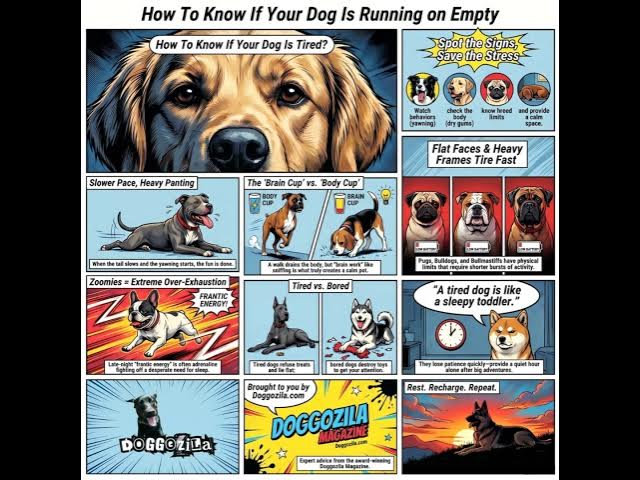
Dogs love to play all day, but even the most playful pups have a breaking point. As a pet owner, learning ow to know if your dog is tired is the key to keeping your furry friend safe and healthy.
Recognizing the early signs of dog exhaustion helps you step in before your dog becomes overstressed (https://doggozila.com/walk-anxiety-in-dogs/) or hurt.
This episode helps pet owners identify when a dog needs a break. It outlines behavioral changes like heavy panting or a loss of interest in play.
The piece also highlights specific dog breeds that tire out very quickly. Finally, it gives simple tips to help your furry friend get high-quality rest.For more information read the original article by Doggozila Magazine that is called:
How To Know If Your Dog Is Tired and Need to Rest? (https://doggozila.com/how-to-know-if-your-dog-is-tired/)
Show More Show Less View Video Transcript
0:00
Welcome to another episode of the Bark
0:01
Brigade podcast by Dog Zilla Magazine.
0:03
>> It's great to be here.
0:04
>> So, okay, picture this. You take your
0:06
highly energetic dog for like a 5-mile
0:10
run.
0:10
>> Uh-huh.
0:11
>> You are completely exhausted, your legs
0:13
are burning, you're drenched in sweat,
0:15
and you're just ready to collapse.
0:16
>> Oh, I've been there.
0:17
>> Right.
0:18
>> Yeah.
0:18
>> You get home, your dog drinks a bowl of
0:20
water, maybe pants for a few minutes,
0:22
and then immediately starts chewing a
0:24
hole in your living room couch.
0:26
>> Classic.
0:27
>> Completely restless.
0:28
>> Yeah.
0:28
>> And you're sitting there wondering why?
0:30
Well, it's because you only emptied half
0:32
of their tank.
0:34
Today, we're diving headfirst into a
0:36
topic that affects, honestly, literally
0:39
every single person who shares their
0:41
life with a canine companion.
0:42
>> Yeah, it really does.
0:43
>> We're going to decode one of the most
0:45
fundamental, yet surprisingly
0:46
misunderstood, mysteries of pet
0:48
ownership. Like, how do you actually
0:51
know when your dog is tired?
0:53
You might be thinking, well, they lie
0:54
down, they close their eyes, and they go
0:56
to sleep, right?
0:57
>> If only it were that easy.
0:58
>> Exactly.
0:59
>> Yeah.
1:00
>> But as we're going to explore today in
1:01
this deep dive, using an incredibly
1:04
comprehensive guide from Dog Zilla
1:06
Magazine,
1:07
it is rarely that simple.
1:10
Our mission today is to unpack the
1:12
incredibly subtle physical cues that we
1:14
miss, the behavioral shifts that we
1:16
almost always misinterpret, and the
1:18
cutting-edge science behind canine
1:20
sleep, cognitive exhaustion, and
1:22
physical recovery.
1:23
>> And it is such a critical topic. I mean,
1:25
I am incredibly glad we're dedicating
1:27
this time to really tear this subject
1:29
apart layer by layer. Because what we
1:31
find, time and time again in veterinary
1:33
and behavioral practices, is that
1:35
well-meaning, loving owners are
1:37
completely missing the signs.
1:38
>> Right, because they just don't know what
1:39
to look for.
1:40
>> Exactly. We have this pervasive cultural
1:42
idea that, you know, a tired dog is a
1:44
good dog. And as a result, we push our
1:46
pets, and they eagerly push themselves
1:48
way past healthy biological limits.
1:51
Today, we're going to look at the real
1:52
data, the physiological mechanisms, and
1:54
the real-world stories that show us
1:56
exactly why this happens.
1:57
>> And how to prevent it.
1:59
>> Yes, and in the process, we are going to
2:00
completely dismantle some deeply
2:03
ingrained myths about canine energy.
2:05
>> I am so ready for this. We're going to
2:07
be busting some major myths today,
2:09
including why the legendary zoomies
2:12
absolutely do not mean what you think
2:13
they mean, and why taking your restless
2:16
dog for a marathon walk might actually
2:17
leave them even more frustrated than
2:19
when you started.
2:20
>> It's totally counterintuitive.
2:21
>> a completely counterintuitive concept,
2:24
but once you see the science and the
2:25
biology behind it, I guarantee it will
2:27
change the way you interact with your
2:29
dog forever. Let's start right at the
2:30
beginning with the physical realities of
2:33
playtime.
2:34
The source material makes a really bold
2:37
statement right out of the gate.
2:39
It points out that dogs, much like us
2:41
sometimes, often just do not know their
2:43
own breaking point.
2:45
>> They will just keep playing, running,
2:47
fetching, and wrestling until they
2:48
literally drop.
2:50
>> Yeah, and that is a fundamental
2:51
behavioral trait in many, many dogs.
2:53
It's rooted deeply in their evolutionary
2:55
history. You have to remember, um, where
2:58
dogs come from. In a wild pack setting
3:01
or, you know, in a survival situation,
3:03
showing fatigue or pain is a massive
3:06
vulnerability.
3:07
>> Oh, like showing weakness to a predator.
3:09
>> Exactly. Modern dogs have retained that
3:11
instinct to mask their exhaustion. Plus,
3:15
they are heavily driven by pack
3:16
dynamics, by intensely bred prey drives,
3:19
and honestly, by the sheer unadulterated
3:22
joy of interacting with you, their
3:24
owner.
3:25
>> They just love the game too much.
3:26
>> Right. When you throw a ball, their
3:27
brain is flooded with a massive cocktail
3:30
of adrenaline, cortisol, and dopamine.
3:33
This neurochemical wave essentially acts
3:35
as an internal painkiller.
3:37
It masks their physical fatigue.
3:39
The Dogazela article highlights that
3:41
recognizing the early signs of dog
3:43
exhaustion is the key to stepping in
3:45
before your dog becomes overstressed or
3:46
physically hurt.
3:47
>> So, we have to be the ones to call the
3:48
timeout.
3:49
>> We have to be the adults in the room, so
3:50
to speak, because the dog is not going
3:52
to do it. They are relying entirely on
3:54
us to read their physical cues, and
3:56
those cues can be incredibly subtle.
3:58
>> Okay, let's unpack this. Let's unpack
4:00
those cues. We all know the obvious ones
4:02
like a dog just stopping and refusing to
4:04
walk,
4:05
but the sources list a few key physical
4:07
cues that happen way before that point
4:09
of total failure.
4:11
They mention heavy panting, excessive
4:13
yawning, lying with legs stretched
4:15
completely out, and a sudden loss of
4:17
interest in toys or treats. Let's start
4:20
with panting.
4:20
>> Good place to start.
4:22
>> Because a dog panting at the dog park is
4:23
the most normal, ubiquitous thing in the
4:26
world.
4:26
>> Mhm.
4:27
>> How do we distinguish between healthy,
4:29
normal evaporative cooling and the kind
4:32
of heavy distress panting that signals a
4:34
massive red flag?
4:36
>> This is where we have to look closely at
4:37
the mechanics of how a dog cools down.
4:39
Dogs do not sweat through their skin
4:41
like humans do. I mean, they only have a
4:42
few sweat glands in their paw pads,
4:44
which do very little for overall
4:46
temperature regulation.
4:48
>> Right.
4:48
>> They rely almost entirely on evaporating
4:50
moisture from their respiratory tract.
4:53
When a dog is engaging in functional
4:54
panting, their mouth is open, their
4:56
tongue might be slightly out, and their
4:58
breathing is elevated, but it is
4:59
rhythmic. It's controlled. They are
5:01
efficiently drawing air over the wet
5:03
surfaces of their tongue and lungs.
5:05
>> Okay, so what does distress panting look
5:07
like?
5:08
>> Distress panting, the heavy panting the
5:10
article warns about, looks and sounds
5:13
entirely different.
5:15
You are looking for panting that is
5:17
rapid, shallow, and seemingly
5:19
uncontrollable. The tongue won't just be
5:21
out, it will be fully extended, often
5:24
hanging far out to the side.
5:25
>> Like completely floppy.
5:26
>> Yeah, and it might even look wider or
5:28
flatter than normal as the body tries to
5:30
expose as much surface area as possible.
5:33
If the dog cannot seem to catch their
5:35
breath even when they stop moving for a
5:37
minute, they are no longer just cooling
5:39
down.
5:40
They are struggling to regulate their
5:41
core temperature.
5:42
>> Wow.
5:43
>> The cardiovascular system is working in
5:45
absolute overdrive, and they are firmly
5:47
in the danger zone of exhaustion.
5:49
>> That makes a lot of sense.
5:50
>> Yeah.
5:50
>> It is the difference between, you know,
5:52
you or me breathing hard after a light
5:54
jog versus hyperventilating after
5:56
sprinting up a flight of stairs. Now,
5:58
what about yawning? I always thought
6:00
yawning just meant a dog was waking up
6:02
from a nap or maybe they were a little
6:03
bored waiting for me to finish talking
6:04
to a neighbor.
6:05
>> A lot of people think that.
6:06
>> But the source material specifically
6:09
flags excessive yawning
6:11
as a sign of exhaustion.
6:12
>> Yes. And this is a classic fascinating
6:15
example of a canine behavior that has
6:18
multiple entirely different meanings
6:20
depending on the context. Yawning is
6:22
indeed a natural way for dogs to stretch
6:25
their facial muscles and relax.
6:27
But in the context of high activity,
6:29
excessive yawning is what behavioralists
6:32
call a displacement behavior.
6:34
>> Right.
6:34
>> It is a sign of sheer exhaustion and
6:36
often of rising internal stress.
6:38
>> Wait, before we move on, for those of us
6:40
who aren't behavioralists, when you say
6:42
displacement behavior, what exactly does
6:43
that mean?
6:44
>> Great question. Um, a displacement
6:46
behavior is a normal behavior displayed
6:48
out of context, usually triggered by
6:50
conflicting emotions or an overwhelmed
6:52
nervous system.
6:53
>> Like a nervous habit.
6:54
>> Exactly.
6:55
Think of a human who is incredibly
6:57
nervous before a public speech, and they
6:59
start subconsciously scratching their
7:00
arm or aggressively adjusting their
7:02
collar. They aren't itchy, and their
7:04
collar isn't tight. Their nervous system
7:06
is just overwhelmed, and the physical
7:08
action is a way to bleed off some of
7:10
that anxious energy.
7:11
>> Oh, that that is total sense.
7:12
>> For dogs, yawning is a primary
7:14
displacement behavior. When a dog is
7:17
pushed past their physical or mental
7:19
limit, their parasympathetic nervous
7:21
system is trying to forcefully hit the
7:22
brakes.
7:23
The yawn is an involuntary physical
7:26
response to that internal stress.
7:28
>> So, if they're doing it in the middle of
7:29
a game?
7:30
>> Right. If you are at the park or in the
7:32
middle of a vigorous training session
7:34
and your dog starts repeatedly yawning,
7:36
they are not bored. They are literally
7:38
telling you, "I am overwhelmed. My tank
7:40
is empty. I cannot process any more
7:41
stimuli, and I desperately need a break.
7:44
>> That is such a vital distinction. It
7:45
completely changes how you view a dog
7:47
yawning during, say, agility training.
7:49
>> Mhm.
7:50
>> And the source also mentions lying with
7:52
legs stretched out, not curled up in a
7:54
cute little ball, but completely
7:56
sprawled, often on a hard surface.
7:59
>> Exactly. When a dog lies completely
8:02
sprawled out with their legs fully
8:03
extended, especially on a cool surface
8:05
like tile or shaded dirt, they are
8:08
attempting to maximize the surface area
8:10
of their body that is in contact with
8:12
the ground.
8:13
>> Just trying to get as much cool contact
8:14
as possible.
8:15
>> Right. It's a physics concept called
8:17
thermal conduction. They are trying to
8:19
dump their excess body heat into the
8:21
cooler ground as rapidly as possible. It
8:23
is a clear, undeniable sign of a
8:25
depleted energy state and an overheating
8:28
core. And this directly pairs with the
8:30
sudden loss of interest the article
8:31
mentions.
8:32
>> Like ignoring a toy.
8:33
>> Yeah. If your extremely ball-obsessed
8:35
dog suddenly ignores the tennis ball
8:37
bouncing right past their nose, or
8:38
refuses a high-value treat like a piece
8:40
of chicken, you need to pay immediate
8:42
attention.
8:43
Their body has hit a critical
8:45
physiological threshold where it has
8:47
prioritized vital survival and a
8:48
recovery over play and food.
8:50
>> That brings us to checking the vitals,
8:52
which is something I think a lot of pet
8:54
owners assume you only do at the vet's
8:55
office.
8:56
But the Dogzilla guide gives us some
8:58
very practical at-home vitals to check.
9:01
First, the gums.
9:03
It says that if a dog's gums are pale or
9:05
pink, it is a sign that they may be
9:07
dehydrated and tired.
9:10
Now, we usually think of pink as a
9:11
healthy color, so we are talking about a
9:12
washed-out pale pink, right? How do we
9:14
actually check this properly?
9:16
>> You are looking for a noticeable shift
9:18
from their normal baseline. A healthy
9:20
dog's gums should be a vibrant, rich
9:23
color, often a bubblegum pink, though
9:25
obviously it varies by breed, and some
9:27
dogs have naturally pigmented black
9:29
gums.
9:30
>> Sure.
9:30
>> But if you have a dog with pink gums,
9:32
you are looking for a washed-out pale,
9:34
almost white appearance.
9:36
To really test this, you can perform
9:38
what is called a capillary refill time
9:40
test.
9:40
>> Okay, how do we do that?
9:41
>> You gently lift your dog's lip, press
9:43
your thumb firmly against their gum for
9:44
a second until the tissue under your
9:46
thumb turns white, and then release it.
9:48
In a healthy, well-hydrated, rested dog,
9:50
the vibrant pink color should rush back
9:52
into that spot almost instantly, usually
9:55
within 1 to 2 seconds.
9:56
>> And if it doesn't?
9:57
>> If the color takes 3, 4, or 5 seconds to
10:00
return, or if the gums just stay a dull
10:03
pale pink, it indicates extremely poor
10:06
capillary refill and a severe lack of
10:08
proper blood flow.
10:09
>> Why does the blood flow stop like that?
10:11
>> It's a survival mechanism. When a dog is
10:13
severely dehydrated or entering a state
10:15
of acute exhaustion, their
10:17
cardiovascular system essentially goes
10:19
into triage mode.
10:20
>> Oh, wow.
10:21
>> The body constricts the blood vessels in
10:23
the extremities, the skin, the paws, the
10:25
mucous membranes in the mouth, and
10:27
forcefully pulls that blood inward to
10:29
support and protect the vital organs
10:31
like the heart, lungs, and brain.
10:33
So, if you lift your dog's lip and see
10:35
that pale color and slow refill time, it
10:38
is an immediate, non-negotiable signal
10:39
to stop all activity, get them into the
10:41
shade, and slowly offer them water.
10:44
>> And then there's the body temperature.
10:46
The article states that a normal dog
10:47
temperature is between 100 and 102° F.
10:51
Anything higher than that means they're
10:53
overheated and tired. That is
10:55
significantly higher than a human's
10:57
normal temperature.
10:58
>> It is, and understanding that baseline
10:59
is critical.
11:01
Because their normal resting temperature
11:03
is already hovering between 100 and
11:04
102°.
11:06
They have incredibly little leeway
11:08
before they hit dangerous,
11:09
life-threatening territory.
11:11
Heatstroke in dogs can begin when their
11:13
core temperature reaches 104 or 105°.
11:16
>> Okay, wait. If their normal is 102, and
11:20
heatstroke happens around 104 or 105,
11:23
that is a terrifyingly narrow window.
11:26
Are you saying we only have a 2 or 3°
11:28
margin of error before our dogs are in
11:30
severe medical distress?
11:31
>> That is exactly what I'm saying. Humans
11:34
have a wider margin and an incredibly
11:36
efficient full body sweating mechanism
11:38
to dump heat.
11:39
Dogs have a very narrow thermal window
11:41
and a highly inefficient cooling system.
11:44
Their internal engine runs hotter than
11:46
ours to begin with, which is why they
11:47
overheat exponentially faster than we
11:49
expect.
11:50
>> It is. Now, obviously carrying a rectal
11:52
thermometer to the dog park to check
11:54
their temperature might not be practical
11:55
or comfortable for everyone, but knowing
11:57
the biological reality of that narrow 2°
12:00
window helps us understand why we must
12:02
be hyper-vigilant about the external
12:03
signs like panting and gum color.
12:06
>> It really paints a picture of how
12:08
fragile their limits can be.
12:10
>> Mhm.
12:10
>> But let me throw an analogy at you cuz
12:12
the psychology of this is what truly
12:13
fascinates me.
12:15
We have all these physical warning
12:16
signs, the excessive distress panting,
12:18
the displacement stress yawning, the
12:20
pale gums showing blood rushing to the
12:22
organs, the sprawling on the cold
12:24
ground.
12:24
>> Right.
12:25
>> Yet despite all of that biological alarm
12:27
ringing, the dog will often jump right
12:29
back up if you pull the tennis ball out
12:31
of your pocket one more time.
12:33
>> It reminds me of a toddler at a busy
12:34
birthday party.
12:35
>> Oh, that's a great comparison.
12:36
>> The kid is rubbing their eyes, they are
12:38
crying over a dropped napkin, they are
12:40
stumbling around clearly fighting off
12:42
sleep with every fiber of their being.
12:45
But if you offer them another piece of
12:47
cake or point to the bouncy castle, they
12:49
will scream, "I'm not tired." and run
12:51
right back into the chaos. Why do dogs
12:54
ignore their own bodily warning signs
12:56
during play?
12:57
What is happening in their brains that
12:58
overrides survival? That toddler analogy
13:01
is remarkably accurate.
13:04
What is happening inside the dog is a
13:05
literal battle between neurochemistry
13:07
and physical biology, and honestly,
13:10
neurochemistry almost always wins in the
13:12
short term.
13:13
>> Wow.
13:14
>> When a dog is engaged in something
13:15
highly stimulating like chasing a ball,
13:17
playing roughly with other dogs, or even
13:19
just exploring a highly novel
13:21
environment, their brains reward centers
13:24
light up. They are flooded with
13:25
dopamine, which drives the desire to
13:27
seek the reward, alongside huge spikes
13:30
of adrenaline and cortisol.
13:32
>> So, they're just high on their own
13:33
supply.
13:33
>> Basically, yeah. These are powerful
13:35
activating fight or flight chemicals.
13:38
Evolutionarily, they are designed to
13:39
keep the animal alert, moving, and
13:41
ignoring pain in life or death survival
13:43
situations, like fleeing a predator or
13:45
securing a rare meal.
13:47
But, the dog's brain doesn't
13:49
differentiate between the life or death
13:50
pursuit of a rabbit and the intensely
13:52
fun pursuit of a frisbee.
13:54
>> It's all the same chemical rush.
13:56
>> Exactly. The chemical cocktail applies
13:58
equally to high arousal play. It
14:00
completely masks the physical sensations
14:03
of muscle fatigue, joint ache, and
14:05
rising core temperature. The brain is
14:07
aggressively screaming, "Go, go, go!"
14:09
while the cellular biology of the body
14:11
is screaming, "Stop!" And until those
14:13
chemical levels naturally dissipate,
14:15
which takes time, the dog will keep
14:17
pushing, often to their own severe
14:18
detriment.
14:19
>> So, there is a literal chemical
14:21
disconnect between their body and their
14:23
brain. Their physical body is running on
14:25
empty, but their brain is still revving
14:27
at 10,000 RPMs.
14:29
>> Right.
14:30
>> Which brings us perfectly to the next
14:31
major concept in the source material.
14:33
And honestly, if there's one thing our
14:35
listeners take away from this entire
14:37
deep dive, it should be this.
14:38
It is a game-changer for anyone who has
14:40
ever dealt with a restless, hyperactive
14:42
pet.
14:43
We need to talk about the two cups of
14:44
energy. The profound difference between
14:47
physical and mental exhaustion.
14:49
>> This is undoubtedly one of the most
14:51
crucial paradigms to understand in
14:53
modern dog care. For decades,
14:55
conventional wisdom was just, you know,
14:56
run them until they're tired. But, the
14:58
Dogzilla article introduces a much more
15:00
accurate model. A dog's energy is not
15:03
just one single monolithic tank.
15:05
>> Okay.
15:06
>> It is strictly divided into two separate
15:07
reservoirs, a body cup and a brain cup.
15:11
And the single biggest mistake owners
15:13
make day in and day out is trying to
15:15
solve a full brain cup with a purely
15:18
physical solution.
15:19
>> Yes.
15:20
The source gives this incredible
15:21
illustrative story about a high energy
15:23
Border Collie named Scout. I think
15:26
anyone with a working breed will relate
15:27
to this. Scout's owner was incredibly
15:29
dedicated. They were running him for
15:31
miles every single day trying
15:33
desperately to tire him out.
15:34
>> Doing exactly what people tell you to
15:35
do.
15:36
>> Right. They were doing exactly what
15:38
society and old school training tells
15:40
you to do with a working breed.
15:42
Run them until their tongue hangs out.
15:44
But despite logging all those miles,
15:46
Scout was coming home, drinking some
15:48
water, and then immediately chewing the
15:50
sofa. He was pacing, he was restless, he
15:52
was destructive, and he was clearly
15:54
deeply unsatisfied. The physical walk
15:56
only emptied his body cup.
15:58
>> Exactly.
15:59
>> The solution, according to the trainer
16:00
in the story, wasn't to run him for 6
16:02
miles instead of five. It was swapping a
16:05
massive physical run for a simple
16:07
20-minute indoor sniffing game, hiding
16:10
treats in a cardboard box. And that 20
16:12
minutes of focused brain work made Scout
16:14
calmer and happier than any long run
16:16
ever did. How is that biologically
16:18
possible?
16:19
>> It is entirely possible, and it comes
16:21
down to the staggering neurology behind
16:22
olfactory processing in dogs. To
16:25
understand this, we have to look at the
16:26
anatomy of a dog's brain. Humans are
16:29
what we call a microsmatic species. We
16:31
rely primarily on our vision. Dogs are
16:33
macrosmatic. Their primary dominant way
16:35
of interpreting the entire world is
16:37
through their sense of smell.
16:38
>> They see with their noses.
16:39
>> They absolutely do. A dog's nose
16:42
contains up to 300 million olfactory
16:44
receptors compared to our measly 6
16:47
million.
16:48
Furthermore, the part of their brain
16:50
dedicated to analyzing odors, the
16:52
olfactory bulb, is proportionally
16:54
massive compared to ours. When Scout the
16:57
Border Collie was out running for miles,
16:58
he was engaging in a repetitive low
17:01
cognitive load activity. Running is
17:03
purely physical endurance.
17:05
>> Right.
17:05
>> His body cup was getting thoroughly
17:07
empty, but his brain cup, his deeply
17:09
ingrained genetic need to problem solve,
17:12
to analyze data, to work out puzzles,
17:14
was completely untouched. In fact, by
17:16
running him for miles every day, the
17:18
owner was inadvertently just building up
17:20
his cardiovascular stamina.
17:22
>> Right. Like a human athlete training for
17:24
a marathon. You aren't actually calming
17:25
them down. You're just making them
17:27
vastly fitter and harder to physically
17:29
tire out over time.
17:30
>> Precisely. You create an elite endurance
17:32
athlete with an incredibly bored mind.
17:34
But when the owner introduced the
17:35
sniffing game with treats hidden in a
17:37
box, everything shifted. Sniffing for a
17:39
hidden target requires intense sustained
17:42
concentration.
17:43
>> Like solving a complex math problem for
17:44
us.
17:45
>> Yes.
17:46
The dog has to inhale the air, trap the
17:48
scent particles in their nasal cavity,
17:50
separate the target odor from hundreds
17:52
of background odors, track the invisible
17:55
scent gradient through the air currents
17:56
in the room, and make complex
17:58
split-second decisions based on that
18:01
data. That level of intense mental focus
18:04
requires immense cognitive fuel. It
18:06
forces the brain to burn circulating
18:09
glucose at an incredibly rapid rate.
18:11
>> exhausting.
18:12
>> Incredibly exhausting. 20 minutes of
18:15
intense scent work or thoughtfully
18:17
interacting with a complex puzzle toy
18:19
can be vastly more exhausting for dogs'
18:21
central nervous system than an hour of
18:23
mindless running. It forcefully empties
18:25
that brain cup.
18:27
>> So, it's almost like a smartphone.
18:29
You can drain the battery by leaving the
18:30
screen brightness on full blast. That is
18:33
the equivalent of the physical run. You
18:34
are burning raw power. But if you have
18:37
50 different apps open in the
18:38
background, your phone's RAM is
18:40
completely overloaded.
18:41
>> That's a perfect analogy.
18:42
>> The phone might be down to 10% battery,
18:45
but it is still glitching, freezing, and
18:46
running hot because the RAM is maxed
18:48
out.
18:49
These mental games, the sniffing, the
18:51
puzzle feeders, the shaping games, they
18:53
are the equivalent of swiping up and
18:55
force closing all those background apps.
18:57
They clear the RAM, and suddenly the
18:59
system can actually power down, cool
19:01
off, and relax.
19:03
So, I have to ask you,
19:05
are we actually doing our high-energy
19:07
dogs a massive disservice by only
19:09
focusing on their physical stamina?
19:11
>> Without a doubt, yes. We are absolutely
19:14
doing them a disservice. When we only
19:16
focus on the physical aspect of
19:17
exhaustion, we are entirely neglecting
19:19
the very cognitive traits these dogs
19:21
were selectively bred for over hundreds
19:23
of years.
19:24
>> Like Border Collies herding sheep.
19:26
>> Exactly. Think about it. A Border Collie
19:28
like Scout wasn't bred to just run in a
19:30
straight line. They were bred to
19:32
independently analyze the complex
19:33
movements of a flock of sheep, to
19:35
anticipate the sheep's reactions, to
19:37
make independent problem-solving
19:39
decisions, and to respond to highly
19:41
nuanced whistle commands from a shepherd
19:43
half a mile away.
19:44
>> That's a lot of brain power.
19:46
>> It is. A physical run around the
19:48
neighborhood does absolutely nothing to
19:49
satisfy that intense genetic urge to
19:51
work. When we ignore the brain cup, we
19:54
inevitably end up with restless,
19:55
anxious, frustrated, and often highly
19:57
destructive dogs. True, restorative
20:00
relaxation for a dog only occurs when
20:02
both the physical body cup and the
20:03
cognitive brain cup are sufficiently
20:05
emptied. And as the Dog Agility Source
20:07
notes, veterinarians and behavioralists
20:09
constantly see this full, overflowing
20:12
brain cup as one of the very top reasons
20:14
for a restless, unmanageable pet.
20:17
>> That is just a profound shift in
20:18
perspective. It really empowers owners
20:20
to work smarter, not harder, especially
20:22
on days when they can't manage a 2-hour
20:24
hike. But of course, not every dog is a
20:26
working line Border Collie like Scout.
20:27
>> Right.
20:28
>> The absolute size of these energy cups
20:30
varies wildly depending on who the dog
20:31
actually is physically. Which brings us
20:33
to a huge variable: breed, build, and
20:36
age. Why fatigue is absolutely not a
20:38
one-size-fits-all equation.
20:40
The Dog Agility piece emphasizes that
20:42
genetics, bone structure, body
20:44
composition, and age dictate a dog's
20:46
rest needs in very absolute,
20:48
non-negotiable terms.
20:50
>> It is essential to recognize that a dog
20:52
is not just a dog. A Greyhound and an
20:54
English Bulldog are technically the
20:56
exact same species, but physiologically,
20:59
biomechanically, and anatomically, they
21:01
are operating in entirely different
21:03
realities. You cannot apply the same
21:05
exercise metrics to them.
21:07
>> Which it doesn't work.
21:08
>> No, it doesn't. The source specifically
21:10
calls out brachycephalic breeds. These
21:13
are the flat-faced dogs that are so
21:15
incredibly popular right now, like
21:17
French bulldogs, pugs, English bulldogs,
21:19
and shih tzus.
21:21
These breeds have severe anatomical
21:23
limitations that directly and
21:25
dramatically impact their energy levels
21:27
and how rapidly they fatigue.
21:28
>> I'm really glad we are focusing on these
21:30
flat-faced breeds because they are
21:32
everywhere and they have such goofy,
21:34
playful personalities that I think
21:36
owners sometimes forget their physical
21:37
limits. The article points out that
21:39
these dogs need constant extra rest
21:41
periods during play because they
21:43
literally struggle to breathe
21:44
efficiently. Can you walk us through the
21:46
actual anatomy of why this happens?
21:48
>> Certainly. The term brachycephalic
21:50
translates literally to short-headed.
21:53
Through decades of intense selective
21:55
breeding for a specific cosmetic look,
21:58
humans have drastically shortened the
22:00
muzzles of these dogs.
22:01
But while the bones of the snout got
22:03
shorter, the soft tissues inside did not
22:06
proportionally shrink.
22:07
>> So everything is cramped inside.
22:09
>> Exactly. This leads to a condition
22:11
called brachycephalic airway syndrome.
22:13
It means their nasal passages are
22:15
severely compressed, their nostrils are
22:17
often pinched or stenotic, and they
22:19
frequently have elongated soft palates,
22:22
which is excess tissue at the back of
22:24
the throat that literally flaps down and
22:25
obstructs their airway when they try to
22:27
breathe deeply.
22:28
>> So every breath is a struggle.
22:30
>> Every single breath. Now compare that to
22:32
a high-energy working dog like a
22:34
Labrador retriever or a Belgian
22:36
Malinois. When a Malinois runs and
22:38
pants, they have a long, fully
22:40
functional snout that acts as a highly
22:42
efficient aerodynamic cooling tunnel.
22:45
They can easily draw in a massive volume
22:47
of air, cool it rapidly across the large
22:49
surface area of their nasal turbinates,
22:52
and expel the heat from their body.
22:54
>> And a pug just can't do that.
22:55
>> A pug or a French bulldog simply does
22:57
not possess that equipment.
22:59
Their oxygen intake is severely
23:01
compromised from the very first step.
23:04
This means their muscles fatigue
23:06
exponentially faster because they aren't
23:07
getting sufficient oxygen to fuel
23:09
cellular activity, and their core
23:11
cooling system is horribly inefficient.
23:14
Therefore, a vigorous 5-minute chase for
23:16
a pug is physiologically and
23:18
cardiovascularly equivalent to a
23:20
grueling 30-minute sprint for a working
23:23
dog. They hit their absolute physical
23:25
limit incredibly fast.
23:27
>> And it isn't just the flat faces. The
23:29
source also mentions heavy breeds like
23:31
Bullmastiffs and Basset Hounds. They
23:33
have a completely different kind of
23:34
limitation based purely on their
23:36
skeletal mass and body shape.
23:38
>> That is correct. We have to look at
23:39
canine biomechanics. Take a Basset
23:41
Hound. They were bred for a highly
23:42
specific purpose, slow, methodical,
23:45
nose-to-the-ground tracking. To achieve
23:47
this, they were bred to have dwarfism,
23:48
extremely short, thick legs, and a long,
23:51
dense, heavy body. The sheer
23:53
biomechanical effort required for a
23:55
Basset Hound to run, or even just to
23:56
walk long distances at a brisk human
23:58
pace, is massive compared to a dog with
24:01
longer legs and a lighter, more
24:03
aerodynamic frame. And then you look at
24:05
giant muscular breeds like Bullmastiffs.
24:08
They carry so much sheer physical mass
24:10
that just initiating movement and
24:12
carrying that weight requires an
24:14
enormous, sustained expenditure of
24:16
energy.
24:17
>> They're just moving so much weight.
24:18
>> Their muscles tire quickly, and their
24:20
joints bear a tremendously heavy load.
24:22
They were historically bred for short,
24:24
explosive bursts of guarding behavior,
24:26
not for sustained, high-intensity
24:28
cardio. If you try to take a Mastiff on
24:31
a 5-mile jog, you are going to destroy
24:33
their joints and completely exhaust
24:34
them.
24:35
>> So, we have the physical build, but the
24:37
source also dives deeply into age
24:39
factors, looking at the two extreme ends
24:41
of a dog's life. Growing puppies and
24:43
aging seniors.
24:45
It points out that puppies have a
24:46
seemingly endless amount of energy, but
24:48
they actually tire incredibly quickly.
24:51
And just like human babies, they get
24:53
incredibly cranky and chaotic when they
24:55
are overstimulated.
24:56
>> That is a wonderful, highly accurate
24:58
comparison. People often assume puppies
25:01
need constant exercise to burn off their
25:03
energy, but a puppy's central nervous
25:05
system is still highly immature and
25:07
rapidly developing. Every single thing
25:09
they encounter, a leaf blowing across
25:11
the yard, a new sound from the
25:12
television, a strange person, is a
25:15
massive influx of novel sensory data.
25:18
>> Just overwhelming for them.
25:19
>> Exactly. Processing all that data fills
25:22
up their cognitive brain cup incredibly
25:24
quickly. When they cross the fragile
25:26
threshold from being tired to being
25:28
overtired, they completely lose the
25:29
ability to self-regulate. They become
25:31
mouthy, they bite, they bark
25:33
uncontrollably, they refuse to settle
25:35
down, they essentially throw a canine
25:37
tantrum. They desperately need enforced
25:39
naps in a quiet space, exactly like a
25:41
human toddler, to allow their nervous
25:43
system to reset.
25:44
>> Okay, let's shift gears to the exact
25:46
opposite end of the spectrum. We have a
25:48
huge population of aging dogs, and the
25:49
prompt for today's deep dive
25:51
specifically asked us to focus on
25:53
identifying fatigue in senior dogs, and
25:55
explaining exactly when sleep pattern
25:58
changes warrant a veterinary
25:59
consultation.
26:01
The article notes that older dogs
26:03
naturally sleep more as they age, which
26:05
makes sense. But, how do we
26:07
differentiate between normal, healthy
26:09
senior dog fatigue, and something far
26:12
more serious?
26:13
>> This is a critical area of canine care
26:15
because senior dogs are absolute masters
26:17
at quietly adapting to their own
26:19
decline, which means owners often miss
26:21
the subtle signs. As dogs age, their
26:24
baseline metabolic rate naturally slows
26:26
down. Their cellular regeneration isn't
26:28
as efficient, and they often experience
26:30
sarcopenia, which is age-related muscle
26:31
loss.
26:32
>> So, they just naturally need more rest.
26:33
>> Yes. So, the simple fact that an older
26:35
dog needs more sleep is entirely
26:37
biologically normal.
26:39
An 8-year-old dog might comfortably
26:41
sleep 14 hours a day, while a
26:43
14-year-old dog might require 18 hours.
26:46
The crucial metric you have to monitor
26:48
isn't just the sheer volume of sleep,
26:50
but the pattern and the quality of that
26:52
rest, and how they behave when they are
26:54
awake.
26:54
>> So, if my 12-year-old golden retriever
26:56
is sleeping all day, I shouldn't
26:57
automatically panic, but I need to watch
26:59
how he acts when he finally gets up.
27:01
>> Precisely.
27:02
Let's look closely at the 2024
27:04
veterinary checklist for senior dog
27:06
fatigue that the Dog Is Love article
27:08
highlights.
27:09
The absolute most important metric on
27:11
that list is what veterinarians call the
27:13
bounce back factor.
27:14
>> The bounce back factor. Okay.
27:16
>> Let's say your senior dog goes for a
27:18
gentle, slow, 15-minute sniff walk
27:20
around the block. They come home, they
27:23
are clearly tired, and they sleep deeply
27:25
for 3 hours. The critical question is,
27:28
when they wake up from that nap, do they
27:29
stretch, wander into the kitchen looking
27:31
for water, wag their tail when you speak
27:33
to them, and show immediate interest in
27:35
a high-value treat?
27:36
>> Like a piece of cheese or a favorite
27:38
toy?
27:38
>> Exactly. If they wake up and show that
27:41
normal engaged interest, then their
27:42
fatigue was just healthy,
27:44
age-appropriate tiredness.
27:46
The nap successfully recharged their
27:48
battery, they bounced back. However, if
27:51
your older dog starts sleeping 18 hours
27:53
a day, and when they do wake up, they
27:55
seem disoriented, they stare blankly at
27:57
walls, they refuse their favorite
27:59
treats, or they seem reluctant to move,
28:01
that is no longer normal aging, that is
28:04
pathological lethargy.
28:06
>> What could be causing that kind of
28:07
pathological lethargy?
28:08
>> It could be a myriad of things. Often,
28:10
what owners perceive as fatigue in a
28:12
senior dog is actually untreated joint
28:13
pain.
28:14
Osteoarthritis is incredibly common, and
28:17
dogs will simply choose to sleep rather
28:19
than move because moving hurts.
28:21
Or, a sudden increase in sleep paired
28:23
with disorientation could be a sign of
28:25
canine cognitive dysfunction, which is
28:27
essentially dog dementia.
28:29
>> Oh, that's heartbreaking.
28:30
>> It is. It could also be heart disease,
28:32
where their heart isn't pumping enough
28:34
oxygenated blood, leaving them
28:35
perpetually weak. Or, it could be an
28:37
endocrine issue, like hypothyroidism,
28:40
which drastically tanks their energy
28:41
levels.
28:43
So, to answer the question directly, if
28:45
your senior dog sleep needs increase
28:47
very suddenly over the course of a few
28:49
weeks or if their increased sleep is
28:52
paired with a loss of appetite,
28:53
reluctance to walk, or behavioral
28:55
changes upon waking, you absolutely must
28:58
schedule a veterinary consultation. It
29:00
is a clinical red flag, not just a
29:02
byproduct of getting older.
29:04
>> That bounce back factor is such an
29:05
incredibly helpful tangible rule of
29:07
thumb for owners to use at home. I do
29:09
want to mention the guide wonderfully
29:10
balances this very serious heavy advice
29:12
with some real-world humor. They mention
29:15
a viral Tik Tok from March 2025
29:17
featuring Nikita Hana, the so-called
29:19
dramatic dachshund.
29:20
>> Oh, I've seen that.
29:21
>> This tiny little puppy went massively
29:23
viral for putting on an incredibly
29:25
dramatic theatrical show of being
29:27
completely and utterly exhausted. She
29:30
was lying dramatically on her back,
29:32
sighing heavily, throwing her paws over
29:34
her face, acting like she had just run a
29:36
marathon
29:37
>> Mhm.
29:37
>> after doing absolutely nothing all day.
29:39
>> It is a very humorous anecdote, but it
29:41
serves a great purpose. It highlights
29:43
how much individual variation there is
29:45
among dogs and how uniquely expressive
29:47
they can be about their perceived energy
29:49
levels, even if in Nikita Hana's case,
29:52
she was clearly just being dramatic for
29:53
attention. But, it underscores the
29:55
point. You have to know your dog's
29:57
baseline. You have to adapt your care
29:58
routine to the dog that is actually
30:00
sitting in front of you with all their
30:01
specific breed quirks, age limitations,
30:03
and dramatic personalities, not the
30:05
generic dog you imagine you have.
30:07
>> And adapting to the reality of the dog
30:10
brings us to a critical, potentially
30:12
life-saving topic. We need to discuss
30:14
the environment. The force makes it
30:16
emphatically clear that while breed and
30:18
age dictate a lot of a dog's base
30:20
stamina, the actual weather acts as an
30:22
instant brutal multiplier for
30:24
exhaustion. Hot weather increases canine
30:27
exhaustion incredibly rapidly. Why does
30:29
hot weather cause such rapid exhaustion
30:31
in dogs compared to us?
30:33
>> It cannot be overstated how profoundly
30:35
dangerous ambient heat is for dogs.
30:37
Humans are exceptional elite
30:39
thermoregulators.
30:41
As long as we are hydrated, we can sweat
30:42
over our entire mass of body surface
30:44
area, and as that sweat evaporates, it
30:47
dramatically cools our skin and our
30:48
blood. Dogs, as we discussed earlier,
30:50
rely almost entirely on panting. When
30:53
the ambient temperature of the air
30:54
around them rises, especially when the
30:56
humidity in the air rises, panting
30:58
becomes less and less effective.
30:59
>> Because the air is already full of
31:00
water.
31:01
>> Exactly. Evaporative cooling only works
31:03
if the moisture from the dog's tongue
31:05
and lungs can actually evaporate into
31:07
the surrounding air. If it is highly
31:09
humid, the air is saturated. The
31:11
moisture has nowhere to go. So, the dog
31:13
pants harder and harder, expending
31:15
massive amounts of physical energy to
31:17
move air, but achieving absolutely zero
31:20
cooling effect.
31:21
>> That sounds terrifying.
31:22
>> Their internal core temperature begins
31:24
to skyrocket. Their heart races to try
31:26
to pump cooler blood to the brain, and
31:28
their organs begin to suffer from
31:29
thermal damage.
31:30
>> The source shares a deeply sobering
31:32
real-life news story to illustrate just
31:35
how fast this happens. A tragic story
31:37
from August 2025 about an English
31:40
bulldog.
31:41
A dog walker took this bulldog out for a
31:43
walk during the day, and then returned
31:45
and left the exhausted dog in living
31:47
room to rest.
31:49
The temperature in that living room was
31:50
27° C, which is about 81° F.
31:53
>> Mhm.
31:54
>> For a human, 81° is just a nice,
31:56
slightly warm summer day. You might wear
31:58
shorts, but the dog tragically died from
32:01
overheating right there in the living
32:02
room, simply resting on the floor.
32:05
It's a devastating warning that a tired
32:07
dog can rapidly become a dog in mortal
32:09
danger, and that preventing overexertion
32:11
is far, far better than trying to cure
32:13
heat exhaustion.
32:14
>> It is a heartbreaking story, and it
32:16
perfectly, tragically illustrates the
32:18
compounding, cascading dangers of breed,
32:20
activity, and environment. You take a
32:22
brachycephalic breed, the English
32:24
bulldog, that already has a severely
32:26
compromised, inefficient airway. You add
32:28
the physical exertion and muscle heat
32:30
generated from a walk, and you place
32:31
them in an environment with an ambient
32:33
temperature of 81°
32:35
>> It's just a perfect storm.
32:36
>> Exactly.
32:37
During the walk, the dogs' internal core
32:39
temperature spiked. And because of their
32:41
highly inefficient cooling system,
32:43
combined with the ambient heat in the
32:44
room, they simply could not bring their
32:46
core temperature back down once they
32:48
were inside. Their body could not dump
32:50
the heat faster than it was being
32:51
generated. Over the course of an hour or
32:54
two, their proteins began to denature,
32:56
their brain swelled, and their vital
32:58
organs systematically began to shut
33:00
down.
33:01
This is why the Dogzilla article
33:02
emphatically stresses that avoiding
33:04
extreme weather is paramount. On warm or
33:07
humid days, walks must be kept extremely
33:10
short, strictly limited to the coolest,
33:12
earliest parts of the morning or late
33:13
evening with constant, unrestricted
33:15
access to fresh water and air
33:17
conditioning.
33:18
>> The guide also provides a very practical
33:20
mathematical tool for owners to check if
33:23
their dog is crossing into this danger
33:24
zone.
33:25
>> [snorts]
33:25
>> It teaches us how to calculate a resting
33:27
breath rate.
33:28
This is such actionable advice. Can you
33:30
explain exactly how to do this and what
33:33
the numbers mean?
33:34
>> Absolutely. This is a vital metric for
33:36
any dog owner to know. You wait until
33:39
your dog is lying down and has been
33:40
resting for a few minutes. You get a
33:42
stopwatch or use your phone. You simply
33:44
watch their chest rise and fall, and you
33:47
count the number of full breaths they
33:48
take for exactly 15 seconds. Then, you
33:51
multiply that number by four to get
33:53
their breaths per minute.
33:54
>> So, if I count five breaths in 15
33:56
seconds, 5 * 4 is 20 breaths per minute.
33:59
>> Correct. And a normal, healthy resting
34:01
breath rate for most dogs is generally
34:03
between 15 and 30 breaths per minute.
34:05
The article clearly states that a
34:06
resting rate consistently over 40
34:08
breaths per minute signals a serious,
34:10
potential medical problem, but the
34:12
absolutely key word here is resting.
34:14
>> Right, because if they just finished
34:16
sprinting, obviously they will be
34:18
breathing faster.
34:19
>> Exactly. If your dog has just been
34:21
running, their respiratory rate will
34:23
naturally be high, but if they have been
34:25
lying down on the cool tile for 10 or 15
34:27
minutes after a walk, their respiratory
34:30
rate should be steadily and visibly
34:31
declining toward their normal baseline.
34:34
If you do that 15-second count, multiply
34:36
by four, and find that they are still
34:38
taking 40, 50, or 60 shallow breaths a
34:41
minute while lying completely still,
34:43
they are in acute distress.
34:45
>> Wow.
34:46
>> They are not recovering. Their
34:48
cardiovascular system is failing to
34:50
bring their core temperature down. This
34:52
is the exact moment you need to employ
34:54
active cooling measures.
34:55
>> What do active cooling measures look
34:57
like? I've heard you shouldn't use
34:59
freezing cold ice water.
35:00
>> That's right. Never use ice water as it
35:02
causes the blood vessels in the skin to
35:04
instantly constrict, trapping the heat
35:06
inside the vital organs. You want to
35:08
apply cool, tepid, wet towels to the
35:10
hairless areas of their body, the groin,
35:12
the armpits, the belly. Offer small sips
35:15
of cool water, turn a fan directly on
35:17
them, and immediately contact a
35:19
veterinary emergency clinic.
35:20
>> So, what does this all mean for our
35:22
summer routines? We clearly have to
35:24
completely shift our mindset.
35:26
Let me offer an analogy to put it in
35:27
perspective for you, our listeners. If
35:29
you've ever tried to run a 5K in August,
35:31
imagine doing it wearing a heavy,
35:33
insulated winter snow suit.
35:36
And to make it worse, you have a tiny
35:37
plastic straw in your mouth, and you are
35:39
only allowed to breathe through that
35:41
straw.
35:42
That intense feeling of suffocation and
35:44
trapped heat, that is exactly what a
35:46
dog, especially a thick-coated or
35:48
flat-faced dog, is experiencing on a
35:50
hot, humid summer day.
35:52
>> That analogy hits the nail squarely on
35:54
the head. You would never, ever push
35:57
yourself in a snow suit under the
35:58
blazing summer sun, yet we routinely
36:00
expect our dogs to trot happily
36:02
alongside us under the exact same
36:03
physiological strain. It is entirely our
36:06
responsibility to check the weather app,
36:08
check the humidity index, and actively
36:10
monitor our dog's breathing. Preventing
36:12
overexertion by simply staying inside
36:13
and playing mental games is so much
36:15
easier and safer than trying to reverse
36:17
the devastating cascade of heatstroke.
36:19
>> Okay, so let's assume we've navigated
36:20
the day successfully. We managed their
36:22
physical energy, we engaged their brain
36:24
with those intense sniffing games to
36:26
empty the cognitive cup. We respected
36:28
their specific breed limits, and we kept
36:30
them safe from the brutal summer heat.
36:32
The dog finally crashes on the rug in
36:34
the living room. Their eyes close. Now,
36:36
their body has to actually repair
36:38
itself. What is happening in their brain
36:40
right at that moment?
36:42
This brings us to the science of dog
36:43
sleep, dreams, and the zoomies.
36:46
I think this might be my absolute
36:47
favorite part of the deep dive, because
36:49
the science here is truly wild.
36:51
>> The scientific understanding of canine
36:53
sleep architecture has absolutely
36:55
exploded in recent years. For a very
36:57
long time, scientists and owners just
36:59
assumed sleep was sleep, a simple
37:01
biological off switch to let the muscles
37:03
rest.
37:04
But, the Dog Azela article highlights
37:05
that dogs, much like humans, have highly
37:08
distinct complex sleep cycles. And deep
37:11
REM sleep, rapid eye movement sleep, is
37:13
absolutely biologically vital for their
37:15
mental and physical health.
37:16
>> The source brings up a landmark 2017
37:19
study from Hungary that completely blew
37:20
my mind.
37:22
It found that dogs actually process
37:23
complex emotions and consolidate
37:25
learning during their sleep.
37:28
The article beautifully states that a
37:29
sleeping dog isn't just recharging their
37:31
physical body. Their brain is actively
37:33
sorting the complex feelings and events
37:35
of the day. They're literally sleeping
37:37
on the fun you had together, which helps
37:39
them wake up feeling emotionally secure
37:41
and bonded to you.
37:42
Can you elaborate on how researchers
37:44
even figured this out?
37:46
>> It was an incredible piece of science.
37:47
The researchers in Hungary actually
37:49
managed to map exactly what happens in a
37:51
dog's brain while they sleep. And doing
37:54
this was no small feat. They had to
37:56
train a group of family dogs using
37:58
entirely positive reinforcement over
38:00
many weeks to lie perfectly still and
38:02
naturally fall asleep in a busy
38:03
laboratory setting with tiny
38:05
non-invasive EEG electrodes glued to
38:08
their heads to measure their brain
38:10
waves.
38:10
>> Wow.
38:11
Getting my dog to sleep with things
38:13
stuck to his head sounds impossible.
38:14
>> It took immense patience.
38:17
But, what they discovered was profound.
38:19
They found that dogs experience sleep
38:21
cycles remarkably similar to human sleep
38:23
architecture, including periods of
38:25
slow-wave sleep and deep REM sleep. But,
38:28
the most crucial finding was regarding
38:30
memory consolidation.
38:32
During the day, when you teach your dog
38:34
a new command, or they have a highly
38:36
stimulating social interaction at the
38:38
park, those experiences are temporarily
38:40
stored in a part of the brain called the
38:42
hippocampus.
38:42
>> Right, like a short-term memory cache on
38:44
a computer.
38:45
>> Perfect analogy, but that cache fills up
38:47
quickly. It's during that deep REM sleep
38:50
that the brain essentially replays those
38:52
events. The researchers literally
38:54
observed electrical spikes on the EEG
38:56
called sleep spindles that correspond to
38:58
the brain transferring that data from
39:00
the short-term hippocampus to the
39:02
cerebral cortex for permanent long-term
39:04
storage.
39:04
>> That's amazing.
39:05
>> But, it isn't just cold data. It is
39:07
emotionally tagged. The Hungarian study
39:09
proved that this memory consolidation is
39:11
tied heavily to emotional processing.
39:14
So, if a dog has a positive, enriching,
39:17
safe day, their REM sleep helps
39:19
neurologically cement those feelings of
39:21
safety and bond with their owner.
39:22
Conversely, if you wake a dog during
39:24
this deep, vulnerable REM stage, they
39:27
haven't finished that vital neurological
39:28
housekeeping. They wake up confused,
39:31
disoriented, and often highly cranky.
39:34
>> And speaking of sleep profoundly
39:35
affecting mood and health, there's even
39:37
more data. The article cites a 2022
39:40
study of laboratory dogs showing that
39:42
sleep deprivation makes them acutely
39:43
anxious and less clear-headed. And there
39:46
is even newer research showing that just
39:47
one single night of lost sleep ruins a
39:49
dog's metabolism and makes their body
39:51
significantly less responsive to insulin
39:53
in a very short amount of time.
39:55
>> That is terrifying. One night of bad
39:57
sleep impacts their actual cellular
39:59
health.
39:59
>> It underlines the absolute fact that
40:01
sleep is not a luxury. It is a strict
40:03
biological imperative. The insulin study
40:05
is particularly groundbreaking because
40:07
it shows how incredibly quickly a lack
40:09
of rest degrades the endocrine system.
40:11
>> Hold on. Before we dive deeper into
40:12
that, for those of us who aren't
40:13
veterinarians, when you say the
40:15
endocrine system, what exactly are we
40:17
talking about in the context of a tired
40:19
dog?
40:20
>> Great clarification. Think of the
40:22
endocrine system as the body's chemical
40:25
communication network. It is a system of
40:27
glands that release hormones directly
40:29
into the bloodstream to regulate
40:31
metabolism, growth, and stress
40:32
responses. When a dog is constantly kept
40:35
awake by household noise or lacks a
40:38
comfortable, safe place to sleep, their
40:40
body perceives that lack of rest as a
40:42
threat.
40:43
>> So, they're just constantly on edge.
40:45
>> Exactly. Their autonomic triggers the
40:47
release of stress hormones, primarily
40:49
cortisol, to keep them alert. If
40:51
cortisol stays elevated because they
40:53
aren't sleeping deeply, it actively
40:55
prevents their cells from properly
40:56
utilizing insulin to absorb glucose from
40:59
their blood. Essentially, their body
41:00
enters a pre-diabetic state of metabolic
41:03
stress very rapidly. This leads directly
41:05
to weight gain, chronic lethargy, and a
41:07
cascading series of other health issues.
41:10
>> It is amazing how interconnected it all
41:12
is.
41:14
Let's talk about how this sleep
41:15
processing actually manifests in the
41:16
real world, because the source shares
41:18
two incredible illustrative stories
41:20
about Bella and Gus.
41:22
Let's start with Gus, the Labrador.
41:24
He was apparently famous for falling
41:26
asleep with a stuffed duck in his mouth.
41:28
One evening, he drifts off, his paws
41:30
start twitching rapidly, which is a
41:32
classic visible sign of REM sleep, and
41:34
suddenly his jaws start making a gentle,
41:37
rhythmic chewing sound.
41:38
>> That's so funny.
41:40
>> up, looks down at his empty mouth with a
41:41
totally confused, bewildered stare, and
41:43
frantically searches stuffed duck that
41:45
had fallen aside while he slept. The
41:47
article says his dream was so incredibly
41:49
real, he thought he'd actually eaten the
41:50
toy.
41:51
>> It is a hilarious story, but it
41:53
beautifully confirms what the Hungarian
41:55
EEG study suggested. Dogs are actively
41:59
replaying and experiencing their waking
42:00
lives during REM sleep. When we see
42:03
their paws twitching or their lips
42:04
curling, it is because their motor
42:06
cortex is firing, simulating the
42:08
physical actions of running, chasing, or
42:10
in Gus's case, chewing. Gus's brain was
42:13
generating the complex sensory input of
42:15
chewing that duck so vividly that upon
42:17
waking, his physical reality simply
42:19
didn't match his dream state. It proves
42:21
how incredibly deep and complex their
42:23
sleep architecture truly is.
42:25
>> And then we have the story of Bella,
42:27
which is a bit more sobering, but
42:28
incredibly important for families to
42:30
hear. Bella is a sweet, docile shelter
42:32
pitbull adopted by a loving family. They
42:35
take her on her first big, exciting
42:36
hiking trip. During the hike, they miss
42:39
her subtle, quiet signals to stop. The
42:41
yawning, the panting. She gets
42:42
overwhelmingly tired. They get back
42:44
home. When a neighborhood child goes in
42:46
to give Bella a tight hug, she gives a
42:47
small, unthinking, defensive growl. The
42:50
family was totally shocked, but they
42:52
learned a vital lesson.
42:54
Here's where it gets really interesting.
42:55
The article states that a loving, tired
42:58
dog has a much shorter fuse.
43:00
We always hear the cliché, a tired dog
43:02
is a good dog, assuming they are too
43:04
polite or too physically exhausted to
43:06
snap.
43:07
But Bella's story proves the exact
43:09
opposite. Can you elaborate on why sleep
43:11
deprivation and extreme fatigue destroy
43:14
a dog's mood and focus? And why we
43:16
dangerously assume tired dogs are safe
43:18
dogs?
43:19
>> This raises a profoundly important
43:21
question about how we fundamentally
43:23
misinterpret animal behavior. We assume
43:25
tired means docile. We assume they lack
43:27
the energy to react. But as we discussed
43:30
earlier regarding the brain cup, an
43:31
over-tired dog is operating on a
43:33
severely depleted central nervous
43:35
system. Their threshold for tolerance,
43:37
their ability to calmly process
43:38
annoyances, drops dramatically.
43:40
>> They just don't have the patience
43:41
anymore.
43:41
>> Right.
43:43
In Bella's case, she was physically
43:45
exhausted from the massive hike, and her
43:47
cognitive brain cup was completely
43:49
overflowing from processing the new
43:51
environment, the smells, the travel.
43:54
When the child approached for a hug,
43:55
which it should be noted, is an action
43:57
that physically restricts movement and
43:59
can feel inherently threatening to any
44:00
dog.
44:02
Bella no longer had the cognitive
44:04
bandwidth to process the hug as
44:05
affection.
44:06
>> She just saw it as a threat.
44:07
>> Exactly. Her tired, stressed brain
44:09
perceived it immediately as a threat,
44:12
and she reacted with a defensive growl
44:13
to protect her vulnerable state.
44:16
A well-rested dog has the mental energy
44:18
to inhibit their primal instincts and
44:20
tolerate uncomfortable things. An
44:22
exhausted dog simply does not. The
44:24
family was smart, they didn't punish
44:25
her. They realized their mistake and
44:27
instituted a strict rule where Bella
44:29
gets a quiet hour completely alone in a
44:30
dark room after any big fun activity.
44:33
That is exactly the right protocol.
44:35
>> And speaking of overtired dogs, we
44:37
absolutely cannot leave this section
44:38
without talking about the biggest myth
44:40
of all.
44:41
The zoomies.
44:42
The source completely busts this myth
44:44
wide open. We see a dog tearing around
44:46
the house at 9:00 p.m., running over the
44:48
couch, doing laps around the dining room
44:50
table, acting totally frantic, and we
44:51
think, "Oh, they still have extra
44:53
energy. I should have walked them
44:54
longer. I failed today."
44:56
But the article says that assumption is
44:57
entirely wrong.
44:59
The zoomies are often a clear, glaring
45:01
sign of severe overexhaustion.
45:03
>> Yes, and we need to look at the biology
45:05
of what causes the zoomies. It is the
45:07
canine equivalent of a second wind, but
45:09
it is absolutely not a healthy one. When
45:12
a dog is pushed far past their point of
45:14
normal, healthy fatigue, their body
45:16
realizes it is failing to stay awake. It
45:19
perceives this extreme fatigue as a
45:21
vulnerability. To counteract this, the
45:23
brain triggers the HPA axis, the
45:25
hypothalamic-pituitary-adrenal
45:27
axis.
45:28
>> that do?
45:28
>> This system aggressively dumps massive
45:30
amounts of adrenaline and cortisol
45:31
directly into the bloodstream. This
45:33
sudden, violent spike in stress hormones
45:35
causes the frantic, explosive, seemingly
45:38
uncontrollable behavior we
45:39
affectionately call the zoomies.
45:42
>> So, it's not extra energy at all, it's a
45:43
panic response.
45:44
>> Precisely. It is not extra stored
45:46
energy, it is emergency reserve fuel.
45:49
Preventing zoomies is crucial for
45:51
long-term behavioral health because
45:53
constantly relying on adrenaline spikes
45:55
creates a vicious cycle of chronic
45:57
stress and extremely poor sleep quality.
45:59
When you see the zoomies, your dog does
46:01
absolutely not need another walk. They
46:03
do not need you to chase them. They need
46:05
a quiet, dark room, dim lights, and an
46:08
immediate enforced transition to sleep
46:11
to allow those stress hormones to
46:12
metabolize and clear from their system.
46:15
>> Knowing how crucial this deep sleep is
46:17
for memory and mood, and how dangerous
46:19
adrenaline-fueled exhaustion can be, how
46:21
do we ensure our dogs actually get the
46:23
high-quality rest they so desperately
46:25
need?
46:26
That brings us to fueling and tracking
46:27
the rest cycle. The source outlines that
46:30
getting good restorative rest comes down
46:32
to what we put into the dog's body and
46:34
how we monitor their internal systems.
46:36
Let's start with diet, because the guide
46:38
plainly states that poor diet equals
46:40
canine fatigue.
46:41
>> Diet is the foundational building block
46:43
of all physical and mental energy.
46:46
The article compares it to putting bad
46:48
fuel in a car, which is an apt analogy.
46:51
If you feed an active dog a diet full of
46:53
empty, cheap fillers, highly processed
46:55
carbohydrates, and low-quality,
46:57
non-bioavailable proteins, their body
47:00
has to work incredibly hard just to
47:02
digest it, gaining very little
47:04
nutritional value.
47:05
>> Mhm.
47:05
>> More importantly, they experience rapid,
47:07
extreme spikes and catastrophic crashes
47:10
in their blood sugar.
47:11
They might have a manic burst of energy
47:13
30 minutes after eating, followed by
47:15
profound, heavy lethargy.
47:17
High-quality food provides complex
47:19
carbohydrates for sustained energy
47:21
release, healthy fats for brain and
47:23
health, and highly bioavailable proteins
47:25
that actually repair muscle tissue.
47:28
If your highly active dog is constantly
47:29
lethargic, the very first thing to
47:31
evaluate before even looking at their
47:33
exercise routine or sleep schedule is
47:35
the nutritional density and quality of
47:36
their daily diet.
47:37
>> So, it's not just about the calories. I
47:39
like to think of it like putting cheap
47:41
watered-down gas in a high-performance
47:42
sports car. The car will technically
47:44
turn on, but it's going to sputter,
47:46
stall, and eventually ruin the engine.
47:49
And beyond diet, the article talks
47:51
heavily about tracking. This is
47:53
fascinating to me. Modern tech is
47:55
entering the pet care space in a massive
47:57
way. We now have smart collars, GPS
48:00
trackers, and even microchips to track a
48:03
dog's resting heart rates, their heart
48:04
rate variability, and their sleep cycles
48:07
in real time.
48:08
>> It's incredible how far the tech has
48:09
come.
48:09
>> It really is. The data shows that a
48:11
dog's heart rate should drop
48:12
significantly during deep rest. If your
48:15
phone app shows a high resting heart
48:16
rate at night, the dog might be
48:18
overtired or chronically stressed.
48:20
But I have to ask you, with a healthy
48:22
dose of skepticism, are we getting a
48:24
little too obsessed with tech? Are we
48:26
micromanaging our pets to the point
48:28
where we're just making ourselves
48:29
anxious?
48:30
Or is seeing that nighttime heart rate
48:32
drop actually a genuine game changer for
48:34
identifying a stressed dog?
48:36
>> It is a completely valid concern. We
48:38
certainly don't want to micromanage our
48:40
pets to the point of transferring our
48:42
own neuroses and anxiety onto them.
48:44
However, from a veterinarian behavioral
48:46
standpoint, I believe this specific
48:48
technology is a genuine game changer.
48:50
Here is why.
48:51
Dogs are absolute masters at masking
48:55
discomfort and stress. It is a survival
48:57
trait. We might look at our dog lying on
48:59
the rug and think they're sleeping
49:00
soundly because their eyes are closed
49:02
and they are quiet.
49:03
>> Yeah, they look fine to us.
49:04
>> Exactly. But if a smart collar shows
49:06
that their resting heart rate is
49:08
stubbornly hovering at 80 beats per
49:09
minute instead of appropriately dropping
49:12
down to 40 or 50 beats per minute, we
49:14
suddenly have
49:16
objective, undeniable data that their
49:18
autonomic nervous system is stuck in a
49:20
state of high alert.
49:21
>> It's like your engine is idling way too
49:23
high.
49:23
>> Exactly. It completely removes the
49:25
guesswork. It allows us to see the
49:27
invisible internal toll that a stressful
49:29
day at daycare, a frightening
49:31
thunderstorm, or perhaps a hidden
49:33
underlying illness is taking on their
49:35
cardiovascular system. It gives the dog
49:37
a voice they didn't have before.
49:39
>> And distinguishing between stress,
49:41
normal fatigue, and actual illness is
49:44
notoriously hard for the average owner.
49:46
We touched on this earlier when we
49:48
discussed the senior dog checklist, but
49:50
the article lays it out so clearly for
49:52
dogs of all ages. Is my dog tired or is
49:55
my dog sick? The answer always comes
49:57
back to how they bounce back.
49:59
>> The bounce back factor is the golden
50:01
rule. A genuinely tired dog, even an
50:03
exhausted one, will bounce back with
50:05
renewed vigor and interest after a solid
50:07
uninterrupted nap and a good meal.
50:09
A sick dog, however, will continue to
50:11
act dull. They will refuse their normal
50:13
food, they will ignore high-value
50:15
treats, and they will lack enthusiasm
50:16
for things they normally love, even
50:18
after sleeping for 10 hours. And that is
50:20
why tracking, whether through a
50:21
high-tech smart collar or just your own
50:23
careful, dedicated observation, is so
50:25
critical. If you notice the recovery
50:27
time is getting noticeably longer and
50:29
longer, or if they're refusing that
50:31
piece of chicken even after a long
50:32
night's sleep, you are no longer dealing
50:34
with simple fatigue. You are dealing
50:36
with a medical issue that requires
50:37
professional intervention.
50:39
>> So, we have the right high-quality food,
50:41
we're tracking their vitals and their
50:43
bounce back factor. But tech and diet
50:45
are only part of the recovery equation.
50:47
The ultimate key to actually achieving
50:49
that vital REM sleep is the physical
50:52
space the dog sleeps in.
50:54
Which brings us to the final, incredibly
50:56
practical advice from the Dogzilla
50:58
guide, creating the ultimate recharging
51:00
zone.
51:01
>> The physical environment heavily
51:02
dictates the quality of the rest. You
51:04
cannot possibly expect a dog to achieve
51:06
that vulnerable deep REM sleep where
51:08
memory consolidation happens if their
51:10
bed is situated in the middle of a
51:12
highly trafficked, busy kitchen with
51:13
kids running past, pots clanging, other
51:15
pets walking over them, and the
51:17
television blaring. The article strongly
51:19
advises picking a quiet, secluded spot
51:21
away from household noise, using a soft,
51:23
supportive bed or a cozy, covered crate
51:26
where they feel fully insulated and
51:27
safe.
51:28
>> Let's talk deeply about the crate for a
51:29
moment because people have very strong,
51:32
often mixed feelings about them. Some
51:34
view them as cages, but the article
51:36
dives into the psychology of the crate
51:38
or a dedicated quiet room.
51:41
It explains exactly how calm spaces
51:43
prevent overstimulation and actively aid
51:45
recovery, especially during periods of
51:47
high energy training or chaotic
51:49
household events.
51:50
>> A properly introduced, positively
51:52
reinforced crate is absolutely not a
51:55
cage.
51:56
To the dog's psychology, it is a den.
51:58
In the wild, canines naturally seek out
52:00
small, enclosed, dark spaces to rest,
52:03
usually under roots or in hollows,
52:05
because it minimizes their
52:06
vulnerability.
52:07
In an open space, they have 360° of
52:10
perimeter to worry about. In a den, they
52:12
only have to watch one single entrance.
52:14
>> That makes so much sense.
52:14
>> When we provide a cozy, covered crate in
52:17
a quiet, dark room, we are deeply
52:19
satisfying that primal psychological
52:21
need for security. It actively lowers
52:23
their cortisol levels. It allows their
52:25
nervous system to completely power down,
52:27
because they no longer feel responsible
52:29
for guarding the perimeter of a chaotic
52:30
living room.
52:31
>> The guide also has specific, brilliant
52:34
tips for calming energetic puppies
52:35
during naptime.
52:37
It reiterates that puppies get
52:38
incredibly cranky when they need sleep,
52:40
just like human toddlers. It suggests
52:42
establishing a routine, a short, calm
52:45
cutter session, moving them to a quiet
52:47
room with soft classical music or white
52:49
noise, and providing a special chew toy
52:51
to help them transition to sleep. And it
52:53
makes a really strong, counterintuitive
52:55
point. Avoid vigorously exercising your
52:57
dog right before bedtime.
52:58
>> That advice directly goes back to the
53:00
arousal chemicals we discussed earlier.
53:02
If you decide to play a vigorous, highly
53:05
competitive game of tug-of-war with your
53:06
dog right before bed, hoping to tire
53:08
them out, you are doing the exact
53:11
opposite. You are intentionally flooding
53:13
their brain with adrenaline and
53:15
dopamine. Those chemicals have a
53:16
half-life. It takes significant time for
53:19
them to dissipate from the bloodstream.
53:21
Your dog will be physically panting, but
53:23
mentally wired.
53:25
Offering a chew toy or a lick mat, on
53:27
the other hand, is a brilliant,
53:28
science-backed strategy. The physical,
53:30
repetitive act of licking and chewing
53:32
naturally stimulates the release of
53:34
endorphins, which are deeply calming,
53:36
soothing neurotransmitters in the dog's
53:38
brain. It physically lowers their heart
53:40
rate, reduces blood pressure, and
53:42
bridges the difficult transition from an
53:44
active state to a resting state.
53:45
>> So, let me play devil's advocate for a
53:47
moment cuz this is something I struggle
53:48
with. We love our dogs so much. They are
53:50
our family.
53:51
>> [snorts]
53:52
>> If a dog clearly wants to be near us all
53:54
the time, following us from the kitchen
53:56
to the bathroom to the living room, are
53:58
we actually being bad, restrictive
54:00
owners by forcing them to go rest in a
54:03
quiet, separate room? Are we depriving
54:07
them of our company and making them sad?
54:09
>> I hear that concern constantly, but we
54:11
have to reframe it. If we look at the
54:12
bigger picture of canine psychology,
54:14
enforcing firm boundaries and creating
54:17
mandatory calm spaces is actually the
54:19
ultimate act of love and care. Dogs are
54:22
highly social animals, yes, but they are
54:23
also deeply opportunistic followers. If
54:26
you are constantly moving around the
54:28
house, they often feel socially
54:29
obligated to move with you to protect
54:31
the pack.
54:32
>> Like they're on guard duty.
54:33
>> Exactly. They suffered from severe
54:35
canine equivalent fear of missing out.
54:38
By creating a mandatory, scheduled quiet
54:40
zone and enforcing rest in a separate
54:42
room, you are actively taking that heavy
54:44
social burden off their shoulders. You
54:46
are communicating to them, you are off
54:48
duty. I am in charge of the perimeter.
54:50
You are safe to sleep.
54:52
It prevents the severe behavioral issues
54:54
that stem directly from chronic sleep
54:55
deprivation, like the tragic snapping we
54:57
saw in Bella's story. Enforcing rest is
55:00
not a punishment. It is a vital,
55:02
life-saving health intervention.
55:03
>> That is such a reassuring, empowering
55:05
perspective. It is entirely okay to be
55:08
the parent and say, "Go to your room.
55:10
You are off duty. Take a nap."
55:11
Well, we have covered an immense,
55:13
fascinating amount of ground today,
55:14
navigating through the complex biology,
55:17
psychology, and practical insights
55:19
provided by the
55:21
Let's do a quick synthesis of the major
55:23
takeaways for everyone listening. First,
55:25
do not ever trust your dog to tell you
55:27
when they are tired because their
55:28
dopamine will lie to them.
55:30
Watch for the subtle, early cues, the
55:33
displacement stress yawning, the heavy,
55:35
uncontrollable distress panting, the
55:37
sprawling out on cold surfaces. Check
55:40
those vitals. If you press their gums
55:42
and the pink color takes more than 2
55:43
seconds to return, or if their resting
55:45
breathing rate is stubbornly over 40
55:47
breaths a minute, you need to intervene
55:49
immediately.
55:49
>> And second, always remember the two
55:51
separate cups of energy. You absolutely
55:53
must respect the mental energy cup. A
55:56
physical 5-mile walk is simply not
55:58
enough for a smart dog. You must utilize
56:00
complex sniffing games and puzzles to
56:02
rapidly drain their brain glucose and
56:05
achieve true restorative relaxation.
56:08
Furthermore, respect their specific
56:10
physical limitations, especially if you
56:12
have a flat-faced brachycephalic breed
56:14
that struggles desperately in the heat,
56:16
or an older senior dog whose sleep
56:18
patterns and bounce-back times are
56:20
changing.
56:20
>> Absolutely.
56:21
Protect them relentlessly from the heat.
56:24
Always remember that tragic story of the
56:26
bulldog overheating in his seemingly
56:28
comfortable 81° living room.
56:30
And when it comes to sleep, completely
56:32
abandon the idea that the zoomies mean
56:34
they need more exercise. Recognize the
56:36
zoomies as a glaring red flag for
56:38
adrenaline-fueled overexertion. Feed
56:40
them a high-quality bioavailable diet
56:42
for steady fuel. Track their resting
56:44
heart rates if you can, and above all,
56:46
create a quiet, safe, den-like space for
56:48
them away from household chaos. This
56:51
ensures they get that vital
56:52
memory-consolidating REM sleep so they
56:55
don't wake up cranky, anxious, or
56:57
metabolically stressed.
56:58
>> It all ultimately comes down to
57:00
dedicated observation, deep empathy, and
57:03
choosing to work intelligently with your
57:05
dog's specific biology, rather than
57:08
fighting blindly against it.
57:09
>> To wrap up this incredibly deep dive, I
57:11
want to leave you with one final, deeply
57:14
provocative thought from our expert. We
57:16
spent a lot of time talking about how
57:17
dogs use their REM sleep to process
57:20
their day, tag their memories with
57:21
emotion, and permanently store those
57:23
experiences in their cortex.
57:25
>> Yes, I want every owner to think deeply
57:27
about this tonight. If your dog
57:29
literally uses their sleep to process
57:31
the emotional weight of the day. If they
57:33
are sleeping on the fun you had together
57:35
to wake up feeling secure and bonded,
57:37
what kind of emotional memories are you
57:39
actually feeding your dog right before
57:41
they close their eyes? Are you feeding
57:42
them a chaotic, loud, stressful
57:44
environment full of adrenaline, or are
57:46
you intentionally giving them a sense of
57:48
profound peace, safety, and a fully
57:50
empty mental cup to dream about?
57:52
>> That is something to truly reflect on
57:54
tonight when your dog settles down for
57:55
the evening.
57:56
Thank you for listening, dear
57:57
brigadiers, and if you have any
57:58
questions, visit the source article on
58:00
Dog A Cilla magazine at dogacilla.com.
58:04
That was all for this episode, and until
58:06
the next time, bye to all listeners of
58:07
the Bark Brigade podcast.
#Pets & Animals