Up next in 10

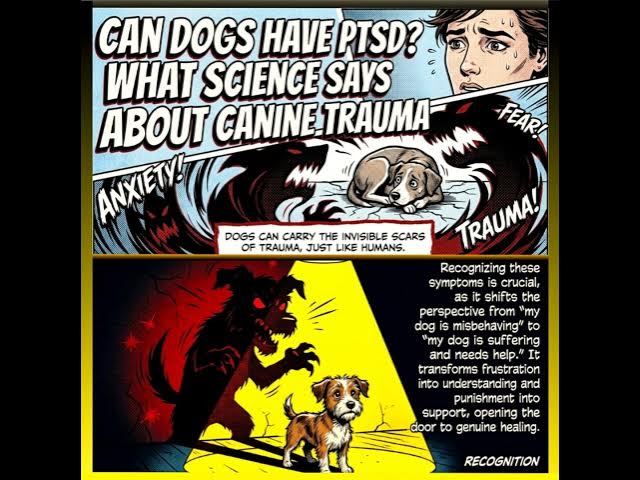
Many caring owners wonder, can dogs have PTSD? (https://doggozila.com/can-dogs-have-ptsd/)
Post-Traumatic Stress Disorder (PTSD) is a well-documented condition in dogs, recognized by veterinary behaviorists worldwide.
Once thought to be a uniquely human disorder, we now understand that the dog brain and nervous system can respond to trauma in almost identical ways.
Show More Show Less View Video Transcript
0:00
Welcome to another episode from the Bark
0:02
Brigade podcast by Dogazilla magazine.
0:04
Today we will talk in-depth about PTSD
0:07
in dogs.
0:09
>> Okay, let's unpack this immediately
0:10
because every dog owner listening right
0:12
now has likely witnessed this scene. You
0:14
have the dog who is uh terrified of
0:16
thunderstorms.
0:17
>> They shake uncontrollably. They pant.
0:19
They bolt. They hide in the closet
0:21
sometimes hours after the last rumble
0:24
has faded away. And we often label that
0:26
as you know simple fear or maybe
0:28
generalized anxiety. But what happens
0:30
when that fear is so overwhelming, so
0:33
profound that it stops being an
0:35
immediate reaction and becomes a lasting
0:37
psychological scar that changes their
0:39
entire world?
0:40
>> That is the central question we are
0:41
tackling today and it is absolutely
0:43
crucial for compassionate modern dog
0:46
ownership. Can dogs have post-traumatic
0:48
stress disorder or PTSD?
0:49
>> Right. Historically, this question was
0:51
met with a lot of um a lot of dismissal,
0:54
but the scientific answer today
0:56
recognized by board-certified veterinary
0:58
behaviorists worldwide, is a resounding
1:00
yes.
1:01
>> So, it's not just us projecting human
1:03
feelings onto them anymore.
1:04
>> Not at all. We have moved far beyond
1:07
anecdotal evidence or, you know,
1:09
anthropomorphic projection. This is a
1:12
diagnosible, scientifically verifiable
1:15
neurological condition. That distinction
1:17
moving from projection to scientific
1:19
fact is so important. Our mission for
1:22
this deep dive is to translate that
1:24
complex neurobiology, the structural
1:26
brain changes, the hormonal
1:27
dysregulation, the reasons why they
1:29
can't just get over it into actionable
1:31
knowledge for you.
1:32
>> Exactly.
1:33
>> We want to move you, the listener, from
1:35
recognizing fear in your dog to truly
1:37
understanding the depth of their
1:39
suffering and most importantly providing
1:41
you with a detailed road map to healing
1:43
and recovery. What's truly fascinating
1:45
and often heartbreaking is the
1:47
realization confirmed by our sources
1:50
that dogs can indeed carry the invisible
1:52
profound scars of trauma just like
1:54
humans.
1:55
>> Invisible scars. That's a powerful way
1:57
to put it.
1:57
>> It is. And once we accept that
1:59
physiological and psychological reality,
2:01
the entire approach to managing their
2:03
difficult behaviors transforms instantly
2:06
from one of frustration
2:07
>> into one of profound empathy, effective
2:09
management, and dedicated
2:11
rehabilitation. So, let's start with the
2:13
hardest truth because to treat this, we
2:15
have to understand the science behind
2:16
it. Not long ago, the concept of K9 PTSD
2:20
was met with significant skepticism.
2:22
>> A lot of it.
2:22
>> It was often dismissed as overeotional
2:24
owners projecting human pathologies onto
2:27
a pet or just chocked up to, you know,
2:30
poor training.
2:31
>> Mhm. The training issue. We heard that
2:33
all the time.
2:34
>> But that entire conversation has
2:35
completely flipped in the last two
2:37
decades. Advanced neurobiological
2:39
research now provides undeniable proof,
2:42
moving the topic firmly from anecdote
2:44
into the realm of hard science and
2:45
clinical diagnosis.
2:47
>> That shift is fundamental. The
2:49
skepticism only lasted as long as we
2:51
couldn't peer into the canine brain the
2:53
way modern imaging and chemical analysis
2:55
allows us to.
2:56
>> We can literally see it now.
2:57
>> We can see it. What the research
2:59
confirms is that traumatic stress
3:01
physically alters the dog's brain
3:03
structure. It's not a willful choice to
3:05
be anxious. It is a genuine
3:07
physiological reality rooted in altered
3:10
neural pathways.
3:11
>> Here is where it gets really interesting
3:13
on a structural level. And this explains
3:15
why trauma is so hard to reverse. We're
3:17
talking about two key players in the
3:19
brain. First, let's talk about the
3:21
amydala.
3:22
>> The fear center.
3:23
>> Exactly. The fear center. It's
3:25
responsible for assessing threats and
3:27
initiating the fight orflight response.
3:30
After trauma, especially acute
3:32
terrifying trauma, studies consistently
3:35
indicate that the amygdala becomes
3:37
profoundly hyperactive.
3:39
>> And not just hyperactive, in severe
3:40
cases, there is even evidence of
3:42
physical enlargement. It actually gets
3:44
bigger.
3:44
>> Wow.
3:45
>> You can visualize the amigdula as the
3:47
brain's main alarm system. Trauma
3:50
essentially breaks the off switch.
3:51
>> So, it's always on.
3:52
>> It becomes stuck perpetually in the on
3:54
position, constantly scanning the
3:56
environment for threats that may or may
3:58
not be there. This hyperactivity means
4:00
the threshold for triggering a panic
4:02
response drops dramatically.
4:04
>> So like a normal dog might ignore a
4:06
dropped book,
4:06
>> right? But a traumatized dog registers
4:08
that sound with the same intensity as a
4:10
gunshot. Their alarm system is just
4:12
screaming danger.
4:13
>> And that hyperactive alarm bell leads to
4:16
a critical imbalance because we have a
4:18
second key player in the equation. The
4:20
prefrontal cortex or PFC,
4:23
>> the rational brain,
4:24
>> right? The CEO of the brain.
4:25
>> Y
4:26
>> this is the area responsible for
4:27
executive function. and rational
4:29
decision-m, filtering sensory input,
4:31
assessing nuanced risk, and critically
4:34
regulating and suppressing the fear
4:36
responses generated by the amydala.
4:38
>> And in traumatized dogs, and this is
4:40
confirmed through imaging, this PFC
4:43
shows reduced activity. It's running on
4:45
low power.
4:46
>> So, it can't step in and say, "Hey, calm
4:48
down."
4:48
>> It can't effectively communicate with
4:50
the hyperactive amydala to say, "Hey,
4:52
wait, that book dropping is just a book.
4:54
Stand down." The message just doesn't
4:56
get through. So, if you connect those
4:57
two dots for our listeners, a super
5:00
sensitive hair trigger alarm bell
5:01
coupled with the rational decision maker
5:04
that is running on low power,
5:05
>> you get a perfect storm.
5:06
>> It explains why dogs cannot simply get
5:08
over the past terror. They can't lodging
5:10
their way out of a panic attack. Their
5:12
neural wiring has been fundamentally
5:14
rearranged to prioritize immediate
5:17
primal survival at the expense of
5:19
rational contextual thought.
5:21
>> It's a survival mechanism that has gone
5:23
haywire. The proof that dogs can have
5:25
PTSD is literally written in their brain
5:28
structure.
5:29
>> Understanding the physiological chaos in
5:31
the brain is one thing, but how do
5:33
veterary experts actually formalize this
5:35
diagnosis? Where do we draw the line
5:38
between high anxiety and clinical PTSD?
5:41
>> That leads directly to the formal
5:43
diagnostic criteria. Veterinary
5:46
behaviorists recognized they needed a
5:48
consistent, measurable framework. So
5:50
they adapted the human model,
5:51
specifically from the DSM,
5:53
>> the diagnostic and statistical manual of
5:55
mental disorders. Yeah.
5:56
>> For K9 application. This formalized
5:58
checklist moves the condition beyond
6:00
vague generalized anxiety and allows for
6:03
targeted professional treatment.
6:05
>> And the specialist is looking for
6:06
several key clusters that must be
6:08
present together. First, obviously,
6:10
there must be evidence of exposure to a
6:12
traumatic event,
6:13
>> something really big,
6:14
>> something life-threatening or perceived
6:15
as catastrophic where the dog felt
6:17
utterly powerless. Second, they look for
6:20
evidence of persistent reexperiencing.
6:22
>> What does that look like in a dog?
6:23
Flashback.
6:24
>> It manifests in dogs as nightmares,
6:27
sleep disturbance, or clear flashbacks
6:30
where they react to a stimulus as if the
6:32
trauma were happening again in the
6:34
present.
6:35
>> Third, they look for active avoidance
6:36
reminders. the dog specifically refusing
6:39
a certain park, hiding under the bed
6:41
whenever a specific person approaches.
6:42
>> Right? And then fourth, there's the
6:44
negative changes in mood and arousal.
6:47
Things like a profound inability to
6:49
trust humans or chronic irritability
6:51
and, you know, just a lack of joy.
6:54
>> And finally, heightened reactivity,
6:56
which is that constant exhausting state
6:58
of hypervigilance we talked about.
7:00
>> And importantly, it's not just a bad day
7:02
or even a bad week. The clinical
7:04
requirement for a formal diagnosis is
7:07
that these severe cluster-based symptoms
7:09
must persist over a month and cause
7:11
significant distress or impairment to
7:13
the dog's ability to function normally
7:15
in daily life.
7:16
>> So, it has to be debilitating.
7:18
>> It has to be debilitating.
7:19
Fundamentally, robbing them of their
7:20
quality of life.
7:21
>> And some of the most compelling
7:22
objective proof that solidified this
7:24
diagnosis in the veterinary community
7:26
comes from landmark studies performed on
7:28
working dogs. Yes, these populations
7:30
provide relatively controlled if tragic
7:33
observations.
7:35
Their trauma, whether from combat,
7:37
search and rescue disasters, or severe
7:39
training incidents, is often a single
7:42
well doumented event.
7:43
>> So, you can track the before and after.
7:45
>> Exactly. It allows researchers to track
7:47
the onset and progression of symptoms
7:49
cleanly.
7:49
>> We're talking specifically about
7:51
military canines returning from high
7:53
stress combat zones, for instance.
7:55
>> Right. And the studies found that a
7:57
significant portion displayed classic
7:59
quantifiable PTSD symptoms. These
8:02
weren't subtle changes.
8:03
>> What did they see?
8:04
>> We saw intense hypervigilance where they
8:06
constantly scan their environment,
8:08
violently startling and unexpected but
8:10
otherwise benign loud noises and
8:13
exhibiting uncharacteristic aggression
8:14
or reluctance toward handling they
8:16
previously tolerated without issue.
8:18
>> So their ability to do their job was
8:19
compromised.
8:20
>> Severely compromised.
8:21
>> Yeah. And similarly powerful data comes
8:23
from rescue dogs. Research documents
8:26
long-term psychological scars in dogs
8:28
rescued from severe neglect, puppy mill
8:30
scenarios, or natural disasters like
8:32
hurricanes or floods.
8:34
>> And that's often complex trauma, right?
8:36
Not just one event.
8:37
>> Exactly. These environments often
8:39
inflict chronic complex trauma. and the
8:42
subsequent behavioral patterns, extreme
8:45
resource guarding, phobias, deep-seated
8:47
distrust align perfectly with the
8:49
diagnostic framework of PTSD.
8:52
>> So, the evidence from the field from
8:53
these working dogs, it just it
8:55
conclusively answers the question.
8:57
>> It does. The data concerns that dogs
8:59
absolutely suffer from a recognized
9:01
debilitating psychological condition
9:04
triggered by terrifying events that
9:06
causes lasting behavioral and
9:07
neurological changes.
9:08
>> So, we know the proof is in the brain
9:10
structure. Now, how do we as owners and
9:13
caretakers see it in daily life? This
9:16
section is critical because it requires
9:18
the listener to fundamentally shift
9:19
their perspective from my dog is
9:21
misbehaving or my dog is dominant.
9:23
>> Oh, that's a big one.
9:24
>> To my dog is suffering and needs
9:25
immediate help.
9:26
>> K9 PTSD often operates in silence
9:30
expressed through behaviors that are
9:31
easily mistaken for stubbornness,
9:33
disobedience, or just being a difficult
9:35
dog. It's about learning to interpret
9:37
their language of distress.
9:38
>> So, let's break it down for them. We
9:40
organized the signs into three primary
9:42
symptom clusters that when observed
9:44
together strongly suggest a trauma-based
9:47
issue.
9:47
>> Let's start with symptom cluster A,
9:49
hypervigilance. This is the relentless
9:51
scanning behavior. Describe what that
9:54
looks and feels like for the dog.
9:55
>> This is the dog living in a constant
9:57
exhausting state of high alert. Imagine
10:01
feeling like you are perpetually walking
10:02
through a field of landmines.
10:04
>> Wow.
10:05
>> They are overly responsive to mundane
10:07
stimuli. It's not just that they hear
10:09
the door closing, they react violently
10:11
to it. A dropping spoon, a floor creek,
10:14
a distant siren, or even a sudden shift
10:16
in lighting can trigger a full-blown
10:18
panic response.
10:19
>> And this relentless scanning isn't just
10:21
about sound, is it? It's often visual,
10:23
too.
10:24
>> Absolutely. The hyperactive amydala
10:26
processes all sensory input as
10:28
potentially life-threatening. The dog
10:30
might be restlessly shifting, their eyes
10:32
constantly flicking across the room,
10:34
unable to settle their gaze or their
10:35
body. Their muscles are often tense.
10:38
>> They're just primed for disaster.
10:39
>> They are physiologically primed for a
10:41
threat that in their mind could return
10:43
at any second.
10:44
>> How does that constant state of
10:46
readiness impact their rest? I mean,
10:48
they must be exhausted.
10:49
>> It creates a vicious cycle of
10:51
exhaustion. This hyperarousal severely
10:53
affects sleep quality. They might only
10:55
sleep lightly and intermittently, always
10:58
having one ear up, always on guard duty.
11:00
>> They never get that deep sleep. They
11:01
don't achieve that deep restorative REM
11:03
sleep needed to process information and
11:05
calm the body down. This sleep
11:07
deprivation then compounds their
11:09
anxiety, making them even less resilient
11:11
the next day. A dog that is constantly
11:14
exhausted cannot be a calm dog.
11:16
>> Moving to symptom cluster B, avoidance
11:18
and withdrawal. This is the dog actively
11:21
coping by strategically retreating. What
11:24
separates this from simple shyness?
11:26
>> Shyness is usually manageable with
11:27
gentle exposure. Avoidance linked to
11:30
PTSD is an active strategic refusal.
11:32
>> Hard no.
11:33
>> A hard no. The dog refuses to walk down
11:36
a certain street because a trigger
11:37
happened there. They might hide under
11:39
the bed for hours or retreat the moment
11:41
someone resembling a past abuser enters
11:43
the room.
11:43
>> These behaviors are often interpreted as
11:45
disobedience. Right. My dog just doesn't
11:47
want to go for a walk.
11:49
>> Exactly. But this withdrawal is their
11:52
strategy to preserve their sense of
11:54
security. It's a non-confrontational way
11:56
of saying, "I feel unsafe here." And
11:58
they might lose interest in things they
12:00
used to love.
12:01
>> Oh, definitely. We often see a profound
12:03
loss of interest in activities they once
12:05
loved. They stop playing with favorite
12:07
toys. They become reluctant to go into
12:09
the yard because the outside world feels
12:11
too threatening, too unpredictable.
12:13
>> And that avoidance gives us clues.
12:15
>> It offers crucial detective-like clues
12:17
to their internal traumatic triggers,
12:19
giving us a road map for future behavior
12:21
modification. Now, the cluster that
12:22
causes the most distress and often
12:24
necessitates professional intervention,
12:27
symptom cluster C, unprovoked
12:30
aggression,
12:31
>> the fear bite.
12:32
>> Yeah, we see fear manifest as preemptive
12:34
aggression, the growling, snapping, or
12:36
lunging at stimuli that appear
12:38
completely neutral to us. Give us some
12:40
examples.
12:40
>> We see this often in dogs with poor
12:42
early socialization or a history of
12:44
abuse. They might react violently to a
12:46
man wearing a specific kind of hat, a
12:48
child running quickly, the sight of a
12:50
bicycle, or even the sound of their own
12:52
leaf being picked up.
12:53
>> Things that shouldn't be scary.
12:55
>> The key is the trigger is neutral to us,
12:57
but perceived as a direct threat to the
12:59
dog.
13:00
>> And this is almost always
13:01
misinterpreted, which tragically leads
13:04
to poor outcomes. Owners often call this
13:06
dominance or being unpredictable.
13:08
>> And that misinterpretation is the core
13:10
of the tragedy. This aggression is
13:13
fundamentally a fear bite. It is a
13:15
desperate primal attempt to increase
13:17
distance from a perceived threat before
13:20
that threat can hurt them again.
13:21
>> It's defense, not offense.
13:23
>> It's an escalated form of fight or
13:25
flight chosen when the dog believes
13:27
flight is impossible. When the owner
13:29
responds by scolding, isolating, or
13:31
punishing the dog for snapping, or
13:32
growling, it only reinforces the dog's
13:35
deepest fear
13:36
>> that the world really is dangerous. that
13:38
humans are unpredictable, dangerous, and
13:40
the world is fundamentally unsafe.
13:41
>> That is a vital treatment insight we
13:43
need to anchor for the listener.
13:45
Recognizing that this aggression is a
13:46
trauma response is the absolute first
13:49
step toward deescalation.
13:51
>> It is.
13:51
>> If we punish the growl, we just teach
13:53
the dog to suppress the warning signal
13:55
and go straight to the bite. We have to
13:57
address the root fear, not the surface
13:59
behavior.
14:00
>> Precisely. And this is why a thorough
14:02
clinical assessment is necessary before
14:05
we label anything as PTSD. A
14:07
veterinarian must rule out any
14:09
underlying medical causes,
14:10
>> right? Pain is a huge factor,
14:12
>> a massive factor. Chronic pain
14:14
dramatically lowers the dog's stress
14:16
threshold, making them quicker to snap.
14:18
Once medical issues are cleared, a
14:20
veterinary behaviorist can perform a
14:22
detailed behavioral history, assessing
14:24
when the symptoms started, what triggers
14:26
the reaction, and how severe the
14:28
impairment is.
14:29
>> It sounds like treating PTSD is less
14:31
about training maneuvers and more about
14:32
complex emotional and neurological
14:34
therapy. It is entirely that we are
14:36
teaching a dog that the rules of gravity
14:38
have changed in a way. We are asking
14:41
their nervous system to accept safety
14:43
where it previously registered mortal
14:45
danger.
14:45
>> Let's delve into what actually causes
14:47
this neurological shift. The triggers.
14:49
Yeah,
14:49
>> trauma is intensely subjective. The
14:52
sources note that what is a manageable
14:54
fright for one dog can be catastrophic
14:56
for another.
14:56
>> And that's so important to remember. The
14:59
common thread is always the feeling of
15:00
being utterly powerless and completely
15:03
overwhelmed by terror.
15:05
>> So identifying these triggers is key.
15:07
>> It's essential for both prevention and
15:09
later for designing precise treatment
15:11
protocols. We generally divide these
15:13
triggers into three main categories.
15:15
>> Start with category one, direct
15:17
life-threatening events. These are the
15:18
classic acute incidents we often
15:20
associate with trauma. Examples here
15:23
include the dog being hit by a car,
15:25
attacked viciously by another animal,
15:27
especially a predator, or caught in a
15:29
severe environmental event like a fire,
15:31
flood, or earthquake. The dog's survival
15:34
system is slammed into overdrive.
15:36
>> The problem isn't just the event itself,
15:38
but how the brain encodes it. Right.
15:40
>> Exactly. The trauma is locked away with
15:42
intense sensory details. This is why we
15:45
see the reexperiencing symptoms. The
15:47
memory includes the specific smell of
15:49
burning plastic, the high-pitched squeal
15:51
of tires, the specific texture of the
15:54
floor they were hiding on.
15:55
>> So later on, something completely
15:56
unrelated can set them off.
15:58
>> It can. Later, these seemingly subtle
16:01
cues such as the smell of rain or the
16:03
distant squeal of a bicycle break can
16:06
trigger a full-blown panic attack. It's
16:08
not just a memory recall, it's a
16:10
visceral reliving of the event.
16:12
>> Then we have category two, chronic abuse
16:14
and neglect or complex trauma. This is
16:17
prolonged exposure to a hostile,
16:19
unpredictable environment.
16:20
>> This is often seen in dogs rescued from
16:22
puppy mills, extreme hoarding
16:24
situations, or homes with sustained
16:26
harsh punishment. These dogs have never
16:28
known true safety, predictability, or
16:30
consistent kindness.
16:31
>> Their whole world has been unsafe.
16:33
>> Their entire history is one of waiting
16:35
for the next negative event.
16:37
>> I imagine this type of trauma presents a
16:39
unique challenge for rehabilitation. It
16:41
does because the core problem isn't a
16:43
specific event, but the complete lack of
16:45
a stable foundation. The dog must learn
16:48
that the fundamental rules of their
16:50
entire existence have changed. That
16:52
human hands now mean safety, not pain.
16:55
>> So, they show more general symptoms.
16:57
>> They often display generalized symptoms
16:59
like profound inability to trust, severe
17:02
resource guarding, and generalized fear
17:04
of human interaction.
17:06
Healing requires immense sustained
17:09
patience and commitment from the owner,
17:11
sometimes measured in years just to
17:13
build basic trust.
17:14
>> And a third category, which is
17:16
tragically common and often preventable,
17:18
category three, iatrogenic trauma.
17:22
That's trauma caused by necessary care.
17:24
>> This refers to events like painful or
17:26
frightening procedures at the vet,
17:28
forceful restraint during grooming, or a
17:30
chaotic, frightening stay in a boarding
17:32
kennel. So the places meant to help them
17:34
become the source of fear.
17:36
>> The tragedy is that the very people and
17:38
places meant to help them become
17:39
inextricably associated with fear, pain,
17:42
and loss of control.
17:43
>> Can you give us a detailed example of
17:44
how a routine visit could become
17:46
traumatic?
17:46
>> Certainly. Imagine a small, already
17:48
anxious dog taken to a busy vet office.
17:51
They smell antiseptic and fear
17:52
pherommones from other animals. Allow
17:54
door slams.
17:55
>> Overwhelming. Then they are forcefully
17:57
pinned down on a cold, slippery metal
17:59
table by a large, fast-moving stranger
18:01
for a painful injection, and their
18:03
desperate struggling is ignored.
18:05
>> So you have loss of control, pain, and
18:07
sensory overload all at once.
18:09
>> Exactly. That combination can encode the
18:11
smell of the clinic, the sound of the
18:13
clanging table, and the sensation of
18:15
being held down as a critical threat.
18:17
The dog subsequently panics every time
18:19
they see a harness or approach the
18:20
parking lot. That underscores the
18:22
critical importance of fear-free, low
18:24
stress handling practices in all animal
18:27
care professions.
18:28
>> Absolutely. If we allow help to become
18:31
associated with pain, we are actively
18:33
creating retraumatization and preventing
18:36
the dog from getting the essential care
18:37
they need later in life.
18:39
>> Now that we've discussed the events, we
18:40
need to go deeper into the underlying
18:42
biology. We established that PTSD is not
18:45
just behavioral, it's a disregulation of
18:48
the survival system. It is the hormonal
18:51
and neurological systems that flood the
18:53
body during danger fail to return to
18:54
baseline after the danger passes.
18:57
>> The dog is essentially trapped in a past
18:59
moment of terror. Let's expand on the
19:01
concept of the hijacked amydala and fear
19:03
generalization.
19:04
>> So when the amygdala is perpetually
19:06
hyperreactive, the alarm bell begins to
19:09
fire at stimuli that are only vaguely
19:11
related to the original traumatic event.
19:14
This is fear generalization.
19:16
>> So fear spreads.
19:17
>> It spreads. For example, a dog that was
19:19
traumatized by a car backfiring a
19:21
certain highfrequency sound might start
19:24
reacting violently to a simple book
19:26
dropping on the floor or a refrigerator
19:29
making a sudden humming noise.
19:31
>> Their brain just lumps it all together.
19:33
>> Their brain categorizes all sudden
19:35
unexpected highfrequency sounds as the
19:37
same life-threatening event.
19:39
>> And the cortex, the rational part, is
19:41
supposed to provide context, saying
19:42
that's just a book. But since the PFC is
19:45
offline, the dog reacts purely on
19:47
instinct.
19:48
>> Precisely. We often talk about trigger
19:50
stacking, which is a crucial concept for
19:51
owners.
19:52
>> Explain that.
19:53
>> It means minor stresses accumulate
19:54
throughout the day until the dog has a
19:56
disproportionate massive reaction. They
19:59
might tolerate a strange noise, but if
20:01
the noise happens right after they saw a
20:02
delivery truck and they were already
20:04
stressed from a brief encounter with a
20:06
neighbor, they exceed their neurological
20:08
capacity.
20:09
>> Their bucket overflows.
20:10
>> The bucket overflows. Their logical
20:13
thinking brain is completely bypassed,
20:16
overruled by a primal survival command.
20:19
Reasoning with or scolding that dog is
20:22
utterly feudal because their higher
20:23
brain functions are unavailable.
20:25
>> And the hormonal reality of the stress
20:27
is devastating to their physical health.
20:29
>> It is during trauma, the body floods
20:31
with cortisol and adrenaline. In PTSD,
20:34
this system becomes disregulated,
20:36
meaning the feedback loop that should
20:38
shut off the production of cortisol
20:39
after the danger passes is broken. So
20:41
they're just marinating in stress
20:42
hormones.
20:43
>> Exactly. Cortisol, the primary stress
20:45
hormone, may remain chronically
20:46
elevated.
20:47
>> This creates a toxic sustained state of
20:50
physiological stress that affects every
20:52
bodily system, not just their behavior.
20:54
>> That's right. This physiological stress
20:56
can lead to noticeable physical
20:58
symptoms. Chronic weight loss due to
21:00
metabolic overdrive, a weakened immune
21:02
system leading to frequent illness,
21:04
persistent skin issues, and chronic
21:06
gastrointestinal issues like diarrhea or
21:08
colitis.
21:08
>> So it's a whole body problem. The dog's
21:11
own chemistry is effectively poisoning
21:13
their physical body, creating a vicious
21:15
cycle where fear begets more fear and
21:18
poor health.
21:19
>> Finally, we must revisit maladaptive
21:22
memory consolidation. We mentioned
21:24
flashbacks, but let's explain exactly
21:26
why the past feels eternal for these
21:28
dogs.
21:29
>> Traumatic memories aren't stored as
21:31
coherent, well-ordered narratives. Yeah,
21:33
>> that was a scary storm, but it's over
21:35
now, and I survived.
21:36
>> It's not a story with a beginning,
21:37
middle, and end.
21:38
>> No. Instead, they are stored as
21:41
fragmented sensory richch data. The
21:44
smell of gunpowder, the sudden change in
21:45
air pressure, the sensation of being
21:47
dragged. These fragments are easily
21:50
triggered, causing a flash flood of
21:51
panic we call a flashback.
21:53
>> That is the cruel heart of PTSD. When
21:56
your dog hears that firework, they
21:57
aren't just remembering the terrifying
21:59
car accident from 2 years ago.
22:00
>> No, they are reacting as if the trauma
22:02
is happening now. Their memory system
22:04
cannot properly file the event as a
22:06
completed past experience. The past
22:08
feels eternally present,
22:10
>> which is why all healing must focus on
22:12
restoring safety in the present moment,
22:13
building new positive memory structures,
22:16
recognizing that biological malfunction
22:18
is the first step, but a diagnosis of
22:20
PTSD can feel incredibly overwhelming to
22:23
an owner.
22:23
>> It really can.
22:25
>> Luckily, it is the beginning of a robust
22:27
road map to recovery. The core principle
22:30
of effective treatment is that it must
22:31
be multimodal, combining management,
22:34
behavior modification, and sometimes
22:36
medication. And the goal is to help the
22:38
dog's nervous system learn to truly feel
22:41
safe in the present moment today.
22:42
>> And we should manage expectations. This
22:44
isn't a quick fix.
22:45
>> Success is not measured in instant
22:47
cures. It is measured in small
22:49
incremental victories, a moment of
22:52
relaxation, a wider buffer zone around a
22:54
trigger or a simple spark of regained
22:57
joy during play.
22:58
>> But improvement is possible.
23:00
>> Significant improvement in quality of
23:01
life is not just possible. It is the
23:03
likely outcome with dedicated
23:05
professional support. So the cornerstone
23:07
of this treatment is step one,
23:09
professional evaluation. We can't bypass
23:12
the general vet.
23:13
>> No, absolutely not. The first stop is
23:15
always the general practitioner vet to
23:17
conduct a full physical and blood work
23:19
to rule out physical pain or illness
23:21
>> because pain makes everything worse.
23:23
>> Because pain dramatically lowers the
23:25
dog's stress threshold. Treating a joint
23:28
issue or dental pain can significantly
23:30
reduce baseline anxiety and make
23:32
behavioral therapy much more effective.
23:35
But for the complexity of PTSD, a
23:37
general vet usually isn't enough.
23:39
>> That's right. For complex trauma, a
23:41
referral to a specialist is ideal.
23:44
Specifically, a diplomat of the American
23:46
College of Veterinary Behaviorists, a
23:48
DACVB,
23:49
>> and they can do what a general vet
23:51
can't.
23:51
>> These are veterinarians who have gone
23:53
through extensive residency and
23:54
certification, specifically in
23:56
psychopharmarmacology and behavioral
23:58
modification. They design a
24:00
comprehensive individualized plan which
24:02
often includes the humane use of
24:04
psychoactive medication.
24:06
>> This is a point where many owners
24:07
struggle. You mentioned medication like
24:09
SSRIs, like fluoxine. We hear so many
24:11
owners say they worry they are just
24:13
drugging their dog into submission.
24:15
>> How do we counter the idea that this is
24:17
a chemical muzzle rather than a tool for
24:19
healing?
24:20
>> That perception is the biggest barrier
24:22
we face.
24:23
>> It is crucial to understand that
24:24
medication is not a sedative and it is
24:26
not a substitute for training. It's a
24:28
support
24:29
>> for moderate to severe cases. Medication
24:31
is a critical humane component because
24:34
it corrects the biochemical imbalance.
24:35
We discussed that disregulated cortisol
24:38
and adrenaline. It works by raising the
24:40
dog's overall threshold for anxiety.
24:42
>> So it doesn't make them sleepy, it makes
24:44
them receptive.
24:45
>> Exactly. We call it turning down the
24:47
volume of their fear. If their fear is
24:49
currently operating at a level 10, no
24:51
amount of counter conditioning will
24:53
stick because the rational brain is
24:54
completely offline. They're just too
24:56
panicked to learn,
24:57
>> right? Medication might drop that
24:59
baseline fear to a five or six, making
25:01
them stable enough to actually process
25:03
the new learning we introduce through
25:05
behavioral therapy. It allows the brain
25:07
to be in a state where emotional healing
25:09
can begin. It is a tool of compassion.
25:12
>> Once that neurological baseline is
25:14
managed, we move to step two, behavior
25:16
modification, which is the absolute core
25:18
rehab tool.
25:19
>> And this uses evidence-based techniques
25:21
to literally rewire the brain's
25:23
maladaptive associations. Okay, so let's
25:25
break that down.
25:26
>> The two essential components are
25:28
desensitization and counter
25:29
conditioning. Desensitization involves
25:32
exposing the dog to a minimized version
25:34
of their trigger.
25:35
>> Minimized is the key word there.
25:37
>> The goal is to keep the exposure below
25:39
the dog's stress threshold. For a dog
25:41
terrified of the vacuum cleaner, that
25:43
might be running the vacuum in another
25:45
room with the door closed and thick
25:46
blankets underneath it so the dog can
25:48
barely perceive the sound.
25:49
>> We want to trigger the sensory input,
25:51
but not the panic response. Precisely.
25:54
If they show any sign of stress back,
25:57
lip licking, tail tucking, we have gone
25:59
too far and we must immediately reduce
26:02
the intensity. This must be done with
26:04
exquisite care to avoid any risk of
26:06
retraumatization.
26:07
>> Then simultaneously, we use counter
26:09
conditioning. How does that work? In
26:11
practice,
26:12
>> we pair that minimized trigger with
26:13
something the dog deeply profoundly
26:15
loves, like high value chicken, cheese,
26:18
or a favorite specialized toy only used
26:21
for training. So the moment they hear
26:23
the tiny sound,
26:24
>> the moment the dog hears the barely
26:25
audible vacuum sound, you immediately
26:27
deliver a piece of high-v value chicken.
26:29
>> The mechanism is simple yet profoundly
26:32
powerful. We are actively overwriting
26:35
the neural association. We are rewiring
26:37
the brain from faint vacuum sound equals
26:40
danger and panic to faint vacuum sound
26:43
equals delicious chicken and safety.
26:45
>> And it has to be that good stuff. This
26:48
slow, positive work directly challenges
26:50
the dog's negative memory consolidation.
26:52
It teaches them that their expectation
26:54
of terror when faced with that specific
26:56
trigger is now wrong.
26:58
>> And because they're below threshold
27:00
>> thanks to the medication or management,
27:02
they can actually form the new positive
27:04
memory. This process can take months,
27:06
sometimes years, and requires meticulous
27:08
tracking and consistent effort.
27:10
>> Finally, we have step three,
27:12
environmental management. This is the
27:13
foundation upon which all other healing
27:15
is built and it's non-negotiable.
27:17
>> Absolutely. Healing simply cannot occur
27:19
in a chaotic, unpredictable or highly
27:21
triggering environment.
27:22
>> So the owner has to become a protector.
27:25
>> The owner must become an expert trigger
27:27
manager. This requires constant
27:29
observation, prediction, and avoidance
27:32
of known stressors whenever possible,
27:34
especially early in treatment. This
27:36
isn't about giving in to fear. It's
27:38
about providing the essential structure
27:40
of security. You're buying them time to
27:42
heal.
27:43
>> We are buying the dog time and space for
27:45
their nervous system to heal.
27:47
>> What are the critical tools for creating
27:49
that safe harbor?
27:50
>> Creating an unshakable safe space is
27:52
paramount. This might be a sound muffled
27:55
crate in a quiet room, a safe haven bed
27:57
where they are never disturbed, or a
27:59
closet they can retreat to,
28:01
>> and other tools. We also utilize
28:03
environmental calming aids like white
28:05
noise machines, calming music playlists
28:07
specifically designed for dogs and
28:09
pheromone diffusers like Adapil
28:11
>> and the importance of structured
28:13
routines.
28:13
>> It is the bedrock for an anxious
28:16
traumatized brain. Predictability equals
28:18
safety. When the dog knows exactly when
28:20
they will eat, when they will go out,
28:22
and where they can retreat, it radically
28:24
reduces the stress of uncertainty.
28:26
>> It's one less thing for them to worry
28:27
about. This management provides the
28:30
secure foundation from which the dog can
28:32
actually begin the intensive work of
28:34
learning to feel safe in the present.
28:36
>> Okay, we've calmed the nervous system
28:38
and started rewiring the fear response.
28:40
Now, we focus on building. True recovery
28:43
extends far beyond just symptom
28:45
reduction, right?
28:46
>> It involves actively building confidence
28:48
and agency to overwrite the initial
28:51
feelings of helplessness that trauma
28:53
instilled. We want to move beyond the
28:56
diagnosis toward a fuller, more
28:58
resilient life.
28:59
>> We want to replace those memories of
29:00
being utterly powerless with experiences
29:03
of success and control. Activities that
29:06
foster confidence are profoundly
29:07
therapeutic. And one of the most
29:09
powerful yet accessible tools available
29:12
to owners is nosework or scent work.
29:14
>> Why is nose work so uniquely effective
29:17
for trauma dogs compared to say
29:19
obedience training? Because a dog's
29:21
sense of smell is their primary way of
29:22
interacting with the world and that
29:24
olfactory bulb is directly linked to the
29:27
emotional and memory centers of their
29:28
brain.
29:29
>> So, it's a direct line to the problem
29:30
area.
29:31
>> It is the simple act of searching for a
29:33
hidden treat or a target odor is
29:36
inherently self- calming and profoundly
29:38
rewarding. It requires immense focus,
29:41
drawing the dog's attention away from
29:43
external threats and inward onto a
29:45
solvable problem. So, it's a
29:47
neurobiological intervention disguised
29:49
as a fun game.
29:50
>> Precisely. Each successful find floods
29:52
their system with dopamine, a
29:54
neurochemical associated with pleasure
29:56
and motivation. This literally helps
29:58
rebuild a brain focused on seeking
30:00
rewards, not scanning for threats.
30:02
>> It changes their whole mindset.
30:04
>> Simple games like find it or more
30:06
structured nosework sports give the dog
30:08
a satisfying job where they're the
30:09
expert. This builds new positive neural
30:12
pathways. One successful search, one hit
30:15
of dopamine at a time. It shifts their
30:17
operating system from threat detection
30:19
to resource seeking.
30:20
>> Building on that sense of competency is
30:22
restoring agency through choice-based
30:24
training. Trauma involves a devastating
30:27
loss of control where things happen to
30:29
the dog without their consent.
30:30
>> Therefore, [clears throat]
30:31
rehabilitation must actively restore
30:33
their sense of agency.
30:34
>> This involves subtle but profound shifts
30:37
in how we interact with the dog daily.
30:39
We want to empower them to communicate
30:41
their comfort levels. How do we do that?
30:43
>> Practices include letting the dog
30:45
initiate interaction, offering a chin
30:47
rest, or sitting close to the start
30:49
button if they want petting rather than
30:51
just descending upon them. We use
30:54
consent testing for activities like
30:55
brushing or nail trims.
30:57
>> And crucially, respecting their no.
30:59
>> That is perhaps the most important part
31:01
of rebuilding trust. Respecting a no
31:04
when a dog politely shifts their body
31:07
away, gives a slight lip lick, or walks
31:09
away from an interaction is just as
31:11
important as rewarding a yes.
31:13
>> You're teaching them their voice
31:14
matters.
31:15
>> We teach them, "I hear you. I respect
31:17
your boundary, and I will not force you
31:19
to engage." This empowerment is how we
31:22
rebuild trust from the ground up.
31:24
Teaching the dog that their actions have
31:26
predictable, positive consequences and
31:28
that their boundaries will be honored.
31:30
This directly counters the powerlessness
31:32
inherent in their traumatic experience.
31:34
>> We should also revisit the importance of
31:36
structured routine and predictable
31:38
enrichment beyond the safe space.
31:40
>> For anxious brain, predictability is
31:42
life-saving.
31:44
A consistent daily schedule when they
31:46
eat, when they have quiet time, when
31:47
they get enrichment reduces the ambient
31:50
stress of uncertainty
31:51
>> so they know what's coming. This
31:52
structure provides a continuous subtle
31:55
drip feed of predictability that slowly
31:58
counters the chaos encoded by the trauma
32:00
memory.
32:00
>> And pairing that routine with
32:02
predictable enrichment provides mental
32:04
anchors.
32:04
>> Exactly. Meal time should be a solvable
32:07
challenge using puzzle feeders. Daily
32:10
frozen Kongs or lickmats provide a
32:13
guaranteed loweffort opportunity for
32:16
sustained calming behavior. These
32:19
activities provide mental stimulation
32:20
within a framework the dog can
32:22
completely trust.
32:23
>> So, you're creating a new narrative.
32:24
>> You're creating a new narrative where
32:26
small guaranteed good things happen
32:28
regularly, countering the ingrained
32:30
expectation of chaotic, negative events.
32:33
>> Now, let's talk directly to the owners
32:34
because this is often the hardest part,
32:36
the owner's commitment.
32:37
>> It's huge.
32:38
>> Supporting a dog with PTSD is a
32:40
profound, demanding commitment that
32:42
requires patience, education, and
32:44
critically self-care.
32:46
>> You are the dog's safe harbor.
32:48
You have to accept that recovery is not
32:50
a straight line. It is a spiral
32:52
involving regressions.
32:53
>> There will be bad days.
32:54
>> There will be bad days, plateaus, and
32:56
sudden steps backward due to
32:58
unpredictable triggers. Owners must let
33:00
go of the idealized version of a normal
33:03
dog and learn to celebrate those micro
33:05
victories.
33:06
>> What's a micro victory?
33:07
>> A softer eye during a walk, a deeper
33:09
sigh of relaxation, a moment of
33:11
unprompted curiosity. This deep patience
33:14
communicates unconditional safety to
33:16
your dog's nervous system far more
33:18
effectively than any treat or command.
33:20
>> And that leads right into the necessary
33:22
discussion of emotional regulation for
33:24
the handler. You cannot model calmness
33:26
from a state of burnout.
33:27
>> Dogs are exquisitly sensitive to handler
33:29
intention. They are masters of reading
33:32
micro expressions and subtle shifts in
33:33
posture.
33:34
>> They know when you're stressed. If you
33:36
approach a counter conditioning session
33:37
feeling anxious, frustrated, or rushed,
33:40
your dog will absorb that tension
33:42
instantly, undermining the behavioral
33:44
work you are trying to achieve, they
33:46
will think, "If my human is stressed,
33:48
the environment must be dangerous."
33:50
>> So, an owner's well-being is not a
33:53
luxury separate from their dog's
33:55
treatment plan. It is a central critical
33:58
component.
33:58
>> Absolutely. Owners must proactively
34:01
manage their own stress seek support
34:03
groups. Practice deep breathing
34:05
exercises before starting training and
34:07
take breaks when they feel frustrated.
34:09
>> It's okay to step away.
34:10
>> If the owner is too stressed, they need
34:12
to implement management tools like
34:14
putting the dog safely in their crate
34:16
and step away. Sustained burnout leads
34:18
to frustration and frustration leads to
34:21
reactive handling, which is precisely
34:23
what we must avoid in a trauma focused
34:25
protocol. Finally, building a supportive
34:27
care team is invaluable. You should not
34:29
attempt to be the sole therapist.
34:31
>> I know you can't do it alone. A care
34:33
team provides the necessary expertise
34:34
and emotional buffer. This team might
34:37
include your fear-free veterinarian, a
34:39
certified professional trainer
34:41
specializing in trauma or fear, and
34:43
ideally the veterinary behaviorist.
34:45
>> And you have to clue everyone in.
34:47
>> Educate everyone who interacts with your
34:48
dog family, dog walkers, neighbors about
34:51
their needs and specific triggers. And
34:53
this includes public advocacy, which is
34:55
a necessary part of management.
34:57
>> Using tools like clearly visible do not
34:59
pet working or nervous patches on
35:02
harnesses protects your dog's space in
35:04
public. It ensures their boundaries are
35:06
honored, reinforcing their sense of
35:08
safety and predictability.
35:09
>> You're their voice.
35:10
>> You're their advocate, reducing their
35:12
need to feel defensive and allowing them
35:14
to experience the world without constant
35:16
pressure. To wrap up this extensive deep
35:18
dive, let's tackle some of the most
35:20
common and sometimes difficult questions
35:22
that owners face once they fully grasp
35:24
that their dog has PTSD and they embark
35:27
on this long-term journey.
35:29
>> First, the big one, because time
35:31
sometimes seems like the only factor.
35:33
Can PTSD go away on its own?
35:35
>> Rarely, if ever. Unlike a simple fear
35:38
that might fade with positive exposures,
35:41
PTSD is rooted in those severe
35:43
maladaptive neurological and hormonal
35:45
patterns we discussed. they get stuck.
35:46
>> They tend to persist and can often
35:48
worsen if the dog is repeatedly exposed
35:50
to triggers without professional
35:52
intervention. Those deep neural pathways
35:54
need active guided rewiring.
35:57
Professional guidance is almost always
35:58
necessary to significantly improve their
36:00
long-term quality of life.
36:02
>> Next, a question we addressed but bears
36:04
repeating. Is medication a copout for
36:07
treatment?
36:08
>> Absolutely not. We must erase that myth.
36:10
For moderate to severe cases, medication
36:13
corrects a complex biochemical
36:14
imbalance, reducing profound suffering.
36:17
>> It lets them learn.
36:18
>> Critically, it enables behavioral
36:20
therapy by lowering the dog's anxiety
36:22
threshold so they can actually learn. It
36:25
turns the noise down so the core healing
36:27
work can stick. It is a humane
36:29
evidence-based tool, not a substitute
36:32
for training or patience.
36:33
>> How long does recovery take? This is
36:35
often the first thing owners ask once
36:37
the diagnosis is confirmed. We have to
36:39
be honest, there is no standard
36:41
timeline. It's a long-term commitment
36:43
measured in months or years depending on
36:45
the severity of the trauma, the dog's
36:48
age, and the owner's consistency with
36:49
the protocol.
36:50
>> So, focus on the journey, not the
36:52
destination.
36:52
>> The goal is measured in gradual
36:54
sustained improvement in welfare and
36:56
functionality, not a speedy magical
36:58
cure. The dog needs stability and
37:00
routine far more than they need speed.
37:02
>> Will my dog ever be normal? This
37:04
reflects the deep desire of owners for
37:06
their dog to return to a pre-trauma
37:08
state.
37:09
>> The goal is not necessarily to recreate
37:10
a dog who never experienced trauma. The
37:13
goal is to help them become a secure,
37:15
happy dog who can manage their world
37:17
effectively and functionally.
37:18
>> The new normal.
37:19
>> Exactly. They will likely retain a
37:21
higher level of sensitivity. And they
37:24
may still have occasional setbacks, but
37:26
with proper consistent support, they
37:28
will have many more good days where they
37:29
feel present and safe than bad days
37:31
spent in panic. They learn how to cope
37:34
and manage their trauma, which is a
37:36
massive victory.
37:37
>> Finally, on a proactive note, can I
37:39
prevent my dog from getting PTSD?
37:41
>> While you can't shield them from every
37:43
possible traumatic event in the world,
37:45
you can't control a car accident or a
37:47
sudden attack, you can absolutely build
37:49
profound resilience.
37:51
>> How so? providing a secure, predictable
37:53
upbringing, abundant positive
37:55
socialization, using only force-free,
37:57
choice-based training methods, and
37:59
advocating fiercely for your dog in
38:01
stressful situations. All of this
38:03
contributes to a robust psychological
38:06
foundation.
38:06
>> It's like psychological armor.
38:08
>> This resilience acts as a buffer, making
38:10
them much more capable of processing and
38:12
recovering from high stress events
38:13
should they occur. And as a final
38:15
provocative thought, let's briefly
38:17
connect this back to the service dog
38:19
community, which relies on the stability
38:21
and emotional strength of canines.
38:23
>> We have spent this whole deep dive
38:25
focusing on helping the dog heal from
38:27
their own trauma. But let's remember the
38:29
powerful two-way street of the canine
38:31
human bond.
38:33
>> Our sources confirm that specially
38:35
trained service dogs are essential for
38:36
performing life-changing tasks for
38:39
humans suffering from PTSD.
38:40
>> Right. interrupting anxiety attacks,
38:43
providing physical grounding and deep
38:45
pressure during dissociative episodes,
38:46
and offering comfort during night
38:48
terrors.
38:49
>> This incredible, profound partnership
38:51
showcases the extraordinary nature of
38:53
the canine species. They are resilient
38:56
enough to heal from profound trauma
38:57
themselves, and then in turn, they
38:59
possess the innate capacity to provide
39:01
profound unconditional healing to others
39:03
who suffer. It's a remarkable testament
39:05
to the strength of the bond and the
39:06
power of mutual reliance. Reminding us
39:09
that whether the dog is the patient or
39:11
the therapist, the core need remains the
39:14
same. Unconditional support, trust, and
39:17
safety.
39:18
>> It truly changes your perception of what
39:20
man's best friend means.
39:21
>> It really does.
39:22
>> Thanks for listening to the Bark Brigade
39:24
podcast, and we hope this insights can
39:26
help someone, even one dog, to get
39:27
healed from these tips. We would be
39:29
happy and we will be satisfied. For more
39:32
dog guides, tips, and fun dog videos, we
39:34
recommend to visit Dogazilla magazine at
39:35
dogazilla.com. See you on the next
39:37
episode.
#Pets & Animals