Up next in 10

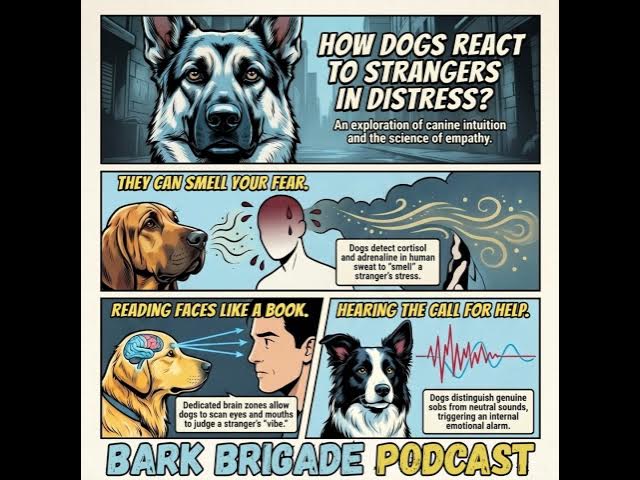
Have you ever noticed your dog perk up when a stranger on the street starts crying, or walk right past someone who’s clearly upset? It’s not random. How dogs react to strangers in distress (https://doggozila.com/how-dogs-react-to-strangers-in-distress/) reveals that their emotional intelligence goes far beyond the family circle.
Science shows that dogs can read unfamiliar people’s body language, vocal tones, and even their scent to sense when something is wrong. But do they always respond with sympathy? And what signals trigger a reaction, or a lack of one?
Let’s dive into the three main cues dogs use to size up a stranger’s feelings: sight, sound, and smell.
Dogs don’t just listen to our words; they smell our stress and see our sadness. This episode breaks down the fascinating ways dogs react to strangers in distress (https://doggozila.com/how-dogs-react-to-strangers-in-distress/) , backed by recent 2025 studies.
You’ll discover that dogs use their noses to detect human fear chemicals, and they have special brain areas just for reading our faces.
We also explore why your dog seems to love some people immediately and dislike others, revealing the true science of dog intuition.
For more in-depth information read the original source article by Doggozila Magazine that is called:
Show More Show Less View Video Transcript
0:00
Welcome to another episode of the Bark
0:02
Brigade podcast by Dogazilla magazine.
0:04
Okay, let's unpack this. I want you to
0:07
picture a scenario that is well, it's
0:10
probably intensely familiar to you.
0:12
>> Oh, I'm sure it is.
0:13
>> Right. So, you've had an absolutely
0:15
catastrophic day. We're talking a flat
0:18
tire in the rain. You spilled coffee all
0:19
over your laptop. Just a real everything
0:22
goes wrong kind of day.
0:23
>> We have all been there.
0:24
>> Exactly. And you finally make it home,
0:25
you just collapse onto the couch and you
0:27
start crying. You're completely
0:28
overwhelmed. And within seconds, you
0:30
hear that familiar click clack of paws
0:32
on the hardwood floor. Your dog rushes
0:35
over, forces their snoot right under
0:37
your hands, nudges you, and just starts
0:39
frantically licking the tears off your
0:41
face.
0:41
>> It's a classic image.
0:42
>> It is. And in that specific moment, it
0:45
feels like pure unfiltered magic. It
0:48
feels like this animal just possesses
0:50
this soul deep understanding of your
0:52
sorrow. Right.
0:53
>> It really does feel that way.
0:54
>> But the question that is driving our
0:56
entire deep dive today is this. Is it
0:59
actually magic? Or is it a highly
1:01
calibrated evolutionary biology at work?
1:04
And even more importantly, what happens
1:06
to that biological magic when a total
1:09
stranger is the one sitting on your
1:11
couch crying?
1:12
>> Well, it totally flips the script. And
1:14
honestly, it is thrilling to dive into
1:16
the mechanics of this with you today. I
1:19
am so ready
1:19
>> because when we strip away that um that
1:24
romanticized Disney version of our pets,
1:26
what we find underneath is actually so
1:28
much more impressive.
1:29
>> More impressive than magic.
1:31
>> Oh, definitely. We're talking about tens
1:33
of thousands of years of sheer
1:34
evolutionary pressure. You know, dogs
1:36
are not just these cute companions we
1:37
keep around the house. They are highly
1:39
tuned emotional geniuses.
1:41
>> Wow. Emotional geniuses.
1:43
>> Yes. They have co-evolved alongside
1:45
humanity for roughly 30,000 years.
1:48
>> That is a staggering amount of time,
1:49
>> right? That is 30 millennia where a wolf
1:52
descendants literal survival, I mean,
1:54
their access to the warmth of the fire
1:55
and the scraps of the hunt. It depended
1:57
entirely on their ability to read our
1:59
deepest feelings.
2:00
>> So, they had to read our shifting moods
2:02
and our unpredictable intentions just to
2:05
survive.
2:06
>> Exactly. Is a matter of life or death.
2:08
>> 30,000 years. That's um that's like a
2:11
staggeringly long internship in studying
2:14
human behavior.
2:15
>> That's a great way to put it.
2:16
>> I mean, think about it from an
2:17
evolutionary standpoint. If you're an
2:19
early dog and you can't figure out if
2:21
the hairless ape holding a spear is
2:24
angry or happy,
2:25
>> you're not going to last very long,
2:26
>> right? You have to get remarkably good
2:27
at reading the room. But to really grasp
2:30
this canine superpower we see today, we
2:33
can't just look at what a dog does.
2:35
>> No, we have to look much deeper. We have
2:37
to look at the invisible data they are
2:39
constantly absorbing. Because before a
2:41
dog can even begin to process a human
2:43
emotion in its brain, it has to gather
2:45
the raw environmental data.
2:48
>> Precisely. And humans are incredibly
2:50
noisy broadcasters of data.
2:52
>> Even when we're quiet,
2:53
>> especially them, even when we're sitting
2:56
perfectly still and totally silent, the
2:58
human body is at its core a sprawling
3:00
reactive chemical factory.
3:02
>> A chemical factory. I like that.
3:04
>> Yeah. And when we experience intense
3:06
emotional shifts like when panic sets in
3:09
or deep stress or just profound sadness
3:12
that factory goes into immediate
3:14
overdrive.
3:15
>> Okay. So what exactly is happening in
3:17
the factory?
3:18
>> Well the sympathetic nervous system
3:19
kicks in and we begin to release very
3:21
specific chemical markers primarily
3:24
through our sweat
3:25
>> like stress sweat.
3:26
>> Exactly. We are talking about
3:27
heavyhitting stress hormones mainly
3:30
cortisol and adrenaline. So, we're
3:32
essentially leaking our emotions into
3:33
the air around us.
3:35
>> You're broadcasting them loud and clear.
3:36
And what's fascinating here is the sheer
3:39
hardware advantage the canine alactory
3:41
system has over ours.
3:42
>> Oh, the hardware difference is wild.
3:44
>> It really is. A human has roughly 6
3:47
million olfactory receptors. But a dog a
3:50
dog can have upwards of 300 million.
3:53
>> 300 million? Wait, that's just that's a
3:55
completely different reality.
3:56
>> It is a different reality. And
3:57
furthermore, the part of a dog's brain
3:59
dedicated to analyzing those smells is
4:02
proportionately 40 times larger than
4:04
ours.
4:04
>> 40 times. Wow.
4:06
>> Yeah. So when a human is stressed, they
4:09
emit this chemical signature that is
4:11
completely imperceptible to you or me.
4:13
We just smell a person,
4:15
>> right? We just smell Gary from
4:16
accounting.
4:17
>> Exactly. But to a dog, that sudden spike
4:20
in cortisol and adrenaline is like a
4:23
blinding neon sign flashing in a pitch
4:26
black room. I have to say a neon sign
4:28
made of stress sweat is a deeply
4:31
visceral image.
4:32
>> It paints a picture, doesn't it?
4:34
>> It sounds a bit gross to us, but
4:35
biologically it's just a brilliant
4:37
survival mechanism. It's like they have
4:39
a literal chemical lie detector
4:41
installed right in their snout.
4:43
>> That is exactly what it is.
4:44
>> But I do have to push back a little
4:45
here.
4:46
>> Sure. Go ahead.
4:47
>> Because humans, we wear deodorant,
4:49
right? We wear heavy perfumes. We cook
4:51
foods with intense odors like garlic and
4:53
onions. Can a dog really pick out the
4:56
scent of cortisol underneath all of that
4:58
environmental noise?
4:59
>> They absolutely can. And the reason lies
5:01
in how their nose fundamentally
5:03
operates. It's not like ours.
5:04
>> How so?
5:05
>> When a dog breathes in, a tiny sold of
5:07
tissue just inside their nostril
5:09
actually separates the air into two
5:11
distinct paths.
5:12
>> Oh, I didn't know that.
5:13
>> Yeah. One path is just for respiration,
5:15
just breathing air into the lungs. But
5:17
the other path goes directly to the
5:19
olfactory recess,
5:21
>> which is a highly specialized area
5:23
purely for analyzing odors.
5:26
>> So they aren't just smelling a blend of
5:27
everything in a room like a soup.
5:29
They're literally sorting the molecules.
5:32
>> So they separate the garlic from the
5:34
fear.
5:34
>> Precisely. The heavy colog or the smell
5:37
of dinner might be present, but the
5:39
chemical structure of fear sweat is
5:41
highly distinct
5:42
>> and it cuts right through the noise
5:44
because their brains are evolutionarily
5:46
hardwired to prioritize it.
5:48
>> This is a warning.
5:49
>> Exactly. It's a matter of basic survival
5:51
signaling.
5:52
>> Man, that completely recontextualizes
5:54
how I see dogs sniffing around guests
5:56
when they come over.
5:57
>> It changes everything. And this brings
5:59
me to a landmark piece of research from
6:01
2025 out of the University of Vienna
6:03
that honestly completely upended my
6:05
understanding of this.
6:06
>> Oh, the Vienna study is incredible.
6:08
>> They wanted to figure out exactly what
6:09
these chemo signals, these stress smells
6:12
do to a dog, isolating the smell from
6:14
literally everything else.
6:16
>> Yes. The methodology of that Vienna
6:18
study is what makes it a massive leap
6:20
forward in the science
6:21
>> because normally it's hard to test,
6:23
right?
6:23
>> Oh, incredibly hard. In behavioral
6:26
science, dogs are notoriously difficult
6:29
to test for just one single variable
6:32
because they are constantly looking at
6:33
us. They're reading our body language.
6:35
They're listening to our breathing.
6:36
>> They're cheating the tests
6:38
>> basically. Yes.
6:40
>> So, the researchers had to completely
6:42
isolate the scent. They entirely
6:44
shielded the humans
6:45
>> like behind a screen.
6:47
>> Yes. The dogs were placed in a room
6:49
where they could not see the people.
6:51
They could not hear them. They could not
6:52
pick up on a single visual or auditory
6:55
cue. They were only exposed to
6:57
specialized men pads.
6:59
>> And from what I read in the source
7:00
material for this deep dive, the the way
7:03
they collected that sweat was wild.
7:06
>> Is very creative.
7:07
>> Yeah. They essentially had people wear
7:08
absorbent pads in their armpits while
7:10
watching terrifying horror movies,
7:12
>> right? To collect genuine, authentic
7:14
fear sweat.
7:15
>> And then on a different day, they had
7:16
them watch calm, neutral nature
7:18
documentaries to collect neutral sweat.
7:21
That's the only way to get pure
7:23
unadulterated cumulo signals. You need
7:25
the genuine physiological reaction of
7:27
terror. You can't fake it.
7:29
>> So they take these scent pads, they
7:31
place them in the testing room, and they
7:33
just observe the dogs.
7:34
>> Exactly.
7:34
>> So the dogs have absolutely zero
7:36
context, no crying human, no scary
7:40
noises, just the isolated pure scent of
7:43
human fear wafting from a piece of
7:45
cotton on the floor. And the physical
7:48
reaction of the dogs to that cotton pad
7:50
is just staggering.
7:51
>> It really is. The dogs that were exposed
7:53
to the fear sweat completely changed
7:55
their body language.
7:57
>> They immediately lowered their tails.
7:59
They started moving much more
8:00
cautiously, kind of hugging the
8:01
perimeter of the room.
8:02
>> But like they were suddenly scared.
8:04
>> Yes. And they instinctively gravitated
8:06
toward the safe experimentter, the
8:09
person in the room they already knew and
8:10
trusted.
8:11
>> So their entire demeanor just shifted
8:13
into this defensive caution. They didn't
8:15
run away in a blind panic or anything,
8:17
but they clearly registered a threat in
8:19
the environment. The chemical alone was
8:22
enough to trigger a defensive protocol.
8:23
>> That is wild.
8:24
>> But the researchers went a step further,
8:26
and this is where it gets into really
8:27
deep cognitive territory. Okay, they
8:29
wanted to know,
8:31
>> does smelling someone else's stress
8:34
actually change the dog's internal world
8:37
view in that moment?
8:38
>> Their world view, like how they see
8:40
things?
8:40
>> Yes. So, they introduced an ambiguous
8:43
cognitive bias test,
8:44
>> right? The ambiguous bull test. I found
8:46
this fascinating. How exactly does a
8:49
bull measure a dog's mood?
8:51
>> It measures optimism versus pessimism,
8:54
which is a really great indicator of an
8:56
animal's underlying emotional state.
8:58
>> Okay, walk me through it.
9:01
>> Imagine you teach a dog that a bowl
9:02
placed on the far left side of the room
9:04
always contains a delicious piece of
9:06
sausage.
9:07
>> Got it. Left is good. Then you teach
9:09
them that a bowl on the far right side
9:10
is always empty.
9:12
>> Right is bad.
9:12
>> They quickly learn this. They'll sprint
9:14
to the left bowl and completely ignore
9:15
the right one.
9:16
>> Sure.
9:16
>> Then you place a bowl right in the
9:17
middle. An ambiguous location.
9:19
>> Ah, okay.
9:20
>> If a dog is feeling upbeat, confident,
9:23
and optimistic, they will usually trot
9:25
over to the middle bowl quickly,
9:27
thinking, "Hey, maybe there's a sausage
9:28
in this one, too."
9:29
>> They're feeling lucky.
9:30
>> Exactly. But if the dog is feeling
9:33
anxious, stressed, or pessimistic, they
9:36
will hesitate. They'll walk slowly or
9:38
avoid it entirely, just assuming it's
9:40
empty.
9:40
>> They basically think, "With my luck
9:42
today, it's definitely empty."
9:43
>> Precisely. Now, apply the chemo signals
9:46
to this test. When the dogs in the
9:48
Vienna study smelled the neutral human
9:51
sweat, they were overwhelmingly
9:53
optimistic. They quickly approached the
9:56
ambiguous bowl.
9:57
>> But the fear sweat,
9:58
>> the moment they were exposed to the fear
10:00
sweat, the cortisol and adrenaline from
10:03
the horror movie watchers, their
10:04
behavior tanked. They became highly
10:07
pessimistic.
10:07
>> Wow.
10:08
>> They hesitated. They took much longer to
10:10
approach the bull or they just ignored
10:11
it entirely.
10:12
>> So, just to put this in human terms for
10:14
you listening at home, just catching a
10:17
whiff of the stress of a total stranger
10:19
made these dogs assume the world was
10:20
suddenly a worse place. Yes, it actively
10:22
depressed their mood.
10:24
>> Their own internal emotional state
10:26
physically and cognitively changed just
10:28
from encountering the chemical debris of
10:30
human fear.
10:31
>> Okay, let's bring this back to the
10:32
chemical lie detector analogy we
10:34
mentioned earlier.
10:35
>> Let's do it. Imagine you have a house
10:36
guest over, someone you barely know,
10:39
maybe a distant relative or a new
10:40
co-orker.
10:41
>> Okay.
10:42
>> This stranger is sitting on your couch,
10:44
smiling, being incredibly polite,
10:46
drinking tea, saying all the socially
10:49
acceptable things,
10:49
>> doing the human polite routine.
10:51
>> Exactly. But internally, they're having
10:54
an absolute meltdown. They are severely
10:57
anxious. Their internal monologue is
10:58
racing and their body is pumping out
11:01
cortisol.
11:02
>> Right?
11:02
>> From our perspective, they look totally
11:04
fine. But from the dog's perspective,
11:06
are they basically screaming? Does the
11:09
dog's mood drop just from sitting next
11:11
to this politely smiling person?
11:13
>> Without a doubt, the dog's oldactory
11:15
system completely overrides the human's
11:18
polite social facade.
11:19
>> Completely overrides it.
11:21
>> Yes. To the dog, a smile is just a shape
11:23
the mouth is making. But the cortisol
11:25
pouring off their skin is biological
11:27
truth. The dog is reacting to the
11:29
reality of the room, not the etiquette.
11:31
That is deeply intimidating for anyone
11:34
trying to hide a bad mood from their
11:35
pet.
11:36
>> It's why you can't trick them. This is
11:38
exactly why you will sometimes see a
11:41
normally friendly dog act incredibly
11:43
guarded, pacing, or even hiding from a
11:46
guest who appears to human eyes to be
11:49
perfectly pleasant.
11:50
>> And the owner is always like, "I don't
11:51
know why he's acting so weird. He
11:53
usually loves people."
11:54
>> Exactly. The dog isn't acting weird. The
11:57
dog is reading the chemical truth that
11:59
the human guest is successfully hiding
12:01
from you.
12:02
>> You can fake a smile, but you cannot
12:04
fake your endocrine system.
12:05
>> Never.
12:06
>> So, we've established they can literally
12:08
smell our fear and our stress. But scent
12:10
is just one pillar of the sensorium,
12:12
isn't it?
12:13
>> It is. We also have to talk about their
12:15
incredible auditory processing system.
12:17
>> Because before a dog even gets close
12:19
enough to smell a distressed stranger,
12:21
they usually hear them. And their
12:23
acoustic architecture is uniquely
12:25
calibrated to the human vocal range.
12:27
>> Uniquely calibrated.
12:29
>> Yes. A dog isn't just registering the
12:31
sheer volume of a sound the way a sudden
12:34
thunderclap might startle them. They are
12:36
meticulously analyzing the pitch, the
12:38
frequency, and the tonal fluctuations of
12:40
our voices.
12:41
>> They're really dissecting the audio.
12:43
They have an innate automatic ability to
12:45
distinguish a genuine jagged sob of
12:49
despair from a neutral sound like
12:52
someone just humming while folding
12:53
laundry.
12:54
>> And when you watch a dog process sound,
12:56
it's like a full body physical exertion.
12:58
You see the head tilt, which always
13:00
looks so adorable, but it's actually
13:01
them mechanically adjusting their ear
13:03
positioning. Right.
13:04
>> Exactly. To triangulate the exact
13:06
location and frequency of the sound. You
13:08
see the ears flatten or swivel. They're
13:11
acting like satellite dishes. The head
13:12
tilt is entirely functional. I always
13:14
thought they were just being cute.
13:16
>> By shifting the angle of their ears,
13:18
they are slightly altering the time it
13:20
takes for the sound wave to hit each
13:22
eardrum, which allows their brain to
13:24
compute the exact origin point and
13:27
gather deeper acoustic data.
13:28
>> Wow.
13:29
>> And when they gather data that indicates
13:31
human distress, it triggers an immediate
13:33
response. There was a really revealing
13:35
homebased experiment mentioned in our
13:37
stack of sources for this deep dive that
13:40
looked exactly at this acoustic trigger.
13:42
>> Oh, the living room study.
13:43
>> Yeah. The researchers didn't use sterile
13:45
labs. They went straight into people's
13:47
living rooms. They had strangers come
13:49
into the home and either start genuinely
13:51
crying or start loudly laughing in front
13:53
of the dogs.
13:54
>> And the difference in the dogs reactions
13:57
was stark
13:58
>> completely. They showed significantly
14:01
more personoriented behaviors, which
14:03
basically means nudging the stranger,
14:06
whining at them, licking their hands
14:08
toward the crying stranger compared to
14:10
the laughing one.
14:11
>> The contrast there is vital. A laughing
14:13
stranger is also making a loud, sudden,
14:15
and unusual noise. If the dog were
14:18
simply reacting to novelty or volume,
14:20
they would investigate both people
14:22
equally,
14:23
>> right? Because both are loud and weird.
14:25
>> But the pitch of crying carries a
14:26
specific evolutionary weight. And the
14:29
most illuminating part of that homebased
14:31
study was the correlation they
14:32
discovered regarding stress.
14:33
>> Right. The heart monitors.
14:35
>> Yes. The researchers measured the dog's
14:36
physiological arousal, their heart
14:38
rates, their physical signs of
14:39
agitation. The dogs that became the most
14:42
visibly stressed by the sound of the
14:43
crying stranger were the exact same dogs
14:46
that tried the hardest to interact with
14:48
and comfort that stranger.
14:49
>> So the dog isn't acting out of a calm,
14:52
collected desire to be a therapy animal.
14:54
They are acting out of their own
14:56
escalating anxiety.
14:57
>> Exactly. It's an internal automatic
14:59
alarm bell ringing in their head. The
15:02
crying makes the dog feel terrible,
15:04
which forces the dog to try and do
15:05
something to stop the noise,
15:07
>> which makes perfect sense when you look
15:08
at the evolutionary context. One of our
15:10
sources points out a brilliant
15:11
comparison between dogs and cats in this
15:13
regard.
15:14
>> Oh, the inner species differences are
15:16
fascinating,
15:17
>> right? Because dogs are phenomenal at
15:18
communicating distress back to humans.
15:21
If you are sad and crying, your dog will
15:23
often start whining along with you,
15:25
literally mirroring your pitch. They
15:27
vocalize with us.
15:28
>> But cats, despite living with us for
15:29
thousands of years, generally do not do
15:31
this. They haven't evolved that specific
15:34
shared acoustic language with humans to
15:36
the same degree. Dogs have evolved to
15:39
not only pick up on the urgency in our
15:40
voices, but to broadcast it back to us.
15:43
>> It is a profound interspecies acoustic
15:46
loop. Over 30,000 years, the dogs that
15:50
survived were the ones who paid the
15:52
closest attention to human emotional
15:54
vocalizations
15:55
>> because it meant danger.
15:56
>> If a human was distressed, it usually
15:59
meant a predator was near or a lack of
16:01
food or an injury.
16:03
>> The dog that ignored a crying human
16:06
might not survive the night. The dog
16:08
that alerted to it, internalized it, and
16:10
responded to it remain part of the pack.
16:13
>> Okay, so we've mapped out the invisible
16:14
data. They can smell the fear in the air
16:17
via cortisol and adrenaline. And they
16:19
can hear the sadness in the
16:20
micrfluctuations of our pitch and tone.
16:22
>> That's the foundation. Yes.
16:24
>> But what happens when we move from the
16:25
invisible to the visible? What happens
16:27
when a dog actually looks directly at a
16:30
distressed stranger's face?
16:31
>> Now we're getting into the really
16:32
complex processing.
16:34
>> Because to understand this, we have to
16:36
physically look inside the canine brain
16:38
to see how all these signals, the scent,
16:41
the sound, the sight are being
16:43
biologically crunched together. And this
16:45
is the frontier of K9 neuroscience. It
16:47
is truly breathtaking. Up until very
16:49
recently, we could only guess at what a
16:51
dog was thinking based on their outward
16:53
behavior.
16:53
>> Just guessing from tail wags,
16:55
>> right? But in 2025, neuroscientists made
16:58
massive strides using functional MRI
17:01
studies, fMRI, to map canine visual
17:04
processing and facial recognition.
17:06
>> Here's where it gets really interesting
17:07
because I want to pause just on the
17:08
logistics of this for a second.
17:09
>> The logistics are insane. An fMRI
17:12
machine measures blood oxygen levels in
17:14
the brain to see which areas are
17:16
actively working. But an fMRI machine is
17:19
a giant claustrophobic tube that makes
17:22
incredibly loud, terrifying clanging and
17:25
banging noises.
17:26
>> 90 dB of magnetic clanging.
17:28
>> You can't just explain to a golden
17:30
retriever that they need to hold
17:32
completely still for 20 minutes for
17:34
science.
17:34
>> No, you can't. The methodology of these
17:36
studies is a triumph of animal training
17:38
in itself. Neuroscientists spent months,
17:41
sometimes over a year, using incremental
17:44
positive reinforcement to train these
17:45
dogs
17:46
>> just to sit in the machine.
17:47
>> Just to sit there. They taught them to
17:49
voluntarily walk up a ramp into the
17:50
scanner, place their chins on a specific
17:53
custom fitted rest, and lie with the
17:55
stillness of a statue, completely
17:57
unbothered by the noise.
17:58
>> And no sedatives?
18:00
>> Absolutely none. They did all of this
18:02
completely awake, without any sedation.
18:04
So the researchers could project images
18:06
of human faces onto a screen inside the
18:08
scanner and record the live brain
18:11
activity.
18:12
>> It's unbelievable dedication just to ask
18:14
the question, "What do you see when you
18:16
look at us?"
18:17
>> And the answers were profound.
18:19
>> What did the scans actually reveal when
18:21
the dogs looked at those human faces?
18:23
>> They found highly complex specialized
18:26
brain zoning. When the dogs looked at
18:28
images of happy, smiling human faces,
18:31
distinct and specific regions of their
18:33
brain lit up with increased blood flow.
18:35
>> Which regions?
18:36
>> Most notably the temporal cortex which
18:38
in mammals handles high level processing
18:40
of complex visual information and the
18:43
codate nucleus.
18:44
>> The codate nucleus. I know this one.
18:46
That is the pleasure center. Right. It's
18:48
the same part of the human brain that
18:49
lights up when we eat chocolate or win
18:51
money or fall in love.
18:52
>> That is exactly right. It is a core
18:54
component of the brain's reward system.
18:56
heavily driven by dopamine. It
18:58
anticipates positive outcomes and
19:00
rewards.
19:01
>> So merely looking at a happy human face
19:03
actively triggers a neurological reward
19:05
in the dog's brain.
19:07
>> Yes, they genuinely experience
19:09
biological pleasure from seeing us
19:11
happy.
19:11
>> That is so sweet. But what about the
19:13
negative faces?
19:14
>> Well, when the researchers switched the
19:16
images to angry, frightened, or sad
19:19
human faces, the codate nucleus went
19:21
dark. The pleasure stopped
19:23
>> instantly and the brain activation
19:25
pattern radically shifted to areas
19:26
associated with threat assessment and
19:28
vigilance. The canine brain was
19:30
accurately and instantaneously
19:32
predicting and categorizing the emotion
19:34
it was seeing on the human face.
19:36
>> But the detail in the research that
19:38
completely stopped me in my tracks was
19:39
about the real estate in the brain
19:41
itself. The scientists discovered that
19:43
dogs have separate anatomically distinct
19:46
neural pathways for processing dog faces
19:49
versus processing human faces. That is
19:51
the crucial finding.
19:52
>> I mean, let's really think about the
19:54
implications of that. If I look at a
19:55
human face or a chimpanzeee face or a
19:57
dog face, my brain uses roughly the same
20:00
general visual processing area,
20:02
>> right? Humans use a generalized system.
20:04
>> But a dog has carved out a bespoke piece
20:07
of neurological real estate dedicated
20:09
solely to decoding the facial
20:11
expressions of a completely different
20:12
species.
20:13
>> It's evolutionary magic.
20:14
>> This isn't just a general ability to see
20:17
faces. This is a highly specialized
20:20
hardwired evolutionary adaptation
20:22
specifically built for us.
20:24
>> It is a biological monument to our
20:26
shared history. They are neurologically
20:29
built to decode us. And because they
20:32
have this dedicated hardware, they are
20:34
incredibly sophisticated at using it.
20:36
>> They don't just look at a sad face and
20:38
take it at face value.
20:39
>> What do they do?
20:40
>> They use their brains to compute what
20:42
behavioral scientists call mismatched
20:45
signals.
20:46
>> Mismatched signals. Like if my face is
20:48
doing one thing but my body language is
20:50
doing another.
20:51
>> Exactly.
20:51
>> I know humans experience this as the
20:53
uncanny valley. Like when something
20:54
looks almost human but slightly off, it
20:56
creeps us out. Does a dog experience a
20:59
version of that?
21:00
>> Absolutely. Dogs are master evaluators
21:03
of a stranger's overall vibe because
21:05
they are relentlessly looking for
21:07
inconsistencies in the data.
21:09
>> Give me an example.
21:10
>> Let's say a stranger walks into your
21:11
house. The stranger's face is crumpled
21:14
up. Maybe they are whining or crying.
21:16
broadcasting distress. But their body
21:19
posture is rigid. Their shoulders are
21:21
squared. Their weight is shifted
21:23
forward. And they are staring intensely
21:25
>> like an aggressive posture.
21:27
>> Right? To a dog, a crying face means
21:29
vulnerability, but a rigid
21:32
forwardleaning posture means aggression
21:34
or defense.
21:36
The canine brain instantly flags the
21:38
mismatch.
21:38
>> The math isn't mathing for them.
21:40
>> Exactly. They compute that visual
21:42
algorithm. The brain says the sound is
21:44
sad, but the posture is a threat. And
21:46
usually in the animal kingdom when
21:47
signals are mixed, the safest bet is to
21:50
assume a threat.
21:51
>> So bringing this back to you listening
21:53
to this deep dive right now, if you have
21:55
a friend over who is going through a
21:57
terrible breakup and they are sitting on
21:58
your rug crying, your dog isn't just
22:01
staring at them with a blank
22:02
uncomprehending mind.
22:03
>> Not at all.
22:04
>> The dog's brain is running a massive
22:06
high-speed algorithm. It is actively
22:09
cross-referencing the spike in cortisol
22:11
it smells, the acoustic frequency of the
22:13
sobbing it hears, and the muscular
22:15
tension in the human's face and body
22:17
that it sees,
22:18
>> taking in massive data streams.
22:20
>> It takes all of that, filters it through
22:21
the temporal cortex and the amydala, and
22:24
makes a split-second life ordeath
22:26
decision. Do I approach this crying
22:28
person to comfort them? Do I bark at
22:31
them to back away? Or do I go hide under
22:33
the bed? It is a deeply complex
22:36
biological calculus happening in
22:38
milliseconds.
22:39
>> Okay, this brings us to a massive
22:40
turning point in our discussion today.
22:43
We now know without a shadow of a
22:44
scientific doubt that their brains are
22:46
lighting up. They're gathering the chemo
22:48
signals. They are processing the
22:50
acoustic pitch. They are visually
22:52
decoding our facial muscles. The machine
22:55
is running.
22:55
>> The machine is definitely running. But,
22:57
and this is a huge, but does processing
23:00
an emotion mean they actually feel
23:02
empathy? Just because a computer can
23:04
read a sad word doesn't mean the
23:05
computer is sad. This brings us to a
23:07
crucial dividing line in behavioral
23:09
science. We need to distinguish between
23:11
catching a feeling and actually
23:13
understanding it.
23:14
>> This right here is the absolute
23:16
epicenter of the canine empathy debate.
23:18
>> It's the big question.
23:19
>> Now that we understand the input, how
23:20
they gather the emotional data, we are
23:23
forced to define the output. What do
23:25
they actually do with it internally?
23:26
>> Right? When your dog abandons its chew
23:29
toy and runs across the room to lick the
23:32
tears off a crying stranger's face, are
23:34
they driven by a noble desire to rescue
23:37
that person from emotional pain or are
23:39
they just panicking because the human is
23:41
panicking and licking is a self soothing
23:43
behavior.
23:44
>> Are they a tiny therapist or are they
23:45
just freaking out?
23:46
>> Exactly. Are they a tiny therapist or
23:49
just freaking out? To answer that, we
23:51
must define the fundamental neurological
23:53
boundary between two very distinct
23:55
concepts. Emotional contagion and true
23:58
cognitive empathy.
23:59
>> Let's start with emotional contagion.
24:01
>> This is a primitive automatic and
24:04
largely involuntary mirroring of an
24:06
emotional state. The classic human
24:08
example is walking into a nursery where
24:10
one baby starts crying and within
24:12
seconds every other baby in the room is
24:14
wailing.
24:14
>> Right? The chain reaction.
24:16
>> The other babies don't know why the
24:17
first one is sad. They don't possess the
24:20
cognitive ability to pity the first
24:22
baby. Their nervous systems simply catch
24:24
the distress like a virus. It is a
24:26
reflex.
24:27
>> So emotional contagion is just catching
24:30
the vibe. You are infected by the mood
24:32
of the room.
24:33
>> Correct. True cognitive empathy on the
24:35
other hand requires a massive leap in
24:38
neurological processing. It requires
24:40
perspective taking. That means
24:41
understanding why the other person is
24:43
sad. Recognizing that their sadness is
24:46
separate from your own emotional state
24:48
and most importantly having the
24:50
deliberate targeted goal to help them
24:53
alleviate that specific suffering.
24:54
>> Contagion is catching the vibe.
24:56
Cognitive empathy is understanding the
24:58
plot.
24:58
>> That's a perfect way to summarize it.
25:00
>> And to really look at how this plays out
25:02
physically in our dogs, we have to look
25:03
at the Harvard ECG study because this
25:06
study proves just how physically deep
25:07
the contagion goes. It's not just in
25:09
their heads, it's in their hearts. The
25:11
Harvard study is a masterpiece of
25:13
physiological monitoring. Researchers
25:16
took owners and their dogs and hooked
25:18
them both up to electroc cardiogram
25:20
monitors, ECGs, to track their heart
25:22
function simultaneously in real time
25:25
over various scenarios.
25:26
>> Both the human and the dog hooked up to
25:29
machines.
25:30
>> Yes. What they discovered was a
25:32
phenomenon of profound physiological
25:34
matching. They specifically looked at
25:37
heart rate variability or HRV. Let's
25:40
break down HRV real quickly because it's
25:42
not just about how fast your heart
25:43
beats, right? It's the time between the
25:44
beats.
25:45
>> Yes. Heart rate variability measures the
25:48
microscopic variations in the
25:49
milliseconds between each individual
25:51
heartbeat. It is a direct window into
25:53
the autonomic nervous system.
25:54
>> Okay. So, a high HRV means what?
25:56
>> A high HRV means your body is relaxed,
25:59
adaptable, and in a rest and digest
26:01
parasympathetic state. A low HRV means
26:03
you are stressed, tense, and in a
26:05
fight-or-flight sympathetic state. The
26:08
Harvard researchers found that the dog's
26:09
HRV literally mirrored their owner's
26:11
HRV.
26:12
>> Wait, their actual heartbeats
26:13
synchronized, like some sort of
26:14
biological Bluetooth.
26:15
>> Essentially, yes. When the owner was
26:17
placed in a relaxing environment, and
26:19
their heart rate variability showed deep
26:21
calm, the dog's heart rate variability
26:24
shifted to perfectly match that relaxed
26:27
physiological state.
26:28
>> And when they were stressed,
26:29
>> when the owner was subjected to stress
26:31
and their HRV plummeted, the dog's HRV
26:34
plummeted alongside it. And other
26:37
long-term studies have shown that this
26:38
isn't just heart rates, it's hormonal.
26:40
>> Hormonal sinking, too.
26:41
>> Yes. If an owner goes through a
26:43
prolonged period of stress, say a
26:45
difficult month at work, the resting
26:48
cortisol levels in their dog's hair
26:49
follicles will actually rise to mirror
26:52
the owner's chronic stress.
26:54
>> So, what does this all mean? If their
26:56
hearts and their hormones are just
26:57
automatically mirroring ours, does that
26:59
mean dogs only ever experience emotional
27:01
contagion?
27:02
>> That's a tough question. Are they just
27:04
biological sponges soaking up our
27:06
stress, vibrating with anxiety, but
27:08
lacking any actual conscious desire to
27:10
help us?
27:11
>> That is the multi-million dollar
27:12
question, and it leads us directly to
27:14
one of the most famous behavioral tests
27:16
in K9 science, the rescue behavior
27:18
experiments.
27:19
>> Heavy box test.
27:20
>> Yes. Researchers needed to know if this
27:23
physiological stress, this soaring heart
27:25
rate, actually translates into helpful
27:28
empathetic action. So, they designed the
27:30
heavy box test. They placed a dog's
27:32
owner inside a large, heavy wooden box
27:35
equipped with a lightweight door.
27:36
>> Sounds a little dramatic.
27:38
>> It was very dramatic. The owner was
27:40
instructed to pretend to be trapped,
27:42
pouting on the door, crying out an
27:44
intense, genuine sounding distress.
27:46
>> And what did the dogs do? Did they just
27:48
sit there and absorb the stress?
27:50
>> No. And this is where it gets
27:51
incredible. About 50% of these
27:54
completely untrained everyday pet dogs
27:56
spontaneously engaged in rescue
27:58
behavior.
27:59
>> They actually try to help. They pushed
28:01
at the heavy door. They dug frantically
28:03
at the edges of the box. They whined.
28:04
They problem solved until they managed
28:06
to open the box and free their human.
28:08
Wow.
28:08
>> And when the researchers monitored these
28:10
dogs, their heart rates and stress
28:12
markers were soaring. They were highly
28:15
aroused by emotional contagion. They
28:17
caught the panic, but that contagion
28:19
drove them to execute a specific
28:20
targeted action, trying to solve the
28:23
problem to free the source of their
28:24
distress.
28:25
>> Okay, that sounds like a massive win for
28:28
the cognitive empathy column. They saw a
28:30
problem. They understood the human was
28:32
trapped and they fixed it.
28:33
>> It certainly looks that way.
28:35
>> But here is the massive twist that
28:37
brings us right back to the core of our
28:39
deep dive today. What happens when you
28:41
change the human? What happens when you
28:44
put a total stranger inside that exact
28:46
same heavy box and have them cry out in
28:49
the exact same distress?
28:51
>> The rescue behavior entirely collapses.
28:53
>> Just completely.
28:54
>> It plummets. When a stranger is the one
28:56
trapped in the box crying, the dog's
28:59
physiologic reaction still happens.
29:01
Their heart rate still raises. The
29:04
emotional contagion is still active
29:06
because they hear the distressing
29:07
acoustic pitch and smell the stress
29:10
sweat.
29:10
>> So, they are still stressed.
29:12
>> Yes. But instead of taking action, they
29:14
freeze.
29:15
>> They just short circuit.
29:16
>> They exhibit what we call a stress
29:17
freeze. They might cautiously walk over
29:19
and sniff the box. They might sniff the
29:22
stranger's fingers through the air
29:23
holes, but they do not attempt to
29:25
problem solve.
29:25
>> They don't try to open the door.
29:27
>> They do not push the door. They make no
29:29
effort to free the person.
29:30
>> They just stand there fully stressed
29:32
out, doing absolutely nothing.
29:34
>> Exactly. And this behavioral collapse
29:36
leads neuroscientists to a vital,
29:38
sobering conclusion. Dogs struggle
29:41
profoundly to understand the goal of
29:43
helping an upset stranger
29:44
>> because it's not their human,
29:46
>> right? They're biologically hyper aware
29:48
that the stranger is in distress. Their
29:51
noses and ears guarantee that, but they
29:54
do not comprehend why the stranger is
29:55
upset, nor do they feel driven by any
29:58
form of cognitive empathy to fix the
30:00
situation. The contagion does not
30:02
translate into empathy.
30:03
>> So, why is there such a massive glaring
30:05
gap in their behavior? Why will a dog
30:07
push a heavy box until its paws hurt to
30:10
save you, but just stare blankly at a
30:12
stranger in the exact same box?
30:14
>> It's the missing variable. If the
30:16
acoustic signals are the same and the
30:17
chemo signals are the same, what is the
30:19
missing variable? And the answer,
30:21
according to our sources, comes down to
30:22
the literal chemistry of love.
30:24
>> It does.
30:25
>> The reason they phrase toward strangers
30:26
introduces the missing biological key to
30:28
this entire puzzle, a neurotransmitter
30:31
and hormone called oxytocin.
30:33
>> Oxytocin is colloquially known as the
30:35
love hormone or the bonding chemical. In
30:38
mamalian biology, it is the primary
30:40
driver of deep social attachment.
30:43
>> It's what mothers and babies have. It is
30:45
the exact same hormone that floods a
30:48
human mother's brain during childirth
30:50
and nursing to ensure she bonds with her
30:52
infant.
30:54
And over the last decade, science has
30:56
discovered something truly magical about
30:58
the human dog relationship.
30:59
>> The eye contact, right?
31:01
>> Yes. When you and your dog lock eyes,
31:03
just a simple shared gaze oxytocin
31:06
levels rise significantly in both of
31:08
your brains simultaneously.
31:09
>> It is a mutual interspecies chemical
31:11
reward system. No other animal does that
31:13
with us. I mean, if you stare into a
31:14
wolf's eyes, oxytocin doesn't rise.
31:16
Cortisol rises because it's a threat.
31:19
But with dogs, it's love.
31:20
>> It's entirely unique. It creates a
31:22
powerful self-reinforcing neurological
31:24
bonding loop. You look at your dog, your
31:27
oxytocin rises. You feel a surge of
31:29
affection. You reach out and pet the dog
31:31
>> and the loop continues.
31:32
>> The physical touch causes the dog's
31:34
oxytocin to spike further, making the
31:36
dog feel deeply safe, secure, and
31:38
attached to you. If we connect this to
31:41
the bigger picture of the heavy box
31:42
experiment, this oxytocin loop forms the
31:45
absolute bedrock foundation of true
31:48
rescue behavior.
31:49
>> Because the oxytocin makes them feel
31:51
responsible for you. It's not just that
31:53
they are panicking. It's that their
31:55
brain chemistry is telling them this is
31:57
my bonded human. Their survival is
31:58
linked to my survival.
32:00
>> Yes. The chemical bond created by years
32:02
of shared oxytocin loops elevates their
32:05
response. It takes the sheer panic of
32:07
emotional contagion and focuses it into
32:10
a motivated, targeted desire to
32:12
alleviate your suffering.
32:13
>> It's the bridge.
32:14
>> The oxytocin acts as a bridge, allowing
32:16
the dog to cross over from mere
32:18
contagious panic into something that
32:19
looks and functions remarkably like
32:21
cognitive empathy.
32:22
>> But strangers do not have that chemical
32:24
VIP pass. A stranger hasn't built up a
32:27
reservoir of oxytocin with your dog. And
32:29
there was a fantastic relatively simple
32:31
piece of research from 2024 that
32:33
illustrated this stranger effect
32:35
perfectly.
32:36
>> The glass door study.
32:37
>> Yeah. Instead of a heavy box, they used
32:40
a clear door. In this study, a stranger
32:43
sat behind a glass door so the dog could
32:45
see them. The researchers had the
32:47
stranger do one of two things. Either
32:49
sit there casually humming a neutral
32:51
tune or sit there slumped over genuinely
32:54
crying and showing intense emotional
32:56
distress. And if you believe that dogs
32:58
possess a universal blanket empathy for
33:01
all human suffering, the hypothesis
33:03
would naturally be that the dogs would
33:05
try to get through the door much faster
33:07
with much more urgency to help the
33:10
crying person,
33:11
>> right? You'd expect them to be pawing at
33:13
the glass, whining, trying to save them.
33:15
But the reveal was that they simply
33:17
didn't care.
33:17
>> They didn't. The data showed that dogs
33:19
did not open the door any faster or try
33:22
any harder for the crying stranger than
33:24
they did for the person who was just
33:25
humming a tune. Because that historical
33:28
oxytocin loop is completely absent with
33:30
an unknown person. The empathy circuit
33:32
in the dog's brain remains unpowered. It
33:34
dims.
33:35
>> It dims because it is aggressively
33:36
overridden by an older, much more
33:38
powerful neurological system. Basic
33:41
survival instinct.
33:42
>> The wolf brain.
33:43
>> Exactly. We have to remember the wolf
33:45
inside the dog. When a dog encounters an
33:48
unknown human who is acting highly
33:50
emotional, erratic, and unpredictable,
33:52
which is exactly what crying looks like
33:54
to an animal, the dog's amydala, the
33:57
threat detection center, lights up.
34:00
>> It's assessing the threat.
34:01
>> The brain asks a fundamental binary
34:04
question. Is this organism part of my
34:06
pack? Because the answer is no, the
34:09
dog's brain immediately prioritizes
34:11
self-preservation.
34:13
An unpredictable, emotionally volatile
34:15
stranger is not a rescue mission. It is
34:18
a potential threat.
34:18
>> But wait, I have to challenge this
34:20
because in that 2024 glass door study,
34:23
some of the dogs did actually figure out
34:25
how to open the door for the crying
34:26
stranger. They didn't all freeze.
34:28
>> That is true.
34:29
>> Were those specific dogs just naturally
34:31
more empathetic? Do some dogs just have
34:33
a bigger heart for strangers?
34:34
>> That is the most fascinating detail of
34:36
the study, and it completely dismantles
34:37
the idea of universal canine empathy.
34:40
The researchers looked incredibly
34:42
closely at the subset of dogs that did
34:44
open the door.
34:44
>> And what did they find?
34:45
>> They analyzed their behavioral profiles
34:48
based on extensive personality
34:49
assessments provided by their owners.
34:52
And they found that the dogs who opened
34:53
the door were not doing it out of some
34:56
deep well of cognitive empathy for the
34:58
stranger's sorrow. They were simply dogs
35:01
with naturally highly confident, bold,
35:04
and curious baseline personalities.
35:06
>> They weren't being empathetic. They were
35:07
just being incredibly nosy. They heard a
35:09
weird noise behind a door and wanted to
35:11
see what was going on.
35:12
>> Essentially, yes. They were boldly
35:14
investigating a novel acoustic anomaly
35:17
in their environment. Their high
35:19
confidence meant their threat detection
35:20
system wasn't easily triggered, so they
35:22
felt safe enough to explore.
35:24
>> And the other dogs,
35:25
>> conversely, the dogs with naturally
35:27
anxious, timid, or submissive
35:29
personalities simply shut down, froze,
35:31
or avoided the door entirely. Neither
35:34
group, the bold dogs or the anxious
35:36
dogs, was displaying true cognitive
35:38
empathy toward the stranger's emotional
35:40
state. They were both simply relying on
35:42
their default personality traits to
35:44
manage a stressful, unpredictable
35:46
environmental stimulus.
35:48
>> This is such a paradigm shift. So,
35:50
empathy towards strangers is clearly not
35:52
an automatic out-of-the-box factory
35:55
setting in our dogs. True. Ashimal
35:58
empathy is highly dependent on a
35:59
cocktail of familiarity, builtup
36:02
oxytocin, and a total lack of perceived
36:05
threat.
36:05
>> Exactly.
36:06
>> Which transitions us perfectly from the
36:07
realm of fMRI scans and behavioral
36:09
theory into your actual living room?
36:12
Armed with this profound neurobiological
36:14
knowledge about chemo signals, visual
36:16
algorithms, and the stranger effect, how
36:18
can you actually change your daily life
36:20
with your dog?
36:21
>> Because gathering knowledge is only the
36:23
first step. Yeah,
36:24
>> it is most valuable when it is
36:25
practically applied to improve the lives
36:27
of the animals in our care.
36:28
>> Right, theory into practice.
36:30
>> If we now understand that a dog's
36:32
biology naturally views a distressed,
36:34
crying stranger with deep caution and
36:36
potential fear rather than immediate
36:39
lassieike empathy. It fundamentally
36:42
changes our responsibility as owners. We
36:44
have to stop expecting them to be
36:45
magical empaths and start managing their
36:47
biological reality.
36:48
>> We have to step up.
36:49
>> We have to become the bridge of safety.
36:52
We must provide the structural
36:53
predictability that their nervous
36:55
systems are desperately looking for in
36:57
those moments.
36:58
>> And the source material provides a
37:00
fantastic actionable step-by-step method
37:03
for handling this which they call the
37:05
safebase protocol.
37:06
>> The safebase protocol is excellent
37:08
>> because remember in the absence of a
37:11
familiar pack structure, their threat
37:13
response activates. But to your dog, you
37:16
are the source of the oxytocin. You are
37:18
the ultimate safe base.
37:20
>> Exactly. So, let's walk through how to
37:21
apply this in a real world scenario.
37:24
Imagine a highly emotional situation. A
37:27
visitor arrives at your home in a state
37:28
of distress. Perhaps it's a friend who
37:30
just received devastating news or a
37:32
family member who is crying.
37:34
>> Very common scenario.
37:35
>> Your dog immediately smells the massive
37:37
spike in cortisol and adrenaline. They
37:40
hear the ragged pitch of the human's
37:41
breathing. Their threat detection system
37:43
is firing. The absolute first rule, the
37:46
golden rule based on everything we've
37:48
discussed today is do not force
37:50
greetings.
37:51
>> Do not drag your dog by the collar over
37:53
to the crying person and say, "Go say
37:55
hi. Go give them a kiss."
37:56
>> Never. That is the worst possible thing
37:59
you could do because you are forcing a
38:01
dog with an activated threat system into
38:03
the personal space of an unpredictable
38:05
variable.
38:06
>> It's a recipe for disaster.
38:07
>> It is. The steps for the safebased
38:10
protocol are incredibly simple, but they
38:12
require discipline from the human.
38:15
First, the moment the distressed visitor
38:17
arrives, calmly direct your dog to a
38:20
designated safe spot. A mat, a dog bed
38:23
in the corner, or an open crate.
38:24
>> Give them a place to go.
38:25
>> Give them a high value, longlasting chew
38:28
toy. This gives their brain a task and a
38:31
dopamine reward that competes with the
38:33
stress signals in the room.
38:35
>> Second, and this is the hard part, you
38:37
explicitly instruct your distressed
38:38
visitor to completely ignore the dog. No
38:41
eye contact. No reaching out of hand for
38:43
them to sniff. No talking to them in a
38:45
baby voice. Total invisibility.
38:47
>> You are systematically removing all
38:49
social pressure from the animal. You are
38:51
telling the dog, "You do not have to
38:52
compute this person's mixed signals. You
38:54
do not have to solve the problem of
38:56
their cortisol. I am handling it."
38:58
>> I have to say, I feel a massive sense of
39:00
relief just reading this protocol. As a
39:02
dog owner, society puts this immense
39:05
unfair pressure on us to have a perfect
39:07
dog.
39:08
>> Oh, the pressure is huge. We expect our
39:10
pets to be these flawless therapy
39:12
animals that will magically comfort any
39:14
guest who walks through the door,
39:15
regardless of the energy that guest is
39:17
bringing. But learning the stark biology
39:20
behind this takes all that pressure off.
39:22
A neutral dog, a dog that simply stays
39:24
on its mat, chews a bone, and completely
39:26
ignores a crying stranger, is not a bad
39:29
dog.
39:29
>> Not at all.
39:30
>> That dog is actually a massive success
39:32
story. It is infinitely safer and less
39:34
stressful for everyone involved than an
39:36
anxious dog rushing the stranger because
39:38
they are overwhelmed by emotional
39:40
contagion.
39:41
>> It requires a profound shift in human
39:43
perspective. We have to learn to
39:44
celebrate neutrality. Neutrality is the
39:47
biological goal when dealing with
39:48
strangers.
39:49
>> Neutrality is good.
39:50
>> But of course, we live in the real world
39:52
and we also have to talk about what
39:54
happens when things do not go perfectly.
39:57
What happens if you are too slow? The
39:59
dog approaches the crying stranger,
40:02
becomes completely overwhelmed by the
40:04
barrage of comical and visual signals,
40:06
and suddenly growls.
40:07
>> Right? Because a growl in that situation
40:09
is terrifying. You have a guest who is
40:11
already upset, and suddenly your dog is
40:13
rumbling at them. The human instinct is
40:16
to immediately yell, "No, bad dog." And
40:19
punish them.
40:20
>> It is a terrifying sound, but we must
40:22
override our human embarrassment and
40:23
understand the neurobiology of why it
40:25
happens. The dog is not being mean.
40:27
>> They're scared. The dog is growling
40:29
because their amydala is redlinining.
40:31
They're experiencing defensive behavior
40:33
due to the sheer unpredictability of the
40:35
crying person's sounds and posture. The
40:37
dog feels physically threatened by the
40:39
chaotic data it is receiving. And the
40:41
absolute most important warning any
40:42
behavioral scientists will give you is
40:44
this. Never under any circumstances
40:47
punish the growl.
40:48
>> Because if you punish the growl, you are
40:50
just aggressively punishing their
40:51
warning system. You are punishing their
40:53
ability to communicate fear.
40:55
>> Exactly. A growl is a vital, healthy
40:58
communication tool. It is your dog
41:00
desperately saying, "I am totally
41:03
overwhelmed by these chemical signals. I
41:05
do not understand this human's posture,
41:07
and I need space immediately."
41:09
>> And if you take that away,
41:10
>> if you punish the growl, the dog's brain
41:12
learns a terrifying lesson.
41:14
>> Oh,
41:15
>> warning my human is dangerous and
41:16
results in conflict. So the next time
41:19
they are overwhelmed by a stranger's
41:20
cortisol, they might skip the warning
41:22
growl entirely and go straight to a
41:24
defensive bite to protect themselves.
41:26
>> That is terrifying.
41:27
>> Instead of punishing, you must calmly
41:29
step in, physically block the space
41:31
between the dog and the stranger, remove
41:34
the dog from the situation, and become
41:35
their safe base again.
41:37
>> Okay, so the safebase protocol is
41:39
brilliant for managing the immediate
41:41
acute situation when a guest is already
41:43
in the house. But what if you want to be
41:45
proactive? What if you want to actively
41:47
change how your dog's brain processes
41:49
these invisible stress signals in the
41:52
long term?
41:52
>> We can do that, too.
41:53
>> I absolutely marveled at this next part
41:55
of the source material. It takes the
41:57
University of Vienna chemo signal
41:59
research and turns it into a practical
42:01
application. We can literally train our
42:03
dogs for smell. We can do targeted scent
42:07
desensitization training. This is where
42:09
we stop just managing behavior and start
42:12
actively using biology to rewire the
42:14
brain's pathways. Scent desensitization
42:17
is incredibly effective because it
42:19
targets the very first input the dog
42:21
receives. Because we know dogs react
42:23
defensively to the chemical markers of
42:25
human fear, we can gradually introduce
42:27
those exact markers in a highly positive
42:30
controlled context.
42:31
>> The steps for this are brilliantly weird
42:33
and I love it. The source suggests you
42:34
actually recreate the Vienna study at
42:36
home. You ask a willing friend to sit
42:38
down, watch a genuinely terrifying scary
42:40
movie, and keep a sterile gauze pad
42:42
tucked under their armpit to collect
42:44
their sweat.
42:45
>> Yes, you need the genuine authentic
42:47
biological markers. You need the
42:48
cortisol and the adrenaline baked into
42:50
that pad.
42:51
>> So, you take this fear soaked gauze pad,
42:53
you put it in a ziploc bag, and you
42:55
bring it back to your house. And the key
42:57
here is distance and agency. You do not
43:00
walk up to your dog and shove the fear
43:02
sweat in their face.
43:03
>> No, absolutely not. You place the pad on
43:06
the floor all the way across the room,
43:08
maybe even in an adjoining hallway.
43:10
>> Correct. You must allow the dog to
43:12
control the distance. You let them use
43:15
their incredible old factory system to
43:17
detect the anomaly in the room, and you
43:19
wait for them to approach it
43:20
voluntarily. And the very millisecond
43:22
they step forward to investigate that
43:24
scent pad, you immediately pair the
43:26
appearance of that chemical smell with
43:28
an incredibly high value reward
43:30
>> like cheese. We are talking premium
43:33
currency roasted chicken, sharp cheese,
43:34
hot dogs, whatever your specific dog
43:36
loves most in the world.
43:37
>> And what is the underlying neurological
43:40
goal here? When they smell the sweat and
43:42
eat the cheese, what is actually
43:44
physically changing in their brain?
43:46
>> We are engaging in classical counter
43:48
conditioning. We are literally rewiring
43:51
the synaptic pathways in the fear
43:52
circuit. Previously, the scent of human
43:55
stress to cortisol acted as a trigger of
43:58
an unpredictable, potentially
43:59
threatening environment. It triggered
44:01
the amydala. But
44:02
>> no,
44:02
>> by introducing this end at a very low
44:04
intensity from across the room and
44:06
immediately pairing it with a massive
44:08
dopamine spike from the high value food
44:09
reward, the dog's brain begins to form a
44:12
brand new neurological association.
44:14
>> Yeah.
44:15
>> Over multiple sessions, the stressed
44:16
human smell stops predicting playoffs
44:18
and starts predicting that a piece of
44:20
chicken is about to fall from the sky.
44:22
The chemical signature transitions from
44:24
a threat warning to a dinnerbell.
44:26
>> It is literal biological hacking. It is
44:29
so brilliant because it takes all the
44:31
mystical, confusing mystery out of dog
44:33
behavior and gives you, the owner, a
44:36
concrete, scientific way to help a
44:38
nervous dog navigate a human world that
44:40
is full of highly emotional, stressed
44:42
out, strange people
44:43
>> is empowering
44:44
>> and honestly, it really wraps up the
44:46
entire mission of our deep dive today.
44:48
Understanding our dog's biological
44:50
reality, knowing that they aren't just
44:51
magical, limitless empathy sponges, but
44:54
incredibly complex biological organisms
44:56
constantly reading invisible chemical
44:58
and visual data makes us infinitely
45:01
better owners. It shifts us from
45:03
expecting them to be perfect to helping
45:05
them feel safe.
45:06
>> It fosters a much deeper, more profound
45:08
respect for them. When you realize the
45:10
sheer amount of computational
45:12
neurological work they're doing every
45:14
single second just to coexist peacefully
45:16
in our chaotic human environments, you
45:19
stop taking their presence for granted.
45:21
>> Which brings us to the end of our
45:23
incredibly deep dive today. And I want
45:24
to leave you listening right now with a
45:26
final thought to really mull over as you
45:28
watch your dog sleeping at your feet
45:30
tonight. because there was one specific
45:32
lingering detail from the 2025
45:34
University of Vienna chemal study that
45:36
we didn't fully expand on, but it is
45:38
deeply provocative and opens up a whole
45:40
new world of questions.
45:41
>> Yes, it is a point that researchers are
45:43
still grappling with. The scientists in
45:46
Vienna noted a phenomenon they called
45:48
strong interindividual variation. In
45:51
simple terms, this means that the dogs
45:53
in the study did not all react the exact
45:55
same way to the human fear sweat.
45:57
>> Some were more scared than others.
45:58
>> Exactly. Some dogs were so paralyzed by
46:01
the chemo signals that they needed
46:03
constant reassuring commands from their
46:05
owners just to inch toward the smell.
46:08
Meanwhile, other dogs didn't seem
46:09
particularly bothered by the cortisol at
46:11
all and walked right up to the pad with
46:13
mild curiosity. Right? It wasn't a
46:15
monolith. And this variation raises an
46:18
incredibly important, almost haunting
46:20
question for you to observe and think
46:22
about in your own dog. If a dog's
46:24
biological reaction to human fear
46:26
chemicals vary so wildly based on their
46:28
individual past experiences, could a
46:30
dog's early life trauma physically and
46:33
permanently rewire their biological
46:35
empathy circuits?
46:36
>> It's a huge question. Think about a
46:37
rescue dog that had a highly traumatic
46:39
past, perhaps living with a chronically
46:41
stressed, angry, or unpredictable human.
46:44
Did that prolonged exposure to toxic
46:47
levels of human cortisol permanently
46:49
alter the physical structure of how
46:51
their temporal cortex processes a crying
46:53
face? Are they biologically locked into
46:55
assuming human emotion is a threat?
46:58
>> Is a profoundly sobering thought that
47:00
our stress could leave a permanent
47:01
architectural scar on their brains? But
47:04
the flip side of that exact question is
47:06
where all the hope in behavioral science
47:08
lies.
47:08
>> The plasticity of the brain.
47:10
>> Yes. If chronic trauma and fear can
47:12
rewire their neural pathways to fear our
47:14
stress, then can our love, our
47:16
intentional oxytocin loops, our endless
47:18
patience, and our consistent use of the
47:20
safe-based protocol, slowly,
47:22
meticulously rewire them back? Can we
47:24
use the neurobiology of safety to teach
47:26
a traumatized canine brain that a crying
47:28
human is no longer a threat, but just a
47:30
human who needs space?
47:31
>> Can we heal the hardware with love? That
47:34
is something truly fascinating and
47:36
deeply hopeful for you to explore and
47:38
observe in your own home with your own
47:40
dog as you continue to build that bond.
47:43
Thank you for listening, dear Brigaders.
47:44
And if you have any questions, visit the
47:46
source article on Dogazilla magazine at
47:48
doggozilla.com.
47:50
That was all for this episode and until
47:51
the next time, bye to all listeners of
47:53
the Bark Brigade
#Pets & Animals