Up next in 10

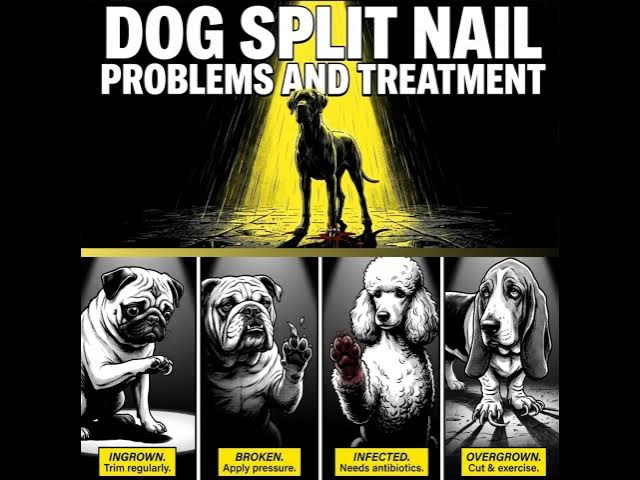
A split dog nail (https://doggozila.com/dog-split-nail/) can look scary. One moment your pup is running happily. The next, you see blood on the floor.
The episode will help you stop the bleeding, clean the wound, and decide if you need a vet. You will also learn simple ways to prevent this painful injury from happening again.
The episode also shares tips to prevent future nail injuries, such as regular trimming and proper nutrition for strong, healthy nails.
For more in-depth information visit the original source article by Doggozila Magazine that is called:
How To Provide First Aid for A Split Dog Nail of The Wounded Paw? (https://doggozila.com/dog-split-nail/)
Show More Show Less View Video Transcript
0:00
Welcome to another episode of the Bark
0:01
Brigade podcast by Dogazilla Magazine.
0:03
>> Glad to be here.
0:04
>> So, right now, your dog might actually
0:06
be walking on a time bomb. And I know
0:08
that sounds dramatic, but um every time
0:11
you hear that familiar click-click of
0:12
their nails on your hardwood floor, you
0:15
aren't just hearing a reminder to call
0:17
the groomer.
0:18
>> Oh, definitely not. It's much deeper
0:20
than that.
0:21
>> You're actually listening to the sound
0:22
of their skeletal system being like
0:25
microfarractured, out of alignment step
0:27
by step. I mean, we really think about
0:29
it, but our dogs don't walk on their
0:30
feet the way we do, right? They walk in
0:32
their toes.
0:33
>> Exactly. They are what we call
0:35
digitrades.
0:36
>> And those toes are highly sensitive,
0:38
biomechanically complex structures that
0:40
basically bear the entire kinetic force
0:42
of their bodies.
0:44
>> So, today we are doing a deep dive into
0:46
a really comprehensive guide from
0:48
Dogazilla magazine. It's written by
0:50
Helen Thompson and it's titled Dog Split
0:52
Nail Problems and Treatment.
0:54
>> It's a fantastic resource.
0:55
>> It really is. And our mission today is
0:58
to take what is arguably the most
0:59
dreaded anxietyinducing chore in dog
1:03
ownership.
1:03
>> Oh, absolutely. The dreaded nail trim.
1:05
Yeah.
1:06
>> Yeah. Exactly. The nail care. We want to
1:08
break down the anatomy, the
1:09
biomechanics, and the behavioral
1:10
psychology to really transform it from,
1:13
you know, a wrestling match into a
1:15
master class in canine health and trust.
1:17
>> And that is such a critical shift in
1:19
perspective because we tend to view dog
1:21
nails as just well, dead keratin, like
1:23
our own fingernails, right? just
1:25
something annoying you have to clip,
1:26
>> right? But canine nails are
1:27
fundamentally different. They're
1:29
actually active weightbearing
1:31
appendages. I mean, they are designed to
1:33
dig into dirt for traction, to pivot at
1:36
high speeds, and to absorb shock,
1:38
>> which is wild when you think about it.
1:40
>> It is. But the problem is that modern
1:42
domestic environments completely betray
1:44
that evolutionary design. Our dogs are
1:47
walking on smooth hardwood, tile, and
1:49
concrete
1:50
>> instead of like the varied soft dirt
1:53
their ancestors navigated.
1:54
>> Exactly. And because of this
1:55
environmental mismatch, nail health has
1:58
basically become one of the most
1:59
overlooked indicators of a dog's overall
2:02
systemic well-being. A seemingly minor
2:04
issue with the nail doesn't just affect
2:06
the toe. It literally alters their
2:09
entire physiological framework. And when
2:11
that framework fails, it fails
2:15
incredibly dramatically. The source
2:17
material draws a really sharp, very
2:20
bloody distinction right out of the gate
2:22
between a split dog nail and a broken
2:24
dog nail.
2:25
>> Yeah, that's a crucial distinction to
2:27
make,
2:27
>> right? And I want to start here because
2:29
this is the crisis moment. The guide
2:31
defines a split nail as a visible crack
2:34
or damage to the nail itself. So it
2:36
splits down the middle or along the
2:38
side, sometimes traveling all the way up
2:40
to the nail bed.
2:41
>> And then you have the broken nail.
2:42
>> Yeah. Which the guide describes as being
2:44
torn completely, usually from getting
2:46
physically caught on something like, I
2:48
don't know, the slats of a wooden deck
2:49
or a thick root in the yard and it just
2:51
physically snaps or tears off,
2:53
>> which is an awful experience for the
2:55
dog.
2:55
>> It is. But whether it's a split or a
2:57
break, the result is exactly the same.
2:59
You get an incredible amount of blood
3:01
and a dog in absolute agony. And I guess
3:04
my question is why is the reaction so
3:07
severe if I break my fingernail? I mean
3:09
it's annoying, maybe it stings a bit,
3:11
but I'm not screaming in pain on the
3:12
floor.
3:13
>> Right. Well, to understand the severity
3:15
of that reaction, we really have to look
3:17
closely at the internal anatomy of the
3:19
canine claw. Like you mentioned, your
3:21
fingernail is just a flat plate of dead
3:23
keratin resting on top of a nail bed.
3:25
>> Yeah. And I don't walk on it.
3:27
>> Exactly. You don't put weight on it. A
3:29
dog's nail structurally is more like a
3:32
hollow cone of hard keratin that encases
3:34
this living, highly vascularized core.
3:37
>> Okay, the quick.
3:38
>> Yes, we call it the quick. But honestly,
3:40
the term quick doesn't quite do justice
3:43
to what it actually is in a biological
3:45
sense. It's this dense fleshy pulp
3:49
comprised of a major blood supply
3:51
>> like an artery.
3:52
>> Yeah. An arterial loop. And it has an
3:54
incredibly high concentration of
3:56
nosceptors. Uh, no.
3:57
>> Basically, specialized nerve endings.
3:59
They detect tissue damage and transmit
4:01
pain signals directly to the brain.
4:03
>> Oh, wow. So, when a nail splits, that
4:06
crack isn't just happening in the dead
4:07
shell on the outside.
4:08
>> Not at all. The structural failure of
4:10
the hard keratin exposes that highly
4:13
pressurized nerve dense pulp right to
4:16
the open air. So, when a nail catches on
4:18
a deck slat and tears, the mechanical
4:21
force shears right through the living
4:23
tissue.
4:24
>> That sounds horrific.
4:25
>> It is. You are essentially dealing with
4:27
an amputation of an appendage.
4:29
>> Wait, really? An amputation
4:31
>> on a micro level? Yes. The reason it
4:33
bleeds so profusely is due to the
4:36
arterial pressure pumping down into
4:37
those extremities to supply the tissue.
4:40
>> And I guess the reason the dog's
4:41
reaction is so dramatic is because those
4:43
exposed nerves are now grinding against
4:45
the floor or the grass with every single
4:47
movement.
4:48
>> Exactly. Every time they try to step,
4:50
they are dragging an exposed nerve
4:52
ending against the environment,
4:53
>> which honestly makes the first aid
4:55
protocol the guide outline sound
4:56
incredibly daunting. Let's say we're
4:58
dealing with a small split and minor
5:00
bleeding. The guide gives us a clear
5:02
step by step.
5:03
>> It's a very solid protocol.
5:05
>> Yeah. [snorts] Step one, keep the dog
5:07
still and calm. Step two, gently wipe
5:10
the area with a clean cloth. Step three,
5:13
apply stipic powder directly to the
5:15
split to stop the bleeding. Step four,
5:18
wrap the paw with a sterile pad or
5:20
gauze, securing it with tape, but not
5:22
too tightly. And step five, monitor for
5:25
signs of infection in the following
5:26
days.
5:27
>> Simple enough on paper, right?
5:28
>> Right. But I have to admit genuine
5:30
confusion or at least skepticism about
5:33
step one. I mean, if the quick is a raw
5:35
exposed nerve and arterial blood is
5:37
pumping onto my living room floor and my
5:40
dog is already in a state of sheer
5:41
panic,
5:42
>> how on earth are we supposed to keep
5:43
them still and calm? Yeah. Yeah,
5:45
>> it feels like telling someone in a car
5:46
crash to just relax.
5:48
>> I completely understand that skepticism.
5:50
It's the most difficult aspect of the
5:52
protocol without a doubt. But
5:53
biologically, it is the absolute most
5:55
essential step.
5:56
>> How so?
5:57
>> Because when the injury occurs, the
5:58
dog's sympathetic nervous system
6:00
activates instantly. Their brain floods
6:02
with adrenaline and cortisol.
6:04
>> They're panicking.
6:04
>> Total fight or flight. Their heart rate
6:06
spikes, which if you think about it
6:07
mechanically, actually pumps more blood
6:09
out of the wound faster. Oh, right.
6:11
Because their heart is racing.
6:13
>> Yes.
6:14
What we really have to understand about
6:16
canine psychology in that exact moment
6:18
is that they are actively looking to
6:21
their environment.
6:22
>> Meaning looking at us.
6:23
>> Yes. Looking specifically to you, their
6:26
primary attachment figure, to assess the
6:28
level of threat. Dogs are exquisite
6:31
readers of human biometric data.
6:34
>> Wait, what do you mean by biometric
6:35
data?
6:36
>> I mean they can smell the changes in
6:37
your sweat when you panic. They hear the
6:39
elevated pitch of your voice. They see
6:41
your erratic jerky movements. So if you
6:44
respond to the blood with panic, you
6:46
validate their terror.
6:47
>> Oh man. So if I start running around
6:49
frantically looking for paper towels and
6:51
tearing apart the bathroom for the first
6:52
aid kit, my dog interprets that as, "Oh,
6:55
we are actively under attack. I need to
6:57
escape."
6:58
>> Precisely. And an animal trying to
6:59
escape a perceived mortal threat while
7:02
in excruciating pain is going to thrash.
7:04
They might bite and they will absolutely
7:07
cause further structural damage to that
7:09
torn nail.
7:10
>> That makes so much sense, right? So
7:11
overriding your own human instinct to
7:13
panic is actually the first true medical
7:15
intervention you perform. You have to
7:17
force your own respiration rate down.
7:19
>> Take a deep breath.
7:20
>> Yes. Lower your center of gravity by
7:23
kneeling or sitting quietly. Speak in a
7:26
low rhythmic tone. [snorts] And the
7:28
guide highly recommends having a second
7:30
person assist if possible. And this is
7:33
exactly why.
7:33
>> So one person manages the panic and the
7:36
other manages the paw.
7:37
>> Exactly. One person needs to manage the
7:39
dog psychology while the other manages
7:41
the physiology. One person stabilizes
7:43
the dog against their body to provide
7:45
deep pressure therapy
7:47
>> which kind of acts like a weighted
7:48
blanket. Right.
7:49
>> Yes. It actually helps lower the dog's
7:51
heart rate and they can distract them
7:53
maybe with a really high value treat
7:55
while the second person addresses the
7:56
bleeding.
7:57
>> Okay. So, let's talk about addressing
7:58
the paw. Specifically, step three,
8:01
>> applying the stipic powder. I understand
8:03
the stipic powder stops the bleeding,
8:06
but if we just establish that the quick
8:08
is a raw exposed nerve,
8:10
>> isn't packing chemical powder directly
8:12
onto it just agonizing?
8:14
>> It's a very fair question.
8:16
>> I mean, are we just trading the trauma
8:18
of the bleeding for the trauma of a
8:19
chemical burn?
8:20
>> That's a very astute observation, and
8:22
the honest answer is yes, it does cause
8:25
a brief intense sting. But we have to
8:28
look at the mechanism of how stipic
8:30
powder actually works to understand why
8:32
it's a completely necessary trade-off.
8:34
>> Okay. What's it actually doing?
8:36
>> The active ingredient in most veterinary
8:38
stipic powders is something called feric
8:41
subsulfate. When this chemical comes
8:43
into contact with blood, it acts as a
8:45
very powerful astringent,
8:47
>> meaning it dries it out.
8:48
>> More than that, it doesn't just
8:50
encourage natural clotting. It actively
8:52
forces the proteins in the blood to
8:54
precipitate and clump together
8:56
instantly. It rapidly dehydrates the
8:58
tissue at the very surface of the wound.
9:00
>> Oh wow.
9:01
>> Yeah. Creating a physical hardened plug
9:04
that seals those ruptured blood vessels.
9:07
>> So it's basically spot welding the wound
9:09
shut chemically.
9:10
>> Spot welding is a highly accurate way to
9:12
visualize it. Yeah. Because the blood is
9:14
flowing out with arterial force. A
9:16
normal bandage often just isn't enough
9:18
to stop it. The blood will literally
9:20
just soak right through the gauze.
9:21
>> Right. Because of the pressure.
9:23
>> Exactly. The feric subsulfate creates an
9:25
immediate structural barrier. Now, it
9:28
does sting sharply for a moment as it
9:30
reacts with the raw tissue, which is why
9:32
the restraint and calmness we just
9:34
discussed are so incredibly vital
9:36
>> because if they flinch,
9:37
>> right? If the dog jerks their paw away
9:39
during that sting, the plug won't form
9:42
correctly and the bleeding will just
9:44
resume.
9:45
>> That sounds intense. Okay, so once the
9:47
plug is formed, the guide instructs us
9:49
to wrap the paw with a sterile pad or
9:52
gauze. And there's a key caveat here.
9:55
Not too tightly. Why is that so crucial?
9:58
>> Because the paw is an extremity. If you
9:59
wrap it like a tourniquet, you cut off
10:01
the venus return,
10:02
>> meaning the blood can't get back up the
10:04
leg.
10:04
>> Yes. Which causes the foot to swell
10:06
massively and can actually lead to
10:08
tissue necrosis where the tissue dies.
10:10
The wrap is simply there to protect the
10:12
chemical plug from being licked off or
10:14
knocked loose while the dog walks.
10:16
>> Okay. So, we see the blood, we overcome
10:17
our panic, we apply the powder, we wrap
10:19
the paw, and we basically survive the
10:21
crisis.
10:21
>> Yeah. But dealing with an acute loud
10:24
injury like a split nail raises a much
10:26
more insidious question. I think
10:28
>> where are you going with this?
10:29
>> Well, if an acute trauma causes this
10:31
much systemic chaos, what about the
10:33
damage we don't see? Because a traumatic
10:36
split often happens when the nail's
10:38
structural integrity is already
10:40
compromised.
10:41
>> Ah yes, the underlying issues,
10:43
>> right? And that transitions us perfectly
10:45
into the hidden chronic pathologies that
10:48
the dogila guide outlines. The bleeding
10:51
nails screams for attention. But
10:53
conditions like overgrown nails, ingrown
10:55
nails, and silent nail bed infections,
10:58
those are slowly deteriorating the dog's
11:01
health right under our noses.
11:02
>> And those quiet conditions are often far
11:05
more damaging over the span of a dog's
11:07
life than a single split nail.
11:09
Let's analyze the most common issue the
11:11
guide brings up, which is overgrown
11:13
nails. This goes back to our earlier
11:15
discussion about the dog's skeletal
11:16
framework.
11:17
>> Right. The digit a great thing. Walking
11:18
on toes. Exactly. When a healthy dog
11:21
stands on a flat surface, their paw pads
11:23
should bear the weight, and their nail
11:24
should hover just slightly above the
11:26
ground. They should only engage when the
11:28
dog pushes off to run or when they're
11:30
climbing an incline. But when the
11:31
keratin grows too long, the tip of the
11:34
nail makes contact with the hard floor
11:36
before the paw pad does,
11:37
>> which creates that clicking sound we
11:39
talked about earlier.
11:40
>> Yes. And that clicking sound is
11:42
literally the auditory evidence of a
11:44
severe biomechanical failure. Wait,
11:47
calling it a biomechanical failure
11:48
sounds really serious.
11:50
>> It is serious. Because the floor is
11:52
unyielding, the force of the dog's
11:54
weight pushes the long nail upward and
11:56
backward into the toe.
11:58
>> Oh, I see.
11:58
>> To conceptualize this, imagine standing
12:01
barefoot right now. Now, imagine someone
12:04
sliding a marble under each of your
12:05
toes, forcing them to point upward.
12:08
>> That sounds terribly uncomfortable.
12:09
>> It is. The kinetic energy of every step
12:12
you take can no longer be absorbed by
12:14
the natural shock absorbers of your
12:15
foot. It forces your flexor tendons to
12:18
stretch abnormally.
12:19
>> I'm going to try an analogy here. It
12:21
sounds like walking in ski boots on
12:23
concrete.
12:23
>> Oh, that's good.
12:24
>> Because your toe is locked into an
12:26
unnatural upward angle, right? It can't
12:28
flex downward to absorb the impact. So,
12:31
the kinetic energy of every single step
12:33
shoots straight past the foot and
12:34
hammers directly into your ankle and
12:36
knee joints. That is an excellent
12:38
biomechanical comparison. In the dog,
12:41
that upward pressure on the toe misalign
12:44
the fanges, the actual toebones. And to
12:47
compensate for the pain and instability
12:49
of that, the dog naturally shifts their
12:51
center of gravity backward, rocking onto
12:54
the heel of their paw pad,
12:55
>> like they're leaning back permanently.
12:57
>> Yes. And this postural shift throws the
13:00
carpal joint, their wrist, completely
13:02
out of its natural alignment.
13:03
>> Oh, wow. So, it travels up the leg.
13:05
>> The kinetic chain reaction. absolutely
13:07
does not stop there. The altered angle
13:09
of the wrist changes how the radius and
13:10
ulna bones bear weight that strains the
13:13
elbow which then forces the shoulder
13:15
muscles to overcompensate
13:16
>> and in the back legs
13:17
>> in the hind legs it alters the angle of
13:19
the stifle which is their knee and
13:21
ultimately the hip joint.
13:22
>> So just by ignoring a simple grooming
13:24
task we are essentially forcing our dogs
13:26
into a chronic orthopedic crisis.
13:28
Without exaggeration, yes. Over months
13:30
and years, this constant unnatural
13:33
friction and joint misalignment
13:35
accelerate the degradation of the
13:36
cartilage. It directly contributes to
13:38
early onset osteoarthritis.
13:41
>> That is heartbreaking.
13:42
>> It is. The dog becomes reluctant to
13:44
walk. Their gate becomes stiff and they
13:46
just live in a state of chronic dull
13:48
aching pain.
13:49
>> And that is just from the nails being
13:51
too long. But the guide also highlights
13:54
a more localized acute pathology, the
13:57
ingrown nail. Now, this typically occurs
14:00
on the due claws, right?
14:01
>> Yes. The dclaws are the most common
14:03
victims of this.
14:04
>> The dclaws are those little thumblike
14:06
digits higher up on the inside of the
14:08
leg. Yeah. The ones that don't even
14:09
touch the ground.
14:10
>> Correct. They are basically evolutionary
14:12
remnants for most breeds. And because
14:15
they don't make contact with the ground,
14:17
they receive zero natural friction from
14:19
walking.
14:19
>> So, they just keep growing. if they
14:21
aren't manually trimmed. Yes. The
14:23
keratin continues to grow in its natural
14:26
curved trajectory until it completes a
14:27
full circle and the sharp tip begins to
14:30
press into the soft tissue of the dog's
14:31
leg or paw pad. Eventually, it
14:34
physically punctures the skin,
14:36
>> which creates a perfect storm for the
14:37
infections the guide warns us about.
14:39
>> It really does. The paw hat is covered
14:41
in a thick layer of stratum corneium to
14:44
protect against rough terrain. But
14:46
underneath that tough exterior is soft
14:48
atapost tissue and a very rich blood
14:51
supply.
14:51
>> So when it punctures,
14:52
>> when the ingrown nail breaches the skin,
14:55
it drives whatever environmental debris,
14:57
dirt, and bacteria were resting on the
14:59
outside of the nail deep into the
15:00
tissue.
15:01
>> Oo, like a dirty needle.
15:02
>> Exactly. Furthermore, because the nail
15:05
is literally plugging the hole it just
15:07
created, it forms a dark, moist,
15:10
anorobic pocket inside the tissue. It is
15:13
the absolute ideal incubation chamber
15:15
for pathogens
15:16
>> and the guide lists bacteria, fungi, and
15:19
parasites as culprits for dog nail
15:21
infections. I assume this is where we
15:23
start seeing the behavioral symptom that
15:25
the article emphasizes heavily, which is
15:27
excessive paw licking.
15:29
>> Yes, licking is the big red flag here.
15:31
>> I think it's incredibly common for
15:32
owners to see their dog curled up on the
15:34
rug obsessively licking one paw and we
15:36
just write it off. We think, "Oh, he's
15:37
just grooming himself or she's just
15:39
bored." But the source explicitly states
15:41
that excessive licking is a primary
15:43
indicator of pain, discomfort, or
15:45
anxiety.
15:46
>> We really have to reframe how we view
15:48
canine licking. While dogs do groom
15:50
themselves normally, obsessive localized
15:52
licking is a self soothing mechanism in
15:55
response to a localized pathology.
15:57
>> What are they actually doing when they
15:58
lick it?
15:59
>> Well, dog saliva contains natural
16:01
painkilling properties, specifically a
16:03
compound called opiorin.
16:05
>> Wait, really? Like a built-in
16:07
painkiller?
16:07
>> Yes. So, when a dog's toe joints are
16:10
aching from the structural misalignment
16:12
we discussed, or when a fungal infection
16:14
is colonizing the nail bed, they are
16:16
licking to deliver that opiorin and to
16:19
physically massage the inflamed tissue.
16:21
>> But doesn't the licking actually make a
16:23
fungal infection worse? I mean, it's
16:25
wet.
16:26
>> It creates a devastating feedback loop.
16:28
Fungi, particularly a common yeast
16:30
called malicitia, absolutely thrive in
16:33
warm, moist environments. So the looking
16:35
is feeding it.
16:36
>> By constantly licking the paw, the dog
16:38
is merating the tissue, basically
16:40
breaking down the skin's natural barrier
16:42
and keeping the area perpetually damp.
16:45
The yeast population explodes, which
16:47
causes intense puritus or itching.
16:49
>> So it itches more, so they link more.
16:51
>> Exactly. They lick more to soothe the
16:54
itch, adding more moisture, feeding the
16:56
yeast further. You can actually smell
16:58
it. A severe yeast infection on a dog's
17:01
paws often smells distinctively like
17:03
corn chips or old bread.
17:05
>> Okay. If an owner is noticing that corn
17:07
chip smell or the chronic licking or
17:09
they see a nail starting to curl
17:11
dangerously close to the pad, at what
17:14
point does home maintenance end and
17:16
veterary intervention begin? The guide
17:18
outlines several red flag symptoms.
17:20
>> The threshold for veterinary care has
17:22
crossed the moment systemic or deep
17:24
tissue involvement is suspected. The
17:26
guide is very clear on this. So, what
17:28
are we looking for?
17:29
>> Well, if you have a deep split with
17:30
excessive bleeding that simply will not
17:32
stop despite applying stipic powder and
17:35
pressure that requires a vet as an
17:37
artery may literally need to be
17:38
cauterized.
17:39
>> What about infections?
17:40
>> Any visual signs of severe infection
17:42
such as noticeable swelling of the
17:44
digit, pervasive redness, any form of
17:46
purilent discharge or pus or necrotic
17:48
rotting smell. Those mandate immediate
17:51
professional care
17:52
>> because it's spreading,
17:53
>> right? The infection has likely breached
17:55
the superficial layers and could be
17:57
threatening the bone itself, which is a
17:59
condition known as osteomiolitis.
18:01
>> And obviously, if the dog is exhibiting
18:04
extreme pain, refusing to let you
18:06
anywhere near the paw, or showing
18:08
systemic signs like lethargy, fever, or
18:10
hiding, you don't wait. You don't try to
18:13
fix that at home.
18:14
>> Exactly. A dog that is hiding or
18:16
lethargic is a dog whose immune system
18:18
is actively fighting a systemic battle.
18:21
At that point, antibiotics, antifungals,
18:23
and professional pain management are
18:25
required.
18:25
>> But the frustrating part is that a lot
18:27
of this could be avoided, right?
18:28
>> That is the real tragedy of these
18:30
complex paw pathologies. Aside from the
18:32
occasional unavoidable trauma of
18:34
catching a nail on a root in the yard,
18:36
almost all of these conditions, the
18:38
joint degradation, the ingrown
18:40
punctures, the yeast loops, they are
18:42
entirely preventable.
18:44
>> Which brings us perfectly to the
18:45
mechanism of prevention. If we know that
18:48
chronic licking indicates a misaligned
18:50
joint from overgrowth or an anorobic
18:52
infection from a puncture, how do we
18:54
intercept that biological process before
18:56
the damage becomes permanent?
18:57
>> By getting ahead of the growth cycle,
18:59
>> right? We have to shift from being
19:01
reactive to being proactive. The guide
19:04
focuses heavily on building a
19:05
preventative routine, specifically
19:07
recommending a trimming schedule of
19:09
every 2 to 4 weeks. But I imagine that
19:11
window isn't totally arbitrary, right?
19:13
It must be tied to the actual biology of
19:15
how fast the keratin synthesizes versus
19:18
how much it wears down naturally.
19:20
>> That is exactly the dynamic at play.
19:22
Keratin growth is continuous, but the
19:24
rate of wear is highly variable based on
19:27
environmental friction coefficients,
19:29
>> meaning what they walk on.
19:30
>> Yes, the 2 to four week rule is a solid
19:33
baseline, but you absolutely must
19:35
calibrate it to your specific dog's
19:37
lifestyle. If your dog's daily exercise
19:40
consists of walking 2 miles on hard
19:42
concrete or asphalt, those rough
19:44
abrasive surfaces act like a continuous
19:46
emery board.
19:47
>> Oh, so it files them down as they walk.
19:49
>> Exactly. The friction essentially files
19:51
the tip of the nail down naturally,
19:53
meaning you might only need to intervene
19:55
manually every 4 to 5 weeks. Or perhaps
19:57
you only need to trim the declaws that
19:59
don't touch the ground. But if you have
20:01
a dog that primarily walks on soft
20:03
grass, dirt trails, or spends 90% of
20:06
their time indoors on plush carpet,
20:09
they're getting almost zero natural
20:11
abrasive friction. The keratin is
20:14
synthesizing way faster than it's being
20:16
worn away.
20:16
>> Precisely. In that scenario, you will
20:19
absolutely need to adhere to the twoe
20:21
end of the spectrum. But even with
20:23
natural wear, as the guide points out,
20:25
natural friction does not replace the
20:26
need for regular visual inspections
20:28
>> because they walk unevenly,
20:30
>> right? Different toes bear weight
20:31
differently. A dog might wear down their
20:33
front middle toes perfectly, but the
20:35
outer toes might be growing abnormally
20:37
long.
20:37
>> So, we really need a system. The source
20:39
material outlines the components, and I
20:41
think we can synthesize them into a
20:43
highly specific monthly home maintenance
20:46
checklist. Let's break this down into
20:48
four clear steps for the listener.
20:50
>> Let's do it.
20:50
>> Okay. Step one is the assessment. You
20:53
don't even have the tools in your hand
20:55
yet. You are just looking. You are
20:56
checking the symmetry of the nails,
20:58
looking for micro cracks before they
21:00
become deep splits, checking the angle
21:02
of the toes to see if they're being
21:03
pushed up, and feeling the pads for heat
21:06
or swelling.
21:07
>> The assessment phase is absolutely
21:09
crucial because you are establishing a
21:11
baseline of what normal looks like for
21:13
your specific dog. You are looking at
21:15
the architecture of the paw before you
21:17
attempt to alter it.
21:18
>> Exactly. Then step two is the tool
21:20
check. The guide emphasizes using proper
21:22
sharp dog clippers or a designated nail
21:25
grinder. Let's talk about the physics of
21:27
the tools because I think people
21:29
massively underestimate how much a bad
21:31
tool contributes to the pain.
21:34
>> Oh, without a doubt. The physics of the
21:35
cut directly dictate the dog's
21:37
experience. There are generally two
21:39
types of manual clippers. Guillotine
21:41
style and scissor style. But regardless
21:44
of the style, the blades must be razor
21:46
sharp.
21:47
>> What happens if they aren't? When a
21:48
blade is dull, it doesn't slice cleanly
21:50
through the hard keratin shell. Instead,
21:53
it crushes the structural walls of the
21:54
nail inward before it finally breaks
21:56
through.
21:57
>> Which means it's squeezing that highly
21:59
sensitive pressurized inner quick we
22:01
talked about earlier.
22:02
>> Exactly. Even if you don't cut the quick
22:04
itself, the hydrostatic pressure created
22:06
by crushing the outer shell pinches the
22:09
nerve endings inside. The dog feels a
22:11
sharp sudden pressure spike. It is
22:14
highly uncomfortable and very startling
22:16
>> and a sharp tool avoids that.
22:18
>> Yes, a sharp blade shears cleanly
22:21
through the keratin without deforming
22:22
the shape of the nail, bypassing that
22:24
pressure spike entirely. Now, grinders
22:27
or rotary tools operate on a different
22:30
physical principle.
22:31
>> They use abrasion, right? Like sanding.
22:33
>> Correct. Abrasion rather than shearing.
22:36
This avoids the crushing action
22:37
altogether, which is great. Though they
22:39
do introduce vibration and noise, which
22:41
we will definitely discuss later.
22:42
>> Okay. Assuming we have sharp,
22:43
highquality tools, we move to step
22:45
three, the precision cut. Now, this is
22:49
where the anxiety peaks for the owner
22:51
because the absolute golden rule from
22:53
the guide is to identify the quick and
22:54
only trim the dead tip. If you cut into
22:57
the living tissue, we are back to the
22:59
arterial bleeding and the screaming dog.
23:01
>> It's the most high stakes part of the
23:02
process,
23:03
>> right? And for a lot of owners,
23:05
identifying the quick feels like trying
23:06
to diffuse a bomb where you can't
23:08
clearly see the wires. With white or
23:11
translucent nails, it's easier, right?
23:13
>> Yes. With translucent nails, the anatomy
23:15
is visibly demarcated. The dead keratin
23:18
shell is clear, and you can visibly see
23:20
the pink triangular shadow of the
23:22
vascular pulp, the quick right inside.
23:25
>> So, you just avoid the pink.
23:26
>> You simply make your cut in the clear
23:28
zone, a few millimeters ahead of the
23:30
pink triangle, at a 45° angle that
23:32
matches the natural curve of the nail.
23:34
>> But millions of dogs have pitch black
23:36
nails.
23:37
>> You can't see a shadow. You can't see
23:39
the pink. How does an owner safely
23:41
execute step three without just guessing
23:44
and praying?
23:45
>> Guessing is exactly what leads to
23:46
trauma. With black nails, you have to
23:48
abandon the side profile view entirely
23:50
and change your visual perspective to
23:52
the cross-section of the nail.
23:53
>> Meaning looking at it head-on.
23:55
>> Yes. You look directly at the tip of the
23:56
nail headon. The technique requires
23:59
making very thin progressive shavings
24:01
rather than one large bold cut.
24:03
>> Tiny little slivers.
24:04
>> Exactly. You shave off a millimeter of
24:06
the tip and look at the newly exposed
24:08
flat surface. Initially, that surface
24:11
will look chalky, dry, and uniformly
24:14
grayish white. That is the dead keratin.
24:16
>> So, if it's chalky and white, you make
24:18
another tiny cut.
24:19
>> Yes. And as you shave slightly deeper,
24:21
moving closer to the living tissue, the
24:23
appearance of the cross-section changes.
24:26
The center of the cut surface will begin
24:27
to show a small distinct dark oval or a
24:31
softer grayish pink dot.
24:33
>> Like a bullseye. like a bullseye. Some
24:35
groomers describe it as looking like the
24:37
marrow inside a soup bone. That distinct
24:40
center spot is the very beginning of the
24:42
living pulp.
24:43
>> And that's when you stop.
24:44
>> The very moment you see that texture and
24:46
color change in the center, you stop.
24:48
You have reached the absolute safe
24:49
limit.
24:50
>> That structural transition is the stop
24:52
sign. That is brilliant. And it removes
24:54
so much of the guesswork. Okay. And
24:56
finally, step four of our routine is the
24:58
postplay inspection.
24:59
>> A very overlooked step.
25:01
>> Yeah. Yeah, the guide notes that outdoor
25:02
activities are where most acute damage
25:04
actually happens. They recommend
25:06
checking the paws frequently after play
25:08
and even using booties to protect
25:10
against rough surfaces.
25:12
>> I think people off often view dog
25:14
booties as a silly fashion accessory,
25:16
but there's real utility there, isn't
25:18
there?
25:18
>> The utility is immense, particularly
25:21
regarding thermmorreulation and abrasive
25:23
trauma. A dog's paw pads are incredibly
25:26
resilient, but they are not impervious
25:28
to physics.
25:29
>> No animal is
25:30
>> right. In the winter, jagged ice can
25:32
slice the pads open, and urban road salt
25:34
causes severe chemical burns. In the
25:37
summer, asphalt absorbs solar radiation
25:39
and can easily reach temperatures
25:41
exceeding 140° F,
25:43
>> which will fry an egg, let alone a paw.
25:45
>> It will cause secondderee thermal burn
25:47
to the tissue in a matter of minutes.
25:49
Booties provide a necessary mechanical
25:51
and thermal barrier when the environment
25:52
is hostile.
25:53
>> So, step four is just making a habit of
25:55
checking.
25:56
>> Exactly. Step four is simply the habit
25:59
of turning the paw over after a hike or
26:00
a run to ensure no glass, thorns, or
26:03
debris have punctured the pad or lodged
26:05
between the toes where they can fester
26:06
and cause an abscess.
26:08
>> So, this four-step checklist assessment,
26:11
tool check, precision cut, and postplay
26:13
inspection. It's a fantastic logical
26:16
system. I am completely on board with
26:18
it.
26:18
>> It works beautifully if followed.
26:20
>> However,
26:21
>> we really have to address the massive
26:23
elephant in the room here.
26:24
>> The behavior. Yes, this entire
26:27
biological and mechanical discussion
26:29
assumes we're working with a cooperative
26:31
static subject. But let's look at the
26:33
real world application. What happens
26:35
when you diligently do your assessment,
26:37
you pull out your perfectly sharp
26:39
scissor clippers, and your dog takes one
26:41
look at the metallic tool in your hand,
26:43
tucks their tail, and immediately
26:45
scrambles under the bed, shaking?
26:46
>> It's incredibly common.
26:48
>> Or what if the mere sound of the grinder
26:50
clicking on makes them bear their teeth
26:51
and growl? All the anatomical knowledge
26:53
in the world is totally useless if the
26:55
patient is fighting for their life.
26:57
>> And that exact transition is where most
26:59
owners fail because they try to solve a
27:02
psychological problem with physical
27:04
force.
27:04
>> Just hold them down,
27:05
>> right? They think, I just need to hold
27:07
him tighter or we just need to get it
27:08
over with quickly. We have to pivot
27:10
entirely from biomechanics into
27:12
behavioral neurology here. The final
27:15
section of the guide is essentially a
27:17
master class in desensitization.
27:19
To successfully treat a fearful dog, we
27:22
first have to understand the actual
27:23
architecture of their fear.
27:25
>> Where is it coming from?
27:26
>> Well, dogs are not born with a
27:28
biological aversion to pedicures. A
27:30
puppy doesn't inherently fear a nail
27:32
clipper anymore than they fear a spoon.
27:34
>> So, how does the phobia develop? What
27:36
are they actually reacting to when they
27:37
freak out?
27:38
>> They are reacting to a combination of
27:40
three specific triggers. a loss of
27:42
bodily autonomy, unfamiliar sensory
27:44
input, and most profoundly, the
27:47
neurological consolidation of past
27:49
trauma.
27:49
>> Let's break that down. Autonomy first,
27:51
>> right? When an owner grabs a dog's leg
27:54
and restrains them tightly, it triggers
27:56
an innate opposition reflex. The dog
27:58
physically feels trapped. Second, the
28:00
sensory experience of pressure on their
28:02
highly sensitive digits or the
28:04
highfrequency vibration of a grinder is
28:07
deeply unnatural to them. And the third
28:09
trigger, past trauma.
28:11
>> The most powerful factor is memory. If a
28:14
dog has been quick in the past, if the
28:15
owner accidentally cut into that highly
28:17
vascularized, nerve- dense tissue we
28:20
discussed, the dog experienced a sudden,
28:23
sharp, intense pain
28:24
>> and the brain logs that event.
28:26
>> The brain aggressively hardwires that
28:28
event for survival. The amygdala, which
28:30
is the fear processing center of the
28:32
brain, creates an immediate, unbreakable
28:35
association between the visual stimulus
28:37
of the clippers, the environmental
28:38
context of the owner grabbing the paw,
28:40
and the sensation of excruciating pain.
28:43
>> So, they aren't just being difficult.
28:44
>> No. The next time the clippers appear,
28:46
the amygdala bypasses the rational parts
28:49
of the brain entirely and instantly
28:51
triggers the sympathetic nervous system.
28:53
The dog isn't being stubborn. They are
28:55
experiencing a physiological panic
28:57
attack. I think about this like human
28:59
exposure therapy.
29:00
>> It's very similar.
29:01
>> Like if someone has a severe clinical
29:03
phobia of spiders, a therapist doesn't
29:06
start their very first session by
29:07
dropping a live tarantula on their lap
29:10
and saying, "Just hold still. It'll be
29:12
over in a minute."
29:13
>> That would be malpractice,
29:14
>> right? That would be called flooding and
29:16
it would just traumatize them further,
29:18
potentially causing a psychotic break.
29:21
You start by looking at a cartoon
29:22
picture of a spider from across the
29:24
room. You look at the picture, you take
29:26
deep breaths, and you realize you are
29:28
safe.
29:29
>> Exactly.
29:30
>> And then maybe the next week, you look
29:32
at a photograph. A month later, maybe
29:34
there is a spider in a sealed jar at the
29:37
far end of the hallway. You slowly,
29:39
incrementally build tolerance. But with
29:42
dogs, our instinct is to just grab the
29:44
paw and go for it, which is the exact
29:45
equivalent of dropping the tarantula on
29:47
their lap.
29:48
>> That is an exceptionally accurate
29:50
analogy. Flooding, which is forcing the
29:52
animal to endure the terrifying stimulus
29:54
without any root of escape, only deepens
29:57
the trauma and it often leads to
29:59
defensive aggression,
30:00
>> which is when they start biting.
30:01
>> Yes. That's when the dog realizes that
30:03
biting is literally the only way to make
30:06
the scary things stop. To prevent that,
30:08
the guide provides a specific
30:10
alternative, a desensitization
30:13
and counter conditioning protocol.
30:15
>> Two different things.
30:16
>> Yes. Desensitization is the slow
30:18
exposure to the stimulus like the spider
30:20
in the jar you mentioned. Counter
30:22
conditioning is changing the underlying
30:24
emotional response by pairing the scary
30:26
stimulus with something incredibly
30:29
positive.
30:29
>> So changing how they feel about it.
30:31
>> Exactly. We are trying to rewire the
30:33
neurological pathway so that the sight
30:36
of the clippers predicts a rush of
30:38
dopamine from a high value treat rather
30:40
than a spike of cortisol from
30:42
anticipated pain. The guide outlines the
30:45
steps for this and I want to walk
30:46
through exactly what this looks like in
30:48
practice because the timeline is
30:49
crucial. So step one is simply
30:51
introducing the tools.
30:52
>> Correct. No touching yet.
30:53
>> You don't touch the dog at all. You just
30:55
place the clippers or the turned off
30:56
grinder on the floor. The dog looks at
30:59
it, sniffs it, or even approaches it.
31:01
You immediately mark that behavior with
31:03
praise and give them a highly desirable
31:05
treat.
31:06
>> Something they only get during this
31:07
training.
31:08
>> Yeah. Like boiled chicken or a lick of
31:10
peanut butter. You do this for 2 minutes
31:11
and then you put the tool away. You
31:13
might do just this step for three
31:15
straight days until the dog's tail wags
31:18
when they see the clippers come out.
31:20
>> Because the clippers have now become a
31:22
predictor of chicken, the emotional
31:24
veilance has shifted from negative to
31:26
positive.
31:26
>> Exactly. Then step two is practicing
31:29
gentle paw handling. Totally independent
31:32
of the tool. You just run your hand down
31:34
their leg, touch the paw for one second
31:36
and give a treat. The next day, you hold
31:38
the paw for 3 seconds. Give a treat.
31:40
>> You are decoupling the touch from the
31:42
trauma.
31:43
>> Step three is combining the elements.
31:46
You hold the paw while the clipper is
31:47
visible on the floor. Or if you use a
31:50
grinder, you turn it on at the other
31:51
side of the room so they just hear the
31:53
acoustic hum and you feed them chicken.
31:55
>> Incremental progress.
31:56
>> Right. Step four is the tactile
31:58
introduction. You touch the cold metal
32:01
of the clipper to the outside of the
32:02
nail without cutting and treat. or you
32:06
touch the vibrating base of the grinder
32:08
to their leg, not the nail, so they feel
32:10
the vibration and treat.
32:12
>> And this progression requires acute
32:14
observation from the owner, which
32:16
actually brings us to step five from the
32:18
guide,
32:19
>> which is recognizing stress signals.
32:21
>> Yes, knowing when to stop. If you
32:23
introduce the sound of the grinder and
32:25
the dog licks their lips nervously,
32:28
yawns excessively, or pins their ears
32:30
back, you have moved too fast. You have
32:32
crossed their threshold.
32:33
>> So, you stop immediately. You must
32:35
immediately stop, take a break, and the
32:37
next day drop back to the previous
32:39
successful step. The process has to be
32:42
painfully slow because you are operating
32:44
at the speed of the dog's neurological
32:46
recovery, not the speed of your weekly
32:49
schedule.
32:50
>> It requires an incredible amount of
32:51
patience. But, you know, the guide also
32:53
offers alternatives for dogs that are so
32:55
profoundly terrified that even this slow
32:57
protocol is just too much. And one of
32:59
the options they highlight is using a
33:01
scratching board or a file. I find this
33:03
concept absolutely fascinating. It feels
33:05
like a paradigm shift in how we approach
33:07
animal husbandry.
33:09
>> It is a profound shift because it
33:10
addresses the core issue of bodily
33:12
autonomy we talked about earlier. A
33:13
scratchboard is essentially a piece of
33:15
wood covered in coarse sandpaper. Using
33:18
basic operant conditioning, you teach
33:20
the dog to target the board with their
33:22
paws, mimicking their natural digging
33:24
behavior. When they drag their front
33:26
paws down the board, the sandpaper files
33:28
the nails down naturally, and you reward
33:30
them with a treat. It's brilliant. It
33:32
completely removes the human hands, the
33:35
restraint, and the scary metallic tools
33:37
from the equation. The dog is entirely
33:40
in control of the pressure, the
33:41
duration, and the angle. They are
33:44
essentially electing to give themselves
33:46
a manicure because it's a fun game that
33:48
results in a reward. You are giving the
33:50
animal agency.
33:51
>> And giving an animal agency over their
33:53
own physical manipulation drastically
33:55
reduces their stress response. It
33:57
empowers them. Now, scratch boards are
33:59
primarily effective for the front paws
34:01
as dogs don't naturally dig with their
34:03
hind legs in the same manner.
34:05
>> Ah, right. So, what about the back legs?
34:07
>> For the hind legs or for cases where the
34:09
phobia is just too deeply ingrained to
34:11
overcome at home, the guide makes a very
34:13
important recommendation. Utilizing
34:15
professional groomers, veterinarians, or
34:17
even discussing sedation.
34:19
>> I think there is a lot of guilt
34:20
associated with that last point. Mhm.
34:22
>> Owners feel like they have failed if
34:24
they have to ask the vet for a sedative
34:26
just to cut their dog's nails.
34:28
>> We need to completely remove that
34:30
stigma. If a dog's panic response is so
34:32
severe that they risk injuring
34:34
themselves or you or if they are
34:36
entering a state of severe psychological
34:39
distress, chemical intervention is
34:41
honestly the most humane and ethical
34:43
choice.
34:44
>> It's just medicine.
34:44
>> Exactly. Modern veterinary medicine
34:47
offers a range of options from mild oral
34:49
anxolytics like tresidadone or
34:51
gabapentin given at home before the
34:53
appointment to full brief injectable
34:56
sedation at the clinic. The ultimate
34:58
goal is the physical health of the paw,
35:00
preventing the arthritis, the
35:01
infections, the splits. How you achieve
35:04
that goal can and should be flexible
35:06
based on the individual dog's
35:07
psychological needs.
35:08
>> I want to speak directly to you, the
35:10
listener, for a second. The source
35:11
material outlines these protocols, but I
35:13
want to make the practical reality very
35:14
explicit. Please permanently abandon the
35:17
idea that all four paws, all 16 nails
35:21
must be trimmed in one chaotic,
35:23
stressful 10-minute session on a Sunday
35:25
afternoon.
35:26
>> Here, here. If you have a fearful dog
35:28
and you manage to clip exactly one
35:30
single nail on a Tuesday, followed by a
35:33
jackpot of high-value treats and a fun
35:35
game of fetch in the yard. That is a
35:38
massive unequivocal victory. It might
35:41
take you two and a half weeks to cycle
35:43
through all the toes, but you doing it
35:45
while keeping their heart rate low,
35:47
keeping their trust intact, and
35:48
preventing the trauma from returning.
35:50
That is the true win.
35:52
>> It completely reframes the objective.
35:54
You aren't just completing a grooming
35:55
task. You are engaging in a daily
35:58
cooperative therapeutic exercise.
36:00
>> We have covered an immense amount of
36:02
ground today, transitioning from acute
36:03
trauma to chronic biology all the way to
36:06
behavioral science. Let's synthesize the
36:08
core insights of this deep dive.
36:10
>> Sounds good.
36:10
>> We started by unpacking the crisis of
36:12
the split nail, learning that the
36:14
dramatic bleeding is due to the highly
36:15
vascularized quick and that applying
36:18
stipic powder despite the brief chemical
36:20
sting is totally necessary to
36:22
structurally plug the wound. More
36:24
importantly, we learned that the owner's
36:26
calm demeanor is the first and most
36:28
vital medical intervention to prevent
36:30
the dog from thrashing and causing
36:31
further damage. From there, we examined
36:34
the hidden chronic pathologies. We
36:36
detailed how overgrown nails act as
36:39
mechanical levers, forcing the toes up
36:41
and misaligning the entire skeletal
36:43
kinetic chain, leading to early onset
36:45
arthritis.
36:46
>> Right? And we discussed how ingrown
36:48
nails puncture the paw pad driving
36:50
surface bacteria and fungi deep into the
36:53
tissue creating anorobic pockets of
36:55
infection.
36:56
>> And we decoded the behavioral symptom of
36:58
chronic leing understanding that it
37:00
isn't just grooming but a self soothing
37:02
response to the pain and the fungal
37:04
yeast cycles driven by that moisture.
37:06
>> We then built our defense mechanism, a
37:09
proactive four-step routine. The
37:11
assessment to check for symmetry and
37:13
damage. The tool check, ensuring we use
37:15
sharp blades that shear the keratin
37:17
rather than dull blades that crush the
37:18
sensitive pulp. The precision cut,
37:21
utilizing the cross-sectional bullseye
37:22
technique to safely trim black nails.
37:25
And the postplay inspection to check for
37:26
environmental debris and protect the
37:28
pads with booties against thermal and
37:30
physical trauma.
37:31
>> And finally, we addressed the
37:32
psychological barrier. We explored the
37:35
neurology of fear, understanding that
37:37
the amydala hardwires the memory of past
37:39
pain, turning the clippers into a phobic
37:42
trigger. We learned to combat this not
37:45
with force but with classical counter
37:47
conditioning. Slowly pairing the sight,
37:50
sound, and feel of the tools with high
37:52
value rewards to rewrite the emotional
37:54
response.
37:55
>> We embrace the concept of agency through
37:58
tools like the scratchboard and
38:00
validated the use of veterinary sedation
38:02
for severe cases to prioritize the dog's
38:04
mental well-being alongside their
38:06
physical health. It is a truly
38:08
comprehensive roadmap to totally
38:10
transforming how we care for our dogs
38:12
feet and I think it leaves us with
38:13
something really profound to think
38:15
about.
38:16
>> I agree. Go ahead.
38:17
>> When we take the immense amount of time
38:18
required to slowly desensitize our dogs
38:20
to paw handling, when we observe their
38:23
stress signals, when we respect their
38:24
fear, and when we work through it with
38:26
incremental patience rather than
38:27
physical dominance, we aren't just
38:29
maintaining the length of their keratin.
38:31
>> It's bigger than that.
38:32
>> Much bigger. We are fundamentally
38:34
teaching them that they can trust us
38:35
when they are at their absolute most
38:37
vulnerable. We are proving to them that
38:39
our hands bring relief and reward, not
38:41
pain and restraint. So ask yourself, if
38:44
you can build that profound, unshakable
38:46
level of trust, one paw, one tiny sliver
38:49
of nail, one piece of chicken at a time,
38:51
how might that deep bond transform every
38:54
other aspect of your life and
38:55
relationship with your dog?
38:56
>> Thank you for listening, dear brigaders.
38:58
And if you have any questions, visit the
39:00
source article on Dogazilla magazine at
39:02
dogzilla.com. That was all for this
39:04
episode.
#Pets & Animals