Up next in 10


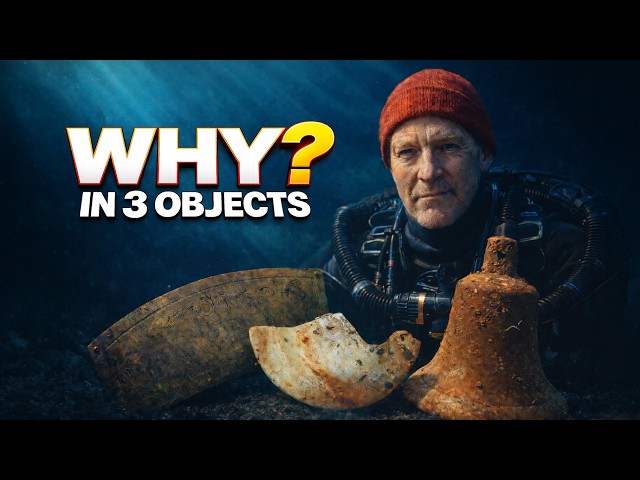
Three objects. One question: why keep go through all the hassle of diving in deep water?
In this video I break down three recovered objects that quietly explain why I dive deep — and what they reveal about technical wreck diving, motivation, and risk. These aren't just trophies. They're evidence, each tied to a specific dive, a specific wreck, and a specific decision underwater.
This presentation was ralso delivered at the Go Diving Show on 1 Mar 26 , where I shared these objects and the stories behind them with fellow technical divers.
━━━━━━━━━━━━━━━━━━━━━━
*Highlights*
00:00 Introduction
00:39 What This Presentation Covers
01:21 Technical Diving and Equipment
02:30 Decompression Reality
03:45 Offshore and Commitment
04:59 Object 1 Story and Lesson
09:10 Object 2 Story and Lesson
20:58 Object 3 Story and Lesson
28:01 Closing Thoughts and Feedback Request
━━━━━━━━━━━━━━━━━━━━━━
*ABOUT THIS CHANNEL*
Deep Wreck Diver explores shipwrecks, submarines, and sunken aircraft from around the world - combining technical diving with detailed wreck identification and historical storytelling. Every dive uncovers a piece of history lost to the depths.
━━━━━━━━━━━━━━━━━━━━━━
*Kit I Use*
Note, some of these are affiliate links so help support making my videos:
- Gloves are Ansell Alphatec 87-063 - https://amzn.to/4jDHhX4
- Main torch is an Orcatorch D630 - https://amzn.to/4jlT4tA
- Backup torch is an Orcatorch D710 - https://amzn.to/4jhddRk
- Drysuit is an O-Three Ri200 - https://www.othree.co.uk/drysuit-range/ri-2-100-drysuit/
- CCR is an AP Diving Inspiration (XPD) - https://www.apdiving.com/
- Backup computer is a Shearwater Perdix v2 - https://amzn.to/42FXZOW
- Reels are by Kent Tooling - https://www.divingproducts.co.uk/
- Cameras are Paralenz Vaquita
- Video light is NiteScuba NSV60 - NiteScuba NSV60 - https://s.click.aliexpress.com/e/_onHEKQZ
- Phone housing is Divevolk Seatouch 4 Max - https://s.click.aliexpress.com/e/_omJlNKL
- Stickers for gear by Dive Signs - https://www.divesigns.com/
━━━━━━━━━━━━━━━━━━━━━━
*Strobes*
I use two different strobes (also affiliate links)
-- Prozhaozhu 3000 Lumen Diving Strobe - https://s.click.aliexpress.com/e/_c3Qb99tF
-- Prozhaozhu 4000 Lumen Diving Strobe - https://s.click.aliexpress.com/e/_c3KmWqCN
- Jon clip - https://s.click.aliexpress.com/e/_oDqq0RW
━━━━━━━━━━━━━━━━━━━━━━
📱Follow My Socials!
Instagram 👉 https://www.instagram.com/deepwreckdiver/
Facebook 👉 https://www.fb.com/DeepWreckDiver
Buy Me A Coffee 👉 https://buymeacoffee.com/d33puk
Email 👉 [email protected]
Show More Show Less View Video Transcript
0:00
Hello again everybody. Today's video is
0:03
a different format. So I'll be really
0:05
interested to get your feedback. I'm
0:08
sure many of you will know that I have
0:10
recently presented at the Go Dive show
0:14
and several people asked me if I would
0:17
do the the presentation that I delivered
0:19
there and put it online so that people
0:21
who aren't able to attend could listen
0:24
and watch it. And that's exactly what
0:27
you've got today. So, I hope you enjoy
0:29
it. As always, please drop us a comment,
0:32
leave us a like, obviously, subscribe,
0:34
share, all of those kind of things. So,
0:37
what I'm going to do in this
0:38
presentation is first of all, explain a
0:41
bit about technical diving and some of
0:43
the challenges that it creates. What I'm
0:47
then going to do is explain why those
0:49
challenges make sense to me. And I'm
0:51
going to use it through the medium of
0:54
some objects. and I'm going to use those
0:57
objects to tell stories or explain why
1:00
those stories are relevant to me.
1:02
They're all stuff that I found
1:03
relatively recently. And you may have
1:05
seen some of the videos um cuz some of
1:07
them are already online. Now, that's the
1:10
back of my van. Um in it, you can see
1:13
all my diving gear. And I think when we
1:16
talk about technical diving, the number
1:18
one thing that we talk about is is gear.
1:22
So, you can see that's all that's only
1:24
mine. It's for one dive. Um although,
1:28
you know, potentially I could use it for
1:29
for two. And you'll see in there my
1:31
rebreather. You'll see in there my dry
1:32
suit, my scooter. Uh whole load of
1:34
cylinders. And there's a whole load of
1:36
other stuff in there as well. So
1:38
technical diving equals lots of gear.
1:41
The other thing that is normally
1:43
associated with technical diving is
1:46
decompression stops. And in here you can
1:49
see a typical profile for a I think a
1:52
nearly 90 meter dive. See the vast
1:55
majority of it is spent doing
1:57
decompression stops. Probably no
1:59
surprise to anybody who watches this
2:01
channel that that is what the vast
2:03
majority of any dive that I do looks
2:06
like. You can see us there. We're sat at
2:08
6 m on a decor trapze. I'm reading my
2:12
Kindle and just waiting for the time to
2:15
tick down. The other thing that's
2:17
associated with this kind of diving is
2:19
going a long way offshore. And you can
2:21
see here uh for those of you who don't
2:23
recognize it, the bottom of that screen
2:25
is France. The top of that screen is a
2:27
very southwest corner of the United
2:29
Kingdom. And you can see we're pretty
2:31
much in the middle. So that's 40 or 50
2:33
miles offshore. And then when you get
2:36
there, you know, this is the kind of
2:38
thing that you hope to find. You can see
2:40
there completely flat seabed and then
2:42
there's a big lump. And that's obviously
2:45
what we're going to dive now. Getting
2:47
out and back is takes a long time. So,
2:50
you know, this is a a single dive. That
2:53
20 minutes that you spend on the bottom
2:55
is a whole day activity, which means
2:57
that you spend an awful lot of time uh
2:59
doing what these guys are doing here.
3:01
You know, sleeping. If you're lucky,
3:02
it's a nice sunny day, the sea's nice
3:04
and flat, you can do it on the back of
3:05
the boat. Otherwise, you're in the in
3:08
the cabin. Now, one of the other things
3:11
with technical diving is there's kind of
3:13
certain personal things that you got to
3:16
think about. If you're in the water for
3:17
three hours, you need to go to the
3:19
toilet and different strategies for
3:21
that. Um, my good friend Michael here,
3:24
you can see he's decided to go with a
3:25
nappy option. Other people use um other
3:28
techniques and I'm not even going to go
3:31
with what the ladies do. So, that's what
3:35
technical diving looks like or that's
3:36
what some of the challenges. But the
3:38
question is why would you want to put
3:39
yourself through that? And for me that's
3:42
encapsulated in this diagram here or
3:45
this picture here. And what I would draw
3:47
your attention to is the scale at the
3:50
bottom you can see this is depth. So on
3:52
the very right hand end where it's red
3:54
that's basically the surface and the
3:57
very left hand end where it's dark blue
3:59
is about 120 m. If we say that 40 meters
4:04
is the the depth at which stuff changes
4:07
from becoming recreational diving to
4:09
technical diving, you can see the vast
4:11
majority of the English Channel is
4:14
outside the range of recreational divers
4:16
but inside the range of technical divers
4:19
and that means there's a huge
4:21
opportunity there. So it's kind of
4:23
zooming in a bit here. This slide um is
4:26
obviously a chart. Once again it is the
4:28
bottom southwest of the United Kingdom.
4:31
You can see that's mainly Cornwall and
4:34
to the left hand side there you can see
4:36
the aisles of silly but what I would
4:37
draw your attention to is all of those
4:40
red wreck symbols. You can see there is
4:42
a huge huge number of them. And what I
4:46
can say on this slide here is the vast
4:48
majority of these wrecks will never have
4:51
been dived but they're all within that
4:53
range that technical divers can achieve.
4:56
So let's move on to talking about the
4:58
first of those objects. And this is it
5:00
here. Here you can see uh me looking
5:02
very very happy just after I've
5:04
recovered it. Now what is it? Well, I'll
5:07
come back to that in a moment. But this
5:10
is where it came from. So you can see
5:12
actually really close to Plymouth where
5:14
I live and um you know it's 50 m this
5:18
wreck. So I guess just in that kind of
5:20
boundary between recreational technical
5:22
diving. Certainly back in the day people
5:24
dived this wreck an awful lot on air.
5:27
And what is the wreck? Well this is it
5:29
here. This is HMS Foil. It was a motor
5:33
torpedo boat or destroyer in in the
5:36
parliament of the time from the First
5:37
World War. She hit a mine in 1917. Uh
5:42
the bow was blown off with the loss of
5:45
about 27 men. The stern stayed afloat
5:49
and was towed back into Plymouth.
5:52
Unfortunately, it didn't make it and it
5:54
sank where it is now. So, it's the stern
5:57
that we that we dive today. Now, it has
6:00
been dived an awful lot. So, these
6:02
pictures are probably from the 70s. And
6:06
as you can see there, it's it's been
6:08
salvaged. That's one of the guns. You
6:11
can also see the the bridge, which is
6:13
made out of bronze. And all of these
6:15
would have been scrapped, sulfur, scrap
6:17
metal, and and obviously they're gone
6:19
forever. Because it's been dived a lot,
6:21
the expectations when you dive it of,
6:24
you know, finding anything are really,
6:25
really low. It's uh almost a training
6:28
dive really. And as you can see here,
6:30
I've gone out with my club um the
6:32
Plymouth Sound branch of the B bezac and
6:35
we we've gone out on a rib. We've
6:37
dropped a shot in and you can see it
6:38
there. That's the the grapple at the
6:40
bottom of the shot. I'm the first diver
6:42
down. I've gone down and as you can see
6:45
here, conditions are actually quite nice
6:46
and I'm just looking up swimming along
6:48
there. There's all sorts of bits of
6:50
wreckage and stuff there. And as I'm
6:52
swimming along, uh you're going to see
6:54
in a second. There you go. That's that
6:56
plate. You can just see it in the left
6:57
of the camera. So, it was really, really
7:00
close to the bottom of the shot. And as
7:04
you can see in a second, my hand is
7:05
going to come out. Famous yellow glove.
7:08
I'm going to pick it up. And there it
7:09
is. I I found it almost immediately uh
7:12
that I hit the bottom. So, absolutely um
7:16
you know, unexpected and incredible, but
7:19
earlier on I said I would explain what
7:21
it is. And it was really, you know, I
7:24
knew it was something important. I
7:26
brought it up to the surface. As you can
7:28
see there, I've started to clean it off.
7:30
And immediately, what you can see there
7:32
is the name of the ship is coming
7:34
through. The foil, you can see it's uh
7:37
the shadow of the letters is is etched
7:39
in um red or orange paint. And what I've
7:42
done is I've had it cleaned up. And as
7:45
you can see there, it's on the wall of
7:47
my office. In fact, the room that I'm in
7:49
now. And and there it is. And that's
7:53
obviously a fantastic thing to own, but
7:56
or fantastic thing to find. Things I
7:59
said I was going to do is I was going to
8:00
use this to tell stories. So, so what is
8:02
the story of this? Well, the first thing
8:04
is nobody actually knows what this is.
8:07
It's not a builder's plate. It's not
8:10
something off the back of one of the
8:13
small boats that the foil carried. It is
8:16
something, you know, potentially unique.
8:19
And the other thing about it is it's
8:21
almost certainly handmade. So if you
8:24
have a look on the top right of it, you
8:26
can see there's a whole load of strike
8:28
marks there where somebody has been
8:30
hitting it uh you know to get that kind
8:32
of effect. You'll see that they've
8:34
stopped doing it as you've gone up onto
8:36
the left and also round the the other
8:39
edges as well. Those uh those strike
8:41
marks are not there. You can also tell
8:43
by the way it's been etched as well that
8:45
it's it's not a it's not something
8:47
that's been cast. So really interesting.
8:50
What it probably means is that one of
8:52
the crew uh you know maybe one of the
8:54
engineering staff or something like that
8:55
made this to kind of show their pride in
8:58
the ship and they put it uh on board the
9:00
foil wherever it was. You know
9:03
potentially still working on it when the
9:05
uh when the foil was sunk and it sat
9:08
there on the seabed for over a hundred
9:11
years until I came along and and found
9:14
it. And that's just, you know, for me
9:17
that's an incredible thing. It gives me
9:19
that kind of connection with somebody
9:22
who was on board that ship. You know,
9:24
maybe they were one of the people who
9:25
died when it hit the mine. Maybe they
9:28
survived cuz that's the majority of the
9:30
crew did survive. But either way, it's
9:32
it's a tangible link. The other thing I
9:35
would say about it is the other part of
9:37
the story is this is a wreck that's been
9:40
extensively dived. I mean, one of the uh
9:42
people from our club um who's no longer
9:45
with us, unfortunately, but it was said
9:47
that he had dived this wreck over a
9:49
hundred times. It is not a big wreck.
9:51
It's quite small. And therefore, you
9:53
kind of go, you know, for somebody like
9:56
that to to not find this is really
9:58
incredible, especially with all that
10:00
salvage going on as well. So for me the
10:02
other part of the story is it shows
10:04
often that going back to Rex looking at
10:07
things again having the you know eye um
10:11
you know having the opportunity to spot
10:12
something like this there is still stuff
10:15
down there uh to be found and that will
10:18
allow us to tell those stories. Now, I
10:21
guess one of the things you may be
10:23
interested in is whether taking that,
10:27
finding that, bringing it up was the the
10:30
right thing to do. Well, I have declared
10:33
this to the UK receiver wreck. He has um
10:37
awarded me this item in lie of salvage.
10:40
The wreck is still owned by the Royal
10:41
Navy. So, they would have had the
10:43
opportunity to get it back if they
10:44
wanted. They've obviously decided they
10:46
don't want it and therefore you know
10:48
legally this item is mine and and is up
10:51
on the uh the wall and you know enjoys
10:54
will stay there in pride of place
10:56
because it's a fantastic thing. I love
10:58
the connection. I love the story.
11:00
So uh that's the first um object that I
11:04
said I would tell you about. The second
11:06
object came off a different wreck. This
11:09
is about 70 m deep. It's further out um
11:13
in the in the English Channel. You can
11:14
see there off off start point and this
11:18
wreck once again just like the foil had
11:20
been dived before. Nowhere near as as
11:23
many times probably or possibly only
11:25
dived once. So this is one of the things
11:28
that we do is we go back to wrecks that
11:30
haven't been um dived a lot and we try
11:34
and see if we can identify them. So this
11:36
wreck was unknown. Um, and when I dived
11:40
it, I found this thing here, which is a
11:42
bit of broken plate or maybe bowl. And
11:45
I'm going to come back to that later on
11:46
as to why it was so important. When you
11:49
dive these wrecks or when we dive these
11:51
wrecks, the first thing we do is go to
11:53
uh recite.eu, which is a website, and it
11:57
uh displays the information from the UK
11:59
hydrographic office. And so for the this
12:02
wreck, this is the information that we
12:04
had. On the left hand side, there's some
12:06
stuff about the location and on the
12:08
right hand side is some more stuff, but
12:11
the bit down the bottom right is the
12:13
really interesting bit because what that
12:15
does is it shows the information from
12:18
every time it was surveyed. And this
12:20
wreck has been surveyed um in 1972, in
12:24
2005, and then again in 2008. And
12:28
probably the key piece of information we
12:30
got off it was the length of the wreck,
12:32
which is about 74 m. So, I'm going to
12:36
come back to that later on. But other
12:37
than that, you know, there's there's
12:39
just a bit about orientation. There's a
12:41
bit about depth. Um, there's a bit of a
12:43
suggestion uh about where the bows are
12:46
and you know, how much it stands off the
12:48
seabed. So, not a huge amount of
12:49
information, but also what you sometimes
12:52
get on Rex site is something like this.
12:54
So shortly after that last survey was
12:56
done, it was dived. And this is a guy
12:59
called Nick Chip Chase. He put his log
13:01
on online and these are fantastic piece
13:05
of information. It's such a good thing
13:07
that he does. Unfortunately, he doesn't
13:08
dive anymore, but I know he play he, you
13:11
know, keeps a close interest in what's
13:13
happening with Rex and um he's probably
13:16
going to watch this this video. So if
13:18
you do, Nick, thank you very much for
13:19
all the information that that you put
13:21
online. So he dived it uh in 2008 and
13:25
you know he recorded a load of
13:26
information about it. The probably the
13:28
kind of two key pieces of information on
13:31
this. The first thing is that the uh
13:34
there was coal in the cargo holds and
13:36
the second thing is he suggests it was
13:39
possibly a post World War I uh vessel
13:42
and possibly an MV MV motor vessel. So
13:46
it probably means that he saw or thought
13:48
he saw diesel engines down there. Um,
13:51
unfortunately, Nick, um, that's not
13:53
accurate. And I'm gonna, you're gonna
13:55
see that in a second. But I guess it's
13:57
to be excused because if you look at
14:00
what he was diving, it was really weak.
14:03
Try mix. He would have been open
14:04
circuit. Wouldn't have spent very long
14:06
on the bottom and so therefore was
14:08
probably had a bit of narcosis. So, um,
14:12
we're really fortunate. We go back and
14:14
dive on rebreathers with strong TRIX and
14:16
that allows us to spend more time down
14:19
there. and also I think make a better
14:21
evaluation of what we see. So this is us
14:25
uh when we got out on the wreck. You can
14:26
see there's a big lump there which is
14:28
really nice. About 77 m
14:32
and this is a photo of us going down. Um
14:36
my good friend Rick Eton took this photo
14:38
and it's an absolute um bomber because
14:41
if you see there I mean you can see that
14:43
the conditions are absolutely stunning.
14:45
I'm the first diver. So, and you can
14:47
probably see my torch is shining on the
14:49
funnel. Relatively unusual to see the
14:52
base of a funnel like that. And then
14:53
just behind it is the uh steam engine.
14:57
And I'm sorry, Nick, not a diesel
14:59
engine. It's a two-cylinder compound
15:01
engine. And we're going to come back to
15:03
that, why that's important in a bit. But
15:05
conditions absolutely wonderful. And
15:08
then I said I was going to talk about
15:10
the plate right at the end of my dive.
15:12
So dive this lovely steam ship, clearly
15:14
old. Uh, sorry again, Nick. And right
15:17
towards the end of my dive, uh, just
15:20
after the engine, I came across this
15:22
thing here, which is a the bit of broken
15:24
plate. And if you have a look on it, you
15:27
can clearly see it's got the Kunard
15:30
steamship logo on it, which is, you
15:33
know, fantastic because once you have a
15:36
uh a logo like that, once you can align
15:39
it to a particular steamship company,
15:40
that is really, really helpful in terms
15:43
of identification.
15:45
And what you can then do is what I've
15:48
done here. So, I've gone on to Rexite
15:50
and I've told Rexite to show me all the
15:53
Kunard steamship um vessels that have
15:56
been sunk. And as you can see, there's a
15:59
shedload of them. Some really famous
16:01
ones there. For those of you who
16:03
remember the Forklands War, Atlantic
16:04
conveyor, which went down in 1982, sunk
16:08
by the Argentinians, that was a Kunard
16:10
line vessel. But then there's some other
16:12
ones that are really famous there. the
16:13
Lucatania off the southern coast of
16:15
Ireland. Massive ship, not quite as big
16:18
as a Titanic, but certainly that kind of
16:20
scale. And then the Carpathia, which was
16:24
the ship that rescued all the survivors
16:27
of the Titanic, uh was sunk towards the
16:30
end of the First World War, right off
16:31
the uh the Silly Isles, a long long way
16:34
out to sea, 150 m deep. But that was
16:36
another Kunard vessel. But the one I
16:39
particularly want to show you is this
16:41
one down here, which is the SS Naunt. Uh
16:44
SS Naunt was a old steam ship. And the
16:49
interesting thing about it is the
16:50
sinking position is very close to the
16:54
wreck that we dived. So we we we've got
16:57
two really good pieces of information
16:58
there. First one is um obviously the the
17:01
crockery tells us it's probably a Kunard
17:04
line vessel. Second thing is we got a
17:07
sinking position relatively close to to
17:09
to where we found this one. Now syncing
17:11
positions aren't always super reliable,
17:14
but if you can put enough things
17:16
together, then I think you get an
17:19
identity. Um the other thing I think
17:22
with So this is the information about
17:24
the na. It was sunk in a collision. It
17:28
was for on a voyage from Liverpool to
17:30
Harve and it was carrying coal. So
17:33
that's really interesting. So, we've got
17:35
a third piece of information there. You
17:37
know, we've got the uh the crockery,
17:40
we've got the sinking position, we've
17:41
got the cargo of coal, and then for me
17:45
at nearly the clincher is the fact that
17:48
it's dimensions. It's 73 m long. You can
17:53
remember the uh the uh information on
17:55
the UK hydrograph hydrograph
17:58
hydrographic office website said it was
18:01
74 m. So you know within the realms of
18:05
uh you know reasonable you know data and
18:08
everything I think that is pretty good.
18:10
But there is one final thing that for me
18:14
absolutely nailed it.
18:17
So this vessel was built in Glasgow by a
18:20
small ship builder called Blackwood and
18:22
Gordon. Uh Blackwood and Gordon also
18:26
built another ship in the same year as
18:28
the Naunt. the the ship was called the
18:32
Hornet. Now, we know that that wreck,
18:35
the Hornet, is off the north coast of
18:37
Cornwall. I have dived it. Um, we found
18:40
the bell. And so, it was, you know,
18:42
indisputable. It was the Hornet. And off
18:45
the hornet came um the port hole that
18:48
you can see on the right hand side here.
18:50
The port hole on the left came off the
18:54
ship that the crockery came off. And as
18:57
you can see, those two port holes are
19:00
almost identical and and quite unusual
19:04
as well. So we now have all of these
19:06
pieces of evidence. So uh we have the
19:10
location, we have the crockery, we have
19:12
the cargo of coal, we have the length,
19:16
and we now have the fact that these two
19:19
very unusual port holes came off ships
19:22
that were, you know, built in the same
19:24
yard. So once you have all those things
19:26
together, I think you we can say for
19:28
absolute certain that we have identified
19:31
the wreck of the Naunt lost in 1888 in
19:35
some pretty horrendous circumstances.
19:38
What is the uh what's the story? What's
19:40
the story of that piece of crockery?
19:42
Well, the story is is really clear,
19:44
which is that one small broken plate has
19:49
suddenly solved a mystery that ex has
19:52
existed since 1888. What happened to the
19:55
naunt? Where is it? And for me, because
19:58
I found that crockery, um that is a
20:02
absolutely fantastic uh thing to
20:05
achieve. I can't tell you how how you
20:08
know proud I am, how happy that makes me
20:11
feel. And once again, for those of you
20:13
who are interested in such things, um
20:16
because I recovered both the port hole
20:17
and the plate, I um declared them to the
20:21
receiver of wreck. And as you can see
20:22
there, he has spoken to the legal owner
20:24
of the nons which I suspect is it may
20:27
well be the um it's either Lloyd's the
20:29
insurance company or the uh the Kunard
20:32
line for whatever reason you know once
20:35
again they weren't interested in it and
20:37
they've awarded me those things so they
20:38
are now legally mine and you know I I
20:42
kind of I think I've become part of the
20:44
story. Um, but you know, I will always
20:48
be the person who identified the wreck
20:50
of the SS Naunt, which is is a
20:54
brilliant, as I've already said, a
20:56
brilliant, brilliant feeling.
20:58
So, the last um object I'm going to talk
21:01
about, the last story is um is kind of
21:06
encapsulated by that photo. You can see
21:07
there a load of people um with a a
21:11
ship's bell. And I guess if there's one
21:13
thing that you know divers dream of
21:15
finding, it is a ship's bell. So that's
21:17
why I've got a massive smile on my face
21:20
and that's why everybody else has got a
21:21
massive smile as well cuz we're all
21:23
feeling uh really really chuffed with
21:25
it. Now the other thing people may well
21:28
know is if you find a bell, you have to
21:31
say thank you to the skipper. So there's
21:33
the skipper um Ben from Indep. And there
21:37
I am saying thank you very much. There's
21:39
the bell on the right hand side. Um it
21:42
was his first bell. It was uh so it was
21:45
quite nice to I guess pop his cherry in
21:48
that kind of in that kind of sense. But
21:50
it was it was a great day. And the wreck
21:53
it came from is or out there. So this
21:56
was nearly 100 m down. Almost certainly
21:59
this wreck had never been dived before.
22:02
Long way out, long day, all those kind
22:04
of things. And to kind of put it where
22:06
it is on the chart, there it is. It's
22:08
kind of it's out there. There's a load
22:09
of wrecks out there. We've dived some of
22:10
them, but but not very many. And one of
22:12
the things we're going to keep on doing
22:13
is going out there and diving the rest
22:16
of them and and finding out, you know,
22:17
what we can find out about them. So,
22:20
this is the information of uh wreck site
22:23
um about that wreck. You know, basically
22:26
there is very very little. It was uh
22:28
surveyed in 1989
22:32
and you know, it's uh you can see the
22:34
length is about 80 m. Its beam is 13 m.
22:38
It stands up relatively well. Now,
22:41
unusually for this one, we've also got
22:42
this as well, which is um some
22:45
multi-beam imagery of the wreck or
22:47
possibly side scan. Not really sure, but
22:50
Odyssey Marine did a big survey of the
22:53
entire western approaches. They were
22:54
looking for uh the Merchant Royal,
22:57
didn't find it, found loads of other
22:59
things, but the the data they captured
23:01
like this was submitted to the UK and
23:05
for Rex like this is available. So you
23:07
can see there there's quite a big shadow
23:09
on that wreck at what we discovered was
23:12
the stern. So the stern is at the top
23:14
right, bow is at the bottom left. You
23:16
can just about make out the engine and
23:18
the boilers in the middle, but really
23:20
it's not a super amount of information
23:22
to go on. Now when we dive these wrecks,
23:26
um what we normally do is take it in
23:29
turns to see who goes first. Uh that's
23:31
what it looks like on the multi-beam.
23:33
Today was my day to go in last, which is
23:35
always a bit frustrating because you
23:38
know that almost certainly all the
23:40
discoveries are going to be made by
23:42
other people. So, you're getting down
23:43
there and you're kind of um you know, I
23:47
guess just trying to make do with what
23:48
you can. Uh on on the way down, the
23:50
visibility was absolutely fantastic. You
23:53
could see divers all over the wreck on
23:54
the bow, on the bridge, all the places
23:56
you would expect. Nobody had managed to
23:58
find anything. It was quite a cheap
24:00
ship. It was um all the bridge gear was
24:03
made of iron and stuff. So, you know,
24:05
there's nothing nothing down there to
24:07
give us much of a clue. I went off the
24:09
side of the wreck looking for some
24:10
crockery. It was all broken. There was
24:13
no um nothing on it, no um logos or
24:16
anything like that. So, I was I was
24:18
feeling a bit miffed if I'm honest. And
24:21
I was just coming back up onto the
24:22
wreck. I right at the end of my dive and
24:25
as you can see here um if you have a
24:28
look under all that yellow rope there is
24:30
all that yellow cable is a a port hole.
24:33
It's iron so it's pretty rubbish but I'd
24:36
seen underneath it something uh that you
24:39
know wasn't rubbish and as you can see
24:41
there I am pulling it out and I can't
24:45
begin to tell you what that moment feels
24:47
like when you find a bell. So it was
24:50
there was all sorts of things. It was
24:51
great cuz I thought, right, brilliant.
24:53
We have now identified this shipwreck
24:56
because that bell is going to have a
24:58
name on it. And all of a sudden, there
25:00
is a mystery that has been solved. Um,
25:04
unfortunately, uh, when I got it to the
25:06
surface and when I cleaned it off, it
25:08
soon became apparent that we hadn't
25:10
solved the mystery because, um,
25:13
something people don't often realize is
25:15
that quite a lot of ship bells don't
25:18
actually have a name on it. And as you
25:20
can see here, this one is smooth as a
25:22
baby's bum. So that was that was really
25:26
frustrating. And we knew pretty quickly
25:28
from getting it to surface. There's no
25:29
name on it. So all of a sudden, we can't
25:33
solve the mystery. About the only thing
25:35
that that we've got to help us is this
25:38
thing that came up. One of the other
25:40
divers found it. And as you can see,
25:42
it's got some writing on there. And that
25:44
is in a Scandinavian language. So it
25:46
might be Danish or Norwegian or Swedish.
25:49
They all use similar words and what that
25:52
is says is cutlery drawer or or
25:55
something like that. So somebody has
25:58
found the label off the cutlery drawer
26:00
from this from the ship. So that's
26:03
that's it. That is the kind of uh the
26:05
the best piece of evidence that we have.
26:09
So you take that information, you
26:10
analyze it. We know it's 80 m long. It's
26:13
got a cargo of coal. It had a
26:14
three-cylinder steam engine. There was a
26:17
quite a large boiler. Uh, and there was
26:18
also a vertical donkey boiler next to it
26:21
and it's possibly Scandinavian.
26:24
You do some filtering on Rex site and
26:27
you come up with potentially it was the
26:30
SS MAG which was Norwegian. It was, you
26:34
know, carrying coal. It was a bit
26:36
shorter. Um, it had the engine, had the
26:39
boiler, and it was sunk 22 mi southeast
26:43
of Wolf Rock by a German submarine in
26:45
the First World War. So, there's Wolf
26:47
Rock. You've already seen where the uh
26:49
where the wreck is down in the bottom
26:50
right hand corner. I'll be honest, those
26:53
kind of sinking reports are so vague and
26:56
there is a load of other ships that
26:58
could also be it. I I have no confidence
27:01
that we found the SS MAG. We might have
27:03
done but certainly there is no level of
27:06
uh proof. So what is the story of the
27:10
bell? The story of the bell is that even
27:14
when you find something like that, it
27:18
doesn't necessarily solve the mystery.
27:20
And there are still mysteries out there.
27:23
In fact, there are a shedload of
27:25
mysteries. So, where is the SS Maidag?
27:27
Is it that ship that I found the SS
27:29
Maidag?
27:31
We don't know. I can tell you almost
27:33
certainly we will never dive that wreck
27:35
again because there are so many other
27:36
ones out there. I would be really
27:38
surprised if anybody else dives at wreck
27:40
anytime soon because there are no other
27:42
boats. No other divers really doing this
27:45
kind of diving in that area. So the
27:47
story is for me
27:50
some mysteries just don't get solved.
27:52
Some mysteries absolutely remain. So I
27:56
hope you've enjoyed my caner through
27:59
three objects, three stories and it was
28:03
interesting to you. One of the things
28:05
that I often uh get told by people is I
28:09
love talking about metal, which anybody
28:11
who's listened to any of my videos know,
28:13
but I don't often talk about marine
28:16
life. So, um for those people, I'm going
28:19
to show you this little clip of video
28:21
here. Now, you know, I I'm not that
28:25
interested in marine life, but I have to
28:27
tell you, when you have an experience
28:29
like this with a dolphin coming up when
28:31
you're on decompression stops and you
28:34
know, he or she is clearly interacting
28:37
with us. That's an intelligent mammal, a
28:40
wild animal that is having a good look
28:42
at us, wanting to know what we're all
28:44
about. Now, the only thing I think
28:47
better than one dolphin is, of course,
28:49
two dolphins. And you've probably uh
28:51
seen that. And then the only thing
28:53
better than two dolphins is lots and
28:55
lots of dolphins. Now the this is on one
29:00
of those dives. This is actually on the
29:01
na dive. You can see it's an incredible
29:05
experience. And
29:08
you know when you do technical dive, you
29:10
don't get or very very rarely get these
29:12
encounters when you're recreational
29:13
diving. We get them surprisingly often
29:16
when we're doing uh when we're doing the
29:17
technical things. So, it's not all hours
29:19
of boring deco stops. Sometimes that
29:22
happens to you. And the other thing I
29:25
think I need to show you is this as
29:27
well. Um, I probably don't need to tell
29:29
you that that is a whale. It's a fin
29:32
whale, which are the they're the second
29:36
largest whales in the world. As you can
29:39
see, there's two of them there. We
29:41
actually think we saw four of them. To
29:44
give you a sense of scale, you can
29:45
probably see the little things near the
29:47
uh near the front of the whale. Those
29:49
are dolphins. So, those are, you know,
29:51
five or six feet long, a couple of
29:53
meters. There's there's two whales in
29:55
that. You can see they're breaching.
29:57
And, you know, there's one um you know,
30:00
blow hole and everything. Obviously, we
30:02
didn't see these in the water. These
30:04
were taken by drones, but it was on the
30:07
way back from one of those deep offshore
30:10
dives. absolutely unbelievable moments
30:13
to encounter something like that. So,
30:15
for those of you who think I only talk
30:17
about Rex, hopefully you'll feel I have
30:19
covered a bit of marine life as well.
30:23
Now, I hope you've enjoyed that video. I
30:26
hope it's been interesting to you.
30:29
Um, it's something a bit different. If
30:31
you have enjoyed this format, I do have
30:33
other presentations that I can do like
30:35
this. So, please uh stick something in
30:37
the comments. Tell me whether you've
30:38
liked it, whether you've not liked it,
30:40
whether you'd like me to do some more.
30:42
As always, I hope you give us a like. I
30:44
hope you'll subscribe, and I hope you
30:47
will watch my next video. I'm Dom
30:49
Robinson, Deep Wreck Diver. Thank you
30:52
for your time, and I'll look forward to
30:54
seeing you on the next one.
Sports