Up next in 10


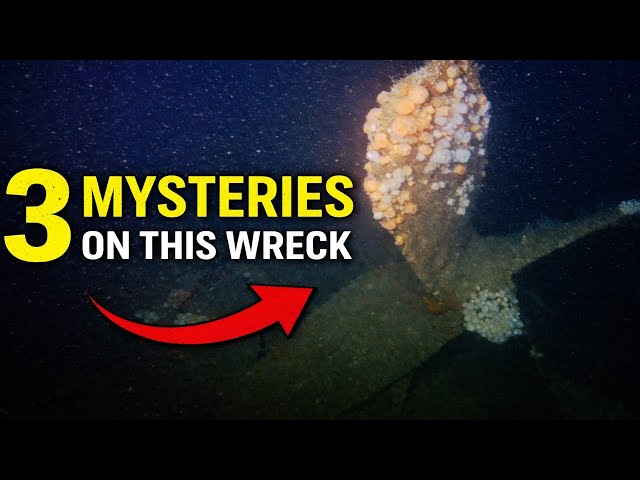
What started as a routine identification dive turned into something far more frustrating… and far more interesting.
On a deep wreck off the southwest coast of Cornwall, believed to be the London Trader, everything quickly stopped adding up. The cargo was wrong. The dimensions didn’t match. The engine configuration told a completely different story. And the deeper we looked, the clearer it became… this wasn’t the wreck we thought it was.
Instead, we uncovered three unsolved mysteries:
• If this isn’t the London Trader, what is it?
• Where is the real wreck of the London Trader?
• And what happened to the SS Seirstad, whose bell was recovered but whose location has been lost to time?
This dive takes you down to 70 metres on a heavily broken steamship, where clues like cargo, boilers, engine layout and wreck dimensions all point in different directions. Along the way, you’ll see how real wreck identification works underwater and why so many wrecks around the UK remain unidentified.
It also highlights a bigger issue in wreck diving: lost knowledge. Information recovered decades ago has disappeared, leaving us to start again from scratch.
If you’re into deep wreck diving, maritime history, or underwater exploration, this is exactly the kind of mystery that keeps us going back.
━━━━━━━━━━━━━━━━━━━━━━
*CHAPTERS*
00:00 The Mystery Begins
Show More Show Less View Video Transcript
0:00
One of the really frustrating things
0:02
that sometimes happens when you're
0:04
exploring deep wrecks is that you
0:06
realize that mysteries have already been
0:09
solved, but that information has been
0:11
forgotten.
0:13
It's even worse when you think you know
0:15
what the solution is, but actually what
0:18
you do is uncover three more mysteries.
0:22
That's what happened with a wreck off
0:24
the southwest coast of Cornwall that
0:27
shown on the charts as the London
0:29
Trader.
0:31
We believed it was a wreck called the SS
0:33
Sir Stead, and in fact, it's something
0:36
completely different. The SS Sir Stead
0:40
was a Norwegian collier that was sunk on
0:43
the 11th of November 1916
0:46
by the famous German submarine
0:48
UC-17.
0:50
They came aboard, laid charges, and blew
0:54
the bottom of out of it.
0:56
But someone about 20 years ago, maybe
0:59
more, found the bell. So, they were
1:02
diving a wreck, they found the bell,
1:04
they recovered it, and they posted a
1:06
photo of the bell on a now defunct
1:09
website called the Southwest Mafia. At
1:13
the time it was a real kind of haven for
1:16
people who were doing deep wreck
1:18
exploration, finding stuff. It had a bit
1:20
of a reputation to it, but it died maybe
1:24
10-15 years ago, and all the information
1:27
from that website has now been
1:29
completely lost and unfortunately can't
1:31
be recovered.
1:33
The good news, such as it is, is that
1:36
somebody took the photo of the bell of
1:38
the SS Sir Stead from Southwest Mafia,
1:41
and they posted it onto wrecksite.eu,
1:44
which is where it currently is and where
1:46
I found it.
1:48
The issue is that it's not been posted
1:53
associated with a wreck, it's been
1:55
associated with a sinking report. Each
1:59
vessel on wrecksite.eu that has been
2:02
known to be sunk has got a sinking
2:03
report which covers things like where it
2:06
was sunk, when it was sunk, any
2:08
information about survivors or how it
2:10
sunk and all those kind of things.
2:13
Unfortunately, the position information
2:15
is rarely particularly accurate,
2:17
particularly for older wrecks like this
2:18
one. 100 years ago they had no GPS, they
2:22
had no radio direction finding. And of
2:25
course, if you've just been torpedoed by
2:27
a submarine, all you're really concerned
2:30
about is getting off the ship. You're
2:31
not really that concerned with with
2:33
where you actually are. So, those
2:35
sinking reports tend to be rough
2:37
guestimates almost of positions. What
2:39
that leaves us then is a mystery. So,
2:42
someone somewhere knows where the SS Sir
2:45
John Franklin is cuz they recovered the
2:46
bell. Unfortunately, that information is
2:49
known to them if they're still with us
2:52
and maybe a small group of other people.
2:54
It's not known to the rest of us. And
2:57
what that really means is that
3:00
the effectively the information has been
3:02
lost. We need to go back out and refind
3:05
it and reidentify the wreck. This hasn't
3:08
just happened with the SS Sir John
3:10
Franklin, it's happened with a whole
3:12
load of wrecks all over the British
3:15
Isles and probably beyond as well. And
3:17
partly it's because I think
3:20
of a culture of secrecy amongst divers,
3:22
they want to keep stuff to themselves,
3:24
but also I think we have this weird
3:26
position legally where people are almost
3:30
discouraged from reporting things
3:32
because of
3:34
all the kind of stuff around um the
3:36
receiver of wreck. Not so much these
3:39
days, in fact not at all these days, but
3:40
certainly back in the day people were
3:42
very worried about the receiver of
3:44
wreck. And also increasingly we're
3:46
seeing, you know, all this legislation
3:48
coming in that I think is probably going
3:50
to push us back towards where we were
3:53
when the SS Stat Bell was recovered.
3:55
Anyway, that's that's my kind of whinge.
3:58
What I'm going to do is now show you a
4:00
dive on a wreck that is very close to
4:03
the SS Stat sinking position.
4:06
You join me here at the bottom of the
4:08
descent. You can see 60-odd meters. My
4:12
buddy Paul there is just attaching his
4:14
strobes to the bottom of the shot line.
4:17
There go mine. You'll have seen that I
4:19
turn them on before I clip them on.
4:22
And that means that I can instantly
4:24
start looking at the wreck. Probably see
4:27
I haven't got a scooter with me today,
4:29
but I did turn on my video lights in the
4:32
descent. And this is
4:34
absolutely typical for what we get at
4:36
the bottom of of a shot line. You can
4:37
see in front of me there there is a wall
4:40
of steel. That's the side of the wreck.
4:43
And just coming over the top of it on
4:46
the top there is a deck winch. And the
4:48
first thing that strikes me is that the
4:51
hold is full of something. Now, I think
4:54
that is coal,
4:56
but I'm not an expert.
4:58
What I would say is when this wreck was
5:00
first dived, it was done by a guy called
5:03
Risdon Beazley, who did it in the 1950s.
5:06
He salvaged an awful lot of wrecks in
5:09
the English Channel, in the area around
5:11
the English Channel. He
5:13
dived this wreck, or he put divers on
5:15
this wreck, and they reported that it
5:17
was full of some sort of mineral.
5:21
They suggested it was magnetite, which
5:24
is an iron ore,
5:26
and to my eyes, at least, looks very
5:28
similar to coal. I've got no idea if
5:31
they brought any of that up and tested
5:33
it or whatever, but the suggestion from
5:35
the 1950s, recorded by the UK
5:37
Hydrographic Office, is that this wreck
5:40
here was carrying magnetite.
5:43
I've looked at it, and it looks like
5:44
coal to me. So, it could be either coal
5:47
or magnetite.
5:49
As you can see here on the dive, I've
5:51
gone past the engine. I've got a boiler
5:53
to my left. On my right-hand side there,
5:57
that is part of the hull. It's heavily
6:00
broken. I'm roughly heading in a forward
6:03
direction. You can see this wreck is a
6:06
complete mess.
6:08
It's badly broken, which is pretty
6:10
standard for all the wrecks in this part
6:12
of the world. This is right in the
6:14
southwest of the UK. We've been diving
6:17
out of Newlyn, which is near Penzance.
6:19
And all the prevailing weather
6:21
conditions here means all the wrecks get
6:23
absolutely battered.
6:25
The good news is that the visibility is
6:27
fantastic. You can also see there's a
6:29
load of fish life. There was a crayfish
6:31
just down there a moment ago. There you
6:33
go, big big crayfish, which is nice to
6:36
see. Those things were super heavily
6:38
fished at one point, but they've sort of
6:41
made a comeback in recent years. Couple
6:43
of things, well, quite a few things have
6:45
made comebacks. Crayfish have made a
6:47
comeback. Octopus have made a comeback.
6:50
We see loads more dolphins than we ever
6:52
did. And last year we also saw whales.
6:56
Now, this is interesting. You can see in
6:57
front of me here, that is a large
7:01
standard Admiralty pattern anchor.
7:04
Typically the sort of thing that you see
7:06
on older ships, and therefore this may
7:08
be a clue.
7:10
The UK Hydrographic Office believe that
7:13
this is a wreck called the London
7:15
Trader. It was built in 1913
7:18
and then sank in 1915.
7:21
Rather unusually, the cause of sinking
7:23
was not enemy action. Wasn't a submarine
7:26
or anything like that. It was actually a
7:28
good old-fashioned storm. So, this The
7:31
London Trader was a ship that was lost
7:33
in the war, but not due to enemy action.
7:36
It was carrying general cargo from
7:39
Dublin to London
7:41
when it sank. So, I think almost
7:43
immediately we can say that this isn't
7:45
the London Trader because this is
7:47
clearly this wreck here is carrying some
7:50
sort of mineral, whether it's coal or
7:52
magnetite, it is not carrying general
7:54
cargo. So, this isn't the London Trader.
7:58
I've no idea why the UK Hydrographic
8:00
Office think it is, but it certainly
8:02
isn't. The other thing
8:04
against it being the London Trader is
8:06
the length of the of the London Trader
8:08
was 60 m. The survey for this shows that
8:12
it's 69 m.
8:14
Once again,
8:15
another useful piece of evidence. So, we
8:18
know this wreck isn't the London Trader.
8:21
Therefore, the big question, of course,
8:22
is what is it?
8:24
As I've been talking, you've probably
8:25
seen that I've moved round the bow and
8:28
I'm now heading back towards the boilers
8:31
and the engine area. So, I'm on the port
8:33
side heading towards the stern.
8:37
Once again, this is this is just a
8:38
heavily broken wreck.
8:40
You can see there's whatever the cargo
8:42
is has spilled on the seabed. There's
8:44
loads of fish life.
8:47
What I'm doing with my torch there is
8:49
just looking for anything off the side
8:52
of the wreck.
8:53
All the usual kind of stuff, maybe some
8:55
bridge gear, maybe some crockery.
8:58
Obviously, it would be wonderful to find
9:00
a bell or a maker's plate or anything
9:02
like that, just something that will give
9:03
us a clue, but there's there's nothing
9:05
here. And in fact, during this whole
9:07
dive,
9:08
we none of the divers and you see
9:10
there's other people around, none of the
9:12
divers actually find anything like that.
9:14
Which is a pretty good indication that
9:17
this wreck has been dived before. That's
9:19
not really a surprise because it's not
9:21
very far away from Penzance {slash}
9:24
Newlyn,
9:25
which back in the day there was a
9:28
charter boat there was a hard boat that
9:30
operated out of there and they were
9:32
diving things in this kind of depth
9:34
range. You You see here, 70 m. So, so
9:36
not super deep. Back in the day, they
9:39
may even have done this on air. So, for
9:41
me, the clues are there that this has
9:43
been dived. Potentially, of course, that
9:46
means that our bell, the SS Cearstad
9:48
bell,
9:49
could have come from this wreck. It's
9:51
not conclusive, but to me, it does seem
9:56
as though it provides a level of
9:58
evidence. Another really good piece of
10:02
evidence is going back to those
10:04
dimensions again. And if you watch my
10:06
other videos about identifying wrecks,
10:08
you know that dimensions, particularly
10:11
length, are very important. This wreck
10:14
here is surveyed as 69 m long. The
10:18
Cearstad, and apologies to anybody who's
10:21
Norwegian if I'm massacring that word,
10:23
by the way.
10:24
The Cearstad was 69.8
10:27
m long. Now, that's a pretty good match.
10:31
Although, what I would also say is a
10:34
whole load of other wrecks were about
10:36
that size. This is a really standard
10:40
1,000-ton
10:41
steamship from early 20th century. As
10:45
I'm diving it,
10:46
everything that I'm seeing, everything
10:48
points to that's what it is. I have I've
10:52
lost count of how many wrecks that I've
10:54
dived that are similar to this.
10:57
And this area
10:58
off the southwest coast of the UK is
11:03
chock-a-block with them because, of
11:05
course, there was a whole load of coal
11:07
being mined in Wales and up on the west
11:11
of the United Kingdom, and that was
11:14
coming round Land's End, and then it was
11:15
going to head up the channel either to
11:17
the big ports or over to France in the
11:19
First World War,
11:22
or to France or the continent, you know,
11:25
before not during the First World War.
11:27
There was a whole load of merchant
11:28
traffic, and ships sank.
11:31
A lot of them due to enemy action, due
11:33
to a whole load of submarine activity
11:35
around here during particular first
11:37
World War, but also as we've seen with
11:39
the London Trader, ships sometimes just
11:42
sank because of bad weather.
11:44
Which is why this area here is one of
11:46
our favorite
11:48
diving locations.
11:51
Loads of reasons. A, there's loads of
11:52
wrecks. B, as you can see in this video
11:55
here, the visibility is absolutely
11:57
fantastic.
11:59
And the other thing is
12:01
not many of the wrecks have been dived a
12:03
lot. Okay, this one seems to have been
12:06
dived, but certainly the ones that are
12:08
further out, they haven't been.
12:11
What you can see here is I've got back
12:13
to the boiler. You can see there's
12:14
actually two boilers. There looks like a
12:16
big one on the right and a little one on
12:19
the left.
12:20
Now, the records that are available to
12:22
me don't show me how many boilers either
12:25
the London Trader or the Sear Stiad had.
12:28
But typically for a 5,000 ton steamship,
12:31
you would expect it to have a single
12:33
large boiler and then potentially a
12:36
smaller donkey boiler, which is I think
12:39
what we've got here. So, the one that
12:40
I'm just going past on the right-hand
12:42
side here, I think this is the donkey
12:44
boiler.
12:45
They were effectively small boilers that
12:48
were kept lit while the vessel was in
12:51
port and would be used to provide steam
12:53
for things like winches in particular,
12:56
but also heating and various other
12:58
facilities on board. You probably
13:01
noticed that the boiler, the smaller
13:03
boiler, was a little bit further forward
13:05
than the the the main boiler. And I
13:08
think that this boiler was once upon a
13:11
time was vertical and has then fallen
13:14
over.
13:15
That's another absolutely standard
13:16
arrangement for the for the donkey
13:18
boiler. I'm not 100% certain why they
13:20
they did have them vertical, but I think
13:23
that potentially that's the the case
13:25
with this one. What you probably just
13:26
seen there is I saw something that just
13:28
caught my eye. I had a look at it. It
13:30
turned out to be absolutely nothing,
13:33
just a bit of brass.
13:35
This area here is where you would expect
13:38
to maybe find some crockery, maybe find
13:41
a maker's plate, maybe find a steam
13:44
whistle, all those kind of things.
13:46
Uh little bit of a spoiler alert, we're
13:48
not going to find any of those. Neither
13:50
me nor any of the other divers on the
13:52
trip, which is a bit of uh
13:54
disappointing. Although I do come up
13:56
with some treasure. And if you hang on
13:59
towards the end, you're going to see
14:00
what the the treasure that I find is.
14:03
Meanwhile, I'm heading towards the stern
14:05
of the vessel. You can see there's the
14:07
side of the hull.
14:09
Really heavily broken down. The stern is
14:12
off to my left, the bow is my right.
14:14
That's that smaller boiler in front of
14:16
me there. I'm not really certain what
14:18
I'm uh what I'm doing here. Maybe
14:21
just spending the time to have a really
14:23
good look. There's the engine there.
14:26
Everything around it has collapsed. In
14:28
and around here, there should be a
14:31
maker's plate, the engine maker's plate.
14:34
Forward of the boilers, you would
14:35
normally expect to find the
14:37
uh builder's maker's plate, but
14:41
not today, unfortunately.
14:43
What I'm doing though, you see there's
14:44
that big net there. I'm just because
14:47
this is 70 m, you get a reasonable
14:50
amount of time on this wreck. I'm just
14:52
taking the opportunity, as you can see
14:54
here, having a really close scan in and
14:57
around, just seeing if I can find
15:00
anything.
15:02
What am I looking for? Something that is
15:06
brass or crockery. That's basically what
15:08
I'm always looking for in these wrecks.
15:12
Just taking the time. You see there's
15:13
bits of fishing gear. There's obviously
15:15
that net, but there's kind of bits of
15:16
rope and stuff around. You've probably
15:18
seen the pots and everything earlier on,
15:21
which or the ropes or the pots, which
15:23
which isn't a surprise. This wreck is
15:25
not too far from Newlyn. Newlyn, one of
15:27
the busiest fishing ports in the UK. And
15:30
wrecks, as you can see on this one,
15:32
attract all sorts of fish life and
15:34
marine life.
15:36
Interesting, there's a ladder there.
15:38
Don't often see those. I think that's up
15:41
against the boiler. There's also a load
15:43
of pipe work down there. You can see all
15:44
the that copper pipe work. So, that
15:46
would have moved steam around from one
15:49
part of the the ship to the other, maybe
15:51
the boiler to the engine or the engine
15:52
to the condenser or something like that.
15:55
Also, a few other
15:57
interesting bits and pieces. One of the
15:59
things that I really would like to do is
16:03
go and actually spend some time on a
16:06
steamship, have a good look around it.
16:08
It would I'd love to be able to go back
16:10
in time and and walk around one of these
16:13
steamships and see all these things when
16:16
they weren't part of wrecks, to try
16:18
figure out what they actually were. It's
16:20
really sad there are very few working
16:22
steamships left in the United Kingdom or
16:25
indeed I I think in the world. So, there
16:28
would have been hundreds, maybe
16:29
thousands, well, no, there would have
16:30
been tens of thousands of vessels like
16:32
this built. And unfortunately, there's
16:36
nowhere really or it's very difficult to
16:38
go and see one. You probably saw just
16:40
there the the strobes flashing away.
16:43
Um and once again, that shows I think a
16:46
couple of things. First of all, it shows
16:48
how good the visibility is. Second, it
16:50
shows the effectiveness of our strobes.
16:53
So, there's probably eight or 10 divers
16:55
on this wreck. Each one of them has put
16:57
a strobe at the bottom of the shot line
16:59
as they come down. And that makes it
17:01
really easy for us to find our way back.
17:04
There you go, you can see there's the
17:05
shot on the right hand side. It's a
17:07
grapple.
17:10
One of the things I think this probably
17:11
shows is how slack
17:14
the water is at the moment. There is no
17:16
current whatsoever on this on this dive.
17:18
The skipper has got it absolutely bang
17:21
on. They've put their shots on the
17:23
highest point of the wreck, which is
17:25
where the engine and the boiler is.
17:28
So, that is a a really good piece of
17:30
work by them. And if I'm honest,
17:32
something that we take completely for
17:34
granted. We're so used to diving with
17:37
really high caliber skippers that we
17:40
often take the fact they can get a shot
17:42
line onto a wreck at this depth so
17:45
accurately. We take that for granted.
17:47
Now, you can see here I'm looking on the
17:49
top of the engine.
17:52
Looking forward, you can see there is a
17:55
very large cylinder, which is the
17:57
low-pressure cylinder. So, typically
17:59
steam in a steam engine
18:01
would come out of the boiler at high
18:03
pressure. It would then go to a smaller
18:05
cylinder, which is a high-pressure
18:07
cylinder.
18:09
And then, once the pressure is reduced,
18:11
it would go to
18:13
another one or even another one
18:16
One of the really interesting things
18:17
about this wreck is that it appears that
18:20
it is only a two-cylinder engine.
18:23
I'm going to come back to that in a
18:24
minute because, as you can see, I've
18:26
just spotted something down there, which
18:28
is
18:29
I don't know what that is, the thing
18:31
with the wheel on,
18:32
but there was also a porthole down
18:34
there. So, there's there's a few
18:36
interesting bits and pieces on this
18:38
wreck.
18:39
I'm not really that interested in
18:41
portholes. This is going to be a cheaply
18:43
made ship. The portholes will be cheap
18:46
and not very interesting. But, it's
18:48
interesting because
18:50
a wreck that would have been dived a lot
18:53
would probably not have any portholes
18:55
left on it or or or very few.
18:59
We haven't seen many portholes on this
19:01
wreck, but it's interesting that there
19:02
is at least one back there.
19:05
What I'm doing at the moment, though, is
19:07
heading towards the stern. So, off on my
19:09
left-hand side there, that is the
19:11
starboard side of the boat. So,
19:14
uh there's some lovely stuff on there.
19:15
You can probably see the
19:17
uh pink sea fans. Once upon a time, they
19:20
were thought to be endangered and very
19:22
rare. We see them on all of the wrecks
19:25
that we dive, pretty much, and they all
19:27
seem pretty healthy, as those ones do
19:29
there.
19:30
The other thing you can see is the stern
19:31
of the ship actually seems to be
19:33
standing up relatively well.
19:37
What I'm doing now is actually heading
19:40
down the uh the starboard side. I'm off
19:42
the side of the wreck. There's something
19:44
I I I I quite like to do. I look on the
19:47
seabed. You often see things other
19:49
people have missed.
19:51
People tend to concentrate on the top of
19:53
the wreck. I I do like to kind of scour
19:56
around the side, and and you do find
19:58
interesting things there. Nothing
19:59
interesting in in this one, though, just
20:01
the sides of the wreck, which have
20:03
fallen outwards, and you can see those
20:04
bits of hull all and everything on the
20:06
seabed.
20:08
I guess it's also a good point to
20:10
highlight the fact that I've got my
20:11
Shearwater overlay in the bottom
20:13
left-hand side of the screen.
20:15
Anybody wants to know how to do that,
20:18
you should go onto Eric Stotts' YouTube
20:20
channel. He's the guy who's done all the
20:22
work to make that happen. I love it. I
20:24
think it works really well.
20:27
What you can see on it here is that I've
20:30
got about 60 minutes TTS. In fact, just
20:32
before that, you can see there is the
20:34
prop. It's a large iron four-bladed
20:37
prop.
20:39
The reason it's still there is cuz it's
20:40
not brass. Once again, further
20:43
confirmation that this is a really cheap
20:45
ship. The other thing you can see is
20:47
that the the wreck
20:50
has completely collapsed at this point.
20:53
All the superstructure that would have
20:55
been above, you know, all the hull that
20:57
would have been above the prop at this
20:59
point has all completely gone. It's
21:01
lying around me on the seabed.
21:03
So, another good example of how broken
21:06
and how deteriorated this wreck is,
21:09
other than a bit of the hull that we've
21:11
just seen there on the starboard side,
21:14
you know, most of this wreck is totally
21:16
flat. You've seen the bow was flat, the
21:18
stern is flat. All there is really is
21:21
the area around the engine and the
21:24
boilers. Rest of it has completely
21:28
completely gone.
21:29
And that's the reality for most of these
21:31
wrecks.
21:32
Most of the ones that we dive. The
21:34
somebody once told me that we're living
21:36
in the golden age of wreck diving.
21:40
Actually, we're at the end of the golden
21:42
age of wreck diving because all of these
21:44
wrecks were sunk in the early part of
21:47
the 20th century or the late 19th
21:49
century.
21:50
There are never going to be as many
21:52
wrecks as they were in that time period,
21:55
obviously due to the wars and the amount
21:58
of shipping and the fact that they
22:01
didn't have all the modern stuff that we
22:03
had. So, those wrecks
22:05
they were created, but they're all
22:08
deteriorating, they're all collapsing,
22:10
they're all falling apart. And once they
22:15
completely fall apart, once they are the
22:18
same level as the seabed and therefore
22:20
vulnerable to things like trawling and
22:22
all that kind of stuff, there will be no
22:24
more wrecks. It's a really It's a really
22:27
interesting thing to think is that
22:30
we, right now,
22:32
we are so fortunate as wreck divers that
22:36
there is so much to see. There are so
22:38
many interesting things, but nobody else
22:41
will have that opportunity.
22:43
What I'm doing here now though is I'm
22:45
looking at the the prop shaft. Also, you
22:48
can see I'm looking at another diver
22:49
over there. That's the bit of the wreck
22:51
that I've just come down, but you can
22:52
see the prop shaft here. It's not very
22:54
big. So, it didn't take
22:57
didn't carry that much power. Therefore,
23:01
uh we've already seen that from the
23:02
engine. The engine was relatively small
23:04
and therefore
23:06
this would have been a old This was an
23:09
old slow steamship. So,
23:13
once again, this ties in pretty much
23:15
with that late 19th century, beginning
23:17
of the 20th century. Everything screams
23:20
that.
23:21
One of the interesting things about the
23:22
Sierstad is that it was built in 1900.
23:27
So, absolutely fits really nicely with
23:31
this wreck and the age of it and all
23:33
those kind of things.
23:34
The big issue that I have with this
23:37
being the Sierstad is that the engine
23:40
was a two-cylinder engine. According to
23:43
the records that we have, the Sierstad
23:46
had a three-cylinder engine.
23:49
I've checked on wrecksite.eu,
23:51
which says it has a three-cylinder
23:53
engine.
23:54
I've been to the Lloyd's Register,
23:56
and it also says it's got a
23:58
three-cylinder engine.
24:00
So, it's really unlikely that all of
24:03
those documents are wrong,
24:05
particularly the Lloyd's Register,
24:08
because obviously they had a particular
24:11
interest in making sure the details are
24:12
right, and they had ship surveys and all
24:14
those kind of things. So,
24:17
I think we can say conclusively that
24:19
this isn't the Sierstad.
24:21
For completeness, I also checked the
24:24
London Trader, and
24:26
that has three cylinders as well. So, we
24:29
end up with a whole load more questions
24:32
than answers.
24:33
What you can see I'm doing here though
24:34
is I've just found myself a nice little
24:37
porthole.
24:38
Um I'm going to pull it out, and there
24:40
it is.
24:42
Once again, not particularly exciting,
24:45
but sometimes on dives you've got to
24:47
take what you can find. So,
24:50
a nice little porthole. It's I've left
24:53
it down there.
24:54
Anybody wants a porthole, this is where
24:56
you can find one on this wreck that
24:58
isn't the London Trader.
25:01
It isn't the SS Dad. It is something
25:03
else completely different.
25:06
Probably carrying coal. Probably about
25:09
70 m long. Probably World War One.
25:13
That sort of era.
25:15
But definitely unidentified. Unless out
25:18
there, somebody has got something from
25:20
this wreck
25:22
that has not been recorded, that they've
25:24
kept to themselves. In which case, if
25:26
you're watching this video and you've
25:28
got that piece of information, I would
25:30
love to have it because I would
25:32
Well, I just love solving mysteries as
25:34
everybody who watches my channel knows.
25:37
I would just love to know what is the
25:39
answer to this conundrum. And it's not
25:43
just this wreck. There are a whole load
25:45
of other ones like it. So many of these
25:49
small collies, these thousand ton
25:51
collies that have no identities. And it
25:55
And it would just be wonderful to to
25:58
solve all of these mysteries or solve
26:00
some of these mysteries.
26:02
But unfortunately, that's not going to
26:04
happen today.
26:06
The other mysteries, of course, are
26:08
where is the London Trader?
26:10
Where is the SS Dad? Now, somebody knows
26:12
the answer to that one. Whoever got that
26:15
bell,
26:16
they they know what wreck it came out
26:18
came from. And
26:20
I would love them to tell us. I would
26:22
love to know so that we can update the
26:24
record, put it on wreck site.
26:26
And then everybody will know.
26:29
Now,
26:30
earlier on in the video, I promised you
26:32
treasure.
26:33
And you've obviously seen those couple
26:35
of port holes that I've pulled out. But
26:37
that isn't the treasure that I was
26:38
talking about. The treasure that I'm
26:41
going to get is one of these things
26:43
here. You can see they're crayfish. And
26:46
And these are good good sized ones as
26:48
well. There's a lot of them. And As I've
26:51
already mentioned, we see this on the
26:53
deep ship wrecks. We see that they've
26:56
kind of come back from being overfished
26:58
in the 1970s. Boom, all of a sudden
27:00
they've they've reappeared, and they've
27:02
reappeared at good sizes as well. The
27:05
inshore wrecks have have smaller
27:07
crayfish, not quite, in my view anyway,
27:10
at the size we can eat yet. But these
27:12
ones here, on this wreck, as you can
27:14
see, there is a ton of them.
27:16
And anyone who's ever eaten one will
27:18
tell you that they make mighty fine
27:21
eating. Some people will tell you that
27:22
it is better than lobster.
27:24
I'm not that much of a connoisseur. What
27:27
I will tell you is that I really enjoy
27:29
eating them in the same way that I
27:31
really enjoy eating lobster.
27:34
Some people are going to get upset by me
27:36
grabbing one of these and taking it up.
27:37
All I would say is that this is about
27:39
the most sustainable way of fishing.
27:43
This is hand-caught. There is a load of
27:46
them down here. You can see that they're
27:48
not in any way endangered. We have them
27:50
all over these deep wrecks. I'm taking a
27:53
large one that is mature. I'm taking a
27:55
male, so the females are are absolutely
27:58
fine, and I'm going to eat it myself.
28:01
This is not for sale. I'm not giving it
28:03
to anyone else. This is going to go on
28:05
my barbecue, and I'm going to really
28:06
enjoy it. What I've just been doing
28:08
there, you can see the other divers with
28:10
me. One of them is my buddy Paul. I've
28:13
just told him that I'm going to be
28:14
grabbing one of these things, and I've
28:16
also been getting my bag off my
28:19
cylinder. that you probably saw my
28:20
cylinder come into shot. That was That
28:23
was just what's happening here. Now, you
28:25
look at these things and you think, "Ah,
28:26
it's easy to get one of these." But
28:28
these things are spiky, and they are
28:31
pretty strong. They are in their natural
28:33
environment, and it's not going to be
28:35
very happy at all, as you can see, when
28:37
I grab it. And there you go. It tries to
28:40
tries to escape.
28:42
Um, I'm not having any of that. There
28:43
you go. I grab it, push it down, and
28:45
what it's actually doing now is, as you
28:47
can see, it's kicking. It also held onto
28:49
the wreck for a bit with its legs.
28:52
But, the unfortunately, that's not going
28:54
to save it. It's going to go in my bag
28:56
there. And you can see how big that is
28:58
by the size of the tail compared to the
29:00
size of my hand.
29:02
So, although we've not identified the
29:04
wreck, although we haven't found
29:06
anything particularly notable, I am at
29:09
least going to have something to eat.
29:10
And for me, that that's a pretty decent
29:14
result. In fact, here go. This is where
29:15
it's holding onto the wreck. You can see
29:16
there its legs are wrapped around a bit
29:18
of it while I'm while I'm getting in the
29:20
bag. It's not going easily. The other
29:22
thing you can't actually hear is these
29:24
things make a noise when you grab them
29:25
as well. And this one was um
29:28
absolutely screaming. So,
29:30
it's not really that daft. Presumably,
29:32
what it's doing is is warning the other
29:34
ones or telling the other ones. Anyway,
29:37
um none of them came to its assistance.
29:38
They've all kind of let me grab it.
29:40
They've all let me put it in in in in my
29:41
bag and there it's going to it's going
29:43
to go up to the surface. Now, whenever I
29:45
see these things, I always think of the
29:47
alien films, the kind of uh the face
29:50
suckers that you get in those.
29:52
I think this must be where the um where
29:56
the inspiration came from. I think I'm
29:58
asking one of the other guys if he wants
29:59
me to catch one. Nobody else is
30:01
interested.
30:02
So, I think this is going to be the
30:05
point at which we decide that our dive
30:07
is done. You can see on my TTS there
30:09
I've got 99 minutes. I've been on the
30:11
bottom I've been down about 33 sorry,
30:15
32. So, my total run time
30:18
at the moment is going to be about 132
30:20
minutes. So, 2 hours 10.
30:23
Standard for us on these dives is no
30:26
more than 150 minutes. So, I'm well
30:28
inside that.
30:30
I also know that I'm going to switch to
30:32
1.5 PO2 on my deco stops, and that will
30:36
chop off a bit of time. You probably
30:38
just saw there my buddy giving me the
30:40
let's go up signal.
30:41
There is the shot line. You can see it's
30:44
tied to the wreck with the waster. So,
30:47
it's going to be really easy to find it,
30:49
really easy to get back, really easy to
30:51
ascend. I think, as I always do at the
30:53
end of any dive,
30:55
it's just part of me. I I always want to
30:57
stay down a bit longer. You can see
30:59
there I'm having a look at another
31:00
crayfish. Maybe I'm thinking I should
31:02
get I should get another one. But, I've
31:04
only got one bag. And if I put those two
31:07
in together, well, it's it's not a
31:09
particularly big bag, but if I if I put
31:11
them in together, A, there might not be
31:12
room. B, it'll be difficult to get them
31:14
in. And the other thing is I think they
31:17
potentially might fight each other.
31:19
Lobsters and stuff will do that. I've
31:21
got no idea if if crayfish or crawfish
31:23
or whatever you want to call them will
31:24
do that. So, there you go. You see I've
31:26
just turned off my torch. You probably
31:28
seen the strobes flashing as well. You
31:30
probably seen the other divers. So, it
31:32
is time for us to
31:34
say goodbye to this wreck. I can't
31:36
imagine I will ever come back to this
31:38
again. And that's one of the other
31:40
interesting things about this kind of
31:42
diving cuz there are so many wrecks even
31:44
close in relatively close in like this
31:46
one. There's so many wrecks that
31:48
basically unless it's particularly good
31:50
or particularly special, it's only going
31:52
to get done by me anyway once. There's
31:55
so much choice.
31:57
End of dive admin. What's going on here?
32:00
You can see I've turned off the video
32:01
lights on my scooter. There are my
32:04
double strobes. They're on that John
32:06
clip. I'm going to pull those off. If
32:08
you want to know more about my strobes,
32:09
I've uh I've got a video. I'll put a
32:12
link to it. You can go and find out
32:13
about that. But, that double strobe
32:15
setup works really well for me.
32:18
See my buddy's there on the shot line
32:19
just turning them off. I'm going to clip
32:21
them on. They normally go on my shoulder
32:24
on the right-hand side. I've got a clip
32:26
that I put them there. That just keeps
32:28
them out of the way for the ascent. You
32:29
can see there's uh two other divers.
32:32
That uh the guy with the white gloves, I
32:35
I that's James on his new XCCR. I think
32:38
he used to have a red beard, but he like
32:41
everybody else he got rid of that and
32:43
he's got an XCCR, absolutely loves it to
32:45
bits. I think this is one of his first
32:48
deeper dives with it. The other diver is
32:50
Paul. He's someone I've done a whole
32:53
load with. He's another guy in an Inspo.
32:55
You can see there off to the right hand
32:56
side with the yellow box.
32:59
One of the great things about Paul is
33:00
he's a fantastic diver, really good
33:02
bloke. Also, something of a rock star as
33:05
well. So, he's just revived his musical
33:08
career.
33:09
They've got the band back together
33:10
again. They've released a single and I
33:14
think they're trying to be the British
33:16
or the England World Cup theme tune. So,
33:20
good luck with it to them with that.
33:23
One of the interesting things on this
33:24
dive as you can see is a whole load of
33:26
divers have come back to the shot
33:28
together.
33:29
And what I'm doing is taking a bit of a
33:30
video of it.
33:32
This often happens at the end of dives.
33:34
You just end up with a big load of
33:36
divers on the shot line. We're all
33:38
ascending up here. You can see my my
33:40
depth is up to 50 odd meters there. I'm
33:43
just recording cuz I
33:45
This is a part of the dive that I think
33:47
looks really cool. You can see it's it's
33:49
quite dark down there, but as I'm coming
33:51
up it's getting lighter
33:53
and pretty much in a minute we're all
33:55
going to get to the lazy shot.
33:57
And I'm recording this cuz these kind of
34:01
parts of dives are often the bit that
34:04
people don't see. I think it's really
34:07
interesting. If you don't do this sort
34:08
of diving, the techniques associated
34:10
with technical diving or certainly the
34:12
way we do technical diving probably have
34:15
quite a lot of interest. So, the strobes
34:17
at the bottom and then the lazy shot
34:19
system. I mean, the lazy shot system it
34:21
always amazes me that it's not used more
34:23
widely in other parts of the world, but
34:26
but I I do know that it isn't. For us
34:28
it's absolutely fundamental. It's so
34:30
important
34:32
that we
34:34
have this system for
34:36
drift decompression. You can see there's
34:38
the the lazy shot just come into view.
34:41
You can see there's a whole load of tags
34:42
on it.
34:43
You can see the the prussic loop from
34:45
the the main shot line to the main shots
34:47
on the right, the lazy shots on the
34:48
left. You can see the the clip there
34:51
that allows it to to break. You can also
34:53
see me there. I'm just going to get my
34:57
my tag off it.
34:59
So,
34:59
the poor old video camera's getting
35:01
abandoned there. See, I've just taken my
35:03
tag off it. That's going to go on my
35:04
right shoulder along the rest with the
35:06
rest of my gear. Everyone else is
35:08
picking up their tags as well. There's
35:11
still a few divers still to come.
35:14
And obviously, the last person will
35:16
release the lazy shot. It will then will
35:19
then all float next to the lazy shot in
35:21
the current doing our deco. So, you can
35:23
see my first stop on my dive computer is
35:25
33 m. I'm currently about 45, so I
35:29
should actually be moving up. I should
35:31
be getting up to my first deco stop so I
35:34
can
35:35
decompress as efficiently as possible.
35:37
But, although I am moving up a bit, you
35:40
can see what I'm mainly doing is is
35:41
watching the lazy shot and I'm obviously
35:43
taking a bit of video. So, that's that's
35:45
part of it. I think
35:47
in the end I get a bit bored of doing
35:49
that and I and I just sack it.
35:51
I've got plenty of other video footage
35:53
of people releasing lazy shots.
35:56
So, I don't know why I think I I need to
35:59
and what I should obviously be doing is
36:01
is what I said is is just getting up.
36:02
And you can see I'm kind of I'm kind of
36:04
stuck almost like half and half. Part of
36:07
me wants to get up and so I'm going up a
36:09
bit. Another bit of me wants to get some
36:11
more video footage and you can see there
36:13
we go. I'm just That's James there with
36:15
his XCCR. He likes to dive with his
36:17
cylinders on his left. You can see there
36:19
he's he's got kind of like a deep mix
36:21
and a and a 50%. Most people like to do
36:24
what Paul's doing, which is have a
36:26
cylinder on either side. But hey, it's
36:29
it's whatever whatever works for you, I
36:32
guess. I'm I'm definitely in the poor
36:33
camp. I have dived with two cylinders on
36:35
the left. I just prefer to be more
36:37
balanced to have the two cylinders on
36:39
the right. I think what you can see now
36:41
is actually the dive There's two more
36:43
divers. You see the one on the right.
36:45
Well, there's two on the right, but the
36:46
the one on the far right. And there's
36:47
another one who's further down. I think
36:49
the one that's further down has released
36:52
the lazy shot. You can also see as we're
36:55
coming up how much lighter the water is
36:58
getting. And as you can see there,
36:59
looking all the way up the lazy shots,
37:01
you can see it's super bright up near
37:03
the surface.
37:05
So, what's going to happen now is I'm
37:07
going to finish the rest of the dive,
37:09
going to do all my decompression, get
37:11
back on the boat, and that's where the
37:13
discussion starts. Because we thought we
37:15
were going to go down there and
37:18
probably confirm it was the SS Caesarea
37:20
Stadt. In fact, what has happened is
37:23
something completely unexpected.
37:25
We know it's not the Caesarea Stadt.
37:27
We know it's not the London Trader.
37:30
What we don't know is what actually it
37:32
is.
37:33
And probably the best chance of
37:36
identifying it has just gone because we
37:40
will never dive this again.
37:41
There's nobody else in this area who are
37:44
diving these wrecks. And what is going
37:47
to happen is the wreck is going to
37:48
continue to degrade and decay and
37:51
collapse into the seabed. And as that
37:53
happens,
37:55
all those bits that might identify it
37:57
will be disappearing under the seabed as
37:59
well. And it's my opinion that this
38:01
wreck will almost certainly never be
38:04
identified, which is actually really
38:06
sad, particularly for somebody like
38:08
myself who loves solving underwater
38:10
mysteries and wants to see them being
38:12
solved.
38:14
Now, if you've enjoyed this video and
38:16
want to see some more underwater
38:17
mysteries
38:19
that haven't been solved, I've got a
38:21
whole load more that I'm just going to
38:22
post up here.
38:24
Please
38:25
click on it, go and have a look at it.
38:27
What you could do first of all though is
38:30
you could leave me a like, you could
38:32
share my post or share my video, you can
38:35
drop me a comment.
38:37
And of course, most of all, please go
38:39
and watch another video. In the
38:41
meantime, I'm Dom Robinson, deep wreck
38:44
diver, and I'll look forward to seeing
38:46
you on my next video.
#Sports