Up next in 10

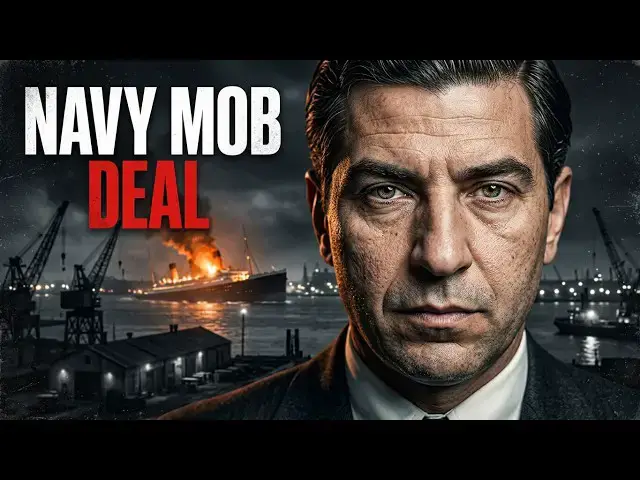
The U.S. Navy made a deal with the most dangerous criminal in America — and then spent 30 years trying to hide it.
In 1942, with German U-boats sinking American ships off the East Coast, the Navy discovered it could not secure New York's docks without help from the one group it had spent a decade prosecuting: the Mafia. This is the true story of Operation Underworld — how Lucky Luciano, serving a 30-to-50-year sentence in a maximum-security prison, became an unlikely asset to the United States war effort.
From the burning of the Normandie to the invasion of Sicily, from secret meetings on park benches to classified files sealed until the 1970s, this documentary traces the strangest alliance in American military history — and asks what a nation owes the criminals it recruits.
📚 SOURCES & FURTHER READING:
- The Herlands Report (1954, declassified 1970s)
- "Operation Underworld" by Tim Newark
- Naval Intelligence Records, Third Naval District
- Meyer Lansky testimony (various interviews)
---
DISCLAIMER: This documentary is based on declassified government records, court testimony, and historical research. All claims are sourced from public documents. This content is for educational and historical purposes only.
#truecrime #mafia #documentary #organizedcrime #gangsters #unsolved #coldcase #cartel #crimestory #underworldshadows
Show More Show Less View Video Transcript
0:05
[sighs]
0:12
In the winter of 1942, [music] the
0:15
United States Navy opened a file it
0:17
could not show to Congress and gave it a
0:20
name, Operation Underworld. [music]
0:23
Inside that file was a deal so backward
0:25
it still sounds invented. The Navy had
0:28
decided to ask the very men the district
0:31
attorney had spent years sending to
0:34
prison to stand guard on the peers of
0:36
New York. Not sailors, not soldiers.
0:39
[music]
0:40
A fish market boss with fists like
0:42
cinder blocks and a convict 6 years into
0:45
a 30 to 50year sentence. They were the
0:49
only people on the Atlantic coast who
0:51
could walk onto a dock at midnight and
0:53
make every long shoreman there tell them
0:56
the truth. It began as these things do
0:58
with a fire. On the 9th of February
1:01
1942, the Normandi, a captured French
1:05
[music] liner being converted into a
1:07
troop ship, caught flame at Pier 88 on
1:10
the Hudson, and by nightfall, the
1:12
thousand ft hull had rolled onto its
1:15
side in the frozen water. The official
1:18
finding called it a welding spark. Naval
1:21
intelligence did not believe a word of
1:23
it. A careless torch does not sink the
1:26
largest ship in the harbor at the exact
1:29
moment German submarines are starving
1:32
the Atlantic coast. The fear was not
1:34
paranoia. In the three months after
1:37
Pearl Harbor,
1:39
120 American merchant ships had gone to
1:42
the bottom, many within sight of the
1:44
Eastern Shore, and no one could say
1:47
whether Ubot were being refueled
1:49
somewhere along the coast or from which
1:52
pier the word had passed. A nation at
1:54
war could not move a single crate
1:57
without trusting the men who handled the
1:59
rope. And the Navy, it turned out, could
2:02
not get a single one of those men to
2:04
talk.
2:09
So the Navy did the obvious thing first.
2:12
It sent its own officers down to the
2:14
waterfront to ask questions, and it
2:17
discovered quickly that the peers of New
2:19
York did not answer questions from men
2:22
in uniform. Long shore men went silent,
2:25
doors closed at the sight of a
2:27
regulation coat. The docks ran on a
2:30
different law and no sailor could read
2:32
it. The harbor was the front line of the
2:35
war and the navy could not get a single
2:38
man on it to speak. The job fell to
2:40
Commander Charles Hafendon [music]
2:42
of the Third Naval District, a
2:44
counterintelligence officer who
2:46
understood faster than most what he was
2:49
being asked to do. He could not secure
2:52
the harbor from the outside. The war
2:54
would be won or lost on the cargo and
2:57
the cargo [music] belonged to [singing]
2:58
men who did not work for the government.
3:01
He had to get someone inside, someone
3:03
the peers already trusted. And the only
3:06
men the peers trusted were the men who
3:09
ran them. And the men who ran them were
3:11
criminals. That is the ugly arithmetic
3:14
of Operation Underworld. The Navy had
3:17
spent a decade and every prosecutor in
3:20
Manhattan trying to put those same men
3:22
in prison. Now it needed them on its
3:26
payroll. So Naval Intelligence went of
3:29
all places to the district attorney's
3:31
office. The very people who had written
3:34
the indictments and the office of
3:36
Manhattan [music]
3:37
District Attorney Frank Hogan did not
3:40
refuse.
3:44
[music]
3:45
Hogan's assistant, a prosecutor named
3:47
Marray Gerine, had spent years putting
3:50
mobsters away, and now he began pulling
3:53
their files. The government did not have
3:55
to look far for its new informants. It
3:58
already had their photographs, their
4:00
fingerprints, and their addresses. The
4:03
first file that landed on the desk
4:05
belonged to a man who would come to
4:07
stand for the entire operation. He ran
4:10
the Fulton Fish Market, controlled the
4:13
Seafood Workers Union, and carried a
4:15
police record reaching [music] back to
4:17
1917.
4:19
Homicide, burglary, conspiracy,
4:22
extortion. His name was Joseph Lanza.
4:25
The docs knew him by another name. They
4:28
called him Socks. He was a made man in
4:30
the Luchano outfit, a 275-lb
4:34
enforcer who earned the nickname the
4:36
honest way by hitting people with fists
4:39
like cinder blocks. He was not high
4:42
rank, but he held the fish market the
4:44
way a man holds a door key. And through
4:47
that market, he held a piece of every
4:50
pier on the East River. The first
4:52
meeting happened the way these meetings
4:54
always happen in the records off the
4:57
books. Around midnight on the 26th of
5:00
March 1942,
5:02
on a bench in Riverside Park, three men
5:06
sat down to talk about saving the United
5:08
States. One was Gerine, the prosecutor,
5:11
[music]
5:11
one was a lawyer. The third was the
5:14
gangster himself. No minutes were kept,
5:17
[music] no deals were signed, and no one
5:19
shook hands for the camera. There was no
5:21
deal on the table. And they told him so
5:24
plainly. No immunity, no money, no
5:27
pardon, only the war. Lanza listened to
5:31
all of it. And then he gave the Navy the
5:33
sentence that became the whole
5:35
arrangement. [music] You let me know
5:36
where you want the contacts made or what
5:39
you want, he said, and I will carry on.
5:42
That was it. The [music] most powerful
5:44
fighting force on earth negotiating
5:47
through a fish market racketeer. But
5:49
there was a problem neither side
5:51
mentioned on that bench. Lanza was under
5:54
indictment for extortion and conspiracy
5:57
and the men on the docks knew it. Some
6:00
of them held back suspicious that the
6:02
fish boss had turned government
6:04
informant and a name that could not be
6:07
trusted was worth [music] nothing. So
6:09
Lanza made a suggestion that changed
6:12
everything. Bring in the boss, he said.
6:15
The word of Charlie Luchano may give me
6:18
the right of way on every dock from
6:20
Brooklyn to the battery. Charlie
6:23
Luchano, Lucky Luchano, the man who had
6:26
reorganized the five families of New
6:28
York and who was running them even then
6:31
from a prison cell far upstate. Even
6:34
locked in Danamora, one nod from him,
6:37
opened every dock on the Atlantic. To
6:40
reach him, the Navy needed an
6:42
intermediary. And the district attorney
6:44
knew the one man who had the boss's ear.
6:47
Mayor Lanski, the accountant of the
6:50
underworld, a Jewish rakateeer who had
6:53
spent the 1930s beating Nazi bundists in
6:56
the streets of Yorkville. Lansky would
6:59
later describe one of those nights.
7:01
Several hundred men in brown shirts, a
7:04
stage draped in swastikas. We attacked
7:07
them in the hall, he said, and threw
7:09
some of them out the windows. A criminal
7:12
and on the subject of Hitler, a fanatic.
7:15
The arrangement was rehearsed over
7:17
breakfast at Long Champs in Midtown.
7:20
Lansky, the lawyer, Polikov, and Gerine,
7:23
the prosecutor, sharing a table like
7:26
three men in a very ordinary business.
7:29
And the terms were repeated once more
7:31
for the record. Luchano would get
7:33
nothing, no promise, no immunity, no
7:37
money, and still the answer came back
7:39
that he would help. Charles Luchano was
7:42
6 years into a 30 to 50year sentence for
7:46
running the city's prostitution [music]
7:48
racket. He was the man Thomas Dwey, the
7:51
very prosecutor who sent him away, had
7:53
called the most dangerous criminal in
7:56
America. They had buried him in
7:58
Danamora, a stone fortress near the
8:01
Canadian border, as far from the docks
8:04
as the state could put him. The Navy was
8:07
about to bring him back.
8:10
>> [music]
8:15
>> Not out, the Navy could release no one.
8:17
Closer. Closer to the peers, closer to
8:21
the war, closer to the strangest job
8:23
[music] the government of the United
8:25
States had ever handed its most famous
8:28
convict. The move was handled the way an
8:31
intelligence service handles a defector.
8:34
A Navy officer handed New York's
8:36
corrections commissioner a letter
8:39
explaining the operation, let the man
8:41
read it, and then took the letter back
8:44
and [music] burned it in front of him.
8:46
On the 12th of May 1942,
8:49
Luchano left Danora for Great Meadow, a
8:52
prison closer to the city, riding with
8:55
eight decoy prisoners, so that no one on
8:58
the outside would ask why Charles
9:00
Luchano was suddenly being moved. and
9:03
nobody [music] had told him why. In
9:05
early June, Lansky, Lanza, and Picooff
9:09
arrived at the visiting room, and
9:11
Luchano looked up at the three of them
9:13
with genuine confusion. "What the hell
9:16
are you fellows doing [music] here?" he
9:18
said. Then they told him the Navy wanted
9:21
the peers watched, and it wanted his
9:23
name to do the watching. Luchano did not
9:26
ask what was in it for him. Not yet. He
9:29
asked how it would work. On the 4th of
9:31
June, the plan was set. Luchano gave
9:35
Lanza the single most valuable thing in
9:37
the American underworld, permission to
9:40
use his name on the street. From that
9:42
day, a doc boss who refused to talk
9:45
[music] was refusing Lucky Luchano. And
9:48
in 1942, almost nobody refused Lucky
9:52
Luchano. What happened next is the part
9:55
that survives every debunking because it
9:58
was measurable. The strikes on the New
10:01
York docks stopped. [music]
10:02
Cargo moved without interruption. Long
10:05
shore men began passing word of anything
10:07
strange. A stranger on a pier, a boat
10:11
that lingered too long. A man asking too
10:14
many questions about a manifest. The
10:17
peers went quiet and they stayed quiet
10:20
for the rest of the war. Years later,
10:22
under oath, a former police officer
10:25
named Morris Kelly, who had joined Naval
10:28
Intelligence after Pearl Harbor,
10:30
described what the operation had
10:32
actually achieved on the ground. From
10:35
the time Commander Hafendon made these
10:37
contacts with Luchano, he testified
10:40
there was a very open and cooperative
10:43
condition between the [music]
10:44
investigators and the men who were
10:46
influential on the docks of New York.
10:49
[music] a cop describing the criminals
10:52
who had done what his own department
10:54
could not. [music]
10:58
Then the war moved and the arrangement
11:00
followed it when the allies prepared to
11:02
invade Sicily in 1943.
11:06
Intelligence officers came to Great
11:08
Meadow and asked Luchano for his
11:10
contacts on the island. His name, it
11:13
turned out, worked in Italian, too. It
11:16
opened doors, loosened tongues, and
11:19
helped locate the headquarters of the
11:21
Italian naval command. Luchano went
11:24
further. He offered to be parachuted
11:26
into Sicily himself to rally the
11:28
resistance. High command said no. The
11:32
record still argues over how much of it
11:34
truly mattered. While the boss gave
11:36
orders from a prison cell, the man who
11:38
had started it all went the other way.
11:41
In January of 1943,
11:44
Sox Lanza pleaded guilty to extortion
11:47
and conspiracy and was sentenced to
11:49
seven and a half to 15 years. At his
11:52
hearing, no one mentioned that he had
11:55
just spent the better part of a year
11:57
guarding the peers for the United States
11:59
Navy. The deal he had made offered no
12:02
protection. It never had.
12:08
And here is where the honest version of
12:11
this story gets cold. For decades
12:13
afterward, the men who ran the operation
12:16
could not agree on what it had actually
12:18
done. In 1947,
12:21
a naval officer played down Luchano's
12:24
contribution. [music]
12:25
A later reported by Governor Duey called
12:29
his services valuable. [music] The truth
12:31
sits somewhere in the fog between the
12:33
two claims, and the [music] fog is the
12:36
point of the whole story. What is not in
12:38
dispute is the arrangement itself that
12:42
the [music] United States government
12:43
took the man it had locked up as its
12:46
most dangerous criminal and for the
12:48
duration of a world war put him [music]
12:50
to work. When the war ended in 1945,
12:54
a debt sat on the table [music] and
12:56
everyone involved knew it. No one wanted
12:59
to be the one to pay it, but someone
13:02
[music] would have to. The debt was paid
13:04
on the 3rd of January, 1946. Governor
13:08
Thomas Dwey, the same Thomas Dwey who
13:11
had convicted Luchano in 1936, [music]
13:14
he commuted the sentence on one hard
13:17
condition that Charles Luchano be
13:20
deported to Italy and never set foot in
13:22
the United States again. In February,
13:26
two federal agents walked him out of
13:28
Sing Singh to Ellis Island, the same
13:31
harbor where the whole thing had started
13:33
4 years [music] earlier. The ship
13:35
carried him to Naples, then to Palamo,
13:38
and finally to Havana, where he [music]
13:40
would spend years trying to run an
13:42
empire from a distance he could not
13:45
close. He never saw New York again.
13:47
[music] The story did not end cleanly
13:50
because no story that pays a gangster
13:52
ever does. Within months, federal
13:55
narcotics agents were whispering [music]
13:57
that Luchano had bribed his way out,
14:00
that the wartime service was a cover
14:03
story. The rumors followed Duey [music]
14:05
into his presidential campaigns and they
14:08
stuck. A man who had been dangerous for
14:11
30 years was suddenly in the retelling
14:14
also a liar. [music] So in 1954, Duey
14:18
did the one thing that could settle it.
14:20
He ordered a full investigation into
14:22
Operation Underworld. Every meeting,
14:25
every officer, every file. The Hurland's
14:28
inquiry gathered thousands of pages.
14:31
Then the state sealed them and they
14:33
stayed sealed until the mid 1970s.
14:39
What the sealed record [music]
14:41
ultimately showed no longer mattered
14:43
much to anyone by then. The men involved
14:46
[music] had already been paid in the
14:48
only currencies each of them understood.
14:51
One in freedom, one in a clean file, one
14:55
in a story he could never quite tell out
14:57
loud. The war was over. The system that
15:00
had made the deal kept running and it
15:03
outlasted every man who had sat on that
15:05
bench [music] in Riverside Park in the
15:08
winter of 1942.
15:10
Walk the New York waterfront now and
15:13
nothing [music] is marked. No plaque
15:15
names the pier where the Navy did its
15:17
strangest [music]
15:18
deal. The long shore men are gone from
15:20
Fulton Street and the fish market has
15:23
scattered [music] to the Bronx. But the
15:25
arrangement left a question behind it
15:27
that no memorial can answer because it
15:30
is not about the dead. It is about what
15:33
a nation is willing to ask of the men
15:35
[music] it refuses to call its own. In
15:38
1962,
15:39
Charles Luchano died in Naples, [music]
15:42
still insisting he had never been given
15:44
what he was owed. Mayor Lansky lived
15:47
until 1983, [music]
15:49
still insisting the whole thing had been
15:52
his idea. and Socks Lanza, the fish
15:54
market boss who had guarded the peers
15:57
for nothing but the asking, [music]
15:58
died forgotten. Proof, if the operation
16:02
needed any, that the Navy's strangest
16:04
alliance was never really about who was
16:07
rewarded. It was about who was left
16:09
standing on the dock when the water went
Arts & Entertainment