Up next in 10

He Owned the Streets of Little Italy — Then a Hidden Tape Recorder Destroyed Him
Aug 30, 2026
John Gotti believed that the third-floor apartment above the Ravenite Social Club was private.
He was wrong.
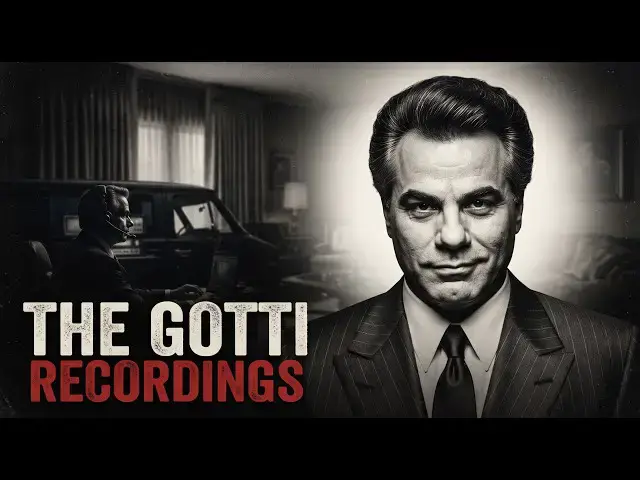
On December 12, 1989, a hidden FBI microphone captured Gotti and Frank Locascio discussing the internal business of the Gambino crime family. Years later, that recording was played for a Brooklyn jury as Government Exhibit 104.
The tape exposed the quiet, administrative reality behind organized crime — and helped prosecutors dismantle John Gotti’s reputation for legal untouchability.
This documentary examines the Ravenite surveillance operation, the Louis DiBono murder, Sammy Gravano’s decision to cooperate, and the recording that turned Gotti’s own voice into evidence.
All visual recreations are AI-generated for documentary illustration and are not original footage of the events shown.
Viewer discretion is advised. This documentary discusses organized crime, murder and federal criminal proceedings without graphic imagery.
CHAPTERS:
00:00 The Reel Begins
00:48 The Jury Hears the Tape
01:30 The Ravenite Surveillance Problem
03:33 Apartment 10
05:33 The Hidden FBI Microphone
06:06 The December 12 Recording
07:57 The Louis DiBono Dispute
09:08 The Recorded Murder Directive
13:21 Gravano Hears the Tape
15:44 Government Exhibit 104
16:58 The Jury Hears Gotti’s Voice
19:08 The Guilty Verdict
19:44 The Ravenite Is Seized
21:28 What the Tape Really Proved
Subscribe for deeply researched documentaries about organized crime, federal investigations and courtroom evidence.
#JohnGotti #RaveniteTape #TrueCrimeDocumentary
#truecrime #mafia #documentary #organizedcrime #gangsters #unsolved #coldcase #cartel #crimestory #underworldshadows
Show More Show Less View Video Transcript
0:00
A heavy quarter-inch magnetic reel sat motionless across the polished playback heads, its
0:06
silver flanges catching the cold glow of a single amber indicator lamp.
0:10
In the Brooklyn federal courtroom on the morning of February twentieth, nineteen ninety-two,
0:16
the prosecuting attorneys did not rise to deliver an opening speech, and they did not
0:22
introduce a cooperating witness to summarize what had occurred in lower Manhattan.
0:27
Instead, an audio specialist adjusted the output levels, and twelve anonymous citizens put
0:33
on heavy black government-issue headphones as the reel began to turn.
0:48
Within fifteen seconds, the room audio cleared through the headsets, revealing the flat,
0:54
unvarnished acoustic signature of an ordinary residential apartment above Mulberry Street.
1:00
There was no orchestral underscore, no dramatic timing, and no theatrical cadence borrowed
1:06
from popular mob cinema.
1:08
The jurors heard only the low mechanical drone of a baseboard radiator followed by the
1:14
unmistakable gravelly voice of John Gotti, casually conducting routine organization affairs
1:20
in an upstairs room he believed was entirely beyond the reach of federal electronic
1:26
surveillance.
1:30
For nearly five years, the Federal Bureau of Investigation had tried and repeatedly failed
1:36
to secure usable acoustic recordings inside the ground floor of two forty-seven Mulberry
1:42
Street.
1:43
The street-level headquarters of the Gambino organization, operating under the sign of the
1:48
Ravenite Social Club, functioned as a formidable acoustic barrier.
1:53
Behind the storefront windows, continuous background interference from clattering card
1:58
tables, multiple overlapping conversations, and commercial espresso equipment created an
2:04
impenetrable wall of ambient noise that rendered hidden microphones ineffective.
2:09
The Gambino leadership understood that their storefront was under permanent scrutiny,
2:15
treating the club floor as little more than a public reception area.
2:20
Whenever sensitive business or internal disputes were brought to Little Italy, Gotti
2:26
routinely directed associates out the front door and onto the Manhattan pavement.
2:31
Federal surveillance logs classified these encounters as walk-talks, documenting men
2:37
whispering closely behind turned-up overcoat collars while walking briskly between Prince
2:43
Street and Spring Street to stay outside the focal radius of directional microphones.
2:54
By late autumn of nineteen eighty-nine, seasonal conditions made those sidewalk conferences
3:00
increasingly impractical.
3:01
Winter temperatures swept through the concrete corridors of lower Manhattan, and elevated
3:07
federal surveillance teams operating from stationary vehicles and nearby rooftops made
3:12
physical movement on Mulberry Street hazardous to organizational security.
3:17
To maintain operational command over thousands of criminal enterprises spanning
3:22
construction, carting, and labor unions, the executive leadership required a secure,
3:28
weatherproof space where orders could be delivered without observation.
3:33
Above the ground-floor social club sat a weathered five-story masonry tenement containing
3:39
modest residential units.
3:41
On the third floor of the building, designated as Apartment ten, lived an elderly widow
3:47
named Nettie Cirelli, whose late husband had been a respected veteran member of the Gambino
3:53
family.
3:54
Like many elderly residents of the neighborhood, Mrs.
3:58
Cirelli routinely left New York City in late November, packing her bags to spend the cold
4:04
winter months residing with family in southern Florida.
4:07
When Mrs.
4:08
Cirelli departed, the keys to Apartment ten remained accessible to associates affiliated
4:15
with the building.
4:16
Gotti viewed the darkened, temporarily vacant third-floor apartment as an ideal executive
4:22
boardroom.
4:23
Because the residence belonged to an elderly grandmother with no active personal role in
4:30
criminal conspiracies, the leadership assumed federal law enforcement would never obtain
4:36
legal authority or technical capability to monitor a private domestic apartment two flights
4:43
above the club.
4:46
That assumption proved to be a fatal miscalculation.
4:50
The Federal Bureau of Investigation Gambino squad had maintained systematic physical
4:56
surveillance on the building entrances for months, documenting the precise timing of Mrs.
5:03
Cirelli’s seasonal departures.
5:05
Recognizing that the apartment was unoccupied, government prosecutors approached a federal
5:12
judge with an extensive evidentiary affidavit demonstrating probable cause that ongoing
5:18
criminal conspiracies were being relocated from the street into the residential floors
5:24
above.
5:25
Under a Title Three federal electronic surveillance authorization, technical specialists
5:31
entered the vacant third-floor residence to install covert listening equipment.
5:36
They intentionally avoided radio frequency transmitters, which could be detected by
5:42
commercial electronic countersurveillance sweeps routinely conducted by the mob.
5:47
Instead, technicians concealed a hardwired micro-pickup directly within the room structure,
5:54
routing a dedicated audio signal line through the building infrastructure to an off-site
5:59
government monitoring facility.
6:06
On the evening of December twelfth, nineteen eighty-nine, federal monitoring equipment
6:11
registered movement inside Apartment ten.
6:14
At approximately seven thirteen in the evening, the sound of keys turning in the deadbolt
6:19
echoed over the surveillance circuit, followed by the heavy tread of leather dress shoes
6:25
across the floor.
6:26
John Gotti had climbed the narrow tenement staircase from the storefront below, accompanied
6:31
solely by his official consigliere and executive counselor, Frank Locascio.
6:36
Salvatore Gravano, the family underboss who would later become the central cooperating
6:42
witness against the leadership, was entirely absent from the meeting that night.
6:47
Gravano’s absence left Gotti and Locascio completely alone in the shadowed apartment, seated
6:53
around a small table with the curtains drawn shut against the winter chill of Mulberry
6:59
Street.
7:00
Gotti arrived in a foul temper, consumed not by law enforcement pressure, but by internal
7:06
insubordination regarding commercial construction subcontracts.
7:12
The primary grievance consuming Gotti that evening concerned a made soldier named Louis
7:18
DiBono.
7:19
DiBono was an exceptionally wealthy commercial drywall and interior contractor who held
7:25
multi-million-dollar subcontracts across major metropolitan building developments, including
7:31
prominent projects underway at the World Trade Center complex.
7:35
Because of his lucrative corporate relationships, DiBono paid substantial tribute into the
7:41
organization, but he had begun to avoid the physical demands of family hierarchy.
7:46
Over the preceding months, DiBono had repeatedly ignored formal executive summonses
7:52
directing him to report in person to the Ravenite Social Club.
7:57
While continuing to operate his commercial drywall companies and maintain profitable
8:03
associations with outside developers, DiBono offered polite excuses for his absence,
8:09
systematically dodging face-to-face meetings with his boss.
8:13
To Gotti, who demanded absolute personal deference from every subordinate regardless of
8:20
wealth, DiBono’s evasions represented an intolerable challenge to his executive authority.
8:33
As the reel turned steadily in the government listening post, Locascio attempted to moderate
8:39
the boss's escalating anger.
8:41
Locascio suggested that DiBono was acting out of fear rather than disrespect, offering the
8:47
prediction that if given time, the contractor would eventually report with a substantial
8:52
financial tribute to repair the relationship.
8:55
But the hidden microphone captured an administrative response that exposed the raw,
9:00
unforgiving reality of the enterprise, entirely unvarnished by traditional underworld
9:06
romanticism.
9:07
Gotti dismissed any possibility of financial reconciliation or commercial compromise.
9:13
In a measured, gravelly cadence, he made it clear that personal profit, lucrative drywall
9:18
operations, and decades of friendship counted for nothing against the strict chain of
9:23
command.
9:24
Addressing the true motivation behind his impending decision, the transcript reads: He
9:29
didn't rob nothin'.
9:31
You know why he's dying? He's gonna die because he refused to come in when I called.
9:36
He didn't do nothing else wrong.
9:42
That single recorded passage dismantled years of defense arguments claiming that internal
9:48
mafia violence was governed by complex underworld trials, formal grievance panels, and
9:54
proven acts of financial embezzlement.
9:57
On the December twelfth tape, Gotti explicitly acknowledged that the subordinate had
10:03
committed no financial theft and stolen no organizational revenue.
10:08
His execution was being authorized solely to enforce unconditional personal obedience across
10:15
the family hierarchy.
10:17
Moments later on the same recording, Gotti leaned forward in the apartment and expanded his
10:22
thoughts into a comprehensive philosophy of how business disputes were resolved under his
10:28
command.
10:29
Expressing open frustration with conflicting business interests across drywall, concrete,
10:34
and construction industries, the transcript reads: And every time we got a partner that
10:40
don't agree with us, we kill him.
10:42
You go to the boss and your boss kills him. He kills 'em. He okays it.
10:46
Says it's all right, good. Where are we going here, Frankie?
10:52
As the conversation continued into the winter night, Gotti shifted his focus from outside
10:58
commercial partners to the internal management of the Gambino family.
11:03
He began a lengthy, resentful critique of his absent underboss, Salvatore Gravano.
11:09
Speaking candidly to Locascio, Gotti complained about Gravano’s growing construction empire,
11:15
accused him of personal greed, and sought to distance himself from previous homicides by
11:22
shifting full operational blame onto Gravano’s shoulders.
11:26
Neither man in Apartment ten realized that every spoken sentence was being permanently
11:33
etched onto magnetic oxide ribbons fifty blocks away.
11:37
Gotti believed he was conducting private executive bookkeeping, venting his personal
11:43
frustrations to a trusted counselor in complete safety.
11:47
In reality, the December twelfth recording had captured the definitive evidentiary blueprint
11:54
that would simultaneously dismantle his criminal organization and permanently destroy the
12:00
personal trust binding his executive inner circle.
12:10
The verbal directives issued inside Apartment ten did not remain theoretical conversations.
12:17
Roughly nine months after Gotti DiBono was marked for death the commercial contractor
12:23
vanished from public view.
12:24
In October nineteen ninety, Port Authority security officers discovered DiBono’s lifeless
12:31
body slumped inside his vehicle in an underground parking garage at the World Trade Center
12:37
complex shot multiple times at close range.
12:40
On December eleventh, nineteen ninety, federal agents and city detectives surrounded two
12:47
forty-seven Mulberry Street, executing arrest warrants for John Gotti, Frank Locascio, and
12:53
Salvatore Gravano on federal racketeering charges.
12:56
The three senior leaders were transported to the Metropolitan Correctional Center in lower
13:03
Manhattan and placed into secure pretrial detention.
13:06
For months, federal prosecutors led by John Gleeson kept the precise contents of their
13:12
electronic surveillance tightly guarded under judicial seal.
13:21
While the defense prepared for trial by attacking the credibility of government agents and
13:27
challenging the legality of the wiretaps, the prosecution executed a decisive strategic
13:32
disclosure.
13:33
During pretrial proceedings in nineteen ninety-one, federal prosecutors provided defense
13:39
counsel and the incarcerated defendants with copies of the audio intercepts, including the
13:45
December twelfth recording from the third-floor apartment above the Ravenite.
13:50
In his detention cell, Salvatore Gravano listened to the unredacted tape recordings of his
13:56
boss speaking in Apartment ten.
13:59
For years, Gravano had operated as Gotti’s most loyal field commander, enforcing orders,
14:05
managing construction unions, and executing internal directives without question.
14:10
But as the tape played through his headphones, Gravano heard Gotti privately belittling his
14:16
intellect, denouncing his business partnerships, and attempting to rewrite organizational
14:23
history to make Gravano the sole architect of disputed homicides.
14:30
The December twelfth recording shattered the foundational code of silence that had protected
14:37
the Gambino enterprise for generations.
14:39
Realizing that Gotti was actively laying the groundwork to sacrifice his second-in-command
14:46
to preserve his own legal freedom, Gravano concluded that his loyalty was unreciprocated.
14:52
In November nineteen ninety-one, Gravano broke the oath of omertà, signing a historic
14:58
cooperation agreement to testify openly as a government witness against his former boss.
15:05
When the federal trial commenced in Brooklyn on January twenty-first, nineteen ninety-two,
15:11
before Judge I.
15:12
Leo Glasser, the public narrative focused almost entirely on the dramatic defection of the
15:19
underworld underboss.
15:20
News headlines predicted a sensational confrontation between Gotti and his former lieutenant
15:27
on the witness stand.
15:28
But the prosecution understood that accomplice testimony from an admitted killer remained
15:35
vulnerable to sharp cross-examination and juror skepticism.
15:44
To secure an unshakeable conviction, the prosecution anchored its murder and racketeering
15:50
case not on Gravano’s spoken recollections, but on the mechanical recordings captured inside
15:56
Apartment ten.
15:57
On February twentieth, nineteen ninety-two, prosecutors introduced the quarter-inch tape
16:04
designated as Government Exhibit one hundred four, directing the courtroom clerk to
16:10
distribute official transcript binders marked as Government Exhibit one hundred four dash T
16:16
to the sequestered jury.
16:18
As the tape played into the anonymous jurors' headphones, the courtroom descended into
16:24
complete silence.
16:25
John Gotti sat at the defense table in a double-breasted charcoal suit, maintaining an
16:31
impassive facial expression, while defense attorneys observed the jury box with growing
16:37
unease.
16:38
The jurors sat motionless, their eyes tracking the typewritten words across the white pages
16:44
as Gotti’s raspy voice echoed through the wiring, delivering his cold, conversational
16:50
verdict on the life of Louis DiBono.
16:58
The defense strategy, which argued that Gotti's recorded statements were merely locker-room
17:04
exaggeration, street bravado, or harmless barroom rhetoric, collapsed beneath the weight of
17:09
the audio oxide.
17:11
Jurors did not hear an angry man shouting in the heat of passion; they heard an executive
17:16
speaking in measured, businesslike cadences, calmly explaining why a construction associate
17:22
had to be killed simply for failing to answer a telephone summons.
17:27
For Frank Locascio, the recording proved legally inescapable.
17:31
Under the federal Racketeer Influenced and Corrupt Organizations Act, prosecutors were not
17:37
required to prove that the consigliere obtained weapons or stood in the parking garage.
17:43
His physical presence in Apartment ten, his silence as Gotti outlined the execution policy,
17:49
and his ongoing counsel to the boss established his active participation in the conspiracy
17:55
to murder Louis DiBono.
17:59
On appeal, Locascio’s attorneys vigorously argued that their client was guilty of nothing
18:06
more than mere presence during an unsolicited monologue, asserting that Gotti held absolute
18:12
authority and was not seeking advice.
18:14
But the Second Circuit Court of Appeals firmly rejected the argument, ruling that an
18:20
underboss who sits in an upstairs apartment, reviews business grievances, and counsels the
18:27
head of a criminal enterprise during execution discussions is legally accountable for the
18:33
resulting homicide.
18:35
On April second, nineteen ninety-two, following twenty-eight hours of deliberation, the
18:40
anonymous jury returned to the Brooklyn courtroom with unanimous guilty verdicts against
18:46
both defendants on every major count, including racketeering, loansharking, obstruction of
18:52
justice, and the murder of Louis DiBono.
18:54
The government’s victory was absolute, dismantling the myth of judicial untouchability that
19:00
had surrounded the Gambino boss for nearly a decade.
19:08
Following the convictions, federal prosecutors pursued an aggressive civil action targeting
19:14
the physical infrastructure of the Gambino family.
19:17
Acting under federal asset forfeiture laws, Judge Glasser signed an order declaring the
19:23
tenement building at two forty-seven Mulberry Street an instrument of criminal racketeering.
19:29
Deputy United States Marshals descended on Little Italy to formally arrest the property,
19:35
padlocking the metal roll-down gates of the Ravenite Social Club and seizing the residential
19:42
apartments above.
19:43
The padlock on the front doors marked the final, symbolic end of an underworld era in New
19:49
York City.
19:50
The street-corner walk-talks, the covert meetings under the buzzing neon storefront lights,
19:56
and the private conferences held in Mrs.
19:58
Cirelli’s quiet third-floor living room were permanently extinguished by the authority of
20:04
the federal court.
20:05
The social club that had served as the operational command post of the nation’s largest
20:11
crime family ceased to exist.
20:15
Over the three decades that followed, lower Manhattan underwent radical commercial and
20:21
cultural transformation.
20:23
The Italian bakeries, meat markets, and quiet tenement hallways of Little Italy gradually
20:29
gave way to trendy fashion boutiques, upscale cafes, and multi-million-dollar residential
20:35
lofts.
20:36
The physical storefront at two forty-seven Mulberry Street was completely renovated,
20:42
stripped of its dark paneling and transformed into a chic retail clothing store where
20:47
shoppers browse designer garments without any awareness of the building’s history.
20:53
Upstairs, the third-floor residential unit has been modernized and remodeled, erasing every
20:59
physical trace of the small apartment where two mob figures met on a cold December evening
21:04
in nineteen eighty-nine.
21:06
But while the physical architecture of Mulberry Street has shifted with the commercial
21:11
currents of Manhattan, the words spoken behind the baseboard microphone remain permanently
21:17
preserved in the archives of the Eastern District of New York.
21:28
The historic weight of the Ravenite tape was never the sensational personality of the man
21:34
who led the Gambino family, nor was it the dramatic courtroom theater that captivated
21:39
television networks across the nation.
21:42
The true significance of Government Exhibit one hundred four lay in its cold, uncompromising
21:48
mechanical objectivity, capturing the hidden mechanics of power exactly as they functioned
21:54
behind closed doors.
21:56
When the public bravado, the expensive tailored double-breasted suits, and the carefully
22:02
crafted media spectacles were stripped away, the inner core of organized crime was revealed
22:08
to be neither honorable nor fraternal.
22:10
It was documented as a ruthless, paranoid, and thoroughly bureaucratic system of
22:15
administrative murder, preserved forever on sixty minutes of quarter-inch magnetic tape that
22:21
a jury could hear.
Arts & Entertainment