Up next in 10

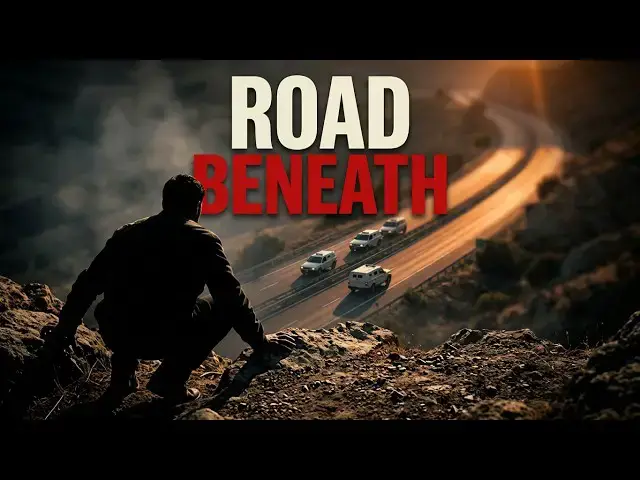
The most protected man in Italy wasn't killed by a bullet, a car bomb, or an ambush.
He was killed by the road beneath him.
On the evening of 23 May 1992, Judge Giovanni Falcone — the man who built the Maxi Trial
that convicted the leadership of Cosa Nostra — was driving home to Palermo on the A29
highway near Capaci. Under that ordinary stretch of asphalt, someone had already dug,
packed, and waited. When the convoy passed, the blast was powerful enough to register on
Sicily's earthquake instruments. In under a minute, Falcone, his wife Francesca Morvillo,
and three escort officers were gone.
This is the story of that one ordinary Saturday: how the Mafia could not reach the man,
so they reached the ground beneath him — and what walked out of the crater afterwards.
⏱️ TIMESTAMPS:
0:00 The point of no return
2:03 What the road had become
4:53 The man who held him when he died
8:24 The blueprint: Buscetta and the Maxi Trial
11:54 Why the road
14:45 The man who pressed the button
16:40 The road stops being a road
20:36 The reckoning
26:07 What remains
SUBSCRIBE for true-crime documentaries on organized crime, the Mafia, and history's most
IMPORTANT: This video was produced with AI-assisted tools. It is based on the historical
public record and is intended as a respectful factual retelling. Sound and visuals are
AI-generated or synthetic.
#GiovanniFalcone #CapaciBombing #MafiaDocumentary #TrueCrime #CosaNostra
#truecrime #mafia #documentary #organizedcrime #gangsters #unsolved #coldcase #cartel #crimestory #underworldshadows
Show More Show Less View Video Transcript
0:00
It was almost six o'clock on the evening of the twenty-third of May, nineteen ninety-two,
0:05
when the most protected man in Italy passed the point of no return.
0:10
Ten minutes earlier he had left the airport at Punta Raisi in a three-car convoy, the same
0:15
armoured cars, the same Saturday routine, the same road he crossed a hundred times.
0:21
Underneath that road, someone had already dug, and packed, and waited for a signal.
0:26
When the signal came, the blast was recorded on Sicily's earthquake instruments.
0:31
In under a minute it killed a judge, his wife, and three officers.
0:35
The state had guarded that man with everything it had.
0:52
They found the road first, or what the road had become.
0:55
A crater that ran across all three lanes.
0:58
Asphalt hurled sideways like torn paper, a guard rail twisted into a question mark.
1:03
Rescuers said later it looked as though the highway had been amputated.
1:07
And in the wreckage of a white Fiat Croma, wedged against a wall of concrete thrown up by
1:13
the blast, lay the people the country would learn to name by heart.
1:17
Falcone. Morvillo. Montinaro. Dicillo. Schifani.
1:20
Five of them, gone before the sun had fully set on a road that had carried them home a
1:26
hundred times.
1:27
The convoy had left the airport at Punta Raisi, three armoured Fiat Cromas on the standard
1:32
Saturday run.
1:33
Falcone did not ride in the lead car and he did not ride in the tail.
1:38
He was in the middle, where the state's own doctrine said he was safest.
1:42
The bomb was not aimed at any of the cars. It was aimed at the ground beneath them.
1:47
That is the detail that still stops investigators cold: the men who did this did not need to
1:52
see him to kill him.
1:54
They only needed the road, and the road was everywhere.
2:03
Its placement was precise, which is its own quiet horror, but the road itself told the truth
2:09
of the morning.
2:10
Armoured glass, a protective detail, a route rehearsed a hundred times, none of it changed
2:15
the outcome, because the state had guarded the man while the mafia had measured the ground.
2:21
On that Saturday the accounts disagree over small things, including who was at the wheel of
2:27
the white car.
2:28
What no account disputes is who sat inside it. A judge. His wife.
2:32
The officers who guarded them. The crater did not care who was driving.
2:36
Falcone was pulled from the wreckage alive, and the country would cling to that detail for
2:42
the rest of the evening.
2:44
His driver, Giuseppe Costanza, survived.
2:46
Officers from the tail car, men like Angelo Corbo and Paolo Capuzza, threw a cordon of drawn
2:52
weapons around the mangled white car in case someone came to finish the job.
2:57
Francesca Morvillo was carried away unconscious.
3:00
By the first rescuers' account, Falcone was still conscious, his eyes moving, unable to
3:06
speak.
3:07
Nobody on that road yet knew the numbers would not hold.
3:10
The news did not arrive as a single clean statement.
3:13
It leaked out of a Saturday evening that was already winding down, one phone call at a time,
3:19
then broke over the state broadcaster, which had to interrupt its usual evening programmes
3:25
to tell the country what had happened on a highway it had never heard of.
3:29
Capaci, a small town a few kilometres outside Palermo, became a name the whole of Italy
3:35
learned in a single night.
3:37
In the bars and kitchens of the city, the question was the same, repeated in a low voice.
3:42
They got him.
3:44
The shock was national, and it was loud.
3:46
In the days that followed, hundreds of thousands of people poured into Palermo and into the
3:52
squares of Italy, carrying banners and candles and photographs of the five dead.
3:57
Workers walked off the job to line the funeral route, and the streets filled with a kind of
4:02
grief that carried a political demand in it, the demand that the state stop pretending it
4:08
had won.
4:09
The mafia had killed the state's best man on the state's own road.
4:13
The country answered by refusing to let that man's name disappear.
4:17
At the funeral, the images fixed themselves in the national memory the way the crater did.
4:22
The five coffins, the officers who had guarded them, the crowds that stretched beyond the
4:28
reach of the cameras, the sense that a border had been crossed and could not be uncrossed.
4:33
Not everyone agreed about what should happen next, and politics would fight over that for
4:38
years, but on the grief itself there was no disagreement.
4:41
A judge, his wife, and three officers had been murdered in daylight on a public highway.
4:47
Italy understood that its own defences had failed.
4:53
At the hospital, a colleague came.
4:55
Paolo Borsellino, his oldest friend in the same war, had rushed across Palermo the moment
5:01
the news reached him.
5:02
Those present later described the two men as brothers in everything but blood.
5:07
Borsellino was at his bedside, and reports of that hour agree that he was there when the man
5:13
he had worked beside for two decades slipped away.
5:16
The record puts Falcone's death at roughly seven-oh-five in the evening, little more than an
5:22
hour after the road exploded.
5:24
The crater had done what it came to do.
5:27
Francesca Morvillo, the first woman magistrate ever killed by the mafia, held on for hours.
5:33
She was carried between hospitals, and she died during surgery close to eleven at night,
5:39
without ever regaining awareness.
5:41
The three officers in the lead car, Antonio Montinaro, Rocco Dicillo and Vito Schifani, were
5:47
killed in the first instant, thrown from the carriageway.
5:51
Twenty-three people were treated for injuries.
5:54
The blast was so powerful it registered on Sicily's seismic instruments as an earthquake.
6:00
A road, a convoy, and five people gone.
6:07
That is where the story could have ended, in a crater and a body count.
6:12
But the Saturday left an unanswered question behind it, and the whole country heard that
6:17
question.
6:18
The state had guarded Giovanni Falcone with everything it possessed.
6:22
So how had the mafia built a hole in a guarded road and waited there with time to spare?
6:27
The answer, when it finally came, was worse than anyone guessed, because it began years
6:32
earlier and it did not begin on that highway at all.
6:35
It began in a courtroom, with a verdict the mafia swore it would never accept.
6:40
To understand what the mafia hated, you first have to understand the man they could not
6:45
reach.
6:46
Giovanni Falcone was born in Palermo in nineteen thirty-nine, a lawyer's son who studied at
6:52
the University of Palermo and then chose the magistrature, the one office that let him
6:57
answer the mafia with the only weapon he trusted.
7:00
For years he worked the hardest desk in the Italian judiciary, and through the
7:05
nineteen-eighties he did what no one before him had managed.
7:09
He turned rumour into evidence, and he turned suspicion into a case the state could take to
7:14
court.
7:15
His method was patient and cold, and it changed everything about how the state fought.
7:20
Where the mafia had always been treated as a folklore of violent men, Falcone treated it as
7:26
an organisation with rules, a hierarchy, a budget and a history, and he hunted all of those
7:32
at once.
7:33
He leaned on informants, men who had lived inside the silence and chosen to break it, and he
7:39
tracked the money the mafia moved, the contracts, the investments, the quiet economy
7:44
underneath the violence.
7:46
It was slow. It was painstaking. And it worked.
7:49
Around him in Palermo, a small circle of investigating magistrates worked as one mind
7:54
against one enemy.
7:55
They were known as the anti-mafia pool, and they shared files and witnesses and danger
8:01
across separate cases, so that no single killing could silence the whole investigation.
8:06
One of their number, Rocco Chinnici, was murdered by a car bomb in nineteen eighty-three.
8:12
The work went on.
8:13
The pool gave the state what the mafia had always had and the state had never managed, a
8:19
permanent institutional memory that could survive the loss of any one man.
8:24
The hinge of the whole enterprise was a man named Tommaso Buscetta, a senior figure inside
8:29
Cosa Nostra who, after years inside the organisation, chose to break the rule of silence and
8:35
talk.
8:36
Buscetta was the first of the great informants, and from his testimony Falcone built the map
8:42
of the organisation that would become the spine of the trial.
8:45
It was not a confession; it was an anatomy lesson, delivered in confidence by a man who knew
8:51
the body he was dissecting from the inside.
8:54
The state, for the first time, had a blueprint.
8:59
The result was the Maxi Trial, the largest criminal prosecution in Italian history, a
9:04
fortress of a courtroom built inside a Palermo prison because it had to survive.
9:10
It ran through the middle of the nineteen-eighties, and at its end, against four hundred and
9:16
seventy-five defendants, the court convicted hundreds, by most accounts more than three
9:21
hundred, including nineteen life sentences handed down to the leadership of Cosa Nostra.
9:27
The sentences together added up to more than two and a half thousand years.
9:32
For the first time the state had named the mafia aloud, named its bosses, and made the names
9:38
stick.
9:39
The mafia had counted on a higher court quietly undoing the verdict, and it waited years for
9:45
that relief.
9:46
On the thirtieth of January, nineteen ninety-two, Italy's supreme court, the Court of
9:51
Cassation, confirmed the convictions.
9:53
Within months the retaliation began.
9:55
On the twelfth of March, a politician the bosses blamed for failing to protect them was shot
10:01
dead on a street in Palermo.
10:03
His name was Salvatore Lima. The message, if anyone had missed it, was unmistakable.
10:08
The state had upheld the verdict. So the state would pay.
10:12
By then Falcone had been pulled toward the capital itself.
10:15
In nineteen ninety-one he was appointed director of the Department of Criminal Affairs at
10:21
the Ministry of Justice in Rome, a position that put him at the centre of the state's whole
10:26
fight against organised crime, beyond the island and its courtrooms.
10:30
He had gone from naming the enemy in one city to commanding the machinery meant to pursue
10:35
the enemy everywhere.
10:37
The promotion was a sign of how much he had come to matter.
10:40
To the mafia, it was another reason the debt had to be settled.
10:45
The order, according to evidence that emerged later, came from the man at the top of the
10:50
pyramid, Salvatore Riina, the boss of the Corleonesi, the clan that had seized control of
10:56
Cosa Nostra by slaughtering its rivals.
10:58
Witnesses who later cooperated with prosecutors described meetings of the provincial
11:04
commission, held in the months before the bombing, in which Falcone's name was decided.
11:09
The record is not a single document.
11:12
It is the testimony of men who were in the room, cross-examined in court and confirmed by
11:17
events.
11:18
It is not tape. It is survivors speaking.
11:21
There was a private man behind the public name, and the mafia understood that too.
11:26
Falcone had married Francesca Morvillo, a magistrate in her own right, and the two of them
11:31
kept a small apartment in Palermo, a life of law books and routine that they tried to defend
11:37
from the danger around it.
11:38
The effort to break him was aimed at that whole life, at the man and the woman he loved and
11:44
the ordinary evenings they were trying to hold onto.
11:47
A judge's conviction was the reason. A couple's life was the target.
11:54
Why the road, though? Falcone travelled under the heaviest escort Italy could arrange.
11:59
A man in a car could be ambushed, but a man in an armoured car, ringed by police, was a
12:04
problem.
12:05
So the planners inverted the problem. They did not need to reach the man.
12:09
They needed only to reach the ground he drove over.
12:12
Highway A-Twenty-Nine, the road from the airport to the city, was the one route he took on
12:18
his weekly return from Rome.
12:19
It was a schedule written in the open, known to the whole city.
12:23
Including the men on the hillside.
12:25
It was not the first attempt.
12:27
In June nineteen eighty-nine, explosives were found hidden near the villa where Falcone and
12:33
his wife were staying at Addaura, on the coast above Palermo.
12:37
The device had not detonated. Investigators found the bomb, and the family lived.
12:42
Falcone's reaction, people close to him said, was not panic but a kind of calm resignation,
12:48
as though he had always known this would come for him.
12:51
He kept working.
12:52
And the men planning the next attempt kept watching his routine with more patience than the
12:58
state ever had.
13:03
For the planners, the advantage was the routine itself.
13:07
Falcone flew to Rome for the state's business and flew back to Palermo on weekends, home to
13:12
his wife and to the apartment they kept in the city.
13:16
Every return meant the same road. Every road meant the same stretch.
13:20
What had begun, by later accounts, as a decision to kill him became a question of where, and
13:25
the answer was the highway, because it was the one place the state could not put walls
13:31
around.
13:32
The open air was his vulnerability, and they had years to look at it.
13:36
And the state, for its part, had grown almost calm about that stretch of road, because it
13:41
had protected the man so well for so long.
13:43
The escort was a ritual, the armour was standard, the route was rehearsed.
13:48
Confidence had settled in around the routine, the way it does when nothing has gone wrong
13:53
for years.
13:54
That confidence was exactly what the planners had measured and priced.
13:58
They had bet not on breaking through the state's strength, but on the quiet assumption,
14:03
inside that strength, that the ordinary road could wait another week.
14:13
Through the spring of nineteen ninety-two, the men who had chosen the road waited.
14:18
The whole bet rested on one idea, that a man of routine would keep his routine.
14:23
And on the twenty-third of May, a Saturday, the routine held. The plane left Rome.
14:28
It landed at Punta Raisi. The three cars formed up as they had a hundred times before.
14:33
Nobody on that tarmac knew the ground ahead had already been measured, or that a signal,
14:39
held ready on a hillside above the road, had already been assigned its place in the world.
14:45
The man who held the detonator is worth knowing by name, because his own record is the
14:50
clearest window into what the road cost.
14:53
Giovanni Brusca, by his own later account and by court findings, was the figure who pressed
14:59
the button on the hillside above Capaci.
15:01
He was a senior operative of the Corleonesi, a man with a brutal reputation inside an
15:07
organisation built on brutality, and in his own testimony he admitted to involvement in
15:12
scores of killings ordered by the boss.
15:15
His is not a clean story. It is the story the courts had to weigh.
15:20
For years Brusca evaded capture, and it was only in May of nineteen ninety-six that police
15:26
finally took him at a villa in the southwest of Sicily, after a long manhunt.
15:31
Once inside the state's walls he made a choice with enormous consequences.
15:36
He turned informant, and his testimony against his own organisation helped convict men far
15:42
above him, up to and including the boss who had ordered the road.
15:46
The man who had killed Falcone became one of the reasons the men who commanded him faced the
15:52
courts at all.
15:58
Pause here, and remember what was at stake in those few seconds, because the whole weight of
16:04
the story is carried in them.
16:05
The reconstruction comes from the record, from testimony, official accounts and the
16:10
photographs taken in the minutes afterward, and even now parts of it refuse to be tidy.
16:16
The convoy left Punta Raisi and took the A-Twenty-Nine toward the city.
16:20
Three cars, standard. The lead car carried the three officers who would die first.
16:25
The white car carried the judge and his wife. The tail car carried the men who survived.
16:30
That order, the state later understood, was exactly what the planners had stood on a
16:36
hillside watching for.
16:40
At roughly six o'clock in the evening, the road stopped being a road.
16:44
Witnesses and survivors describe a white flash and a pressure wave that did not sound like
16:50
anything they knew, a sound some compared to a small earthquake because, in a literal sense,
16:55
the instruments recorded one.
16:57
The lead car was lifted and thrown clear of the carriageway, its three occupants killed in
17:03
the instant.
17:04
The white car struck the wall of concrete hurled up by the blast.
17:08
The tail car braked, its officers scrambled out, and formed a ring of drawn weapons around
17:13
the wreck, waiting for the second attack that never came.
17:17
Some survived, which the planners had not cared about and the state would come to need.
17:22
Giuseppe Costanza, who should have been at the wheel that day, got out under his own power.
17:27
Officers Angelo Corbo and Paolo Capuzza moved to shield the judge's car.
17:32
Twenty-three people were treated for injuries.
17:34
In the middle of it all, on a road that had been a road one minute earlier, lay five people
17:39
the country would spend the next decade trying to account for, one name at a time.
17:45
It is too easy to fold the three officers of the lead car into a single line, so the record
17:51
asks us to remember that they were three separate men with three separate lives.
17:56
Antonio Montinaro, the escort's leader, was the senior of the three, responsible for the
18:01
very formation the state believed was safe.
18:04
Rocco Dicillo and Vito Schifani rode with him. None of them chose the road.
18:09
They were on it because guarding the judge was their duty, and on that Saturday they paid
18:14
for that duty with everything they had.
18:17
The men who survived that Saturday did not simply walk away from it.
18:21
In the trials that followed, officers from the convoy, men like Giuseppe Costanza and Angelo
18:27
Corbo, took the witness stand and told what they had seen, year after year, across the long
18:33
string of proceedings.
18:34
They were the ones who could put the court inside that moment, who could describe the
18:39
formation, the blast, the scramble to form a cordon, the fear of a second attack that never
18:45
came.
18:46
Their testimony is part of the record, and it carried the weight only a man who was there
18:51
can carry.
18:56
The scale is written in the physical record.
18:59
The blast tore through the roadway and registered on the instruments of Sicily's earthquake
19:04
monitoring station as a seismic event.
19:06
Photographs show a crater running across the full width of the motorway, the asphalt peeled
19:11
back to the bare earth beneath it.
19:13
This was not a car bomb. It was not a street ambush.
19:16
It was a road removed from the world in order to remove one man from the world.
19:21
The difference between those two things is the whole horror of it.
19:26
And that is what the record now allows us to say with care. Some details the courts settled.
19:31
Others remain the word of men who chose to testify, and testimony bought with leniency is
19:37
evidence the courts weigh, not gospel to be repeated.
19:40
What is beyond dispute is the weight of what was lost, and the warning the mafia meant to
19:46
send.
19:47
Because in the weeks after that road exploded, the killers did not stop.
19:51
They were just getting started.
19:53
And the next name on the list was the man who had held Falcone when he died.
19:58
Fifty-seven days later, the second shoe fell.
20:01
On the nineteenth of July, nineteen ninety-two, Paolo Borsellino, Falcone's friend, his
20:06
rival, the man at his bedside when he died, was killed by a car bomb outside his mother's
20:12
apartment in Via D'Amelio in Palermo.
20:14
Five police officers died with him.
20:16
The country understood, in one terrible week, that Capaci had not been an ending.
20:21
It had been the opening move of a campaign against the state itself.
20:26
And the state, in turn, had finally been forced to answer.
20:36
The answer began on the streets, with ordinary people.
20:39
In the days after the bombing, Palermo's shops and balconies filled with sheets and posters,
20:45
and one phrase above all came to stand for what the city felt, words the crowds have carried
20:50
down the years ever since: you did not kill them.
20:53
Their ideas walk on our legs. It was not grief dressed as politics.
20:58
It was the public refusing to let the crater close over the memory of the man who had died
21:03
in it.
21:04
And it changed the calculation inside the state itself.
21:07
The public anger was impossible for the government to ignore, and it forced action that
21:13
years of argument had never produced.
21:15
New laws came, aimed at mafia assets and at those who helped the bosses hide.
21:20
A new investigative agency was built to hunt the fugitives.
21:24
In January nineteen ninety-three, the man at the top of the pyramid, Salvatore Riina, the
21:30
boss who had ordered the road, was arrested in Palermo after decades in hiding.
21:35
He would spend the rest of his life in prison, until his death in twenty seventeen.
21:40
The hunt had finally reached the top.
21:43
But the top was not the whole story, and the full shape of the Saturday only came into focus
21:49
as the men who built the road began to talk.
21:51
One cooperating witness, Salvatore Cancemi, described how the killers celebrated the news of
21:57
Falcone's death, toasting with champagne, by his account, at the order of the boss who had
22:03
sent them.
22:04
Another, Santino Di Matteo, described the planning and the placing of the bomb in detail.
22:09
Their testimony, tested across trials, is what finally turned the crater into a case.
22:19
The trials were long, and their verdicts were not clean.
22:23
In nineteen ninety-seven the court in Caltanissetta convicted Riina and other leaders,
22:28
sentencing them to life in prison.
22:30
Giovanni Brusca, the man who by his own admission pressed the detonator on the hillside
22:36
above Capaci, became a cooperating witness and was sentenced to twenty-six years for the
22:41
massacre.
22:42
Across the years that followed, the case stretched on through appeals and new trials and new
22:48
names, until even the one fugitive who had slipped capture longer than any of them, Matteo
22:54
Messina Denaro, was convicted in twenty twenty as one of those who had ordered it.
22:59
Messina Denaro's conviction was confirmed on appeal in twenty twenty-three, after his arrest
23:05
in January of that year, and it closed the legal ledger of Capaci with a name that had once
23:10
seemed untouchable.
23:12
But a ledger of names is not the same as a ledger of reasons, and the deeper questions never
23:17
received a verdict.
23:18
Did the state fail Falcone before the road? Were there warnings that went unheeded?
23:23
Those questions have been argued in courts and newspapers for three decades, and the record
23:29
does not answer them.
23:30
It only preserves the silence.
23:33
And behind the legal ledger sits a question the courts have never fully closed, one that has
23:39
been argued in Italian politics and journalism for three decades.
23:43
In the years after the massacres, cooperating witnesses and press investigations pointed to
23:49
secret contacts between the state and mafia intermediaries, a so-called negotiation, an
23:55
arrangement that some allege was offered as the violence escalated and others insist never
24:01
took place.
24:02
It is among the most contested ground in the whole story, and the record neither proves it
24:09
nor fully disproves it.
24:10
The honest position is to say the charges exist and the matter is unresolved.
24:16
Part of why the question refuses to die is that so many documents and records related to
24:21
those years remain sealed or unexamined, and part is that the testimony is contradictory and
24:27
freighted with motive.
24:29
What can be said without overclaiming is that the state's fight against the mafia was not a
24:34
clean story of good against evil, and that the families of the dead have spent decades
24:40
asking for answers the institution has not always given.
24:43
That is not speculation dressed as fact.
24:46
It is the unresolved record, left exactly as unresolved.
24:53
The reckoning did not end in the courtroom, and it should not be measured only in sentences,
24:58
because behind every name on the record stood a family.
25:02
Antonio Montinaro's wife kept his memory alive while the state built its case against his
25:07
killers.
25:08
Francesca Morvillo is remembered not only as Falcone's wife but as a magistrate in her own
25:14
right, the first woman of her office ever taken by the mafia.
25:18
The three officers of the lead car did not choose the road.
25:21
They were on it because guarding the judge was their duty, and they paid for it with
25:27
everything they had.
25:28
There is a cost to the testimony that rebuilt this case, and it deserves to be named
25:33
plainly.
25:34
Santino Di Matteo, the man who described the planning in court, paid for his words with his
25:40
family.
25:41
In nineteen ninety-three his fourteen-year-old son was taken, and for over two years the boy
25:47
was held and finally killed, an attempt to force the father to take back his testimony.
25:53
He would not.
25:54
That is the price the state's case was built on, and it is why this story must be told with
25:59
the witnesses counted not as heroes on a stage but as people who bled, and as the measure of
26:05
what the silence really demanded.
26:07
What remains today is a geography of memory.
26:10
The airport where Falcone landed is now named for him and for Borsellino.
26:14
The mangled white car he was riding in is preserved as a monument, its metal still folded in
26:20
the shape of the blast, and a stone in the middle of Palermo marks the spot where he lived
26:25
for years under constant guard.
26:27
On every twenty-third of May, people return to the road near Capaci, to the place where a
26:33
highway was torn out of the world, and they lay flowers on the ground.
26:38
The naming came with time, and it was deliberate.
26:41
The airport where Falcone landed on that final Saturday now carries his name and
26:46
Borsellino's, Falcone-Borsellino, the two friends joined in the same monument as they were
26:51
joined in the same war.
26:53
In the country's courts, in its law schools, in the training of a new generation of
26:58
magistrates, the standard he built outlived the crater that was meant to destroy it.
27:03
What the state could not protect on the road, it chose to enshrine in the institutions that
27:09
survived.
27:10
And on every twenty-third of May, the remembering returns to the road itself.
27:15
Families of the dead, officers from the escort, schoolchildren from the city, people who
27:21
were not yet born in nineteen ninety-two, all gather at the place where the highway was torn
27:27
open, and the ritual repeats itself with the sameness of a vow.
27:31
They place flowers on the ground, they read the five names, and they hold the one thing the
27:37
killers spent all their planning trying to take: the refusal to let that Saturday become
27:42
just a date on a calendar.
27:49
The road itself was rebuilt, which is the nature of roads.
27:52
Traffic moves over the place where the crater was, the scar smoothed over by asphalt and
27:58
time.
27:59
But the account of that Saturday has never been allowed to go back into the ground, because
28:05
it was never only about the road.
28:07
It was about what the road was used to take from the country, a judge who had proved the
28:12
mafia could be named, measured and convicted, and about the refusal of the people who
28:18
survived him to let that proof die with him.
28:20
So the testimony-heavy record of Capaci is not a clean thing, and we should not pretend
28:26
otherwise.
28:27
Men who confessed to murder were traded leniency for detail, and every word they gave was
28:32
examined, contradicted, tested, and weighed.
28:34
What survived that scrutiny is a solid core: that the road was ordered from the top, that it
28:40
was watched and waited on for months, and that it was used to kill a man the mafia could not
28:45
otherwise touch.
28:46
The edge of the picture stays blurred. The centre holds.
28:55
What Falcone built did not stay inside one island.
28:59
The method, the use of informants and the tracking of money, became a template carried far
29:04
beyond Sicily, studied by prosecutors on other continents who faced other men behind other
29:10
walls of silence.
29:11
That is part of what the mafia lost when it blew up that road: the verdict it had tried to
29:17
erase was not erased, it was exported.
29:19
The attack was meant to silence one man's work.
29:22
Instead it made that work a standard that outlived the attacker's freedom.
29:28
Men pass, Falcone said once, and the ideas remain, and they will continue to walk on the
29:33
legs of other men.
29:35
He said it years before his own legs were taken, in a line the country has repeated ever
29:40
since, at memorials, in courtrooms, in the training of prosecutors who never met him.
29:46
The phrase is the truest record of the Saturday at Capaci, because it turns the story away
29:51
from the crater and toward what walked out of it.
29:55
A protected man died on an open road.
29:57
But the standard he carried, that the mafia is a human thing with a beginning and therefore
30:03
an end, kept walking on the legs of everyone who came after him.
30:07
There is a second sentence Falcone is remembered by, and it does the work the monument
30:13
cannot.
30:14
The mafia, he said, is a human phenomenon, and like all human phenomena it has a beginning
30:19
and it will also have an end.
30:21
He meant it as a kind of quiet scientific claim, an assertion that the thing killing him was
30:26
not an eternal force but a contingent human organisation, made by people and therefore able
30:32
to be undone by people.
30:33
Those are not the words of a man who had given up.
30:36
They are the words of a man who had already won the argument.
30:40
That argument did not stay in the courtroom, and it did not stay with the state.
30:45
It went to the street.
30:46
In Palermo, a movement of shopkeepers and ordinary citizens grew up that refused to pay the
30:52
extortion money the mafia had always taken as tribute, and one of their slogans carried
30:58
Falcone's logic to its very end: a person who pays the pizzo is a person without a future.
31:04
These are not the grand gestures of institutions.
31:07
They are small, repeated, exhausting acts of refusal carried out one shop at a time, and in
31:13
the decades after Capaci they became the most ordinary, daily proof that his claim was true.
31:20
The road near Capaci is empty now on most days, a quiet stretch of motorway like any other,
31:26
cars passing over the place where a crater once opened.
31:29
It is easy to drive past and see nothing at all.
31:32
But the morning is not only what is left on the asphalt.
31:36
It is in the names kept by families, in the car preserved as a monument, in the archive of
31:42
testimony that took thirty years to build, in a sentence spoken years before that refuses to
31:48
stay buried.
31:49
A judge, his wife, and three officers died here in the space of one single ordinary
31:54
Saturday, on a road that was supposed to bring them home.
31:58
What they carried did not die with them.
32:01
It is still walking, on the legs of the living, and it is not finished.
Arts & Entertainment