Up next in 10

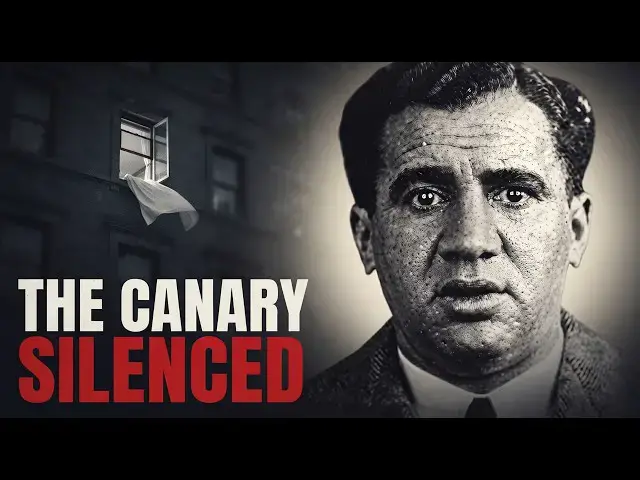
On November 12, 1941, the most dangerous witness in American mafia history fell from Room 623 of the Half Moon Hotel. Outside the door stood five NYPD detectives. Below the window lay Abe "Kid Twist" Reles—the man who knew every secret of Murder, Inc.
The police called it an accident. The mob called it business.
With a $100,000 contract on his head and hours before his final testimony against the mob's top boss, how did the government’s most protected "canary" go out of a locked, guarded window?
In this video, we break down the forensic evidence, the police cover-up, and the unsolved mystery behind the death of Abe Reles.
💬 Question for you: Did Abe Reles really try to escape, or was he thrown by his own guards? Drop your theory in the comments.
🔔 Subscribe for more deep dives into organized crime and untold mafia history.
#Mafia #MurderInc #TrueCrime #AbeReles #OrganizedCrime #MobHistory #NYPD #Underworld
#truecrime #mafia #documentary #organizedcrime #gangsters #unsolved #coldcase #cartel #crimestory #underworldshadows
Show More Show Less View Video Transcript
0:12
Sixth floor, room 623, the Half Moon
0:15
Hotel, Canai Island, [music]
0:16
1941. The window is open and the curtain
0:20
is moving and nobody is there. 42 ft
0:23
below, a low roof catches whatever the
0:26
building lets go. By the end of that
0:29
morning, the city will know what came
0:31
off the window, and it will spend 80
0:33
years arguing about what the window was
0:35
keeping. A man under the guard of the
0:38
New York Police Department died in that
0:40
room or from that window, and no one can
0:43
say which. The record calls it an
0:45
accident. The street calls it something
0:48
else. Between those two words stands a
0:51
window, two knotted sheets, a length of
0:53
wire, and five officers paid to make
0:56
sure it never happened. In the early
0:58
hours of the 12th of November, one of
1:00
the officers on the guard detail looked
1:02
out the window. Below, on the low roof
1:05
of the kitchen extension, four floors
1:08
down, there was a figure hunched on the
1:11
stone. He ran down the stairs. In the
1:14
man's pocket, he found a cap. The name
1:16
on it was A Brles. Within the hour, the
1:19
room was a scene in the only sense that
1:21
mattered. Two bed sheets knotted
1:23
together, a length of wire tied to a
1:26
radiator valve, a door standing open, a
1:30
window raised a few inches, and a story
1:33
handed to the city that afternoon that
1:35
was simple. And simple is the word a
1:38
file uses when it has decided what to
1:41
say.
1:42
[music]
1:45
Here is the version the record keeps.
1:48
Alone, Reles tied the sheets, tied the
1:51
wire to the valve, and lowered himself
1:53
toward the window on the floor below.
1:55
The knot came loose, he fell, and it was
1:58
an accident. The words the record uses
2:00
are accidental death during an attempted
2:03
escape. In 1951, a grand jury came back
2:07
with the same answer. But records are
2:10
written by people and people keep jobs.
2:13
The man was sick. The nurses at Harbor
2:15
Hospital had him for a week. The man was
2:18
scared. His guard said he could not
2:20
stand to be out of earshot. So the man
2:23
did it himself alone in the dark. That
2:26
is the official line. And we will hold
2:29
it against what the room says. So let us
2:31
name the questions first. The way you
2:33
lay evidence on a table. Who opened the
2:36
window on the fifth floor? The one
2:38
directly under Reles's room. Opened from
2:41
the top in a hotel where every other
2:43
window is shut. The police report
2:46
answers in the driest sentence in the
2:48
file. By whom and by when is not known.
2:52
Five officers on duty, 18 men on three
2:55
shifts, a door that never closed, a room
2:59
checked [music] every 15 minutes, and a
3:01
man who, by every fact in the file,
3:04
could not have left that room alone and
3:06
yet left it. Those are the holes. We
3:09
will close them one by one, or we will
3:11
not, and we will not pretend otherwise.
3:14
Now you need to know what was at stake
3:16
in that room because the window did not
3:18
open for a nobody. Abra was the most
3:21
valuable man the state of New York had
3:24
in its corner. Not because he was
3:26
violent, though he was, but because he
3:28
remembered everything, every job, every
3:31
face, every body. He carried the whole
3:34
ledger of murder incorporated in his
3:36
head. He was the reason Lep Butcher was
3:39
going to the electric chair and the
3:41
reason the machine the newspapers had
3:44
just named Murder Incorporated was
3:46
coming apart in a courtroom, one verdict
3:49
at a time. And on the morning of the
3:52
12th of November, one name was left in
3:55
his ledger, and the trial against that
3:57
man was set for the same day. The Half
4:00
Moon was not a luxury hotel, but for
4:02
Reles, it came close. Room 623 on the
4:06
sixth floor near the boardwalk. The
4:09
police built the guard the way you build
4:11
a vault. Three shifts, 18 men, the door
4:14
kept open, a patrol every 15 minutes,
4:17
[music] and after dark, a knock, a
4:19
question, and the man in the bed. That
4:21
setup was not paper talk. The order to
4:24
kill Reles had come from the top, and
4:27
the price was out, settled by the street
4:29
at $100,000.
4:32
So the city locked the canary in a room,
4:34
put a guard on the door and decided the
4:37
way a man decides not to look at a leak
4:40
in the ceiling that the window was a
4:42
detail. And that is where the official
4:44
story ends and where this one begins. A
4:48
room is a machine and every machine has
4:50
parts. The door, the window, the guard,
4:53
the man. One part in this room was
4:55
loaded like a gun with everything that
4:58
happened to Abbeles before he got there.
5:01
So, we go back to Brownsville to a kid
5:03
who was 5'2. This is not a story about a
5:07
fall. A fall happens to a body. A window
5:10
happens to a story. And the window in
5:13
this case is open from the top in a
5:16
vacant room on the fifth floor. And the
5:19
record will keep telling you it has been
5:21
open for 85 years.
5:24
[music]
5:26
Brownsville, Brooklyn. Tenementss and
5:28
Pushkarts. Abraham Reles was born in
5:31
1906, the son of immigrants from
5:33
Galatia. His father worked the garment
5:36
trade until the depression, then sold
5:38
niches off a pushcart. School stopped at
5:41
the 8th grade. After that, the candy
5:44
stores and the pool rooms taught two
5:46
laws. The world takes from you and it
5:49
can be taken back. He was small, 5'2,
5:52
and a small man in that world had two
5:54
choices. Be quick or be buried. And
5:57
Reles was quick. His first arrest came
6:00
in 1921 for $2 of chewing gum and did
6:03
four months in a reformatory. When he
6:06
came back, he was Kid Twist, a name he
6:09
took from a gangster before him, dead
6:11
young at Canai Island. By the 20s, he
6:13
had two partners, boys from the same
6:15
block. Martin Goldstein, who went by
6:18
Bugsy and Harry Straws, who went by
6:20
Pittsburgh Phil. They worked the slot
6:23
machines, the lone sharking, the
6:25
restaurant union, paid in cash,
6:27
collected in blood. For a while, they
6:30
worked under the Shapiro brothers, the
6:32
local kings, and the arrangement held
6:35
until it did not. The record keeps it
6:37
cold. Mayor Shapiro took Reles's
6:40
girlfriend, and in an open field, he
6:42
broke her. Reles never forgave it, and
6:45
he did not wait. Over 3 years, he went
6:48
after all three brothers, one at a time.
6:51
William the last was buried before the
6:53
hole was finished and the coroner who
6:56
dug him up had a finding for the record.
6:58
Buried alive. In 1934, the state tried
7:02
him for one of those jobs and convicted
7:04
him of a lesser charge. Then the judge
7:06
did what courts rarely do. He named the
7:09
man. The words are in the transcript
7:11
[music] and they travel well. More
7:13
vicious than Dillinger, but he lacks the
7:16
courage. Three years in prison, then
7:18
[music] out and back to the block. By
7:21
the mid-30s, the world had changed. The
7:23
men who ran the criminal syndicate had
7:25
turned murder into a business. Not the
7:28
old way, one thug and one grudge. The
7:30
new way had a board, a budget, a
7:33
payroll. And at the bottom, it kept
7:35
shooters on ice. Small men, quiet men
7:38
waiting for the phone call. The
7:40
newspapers later gave the machine its
7:42
name, [music]
7:43
Murder Incorporated.
7:47
The structure was cleaner than a
7:49
company. At the top, the men who decided
7:52
lepalter was the name to fear. The labor
7:55
rakateeer who ran the syndicate in New
7:57
York and the record later called Albert
7:59
Anastasia co-chief of operations. The
8:02
man who turned decisions into work.
8:04
Below the board, the men who carried the
8:06
work. Below them, the hands, small,
8:10
quiet, fast, disposable. Reles was a
8:13
hand. The work arrived by phone or a
8:16
middleman. Either way, with a number
8:18
attached, a bookie who talked, a union
8:21
man who organized, a rival who got in
8:24
the way. The bottom never saw the top,
8:26
and the top never learned the bottom's
8:28
names, and that was the design. If it
8:31
went wrong, [music] the machine had no
8:33
cracks to follow. The men who built the
8:35
machine had a phrase for the work, and
8:38
the [music] phrase became the name of
8:39
the trials, cash and berry. The order
8:43
came down with a figure on it. The price
8:45
of the silence and the silence was the
8:47
product. A bookie did not pay. He was
8:50
buried. A union man did not sign. He was
8:54
buried. And the wall had a maintenance
8:56
man. Someone had to carry the orders
8:58
down, bring the money back up and keep
9:01
the names separate. The record points at
9:04
the middle and at the one small name at
9:06
the bottom who remembered every single
9:08
call. The machine thought it had built a
9:11
wall. The machine had built a ledger,
9:14
and the ledger had a keeper. Every
9:16
machine has one fear, the canary in the
9:18
cage. The street had a word for a killer
9:21
who talks, and the punishment was not a
9:24
verdict. It was a body. A man named
9:26
Reuben, one of the men in the box, told
9:29
the story himself. He went into a grand
9:32
jury room, and he came out with a bullet
9:35
in his head. That was the law of the
9:37
cage. And the cage had no bars because
9:40
the bars were in the head of the man
9:41
inside. A killer who talked died in a
9:45
hallway or a parking lot or a grand jury
9:48
room and the city never heard. And in
9:51
that world, the word from man [music]
9:52
who talked was a stool, the only seat
9:55
with no back. In the spring of 1940,
9:58
Reles [music]
9:59
sat in the tombs, the jail in Manhattan,
10:02
indicted for murder with the chair
10:04
waiting past a guilty verdict. He had
10:07
made a living out of other men's fear,
10:09
and now the fear had his face. The men
10:12
around him had their own counts and
10:14
their own clocks. [music] None of them
10:16
was going to talk. In that cell block,
10:18
he heard the rumor that changed the
10:20
case. A local hitman, a man like him,
10:23
had talked and walked out and lived.
10:26
Relays measured the distance between the
10:28
electric chair and the witness stand and
10:31
found the witness stand was closer. The
10:34
state had left the door open, not out of
10:36
mercy, but out of arithmetic. It had a
10:39
machine to dismantle.
10:45
[music]
10:46
He was not the first to talk, and the
10:48
machine knew it, and the knowing made
10:50
him dangerous. Before Reles, the
10:53
district attorney's office had brought
10:55
in the small men, a man named Mafeta, a
10:58
man named Lavine, and a turncoat named
11:01
Tannenbound. Each one gave the state a
11:04
piece, and each piece fit. But the small
11:06
men knew the hands, not the board. They
11:09
knew who carried the work, not who
11:11
ordered it. The board sat behind the
11:13
wall, and the wall was the machine. The
11:16
only man who had walked the whole length
11:18
of that wall, from the bottom of the
11:20
payroll to the top table, was the one
11:23
sitting in the tombs, indicted for
11:25
murder, with the witness stand the
11:27
closer door. When the ledger finally
11:29
opened [music] in the spring of 1940, it
11:32
read like a payroll of the dead. There
11:35
was the hit on Dutch Schultz the Bookie
11:37
King in 1935.
11:40
There were the men shot from a moving
11:42
car on a signal and there were the men
11:44
Reles had done himself, at least 11, by
11:48
his own count in the grand jury room.
11:51
Before this, the state's Gangland murder
11:53
book was a wall of open cases, bodies
11:56
counted, files closed in pencil. [music]
11:59
Now the file opened in ink. The
12:02
prosecutor could go from a body to a
12:04
name, from a name to a room, from a room
12:06
to a face, and in 11 of the cases, the
12:10
face was the man in the witness box.
12:13
Reles sat for 12 days, and the
12:15
stenographers filled 25 notebooks. The
12:18
prosecutors said he had total recall,
12:20
which is a strange thing to say about a
12:23
man who had spent his life making things
12:25
disappear. Most men who live on other
12:27
people's fear forget the parts that
12:29
point at them. Reles did not. [music] He
12:32
gave the detail past the deal. Rooms,
12:35
streets, weather. Authorities took the
12:38
material and ran it against the oldest
12:40
unsolved murders in the city. As many as
12:43
70 of them. Cases that had been open for
12:46
a decade. bodies [music] with no names
12:48
on the files. In the end, the district
12:52
attorney's office used what the canary
12:54
gave it to close 85 cases of gangland
12:58
murder. That is the size of the canary.
13:01
[music] One entry went to trial, the
13:03
closest the city ever came to hearing
13:05
the machine run. A man called Puggy
13:08
Feainstein [music]
13:09
killed in his own house, and the case
13:11
was built on one witness, the man who
13:14
had done the job. Reles stood in the
13:16
box, placed himself in the room with his
13:19
two oldest friends, [music] and
13:21
described the work the way a man
13:22
describes a shift. The house's own
13:25
witness, the woman asleep in the back,
13:27
said the men had woken her and asked
13:30
where the rope was and where the ice
13:32
pick was. After one man complained of a
13:35
bite, the men in the box went to the
13:37
chair, and among them was Bugsy
13:40
Goldstein, the boy from Reles's own
13:42
block. The other case that went to trial
13:45
was a bookie called George Rdnik killed
13:47
in a garage in Brooklyn. The record for
13:50
that case is the coldest paragraph in
13:53
the file. The body was found with an ice
13:55
pick and a meat cleaver and the count of
13:58
the stabs was 54. The men in the box
14:02
were Mayon and Abando. The first verdict
14:05
came down in the spring of 1940 and the
14:08
high court threw it out. The [music]
14:10
second trial came in the spring of 1941
14:13
and the second verdict held. The machine
14:16
was starting to lose its parts one at a
14:19
time and the state was learning case by
14:22
case what the canary was worth. Then
14:24
came the cases that made the name. The
14:27
Schultz case in New Jersey where Reles
14:30
and Tannenbound put the getaway car at
14:32
the scene and the jury listened. the
14:35
Nitsburg case, a murder in Brooklyn,
14:37
where the [music] testimony built the
14:39
signal and the car and the route and the
14:42
jury convicted. And through all of it,
14:44
the machine did what the machine does.
14:47
It watched, it waited, and it priced the
14:49
canary. A canary that sings that well in
14:53
a cage that is that locked is a canary
14:55
the owners are going to stop singing.
14:58
The only question the machine asked was
15:00
not how, it was when. and the when was
15:03
the morning the last name on the ledger
15:05
went to trial.
15:10
[music] The offer did not come out of
15:12
the cell. It came from the one person in
15:14
the city who still had a reason to knock
15:17
on the right door. His wife, Rose,
15:20
walked into the office of the assistant
15:23
district attorney, a man named Burton
15:26
Turkus, and the record keeps her words
15:28
almost exactly. To save my husband from
15:31
the electric chair, she said, "My baby
15:34
is coming in June." The district
15:36
attorney's office had the machine's men
15:38
in its corner, and it needed the
15:40
machine's memory. And now the memory had
15:43
an address [music] and a deadline and a
15:46
price the state could pay. The state had
15:48
a machine to dismantle and the memory
15:51
was the only key. The deal when it came
15:53
was simple. Protection and immunity for
15:56
the man in exchange for everything the
15:59
man knew. The state took [music] the
16:01
canary out of the machine's cage and put
16:03
him in its own. And the state's cage had
16:06
bars you could see because the state had
16:09
to be honest about the locks. But the
16:11
machine's cage had no bars because the
16:14
bars were in the head of the man inside
16:16
it. The canary knew both cages and he
16:19
started to sing and the singing went in
16:22
one direction. From the cell to the box,
16:25
from the box to the calendar, from the
16:27
calendar to the top of the machine. The
16:30
top had a name and the name had a date.
16:33
The first wave hit in the spring and
16:35
summer [music] of 1941. The Rdnik case
16:38
held on retrial and the men went to the
16:41
chair. The Goldstein and Straw case went
16:44
to the chair with them. The Nitsburg
16:47
conviction went to the chair too, though
16:49
the high court would later throw it out.
16:51
And that is where the state did the
16:53
thing that made the case what it was.
16:56
The Nitsburg retrial opened in 1942 and
16:59
the prosecutor read the testimony of a
17:02
dead man to the jury from the notebooks.
17:05
That is what the state does with a
17:07
canary. It keeps singing him after he is
17:09
gone. And the state was saving his best
17:12
song [music] for the top. In the fall of
17:14
1941, they flew the Canary West to Los
17:18
Angeles with Tannenbound to try a
17:21
different bird. The name on the docket
17:23
was Benjamin Sieel and the charge was
17:26
the murder of a man called Big Greeny,
17:29
killed in 1939 for the crime of talking
17:33
to the police. Reles sat in the witness
17:35
box and did his song, the rooms, the
17:38
streets, the weather. The jury came back
17:41
with not guilty. For the first time, the
17:43
canary had missed a note. A miss in a
17:46
town like that is a report. And by the
17:49
time the plane was back over the east
17:51
coast, the machine knew exactly what the
17:54
canary had done and what he was worth.
17:56
The figure came back from the street the
17:59
way figures come back in that world
18:01
without a signature. $100,000.
18:05
That was the number the men on the
18:07
machine's board had settled on the price
18:09
of the canary. And the number [music]
18:11
moved from table to table, from hand to
18:14
hand, the way money moves in a machine
18:17
that does not issue receipts. Notice
18:19
what the price bought. [music] It did
18:21
not buy a bullet. It bought a hand. And
18:24
the hand was supposed to take the canary
18:26
out of the cage the state had built. The
18:30
guard's job. The whole of the guard's
18:32
job was the door. In no version of the
18:35
job was it ever the window. Then the
18:37
biggest case of all opened in New York
18:40
in the fall of 1941.
18:42
The charge was the murder of Joseph
18:44
Rosen and in the box there were three
18:46
names. Lep Bachelta the head of the
18:49
machine in New York, Louis Capone, not
18:52
the famous one, a distant cousin and
18:55
Mendy Weiss. The state's case was one
18:58
man's memory [music] with 25 notebooks
19:00
behind him. The defense did what
19:02
defenses do in a case built on a
19:04
turncoat. They went after the canary,
19:07
called the memory a gift. The gift a
19:10
reason to lie, the lying a habit. But
19:12
the canary stood in the box and did not
19:15
flinch [music] and gave them the rooms,
19:17
the streets, the weather. The jury came
19:20
back with one word. Guilty. The first
19:23
and only time a man on the syndicate's
19:25
own board went to the chair. The name
19:27
was [music] Lep Butcher and the sentence
19:30
was carried out in the spring of 1944,
19:34
4 years after the Canary sang it. But
19:37
the machine had one board member left
19:39
not yet on trial. And that trial was
19:42
already on the calendar. That man was
19:44
Albert Anastasia. If Lep was the
19:47
machine's face, Anastasia was its spine.
19:50
A man of the family. high in Kosa
19:53
Nostra. The file had two lines against
19:55
him, a trucking union man in the spring
19:58
of 1939, a long shoreman in the autumn
20:01
of [music] 41, and the trial rested on
20:03
one witness, Reles. The calendar gave it
20:06
its date, the 12th of November, 1941.
20:15
>> [music]
20:16
>> The Half Moon was not a hotel a witness
20:18
would brag about. A working hotel in
20:21
Canai Island near the boardwalk where
20:23
the summer crowd and the police details
20:25
shared the corridors. But for Reles, it
20:28
was the closest thing the state had to a
20:30
fortress. Room 623, 6th floor. The door
20:34
kept open. Three shifts, 18 men, a
20:38
patrol every 15 minutes. The police were
20:41
careful with him out of arithmetic, not
20:43
malice. The order to kill him was out.
20:46
The price was out. And he was the only
20:49
witness who could carry the case against
20:51
the family. So the state built the room
20:54
to keep a man in, not to keep the room
20:56
from a man. And the room had a window.
20:59
The guard was not a man. It was a system
21:02
with a clock. Every 15 minutes the
21:04
patrol came through. The door kept open
21:07
because an open door is the only door a
21:10
guard can see through. And after dark,
21:12
the officers knocked, asked, and wrote
21:15
down the answer. In no night of the
21:17
record does anyone mention the window,
21:20
because the window was never part of the
21:22
guard. The system was built for the
21:24
door. The door was the line between the
21:26
man and the world. But the room had a
21:29
second exit, the one the system never
21:31
mapped. A window on the sixth floor
21:34
raised a few inches. The moving air was
21:37
the one sound in that room the guard
21:40
never counted. The record keeps the
21:42
names of the men on that night's detail.
21:44
A detective named Robbins. Two more
21:47
detectives, Morren and Boille, and two
21:50
[music] patrolmen, Tempone and Mclaflin.
21:53
Five men paid on the state's dime to
21:55
keep the room closed. And the room had a
21:58
window and the window was the one part
22:00
of the job not on the list. And the five
22:03
men were not alone in the building. The
22:05
hotel held other witnesses in the same
22:08
corridors on the same clock. The guards
22:11
did not work one room. They worked the
22:13
floors. And the building had a sixth
22:16
floor and a fifth floor and a vacant
22:18
room on the fifth floor with a window.
22:21
And the off-c clock part of the building
22:23
is where this case still stands. The
22:25
months in the fortress were not kind.
22:28
Reles was spitting blood, he told the
22:30
men who guarded him. He was a patient at
22:33
Harbor Hospital for a week [music] and
22:35
the autopsy found a cyst on one lung.
22:38
His own doctor, Dr. Dunning, had died 6
22:41
weeks before, and the record says
22:44
[music] Reles took that badly. The new
22:46
doctor was the district attorney's own
22:48
man, Dr. Nash, and the medicine was the
22:51
state's medicine. Reles by the record's
22:54
own words had [music] stopped trusting
22:55
the street. He feared being out of
22:57
earshot of the police and the room was
22:59
never alone. The patrol came. The
23:02
question was asked. The answer was down.
23:05
A man who feared the dark was the
23:07
official story says the man who knotted
23:10
sheets in the dark. The calendar is
23:12
where the case takes its shape. Before
23:14
the 12th, the Butcher trial had closed
23:17
[music] and the machine's head was going
23:19
to the chair. The Nitsburg retrial was
23:22
cued and the Anastasia [music] trial,
23:25
the one that rested on one man, was set
23:28
for the morning of the 12th of November
23:31
1941. The record says it plainly, Reles
23:34
had no reason to run. The [music] deal
23:37
was protection and immunity, and the
23:39
next page was Anastasia.
23:41
A man about to be finished by the state
23:43
does not, as a rule, not sheets in the
23:46
middle of the night. And a man who
23:48
feared the dark does not choose the
23:50
dark. So the question stands, if he did
23:53
not do it, who did? The night of the
23:56
11th into the 12th, the record is thin,
23:58
and the thinness is part of the case.
24:01
The patrol came through on its clock.
24:03
The door was open, the window was raised
24:06
a few inches. The officers made their
24:08
rounds, knocked, asked, and heard the
24:11
answer. And then in the early hours, a
24:14
guard story became a false story. The
24:17
official account fills the gap with the
24:19
man alone. He got out of bed, took two
24:22
sheets and knotted [music] them, tied
24:24
the end to a length of wire, the wire to
24:26
a radiator valve, and lowered [music]
24:28
himself toward the window on the fifth
24:30
floor, the room directly below, which
24:33
the report says had been opened from the
24:36
top. By whom and by when is not known.
24:40
[music]
24:43
In the early hours of the 12th, a
24:45
detective on the detail, a man named
24:47
Robbins, looked out the window. Below,
24:50
on the low roof of the kitchen
24:52
extension, [music] four floors down,
24:54
there was a figure hunched on the stone.
24:57
He ran down the stairs. In the man's
25:00
pocket, he found a cap. The name on it
25:02
was A Brles. Notice who found him
25:05
because the finding is the case. It was
25:08
not a passerby, not a bellhop, not the
25:10
morning paper or the boardwalk. It was
25:13
one of the five men whose job was the
25:15
room standing at the window, seeing the
25:18
roof, seeing the figure running down the
25:21
stairs. The guard found the man the
25:23
guard was paid to keep. Inside the room
25:26
had told its part. Two bed sheets
25:28
knotted together. The sheets ended in a
25:31
length of insulated wire and the wire
25:33
ended at a valve in the radiator. The
25:36
wire, the record adds, had been in the
25:39
room for months. The hotel engineer had
25:41
brought it in to fix a radio. A room
25:44
does not supply a story. A room supplies
25:47
parts and someone fits them. And the
25:49
marks, the marks on the fifth floor sill
25:52
and the marks on the soles of the shoes,
25:54
the report says, [music]
25:56
showed that a man had stood on the sill.
25:58
He had reached it, the official [music]
26:00
story says, and as he tried to get in,
26:03
the rope had failed and he had fallen
26:05
four floors onto the extension roof 42
26:09
ft below. Now, the knot, the police
26:11
called it crude, and the word is the
26:14
whole of the official case. A man who
26:16
had spent his life tying other men's
26:19
hands, who had worked jobs with a rope
26:21
and an ice pick, is supposed to have
26:24
tied his own rope like a boy learning.
26:27
And the word crude is the proof the
26:29
record offers that he was alone. But a
26:31
not is a [music] detail and details are
26:34
where the record picks and chooses. The
26:36
room offered other things too. A window
26:39
opened from the top in a vacant room by
26:42
a hand the record cannot name. A guard
26:45
on the door the whole night on a clock
26:47
with nobody off it. And the record
26:50
picked the crude knot and left the
26:52
window. The fifth floor window is the
26:54
one the story needs and the one it
26:56
cannot explain. It was open from the top
26:59
in a vacant room in a hotel with police
27:02
keys and police hours. The story says
27:05
the man below needed it open to reach,
27:08
to climb, to get in. The story does not
27:11
say who opened it because the record
27:13
does not know by whom and by when is not
27:16
known. Hold the sentence. The record
27:19
does not say the window was opened by
27:21
the man. It does not say it was opened
27:24
by the guard. It says that it is not
27:27
known. And the not known is what the
27:29
city has carried for 85 years under the
27:32
skin like a splinter. [music] The men
27:34
who came to test the rope were not from
27:36
Brooklyn. They were from the Federal
27:38
Bureau. Their finding has been quoted
27:41
for 85 years. The sheets knotted the way
27:44
they were would hold about 130 lb. Reles
27:49
was 5'2 and the record does not say he
27:52
was light. The official story to survive
27:55
its own rope has to believe in a man who
27:57
weighed less than his own sheets. That
28:00
is the first crack. The second is the
28:02
angle. The accounts that have circulated
28:04
say the body came down straight off the
28:07
window, not along the wall. The third is
28:10
the window itself opened from the top by
28:13
a hand the record cannot name. Three
28:15
cracks all running to the same place.
28:18
The city needed a story. Police
28:20
Commissioner Valentine ordered a report,
28:23
a comprehensive and thorough one from
28:25
the head of the Brooklyn detectives, a
28:27
man named McGrath. And the report came
28:30
back with a verdict. The city could live
28:32
with accidental death during an
28:34
attempted escape. A man alone, a bad
28:38
knot, a failed rope, a fall. And the
28:41
five officers on the detail that night
28:42
were demoted the next day. Demoted, not
28:45
arrested, not charged. The state took a
28:48
loss on the witness, wrote it down as an
28:51
accident, and the book closed. The room
28:53
was cleaned, the sheets replaced, the
28:56
window [music] closed, and Cannai Island
28:58
went on with its boardwalk, and the
29:00
record of his death was a paragraph long
29:02
with one word the lawyers liked:
29:04
accidental. The street kept a different
29:06
file and the number in it was $100,000.
29:10
The name attached to the money moved the
29:13
way names do. In some versions, it was
29:16
Frank Costello who ran the money who
29:19
raised it to loosen the guard's hands.
29:22
In other versions, it came from the man
29:24
whose trial was about to open. [music]
29:26
Rumor is evidence with a bad haircut
29:29
held up to the light not believed, but
29:31
it fits the arithmetic. The order was
29:34
out. The price was out. The witness was
29:37
in a room with a window and a guard on
29:39
the door. And the job was the door, not
29:41
the window. The machine had built a wall
29:44
between the order and the hand, and the
29:46
wall had one opening. Then the dead
29:49
started to talk. In 1963,
29:52
22 years after the fall, a man named
29:55
Joseph Valache stood before a grand
29:58
jury. Valache was a government witness
30:00
[music] himself, a turncoat who had paid
30:03
for it. And in his testimony, he put a
30:06
hand on the window. Valache said Reles
30:08
had been murdered. The guards had done
30:10
it. The family had known. And he named
30:13
the name at the top, Anastasia. Many on
30:16
the force did not believe him. The
30:18
accusation went into the file as what
30:20
the file calls, in its careful language,
30:23
an allegation, not a finding. The file
30:26
does not deal in prophecy. [music]
30:27
So, it kept the allegation and the
30:29
window and the sentence that is still in
30:32
the report. Then in 1951, 10 years after
30:35
the fall, a grand jury looked at the
30:37
file. It came back with the official
30:40
line, "Unchanged, accidental death."
30:43
During an attempted escape, the same
30:45
word 10 years later over the same rope,
30:48
the same valve, the same window nobody
30:51
had opened. The file closed and the word
30:54
went in the way guilty goes into a
30:56
verdict as the last word. In this city,
30:59
the last word is the word that survives.
31:02
From one grand jury to the next, nothing
31:04
moved it. No trial, no retrial, no
31:08
answer. The file closed in 1941, and it
31:12
closed in 1951 with the same word doing
31:15
the work of a verdict. And a verdict in
31:18
this city is the thing that is never
31:20
appealed. The newspaper needed a line
31:22
for the man, and it found one. The
31:25
canary who could sing but couldn't fly.
31:27
It did what lines do. It made the death
31:30
a fable. The canary sang, the canary
31:33
fell, the cage closed, and the city has
31:36
carried the fable for 85 years. Because
31:39
the fable says the man could not fly,
31:42
and the fable does not ask who opened
31:44
the window. Because the question the
31:46
fable swallows is the question the file
31:48
cannot answer. Who opened the window? By
31:51
whom and by when a window does [music]
31:54
not open itself from the top in a vacant
31:57
room. The fable ends with the bird gone
32:00
and the question open and the window
32:02
still the one part of the case nobody
32:04
has looked at directly.
32:08
[music]
32:10
Let us close the case with a balance
32:12
sheet. Abra, born in Brownsville in
32:15
1906, a hitman of Murder Incorporated,
32:19
turned witness in 1940, the man who
32:22
opened the machine's ledger and sent its
32:24
men to the chair until the name at the
32:27
top of the board went in 1944.
32:30
They buried him at Mount Carmel in
32:33
Glendale, Queens. He died in a room in
32:35
Canai Island on the morning of the 12th
32:38
of November, 1941.
32:41
That is the record. [music] and the
32:43
record is enough. What the record is not
32:46
is an answer. A window open from the
32:48
top, a curtain moving, and a city that
32:52
decided twice what the window means and
32:54
never said it to the window's
Arts & Entertainment