0:00
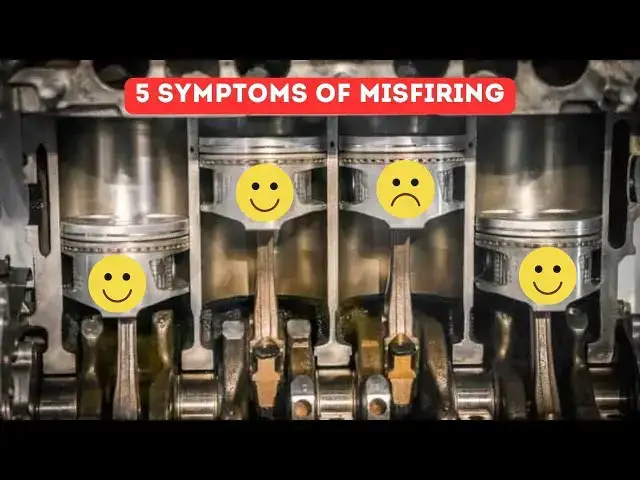
First of all, what is misfiring? Misfiring is when one of the cylinders of your engine somehow
0:08
doesn't fire when it should. So it gets the fuel, but it doesn't fire because it doesn't have the
0:13
spark, because it doesn't have the compression, or because of some other reason, but it doesn't
0:18
fire. So how can you understand that the engine is misfiring? You will need to spot several of
0:24
the symptoms that I will tell you about today. And the first symptom, which is pretty common sense,
0:30
is the loss of power. So when one of the cylinders misfires several times, you basically have not a
0:37
four-cylinder engine but a three-cylinder engine. So one cylinder just doesn't produce any power,
0:42
and this causes power loss, of course. But the power loss in this case will be only at
0:48
the moment when you have misfiring. So when your engine works, like, for example, you give a lot of
0:53
RPMs to your engine, and it works just okay, so in this case, you will not have the power loss. But
1:00
when the misfiring occurs, the power will be much lower. The second thing you want to pay attention
1:04
to is hesitation. So when you press the gas pedal, but your engine hesitates and doesn't want to
1:11
accelerate immediately, this is one of the common things that misfiring causes. One of the cylinders
1:17
will just skip the moment when it should fire, and you don't have the power to accelerate. So your
1:22
engine may even stall at this moment, but this happens only when several cylinders misfire, so
1:28
there is a huge problem with the engine. Then, if you experience sudden vibrations in your engine,
1:33
this is also the sign that shows misfiring. Why? Because when your engine, for example, it's a
1:39
four-cylinder engine, and suddenly it becomes a three-cylinder engine, it comes out of balance,
1:44
so it starts vibrating. But this vibration is not constant, so your engine doesn't vibrate
1:49
constantly; it vibrates only when the misfiring occurs. So when one of the cylinders misfires,
1:56
your engine becomes shaky, and you will feel this on the entire body of your car, and you
2:02
will see this when you open the hood and look at the engine. You will see that it shudders a
2:06
little bit from time to time. This is a very clear symptom of misfiring. Then, sometimes you may have
2:14
black exhaust. This doesn't occur at all times because sometimes the misfiring is not that bad,
2:21
and all this fuel that comes through the engine without being burned there, it will be burned in
2:29
the catalytic converter, and you will not have the huge amount of black exhaust. But sometimes,
2:34
sometimes it may happen when the misfiring is really bad, and a lot of fuel isn't burnt. But
2:41
because what happens when the engine misfires is your injector will still inject some fuel
2:47
into the cylinder, but the cylinder will not burn this fuel, and part of this fuel will go inside
2:54
the engine, down the engine, so it will dilute the oil, which is not good at all. But part of
3:00
this fuel will go to the exhaust system when the valves, when the exhaust valves open, part of this
3:06
fuel will go to the exhaust system, and then it will burn directly in the exhaust system, in the
3:11
catalytic converter, in some other tubes and parts of the system, which is pretty bad because it will
3:19
raise the temperature in the catalytic converter, and it will destroy the catalytic converter if you
3:23
ignore this problem. So when you actually have black smoke from the tailpipe, and you suspect
3:29
that it's because of misfiring, you need to take action. You need to repair the engine; otherwise,
3:36
it's going to cost you much more in several weeks. And the fifth symptom, which is pretty easy to
3:43
spot if you have a scanner, it's the code P300 or P300N (some number). When you have the code P3000,
3:55
it means several cylinders misfire. They may misfire all together or one by one,
4:00
but if you get P3000, it means that the problem is not likely with one of the spark plugs or one
4:09
of the ignition coils. The problem is with something else, like engine electronics or
4:14
maybe the compression or maybe something like that. But when you get the trouble code P0301,
4:19
you are sure that this is about the first cylinder. So the misfiring occurs in the
4:23
first cylinder. P0302 will tell you about the second cylinder, P0303 about the third cylinder,
4:30
and so on and so forth. And you may also see some other codes for the exhaust system problems,
4:35
etc. So if you have the scanner, check it, and you will see easily that this is misfiring.