Up next in 10



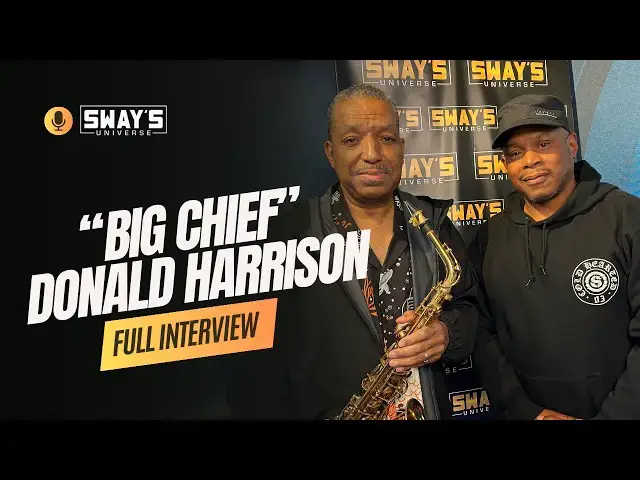
Step into the world of a living legend as Big Chief Donald Harrison joins Sway in the Morning for an unforgettable masterclass in music history. From mentoring The Notorious B.I.G. to pioneering quantum improv with physicists, this conversation explores the deep roots of New Orleans culture and the future of jazz. 🎷✨
In this exclusive interview, Donald Harrison shares incredible stories from his illustrious career, including how he helped a young Biggie Smalls develop his legendary flow by studying jazz rhythms and Marvin Gaye. He dives deep into the historical significance of Congo Square, explaining why it remains the ground zero for African-American music and culture. 🎺
You will also hear about his experiences working with icons like Miles Davis and Lena Horn, and how those interactions shaped his philosophy on discipline and handling mistakes. Donald breaks down his new project, The Magic Touch, which features a single song reimagined in ten different musical styles, proving that music is a universal language that can bring everyone together. 🎶
Chapters
0:00 Intro and Welcoming Big Chief Donald Harrison
3:15 The Significance of Congo Square in New Orleans
6:45 Preserving Ancestral Traditions and Sacred Secrets
9:30 Critiquing Modern Music Festivals and Branding
12:15 Defining the Lineage of Jazz Masters
15:00 Bridging the Generational Divide in Music
18:45 Mentoring The Notorious B.I.G. and Rhythmic Phrasing
22:30 Teaching Biggie Smalls About Positive Undertones
25:15 The Warrior Culture of Mardi Gras Indians
29:00 How Miles Davis Taught Him to Handle Mistakes
32:45 Engaging the Next Generation of Jazz Listeners
35:30 Personal Memories of the Legendary Lena Horn
Show More Show Less View Video Transcript
0:00
Yes, man. Yes, yes. We have to set the
0:02
mood right for this one.
0:05
We had to set the mood right for this
0:07
one. Had to be
0:08
>> Let's go.
0:09
>> We got a legend amongst us.
0:12
We got a legend amongst us, citizens.
0:16
This is a legendary saxophonist.
0:20
In New Orleans, Big Chief representing
0:23
Congo Square. We'll break that down in a
0:25
minute. Known for bridging generations
0:28
and genres of music over the course of
0:31
his career. Some of the people he's
0:34
worked alongside has include a very
0:37
illustrious list, if I will.
0:40
He's mentored the likes of Jon Batiste.
0:43
Give that man a round of applause.
0:45
applause.
0:49
He's collaborated with Art Blakey. Give
0:51
that a round of applause. McCoy Tyner,
0:54
give Ron Carter, give that a round of
0:56
applause. He's worked with hip-hop
0:58
artists including Digable Planets and
1:01
Guru, who we just played a jazz thing
1:04
from the Jazz Matazz series, and The
1:07
Notorious B.I.G. Give that a round of
1:09
applause.
1:11
He's been a part of major productions
1:14
like Luke Cage and Treme. Give that a
1:17
round of applause. The Funky Meters and
1:19
Bernie Worrell. He's played with film as
1:22
well. Give that a round of applause.
1:25
Classical composer with orchestras
1:27
including the Moscow Symphony Orchestra,
1:30
Chicago Symphony Orchestra. Give that a
1:32
round of applause. Legendary, had to be.
1:35
>> Legendary.
1:37
>> Legendary.
1:38
I got a chance to talk with this man
1:40
along with Easy Mo Bee and others, my
1:42
man Vincent, Miles Davis's nephew,
1:46
and we got a chance to talk about
1:49
working with Miles Davis, and the whole
1:51
time I'm looking at this man like,
1:53
"Whoa, what a treasure trove of
1:55
experiences and information he must hold
1:58
and I invited him to come on the show.
2:00
>> Beautiful.
2:01
>> And he did not hesitate. He said, "Sway,
2:03
I'm only going to be there for maybe 24
2:05
to 48 hours.
2:07
Is it all right if I come on your show?"
2:09
I said, "Big Chief, salute to you. I
2:11
would love to have you on the show."
2:13
Today, citizens, standing ovation
2:15
necessary. Give it up for the one and
2:17
only Big Chief representing Congo
2:20
Square, Donald Harrison is in the
2:23
>> Come on, man.
2:24
Stand up IN NEW YORK.
2:26
STAND UP IN NEW YORK. THANK YOU.
2:29
YES.
2:30
YES. He got his new album, The Magic
2:33
Touch.
2:33
>> What a blessing.
2:34
>> That's out right now.
2:36
>> Yeah.
2:36
>> Donald Harrison, Big Chief, welcome to
2:38
the show, brother.
2:39
>> Beautiful.
2:40
>> Man, it's unbelievable to be here.
2:42
>> Man.
2:43
>> I'm one of your biggest fans, all of you
2:44
guys. Thank y'all for what y'all do.
2:47
>> Thank you.
2:47
>> I love y'all forever.
2:48
>> you, too. Thank you.
2:49
>> Good to meet you, too, my brother.
2:51
>> Yeah, man. That's actually Chris
2:52
Webber's little brother, too, man.
2:54
>> What?
2:55
Pleasure, man.
2:56
>> Yeah, man. Um welcome to the show, man.
2:59
I call you Big Chief representing Congo
3:01
Square.
3:02
And Congo Square has so much historical
3:05
and legendary history behind it. Man,
3:08
what exactly that is. And that's a place
3:11
in New Orleans, right?
3:12
>> Yes, uh
3:14
what I call ground zero
3:16
>> Uh-huh.
3:16
>> for uh especially the music that comes
3:19
out of the African-American
3:21
uh
3:23
diaspora here in America. Because it's
3:25
the only place
3:27
where uh people of African descent were
3:29
allowed to participate in their culture.
3:32
>> Mhm.
3:32
>> So, if you came from Nigeria,
3:35
you were Igbo
3:37
or Yoruba, you could participate in your
3:39
culture in Congo Square. Get in a circle
3:42
with the people from the area that you
3:43
came from
3:45
and and keep your culture alive.
3:47
>> Mhm.
3:47
>> So, it turned into uh
3:50
a new tribal culture or call
3:52
culture.
3:53
>> Mhm.
3:53
>> So, uh uh
3:55
through uh my lifetime
3:58
I uh
3:59
went through the rituals
4:01
and became the the big chief of Congo
4:03
Square to hold those secrets down
4:06
uh all the connections going back to to
4:09
antiquity
4:10
and keeping them alive for the for
4:13
future generations so that uh
4:16
we could keep keep uh our ancestors
4:18
alive
4:19
in that way inside of our system.
4:22
>> I love this, man. Wow, get out. Come on,
4:25
man. You can locate it that area in the
4:28
Louis Armstrong Park now, is it called?
4:30
>> Yes, in Louis Armstrong Park in New
4:31
Orleans. So, you can go there and you
4:34
can feel them spirits is
4:36
you you can feel it.
4:37
>> But keep
4:38
>> If you walk in there, you like
4:39
I'm home.
4:40
>> Home, home.
4:41
But you know what he said is, you know,
4:44
this is the only place we were allowed
4:47
to exercise our customs and traditions,
4:51
right? And spirituals and chants and
4:54
prayer and and play our music was in
4:58
this particular area called Congo Square
5:00
because it was outlawed, right? It was
5:02
illegal.
5:03
>> Well, yeah, everywhere else. But you
5:05
know, in South Carolina
5:07
what they now call Gullah Geechee
5:09
people, they kept uh they kept their
5:11
culture
5:12
and and some of the African language
5:14
alive. Also in Cuba and Haiti
5:17
>> Mhm.
5:17
>> and different places in Brazil
5:20
in the Caribbean. I always call New
5:22
Orleans the northernmost Caribbean
5:23
island.
5:24
>> Uh-huh.
5:24
>> Got one foot in America and one foot
5:27
in Caribbean and one foot in Africa.
5:29
When you come there, you feel it.
5:30
>> You feel it, right? Heather's a
5:32
of a she is a queen Geechee. She's a
5:36
Geechee queen. You can see it in her,
5:38
right?
5:38
>> Oh, please. What does that mean?
5:40
>> saying, you know.
5:41
She look Now, it's all Gucci, but you
5:43
look Geechee.
5:44
>> It was all Gucci, but it's Gullah
5:46
I'm I'm a Gullah Gucci
5:47
I got you.
5:48
>> Gucci girl. but my family was a islands
5:51
in South Carolina um Gullah Geechee
5:53
proud though. Just just proud from the
5:55
heritage, the legacy, the food, the
5:57
family,
5:58
um and just that sense of home. If it
6:02
just that sense of home and so I always
6:04
try to bring home with me wherever I go
6:07
um thanks to my ancestors.
6:09
>> So you know you know what I'm talking
6:10
about.
6:11
>> Absolutely.
6:12
>> You said there's things I'm not going to
6:13
ask you the secrets, but there's things
6:15
that you have to keep secret though.
6:17
You're saying sacred, right?
6:19
>> Yeah, so you know uh
6:22
we have to keep that so that we can we
6:24
maintain
6:26
what I call strange to antiquity.
6:28
>> Uh-huh.
6:29
>> So nobody disrupts them.
6:31
>> Uh-huh.
6:31
>> So we just uh
6:33
we keep uh
6:35
our ans- our ancestors are our
6:37
ancestors, so they speak to us
6:39
>> Mhm.
6:40
>> and keep us grounded.
6:41
>> Uh-huh.
6:42
>> So that that that's all it is is
6:44
you know everybody has that, you know.
6:47
And it's okay.
6:48
All societies have have uh
6:52
the understanding of where they came
6:54
from.
6:54
>> And keep it pure, you know,
6:56
um
6:57
there was a show I saw you speak on um
7:01
I think the Jake Feinberg show a few
7:04
years back,
7:05
right? And
7:07
um he had a you had an observation and a
7:10
criticism
7:11
over
7:13
a lot of these blues festivals because
7:16
a lot of the blues festivals you go to,
7:19
you don't see black blues bands, right?
7:22
Has
7:23
has that How long has that been a
7:25
problem
7:26
um when you go to jazz and blues
7:29
festivals and and is that something you
7:31
often speak out about? And why is that a
7:33
problem?
7:35
>> Well, it's a it's a
7:37
problem because they we have a society
7:41
that uh
7:42
says
7:44
this is this
7:46
and if you're going to give us that
7:48
title, that's the name of us,
7:50
>> Mhm.
7:51
>> then you're confusing the brand.
7:54
You know, for for me it's just music,
7:56
but if you're going to say these are if
7:58
Louis Armstrong is a jazz artist,
8:01
and I love Pinkerton, and you have
8:02
Pinkerton as the main featured artist,
8:04
>> Mhm.
8:05
>> then you're confusing
8:07
to me young people
8:09
their understanding of what jazz is. So,
8:12
it's it's just a simple fix,
8:14
you know, to to just just label it if
8:16
you're going to make a label, even
8:18
though it's it's just music. If you're
8:20
going to make a label, let it be right.
8:22
Cuz you ain't going to If you're going
8:23
to in the store and you're looking for
8:24
ketchup and they put mustard in the
8:26
bottle, you ain't going to be happy.
8:30
>> I like that.
8:31
>> Boom.
8:32
>> So, what would you label it then? What
8:34
would you label those kind of festivals
8:35
that feature that variety of artists?
8:37
Just
8:38
>> Or just a music festival. If it's a
8:39
variety, it's a music festival.
8:41
>> Okay.
8:41
>> Cuz I I have a festival. We couldn't do
8:43
it this year
8:45
because uh
8:47
because of what happened. I almost
8:49
kicked the bucket. But anyway, we
8:51
canceled the But it was a music
8:53
festival.
8:54
>> The Hornucopia? Or what the
8:56
>> No, the No, the this festival is uh
8:58
what's called a Quantum Leap Music
9:00
Festival.
9:00
>> Okay.
9:01
>> So, we had it in New York. We did it 2
9:03
years, but this year we're going to take
9:05
a year a year off to get my little self
9:07
together. And uh
9:10
cuz I was a little bit a lot bit sick,
9:12
put it like that. And uh
9:14
And but we didn't say jazz festival cuz
9:17
we had all kind of music.
9:18
>> Mhm.
9:19
>> But if I do a jazz festival, it's going
9:20
to be all jazz, you know, what what we
9:23
call jazz.
9:24
>> What do you How do you
9:26
define How do you define jazz? What is
9:28
jazz?
9:30
>> Like with anything, it's a tradition.
9:32
>> Mhm.
9:33
>> You know, uh
9:35
So, I'd um a master of it would be like
9:38
Miles Davis, Ron Carter, and uh
9:41
John Coltrane.
9:43
The guys who go through the system
9:46
and uh
9:48
the elders
9:49
>> Mhm.
9:50
>> who uh
9:51
came up with the music
9:53
acknowledge
9:55
these guys belong
9:57
with us.
9:58
>> Mhm.
9:58
>> You know, so uh if you're playing
10:01
basketball
10:03
you can't come out there with a football
10:05
>> Yeah.
10:06
>> and say, "I'm playing basketball."
10:08
>> Mhm.
10:09
>> So, we have to just say, "You know
10:12
you can look at the lineage."
10:14
Louis Armstrong, he came from uh
10:18
uh
10:19
King Oliver. That's who taught him.
10:22
>> Mhm.
10:23
>> And then uh
10:25
Roy Eldridge and
10:27
Charlie Shavers came out of Louis
10:29
Armstrong.
10:30
>> Mhm.
10:30
>> Then Dizzy Gillespie came out of Charlie
10:32
Shavers and and uh
10:35
Roy Eldridge. Then Clifford Brown
10:38
came out of
10:39
Dizzy Gillespie. So, you can hear
10:41
>> Mhm.
10:42
>> if you know music, you can hear
10:45
that it was passed down to these younger
10:48
generations. They all play with each
10:50
other and they
10:51
it's it's just a tradition that's passed
10:53
down
10:54
>> Mhm.
10:54
>> from playing with the masters that came
10:56
before.
10:58
It's hard to really understand. I played
11:01
I did 15 years with the be boppers.
11:04
I played with them so much they called
11:05
me
11:06
the only young be bop brother.
11:09
But
11:10
you can hear when the tradition has been
11:12
passed down
11:13
>> Mhm.
11:14
>> to a younger player.
11:15
>> Mhm.
11:16
>> So, it's just a tradition
11:17
a musical tradition that has been passed
11:19
down. Just like great classical
11:21
composers
11:22
studied with the old older composers.
11:24
Great blues players
11:26
studied with the other blues players and
11:28
they're all connected. A connected
11:31
tradition that's passed down to the next
11:33
generation.
11:34
>> So, when you look at Let's get Mr.
11:36
Harrison to chief some water if we don't
11:38
if y'all don't mind, man.
11:40
So, when you look at rap music
11:43
right?
11:43
>> Right.
11:44
>> We don't have that kind of bridge. We
11:47
actually have more of a if you know,
11:49
there's some people who are bridging
11:51
like we do that. We bridge with the
11:52
younger artists and the younger
11:54
creators. But, for the most part, we
11:56
don't have that bridge. In fact, we have
11:58
a divide between young and old. Right?
12:01
Typically, that's what you hear. I know
12:03
you look you you sat with Biggie.
12:06
You know, what are your thoughts on that
12:07
for us when it comes to hip hop?
12:10
>> I just don't believe that because the
12:12
young generation is listening on the
12:14
radio.
12:15
>> Mhm.
12:16
>> And they listen to the beats.
12:18
They just keep changing it.
12:20
>> Mhm.
12:20
>> You know?
12:22
When they came up with trap, they
12:23
changed it, man.
12:24
>> Yeah.
12:25
>> The high hats is different.
12:27
>> Mhm.
12:27
>> They They They looked at the drum
12:29
machine.
12:30
And the stuff we used to, you know, like
12:32
the rolls on the drum machine, we used
12:33
to
12:34
I don't want to use that. They used it.
12:37
They used technology to move the music
12:39
forward.
12:39
>> Mhm.
12:40
>> And you can't be mad at them.
12:42
>> Mhm.
12:42
>> For me,
12:43
I enjoy when somebody takes is takes
12:47
something that you're looking at and
12:48
they use it in a creative fashion.
12:51
Cuz it it it adds to
12:53
the
12:54
the idea of what the music is. But, you
12:56
know that they You can't
12:59
rap without hearing hip hop
13:02
from a previous generation. You just
13:04
didn't pop out of somewhere
13:06
rapping
13:08
without hearing no hip hop in your life.
13:10
>> Right.
13:10
>> I never heard hip hop, but I can do it
13:13
and I can innovate it.
13:14
>> Yeah.
13:14
>> No, it's it's not going to happen. So,
13:16
they didn't live in a vacuum and they
13:17
heard it. Maybe they don't talk to each
13:19
other and
13:21
but
13:23
I mean, I was I was around Biggie. He
13:24
was listening to everybody.
13:26
>> So, talk to me about that. Your your
13:28
experience with um The Notorious B.I.G.
13:31
At that time, he was still Biggie
13:33
Smalls.
13:34
And was it you the one in that
13:36
documentary that said he he learned to
13:38
rap like a jazz musician plays melodies?
13:42
That's how his style developed?
13:45
>> Yeah, you know, I was I'm always
13:47
thinking out the box.
13:49
And he was he was a great uh
13:52
student of music.
13:55
And
13:56
I I'll say this. I I taught a lot of
13:58
people who went to the top of the game.
14:01
And they all share one thing.
14:03
>> Mhm.
14:04
>> If you say, "Man, go check this out and
14:05
work on it."
14:07
or young lady, when they come back
14:10
they have that idea and they have 10
14:13
other things that they figured out
14:15
>> Mhm.
14:15
>> besides what you gave them.
14:18
And he was of that ilk.
14:19
>> Mhm.
14:19
>> So, if you said, "Man,
14:21
uh listen to this uh rhythm that Max
14:23
Roach is playing on the drums and see if
14:25
you can incorporate that." He would come
14:27
back with that idea and 10 more
14:30
maybe 20 more.
14:32
>> Mhm.
14:32
>> So, he he uh
14:34
was very astute hard worker
14:37
and understood
14:38
almost instantaneously.
14:40
>> What kind of questions did he ask?
14:43
>> I don't know if he he was just a
14:45
jokester really when he was around me.
14:47
>> Mhm.
14:48
>> But I used to just
14:49
I'm a guy who shares information.
14:52
Like
14:53
one of the things you may not realize
14:55
when when he's going "Woo!"
14:57
That's because I was like, "Check out uh
14:59
Marvin Gaye going "Woo!" on a song."
15:01
>> Oh, yeah.
15:02
>> Then he incorporated that into rap. So,
15:04
all these little things
15:06
just just sharing examples
15:08
>> Mhm.
15:08
>> of music. Which is, you know,
15:11
Jon Batiste. I teach all of music.
15:14
So,
15:15
once you get the idea this 360 degree
15:18
idea of what music can be
15:21
>> Mhm.
15:22
>> it broadens your scope. And if you work
15:24
hard,
15:25
it's usually uh
15:27
puts you in a special place. You know,
15:29
like a star, you're standing out there.
15:32
You can see that star cuz
15:34
it becomes special because it has so
15:36
much you have so much information.
15:39
And uh he he was able Well, I think he
15:42
he really did
15:43
he was able to uh speak the language of
15:46
his generation. We talked about putting
15:49
positive
15:50
undertones in the music.
15:52
>> Mhm. You talked to Biggie about that.
15:54
>> Yeah, well, I had
15:56
I stole it from Ice-T.
15:57
>> Uh-huh.
15:58
>> Because he was on Arsenio Hall
15:59
>> Uh-huh.
16:00
>> saying they think that my music is
16:02
gangster,
16:03
but I'm really showing them if you go
16:05
down this path, it's going to lead you
16:07
astray.
16:09
And I'm trying to tell them to work
16:10
hard. And and so I I said, "That's the
16:13
ticket right there." And then I started
16:15
uh sharing that with Biggie.
16:18
And and I'm really happy to see if you
16:21
If you type on If you Google Notorious
16:23
B.I.G. positive uh messages,
16:27
there's all these websites that pop up
16:29
now.
16:29
>> Mhm.
16:30
>> And I've done tributes and the young
16:32
people come to me
16:33
who are fluent, say, "Man,
16:36
I know what you did and it really
16:38
changed my life." So, all these little
16:40
things that you do,
16:42
you never know how they're going to uh
16:45
turn into something that helps somebody
16:47
else. And my father used to say, "If
16:48
your If your life helps one other
16:50
person, then your life was necessary."
16:53
>> Big Chief Donald Harrison is here, man.
16:56
Give this guy a round of applause.
17:00
The Mardi Gras The Mardi Gras tradition.
17:07
Can you talk about the the tribes?
17:11
Tribe culture surrounding the Mardi
17:13
Gras.
17:14
>> Yeah, like we You about Congo Square,
17:16
you know, uh
17:17
all these uh
17:20
groups from all over Africa
17:22
uh continuing to participate in their
17:25
culture in America.
17:27
And it just got turned into
17:32
one rhythmic and musical ideas,
17:36
a new uh
17:38
confluence of dance styles
17:41
that came together into uh
17:43
our way of dance singing and our
17:46
rituals.
17:47
>> Mhm.
17:48
>> But the roots are there and also uh
17:52
ideas from uh
17:53
from uh Native Americans and other other
17:56
cultures got mixed in there.
17:58
But we we still go out and continue uh
18:04
uh
18:05
ancient ideas in the modern world.
18:08
>> Mhm.
18:08
>> I I I came up with an idea
18:12
when you put uh the past
18:15
and the present together,
18:17
you shape the future.
18:19
So, it it keep it keeps continuing
18:22
and it keeps giving.
18:24
So, uh
18:25
we meet each other and we go through the
18:27
rituals and nowadays it's
18:30
it's uh got boiled down to who can
18:33
make the best cultural attire, mhm, who
18:36
can dance the best,
18:38
who can play our war games the best, all
18:40
those kind of things.
18:42
Cuz it still has has that element, the
18:44
the warrior aspect to it.
18:47
And and uh
18:48
we just have a whole bunch of fun.
18:50
But you will you will be tested.
18:54
Uh
18:54
as my friend said, there will be some
18:56
pressure put on you.
18:57
>> But what kind of pressure though? To
18:59
play, to know your history? Like what
19:01
kind of pressure comes up?
19:02
>> All of that, too, yeah.
19:03
>> Oh, okay.
19:04
>> But also uh
19:06
if you're strong, put it like that.
19:08
>> Okay. All right.
19:09
>> That's so funny because um Mr. Harrison,
19:12
my friend is texting me now. His name is
19:13
Hasheem Williams and he said tell Big
19:15
Chief some of his seventh ward family is
19:18
listening. His Mardi Gras Indian family.
19:20
I know his keeper of the flame legacy
19:22
and family. What does that mean?
19:24
>> Well, my father had a tribe called the
19:26
the Guardians of the Flame.
19:27
>> Mhm.
19:28
>> Uh
19:30
so uh
19:31
at that time when he when he came up
19:33
with
19:34
it was uh
19:37
a lot of uh
19:38
dissenting and
19:40
and some outside forces trying to
19:43
uh
19:44
take it over so he felt that
19:47
that that name was apropos for the
19:48
moment.
19:49
>> Mhm.
19:50
>> Cuz he he
19:51
Well, my father he brought me around the
19:53
old-time chiefs.
19:55
So, that's a whole 'nother
19:57
uh idea. They they they came
20:01
they were around
20:02
and had those
20:05
old-time what we call old-time ways and
20:07
old-time way old-time
20:10
>> traditions
20:11
>> Traditions, yeah. Good good word. So,
20:13
they
20:14
I was passed that
20:16
as a young man.
20:17
>> Mhm.
20:18
>> And uh
20:20
you don't mess up around them so
20:21
>> Right.
20:23
>> I I I
20:24
And you have to for them to really share
20:26
with you
20:27
it's the something called the heart
20:29
condition that they're looking for you
20:31
looking for.
20:32
Because uh
20:34
the idea of the solution of humanity
20:37
being
20:38
that we all learn to be human beings
20:42
instead of fighting each other even
20:44
though we do
20:45
still do
20:46
it's it was uh
20:48
something I really uh
20:50
was happy to understand.
20:53
Because if we all if we
20:56
if we prayed at the people who are not
20:59
who don't understand to treat each other
21:01
the best that we can
21:03
and they
21:04
become that
21:06
then we our solution.
21:09
>> Mhm.
21:10
>> I love it, man. We got the the big chief
21:13
Donald Harrison here. You you want to
21:14
jump in?
21:15
>> Yeah, as you were talking as a
21:17
therapist, one of the things I see most
21:19
are people who
21:20
um struggle with moving on after making
21:23
a mistake. And so as a musician, even a
21:26
professional one, I'm sure every now and
21:28
again you hit the wrong note, right? And
21:31
so how do you stay out of your head when
21:33
you hit the wrong note, particularly
21:34
when you have peers around you who have
21:37
great ears and can tell if you hit the
21:38
wrong note? How do you move on to the
21:40
next to the next song, the next note, um
21:43
without getting in your head?
21:46
>> Well, Miles Davis summed it up.
21:48
Uh
21:49
Herbie Hancock talked about it.
21:52
You turn the a wrong note into the right
21:53
note.
21:55
That's one thing we can do. And you you
21:59
I was around so many great artists
22:02
that
22:04
uh
22:05
I knew
22:08
I I learned
22:09
that you can only do the best that you
22:11
can do at that moment.
22:13
>> Mhm.
22:14
>> And then you have to move on cuz you're
22:16
not going to get up on the stage, you're
22:17
not going to go play baseball,
22:19
you're not going to get on the
22:20
microphone and here
22:23
trying to do the worst you can do.
22:25
>> Right.
22:26
>> You're every moment you're trying to do
22:27
the best you can do.
22:28
>> Yeah.
22:29
>> So you have to accept that I did that at
22:31
that moment and that was the best I can
22:34
do. Tomorrow I can learn the lesson to
22:37
make it better.
22:39
And if you keep doing that,
22:41
then uh
22:42
you you'll become more proficient, but
22:45
you can't
22:46
uh
22:47
stop yourself from making mistakes.
22:50
>> Yeah.
22:50
>> And you can't stop yourself from
22:52
sometimes being in a situation where you
22:54
just don't know what's going on.
22:57
Cuz I've been in a situation, you think
22:58
you can play and God show you, "Oh, you
23:01
don't know nothing.
23:03
Because life and music is infinite.
23:06
Mhm. You can't learn it all.
23:08
>> Mhm.
23:08
>> But that's the beauty cuz you can get up
23:10
every day and learn more.
23:12
>> Mhm.
23:12
>> That's right.
23:13
>> There you go, man. Big Chief Donald
23:14
Harrison here. We're going to go to New
23:15
York in a second. I got Gary from Kansas
23:17
City on the line.
23:18
>> What up, Gary?
23:19
>> What up, and he's going to play live for
23:21
us in a minute. He's going to play live
23:22
for us. Go ahead, Gary.
23:25
>> What's going on, folks? How y'all
23:26
feeling?
23:28
>> Great, man. What's your question for Big
23:30
Chief?
23:31
Yes.
23:31
>> Hey, quick question. You all sort of
23:32
already highlighted just a little bit,
23:34
but I wanted to double down and make
23:35
sure I'm not crazy. As a young cat, I'm
23:37
30 years old, and so I love jazz. My
23:39
grandparents raised me around it.
23:42
How do we
23:43
um get the younger generation to show up
23:46
to our concerts, to our festivals, and
23:49
still appreciate this uh genre, and not
23:51
look at it as a historical
23:53
uh a pinpoint that's in the history
23:55
textbooks? And And I'll say that and say
23:57
that um we have a I think she's 27,
24:01
Samara Joy. She has a voice that sounds
24:03
like Ella Fitzgerald or Sarah Vaughan.
24:05
And when I go to these concerts, I see
24:07
hardly any anybody that looks like me.
24:11
>> Mhm.
24:13
>> Yeah, well, that's you know,
24:15
I'll say this,
24:16
the musicians who followed this nuevo
24:18
swing idea that I came up with, I'll
24:21
name some of them, Christian Scott,
24:23
>> Mhm.
24:24
>> Legend.
24:24
>> Robert Glasper,
24:25
>> Mhm.
24:26
>> and uh
24:28
Esperanza Spalding,
24:30
but
24:31
you know, I I went to see uh Robert
24:34
Glasper,
24:35
and there was a large contingent of
24:37
young young people,
24:40
uh African Americans,
24:42
>> Mhm.
24:42
>> and Mary J. Blige was in the audience,
24:45
and all these, you know, so uh
24:50
we still have a
24:52
a lot of work to do with older artists,
24:55
but there's a young generation that's
24:57
coming up
24:58
that you can't even get into a theater
25:02
or a
25:03
a
25:04
a club because it's it's always
25:07
oversold.
25:08
>> Mhm.
25:08
>> And so, I'm really happy to see what
25:11
these young people are doing. But, it's
25:13
a good question. We still got to work on
25:15
the older generation to make sure that
25:18
uh
25:19
we
25:20
we connect the younger people
25:22
with the idea that this is great music.
25:25
I was fortunate to work with a lady
25:28
named Lena Horne for like 6 years.
25:30
>> Oh my gosh.
25:30
>> She never had a problem with
25:32
>> You just threw that out there like it
25:33
was nothing. Lena Horne, damn.
25:36
Oh gosh.
25:37
>> 6 years, man.
25:37
>> My gosh. All right.
25:39
>> Lena was a real
25:39
>> What was she like?
25:40
>> Oh, Lena was uh
25:43
incredible. Just
25:45
lady. Just We called her a lady cuz
25:49
her heart was like big as big as the
25:51
sun, man. Just just
25:53
warm and loving.
25:55
A real human being and uh
25:57
I was lucky she
25:59
I used to be shy when I was in her band
26:01
and she was trying to make sure people
26:03
knew me.
26:04
So, she told me I had to stand by her uh
26:06
right next to her so the cameras could
26:08
get me. And I would always run to the
26:10
back. She would come back
26:12
and get me and say, "You I told you to
26:14
stand by me." And
26:15
that was my relationship. She was trying
26:17
to build me up off of her legend. So, I
26:20
I love her every day. She gave me a
26:22
nickname which I treasure. She called me
26:24
Mr. Cool Breeze.
26:25
>> Mr. Cool Breeze.
26:26
>> a song about it.
26:28
>> Yeah.
26:28
>> Cuz I loved it so much. So, yeah. I I
26:30
love Lena Horne. But, she
26:32
she drew all these sororities and
26:34
fraternities just from the college
26:37
and a lot of young people and uh people
26:39
from all walks of life. So, I was happy
26:41
to see that.
26:43
They really knew who she was and they
26:45
enjoyed the music.
26:46
>> They enjoyed the music. Gary, thank you
26:48
for your question, man. Keep fighting,
26:50
man. You're a super citizen, brother.
26:52
>> in the morning.
26:52
>> We got
26:53
>> RJ on the line from Buffalo. What up,
26:54
RJ?
26:55
>> Hey, RJ.
26:56
>> Hey, RJ.
26:57
>> Hey, peace, champ. Peace, champ. How's
26:59
everybody doing?
27:00
>> Great.
27:01
>> Great. Great.
27:02
>> Okay, so my quick question is, Mr.
27:05
Harrison, I don't know if you I met you
27:07
in the late '80s, early '90s, and I
27:09
wanted to ask you, do you remember or
27:11
recall my uncle, Mike Wells, ever
27:13
managing you with Harrison and
27:15
Blanchard? That's my question. Thanks,
27:17
y'all.
27:18
>> Your uncle What's wrong with me? Your
27:21
uncle is one of my greatest friends,
27:22
man. He's a great advocate for the
27:24
music.
27:26
He was trying to get us hooked up with
27:27
the sports world. But he wanted us to
27:30
put on tennis shoes on the album cover,
27:32
and you know,
27:34
be jumping like we're playing
27:35
basketball. I was like, "It's a little
27:37
stretch, Mike, but uh
27:39
uh
27:40
I still love him, man. He's He's my
27:41
brother, man. Your uncle is great He's a
27:44
great man.
27:45
>> Thank you. That's good to hear, and it
27:47
was a pleasure meeting you back then.
27:48
Y'all was real real real cool cats, man.
27:50
Thank you.
27:52
>> My man, RJ, you're a super citizen.
27:54
>> in the morning.
27:55
>> you guys, in case you don't know, we got
27:56
Big Chief Donald Harrison on the
27:59
in in the studio with us. You can follow
28:02
him on his Instagram
28:04
@bigchiefdonalharrison.
28:08
Yo, citizens, follow this This is This
28:10
just a treasure trove of experience and
28:13
history, and his bop is crazy, too. He's
28:17
going to demonstrate that on the sax for
28:18
us momentarily. Both he and I both play
28:21
saxophone,
28:23
and so
28:24
>> Yeah, I heard you saying that to him
28:26
back in the room, and I walked away cuz
28:28
I didn't want to see Mr. Harrison me
28:29
laughing.
28:31
>> At what?
28:31
>> The story you was telling them. I was
28:33
like, "That's a lie."
28:35
>> I did play sax. I played alto sax. Mr.
28:37
Gators was my instructor.
28:39
>> I mean, you know, we all got a start. We
28:41
all got a beginning. We all got a
28:44
beginning. All right. All right. Tracy,
28:46
you you got a question. You know those
28:49
that they're in New York right now.
28:50
>> Hey Big Chief, it's a pleasure to have
28:53
you. I'm doing good. I'm doing good.
28:55
When you were talking about how, you
28:57
know, you cannot learn everything,
29:00
right? All the knowledge is just like a
29:02
bottomless pool of it. You'll never
29:05
really get to every drop, but every day
29:08
you can learn something. I wanted to
29:10
know, what does discipline around your
29:14
craft with the sax? What does it look
29:16
like today? And what did discipline
29:19
around your craft look like when you
29:20
just started in your career?
29:23
>> Oh yeah, when I was young, I used to
29:25
practice all the time.
29:27
Charlie Parker,
29:28
he practiced for 3 years in the
29:30
mountains
29:31
to get to where he was.
29:33
But I practice But now
29:35
uh
29:37
I can think of things
29:39
and pull them off
29:41
because
29:42
what I call the fundamentals
29:44
when you have strong fundamentals and
29:46
learn that
29:48
you can pull it off a lot of things that
29:50
are mental.
29:51
So I I can sit around in a corner for
29:54
like 15 minutes
29:56
and think of something
29:58
and then pull it off. Just get up and
30:00
and pull it off. So
30:01
it took a lot of work to get to that.
30:04
>> Mhm.
30:04
>> So So but uh
30:06
we have to remember
30:07
one of the greatest scientists in the
30:09
world uh
30:11
uh
30:12
she Einstein who said he
30:15
he knew less after all of years of study
30:19
and innovation than he knew when he
30:21
started.
30:22
>> Damn.
30:23
>> if he if he says that
30:25
then that tells you
30:26
that we we don't even
30:28
tap
30:29
into one iota
30:31
of of the information that's that's out
30:33
here. But uh
30:36
I say this.
30:38
We're all geniuses because our guts are
30:40
geniuses.
30:41
And they they your gut will tell you
30:43
where to go
30:45
if you just follow it. Sometimes you say
30:47
I I Wait, no, not over there.
30:49
And and you're right cuz there's
30:51
something inside of you that's in two a
30:52
tune
30:53
with the universe.
30:55
So I I I just say try to follow that and
30:58
it will show you where to go.
30:59
>> Mhm. Thank you.
31:00
>> Man, Big Chief Donald Harrison is here.
31:02
Mike News.
31:03
Big Chief, it's such an honor to have
31:05
you here and to hear your stories and
31:06
hear your conversations. As a way, I
31:09
used to play the saxophone. I used to be
31:11
in the All-City Jazz Band and
31:14
what I found so interesting about your
31:15
story was that you discovered
31:17
along with the physicist created quantum
31:20
improv.
31:21
I was wondering if you can just talk to
31:23
us a little bit about what quantum
31:24
improvisational is and what made you
31:27
want to create that with the physicist.
31:30
>> Well, I knew I should work with
31:32
physicists cuz they have the
31:33
information. Fortunate Fortunately, I
31:36
found one and we worked together well,
31:38
but
31:40
I had found a a way to make take music
31:43
from a two-dimensional state to a
31:44
four-dimensional state.
31:46
And uh
31:48
they acknowledged that, some of the
31:49
quantum physicists.
31:51
So we we we stepped up everything and
31:54
we're finding uh
31:56
a ton of uh revelations in
31:59
in the idea of moving science forward
32:02
with uh music and music forward with
32:04
science. So it's a rewarding as uh
32:08
so many ideas we'll never get to them in
32:10
a lifetime.
32:12
But we're going to try our best to get
32:14
to as many as we can. I have a recording
32:16
called uh
32:17
Quantum Leap
32:19
where the template when you clap on two
32:22
and four, you'll feel the music actually
32:24
morphing.
32:26
So I figured out how to uh
32:29
make time in music react to
32:31
the same way it uh
32:34
reacts in space, quantum space-time.
32:36
In a musical sense.
32:38
>> How does that sound different from
32:39
traditional improv? Is it with the band
32:41
ensemble you're improving with or is it
32:43
just
32:44
>> is time time doesn't feel
32:47
uh
32:48
different in space.
32:49
So, it won't sound different. But, if
32:52
you use the mark of clapping on what on
32:54
two and four
32:56
then you'll feel it.
32:57
>> Got it.
32:58
>> But, you you won't hear it.
32:59
But, you'll feel it once you start
33:02
clapping on two and four, you'll see
33:04
that
33:05
you're going out of place.
33:07
Cuz it's morphing.
33:10
>> It's amazing, man.
33:11
>> Yeah, us saxophone players get exactly
33:14
what he's talking about, Heather.
33:16
>> You didn't know. That's why MIKE ASKED
33:18
IT.
33:20
>> TIME CHECK. WE GOT IT.
33:21
>> THE TWO AND the four.
33:24
>> That not the one and the three, the two.
33:26
See, James
33:27
>> do the one and three, too, if you want
33:28
to.
33:28
>> and three? Okay.
33:29
>> But, you know, because of who we are,
33:31
it's the two and the four.
33:34
>> James taught us how to hit on the one.
33:37
>> That's right.
33:38
>> James Brown said on the one.
33:41
>> The one and the four though, right?
33:42
>> No, just the one.
33:43
>> one.
33:44
>> But, that came from a guy in New Orleans
33:46
named Clarence Hungry Williams. I'm I'm
33:49
I studied a lot of music in the
33:51
uh
33:51
>> So, that was pre-James?
33:53
>> Yeah, there's a guy here James Brown
33:55
drummer Cla- Clayton Filyau
33:57
>> Uh-huh.
33:58
>> who came up with the
34:00
the the James Brown beat on a song
34:01
called I Got Money.
34:03
>> Uh-huh.
34:04
>> They asked him, "Where did he get
34:07
uh
34:08
the funk from?" He said, "I learned it
34:09
from a guy named Clarence Hungry
34:12
Williams."
34:13
And he was the one who told me "Always
34:16
know where the one is
34:18
because then you can play all around and
34:21
you'll always come back on time."
34:24
So, I can show you some of that
34:25
historical evidence.
34:27
Cuz I when I was young, I said, "Find
34:29
the guy who made it up and then you'll
34:31
find the right answer.
34:33
>> Wow. Okay. And then before you
34:35
demonstrate that, Miles,
34:37
can can you speak to your experience
34:39
with Miles Davis?
34:41
>> Uh one experience we talked about at the
34:45
uh
34:46
conference was uh
34:49
seeing Miles doing five things at one
34:51
time.
34:52
>> Yeah.
34:53
>> Like uh
34:54
I used to work on one thing, but Miles
34:56
would work on five things at one time.
34:58
15 minutes on painting, 15 minutes on
35:00
writing a song, looking at a TV show,
35:03
like that.
35:04
So uh
35:06
when I left the first time, I said,
35:08
"Man, you're lazy."
35:09
And it made me uh
35:12
start working on
35:14
multiple projects like that.
35:16
So now I'm sleepy all the time. But uh
35:20
but I get a lot a lot accomplished,
35:22
which I'm going to segue into this
35:24
record
35:25
uh the magic touch.
35:26
That's one song.
35:29
>> Mhm.
35:30
>> And it's played
35:31
and produced in 10 different styles.
35:34
>> Wow. So when you get that project, when
35:37
you get the magic touch album, you're
35:38
going to get that one song in 10
35:40
different styles?
35:41
>> Right. So
35:42
it's having a greater effect, I think,
35:44
because if you like hip-hop,
35:46
we got a hip-hop version. Then you hear
35:49
the uh
35:50
the smooth jazz, or you hear the the
35:52
reggae version.
35:54
And I think it's uh
35:55
it can open up
35:57
uh
35:58
more ways of looking at music for people
36:01
and bring us together at the same time.
36:04
So that's uh I think that's
36:07
something that needs to happen in these
36:08
times.
36:10
>> Yeah, thank you for sharing. Uh Spike
36:12
Lee's Mo' Better Blues,
36:15
that was an amazing movie to me. Spike
36:17
put his foot in that, right?
36:19
>> Everything he touches, man. He's He's
36:21
He's a genius. I was fortunate to go sit
36:24
in his classroom and watch him teach his
36:27
children.
36:29
I mean not children, his students uh
36:32
and uh see his process.
36:35
And also work with him
36:37
on different uh movies. I was a
36:39
consultant on Mo' Better Blues.
36:41
>> Mhm.
36:42
>> So uh I got to work with him every day.
36:46
And and talk to him about his process.
36:48
So I I walked away saying this is a
36:51
genius.
36:51
>> Yeah, Spike guru, you know, a lot of hip
36:54
hopped uh from the Tribe Called Quest,
36:57
lot of folks who sampled jazz music has
37:00
helped keep it um in in the forefront in
37:02
the in the in in the forefront for us
37:05
right now. But it's one of those genres
37:08
that we don't discuss a lot of
37:09
information about, a lot of history. And
37:12
here we have one of the creators Manny
37:14
Fresh and Cash Money, you know, and
37:17
Manny Fresh is one of those producers
37:19
who puts together a hodgepodge of
37:21
sounds, but he's always paid his respect
37:24
to New Orleans jazz. Would you agree?
37:26
>> Yeah, I agree. I'm working with two
37:28
young producers uh
37:30
guy named Diesel
37:32
who uh
37:33
he did Mrs. Officer
37:35
>> Mhm.
37:36
>> different songs. Work with Drake and
37:38
another guy we got bounce music in New
37:41
Orleans, but he works with in uh
37:44
in uh mainstream hip hop too. His name
37:47
is uh Black and Mile.
37:49
>> Mhm.
37:49
>> Black and Mile is a beast, man.
37:51
So they're working on tracks with me.
37:54
And uh
37:55
I'm I'm still in the hip hop world. I'm
37:58
65 65 years old.
38:00
>> Let's go.
38:01
>> And I call myself the oldest jazz rapper
38:03
in the world.
38:04
>> go, man. We got him right here, Big
38:05
Chief Donald Harrison. I asked him to
38:08
bring the I asked him to bring two
38:09
saxophones. He only brought one. I would
38:11
have dueted with him. But he only
38:13
brought one.
38:14
>> better.
38:15
>> What Well, come on, Heather.
38:17
So we going to play a track and just let
38:19
him jam out. You You cool with that?
38:21
>> I'm cool with that, baby.
38:22
>> Okay, that's what's up. The new album is
38:24
called The Magic Touch citizens. If you
38:26
love music culture and just education
38:29
and just a master at his at his skill
38:32
set, Big Chief Donald Harrison on
38:35
Instagram, give him a follow.
38:40
Is that it?
38:41
>> Yeah, that's the one, baby.
38:42
>> Yeah, you can stand up, too, if you want
38:44
to.
38:44
>> I'm going to do more than play, you
38:45
heard me.
38:45
>> Okay, I heard that, man.
38:47
>> Yeah.
38:47
>> And the locks, man.
38:50
>> Mhm.
38:53
Down in New Orleans, yo.
38:56
When the sun come up, huh?
38:59
Boys went to running, yo. Come on.
39:02
Uh, running, running, one by one.
39:05
Uh.
39:06
Going down by the bayou, come on now.
39:10
On the bayou, shoot the fire. Huh.
39:14
Going on the river, son.
39:16
Huh.
39:17
On the river, we going to stand in this
39:19
river. Uh.
39:21
See here, little boy, and here, little
39:22
girl, too. Check it.
39:24
She run to your mama, run to your papa.
39:27
Mhm. The Big Chief coming through.
39:31
Uh, Big Chief coming, know what to do.
39:34
Come on.
41:18
>> Ain't your time, Joe.
41:20
Big
41:23
Big Chief, Donald Harrison.
41:26
Freestyle. I THINK WE GOT A HYENA UP IN
41:29
HERE.
41:35
>> WOW.
41:37
>> JAZZ LEGEND.
41:38
>> What an honor.
41:38
>> Big Chief, Donald Harrison. Big round of
41:41
applause. Come
41:41
>> That was amazing. That was amazing.
41:43
>> The magic touch.
41:44
>> Thank you.
41:46
>> came off the top of the head. Head came
41:48
off the top with that sax. Come on.
41:50
First time ever. First time ever.
41:54
First time ever. Nouveau swing. First
41:56
time ever. Come on, man.
41:59
>> Beautiful.
41:59
>> Love, brother. Love, brother. Love,
42:02
family. That was amazing, man. That was
42:04
amazing.
42:06
Yeah, Mike. That's how we doing it,
42:08
Mike.
42:08
>> That was amazing, man. I
42:10
I don't think we understand what we just
42:11
witnessed there.
42:12
For someone to have that much legacy,
42:14
understanding of music, but he is a
42:16
musician, a master's musician, the NAA
42:19
National Endowment of the Arts master to
42:22
be given the title master by the
42:23
National Endowment of the Arts. It's
42:25
It's I can't even describe how rare that
42:27
is. And then for him to rap and to
42:29
freestyle
42:30
Rap is improv. Like right when you think
42:33
about improv, that is rap. Improvisation
42:35
is your freestyling. And freestyling
42:37
improv is so hard. That was my weakness.
42:39
And I sat first chair in jazz, man. And
42:41
to improv was one of the hardest things
42:43
that I could do. That's why I knew I
42:45
didn't have a future in it. And so
42:47
to see to see you go on, sir, to do
42:50
quantum improv as an engineer and
42:53
physicist it just blows my mind who you
42:55
are. And what an honor it is to have you
42:58
on Sway in the Morning and and to bless
43:00
us with your presence and your gift. I
43:02
don't even know if the audience
43:04
understands what we just heard and
43:05
witnessed, but I hope they will go back
43:08
and rewatch it to really feel the impact
43:10
of what you just did.
43:12
>> Thank you, brother.
43:14
>> Thank you.
43:14
>> I'm honored to be here and thank you for
43:16
what you doing.
43:18
Thank you for letting me be part of your
43:20
platform.
43:21
>> Come on, man. I can't wait till we get
43:23
to New Orleans. They have the They going
43:25
to roll out the carpet for us. I already
43:27
know that.
43:28
>> Right? I already know. I'm with Big
43:30
Chief. That's all I got to say.
#Arts & Entertainment