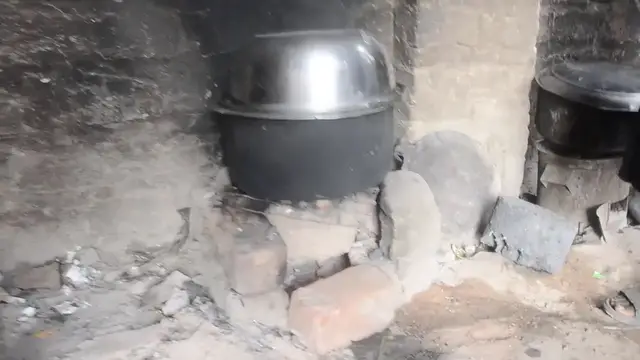

Uganda: Young mothers in Uganda’s capital turn agricultural waste into biomass fuel briquettes.
Jun 27, 2026
SHOTLIST: KAMPALA, UGANDA (JUNE 24, 2026) 1. VARIOUS OF YOUNG MOTHERS PRODUCING BIOFUEL BRIQUETTES FROM AGRICULTURAL WASTE AND ARRANGING THEM 2. VARIOUS OF BIOFUEL BRIQUETTES BEING USED FOR COOKING 3. ROBINAH MUGANZI, FOUNDER OF "SET HER FREE," INITIATIVE SPEAKING TO REPORTER (English) 4. AIDAH NAKIDENTE, YOUNG WOMAN WORKING IN PRODUCTION PROCESS, SPEAKING TO REPORTER (English) 5. BIOFUEL BRIQUETTES BEING ARRANGED TO DRYKAMPALA, UGANDA - JUNE 24, 2026: Young mothers in Uganda’s capital are turning agricultural waste into biomass fuel briquettes, generating income while contributing to environmental protection. More than 20 young mothers gathered under the "Set Her Free" initiative in Kawempe, a low-income district of Kampala, process agricultural waste every morning to produce biofuel briquettes used for cooking. The founder of the organization, Robinah Muganzi, told Anadolu Agency that she established the initiative to support young women facing hardships similar to those she experienced growing up in Kampala’s underserved neighborhoods. Muganzi noted that the project aims to reduce reliance on firewood and charcoal by recycling agricultural residues. The women mix crop waste and other organic materials with clay and molasses to produce briquettes that can be used in homes and schools. The organization provides training, counseling and vocational skills to young women at risk of poverty and social exclusion, aiming to improve their participation in economic life. Set Her Free officials said the briquettes are sold to households and schools across Kampala, with the income helping support the young mothers’ livelihoods. The product, sold for less than $1 per kilogram, offers a more affordable cooking fuel option for low-income families. In Kampala, the briquettes are increasingly used in schools, restaurants and households as an alternative to charcoal. Users say the product is not only cheaper but also helps reduce tree cutting for fuel. Uganda still relies heavily on firewood and charcoal for cooking. According to the U.N. Food and Agriculture Organization, about 94% of energy consumption in the country comes from biomass sources. Of this, roughly 80% is firewood, 10% charcoal and 4% agricultural residues. Nine out of 10 households in Uganda still rely on firewood or charcoal for cooking. The FAO has warned that charcoal production has significant environmental, social and economic impacts, contributing to long-term pressure on the country’s forests. Uganda’s National Forestry Authority data shows forest cover fell from about 25% of the country’s land area in 1990 to around 9% in 2015. Recent conservation and reforestation efforts have helped restore it to about 13% by 2021, with a target of 15% by 2025. Experts say expanding the use of agricultural waste-based briquettes could reduce dependence on charcoal and help ease pressure on Uganda’s forests.
Show More Show Less