
Switzerland: Swiss glaciers to lose all winter snow reserves by June as heat waves accelerate melting.
Jun 27, 2026
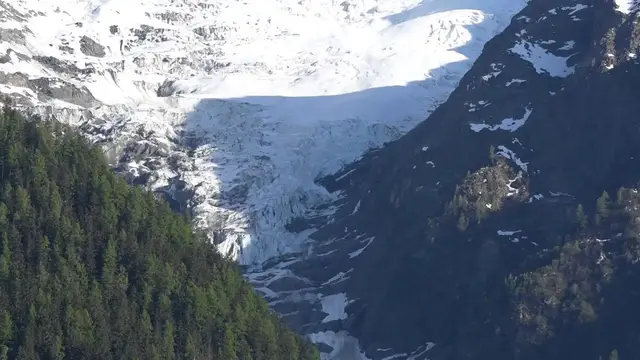
SHOTLIST: CHAMONIX, FRANCE (MAY 29, 2025) (FILE FOOTAGE) 1. VARIOUS OF DETAILS FROM HOUSES UNDER BOSSONS GLACIER IN CHAMONIX 2. VARIOUS CLOSE SHOTS OF BOSSONS GLACIER 3. DETAIL FROM BOSSONS GLACIER 4. HOUSE UNDER BOSSONS GLACIER 5. VARIOUS OF VIEWS OF BOSSON GLACIER AND NATURE OF CHAMONIXCHAMONIX, FRANCE - MAY 29, 2025: Swiss glaciers are expected to lose all the snow and ice accumulated over the winter by June 29, marking the country's second-earliest "glacier loss day" on record as an intense heat wave accelerates melting. According to researchers from the Swiss Federal Institute of Technology's glacier monitoring group, snow and ice melting, which typically occurs in August, is arriving unusually early due to months of unfavorable weather conditions combined with persistent high temperatures, Swissinfo reported on Friday. "According to our calculations and forecasts, glacier loss day this year will fall on June 29," glaciologist Matthias Huss said. By that date, Swiss glaciers will have exhausted the snow and ice gained during the winter, meaning any further melting through the summer will directly reduce glacier ice. "The situation is truly exceptional. Only in 2022, when all glacier melt records were broken, did this day come earlier. Otherwise, this ranks second," Huss said. In a post on the US social media company X, Huss said the ongoing heat wave is rapidly stripping snow from the Great Aletsch Glacier, the largest glacier in the Alps. "Within just two weeks, Konkordiaplatz on Great Aletschgletscher has gone from snow-covered to bare ice," he wrote. "It's the timing that is worrying. This should occur one to two months later in the season." Huss said Swiss glaciers are currently losing meltwater at a rate equivalent to filling an Olympic-sized swimming pool every six seconds. He added that the early milestone is not solely the result of the current heat wave. "We've once again had a winter with too little snow, leaving glaciers with a weak protective layer," he said, adding that summer-like temperatures reached 30C (86F) in the Swiss lowlands as early as May. "All the high temperatures we are very likely to experience in July and August will lead directly to long-term glacier loss. We will certainly lose a large amount of ice this year," Huss warned.
Show More Show Less #news