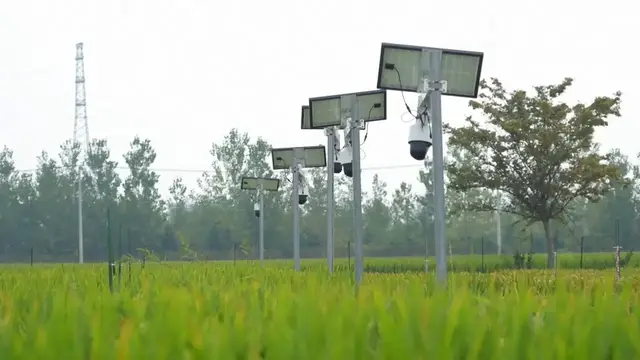

China: Technology makes farming as easy as 'a tap on a smartphone' in China.
Oct 12, 2026
【Voice_over】 Technology is playing a larger role in assisting farmers plant and harvest rice and grains in China. In Xuzhou, farmers used to conduct field inspections by walking the vast areas to identify which plots were weak or lacked fertilizer. Now, drones and sensors collect data on crop growth, offering a more detailed and efficient view of field conditions. Artificial intelligence then generates a water and fertilizer plan based on this data and sends instructions to the field equipment so that fertilizing and watering can be managed with a tap on a smartphone. 【Sound_bite】 Xiao Liujun, Associate Professor, Nanjing Agricultural University: "Agriculture is highly regional, complex, and time-sensitive, and the experience farmers have accumulated over the long term is extremely valuable. So what AI can do is to effectively summarize and organize this experience, and at the same time, combine it with real-time data and models to provide farmland with a more scientific plan — one field, one strategy — tailored to local conditions." 【Voice_over】 In laboratories in southern China meanwhile AI acts as a grain "breeder". Developing a new variety used to require screening through thousands of offspring, layer by layer. Now, AI can perform a "genomic health check" and design breeding pathways to calculate traits like yield and disease resistance in advance. 【Sound_bite】 Yang Jing, Head, Breeding Center: "We've transformed the experience-based selection of traditional breeders into data-driven breeding. Our research has found that there are only a handful of key genes that regulate rice's high yield, disease resistance, pest resistance, and heat tolerance. Through targeted design, we can bring them together." 【Voice_over】 Other uses of technology include artificial climate chambers where lighting, temperature, and humidity can be simulated as needed. This drastically compresses the breeding timeline from the usual average of nine years to just four. [Restrictions: No access Chinese mainland]
Show More Show Less