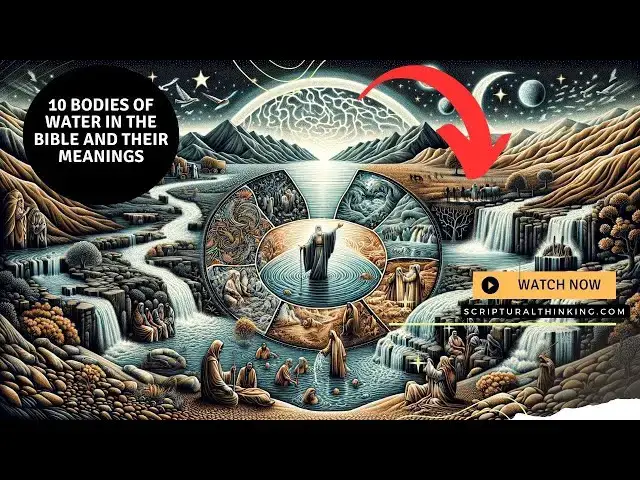

10 Bodies of Water in the Bible and Their Meanings
Apr 16, 2024
The Bible, rich in symbolic language and imagery, often references bodies of water to convey spiritual, historical, and prophetic meanings. Here are ten significant bodies of water mentioned in the Bible, along with their meanings:
The Red Sea - Symbolizes God's power and deliverance. The parting of the Red Sea allowed the Israelites to escape from Egyptian slavery, demonstrating God's ability to save and deliver His people (Exodus 14).
The River Jordan - Represents purification and transition. The Israelites crossed the Jordan River to enter the Promised Land (Joshua 3:17), and John the Baptist baptized Jesus in its waters (Matthew 3:13-17), symbolizing a new beginning and the entrance into a spiritual promise.
The Sea of Galilee - Also known as Lake Tiberias or Lake Kinneret, it is the site of many of Jesus' miracles, including walking on water (Matthew 14:22-33) and calming the storm (Mark 4:35-41), highlighting His divine authority over nature and circumstances.
The Dead Sea - The lowest point on earth, it symbolizes death and judgment due to its inhospitable environment where life cannot flourish. It's a reminder of the destruction of Sodom and Gomorrah and the consequences of sin (Genesis 19).
The River Nile - Symbolizes life and sustenance, as well as judgment. The Nile was crucial for Egypt's prosperity but also the site of the first plague, where its waters turned to blood (Exodus 7:14-25), demonstrating God's judgment on Pharaoh and the Egyptian gods.
The Pool of Bethesda - Represents healing. According to the Gospel of John, Jesus healed a man who had been invalid for 38 years at this pool (John 5:1-15), showcasing God's mercy and power to heal.
The Pool of Siloam - This pool is linked to both healing and sent. Jesus sent a man blind from birth to wash in the Pool of Siloam, and the man returned seeing (John 9:1-7). It symbolizes obedience, faith, and the sending of Jesus as the Light of the World.
The Brook Kidron - Represents sorrow and cleansing. Jesus crossed the Kidron Valley after the Last Supper on His way to Gethsemane, a place of deep sorrow and prayer before His crucifixion (John 18:1).
The River Euphrates - Often represents boundaries and conflict. It is one of the four rivers that flowed from the Garden of Eden (Genesis 2:14) and is mentioned in prophecies concerning the end times (Revelation 9:14-16), symbolizing significant geopolitical and spiritual boundaries.
Show More Show Less