Up next in 10

Lt. Gen. Gavin Lawrence on Modernizing the Army's Industrial Base and Infrastructure
Oct 13, 2026

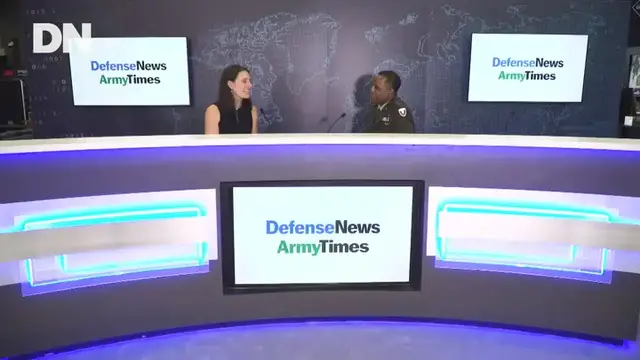
Lt. Gen. Gavin Lawrence discusses modernizing Army manufacturing, accelerating military construction and improving facilities and services for soldiers.
Show More Show Less View Video Transcript
0:00
Good morning. I'm Hope Hodge-Sec with Defense News, and today I'm joined by Lieutenant General Gavin Lawrence
0:08
the Deputy Commanding General and Acting Commander of Army Materiel Command. And there have been some really exciting things going on in your portfolio in the last year, so I'm excited to dive right in
0:21
First of all, thank you so much for being here. Hope, thank you for having me
0:28
And absolutely excited to be here at AUSA and have the opportunity to talk about what Army Material Command is doing to contribute to our Army and to the Joint Force
0:39
So there's an ongoing organic industrial-based modernization that has been described as historic
0:47
So can you walk me through what has been accomplished so far in this OIB modernization
0:53
and what we should expect in the next year to come? So thank you for that question
0:59
One of our lines of effort at Army Material Command is reimagining the organic industrial base
1:08
How can we use our 13 government-owned, government-operated industrial sites to enhance the readiness of our Army
1:17
And so there's a number of initiatives that we are doing to move forward with that
1:23
First and foremost, we're absolutely moving out in terms of investments to really improve the capital infrastructure at our organic industrial base site
1:36
So we have a 15-year, $18 million program to ensure that we are doing infrastructure uplift
1:43
to our organizational-based sites. The second thing I want to highlight is a number of strategic capital initiatives
1:50
that we're partnering with private industry on to improve technology in our industrial sites
1:57
to improve how we can leverage technology such as advanced manufacturing, to improve the way that we are solving some of the obsolescence issues we see with our legacy fleets
2:09
and really capitalizing that to improve readiness. And the third thing I would highlight, programs like our operational readiness program
2:19
where we're using our skilled artisans in our industrial-based sites and sending them forward
2:26
So moving them from our industrial OIB sites forward with units to assist them
2:31
and providing over-the-shoulder assistance in terms of triaging and doing maintenance on their systems
2:39
and then providing them deferred overhauled equipment to provide them boosts and readiness
2:43
So just a couple of examples of how we are reimagining and utilizing the organic industrial base to improve readiness for our Army
2:51
Very good. Ken, I'd love to talk more about enlisting industry to help with this challenge of fighting obsolescence
3:00
I know this is a constant for the military services. You've got gear that's been in service for a long time
3:05
So can you talk more about how industry is helping you get after that and give some examples
3:11
So Army Material Command, we're absolutely laser focused on the health of the industrial base
3:18
And to be quite honest, that's what events like AUSA is very helpful for us to have candid conversations with industry
3:26
on how we are doing as Army in terms of providing demand signals so they can plan, forecast
3:33
and make investments appropriately to be more responsive to the commercial industry So some of the things we talking about is hey how do we move from short contracts to long multi contracts right to give a steady drumbeat and signal to industry
3:52
so they can make the necessary investments to have repair parts where and when we need
3:58
them to infuse and build readiness? How do we leverage advanced manufacturing and have access to tech data so that we can use that from an Army material command and enterprise level, utilizing advanced manufacturing to provide repair parts to get after some of the issues that we see with obsolescence and availability of repair parts needed to maintain pieces of equipment
4:24
And then at the same time, provide that same sort of ability at the tactical level so that our tactical commanders have options in terms of how to generate repair parts where and when needed for tactical operations
4:39
We talked not long ago about the recent opening of the Anniston Forge facility
4:45
Can you tell me what that facility is, what it's going to do, and how that's going to get after the Army's OIB modernization goals
4:55
That's a great segue to talk to what we're doing in terms of MILCON reform and what we're trying to do in terms of infusing commercial construction, best business practices, into the way we do military construction and facilities maintenance
5:15
So Anson Forge is really the second in a series of Forge projects
5:21
We've already moved out on one at Joint Base Lewis-McChord, where we're taking an installation that has requirements for MilCon
5:31
multiple FRM requirements, using other transactional authorities, contracting authorities, to bundle those requirements together
5:40
and then be able to utilize those authorities to hire commercial architecture and engineering firms
5:50
to do not only the execution but the project management of those contracts
5:57
And what we've seen as a result of our ability to use those OTA, other transactional authorities, to execute that
6:06
a reduction in time it takes to execute those projects and get them on contract
6:12
and then in terms of execution. Somewhere in between a 30% reduction in time in terms of getting those in contract
6:20
and a 30% reduction in costs. What we're trying to address, Hope, is the challenges we've had
6:26
in our traditional MilCon processes where we've been very linear in terms of execution
6:32
So it takes a number of years to get designs approved, a number of years to get items on contract and associated contractors to execute
6:41
And by the time you're done with the process, you're five to ten years behind in terms of execution
6:47
and above where you need to be in terms of cost. We think we can do better
6:54
And so Forge at JBLM, we executed that. It took us about nine months from concept to industry day to groundbreaking
7:06
Unheard of in terms of how we execute military construction in FSRM
7:11
Anderson Army Depot is our organic industrial base site where we do a lot of work on our arm and weapons platforms And so we utilizing we going to utilize that same concept to upgrade some of the facilities
7:25
at Anderson Army Depot. And that's what Anderson Forge is all about
7:31
Thank you. So another thing that's been going on is a new mandate for the Army about moving to
7:38
industrialized construction for things like barracks buildings and hangars. What that means
7:45
as I understand it, is a lot of these structures are going to be 3D printed, are going to be sort of
7:50
pre-constructed, and the net benefit is going to be costs come down, construction time comes down
7:58
but also you have the buildings for less time and you're replacing them more often
8:03
So I wanted to ask you, what are the tradeoffs? Especially when you think, okay, these structures are not going to be particularly hardened
8:12
They might not be as exquisite or detailed. What are the tradeoffs you look at and how is the Army accounting for that
8:19
So we are just in the throes of utilizing technologies like 3D printed buildings
8:27
It's not mandated that they use that technology. I just want to make sure we clarify that point
8:33
But we do see some efficiencies that can be garnered at it based upon the proof of principles that we've executed
8:41
And so I'll use the example of what we did at Fort Bliss
8:45
Fort Bliss, at the MOBE site there, we essentially utilized in the company 3D printed 10 barracks facilities in less than a year
8:59
And those facilities have been tested by our engineering agencies in terms of their ability to withstand hurricane-type weather, explosive
9:14
So they've been certified to meet those specs. And so we've moved on from what we did at Fort Bliss, Texas, and we're in the process of doing a project, that same company, for the Rube area at Fort Polk, Louisiana
9:30
And we expect to achieve the same efficiencies that we've seen in terms of time to build those barracks
9:37
you didn't utilize them, those 3D printing, building techniques, and what we've garnered in terms of being able to put them on contract in terms of cost savings
9:47
So we're excited about those opportunities. What does the learning curve look like to sort of convert to this new way of understanding construction
9:56
So that's a great question. And I will tell you, when we initially went down this road
10:02
there was some concern about the ability of the company to train the workforce to be able to utilize those techniques
10:11
And what we found is that in a relatively short order, within a two- to three-month period, they've been able to train up the workforce to utilize
10:21
Now, they have a set group of cadre that has responsibility for maintaining and sustaining the 3D equipment, their 3D printing equipment
10:30
But in terms of training the workforce to utilize the tools, to get after milk construction, using those tools, a relatively short train up
10:38
So we have not seen any degradation in time in terms of execution
10:42
in terms of train up time using these new printing techniques. Another thing I wanted to get to in the time that we have is barracks modernization
10:53
This is a big deal for the Army a big investment Can you talk about how much the Army has accomplished in the last year towards this objective and what remains to be accomplished
11:05
Yeah, so there is a number of initiatives that our ASA IEA is spearheading
11:16
in terms of looking at ways that we can put access to Internet in our barracks facilities
11:25
looking at things like privatization of barracks, so a number of initiatives that we're looking at
11:31
and then also looking at how can we maintain and sustain proper upkeep of our barracks facilities
11:39
We're in line with the OSW Task Force that's taking a holistic look at our barracks
11:44
and embed it with them so that we can really grab a picture on what needs to be done
11:49
to improve the quality of our life for our soldiers living in those facilities
11:55
I know we're coming to the end of our time. So finally, I wanted to ask you, what should we be looking for in the next year, in 2027
12:04
in terms of Army material command, continuation of some of these initiatives, and what's new
12:10
Yeah, so I'm happy to say that we are absolutely moving forward with our campus-style dining venue initiative
12:18
We just, two weeks ago, I'm sorry, last week, opened up our fourth campus-style dining venue at Fort Bragg, North Carolina
12:29
the Rally Point Bistro, and we're excited about the opportunities to really utilize CSDBs as part of the overarching strategy
12:39
to re-envision, re-imagine what the food ecosystem looks like on our post camps and installations
12:47
We're also moving forward with our feed program, flexible eating and expanded dining
12:52
where we're leveraging commercial entities like APs entities, ensuring that we do a thorough review of items on the menus of those agencies
13:03
making sure they meet the nutritional and cost standards for our soldiers, and then allowing our ESM soldiers to utilize their entitlements to go and mess there
13:14
Really looking at how can we build a holistic ecosystem to enhance and improve the quality of dining options
13:23
for our soldiers and families on our installations. So we're very, very excited about that
13:28
And then the second thing I would mention is absolutely moving forward with a number of what we call strategic capital initiatives
13:36
And I'll actually get to talk on the panel about that this Wednesday, where we're partnering with the commercial industry to enhance the facilitation of our industrial sites
13:48
And so we have products in the works at Tobyhanna Army Depot, at Anderson Army Depot, and Red River Arsenal, where we've issued a commercial solutions opening to companies
14:00
And they've agreed to partner with us to help us improve our manufacturing capabilities
14:05
Look, what we want to get to in terms of our production, our industrial sites, is agile production lines, right, where they can be flexible in terms of what they're producing, when they produce it, to meet the readiness needs of our forces
14:21
Well, General Lawrence, thank you so much for your time today. Really appreciate the insights
14:26
And this is Defense News. We'll be here all week at AUSA, so please keep watching
14:32
Thank you very much. Thank you
news