Up next in 10



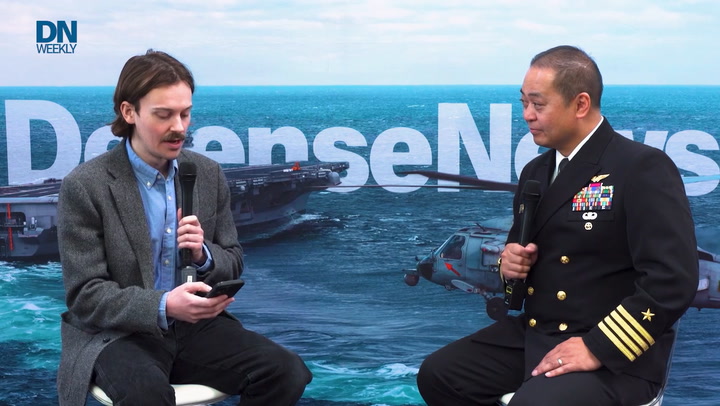
Capt. Randy Cruz from the Naval Research Laboratory gives an update on areas his office is looking to develop tech - including in space.
Show More Show Less View Video Transcript
0:00
Well, thank you so much for speaking with us today
0:01
We're here with Naval Research Laboratory, Commanding Officer Captain Randy Cruz. Just diving right in, what new defense technologies
0:09
whether it's airborne or space or electronic warfare, are on the horizon for the Naval Research Laboratory
0:15
What are you showcasing right now at SAS, maybe? Oh, yeah. Well, first of all, Raleigh, thanks for having me
0:20
We've got a lot of things going on at the laboratory, everything from seabed to space
0:24
Here at the symposium, you'll find things that we're doing out in space
0:30
you'll hear about our compact coronagraph, which is looking at the corona mass ejections
0:36
the stuff coming off the sun, space weather, if you will. And quite often we get asked, well, why is the Navy looking at that
0:44
Why do we care about that? Well, because the space weather actually affects the satellites that are in space
0:50
And as the Navy is the biggest user of space-based effects from satellites
0:55
we're very concerned about that. So just like we are always looking at the weather here on Earth, when we know rain is coming, we want to make sure we're prepared
1:03
We want to make sure we know the status of our satellites that we're dependent on when we're deployed as a naval force out and abroad
1:10
So that's out in space. You come down a little bit closer down to Earth. We've got some work that we're doing with some of our aircraft
1:18
There's potential talk about this project called Laredo. It is something that launched into space on April 7th
1:24
We're about to turn this thing on, and it's looking at debris. in space. Why does that matter? Well, that technology could be something we bring down to
1:31
aircraft. And knowing that debris is about to enter an engine inlet, you want to make sure that
1:35
you shut off that engine before you destroy it. Potentially saving the engine, allowing the aircraft to be available for future operations and not having to worry about it being out for
1:43
an engine replacement. Come back down to the surface of the earth. We're doing all kinds of
1:48
work with ships and ship awareness maritime awareness maritime dominance Knowing where all these things are We got a program called Proteus It is an unclassified network of sensors put together
1:59
to figure out where all the ships are and what they are out there. Very useful. And then I don't
2:04
think we have it here, but we're doing a lot of underwater work as well. So as we work with other
2:08
service labs and other organizations, the Navy obviously is the most concerned about things
2:13
underwater for the Navy and Marine Corps, looking for mines, autonomous systems and things like that
2:18
So everything from CBIT to space plus cyber, the Naval Research Laboratory is involved in
2:24
What does that process of ideation look like at Naval Research Laboratory
2:28
Can you just kind of walk me through how a project goes from, you know, origin of idea to coming to fruition
2:34
Yeah. Well, so there's two different methods. About 80% of our work is someone is coming to us to help solve a particular problem
2:43
It could be, you know, NAVC saying, hey, can you help me figure out how to do better sustainment of our ships
2:52
How do I do better corrosion? How do I make sure that we're ready to deploy
2:57
And so sometimes there are specific things that they want us to work on. And those are very scoped and very easy
3:02
The other 20%, and this is the amazing part about the Naval Research Laboratory, and this is where the researchers start to shine
3:08
We have this thing called the BASE program. And this is where scientists take input from the fleet
3:14
They do some homework. They figure out what the current problems are and what the problems are going to be in the future
3:18
They put together these proposals, a 45-minute proposal that they'll pitch to the senior leaders
3:24
It's like a shark tank. And using the Haumeier Catechism, you know
3:28
what are we trying to solve? What's its relevance? Who's on this team
3:32
How much does it cost? How long it'll take? We'll vote. We'll rack and stack them. And then those will get funded if they meet the mark
3:38
Otherwise, they'll have to go get funded somewhere else. So a little bit of both internal and external What are some important collaborations that the Naval Research Laboratory is engaged in maybe currently in the future So it is all about collaboration For a long time for the last hundred years or so that the Naval Research Laboratory has been in business a lot of it was internal
3:59
We're realizing now more than ever, it is about collaborations. So hypersonics is a big topic, and we're working with the Air Force Research Lab on that as well
4:06
In July, we're about to launch a payload that's going to go to the geo-orbit
4:12
That is our remote service scene for geosynchronous satellites. That's a partnership with DARPA and Space Logistics, a subsidiary of Northrop Grumman
4:20
that's going to go service these exquisite satellites out in space. Think of it like a tow truck to come service and adjust and fix these long-distance satellites
4:30
that require an autonomy package because they're so far away that if you send a signal
4:35
It'll be delayed and you kind of want an immediate response. There are quite a few vendors here at this symposium that we're doing business with
4:41
We've got all kinds of equipment, power plant equipment and the expertise that we're always open to partner with
4:49
There's a lot, perhaps too many to go over in the few minutes we have here
4:55
Sure. How does the NRL work with small businesses? I mean, you kind of touched on it, solving problems
5:00
but how does the NRL work with small businesses to address U.S. military needs for cutting-edge technologies
5:06
Yeah, so small businesses are some of my favorite organizations because they often focus on these niche things that perhaps get overlooked from time to time
5:16
from some of the bigger companies. So we're open to all, small, large, all-comers
5:23
and even universities if they want to partner up, we're happy to get involved in
5:27
So there are all kinds of problems that we try to solve, not just the big ones, sometimes even smaller
5:32
Think microscopic, think nanoscience, very, very small. All scales all domains that are out there we are looking at How has the Naval Research Laboratory changed over the last couple of years if you can speak to that
5:46
And how do you anticipate that it might change over the next few years
5:50
I think the fact that the laboratory has been around since 1923. We've been innovating
5:54
We're one of the original innovators. And so with all this innovation theater, I think the beauty of the laboratory
6:00
and the reason why we're able to exist for so long is their adaptability and the flexibility
6:05
The problems we're solving aren't easy problems, which requires you to have that flexibility
6:09
And so our ability to change to all the changing environments, adapt to the changing environments, is what makes us strong
6:16
The fact that right now we've got about 2,400 government civilians. Of that 2,400 government civilians, about 1,600 of them are science and engineering professionals
6:26
Of that 1,600, over 800 of them have PhDs. The brain trust at the Naval Research Laboratory is incredible
6:33
Pound for pound, this small group is punching well above its weight. How is the NRL adapting to this new world of cost-efficient, scalable, unmanned systems, and where do you see the future of it going in terms of NRL
6:46
Yeah, so when you say the future, I think the future is already here. We've been in the autonomy business for a while
6:53
In fact, we've got a specific laboratory, we call it the Laboratory for Autonomous Systems Research, LASER for short, where we've been doing autonomous systems research for a while
7:02
Everything from different environments, whether it be a jungle, the desert, or underwater
7:07
We literally have those environments in this building. And a high bay available for folks to fly autonomous systems
7:13
You know, the very first unpiloted aircraft was in the late 20s with the Naval Research Laboratory and with Dahlgren
7:21
We've been doing UAS work almost 100 years now. So what are we doing to get ahead of it
7:26
That's the question. We've been in this business for quite some time. well thank you so much for taking the time to speak with us today we really appreciate it
7:33
my pleasure
#news