Up next in 10



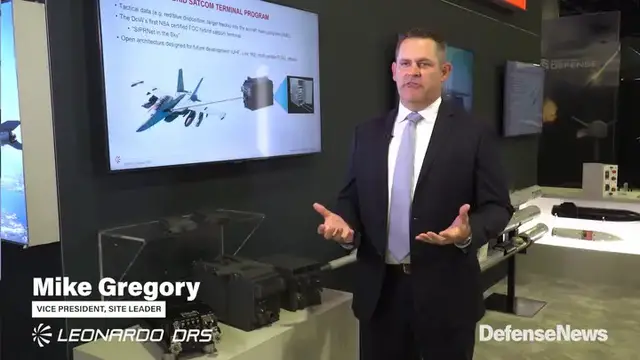
Learn how JTT-X uses multiple satellite networks to strengthen secure communications and connectivity for military aircraft in contested environments.
Show More Show Less View Video Transcript
0:00
The U.S. Air Force is in need of secure communications for tactical
0:08
aviation in all environments. DRS has been in development of secure satellite communications
0:14
for the last 25 years. As threats evolve, there's a higher chance of those communications being
0:20
degraded, jammed, taken out in some capacity. There's a need for multiple communication
0:26
pathways that the U.S. Air Force is focusing on from a PACE perspective, or primary alternate
0:32
contingency and emergency communications. The JTTX that we've developed with in partnership with the
0:37
Navy is a secure communications platform that provides multiple pathways to achieve those
0:43
critical communications. Air Force operators are consistently operating in higher and higher contested environments
1:03
Those contested environments have the ability to challenge our legacy secure communications
1:08
capabilities in the jet, taking away an opportunity for them to have critical communications about
1:14
command and control or threats or target information. In an operating environment where communications are challenged or jammed, paced communications
1:22
are required. So primary, alternate, contingency or emergency. The hybrid SATCOM terminal that we've developed, JTT-X, provides a myriad of ways to close the
1:31
loop on those critical communications in a secure fashion through a variety of tactical
1:35
SATCOM environments. The Air Force started working on a project in 2018 through the Air Force Research Lab
1:46
called Global Lightning. That project was meant to develop technologies to provide proliferated LEO communications to tactical aviation aircraft The Navy saw this as a critical need as well given the operating environments and the challenges that they facing About two years ago we started developing with the Navy the JTT
2:04
which is our hybrid SATCOM solution, to provide global lightning capability for the Growlers and the Super Hornets
2:11
That capability will provide secure communications across a myriad of proliferated LEO commercial and traditional satellite communications networks
2:20
The XCM3 was developed as our solution for a SOSA-aligned open architecture 3U VPX transceiver card
2:29
It's based on red side processing, black side processing, RF transceiver, as well as an embedded crypto module included
2:37
For JTTX to start with, it does not include the transceiver capability, but does include the embedded crypto module to provide secure communications for proliferated LEO communications architectures for high assurance IP encryption
2:51
The JTTX Production Award, while it's for the Navy and primarily focused on the Growlers
2:58
is important because it shows that we've gone from concept to a production contract within
3:03
two years of developing a critical need for the Navy as their threats emerge
3:08
DRS has been in development and production of secure satellite communications for our
3:14
warfighters for the last 25 years. What JTTX provides is that next generation capability and hybrid satellite communications
3:22
capability whereby offering additional communications protocols other than what we've offered with
3:28
traditional means in the past. The Navy's JTTX program is significant for the Air Force simply because it provides a
3:35
mature technology that's now starting production capability that can certainly support other
3:40
tactical aviation aircraft. you
#news