Up next in 10



Silvus explores how tactical radios, threat detection and anti-jamming capabilities can help the Army maintain communications in contested environments.
Show More Show Less View Video Transcript
0:00
One of the key aspects in today's battle space is being able to sense and see yourself and sense and see the enemy threat
0:13
And when I was a brigade commander in Iraq, we had very limited access to comms
0:18
We had Singar's radios. We had some limited access to SAT, COMM, and very little access to Blue Force Tracker
0:25
As you fast forward today and you look at what the Army is doing with the next generation command and control
0:30
and the focus and the shift to data as the primacy for operating in the spectrum
0:38
that's a major shift from the past to what soldiers have to do today. One of the key aspects in today's battle space is being able to sense and see yourself and sense and see the enemy threat
0:49
We have a product and a product line called RFI, which enables the operator to both locate the threats and then identify friend or foe and then actually geolocate where the specific threat is coming from
1:03
And that plays to both us seeing ourselves and us also seeing the threat forces and the threat electromagnetic spectrum effort
1:10
Yeah, you have to be able to operate in multiple different layers. and think of in terms of having an ecosystem of communication systems
1:19
that can operate at the high level, but also at the mid-tier level
1:23
all the way down to the edge in the soldier. And if you think of what we have here with Nexus
1:28
and the small embedded radio that is an example of where we come from and where we are today And to be able to have that distributed across the formation is something unique in the direction
1:43
that the Army is going. Think of it in terms of having a full suite, an ecosystem of communication
1:50
systems from the sensing piece that I mentioned previously to the connect piece where we have
1:56
multiple different radio capabilities within the same family in the same ecosystem
2:02
So you could have a handheld or string cast of 4200 radio, for example
2:07
that the troop carriers or the soldier carriers. You also have embedded OEMs
2:12
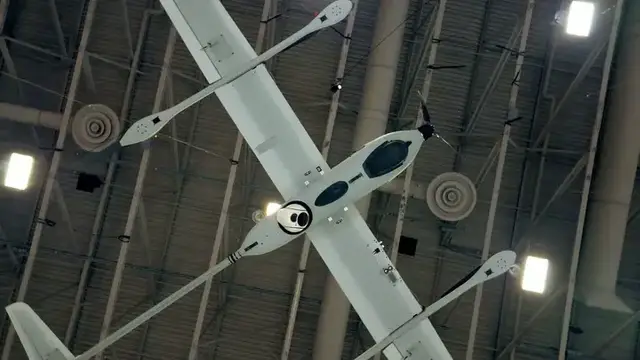
If you look back up at our UASs here, Group 1, Group 2, Group 3 UASs
2:18
we have embedded modules that provide good data throughput. The swap is very light and is able to be vertically inserted in some of these vertical platforms
2:28
but also distributed along the front line, if you will, with troops both in the man-pack
2:34
the handheld, and vehicle-mounted communication systems. Silvas, for example, has spectrum dominance 2.0
2:42
We take a layered approach to EW defense, and if you think of it as our core waveform
2:47
as a center of the layered defense. The outer layers of that start with low probability of detection
2:54
low probability of interception. And then as you get closer into the central waveform
2:59
and the central part of our EWU defense, we have anti-jam capabilities
3:04
and we also have advanced threat protection capabilities
news