Up next in 10


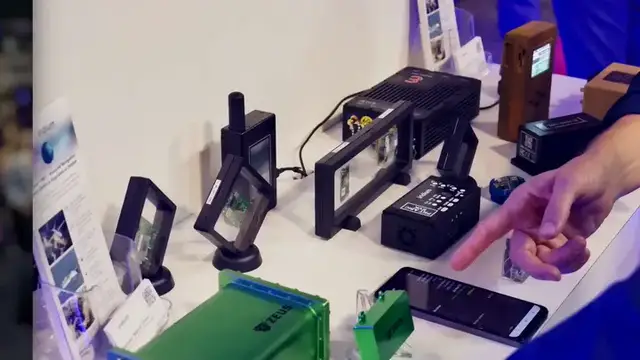
Iridium discusses satellite communications that keep soldiers and unmanned systems connected, along with navigation technology for GPS-disrupted environments.
Show More Show Less View Video Transcript
0:00
As the threat environment increasingly requires dispersion, another important thing is to ensure that the most important data continues to flow
0:12
So the Army is really in need of resilient communications at the edge
0:17
And what they're asking industry to do is work together as teams to provide capabilities across all modalities of communications
0:26
So, line of sight, 5G, LTE, and satellite communications all need to be integrated into single solutions
0:35
Where Iridium provides capability is in the L-band, narrow band aspect of that
0:41
So, to have multi-spectrum and multi-orbit is going to be very important for satellite-on-the-move connectivity
0:47
Having that PACE plan, that primary alternate contingency and emergency built into one solution
0:53
is going to help the Army be resilient at the edge. And as D-DIL environments are important
1:00
because of the adversary electronic warfare capability, we have to make sure that there is different kinds of spectrum
1:09
and different kinds of capabilities so that if any one of them becomes inoperable
1:14
it can failover or simultaneously pass data across the different kinds of communications that are in those solutions
1:22
So in the modern tactical environment, dispersion becomes increasingly common due to the threat environment
1:31
And so there are many opportunities for units and devices and equipment and soldiers to be separated from line-of-sight communications
1:38
And because Iridium enables some of the smallest form factor devices, it allows for beyond line-of-sight communications down to individual soldiers and individual pieces of equipment
1:48
The good news about embedding that connectivity down at the individual level is it allows connectivity to go to common operating pictures at every level So whether soldiers are using MAVEN whether they using TAC whether they using any of the new systems under NGC
2:03
this will allow things that are disconnected to remain connected via beyond line of sight
2:07
connectivity. The Army also maintains programs like the Force Tracking Mission Management Center
2:12
that consolidate location information for the entire force, giving any common operating picture
2:18
the opportunity to see where all friendly units are. As the threat environment increasingly requires dispersion
2:24
another important thing is to ensure that the most important data continues to flow
2:28
And one of the things that Iridium supports is the absolute essential information
2:33
Things like location information, things like chat messages, medevac, fire missions, and of course, voice communications
2:41
And having that at the tactical edge allows that key information to remain
2:44
even when other networks break down. So as more and more devices are giving more data to individual soldiers in the field
2:52
having multiple transports to make sure that data continues to flow at that low level is extremely important
2:59
And so Iridium enables devices to be multi-waveform. Iridium has very small form factor equipment, transceivers
3:06
And so that allows things to be embedded at the lowest level, at the smallest level
3:11
whether that's through multi-waveform, multi-net chips, like, say, a Qualcomm Snapdragon, or whether that's using the very small form factor Iridium hardware that exists
3:21
and can be embedded in any number of hundreds of different partner applications
3:26
The ability to have unmanned systems working side-by-side with the human aspect on the battlefield
3:33
it's going to be a blend of both. And so you're going to have to have satellite communications on the move
3:37
you're going to have to have small capabilities, small narrowband antennas that can allow telemetry and command and control of those platforms
3:46
as well as having the larger pipes for the data backhaul that comes from that system back to an operations center or to where the decision makers are that require that information to make that next plan on the battlefield
4:02
As autonomous systems get more sophisticated, one of the nice things is that actually decreases the requirement for bandwidth
4:08
because many of these systems make decisions and do a lot of their activities on their own
4:12
So really, some of the most important information that has to continue to flow are things like status and telemetry, navigation, targeting
4:19
things that don't require large bandwidth. And with Iridium's small form factor
4:25
it allows that information to flow beyond line of sight, so even in some of the smallest autonomous systems at the most basic level
4:32
And when combined with other line of sight or other data links
4:35
it ensures that those autonomous systems reach their destination and accomplish their mission
4:39
Yeah, so the EMSS Unlimited Airtime Contract has been around in different shapes and sizes for about two decades
4:46
Right now, in formations, there are the ability to do position location information and messaging to any common operating picture
4:55
So EMSS provides various Iridium partners that have solutions that can put your blue dots and your messaging onto various common operating pictures like Maven, Lattice, Wintac, A-Tac
5:09
The EMSS program providing that unlimited airtime allows for those small handheld devices and that kind of data for common operating pictures for command posts and for leaders on the battlefield
5:23
So the EMSS program has various Iridium partners that make products for logistics, whether it's in transit visibility or getting telemetry off of platforms so that your maintenance team knows the health of that platform
5:36
These systems already exist in an unlimited airtime fashion. Small data pipes is all you need, just a few kilobits, to get that kind of data back to the decision makers
5:47
So on unattended sensors we have partners that make very small about the size of a deck of cards sensors that can be left unmanned listening for seismic acoustic and metallic activity
6:01
and then can send that data back to Sanctuary, where the safety of a decision maker is
6:06
to know whether or not further action needs to be taken in that area of responsibility
6:12
So across the EMSS program, these exist in the formations, not just the secure telephony
6:18
but also small data pipes that give just enough information for a decision maker to move forward
6:25
Iridium P&T is the first truly global LEO P&T solution. It is trusted, high-powered, and assured capability as an alternate layered solution
6:37
In a GPS-contested environment, Iridium as a part of a layered solution is able to provide confidence and position
6:45
where you're navigating and as well as timing. When we think about P&T and GPS and what it provides, the T in P&T sometimes gets lost
6:55
And the timing that's important in all those calculations to provide that assurance is critical
7:03
Iridium P&T is down to 50 to 250 nanoseconds level of accuracy and is an incredible capability
7:12
Iridium solution can be a software-defined solution. or we recently came out with the Iridium P&T ASIC
7:19
And the Iridium P&T ASIC is a small 8x8mm chip. So it's about the size of your fingernail
7:25
It draws about one watt of power and allows developers an easy to integrate optimized solution
7:33
to leverage Iridium's P&T capability. The Iridium P&T ASIC is a great fit to drive down cost
7:40
and to be able to integrate a small form factor and provide the resilient Iridium P&T capability
news