Up next in 10



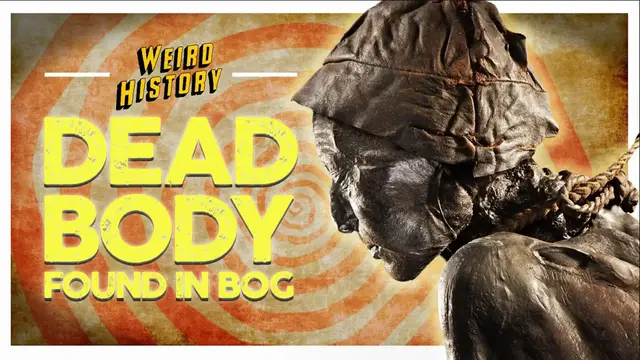
The mysterious story of the Tollund Man continues to fascinate archaeologists and scientists. Found in a bog in the Jutland peninsula in the mid-20th century, the Tollund Man lived during the Iron Age and is believed to have been the victim of a religious sacrifice. While many of the details about the Tollund Man are pure speculation, the combined efforts of Mother Nature and human researchers have led to fascinating new revelations in the decades since he was found.
Show More Show Less View Video Transcript
0:00
Remember the bog of eternal stench from Labyrinth
0:02
where if you fall into it, you smell horrible for the rest of your life? That sounds pretty bad
0:08
But falling into a real-life bog can result in your body being perfectly preserved for thousands of years
0:13
so future people can discover and do all kinds of weird experiments on you to figure out what life was like back
0:20
in your time. And that ain't entirely pleasant either. So today, we're digging into the tale of the Talland Man
0:28
the 2,400-year-old bog body. All right, everyone, bogs away! Our story starts in May of 1950
0:42
with a pair of peat cutters in a bog outside Silkeborg, Denmark
0:47
Back then, peat was an important fuel source, particularly for heating homes and cooking
0:52
In the spring months, it was harvested around bogs with specialized tools
0:56
While gathering some peat, brothers Vigo and Emil Hoigo came upon what looked like a freshly felled corpse
1:03
A boy from Copenhagen had recently gone missing in the area, and the brothers contacted authorities
1:08
grimly assuming they had found the child's remains. But it soon became clear to the police that the body had not been placed in the bog all that recently
1:17
For one thing, it was buried deep under eight feet of peat moss, with no external signs of the surrounding ground having been freshly dug
1:24
representatives of the local Silkebor Museum, along with other scientific experts, including Danish archaeologist Peter P. V. Gloep, were called into the scene
1:35
What the brothers actually found were the surprisingly well-preserved remains of a man who lived in the area during the pre-Roman Iron Age, likely around the year 400 BCE
1:46
The find was ultimately named the Talland Man, after the nearby village of Talland
1:51
Although some newspapers suggested the man from Bogville, which is very colorful, but ultimately didn't stick, unlike the Pete in which he had been found
2:00
Oh, they should have named him Pete. So, how did the body look so fresh after being there for so long
2:11
Well, in addition to various swamp things, the ground beneath bogs contains little oxygen, which does not allow for a lot of bacterial growth
2:20
Additionally, a common planted bog moss known as svagnum releases biomolecules called polysaccharides when it dies which also stops bacteria from growing and spreading That means organic materials such as well human remains doesn degrade when buried under a bog
2:37
the way they would in normal dirt. Bogs could almost be described as curing human bodies
2:42
a process similar in some ways to tanning, the beef jerky kind, not the banana boat kind
2:49
Though the skin gets almost perfectly preserved, the rest of the corpse, like bones and organs
2:53
degrades at a faster rate over time, resulting in the corpse shrinking and distorting
2:58
kind of like the guy who drank from the wrong cup in the last crusade, but less fun
3:07
The process of safely transporting the Talland Man to the National Museum in Copenhagen
3:12
where it could be studied, proved difficult. The dirt was dug away from around the body
3:17
then a large wooden crate was assembled around the entire specimen, with the bottom box pushed
3:23
through a thick layer of peat underneath the corpse. The box containing both dirt and the
3:27
Talland Man weighed around a half ton and was ferried to a nearby train station by horse-drawn
3:32
carriage. It was an extremely old-timey way to travel. Once back in Copenhagen, scientists
3:37
determined that the Talland Man was likely around 40 years old when he perished, but he did not pass
3:43
away from natural causes. A noose made of animal hide was found around his neck and trailing down
3:49
his back, indicating that he was hung. His tongue was also distended, a common sign of having died
3:55
by strangulation. No historical record has ever been found concerning such an execution, so
4:00
historians and scholars are left to guess the specifics of how the Tolland man met his end
4:05
It's possible he was a criminal whose hanging was meant as punishment, but some, including P.V
4:11
Globe and British archaeologist Miranda Althaus-Green, have suggested an alternate theory. The placement of the body in the fetal position suggests that the Talendman may have been a human sacrifice, perhaps to a fertility goddess
4:25
Iron Age Scandinavia was a pagan society, and bogs and wetlands were seen as particularly spiritual locations in Germanic paganism, with religious rites and practices conducted there
4:36
Plus, a number of ancient Roman historians reported that human sacrifice was practiced by the people of Northern Europe and Scandinavia
4:43
However, these accounts were written by outsiders. many of whom were inclined to depict non-Roman or pre-Christian
4:49
societies as savage or barbaric, so they can't be entirely trusted. Only the bog knows for certain The Talon was found hanged with his hair cut very short entirely naked except for a skin cap and leather belt
5:09
Still, he got off easy compared to some of his fellow bog discoveries. A corpse known as the Lindau Man perished near Cheshire, England in 60 AD from a sharp blow to the head that fractured his skull
5:20
After that, he was strangled and slashed with a knife before being kicked into the bog
5:25
So Mr. Lindau wasn't exactly popular in life. Other bog bodies appear to have been the victims of ritual humiliations
5:33
like having their heads shaved or their arms mounted on wooden branches driven through the wounds
5:37
There was even one body discovered that was nothing but a torso, known as Old Croggan Man
5:42
If Clive Barker's watching, he's taking notes for the next Hellraiser movie
5:46
But then there's the facial expression of the Taland Man himself. Rather than looking scared or traumatized by what's happening to him
5:53
he appears calm and accepting. P.V. Globe remarked that he had a gentle expression
5:59
as if in silent prayer. In the 1970s, Irish poet Seamus Heaney was so moved by photographs of the
6:06
peaceful faces of the Talland Man and other bog bodies, he wrote a cycle of poems about them
6:11
comparing their ancient fates to the ethno-nationalist violence known as the Troubles
6:16
So perhaps the Talland Man and others like him were willing participants, or maybe they just got
6:21
him really stoned beforehand. In 1950, researchers did a full autopsy and examination of the Tolland man, which included
6:35
removing his hands and feet for preservation in a formaldehyde solution known as formalin
6:40
The study of his intestines suggested what was likely his final meal, a porridge or gruel
6:45
made with a combination of cultivated and wild grains and seeds. A total of more than 40 different kinds of seeds were found in his digestive tract
6:53
along with barley, flax, false flax, and knotgrass. It's too bad he didn't make it into the 21st century
6:59
He would have loved acai bowls. Scientists also found pale persicaria seeds in the Talland man's gut, an unexpected find
7:08
as this plant was considered a weed, and its seeds would have been removed from grains prior to cooking
7:13
This weed seed consumption could be more evidence that the Talland Man's fate was ritualistic
7:19
In 1976, Danish authorities took the Talland Man's fingerprints, making them some of the oldest human fingerprints on record
7:26
So if he ever steals a valuable emerald we got him dead to rights And in 2013 scientists even attempted to take some DNA samples from the Talland Man The hope is that one day sequencing his genome and
7:38
comparing it to modern-day Danes could prove vital clues about the population's history
7:51
Keeping the Talland Man's body in adequate condition has been a significant challenge
7:55
ever since its initial discovery. At first, its head was placed in a solution
7:59
combining beeswax and alcohol, which scientists hoped would mimic the effect of bog water
8:04
and help replenish some of the liquid in the corpse's cells. But when the mixture was washed off after six months
8:11
the head had shrunk around 12%. Wash it with cold water next time, guys
8:15
That's laundry 101. The rest of the Tolland man's body had been left essentially alone
8:20
and continued to dry out at a fast pace in a laboratory setting
8:24
The corpse remains on display at the Silkebor Museum in Denmark, though only the head is from
8:29
the original find. The rest of the displayed body is a replica based on the original skeletal remains
8:35
Why a replica? Well, keeping track of the Tallent man's various body parts has become something of a
8:40
challenge for Danish museum curators. After the initial 1950 excavation and examination
8:46
the body was cut up into several parts for preservation. While the head remained intact
8:50
at the museum, over time, some of these other body parts went missing. The body's right toe was
8:55
returned to the museum in 2016 by the daughter of a conservationist who had kept it for years in a
9:01
glass jar on his desk. For normal reasons, for sure. It's a heck of a conversation piece
9:07
Though it's no longer the well-preserved specimen first unearthed over 70 years ago
9:12
some forms of research on the Italian man corpse are probably still possible. Carbon dating has
9:17
attempted to determine with greater accuracy the exact dates during which he lived. A 2015
9:22
examination by French anthropologist Dr. Philippe Charlier yzed strange dots found on his feet
9:29
that had not been previously investigated to see if they were potentially warts or even an early
9:34
sign of heart disease. The discovery was also memorable enough to inspire writers and artists
9:39
for the last 70 years. Novelists Margaret Drabble and Anne Youngson have both worked the Tolland
9:44
man into their books. He's the subject of songs by American folk band The Mountain
9:49
Goats and English rockers The Darkness. The find even got name checked on an episode of TV's Bones
9:55
Now, that's the big time. Not bad for a guy who got tossed into a swamp over 2,000 years ago