Up next in 10



The reality of nuclear combat's devastation was clear as soon as the first atomic weapons were dropped during World War II, leading the U.S. government to develop a "doomsday plan" out of perceived necessity. In the Cold War era, the threat of impending nuclear warfare – and the fear it caused in the American citizenship – escalated even further. Politicians played on this fear, and the government began planning for a potential attack. Testing bombs on mock cities in the Nevada desert – constructed to assess potential damage – was only part of the doomsday strategy.
Show More Show Less View Video Transcript
0:00
In the Cold War era, the threat of impending nuclear warfare inspired the U.S. government
0:06
to dig giant secret bunkers into mountains. Decades later, a fluke would lead reporter Garrett Graff to discover one such bunker
0:14
And from there, the history of the whole program. So, today we're uncovering how one man stumbled upon the U.S. government's ultra-secret nuclear
0:25
holocaust bunkers. Okay, someone call Val Kilmer, because what we're digging into is top secret
0:35
Sometime in the mid-2010s, Washingtonian journalist Garrett Graff was given a peculiar
0:40
government ID badge by a colleague who found it in a parking lot. The badge was dropped by someone in the intelligence community, who you'd think would be better
0:48
about protecting secrets. At least invest in a wallet chain. Since intelligence was Graff's beat, the colleague thought he might be able to return it
0:57
But looking the badge over, Graff noticed that it appeared to have directions written on the back
1:01
Did he immediately rush himself into a national treasure-esque adventure full of betrayal and triumph
1:07
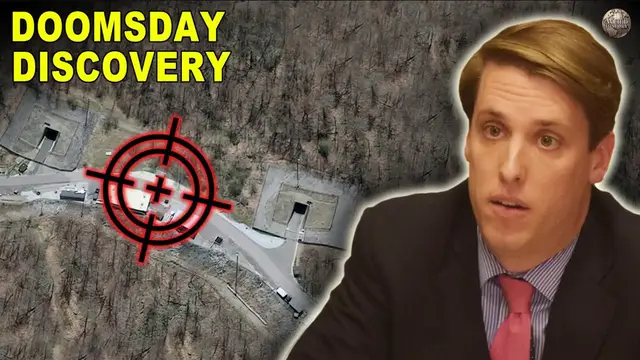
Not exactly. He put the location in Google Maps and found himself looking at a West Virginia road that seemed to run straight into a mountain
1:14
But that's not all he saw. In his own words, you could see very clearly these big concrete bunker doors
1:20
this little guard shack, chain-link fence, and then this set of concrete bunker doors beyond
1:26
Graff knew he had stumbled onto one of the Cold War-era bunkers built to help the U.S. government survive a nuclear, chemical, or biological attack
1:37
His interest piqued by the top-secret discovery. Graff began researching the bunkers
1:42
when they were built, what they were intended to do, and how many existed
1:46
He was particularly impressed by Raven Rock, a sister bunker, to the one he'd found
1:52
Raven Rock Mountain Complex, also known as Site R, the Underground Pentagon and the Alternative Joint Command Center is located in Pennsylvania Sanctioned by President Harry S Truman construction on Raven Rock began in 1951
2:06
intended to be a relocation site for the Pentagon in the event of a nuclear attack
2:10
The first of many bunkers built during the Cold War, Raven Rock includes five three-story buildings
2:16
a dining hall that can serve four meals a day, fire and police departments, a post office
2:21
medical facilities, roads, power plants, ventilation systems, and a Starbucks, probably. In the event of a nuclear event, the facility would be totally self-sufficient
2:32
and the personnel inside would have enough provisions for 30 days. But obviously, space was limited
2:38
So while the president's cabinet and their secretaries were all on the guest list
2:42
none of their wives were invited. If you're wondering what kind of men would leave their wives behind to die in a nuclear holocaust
2:48
then you probably would get along with Supreme Court Chief Justice Earl Warren
2:53
When handed his Raven Rock ID badge, he immediately asked where his wife's pass was
2:58
When told that his wife, Nina Myers, wouldn't get one, he handed his pass back and said
3:03
you'll have room for one more important official. Now, there may not have been room for wives
3:12
but there apparently was room for a bunch of old junk. To be fair, it was less junk, more America's greatest historical treasures
3:20
But try telling that to your wife. Two bunkers were additionally designated for historical archival
3:25
Raven Rock and the Mount Weather Emergency Operations Center near Blumont, Virginia
3:30
In order to keep the United States history alive, artifacts would need to be chosen
3:34
moved underground, and saved for future generations. See, now that's the setup for a national treasure movie
3:40
The two items at the top of the list were the Declaration of Independence and a portrait of George Washington
3:46
both saved by Dolly Madison from the White House during the War of 1812
3:50
The Gettysburg Address was slated to be saved over George Washington's military commission
3:55
and a team of park ranchers was organized to save the Liberty Bell As for the Constitution well let hope it negotiates for a higher draft position next season
4:06
Imagine there was a nuclear apocalypse, but you still had to go to work the next day
4:12
Well, back in the Cold War era, the US government not only imagined it, but planned for it
4:17
putting contingencies in place to dictate how the United States would function in case of nuclear attack
4:22
President Dwight D. Eisenhower designated nine people to work with private industries and recreate bureaucracies
4:29
while existing agencies were given specific tasks. The National Park Service would organize refugee camps
4:34
because they're already into camping. The Department of Agriculture would oversee ration distribution
4:39
because they're all about the food. And the post office would be in charge of registering the dead
4:44
because working there was already depressing. Financially, the government moved large amounts of currency
4:50
mostly $2 bills, to one of the bunkers. And don't worry, they set up a plan for the IRS to continue collecting taxes
4:58
So rest assured that even if society collapses and all of your loved ones are incinerated
5:02
by atomic fire, taxes will survive. As we all know, one is the loneliest number, which is probably why the U.S. government
5:14
built multiple bunkers like Raven Rock. For example, the Greenbrier Mountain facility in West Virginia, known as Project Greek Island
5:21
had the same general resources and a similarly outdoorsy name. Project Green Island, that's green, not Greek
5:29
was constructed to be a congressional bunker. Begun in 1958 under President Eisenhower
5:34
the bunker was outfitted with a dentist's office, a power plant, numerous bathrooms
5:39
and enough food rations to last six months. But no tiki bar
5:43
No thank you. Pass. Also, does the dentist use that office year-round
5:48
Or only in the event of a nuclear emergency? The Cheyenne Mountain Bunker near Colorado Springs was constructed in 1961 and by 1966 was home to the North American Aerospace Defense Command more famously known as NORAD The mountain has its own power plant and because the facility is still manned by a skeleton crew
6:08
it has gym access, a doctor's office, and even a subway restaurant
6:12
in case you've ever wanted to eat a $5 footlong inside a hollow mountain
6:16
Man, who's that franchisee? It feels like the existence of top-secret bunkers
6:26
should have been, well, a secret. But if you lived in the vicinity of any of these bunkers
6:30
you pretty much knew they were there. Secret bases and villain lairs are always
6:35
turning up unexpectedly in movies. But in reality, a bunker ain't exactly easy to hide
6:41
Workers, however, did their best to keep their knowledge confidential. One such worker, Gene Bowman, would later recall
6:47
that in 1950, when he was just 17, he was being paid $1.35 an hour to drill and blast granite
6:53
at Raven Rock. If asked about the construction, the powers that be just said that they were building a tunnel
6:59
Of course, the system would only work for so long. And soon, newspapers were reporting on the second Pentagon being built in the hills
7:06
Better luck next time, we guess. Located in the hills of Maryland, Camp David is the president of the United States Retreat
7:16
And as many have noticed over the years, it's only six miles from Raven Rock Mountain Complex
7:20
This has led to rumors that the two locations may be connected by an underground tunnel
7:26
And it doesn't sound like a terrible idea. If the president was chilling at Camp David and bombs started dropping
7:32
it would be nice for him to have a direct path to rig. Thank you