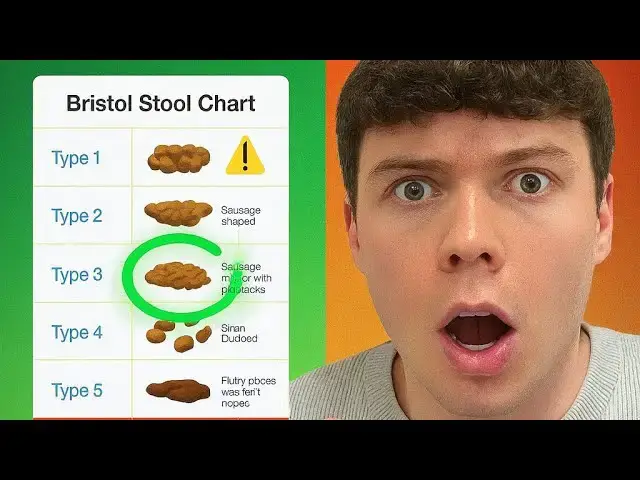

What Your Poop Says About Your Health (Bristol Stool Chart Explained by a Gut Health Expert)
Nov 26, 2025

Ever wondered what your poop says about your health? 🌟 In this enlightening video, a gut health expert breaks down the Bristol Stool Chart, explaining stool types in-depth! 💩 From healthy poop indicators to the causes of diarrhea and constipation, our gut is a window into our overall well-being. 🩺 Discover how understanding the poop chart can guide you toward optimal gastrointestinal health. With engaging visuals and concise explanations, we’ll empower you to better regulate your digestive health. Don’t miss out—watch now to unlock the secrets of your bowel movements and learn how they relate to your gut health! 🚀 #Health #GutHealth #BristolStoolChart
Understanding your poop may feel embarrassing, but it is one of the most accurate windows into your gut health. In today’s video, I’m breaking down the Bristol Stool Form Scale, a medically validated tool used by gastroenterologists around the world to understand digestion, gut motility, hydration, and fiber status.
This video will help you know what your stool type means, when to adjust your diet, and when it’s time to see a doctor. If you’re “poop shy,” don’t worry — by the end of this video, you’ll understand everything clearly.
🔍 What We Cover in This Video:
1. What is the Bristol Stool Form Scale?
The chart classifies human stool into seven types, ranging from severe constipation to severe diarrhea. Doctors use this daily to assess gut health, hydration, and bowel transit time.
2. Type 1 & Type 2 – Signs of Constipation
If your stool looks like separate hard lumps (Type 1) or sausage-shaped but lumpy (Type 2), this almost always means one thing:
➡ You’re dehydrated or low in water-rich foods.
I’ll show you simple dietary fixes:
Increase water intake
Add water-dense foods like watermelon, cucumber, oranges, soups
Consider mild fiber adjustments if water alone isn’t enough
These are often the easiest types to fix with hydration.
3. Type 3 & Type 4 – The Healthy, “Normal” Zone
These are considered ideal bowel movements in gastroenterology.
Type 3: Sausage shape with cracks
Type 4: Smooth and soft
If you’re closer to Type 3, a small bump in hydration usually smooths it out.
If you're Type 4 consistently, your gut motility is likely working optimally.
4. Type 5, Type 6 & Type 7 – Mild to Severe Diarrhea
These are signs that stool is moving too quickly through the colon, giving the body less time to absorb water.
This is often due to:
Low fiber intake
High sugar/refined food diets
Gut irritation
Mild GI infections
Stress or anxiety
#GutHealth #BristolStoolChart #DigestiveHealth #ConstipationRelief #DiarrheaHelp #Microbiome #HealthyPoop #FiberFoods #HydrationTips #MedWiseDaily #MedicalEducation #NutritionScience #GutTips
poop chart, bristol stool scale, stool types explained, gut health, diarrhea causes, constipation causes, healthy poop, gastrointestinal health, microbiome tips, digestion help, fiber foods, hydration tips, GI doctor advice, bowel movement types, bristol scale breakdown, medical education, stool analysis, gut healing diet, healthy digestion tips, poop explained, GI health guide, MedWise Daily, gut motility, stool meaning, natural gut health fixes
Fix these by increasing your intake of soluble fiber, especially from:
Leafy greens
Whole grains
Bananas
Oats
Lentils
Chia or flax seeds
Soluble fiber helps stool form properly and slows down transit time.
5. When You Need to See a Gastroenterologist
If you remain stuck in Type 1–2 or Type 6–7 after dietary modifications, this may indicate something deeper such as:
IBS-C or IBS-D
Malabsorption
Dysbiosis (imbalanced gut bacteria)
Inflammation
Medication side effects
Hormonal imbalance
That’s when a GI specialist can run the proper tests and guide supplementation or treatment.
🧠 Why This Matters
Your stool is a daily diagnostic tool. It can reflect:
Hydration
Fiber intake
Gut microbiome balance
Nutrient absorption
Stress levels
GI health
Even early signs of conditions like IBD or IBS
This is why stool type is one of the first questions gut health researchers ask patients.
🩺 If You’re New to the Channel
Welcome to MedWise Daily — where we take evidence-based medicine and translate it into simple, practical lessons you can apply in real life.
If you care about gut health, microbiome science, and improving your body naturally, hit subscribe.
🔗 Join the MedWise Community
I share evidence-based tips on:
Gut health
Microbiome science
Fiber & digestion
Clinical nutrition
Supplements backed by real research
Stay connected for more scientifically accurate, practical medical content.
gut health poop, gut health, poop health, poop says about health, gut health diet, gut health dr. janine, what poop says about health, improve gut health, things poop says about health, healthy poop tips, healthy poop chart, poop health connection, healthy vs unhea
Show More Show Less