Up next in 10



New handheld gaming PCs are getting bigger and more powerful.
Show More Show Less View Video Transcript
0:00
I saw a lot of new gaming handhelds here at Computex 2026
0:03
A lot of that has to do with Intel's recently launched ArcG series
0:07
which are chips specifically made for these Windows gaming handhelds, hopefully unlocking a new tier of power and battery life in these systems
0:14
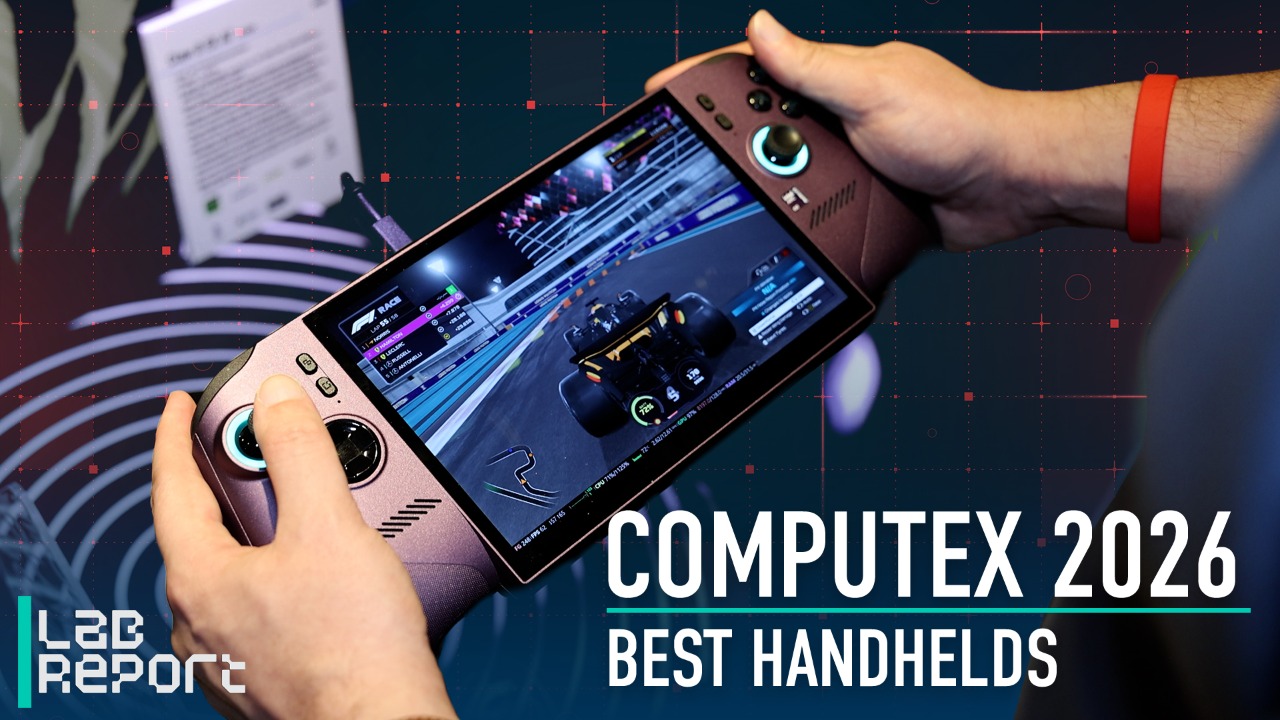
The two main handhelds I saw are MSI's Claw 8 EX AI+
0:18
which is a new revamped version of their existing Claw 8 handheld
0:22
and Acer's Predator Atlas 8, which is an all-new handheld entirely. As Intel announced just before Computex
0:27
The two chips in this G series are the G3 and the G3 Extreme
0:32
Obviously, the G3 Extreme is the higher end processor of the two, and it's going to take front and center stage in these two handhelds
0:38
Acer mentioned that it's going to launch a model with the base G3, but that may not make it to the US
0:43
So we're really focusing on the G3 Extreme, which is based on the ARC B390 and its XC graphics scores
0:48
Naturally, there are a lot of compromises with getting a lot of performance out of a small handheld device
0:52
The hope with the new G3 Extreme chip is that the performance will reach a new high level while maintaining the efficiency of past versions
0:59
Now, frame rates in these systems will always be a little compromised because there's thermal constraints on these small handhelds
1:05
But the idea is the frame rate should be higher than ever. Part of that, while divisive, is Intel's XCSS3 upscaling technology
1:12
This can boost frame rates and you can even turn on multi-frame generation. A lot of gamers don't like these fake frames
1:17
I think especially in a compromised environment compared to a full desktop and even a laptop where you have these thermal concessions you have these performance limits It makes sense to use the software and upscale to get higher frame rates and make your games playable which is ultimately the most important thing That said you can turn it off You can get decent performance I did have a chance to
1:38
while not running full benchmarks, test a bit of the MSI Claw, tried some medium and high settings
1:43
in Battlefield 6 with and without XCSS Active. Of course, there were concessions, around 50 frames
1:50
running a fairly moderately demanding game at medium settings. Of course, turning XCSS on boosted
1:55
that way into the hundreds. Those sorts of frame rates are possible on these handhelds if you're
2:00
willing to futz with the settings, do a little trial and error, and run XCSS 3. As for the devices
2:06
actually running these exciting new chips, the MSI Claw is an interesting redesign of the previous
2:10
MSI Claw 8. The handles have been redesigned to be a bit more ergonomic. They based it heavily on
2:14
the Xbox controller, trying to get that nice, comfortable flared curve and grip. I did find it
2:19
more comfortable. I think the previous version kind of butted into your hands instead of really
2:23
folding into them. So this new look is a bit better, has a nice purple color as well. Maybe
2:28
not your favorite, but I think it's a little more interesting than all the black devices out there. The display is the same. It's an eight-inch screen with a variable refresh rate up to 120 hertz
2:37
The screen juts out a little more with the new design to make way for the handles, but it's the
2:41
same screen. What is new is some of the inputs. We have hall effect triggers and sticks. The buttons
2:45
have been redesigned, the ABXY are slightly differently shaped now. They're more rounded, should be a little more comfortable. Additionally, the D-pad has been reworked to be a little more
2:52
tactile and something you might not notice as much is that the motor for the Rumble has actually been reworked as well Should be quieter less power consumption and a little more nuance in the type of feedback that it gives you depending on the game As for the Predator Atlas 8 I excited to see another company sort of jump into the fray here
3:07
I think with the more options we get and the more competition that happens, these things get a lot of feature parity and they go blow for blow, which makes them all better
3:13
Speaking of feature parity, there's a lot that's similar across these devices. I would give the edge overall to the MSI because they've been iterating over years, making these things better, taking in user feedback and changing the design up
3:22
their software started a little rough, and now it's gotten a lot better over the years. Those sorts of things make a big difference to the usability
3:28
Acer has the advantage of dropping in later to see what to do and what not to do. So that means they both have XSS3 support
3:34
They both have an Xbox mode and an Xbox button to draw different shortcuts and things
3:39
easily to navigate the software faster. They both have Thunderbolt 4 support
3:43
They both have microSD support. It's also an 8-inch display, again, with the variable refresh rate up to 120 Hz
3:49
So there's a lot of similarities here. it might come down to ergonomics and personal opinion about which one you like better. We're
3:54
going to want to spend more time with both of these, especially the Acer machine, since they are just getting into this market. See how it handles, see if there's any performance quirks or
4:01
ergonomic quirks, as well as the software, because it is really key to making these things actually
4:05
usable. Now, you may have noticed I've left a major player out so far, the ASUS ROG Xbox Ally
4:10
We did see a new one of these handhelds, but it's not using the ArcG3 processors, which was a bit of
4:14
a surprise. What ASUS did show us is a new special edition of the Ally for the ROG 20th anniversary
4:20
Despite being an anniversary edition, it not just some limited special model It actually has pretty major upgrades First thing you notice is the transparent black plastic Kind of cool I love see plastic There also some gold accents all over for the 20th anniversary That on the face buttons on a couple of spots
4:33
as well as a strip along the back. But what's even better is the screen has gone from seven inches flat to 7.4 inches
4:39
and it is now an OLED screen, which is awesome. I love OLED, I think it should be on as many devices
4:43
as possible, even though it might make things a little more expensive. The outfit in the room here is that it is not running
4:48
the ArcG3 chips. As I said, it's still using Intel's Z2 Extreme processor
4:52
which granted gets pretty solid performance, but I think a lot of Ally fans and a lot of people looking to get into the handheld space
4:57
might've been hoping to see the new ARC G3 Extreme chip on this as well
5:01
because the performance, though we do need to test it, should still be a pretty significant boost
5:06
The inputs have been redesigned too. These are now nice new TMR joysticks. The face buttons have been redesigned
5:11
the ABXY to be a little nicer to press. And finally, the D-pad can be twisted
5:15
and changed the orientation, depending on the game you're playing. Nice little feature to have, not a must have
5:20
but it's kind of fun. This also is considered a bundle. It comes with X-Real AR glasses and a carrying case to make it a little special for the anniversary edition
5:26
Unfortunately, we don't know the price yet, and it will be coming much later this year, thinking maybe the holiday season
5:31
So you will have to wait a while for this one, and you'll have to bypass the newer G-Series chips to do so
5:36
Those are the major highlights for these handhelds. We did already cover the G3 Series chips on our website, so go read about all the speeds and feeds over there as far as cores and specs and the wattage you can kind of expect out of these systems
5:46
even though performance will vary depending on the thermals within each. on that note be sure to check back for our full reviews of these systems when they become available
5:53
and subscribe to our channel for more Computex 2026 coverage
Celebrities & Entertainment News