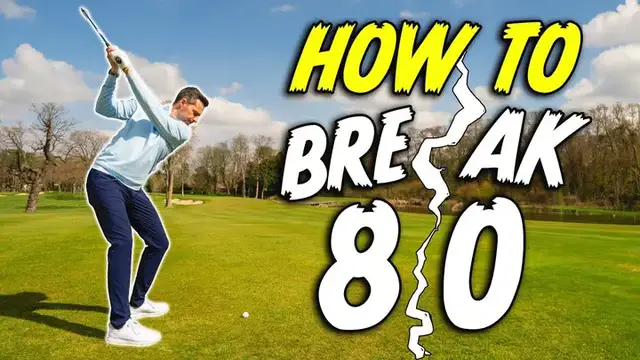
Up next in 10



Joel Tadman runs through the Shot Scope data that demonstrates how good golfers break 80 on a consistent basis.
Show More Show Less View Video Transcript
0:00
Now for many golfers, breaking AT for the first time is seen as the holy grail, but if this
0:04
milestone continues to elude you or you're struggling to know how to get there, in this
0:09
video I'm going to give you some proven tips that are really going to help you break AT
0:13
whether it's for the first time or on a more consistent basis. The data in this video comes
0:17
courtesy of ShotScope, one of the leaders when it comes to distance measuring devices and performance
0:22
tracking. And if you're interested in starting your own journey with ShotScope to get some data
0:26
on your own game, I've put some handy links in the description below where you can get your hands on
0:30
their products for the best price in your area. Without further ado, let's dive into the seven
0:35
proven ways you can break 80 for the first time. Now more driver distance has a direct correlation on your ability to shoot lower scores. If you look
0:48
at the data from Shotscape you can see that golfers shooting in the 80s are only averaging 236 yards
0:53
off the tee with their driver whereas golfers shoot in the 70s are averaging 261 yards so that's
0:59
a really big jump so clearly there's a link between more distance and lower scores but if you are able
1:05
to increase your driver distance it doesn't necessarily always work out to lower scores
1:09
if for example you're spraying all over the place with your added length and you're finding out
1:13
of bounds lost balls penalty areas that extra distance is not necessarily useful to you but
1:17
generally speaking a little bit more distance will definitely help i'm going to try right now
1:22
Now I'm going to try and hit this a little bit harder and get that driving distance up
1:26
And hopefully it will help me shoot something in the 70s a bit more often
1:37
Pretty happy with that one. So there you go. If you can try and hit it further, keep it in play
1:41
it should help your ability to shoot slower scores. Now, another big dividing factor between golfers
1:51
that shoot in the 70s versus those that shoot in the 80s is their ability to find greens in regulation
1:56
If you look at the data from ShotScope, it tells us the golfers shooting in the 80s
2:00
only hit just over five greens in regulation per round, whereas golfers who are shooting in the 70s
2:06
hit nine greens around. So that's a significant increase. Now what can you do to increase your chances
2:11
of finding more greens in regulation? Well, the first thing you can do is find the fairway off the tee
2:16
The data from ShotScope tells us you're around about 9% more likely to hit the green
2:20
if you're on the fairway versus if your ball is in the rough. So that's your first point
2:23
and luckily I've hit a good tee shot here, so I've got off to a good start. Now if you look at the trouble on most holes
2:28
you'll see that around the green, it tends to be short of the green. So you wanna be choosing a club
2:33
that's gonna be favouring going slightly long of the flag. That's gonna increase your chances of hitting the green
2:37
If you also think about when you're misstriking a shot, what tends to happen? You lose distance
2:41
If you lose distance, you're more likely to be finding that trouble short of the green. So choose an appropriate club
2:46
In here, for this particular shot, The flag is 150 yards away, give or take
2:51
and my A time carries 155 yards. So that's the perfect club for this particular shot
2:55
I know I'm probably not gonna come up short the green, it's gonna increase my chances of hitting the green
2:59
And the other thing you need to consider is where you're aiming. In this particular shot, you can see here
3:03
the flag is positioned quite tight on the left-hand side. So that's a flag you don't wanna go chasing
3:08
If you miss it short left, short-sided, it's gonna reduce your chances of getting up and down
3:12
from there and potentially making a bogey. So on this particular shot, I know I've got the right club
3:16
I'm going to be aiming probably 10 foot right at that flag, the middle of the green is going to increase my margin of error and hopefully give me a better chance of hitting the green
3:23
and shooting something in the 70s. So I've talked the talk here, let's give it a go
3:27
I know I got the right club going to be aiming just right at that pin Hopefully we can find the green
3:42
Whoa now see that's a perfect example didn't hit it great but it just covered the bunker because I
3:47
had the appropriate club and it's kicked forward on the green about 15 foot right at the pins I'm
3:52
absolutely delighted with that. If you follow those tips, it should help you find a few more greens
4:01
Now, this might look like a relatively easy shot. I'm going to get my rangefinder out here
4:05
and it's going to tell me that we are exactly 70 yards away from the pin. But if you look at the
4:12
Shotscope data, it tells us that golfers shooting in the 80s are much worse at minimizing wasted
4:18
shots from this particular distance, i.e. they're not hitting the green on their first attempt and
4:22
and they're often pitching or chipping again, which is no good if you want to shoot lower scores
4:26
It's round about one more time per round that golfers in the 80s are doing this
4:30
So you absolutely need to make sure you practice shots from this particular distance
4:35
There's a few things you can do to increase your chances of not having to pitch or chip again
4:40
First thing is obviously making sure you're achieving clean contact from this distance with your wedges
4:44
So practicing strike, making sure you're getting ball then turf is obviously a good place to start
4:49
But I think the real key here is having some sort of system in place that's going to allow you to control your distances
4:55
So it could be a simple clock face drill, for example. So we know that swinging the club back
5:00
at different lengths is going to control the speed that you put into the wedge and that's
5:04
going to control the distance output at the other end. So for example, for me, I know that my lob
5:08
wedge out four goes 85 yards, but my nine o'clock swing with a lob wedge, so left arm parallel to
5:13
the ground, goes around about 70 yards. So that should be the perfect swing and club for this
5:19
particular shot. Obviously, the last thing you want to do is just make sure you're airing on the side
5:22
of safety in terms of where you're aiming. Don't go chasing those really tight pins. If it's just
5:27
over a bunker and you're getting a bit too cute with it, you could get into serious trouble there
5:31
So make sure you're favoring longer the pin in that particular situation or just aiming at the
5:35
slightly fatter part of the green. That's going to increase your chances of not having to pitch
5:38
or chip again. So I know this is a perfect nine o'clock swing for my lob wedge. I'm going to aim
5:44
just right at the pin and hopefully we can knock it close. Just right at the pin. It's not a great shot but it's on the green and I'm not chipping or pitching
5:58
again. Now arguably one of the easiest ways you can go from shooting in the 80s to shooting in
6:07
the 70s is to reduce the number of what I would call troublesome tee shots you have during a round
6:12
and what I mean by troublesome tee shots is any tee shot that ends in a fairway bunker, a lost ball
6:18
out of bounds or in a penalty area. And if you look at the data from ShotScape you'll see that
6:22
golfers shooting in the 70s are only having around about two of these tee shots per round
6:26
whereas golfers in the shooting in the 80s have it almost double that. So clearly there's progress
6:31
to be made off the tee if you want to break 80. And there's a few things that I think you can do
6:35
to reduce the number of troublesome tee shots you have during a round. The first would be to use
6:39
what technology you have available to scope out what lies ahead so on this particular hole here
6:44
at the beautiful stoke park you can see here there's obviously a massive penalty area on the
6:48
left we'll come on to that in a second but there's also trees on the right that sort of stick out so
6:52
it's like can i use my rangefinder to see exactly how far those trees are away so i know that they're
6:58
sort of 215 yards away so i can definitely carry those so that's useful information to me to know
7:03
that i can actually go a bit further right here and probably carry those trees but the biggest So the biggest bit of advice I would say is to get some technology that allows you to see where the widest part of the fairway is shotscape has the g6 watch which has hole maps
7:15
which is really useful to see exactly what lies ahead and choosing a club that's going to hit the
7:20
ball to the widest part of the fairway it's going to increase your margin for error on your tee
7:24
shots and hopefully reduce the number of those troublesome tee shots right is obviously a slightly
7:29
miss here but i'm going to try and hit it straight it's a drivable par four so i'm just going to aim
7:34
pretty much just right at the green and hopefully we won't go left in the penalty area
7:40
and we might even find the fairway. Yeah, pretty happy with that one just down the right hand side. So try those tips in terms of
7:52
finding fairways more often, less troublesome tee shots and your scores should come down
7:57
Now this might sound obvious but golfers who want to shoot in the 70s more often need to reduce the
8:08
number of three putts they have per round. If you look at the data from ShotScope it tells us that
8:13
golfers shooting in the 80s are basically having one more three putt per round versus golfers who
8:18
are shooting in the 70s and if you look a little bit deeper into the data of a five handicap golfer
8:23
versus a 10 handicap golfer you'll see that putts per green in regulation golfers who are 10
8:28
handicappers are actually having more three putts than they are one putts whereas the opposite is
8:33
true for five handicap golfers so it's obviously a two-pronged attack in terms of reducing three
8:38
putts you need to be better at short range and there's a couple of things that as a three handicap golfer myself that have really helped me reduce the number of three putts I have during
8:45
the round the first is if you're short on time before a round just spend a couple of minutes
8:49
having some long putts on the practice putting green just to get a feel for how the ball's
8:53
rolling on that particular day it'll help you sort of calibrate your brain and just get a feel
8:57
and understanding of how fast the greens are on that particular day the other thing i like to do
9:02
on really long putts is to break the putt down into thirds but also really focusing on that final
9:08
third because that's when the ball is slowing down it's going to be affected the most by the slopes
9:12
of the green so really focus on the final third of the putt read it as if you had a putt from that
9:17
shorter distance versus from back here and that'll just give you a better sense of what the ball is
9:21
going to do as it slows down and should hopefully reduce the proximity of the hole from long range
9:27
and that would obviously then correlate to reducing the number of three putts so give those tips a try
9:32
focus on reducing three putts and that could well get you from shooting in the 80s to the 70s
9:42
the golfers who are consistently shooting in the 70s are getting up and down when they miss
9:46
the green more than golfers who are shooting in the 80s. If you look at the shot scope data, you can
9:50
see that five handicapped golfers who are breaking 80 most of the time get up and down when they
9:56
miss the green 47% of the time, which is pretty much one in two attempts, whereas 10 handicapped
10:01
golfers who are breaking 80 not much of the time, it's 39%, which is closer to one in three attempts
10:07
Clearly, scrambling is a very important metric if you want to shoot lower scores. There's a few
10:12
things you can do to increase your chances of getting up and down and breaking 80. The first
10:16
thing would be to choose the right club for the shot at hand. So you see here, I've not got loads
10:21
of green to work with in this particular shot, so my 54 degree wedge is going to work wonders
10:27
But if the pin was at the back of the green, there's a lot more green to work with, I'd probably
10:30
switch to a lower lofted club, maybe a 9 or an 8 to get the ball running a little bit more like a
10:35
putt and getting it running out towards the hole. One thing I really like to do on shots like this
10:40
like short chip shots is to read the green So I stand at the edge of the green and have a proper scope out of the slope and obviously choose the line accordingly And the last thing that really
10:51
helped me in reduce my proximity when chipping is just have the mental approach of trying to
10:56
hold it. Obviously when you aim small, you miss small and having that real sharp focus on trying
11:02
to hold it, I've found has really reduced my proximity. Obviously I'm not going to hold it
11:06
a lot of the time, but it should help you hit the chip shots a little bit closer than you did
11:10
before. So I know this is like a right edge putt, I've just had a read of it and I'm really
11:16
focused on my landing spot and trying to hole it. There we go, not a bad result. Focus on holing it, choose the right club and that should increase
11:29
your chances of getting up and down. Now another way you can make inroads on your scores and hopefully move from shooting in
11:40
the 80s to in the 70s is by missing fewer putts from this particular range inside five feet. It's
11:46
a critical distance, keeps momentum of your round going. If you look at the data from ShotScope
11:51
you'll see that golfers shooting in the 80s are missing around about one more putt per round from
11:56
inside five feet versus golfers shooting in the 70s. So clearly there's progress to be made from
12:01
this distance. It's important to remember you don't have to be perfect from this distance. Even
12:05
PGA Tour players from three to five feet are only holing out on average 87% of the time. So what's
12:10
that? One in seven. But if you can hole out once more per round from this distance, it's going to
12:16
make a real impact. So what are the things that you can do to increase the likelihood of holing
12:20
out from short range? Well, there's a few things I like to do. The first thing is once you've read
12:24
the putt and picked your line, you could choose a spot that's in between the ball and the hole to
12:29
roll the ball over. That's a good thing here. So there's a little blemish on the green there. that might work. Another thing I like to do is pick an imperfection at the back of the hole
12:37
That also helps me to be a bit more committed through the stroke. But in this particular putt
12:40
which is probably right half, there's a little bit of mud on the cup there, which is a really
12:44
good aiming point. Another thing you could do is switch to a golf ball that has some alignment
12:47
and assistance on it. So this is the TaylorMade TP5X Stripe. If you struggle to start your ball
12:52
online, this is a really good option to try. You can just line the ball up on your intended line
12:57
and then obviously when you're addressing the ball, just make sure the sight line on your putter is a line to the line on the ball and stroke away and hopefully you'll hole a few more putts that
13:05
way but this particular putt there's a speck on the hole which i really like it's just right half
13:10
perfect for this particular putt gonna just really be committed on that particular line
13:15
get the sight on the putter aiming at that and put a committed stroke on it
13:19
and in we go so if you could just hole at least one more putt from inside five feet
13:25
it might well take you from shooting in the 80s into the 70s so hopefully this video has given you
13:30
some food for thought in terms of the things you need to do to break 80, whether it's for the first
13:35
time or just on a more consistent basis. If I had to give you three key takeaways, they would be to
13:41
hit at least nine greens in regulation, have no more than two three-puts per round, and no more
13:47
than two failed chip or pitch shots from inside 70 yards. Those are the three things to really focus
13:52
on, but if you focus on those and the rest of the tips in this video, hopefully you'll be breaking 80
13:57
in no time. Big thank you to Shotscope for providing the data in this video and as I
14:01
mentioned earlier if you're interested in trying any of the Shotscope products I've put some handy
14:05
links in the description so you can get hands on those. But that's all from me here from Stoke Park
14:10
we'll see you next time
sports