Up next in 10



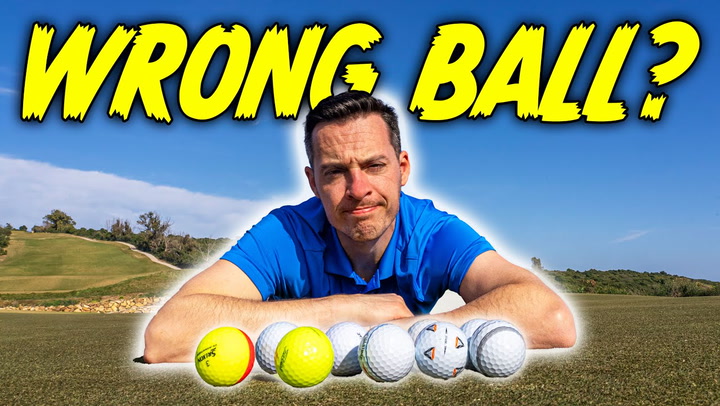
Join Golf Monthly's Joel Tadman as he breaks down the common mistakes golfers make when choosing a ball. From optimizing driver spin to gaining control on windy days and sinking more putts, this guide will help you match your ball to your game.
Show More Show Less View Video Transcript
0:00
Are you fed up of hitting what you think are good golf shots but not getting the results
0:04
that you were hoping for? A lot of golfers will be quick to blame their swing or the
0:07
clubs but it could actually be your golf ball that's causing all your problems. So in this
0:12
video I'm going to highlight the seven signs that you're using the wrong golf ball and
0:16
give you some advice that could really help you choose the right type of golf ball for
0:21
your game that should help improve your results on the golf course. We're here at the amazing
0:25
La Hacienda Golf Links in Spain. Let's get into it. Sign number one would be not getting the amount of distance you were hoping for with your driver
0:37
We all know it's frustrating when you go out on the course with your buddies and you think
0:41
that you should be hitting it a similar distance to them, but when you get down to the fairway
0:45
it turns out they're hitting it 5, 10 yards longer and it's really frustrating. But it could be the golf ball that's at fault, and particularly the spin profile of it
0:53
We all know that golfers deliver the club in very different ways, in different speeds
0:57
and as a result there's no spin number that's going to be right for every type of golfer
1:01
But it's important that you get the right spin profile for you to see the optimum ball flight
1:06
because what a lot of golfers typically see would be a ball flight where the ball starts quite low and climbs
1:11
and that's an obvious sign that the golf ball is spinning too much for your driver
1:15
What you really want with your driver ball flight is one that sort of launches high and sort of pierces forward on a boring trajectory
1:22
Sort of that rainbow ball flight is something you really want to see with a driver. You don't want to see it start low and climb up too high because if you're hitting into the wind
1:29
that's going to really rob you of distance. You also don't want to see a trajectory where the ball
1:34
sort of falls out of the sky too early. That's a sign that your golf ball is not spinning enough
1:39
for you. So that trajectory is really important. So really observe the flight when you hit a driver
1:44
You want to see that sort of rainbow ball flight and that's going to give you the most amount of
1:49
distance potential for your driver. So hopefully I can sort of demonstrate that for you now. This
1:53
is the golf ball that's fully optimized for my particular swing. Yeah, I'm pretty happy with that one. That's the optimum ball flight for my particular
2:07
swing speed and delivery. So have a look at your ball flight, see if it's falling out
2:11
of the sky or climbing too much. Definitely a switch in the spin profile of the golf
2:15
ball is going to give you a little bit more distance. But do be careful if you are switching
2:18
for example, into a lower spinning golf ball, there's going to be a bit of trade-off in performance in terms of what you're experiencing into and around the green. So if you can sacrifice
2:26
a little bit of short gain control for an added distance off the tee, if you prioritise distance
2:31
you really want to out drive your friends, make that switch, it should give you the potential
2:36
to get further down the fairway and score a little bit lower
2:43
So another sign that you're using the wrong golf ball is a lack of control in the wind
2:48
So if you feel like you're hitting good shots but you feel like the wind is buffeting them too much, maybe you hit the ball a little bit too high and the wind is pushing it one way or the
2:55
other or maybe it's pushing it back towards you, you're losing a lot of distance. Or if you generally
3:00
play on quite exposed golf courses and you're using quite a high flying golf ball, that is
3:04
obviously not probably the best way to go. So there are some advantages in the rules of golf
3:09
you're able to tee up at any type of conforming golf ball at the start of any hole in the amateur
3:15
game. So that's definitely something you can take advantage of if you come to a hole where
3:19
it's maybe blowing into the wind and you need to keep the flight down, a change in golf
3:23
ball would really help. It's something I've talked about in other videos as well. So for example, I've got a Titleist Velocity here, which is one of the higher flying golf balls
3:31
in the Titleist range, which is fine when you're hitting downwind, but if you do play
3:36
in quite exposed golf courses that extra height is going to cause you a bit of a problem So let just hit one with the tight list and hopefully you can see how high the ball flight is
3:50
So that was a pretty good hit with the tight list, you see that's sort of right in those clouds there
3:53
you'll see from the shot tracer just how high that shot went. And so obviously within the rules of golf, you know there's a lot of options available to you
4:00
I've got here the Tightlist Pro V1 which is a considerably lower flying golf ball than the
4:04
the Titleist Velocity. In the Titleist range, you've got the Velocity, then you've got the Pro V1X, then you've got the Pro V1, and then if you wanted something even more extreme
4:11
than that, you might go for the AVX, which is a significantly lower-spinning, lower-flying
4:15
golf ball. Definitely worth trying. If you play a lot of Lynx golf, I'd 100% recommend
4:19
the AVX golf ball. It's a really good ball at keeping the flight down and getting a more
4:24
penetrating trajectory. But anyway, here's the Titleist Pro V1, which, by design, is a
4:29
lower-flying golf ball. And obviously, if there's wind around, generally, keeping the
4:33
flight down is going to mean you get a little bit more control it's not going to be buffeted as much
4:37
by that wind in all directions. You can see there it was a bit necky but that was noticeably lower
4:46
than the velocity and it's running a lot more when it lands so if you are playing in quite windy
4:51
conditions definitely consider switching golf ball into something that's going to fly lower
4:55
it should help you gain a little bit more control over where it's going. Now that is another sign that you might be using the wrong golf ball. If you struggle
5:11
from short range, in particular with your alignment and feeling comfortable over the ball that you're aiming in the right place, maybe a change of golf ball could really help
5:18
you out because there's lots of visual options on the golf ball market that will enhance your
5:22
awareness of where you're aiming the putter face. And there's a few options that I really
5:26
like and these are two ones in particular. So I've got the tailor-made TP5X stripe and
5:32
This is the Callaway Chrome Soft X Triple Track 360. Obviously, more recently, it's been the Chrome Tour 360
5:38
This is an older model. But you can see the visual impact this will have on
5:42
sort of highlighting exactly where the putter is aiming if you're able to align the sight lines on your putter
5:48
with where these lines and graphics are aiming. So it's really simple
5:53
You just stand behind the ball, get it lined up. I've got the Callaway one here
5:57
You can just check it, maybe just use the shaft of your putter just to check it
6:01
this is a pretty straight putt, so I'm pretty happy with that. And then all you have to do is make sure you get the sight lines on your putter
6:07
exactly aligned with where the lines on the ball are aiming. And as an added benefit of this, it will definitely help you
6:14
if your perception of where your putter is aiming is off. It will give you that visual feedback
6:19
So I know that I actually tend to aim right and pull my putts online. So as a result, even though I've got this strike pretty much aimed at the hole
6:26
actually looks like it's aiming a long way left of the hole. so that's going to really help your practice in ingraining a more neutral stroke and maybe ironing
6:33
out some of the faults in your putting stroke that should help you longer term. But anyway
6:37
all you do with this particular shot, get the sight line lined up with the line on the ball
6:41
and just focus on matching up when you swing the putter just like that and in it goes. So if you
6:48
struggle to hold out from short range, definitely try something on the ball. Obviously a line would
6:52
work just as well but these ones in particular are a little bit more vivid and they're going to give
6:55
give you really good visual feedback on your alignment, which should help you hold more short putts
7:04
Now, another sign that you might be using the wrong golf ball is that chip shots
7:13
release past the hole a lot more than you're expecting. I think a lot of golfers like playing
7:20
distance golf balls off the tee It gives them more yardage but around the greens can lose them a lot of control If you someone who likes to be quite aggressive with your landing spots likes to play the higher chip shots around the green you could really be sacrificing
7:34
that performance that's going to help you get up and down. So one option to definitely try would be to switch to a urethane-covered golf ball. On this sort of partial chip shot
7:42
you're not activating any other layer on the golf ball apart from the cover. So a urethane
7:47
cover is going to give you more friction with the club face and the groove is going to give
7:50
you more spin around the greens. You'll notice when you chip with a urethane cover golf ball
7:56
like I've got here, the ball flight is very different but more importantly how it reacts
8:01
when it lands on the second and third bounce is incredibly different. So you can see how much lower that flew, how much it stopped to attention quickly when it bounced
8:12
So it's very much down to personal preference. If you're someone that likes to play a lot of chip and run shots, you prioritise distance off the tee versus control around the green
8:19
maybe your short game's fairly one-dimensional and you're okay with that, then you can get away with
8:23
maybe a non-urethane covered golf ball, a more distance ball that's going to give you more
8:27
release around the greens, and accept that you might not get up and down a lot of the time if
8:31
you're short-sided. But if you're something that wants to be a bit more creative around the greens
8:35
and wants the opportunity to get up and down in more situations, especially from the rough when
8:39
you really need that spin to get the ball to stop, switching to a urethane covered golf ball is just
8:43
going to give you a few more options around the green. It's going to give you a little bit more control when you're chipping and it might cost you a few more pounds versus a
8:50
distance ball but in the long run I think it's probably going to save you a few shots
8:57
Now another sign you're using the wrong golf ball again relates to distance
9:02
especially off the tee but it specifically refers to the compression of your golf ball. A lot of golfers out there are very quick to choose a soft
9:10
feeling golf ball because they like the feel of it and maybe they think that
9:14
gives them a little bit more control into and around the greens but generally speaking a softer
9:19
golf ball is a slower golf ball so for most golfers you may well experience less distance
9:25
off the tee with us a low compression golf ball versus a higher compression golf ball it's going
9:29
to be a little bit firmer and give you a little bit more speed it's not an exact science and
9:34
compression of golf balls range from 30 or the way up to something in excess of over 100 so
9:39
there's a whole range of different spectrum of compressions you can choose. Slower swing speeds
9:44
could well benefit from actually having a little bit more compression in their golf ball where the
9:49
ball deforms and springs off the face a little bit more but that point of diminishing returns
9:54
comes pretty quickly as you move up the scale of compression. So my advice to you on this would be
10:00
to try out different compressions of golf ball normally it's listed on the box somewhere
10:05
there. Try a soft feeling golf ball, try a firm feeling golf ball, try something in the
10:09
middle and see exactly what your ball speed and your carry distance is like. But I'd say
10:14
generally speaking, a lot of golfers would be probably playing a ball that is a little
10:19
bit too soft for them. And if you want to hit the ball further, maybe switching into
10:23
a slightly firmer golf ball would be the way to go. Now some manufacturers obviously will offer ball fittings and some other manufacturers
10:30
will offer recommendations for golf ball based on driver swing speed. All I would say on
10:35
that is just be a little bit careful because obviously when you're hitting a golf ball, you're not just hitting it with driver, you're hitting with lots of different clubs where
10:41
you're delivering the club at lots of different speeds. So it's not an exact science to be
10:45
able to recommend a particular type of golf ball based on your driver swing speed, but
10:50
as a rough guide, it could well be helpful in terms of determining which compression
10:54
of golf ball would be right for your game. Yeah that another common mistake and a real sign that you using the wrong golf ball is if your iron shots are flying too high especially in this situation a lot of
11:17
trouble short, a little bit wind into, you really don't want to be hitting your iron shots too high and coming up short of the pin
11:23
And that often happens when you use a distance-oriented golf ball because you're not getting that
11:28
friction with the ball on the face like you typically would with a golf ball that has a
11:32
a urethane cover, a premium golf ball. You typically, with a firm golf ball, it would slide up the face
11:38
it'd be more launched, a little bit higher, and that's when you get those trajectories that go quite high
11:42
Obviously, you do get a slightly lower spin as well with a sort of firmer, maybe like a two-piece Serling golf ball
11:48
but generally speaking, if your iron shots are going too high, it's a sign that you might need to make a switch
11:53
into something that's going to give you a slightly lower trajectory, a bit more control
11:57
and maybe a urethane-covered golf ball where you spend a little bit more, you get a little bit more control over your ball flight
12:04
and that's going to help you find a few more greens and low risk scores. So another sign that you're using the wrong golf ball
12:13
is that if you struggle to really see it or track the trajectory of it
12:17
whether that's through the air or even when you get down to the hole, the fairway or more likely the rough
12:21
and you struggle to see where the ball's finished, it could be that a change in golf ball
12:26
actually helps you see the ball through the air or on the ground a little bit better
12:30
And there are plenty of options out there in terms of the visual tech available on golf
12:33
balls that might help you see golf balls a little bit clearly. So I've just brought a few here from home
12:39
This is the tailor-made TP5 Picks with its sort of triangle patterns on it
12:43
That's going to definitely make it easy to see. You can switch to a yellow golf ball. I've got the yellow Pro V1X here from Titleist again
12:49
Definitely going to help you pick out a golf ball. When you've got a, maybe not today, you can see here at La Hathienda, we've got a lovely
12:56
bright blue sky. If there's a white milky sky, white golf ball against a white sky
13:01
it's gonna be difficult to see. So yellow golf ball would definitely help. Or one thing I really like
13:06
which is the one I'm gonna sort of demonstrate for you now, is the Swixon, this is the Q-star tour divide
13:12
You can get Z-star divides as well. You can see this is a sort of split golf ball
13:16
with yellow on one side, red on the other. Great for alignment. You can use it on the golf course
13:21
It's conforming to the rules of golf. So great for alignment when you're putting. You can obviously peg it up like that
13:25
to help you with the alignment with the driving. But one thing you can do with this particular golf ball
13:30
if you do struggle to track where it goes through the air, maybe your eyesight's not as good as it used to be
13:35
If you tee up this way, so with the divide sort of pointing away from me
13:40
so perpendicular to the target, when you hit a drive, obviously the ball will spin backwards
13:45
It creates like a strobe effect. It's very easy to spot through the air
13:49
So definitely well worth trying if you struggle to see golf balls
13:54
So let's demonstrate with that for you now you can hopefully see how much easier it is to pick out
14:04
So we have it. You can definitely see that sort of strobe effect with the balls spinning and the different colours appearing as it was rotating, which definitely made it easier to see down that
14:12
hole. So if you are someone that struggles to see where your ball's going, let's face it, no one likes that person who constantly asks the other people, oh did you see that? Where did that
14:19
go? Maybe you're switching to any of these type of golf balls, but it's especially that divide
14:24
option from Srixion could help you see the ball a little bit better. So have you recognised any of
14:29
the signs that I've talked about in this video? Well in that case some new golf balls could well
14:33
be on the cards. Do your research, invest in maybe a sleeve of three, give them a try and see how they
14:38
compare to what you played before and hopefully with the advice that I've given you you should
14:43
be able to make a change for the better and it might even help you improve your scores
14:47
That's all from me here, a lajadienda, golf links in Spain. I'll see you next time
sports