Up next in 10



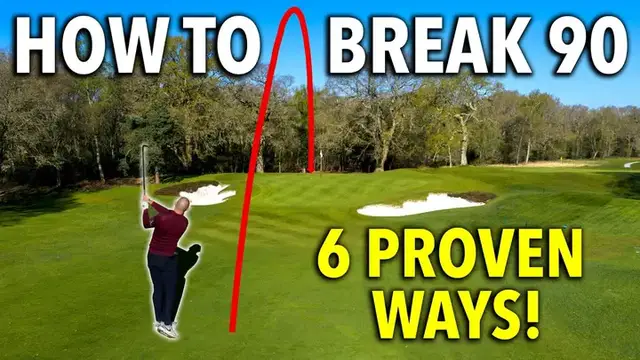
Want to finally break 90? This is the video for you. We dive into the stats and provide simple, actionable tips to lower your scores. You'll learn: how to manage your tee shots, the secret to adding 10+ yards to your drives, and why hitting more greens in regulation is the key to consistency.
Show More Show Less View Video Transcript
0:00
If you want to break 90, you have come to the right place because with the help of ShotScope
0:05
and all of their incredible data and insights, we have pinpointed exactly where you need to
0:11
improve your game to make sure you're shooting in the 80s. I'm here at the incredible Blackmore
0:18
Golf Club and Top 50 coach Adam Hartnett is going to help us
0:30
The first point we're going to look at is troublesome tee shots. Now what do we mean by that
0:37
That is anything where basically you can't go for the green with your second shot. So you've knocked
0:41
it into the trees, into the rough, out of bounds, into a penalty area. Obviously they're big ones
0:46
or even just into a bunker which really limits your ability to attack the green with the second
0:52
shot. Now if you're shooting in the 90s you're averaging 4.9 of those troublesome tee shots per
0:58
round in the 80s that's dropping down to 3.3 so about one and a half fewer per round is going to
1:05
really really help you big question is adam how do we do that okay well i think initially you know
1:11
golfers need to understand their shape and and play with it you know um so if you're a fader of
1:17
the ball or a drawer of the ball you need to stick to your shape and use that in your strategy okay
1:23
so most amateur golfers handicapped players we're struggling a bit of a slice of fade if you're a
1:28
right-hander so you're heading over to the right hand side of the tee box right? Correct and the mistake that a lot of slicers make is because their ball goes to the right they
1:36
tend to tee up on the left thinking they're giving themselves more room but actually what
1:40
that does a lot of the time is it blocks them off because of certain trees or parts of the hole so
1:45
we want to do the opposite so if you're somebody that slices the ball we tee it up on the right
1:50
to hit across diagonally and if you're somebody that hooks draws the ball maybe you tee up on the
1:56
left to open up the right side to draw it back. I know you've got a nice draw in the bag. Let's
2:01
do a little draw yeah. You're heading over to the left-hand side of the tee, let's see how it's done. I am indeed, so I would tee my ball up here
2:10
and that way then I can aim down the right side and allow for my draw. And a good thing to note
2:17
here your feet are outside of the tee markers, it's only the ball that has to be within the
2:20
the teeing area so use all of that to your advantage. Beautiful strike. There is absolutely
2:32
no trouble there so get rid of those troublesome tee shots and those scores will start to come down
2:38
Next up it's driving distance. There is a direct correlation between how far you hit the ball off
2:44
the tee and how good your scores are. If you're shooting in the 90s you'll be averaging around
2:49
225 yards off the tee breaking down into the 80s and you're up to 236 yards so it's not a massive
2:57
increase just 11 yards and that can really help your scoring but Adam how do we find those extra
3:04
yards off the tee? Well a lot of golfers are trying too hard to control the direction of their driver
3:10
and actually robs them of speed. Now we need the club head to be moving at maximum speed throughout
3:17
And what I see a lot of golfers do is pull the handle through to try and steer the face and keep the face straight
3:25
Now what that does is all the time I pulling on the handle the head is lagging behind and it not actually getting the full extent of the energy into the golf ball So we really need to feel the club release And the way i like to describe it to my players is allow the club head to win the race back to the ball so we don want the handle to be
3:48
ahead like we do maybe with an iron we want the club head to come through release past and think
3:55
of it as the last part of a whip where we're trying to create that real swoosh at the bottom
4:02
and get all the energy into the club head to create more club speed and more ball speed
4:06
We've got a handy bit of feedback with a golf club in our hands as well, because you will hear that swoosh, won't you
4:10
Absolutely. So the way to do it is to really feel that you're creating that swoosh at the bottom
4:17
And if you can't hear it, the chances are you're pulling the handle too much through the ball
4:22
Another important thing when it comes to driving distance as well is efficiency
4:26
It might be that you're not actually getting everything out of the speed that you're creating
4:31
because maybe you don't have the right club setup. How important is it to make sure the driver is fitted into you
4:37
and set up to optimize what you're doing at launch? Really key
4:41
I mean, loft, shaft, flex. You know, with modern day drivers now
4:45
we can adjust the club heads. So super important to make sure you get fitted for your driver
4:49
to optimize your distance. There you go. Right club in your hands
4:53
and make sure it's moving its fastest when you want it, down at the bottom of the swing when it's hitting the ball
4:58
The third thing that can really help you is greens in regulation. It's a great stat to monitor as it tells us an awful lot about the state of our game
5:08
And the facts are, if you're shooting in the 90s, you're probably only hitting 3.6 per round
5:13
If you can up that to 5.4, very achievable, that gives you a great chance because that is what people who shoot in the 80s are doing
5:22
So Adam, we've got a beautiful green ahead of us. Very inviting. How do we make sure we hit it
5:27
First of all, knowing your yardage is super key. So rangefinder in hand, I've measured this 156 yards
5:34
So I know my distance, the flag's at the back of the green. So now it's a case of how's the best way for me to hit this green
5:41
One of the biggest things is to hit the middle of the green. If we can hit the middle of the green to break 90, that's going to be great
5:48
But making sure that we're not aiming at flags that cause us a real problem
5:53
so for example understanding where your missed tendency is so for me my missed tendency is a
5:59
little bit left so I never aim at a flag on the left side of the green because if I miss the green
6:05
I'm short-sided and I've got a really tricky up and down you've got to be realistic about how far
6:10
we're hitting our clubs as well and and choose the appropriate club for the average not your Sunday
6:15
best absolutely here I know that this club is not going to fly over the green so I'm pretty confident
6:22
here that I can get to the green into the middle of the green and I'm not going to go too long
6:27
and bring the danger into play. Brilliant, like a good caddy I'm going to take that lovely range
6:31
finder off of you and now we're going to see you do it. Okay let's go for it. So for me I know that
6:38
my miss is a little bit left so I'm going to feel quite comfortable aiming a tiny bit to the right
6:43
of this flag. It's pretty good. Absolutely picture perfect. So know the yardage, be realistic about
6:59
the club you choose and play for your missed tendencies to give yourself that bit of margin
7:05
for error and you'll knock one up close and have a decent birdie putt like that. Next up is an area of the game that is actually a little underrated and maybe not focused on as much as it should be and that pitching from inside 50 yards This sort of range that we got here you might look at it think it simple i going to get it on the green whatever happens and i just want to try and get it close well the reality is the numbers do not bear that out
7:29
if you're shooting in the 90s 3.2 times per round you're not hitting the green from here
7:36
to get into the 80s it drops down to 2.1 so that shows you the importance of hitting the green
7:43
even from a short looking shot like this. So when we are pitching we've got
7:48
these tricky little distances. Adam what's the way you would set up and approach them? So really to have a standardized technique something you can
7:55
rely on you know most golfers are either duffing or thinning these through the
8:00
green okay they're not missing the green because they're usually too far left or right from this distance so if we can have a nice standardized routine for our
8:07
technique that's really going to help. Okay show us that standardized routine
8:11
Okay so we're going to narrow our stance in a little bit for this one
8:15
Two reasons for that. Number one is a narrower stance helps to reduce the length of swing and we don't want a really big swing for
8:22
these shots we want to keep it in control. And also with a narrow stance it allows us to naturally
8:27
turn our body. I see a lot of golfers play this shot with a stance that's way
8:32
too wide and then the lower body becomes locked and it's then all arms and hands. So this is a big body movement so stance
8:39
nice and close together, weight a little bit on the left side and from there really it's a thought
8:44
of turning the body back, turning the body through. What are your thoughts on club selection? A lot of
8:50
the time this sort of situation people automatically go for the most loft in the bag or at least a 56
8:56
degree wedge. Here there's nothing really to carry over, those bunkers aren't in play. Do you want to
9:01
try and take the loft out of your hands a little bit and keep things simple? I think it's safer for
9:05
a lot of people to take the loft out but we still want to land the ball on the green and have it
9:09
stop so club selection is really really key it can depend a little bit on the on the pin position
9:13
here we've got a lot of we've got a shelf here with the flag at the back of the green and actually
9:18
we walked up didn't we and there's a lot of room at the back here so on this particular shot we've
9:22
got to get it up there but yeah trying to keep the loft down you know 60 degree wedge from here you
9:28
know isn't ideal likewise an eight iron along the ground you know there's a bit too much variation
9:33
in how the ball might roll through the fairway so anywhere between your kind of gap wedge to your
9:38
56 is probably a safe bet. That's a great description, Adam. Let's see you hit one
9:44
Okay. There we go
9:56
Those are the keys. Simplify the technique. Give yourself something that you know you can rely on
10:00
And actually realise sometimes just hitting the green, even on a short shot like this, will help you improve
10:06
as you would expect there are big gains to be made on the greens and the first metric we want
10:12
to cast our eye over is three putts now a lot of people struggle on the greens three putts are a
10:18
big issue and if you're shooting in the 90s or more you're likely three putting upwards of four
10:24
and a half times per round but just reducing that by one can really help you get down into the 80s
10:31
now adam you've got a great drill that people can use to calibrate their speed on the greens
10:36
Absolutely, yeah and speed is just so key for avoiding three putting
10:40
Most golfers are too short or too long, that's what leads to three putts
10:44
not necessarily too left or right. And something really common that I see is putter lengths that are too short
10:52
and then a big acceleration or too long and then decelerating Okay so this drill is great to help you keep a nice constant speed constant swinging club so we can get some predictable
11:06
distances. I'm just going to use the width of my stance here and swing the
11:11
putter just to the outside of my right foot, just the outside of my left foot and if I can do that with a nice constant swinging club I'm going to get
11:20
the ball rolling the same kind of distance each time. Okay so I can then use
11:30
that for longer putts and shorter putts, I can lengthen it. So a nice drill to make
11:34
it longer is to pop some T's in the ground a little bit wider. Let's go a
11:40
little bit more and now instead of just outside my stance I can go to the T here
11:49
and to the tee the other side and as you can see that's gradually moved past the first two putts
11:57
and that's the key is to gradually increase your distance and not struggle with it being too short
12:02
or too long. Absolutely superb there you go calibrate your stroke know how far the ball is
12:08
going to travel on a typical flat green for each length of stroke and you've got something you can
12:14
work with then to make sure you are dialed in in terms of distance and avoiding those unwanted
12:19
three putts. Holing out is absolutely crucial and the key sort of distances we're looking at where
12:26
we want to be holing it more often than not is everything inside five feet. Now the difference
12:32
between whether you're shooting in the 90s or the 80s in this particular stat if you're up in the
12:37
90s you will miss 3.6 putts from inside five feet per round if you're shooting in the 80s that drops
12:44
down to 2.7 it's very very important this particular part of the game so how do we make sure we are
12:52
holding more than our fair share from this kind of range Adam so a little drill here that I really
12:56
like to use with my golfers is it's really about not being perfect and we've got two tee pegs here
13:02
one either side of the hole just slightly less than half a hole each side so if I can roll some
13:08
balls through those tees at least half of them the hole is going to get in the way all right
13:13
let's see you roll on I don't want it just between the tees I want it right in the middle of that cup
13:17
no pressure let's give it a go bang now the interesting thing is you showed me just before this if you take those tees and move
13:28
them away from the hole that kind of shows us actually how big an area that is correct so if
13:35
you move that away and you stand you know you now stand you're three to five feet away most people
13:40
are going to be able to roll or feel comfortable rolling their ball through those tees and if you
13:47
can roll your ball through the tees and keep a sensible pace you've got such a big chance of
13:52
holding more and more putts you mentioned the pace there that is still important from this sort of
13:56
distance. What is a sensible pace? What's the optimum pace for holding these putts
14:00
If we can keep it no more than about nine inches past the hole, the hole maintains its full size
14:06
So if we're too firm, the hole shrinks. So that makes it more difficult to hold your putts
14:10
Absolutely. So there we go. Don't try and be too perfect. You do have some margin for error on
14:15
these and get the right pace as well. That will really help you holding out these short putts
14:19
inside five feet. Hope you enjoyed the video and you found it helpful. Once again, thank you very
14:25
much to Blackmore Golf Club, of course to ShotScope for providing all of that brilliant data
14:30
and to Adam, and we'll see you next time
sports