Up next in 10



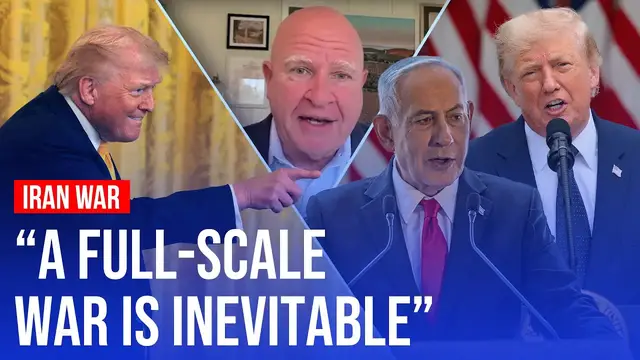
Ben Kentish is joined by former national security adviser H.R. McMaster to discuss the ongoing war in Iran. US media reported this week that Israel had shared intelligence with Washington that Iran had recently devised a plan to assassinate Trump. Trump told Tehran the US Army would “completely decimate and destroy all areas” of the country were the regime to "act on its threat". Listen to the full show on the all-new LBC App: https://app.af.lbc.co.uk/btnc/thenewlbcapp #benkentish #trump #donaldtrump #iran #netanyahu #israel #LBC LBC is the home of live debate around news and current affairs in the UK. Join in the conversation and listen at https://www.lbc.co.uk/ Sign up to LBC’s weekly newsletter here: https://l-bc.co/signup
Show More Show Less View Video Transcript
0:00
Well, first of all, I think it was important to take the action that Israel and the United States took in February, because I think in retrospect, the cost of not acting would have far exceeded the cost of acting
0:13
And that's because Iran was building up this massive arsenal of missiles and drones, which has been using against 14 different countries, using to affect the global economy and to burst the Gulf states economic model
0:26
And they were also using that drone missile strike complex as a shield behind which they were continuing their nuclear program
0:34
But once we initiated that war, I believe we should have stuck with it
0:39
I think the ceasefire was a mistake. And, of course, it's a mistake really to launch gratuitous insults at your allies and then ask them for help
0:48
That didn't work. That didn't help. And the communications effort, the diplomatic part of this, has been inconsistent
0:55
And some of the language has been unserious and bombastic. And so in terms of war leadership, the direction of war, I think it has not been executed well
1:07
But that said, I think Iran believes, because of a lot of that, that it is in a position of advantage
1:13
But I think Iran is wrong. I think Iran believes that they have President Trump in a difficult position because of the midterm elections coming up in the United States
1:22
because of oil and gas prices and inflationary pressures. So I think they think they can get what they want from him
1:30
But I think they're wrong about that, Ben. And the ceasefire is broken down
1:34
President Trump clearly yesterday being very clear that he sees it as over. As I say, we've had two nights now of airstrikes
1:40
What's your sense of where this goes next, General? Well, it's broken down because of the intransigence of the Iranian regime
1:47
you know, and whoever's running it, right? I don't think it's Golubov. You know, I don't think it's possession
1:52
certainly not Arachi, right? It's the Islamic Revolutionary Guards Corps. And that word
1:56
revolutionary is really important because they are adherents to this revolutionary ideology
2:02
you know, and as part of that ideology, they have a permanent hostility, you know, to the United
2:08
States, who they call the great Satan, you know, the United Kingdom, who they actually call the little Satan. They call Israel the cancerous boil, their Arab neighbors. And so until there's a change
2:18
in the nature of that regime, such that it ceases as permanent hostility to the Gulf states
2:24
the United States, Israel, there's not going to be enduring peace in the region
2:28
So do you see the latest violations of the ceasefire by both sides, effectively
2:33
Iran initially in the US response? Is that going to lead to a resumption, do you think
2:38
of basically a full-scale war like we saw previously? Ben, I think it's almost inevitable. And the reason is, President Trump has given them a
2:47
number of off-ramps. He gave them off-ramps during negotiations, actually prior to last August with
2:54
the Midnight Hammer operation against their nuclear program that followed the Israeli 12-day
3:01
air campaign. He gave them off-ramps again in the negotiations prior to the initiation of these
3:06
strikes and the initiation of this phase of the 47 war with Iran in February And then this MOU Ben was pretty generous to them you know and it was getting them the infusion of cash they so desperately needed
3:22
But what the Iranian regime has done is driven past every off-ramp that President Trump has given them
3:29
And again, that's, I think, due mainly to that permanent hostility, the ideology that drives and constrains their leadership
3:36
I mean, these attacks that Iran launched against a Qataris LNG tanker, a Saudi tanker, those were messages to the Gulf states
3:45
Hey, tell the United States that they've lost. We're going to be in control of the Strait of Hormuz
3:50
I think that's non-negotiable to President Trump. And yet he's obviously under a lot of pressure, as you touched on there, General, domestically from his own party, his own base, to not get sucked into another sort of open-ended, unending, perhaps, foreign war
4:05
So how will he balance the domestic pressure he's under to bring this conflict to a close with the fact that, as you say, the other actor, the other party in this war is an extremist Islamist regime that has apparently no desire for peace
4:21
Well, Ben, you know, of course, he's torn about this. He would rather have a negotiated settlement always, right? He always pursues the big deal, right? He sees himself as the big dealmaker
4:31
And so, but of course, he's not going to get an acceptable deal to him
4:36
If you think about the war objectives, right? Objective one, block Iran's path to a nuclear weapon
4:43
Hey, there are all these excavations going on at Pickaxe Mountain. It's clear that they have an intention to continue their nuclear program
4:50
And they're saying now in the negotiations, oh, we're not even going to talk about that. Well, that's his number one priority
4:55
The second was to prevent Iran from projecting power outside of its borders
5:00
Well, what is Iran doing? I mean, they're launching missiles and drones. They're excavating a lot of these buried missiles
5:06
and they think some estimates are that they've gotten back up to about 50% of the missiles they had at the outset of the conflict
5:12
So, hey, I mean, they still have the ability to project power side of the borders, and especially through control of the Strait of Hormuz
5:18
And another objective was to prevent them from reconstituting, reconstituting the missile drone strike complex, the nuclear program
5:26
but also reconstituting their terrorist proxies in the region. Well, to do that, you've got to constrain the cash flow because their intention
5:35
and they've already promised Hezbollah, they said, oh, hey, as soon as we start getting some of this oil revenue again
5:40
we're going to cut you some bigger checks. So I think it's really important, Ben, to recognize that none of those objectives have been met
5:48
and what it's going to take to meet those objectives is, I think, a fundamental shift in the nature of the regime
5:54
but in the near term, convincing, convincing the Iranian leadership that they've been defeated
6:00
And they're not there now. I think they think they have the upper hand. I think they're wrong about that, Ben, but I think they think they have the upper hand. You know, war is a contest of
6:07
wills, Ben. And so that ceasefire communicated to the Iranians that we didn't have the will to
6:14
continue the war, the U.S. and Iran. And then what they began to work on is the Gulf states
6:20
Remember Operation Freedom that began as an effort to forcibly open the strait to protect ships that were going through And then what Iran did is they coerced the Saudis the Emiratis the Qataris
6:33
who said, hey, we don't want to do that. We don't want to risk, really, our energy infrastructure is
6:38
what they felt was at risk. So if you don't have the will, you can't win in war. And there's no
6:44
such thing, Ben, as an easy war. There are costs to every war. I mean, to people on this side of
6:50
the Atlantic, I'm sure you've been aware of this, General, a lot of people have interpreted the sort
6:54
of decision making behind President Trump's decisions as being lacking in clear strategy
7:01
lacking in forethought, and frankly, quite often largely impulsive. What would be your response
7:06
to the allegation that that's how this war has been handled from the President
7:10
Well, there have been these, you know, these dramatic swings, right, even in statements in
7:13
the last 48 hours, right, in terms of determination to see it through, but then also it's going to be
7:18
very short term. And of course, the president has these different pressures on him and he tries to
7:22
alleviate these pressures with these different kinds of public statements. Also, one of President
7:27
Trump's negotiating techniques is to kind of lay out his ideal or his idealized future as reality
7:34
But that's not going to work with the Iranians. It does work sometimes. It works getting the
7:39
Israeli hostages out of Gaza. Remember when he, this was the approach President Trump took at that
7:43
time. That works. It's not going to work with the Iranians until, again, they're convinced that
7:49
they've lost the war. But the other aspect of this, Ben, is in any kind of planning effort
7:54
you have to make clear the assumptions on which this plan is based, right? This decision is based
8:01
to initiate the campaign as we did in February. And I think one of those assumptions should have
8:08
been, that Iran will not capitulate until it's convinced it's been defeated, and that the
8:15
ideology of the regime and its permanent hostility will not allow there to be an enduring peace
8:22
or enduring security for people in the region or for the Iranian people until there's a
8:27
fundamental change in the nature of that regime. And so even if we were to, and I don't think this is going to happen, get to some kind of
8:35
an enduring ceasefire or an arrangement that's based loosely on the MOU and these different
8:41
interpretations of the MOU. This was particularly about the Strait of Hormuz and who controls it
8:45
If those are reconciled and there's another piece, it's not going to be a piece, Ben
8:50
It will be a pause, a pause between this latest phase, maybe we call this phase the ceasefire war
8:57
and the next phase of that four decade plus, almost five decade long war that Iran has been
9:04
waging, you know, against the great Satan, its Gulf neighbors and Israel. Of course, you know
9:11
war is, as Carl von Clausewitz said, you know, the 19th century philosopher of war
9:17
war is a continuous interaction of opposites, and each side tries to outdo the other. And of course
9:23
war is also this extension of politics. So the war doesn't end until you get to a sustainable
9:27
political outcome consistent with what brought you into that war to begin with. And if what brought
9:32
into that war is to block their path to a nuclear weapon to ensure that Iran cannot project power outside of its borders and also to ensure that Iran doesn reconstitute its terrorist forces and militias in the region
9:46
that have caused so much death and destruction over 47 years. Hey, then, of course, the war's not over until you accomplish those objectives
9:57
unless you capitulate. And the MOU, you know, it kind of looked a little bit like a capitulation to the Iranians
10:04
And one of the many pressures and the strains that have resulted from the tensions that we're discussing in general
10:08
clearly the relationship between President Trump and Prime Minister Netanyahu seems to be increasingly straight
10:14
I mean, do you think there's a risk that that relationship is approaching some sort of combustion
10:21
I don't think so, Ben. I think because, you know, we kind of need each other, I think, you know, in the region
10:28
And because I think our interests are fundamentally aligned. I think a lot of this was a reaction to what you saw in elements of President Trump's political base, elements of that political base that are skeptical about the U.S. relationship with Israel and elements in that base which are in favor of kind of retrenchment and disengagement
10:49
Some of these people tend to see the Middle East only as an area, a mess to be avoided
10:55
And so I think a lot of those people were convincing President Trump that Israel had sort of drug us into the war, which I don't think was the case
11:07
You have to remember going back to 1979 when they took over our embassy and held Americans hostage for 444 days
11:15
The 1983 bombings in Beirut of our embassy and of our marine barracks, the sustained campaign of terrorism, worldwide terrorism against us
11:25
The 600 plus soldiers they killed through their proxies in Iraq during the Iraq war
11:33
I mean, the list goes on and on. So I'll tell you, Ben, I think we were not tricked into this war
11:38
This is a war that's been going on since 1979. It was a curious suggestion that from Marco Rubio, wasn't it
11:44
That his boss, the president, had somehow been outmaneuvered or tricked into starting a war by the Israeli prime minister
11:50
Well, I think what happened is President Trump, I believe, from my reading of this, had made a decision, made a decision to conduct this campaign against Iran, again, based on the assessment that they were racing to build up this massive, which we've seen in effect, right, this massive missile drone strike complex, and they were restarting the nuclear program
12:14
So he made the decision to do it. I think the exact timing of it was based on this intelligence that so much of this of the leadership was gathered in one place
12:24
And so to begin the campaign with this, you know, this decapitation strike against the Iranian leadership, who we have to remember, Ben, had just murdered 40,000 of their own people in January
12:36
Right. So so I think that these were this is the context that's important. Israel didn't trick us into this war. Iran has been waging this war again against the United States, Israel and its Arab neighbors and the UK, by the way, for 47 years
news