Up next in 10



We were reassured that those released early from prison would be subject to world-leading tagging technology, with recall to prison if anyone were to breach the terms of the licence upon which they were released.
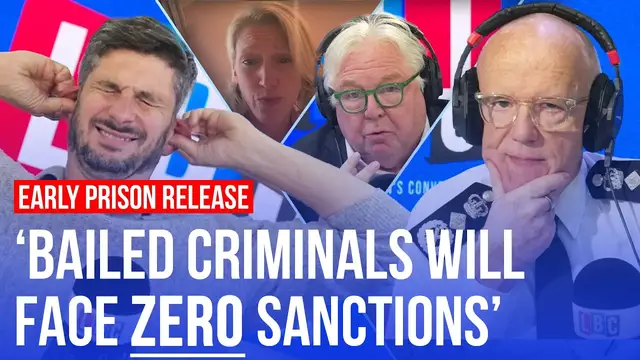
Sir Mark Rowly, the head of the Metropolitan Police, has said that the system doesn't seem to be working...
00:00 | Tom Swarbrick reacts to hearing that there is 'no sanction' for breaching the terms of your release, and that 95% of those that the Met arrests for this are released back into the community on the same terms.
01:45 | Claire Waxman OBE, Victims' Commissioner for England and Wales, has 'real concerns' over whether the probation system can deliver. She says 'we aren't seeing victim safety being considered' as part of bail terms, and that victims of stalking or domestic abuse can have 'no confidence' in the system.
06:13 | Steve Gallant is a Prison Safety Consultant and hero of the London Bridge terror attack. Steve spent over 16 years in custody for murder and was released in 2021. He goes into the reality of what it's like for criminals being released and says that 'tagging is no substitute for a prison sentence', and that there's 'nothing to stop people reoffending'.
12:18 | Nick Ferrari is joined by head of the Met Mark Rowley. Kirsty kicks off by asking about the early release scheme as she is worried about the release of her stalker. Mr Rowley opens up about his thoughts on the matter...
#Tomswarbrick #metpolice #LBC #crime #earlyprisonrelease #Prisons #Ukpolitics
LBC is the home of live debate around news and current affairs in the UK.
Join in the conversation and listen at https://www.lbc.co.uk/
Sign up to LBC's weekly newsletter here: https://l-bc.co/signup
Show More Show Less View Video Transcript
0:00
We're arresting two or three early release offenders a week who are being recalled to prison or doing further offending
0:05
We're getting increasing numbers of tag breaches to enforce that probation are sending to us
0:12
I think it's now over 100 tag breaches a day in London we're being sent
0:17
Over 100 a day? Yeah. We were reassured that those released early from prison would be subject to world-leading tagging technology
0:24
with recall to prison if anyone breached the terms of the licence upon which they were released
0:29
a licence that may have told them not to be in certain places at certain times or to be near certain people
0:35
But Sir Mark Rowley, the head of the Met, has told LBC that system doesn't seem to be working
0:40
This is what he said to Nick Ferrari. There needs to be jeopardy. So if you've been given that chance, Nick
0:45
and then you breach all your conditions, you should be back inside
0:50
What does happen then? So we take them to court, we're seeing 95% plus
0:54
of the tagging breaches that we arrest are simply being bailed back into the community on the same condition
1:00
so there is zero sanction. Which is a revolving door, isn't it
1:04
It is. There is no sanction, the head of the Met says, on people who have breached the terms upon which they have been released from prison
1:12
If you breach the terms on which you have been released from prison, you're meant to go back to prison
1:16
Indeed, there are a huge percentage of prison population recently have been taken in as a result of being recalled to jail
1:24
And yet here is the head of the Met saying, actually the overwhelming vast majority, maybe in his patch in London, are sent back into the
1:32
community despite having breached their licence conditions. There's no sanction. Is this just a
1:38
licence to do what you want? Claire Waxman is a Victims Commissioner for England and Wales. Thank
1:44
you very much indeed for coming on the programme, Claire. I wonder what you make of the reality that Sir Mark Rowley paints there. Thank you, Tom. I mean, it's a reality I've sadly been predicting
1:52
for many months talking to government and probation and other justice partners on my
1:57
concerns now around what impact will be on victims in the wider public when we started to release
2:02
offenders early as of last week um you know we are we all know very well that tagging is not
2:08
working effectively we don't see uh robust and rapid responses to breaches and that's something
2:14
the commissioner spoke about this morning i've had you know real concerns around the safeguards
2:19
that's being offered on paper, many of them that you've just spoken about in your opening
2:24
that were being offered and told that victims, to reassure them that if the offenders are coming
2:28
out early, everything would be put in place to keep them safe. And for me, it's really important
2:33
now to monitor how that's working in practice, because I have real concerns of whether probation
2:38
can actually deliver. And that's the concern here. So, I mean, there are two, the commissioner spoke
2:43
about two issues here, which I think we need to clear, to make clear to the public and to victims
2:49
He was talking about bail, first of all, so that's not in relation to early release of prisoners
2:53
That's when people are bailed instead of going on remand whilst waiting for their courts, their defendants
2:59
And I think the issue that the commissioner was talking about, and it is a concern for me
3:03
is that we are not seeing victim safety as part of that bail process
3:08
So when you see breaches of bail, the police are getting very frustrated
3:12
as the commissioner spoke about, they're being put back out into the community when really you want to see them remanded
3:16
But of course, we have limited spots within prison. It strikes me that actually, in some instances here, the probation service is doing its job in that someone has breached their tagging condition or their license
3:28
The probation service has notified the police. The police have got involved. The police have taken this person in front of her to a court
3:36
And the court is not doing what the police think that they should be doing, which is to recall them to prison
3:42
Well, again, just to clarify, Tom, that's two separate things. So if someone were to breach their, if they're a prisoner that's been released early and they breach their tag
3:52
probation will decide, so the police will arrest them and the probation decide to recall
3:56
It doesn't go in front of a court. The bail breaches go in front of a court. So the bail breaches are the ones where they're not actually prisoners, they're defendants waiting for their trial
4:07
And the concern there is that we are just seeing a continuation of them going back into the community
4:12
breaching the bail police taken to court and court aren't don't seem to be taking the measures needed
4:18
to protect victims and the wider public when it comes to probation tags which are breached that
4:24
will go back to probation to make a call around whether they need to be recalled back into prison
4:29
so they're two slightly separate issues but it is around tagging and what we need to see is
4:34
tags actually work in practice to safeguard victims in the public and a victim of of stalking or
4:40
domestic violence or domestic abuse, who is being told, don't worry, the person who was sent to
4:46
prison who should really be in prison, were it not for this early release scheme, is being monitored, being tagged, being watched. How much confidence do you think they can have in this system
4:54
I know they have very little I speak to many of them on a daily basis And this was part of the concern I had about the early release of offenders will impact now mainly domestic abuse and stalking victims They are the cohort of victims most impacted And I think people again victims and
5:09
public need to be very clear that this electronic tag, it doesn't mean someone is monitoring it 24
5:15
seven. And it's, that's not how our system works. And also, we are not tagging people on release in
5:23
prison, we are tagging them once post-release. So they're coming out and there are delays in
5:27
getting the tag on them. So what I would say is government need to work at speed to make sure that
5:33
we are tagging prisoners in prison before they're released. That's the most important thing. And then
5:39
if there is a breach of the tag, the issue that you have is the delay in notifying probation and
5:45
the delay in notifying police. So no, victims don't have, I think it almost feels like a false
5:50
sense of security because they don't have the reassurance one that the offender has actually
5:55
been tagged in time and two how quickly will agencies respond to a breach of the tag and how
6:01
robust will that response be and that's where we need much more reassurance really appreciate your
6:06
time thanks for coming on claire waxman is victims commissioner for england and wales nine past five
6:11
steve gallant is a prison safety consultant uh hero of uh the london bridge terror attack actually
6:16
and Steve you spent some time in custody for murder didn't you I think you spent 16 years
6:21
behind bars you released in 2021 is that right? That's correct yes. Do you mind me asking then
6:26
about what you know of this system of being tagged of being apparently monitored by the
6:31
probation service and how much trust people should have in it? Well you know this the tagging system
6:37
is no substitute for a prison wall of course. The government know it's it's not good enough but
6:43
But as Mark Rolly mentioned earlier, you know, this is a crisis that's been in years in the making
6:47
And if they don't let people out of the prisons now, there's going to be nowhere to put people who are waiting to go in
6:52
So, I mean, essentially, you know, you know, the tag will be fixed onto your Lego and then you'll be at home
6:59
But it only stops you from, I guess, going into a certain area or going so far from your home
7:05
No one's there watching you or monitoring you 24-7. I mean, if you step outside of a particular zone, then it might send a signal to a preparation officer
7:12
and then they will then have to act on it. That doesn't stop you from, I don't know, going online
7:17
bawling somebody, going around the corner and even punching somebody in the face or pinching somebody from the shop
7:23
It's very, very limited in what it can do. It also, Steve, it's made completely redundant
7:29
totally useless if once the probation officer's light is flashing on their debt
7:33
I don't know how it works, obviously, once they've been alerted to the fact that they've breached their licensing conditions
7:38
and the probation service notifies the police and nothing happens, that person is not taken off the streets for whatever reason
7:47
then the whole thing is, as Mark Rowley says, there is zero sanction. Exactly
7:53
And I think it makes no sense having this thing if there's no sanction
7:57
What is the point? And people are going to come out and go, well, if I'm not going to go back to prison
8:00
then pretty much I can do what I want. Exactly. It's an open door to do as you will
8:05
I mean, I suppose a really serious crime would get picked up and somebody probably would get remanded
8:09
but by and large, many people are not, as we heard earlier. And that is the issue
8:13
There is nothing to stop people going on to commit offences. And, you know, if I was to sort of, you know
8:21
adding what more could be done, I think that anyone who comes out on the early release scheme
8:25
should be really held under some form of house arrest until the end of their sentence
8:30
At least then, you know, if somebody left their house, then it would indicate a breach and something could be acted on much quicker
8:35
Yeah. But wouldn't that potentially, yeah, Steve, listen, I understand the point that you're making, you know, needs to be much more stringent licence conditions
8:44
But if the licence conditions currently in place are not being enforced, what's to say that the licence condition of being told you have to stay in your home under a form of house arrest or whatever, what's to say that would be enforced
8:54
Well, exactly. I mean, they would only get indicated or informed earlier if they're breached
9:00
We haven't got the people. nothing i mean i i mean i'm guessing that the police and the courts are probably probably know
9:05
that the the prisons are full and they're being a bit more lenient for that reason and it's not their
9:10
role to do that i mean i would advise that they they do what they should be doing is if someone
9:15
needs remanding or they've breached their license condition then they should be sent back to prison if the prisons can't is there not a capacity and that's for the government to sort out the
9:22
government would have to find more capacity they'd be they'd just have to do that and and do it in
9:26
somewhere other so ultimately i think the the police the courts they just had to enforce the
9:32
law as as it is but that's people's i think frustration with this whole process is the law
9:37
was was clear about either the time you served behind bars which has then been shortened because
9:42
of this early release scheme well we are where we are but don't worry everybody we've got a world
9:45
beating technology here that can prevent people from breaching their conditions or being a threat
9:49
to the people they were previously a threat to turns out actually that's not working either
9:53
No I mean look it a shambles isn it And ultimately the public are paying the cost for this I mean what else can you do You can force the courts and the police to do something about it
10:05
But there is now a growing crisis of confidence in the system. If somebody commits a crime against somebody and you are quite certain that nothing serious is going to happen
10:15
or at least they're not going to be sent to prison, then people might start taking the law to their own hands, for example
10:20
And you obviously don't want that. But what are people supposed to do if they lose confidence in the system to protect them
10:26
Really appreciate your time. Thanks for coming on. Steve Gallant is a prison safety consultant, a hero of the London Bridge terror attack
10:31
but who spent 16 years in custody for murder, was released in 2021. Mark Rowley's quote, we're seeing 95% plus of the tagging breaches that we arrest
10:40
as simply being bailed back into the community on the same condition
10:45
There is no sanction. one absolutely exposes the complete folly of releasing early violent people no violent person
10:57
should ever have been thought of as being released under that early release scheme you don't need to put a person who's been done for fraud on license particularly I wouldn't have
11:04
thought um two this is uh evidence of the almost total collapse if Mark Rowley is right on his
11:12
The almost total collapse of this apparently world-beating system that is meant to protect people who were victims of those violent individuals
11:19
That don't worry. We basically, I think I heard someone say it's like an outdoor prison in effect
11:24
Or they're imprisoned in a various way by this tag. Well, it doesn't seem to be. They're picked up
11:28
The police are notified. They're taken in to be remanded. And no, they're back out on the streets again
11:33
So that's failed completely. I would really like to speak to you
11:37
I saw someone on the train the other day. I was heading back home and this bloke on the train sitting a seat away from me
11:42
and he had a tag on his ankle and it was sort of quite clunky
11:46
and there was a light on that was flashing or something. Do they work
11:51
Do they stop you from going somewhere? Do you think, oh God, the tag's gone off? Oh no, I better get inside at 6pm
11:55
I've got, you know, like a vampire before sunlight. You've got to get back indoors
11:59
before the tag starts beeping. Are they actually effective in getting you to do
12:03
what the authorities want you to do as part of your licence for being out in the community? or do you know how to override it
12:09
You can take it off and even if you do breach it, no one comes. Frankly, if someone does come
12:14
and picks you up and says, right, back to prison, you go, you're not going
12:18
My stalker was sentenced to five years in January 25 and I received a letter to tell me
12:23
he'd be released this coming January. Why are we releasing perpetrators with committed offences
12:27
relating to violence against women and girls early when we obviously clearly know
12:32
that the government tell us it's a priority? We already know there are concerns
12:35
about probation capacity and electronic monitoring not working consistently, and nothing has been said about digital stalking
12:41
or digital safety prevention. So what can police do to help victims feel safer
12:48
Kirsty, do you... Take a victim to be seriously hurt or killed by the perpetrator
12:52
How do you feel personally as regards your safety now, Kirsty, before I hand over to the Commissioner
12:58
I'm really angry, for one, because government, as I said, say it's a priority when it's clearly not by their actions
13:03
but I just don't feel safe. There's nothing preventative that we have been told
13:08
that's happened in prison to lessen the concerns that we had when these arbitrators were convicted
13:14
Kirsty, stay on the line. I need to tell you that the Commissioner, I think, probably went as far as he can with his brief
13:20
to say he was flabbergasted by the decision. I remind you, he doesn't make these decisions
13:23
the politicians do, and I remind you again, he has to serve under the Home Secretary. Let's send over to Sir Mark now
13:28
Kirsty, first of all, I speak to many victims of domestic violence
13:33
and stalking and it is so intrusive and it affects your life so greatly
13:38
I'm really sorry the effect this is having on you and I can completely understand how someone released early
13:45
is really sort of unnerving you and that comes across in what you're saying
13:51
I'm sort of deeply worried about the release of people into communities
13:56
but I think there is a challenge that government is wrestling with
14:01
that this is long-term policy, very poor approach from successive governments, that the national approach to sentencing offenders
14:12
and the national approach to building prisons have been completely different. So sentencing policy has not been followed
14:22
by a prison-building policy that's going to match it. And eventually that came to a crash
14:27
just at the change in government from the last Conservative government to Labour
14:31
and they've had to wrestle with that challenge and they're making decisions
14:36
I'm not going to defend or criticise their decisions, but they have to make those decisions
14:41
I'm worried, though, about the number of offenders being released into communities. At the moment, we're arresting two or three early release offenders a week
14:51
who are being recalled to prison or doing further offending. That been over the last since the start of August We been capturing that data We getting increasing numbers of tag breaches to enforce the probationers sending to us I think it now over 100 tag breaches a day in London we being sent
15:10
Over 100 a day? Yeah, and rising. Tagging doesn't work, Commissioner, does it
15:14
Tagging could work. I think if you put someone in the community
15:19
you're saying, Nick, we're giving you a chance, we're putting you in the community, but you need to behave
15:25
and we're going to monitor your behaviour through tagging. I think that is a reasonable thing to do
15:30
The challenge at the moment is the number of breaches and... But your officers are busy enough already, Samar
15:37
without having to have 100-plus tagging breaches a day. Exactly. Your blokes and women are busy enough
15:42
So there's more work landing on us. And also there needs to be jeopardy
15:47
So if you've been given that chance, Nick, and then you breach all your conditions
15:52
you should be back inside. What does happen then? So we take them to court
15:56
We're seeing 95% plus of the tagging breaches that we arrest are simply being bailed back into the community on the same condition
16:03
So there is zero sanction. And that's... This is a revolving door, isn't it
16:08
It is. And the other thing we're seeing more of, because we've more..
16:13
Fewer offenders being remanded in custody pre-ch... So that's just to help listeners
16:19
So when we charge somebody, the courts have got a choice. Do you keep them in prison before the trial
16:23
or do you have them on bail in the community? And we press for, with the most dangerous and prolific individuals
16:31
that they should be remanded in prison. We're seeing fewer people remanded in prison
16:36
That's leaving more prolific and volatile people in communities. The number of people failing to appear at court is now going up
16:45
So I saw some data the other day. We've gone from, so far this year, at the start of this year, we were getting 800 arrest warrants a month
16:53
we're now getting the best part of 1,600 because more volatile people are being put back out into the community
16:59
So this is a really difficult situation. What are we going to do about it? So, Kirsty, we will do everything we can
17:06
And so as the volumes get bigger and bigger, what we're doing is trying to get sharper and sharper
17:12
at spotting the most dangerous people and going after them. And at least the system needs to be more joined up
17:18
at dealing with the most dangerous, most prolific. But I'm really concerned, and I've heard Claire Waxman
17:22
and the National Victim Commission has talked about this, about sort of issues around those obsessive offenders
17:27
who are repeat domestic violence offenders, repeat stalkers. They are... Some of them are very difficult, very dangerous
17:35
and this is a very difficult issue that they're now going to be released early. The Justice Secretary, when asked, said he didn't know
17:41
how many had been early released and how many were tagged. Do you know those numbers
17:45
I haven't got them for London, no. But I do know that I say we are arresting two or three a month
17:51
since the start of August. But you went as far as you... And you know I've known a lot of police commissioners
17:55
I think you went as far as you possibly could, noting your brief with this early release
18:00
and you weren't listened to. How frustrated did that make you? So we're a determined organisation
18:07
We will do everything we can. What we need from... My question was how frustrated were you
18:11
They didn't listen to Mark. So the thing that... I mean, 100-plus breaches, I find that figure staggering
18:17
The thing that I recognise is that we're in a unique position in the justice system
18:22
we're the ones who are in contact with victims day in and day out
18:26
because we're at the front end, we meet victims, colleagues will have met Kirsty
18:33
we're supporting victims, we're dealing with these cases. This is... And the officers are really concerned and frustrated
18:40
that they're trying to deal with danger on behalf of the public and the system is losing its strength to do it
18:45
So what we want to do is to get CPS and the courts, and they're working with us
18:49
to get sharper at dealing with the most dangerous people in a system that's overloaded
18:53
And finally on this, a case that has been dealt with in the courts, a violent criminal murdered his former partner in her own home
18:59
days after being freed under the early release scheme. Robert Sabat, if I'm saying that correctly
19:04
stabbed a education nurse to death after moving into a home upon release from prison
19:08
That's what your men and women have to deal with, isn't it? That's the reality of the early release scheme, people being killed
19:13
Yeah, we, last weekend, I mean, And that's at the most ghastly and horrific end
19:21
In the last few days, we've arrested somebody within a couple of days of them being early released
19:25
because they were a prolific offender, multiple shoplifting and other breaches, etc
19:30
They were released early and went straight on into a town centre in north-west London
19:35
committing multiple offences. My office has spent a couple of days chasing them down, got hold of them, and they're back inside now
19:40
But that's going to keep on happening. but government have inherited this big challenge
19:46
one of the things when they announced these reforms government that they felt they had no choice because
19:50
prisons are full and that is a real typical choice we shouldn't pretend otherwise
19:53
one of the things they announced was that the extra resource that was going to land on policing would be funded
19:58
and we're still in those conversations
news