0:00
A couple of days ago, we published a
0:02
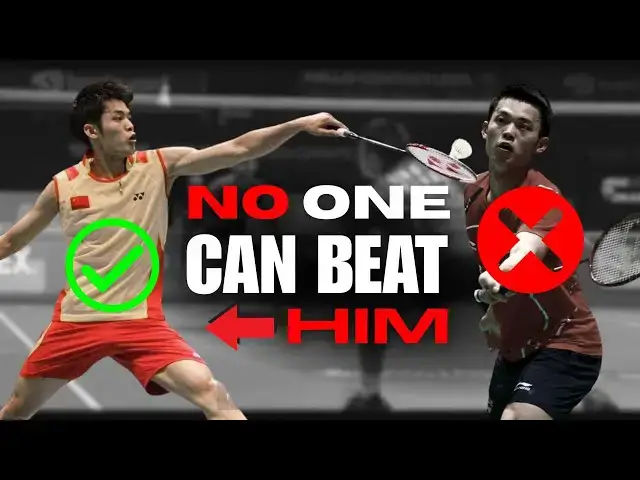
video on how studying 2008 Lindan will
0:05
change the way you think about badmitten
0:07
and there were some misunderstandings
0:08
that we wanted to address. A lot of
0:10
people like to dismiss 2008 Lindan as a
0:13
player with phenomenal speed and
0:14
explosiveness that nobody else can copy.
0:17
While that is half true for some people,
0:19
one of the key things people have missed
0:21
from our discussion of young Lind Dan is
0:23
how you can simultaneously become more
0:25
consistent and make it difficult for
0:27
your opponent to play. This is what 2008
0:31
Lindan was truly good at and what you
0:33
should be copying. Today, we'll discuss
0:36
how a younger Lindan plays a game that
0:38
allows him to prevent his opponents from
0:40
playing winners and puts himself in a
0:42
position to effectively use his speed
0:50
But before we get into the video, a
0:52
quick word to our partner, NordVPN. We
0:55
talked about NordVPN a few times on this
0:56
channel and thought it was a good time
0:58
to give them a mention again. On Get
1:00
Good at Badminton, our rule is to only
1:03
take on partnerships with companies
1:04
whose products we actually use and
1:06
believe in. And NordVPN definitely fits
1:09
this description. Before partnering with
1:12
NordVPN, we were already paying
1:14
customers and it has become an app
1:16
that's absolutely crucial in our lives,
1:19
especially with regard to this channel.
1:21
Most of you are probably aware that a
1:22
lot of BWF badmitten content is
1:24
restricted based on where you are in the
1:26
world. For example, the most recent
1:29
Canada Open was not available for people
1:32
in Canada to watch on YouTube. But if
1:34
you have NordVPN, this is not a problem
1:36
at all. Simply switch your server
1:38
connection to one of the many available
1:40
options and voila, you can watch the
1:43
Canada Open YouTube broadcast in Canada.
1:46
If you want to try NordVPN, use the link
1:48
in the description or on the screen for
1:50
a huge discount. It's completely risk-
1:52
free with their 30-day money back
1:53
guarantee. Thanks again to NordVPN for
1:55
supporting the channel. Now, let's talk
1:58
about why you should copy 2008 Lindan.
2:04
Lindan almost never forces shots that
2:06
either result in winning or losing the
2:07
rally outright. These are shots like
2:10
playing spin nets off the serve or
2:12
around the service line, out of position
2:14
full smashes, flat pushes when you're
2:17
below the tape, or any shot aiming to
2:19
hit the lines. When you do the things
2:21
above, you are gambling the rally where
2:23
your next shot will either win or lose
2:25
you the rally outright. While it's not
2:27
wrong to play any of the shots we just
2:28
mentioned, and there are times where
2:30
gambling for your shot does make sense,
2:32
players today gamble on their shots way
2:35
too often. And it is the reason why
2:37
seemingly anybody can beat anyone in
2:47
In fact, Lindan himself started doing
2:49
more of this after 2010, which is why
2:52
we're not huge advocates of actually
2:54
trying to play like post200 Lindan. Yes,
2:57
it is a style that seems more realistic
2:59
to execute in the sense that you don't
3:01
need the same explosive power and speed
3:03
that pre-2010 Lindan played with, but
3:06
post2010 Lindan was also just worse. You
3:09
can actually hear it in a discussion
3:10
during the 2011 World Championships
3:13
where commentator Jillian Clark talks
3:16
about how a coaching and Lindan style
3:18
change was worse for him. I think his
3:22
influence on the way that Lindan is
3:24
playing now has changed Lindan's outlook
3:28
on the game of how he's approaching it
3:30
and maybe not for the better.
3:32
We agree with this sentiment after 2010.
3:36
Lindan's performances weren't actually
3:38
that good. He was upset way more often
3:41
by lower ranking players and a lot of
3:44
people were actually discussing if he
3:46
was preparing to retire during that time
3:48
for good reasons. He made way more
3:50
mistakes in 2011 than 2008 and his
3:54
opponents had far more opportunities to
3:56
get the attack and put pressure on him.
3:58
On the other hand, 2008 Lindan was a
4:01
player that his opponents felt like they
4:03
couldn't do anything against and could
4:21
Of course, we don't expect everyone to
4:22
have or develop the same explosive power
4:24
as 2008 Lindan, but there are elements
4:27
in his game that are extremely
4:28
beneficial for anyone to understand and
4:31
copy. We mentioned that 2008 Lindan does
4:33
not gamble with his shots, but what does
4:35
that actually look like? For one,
4:37
Lindan's shots rarely ever pin the
4:39
lines, and you almost never see him hit
4:41
out on the sides. Two, Lindan puts a lot
4:44
of emphasis on taking the net early. It
4:46
is much easier to get the shuttle over
4:48
the net when you're playing the shot
4:50
around your chest level compared to
4:52
playing with your racket at your knees.
4:54
And to build on the second point, play
4:56
shots that allow for quick follow-ups to
4:59
take the net early, like his renowned
5:02
stick smash that requires little full
5:04
body commitment. or if that's not
5:06
possible, play shots that give yourself
5:08
time to recover, like high clears and
5:19
One major reason we talked about the
5:21
idea of playing to attack your
5:22
opponent's body control is because it's
5:24
an easy way to think about the game, to
5:26
play more like 2008 Lindan. Instead of
5:28
looking to set yourself up for smash
5:30
winners with good spin nets or tiring
5:32
your opponent out by moving him around
5:33
the court, you can think of the game
5:35
where you simply attack your opponent's
5:37
body control until they inevitably play
5:40
a loose shot that you can guarantee a
5:42
kill on. This way, you're just focused
5:44
on playing shots with good angles and
5:46
speed. And if you can sustain these type
5:48
of rallies longer than your opponent,
5:50
they'll eventually be the one losing
5:52
body control and playing worse shots. At
5:54
least for us, having this type of
5:56
mindset significantly reduces the number
5:59
of unforced errors that we make because
6:01
we're not thinking so much about how
6:02
everything needs to be perfect. In other
6:04
words, you don't really care that your
6:06
opponent is getting your shots back as
6:08
eventually they'll play a shot that'll
6:11
give you a guaranteed winner.
6:17
Now, we talked about how Lindan
6:18
generally does not gamble on his shots,
6:20
which reduces his own chances of making
6:22
an error. The second part is about
6:24
making your opponent's gamles even more
6:26
risky. For example, think about spin
6:28
nets. Are you more likely to net roll
6:30
when you're close to the net or far from
6:33
the net? Probably when you're closer to
6:35
the net. Since 2008, Lindan was not the
6:38
one to take chances and compete to see
6:40
whose spin net was better. He almost
6:42
always played blocks toward the service
6:44
line. If his opponent wanted to spin
6:46
net, it would be a huge gamble that
6:48
often did not play out for them. as you
6:50
can see here from Lie Chongwe in the
6:52
2008 Olympic finals. In fact, we can
6:55
draw parallels in this match with
6:57
Lindan's match against Lie Chongi in the
6:59
2011 World Championships. In 2011, Lie
7:03
Chong Wei as well as other players that
7:05
played Lindan had a ton more
7:06
opportunities to spin net and attack. He
7:09
was noticeably on the defensive more
7:10
often. And that is why Lindan's matches
7:12
in 2011 were much closer than they were
7:30
Similarly, the angles that Lindan
7:32
produced on his pushes in 2011 were
7:34
worse than they were in 2008, especially
7:37
to his opponent's forehand side. These
7:39
pushes were much easier for Lindan's
7:41
opponents to cut off and initiate drive
7:43
battles, which is a gamble where you're
7:46
betting on having a better drive game
7:47
than your opponent. To 2008, Lindan, on
7:50
the other hand, played his pushes higher
7:53
and passed his opponent. This made it
7:55
difficult for his opponents because they
7:57
had to jump into the shot or take a late
7:58
forehand or backhand. Additionally, high
8:00
pushes helped Lindan's footwork rhythm
8:02
because it always gave Lindan time to
8:04
adjust his feet and prepare for the next
8:06
shot. Speaking of preparing for the next
8:08
shot, pushing high is one of the reasons
8:11
why Lindan's anticipation skills are so
8:13
good and something you can immediately
8:14
implement into your own game. When you
8:17
push high and see your opponent moving
8:18
fast into the shot with jumps or quick
8:20
shuffles, that's a sign to prepare for
8:23
defense. However, if your opponent takes
8:25
slower steps instead and looks to take a
8:27
late shot, you should be anticipating a
8:29
front court shot or flatter clear. One
8:31
thing Lindan frequently does is position
8:33
his legs for the flat clear, but closely
8:35
watches the front court. The more late
8:37
your opponent is, and the lower they're
8:39
taking the shuttle, the closer you
8:41
should be to the front court. If your
8:43
opponent is below the tape, for example,
8:45
there's no way that they'll be hitting a
8:47
shot going downwards on your side. And
8:49
the more late they are, the more
8:51
difficult it is to whip a high clear
8:53
that you can't cut off.
9:06
At the end of the day, 2008 Lindan
9:09
ultimately was a super explosive player
9:11
and replicating that same explosiveness
9:13
is an extremely challenging task and not
9:16
possible for certain players. But that
9:19
doesn't mean you shouldn't learn from
9:20
2008 Lin Dan and at least try to copy
9:23
some elements of his game. For example,
9:25
even if you don't have as explosive of a
9:28
back court, you could study how Lindan
9:30
plays his pushes and be a player who
9:32
controls the front court. Everyone
9:34
should also understand the idea of how
9:36
certain shots like spin nets or trying
9:38
to pin the lines with a full smash can
9:40
be gamles that are not worth it. With
9:43
this in mind, you can copy Lindan by
9:45
playing shots that stack the odds
9:47
against your opponent and make these
9:48
gamble shots more unlikely to succeed.
9:51
And in your own training, you can also
9:53
consider spending more time practicing
9:55
similar shots that 2008 Lindan used to
9:57
become a player who makes fewer mistakes
10:00
while simultaneously forcing more
10:01
mistakes from your opponent. Some of
10:03
these shots include high pushes, stick
10:05
smashes, cross nets, and blocks toward
10:08
the middle. And your biggest focuses
10:10
when you practice these shots are speed
10:13
and angle rather than placement. That
10:16
said, at the end of the day, you can
10:18
play however you would like to play and
10:20
should play in a way that you enjoy.
10:23
Thus, let us know in the comment section
10:25
below who you would like to play
10:27
similarly to. And as always, don't
10:30
forget to hit the like and subscribe
10:31
button so you don't miss out on our
10:32
future videos. Thanks for watching and
10:35
we'll see you next time.