0:00
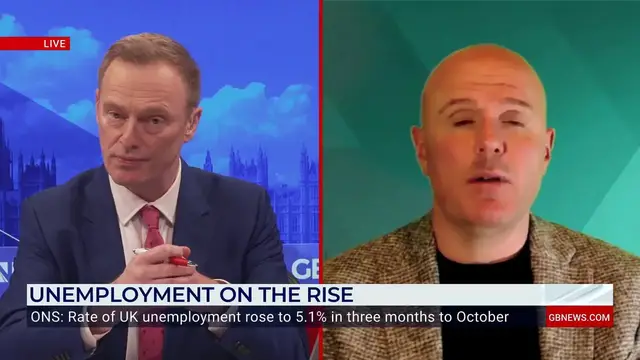
After four periods of stagnated or shrinking growth in the labour, we're asking the same question
0:06
Today, labour isn't working. Payrolls are plummeting. Yeah, so I think as night follows day, these figures are kind of coming quite thick and fast now
0:17
And they're following hot deals on the recent budget that we've had, Martin
0:21
So, yeah, that four months of negative, stagnant growth that we've seen
0:25
and we've seen literally the jobs market is plummeting. So if you just look at the last three months, we've seen 88,000 fewer people on payroll
0:32
And then we can look into what sectors are they? So continuing to see that decline in retail
0:37
And we're seeing a slump on the high street in terms of consumers spending money on the high street as well
0:42
Further falls in hospitality as well, Martin. So the figures are quite damning
0:47
It's not looking positive. And 187,000 lost since the election. I think when you're sat in the Treasury and you're looking at these figures that the ONS are publishing
0:57
You know, it is waking up people and the alarm bells are ringing. You know, the government really needs to go on a different course
1:03
because I don't see where this is going to turn otherwise, Martin. Jamie, what's particularly alarming from my point of view
1:09
is that young people seem to be leading the charge here towards benefits, dependency
1:14
Over a million now, not in work or full-time education. They're the most impacted today
1:21
And, like, call me Poirot, but if you hike minimum wages for young people
1:25
if you make it more expensive to hire people via national insurance
1:29
it going to impact young people the hardest Is there a sense of inevitability about today data Yeah so one time when you look I used to work in EOS and when you start to work
1:42
can you predict some of these trends? And it's not rocket science, as you said, that what happened with the minimum wage is they put the minimum wage up. Everybody wants more
1:49
wages. So there's no harm in that, but they disproportionately, as a percentage, put the
1:53
youngest minimum wage rates up more than older adults. So then the incentive for that first run
1:59
on the ladder just wasn't there anymore for some of these people. That was the big problem that we
2:03
had there, Martin. And the big, big challenge as well when we're looking at the figures is
2:08
if you think back to last week, £1.5 billion government investment was put in to try and get
2:13
more job apprenticeships. So the government's creating a problem, and then it's trying to fix
2:18
it with taxpayers' money on the other side. Jamie Jenkins, something else that really leaps
2:23
out at me today, because I'm a bit like yourself, I'm a data geek, I had a real dive into that
2:28
The public sector wage bill is looking very, very alarming. Annual average regular earnings growth is 7.6% if you work in the public sector
2:39
but it's only 3.9% if you work in the private sector. That means that the number of staff is also increasing
2:48
6.18 million public sector staff members at present. And that means this
2:56
The public sector is getting bigger. They're getting paid more. And that becomes a cart that the horse of the private sector has to pull
3:05
It's getting harder and harder to do that. Yeah And in those public sector figures what we also got Martin is we got a record number employed in the NHS now That 2 million And obviously we need more health care workers
3:18
We've got an ageing population. But more critically, the civil service has grown
3:22
So there's now 554,000 people working in the civil service. That's up 6,000 on this time last year
3:29
So private sector jobs are going down. The public sector is in growth
3:33
And you're right to call that out. And the junior doctors or the resident doctors now are going for this strike
3:37
they're one of the factors why public sector pay growth is so high, because obviously you're looking
3:42
at the wages now compared to last year. And if they're going to continue to go up even more by
3:46
asking for these demands, it's just unreasonable. And Jamie, back in the old days, the accepted
3:52
norm was you got less money from your salary in the public sector because you got a nice fat
3:57
public sector pension. Well, now you get both. And that is an increasing public sector payroll
4:04
and a future pension liability paid for by the private sector. And talking about predicting things ahead, Jamie Jenkins
4:11
I put it to you, that is unsustainably expensive. Yeah, when you look at the pension contributions
4:19
that's one of the hidden costs. Could you actually look at the total remuneration
4:23
of what a public sector worker is? That is increasingly more than what the public sector figures
4:29
when you're looking at wages are, Martin. And you can see over the last 20, 30 years
4:33
a lot of private sector companies have had to go to what you could find
4:37
as a defined contribution scheme where you have a pension pot. But the government seems to continue with these defined benefit schemes
4:44
They made them a little bit different by taking career averages but they are still significantly more kind of rich in terms of the public sector versus the private sector And these pension liabilities they adding a huge amount
4:56
to the debt burden. They're not unfunded, but they're unfunded, sorry, in that basically the
5:01
money that we pay in today, it's not going in a pot for the government to pay in the future
5:06
They're basically just going into the same pot of money. And in the future, people are going to
5:10
have to try and pay for these pensions of the public sector workers. I think that's one angle
5:14
that you're rightly pulling out here today, Martin. Jamie Jenkins, a ballooning public sector liability
5:20
a pensions time bomb, a payroll disaster, four consecutive periods now, stagnated growth
5:27
If you were going to give the Chancellor an end-of-year mark, what would you give her out of ten
5:32
Well, I think it's got to be close to one there. And I think the best advice I'd give to the Chancellor
5:36
is just to resign. I think, you know, the figures are the facts, and you can't deny the facts
5:41
The facts are all going in the wrong direction. If Keir Starmer wants to go down a different road
5:46
he needs to change the Chancellor. But I think he's probably using Rachel Reeves
5:50
as kind of a shield away from him because ultimately, as we move forward
5:54
I don't think the Labour Party can sustain either of them if they're going to continue to see this weak economy
6:00
That's the one thing that's kind of popping them up, hopefully, to try and turn the economy. It's all going in the wrong direction
6:05
So I think the best Christmas present for the public, Martin, is for both of them to resign
6:09
Jamie Jenkins, harsh words at Christmas there for the Chancellor. but your ability to distill and make stats succinct
6:17
and easy to digest is superb. Jamie Jenkins, thanks again once again for joining us on GMI News
6:23
Pleasure to have your company. Thank you. Still to come, Keir Starmer