Up next in 10

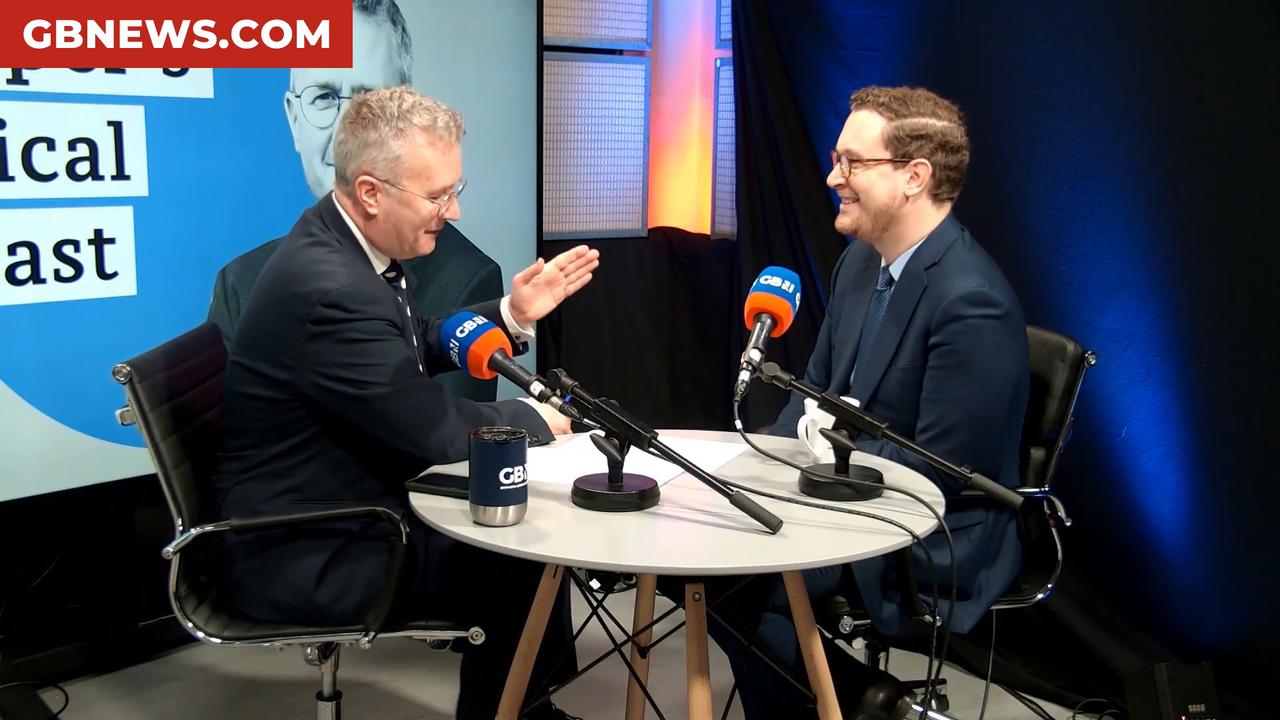
Chopper's Political Podcast episode 95 - Darren Jones and Helen Whately - WATCH IN FULL
Mar 13, 2026


Sit back, pour yourself a drink and join GB News Political Editor Christopher Hope at his regular table where he will discuss the latest insider political intrigue and gossip with everyone from popstars to politicians.
Show More Show Less View Video Transcript
0:00
Coming up on Chopper's Political Podcast
0:02
You're the political plumber. You unblock issues that PM wants to get flowing
0:07
Or something. I'd describe it in a slightly less visually disgusting way
0:21
Welcome back to Chopper's Political Podcast, where I bring you the best guest gossip, news and stories
0:28
from our studios at GB News here in the heart of Westminster. My name is Christopher Hope
0:33
I am GB News' political editor. As the war in Iran dominates the news and, of course, our pockets
0:40
This week, we want to move away from that. That was last week's topic for this podcast, certainly
0:44
although still very much in front of our minds, and discuss more domestic issues
0:49
I'm joined later by the Shadow Work and Pensions Secretary, Helen Wakeley, to discuss pension ideas from this Labour government
0:58
But first, I'm joined on the podcast by the Chief Secretary of the Prime Minister, Darren Jones
1:02
Darren, welcome. Hello. Good to see you here. Good to be here. Welcome to be here. Now, we're going to be talking about this launch of your national consultation on digital ID cards
1:10
But first, I've got to ask you a bit of a cheeky question, which my producer wants me to ask
1:14
Are you the PM's new right-hand man? Is this job going? Morgan McSweeney's left
1:20
Are you the chief of staff? They factored chief of staff? Oh, no, no. The chief of staff is a special advisor job
1:26
I was always there, was it? Didn't MP do it in the old days
1:30
Yes, but I don't think it really works. Lee Bartley? Yeah, you'd have to ask Steve, but I don't think it really works being a minister and a special advisor at the same time
1:37
No. As Chief Secretary to the Prime Minister, I'm kind of the closest advisor as a minister to the Prime Minister
1:44
I operate a number 10 team every day and all those types of things. But the chief of staff is a special advisor appointment because they have to be operationally kind of doing their job 24-7
1:54
I can't do that as well as being a minister. But you're the political plumber. You unblock issues the PM wants to get flowing
2:01
I describe it in a slightly less visually disgusting way. I often say I'm a bit like the chief operating officer for a group company
2:10
So all of these departments are, you know, departments in their own right. The boss is the prime minister. The board is the cabinet
2:16
And my job is to go around and try and do the best at making sure everything's working well
2:20
Okay. One of the big issues this week is this digital ID card. we've never had them before in our country. I was there in that progressive conference in September
2:30
when you were there in the afternoon and the PM announced his plans in the morning. He said then, of course, it was to tackle illegal migration, didn't he? What happened to that
2:39
Well, the first thing to say is, what is digital ID? It's the ability to log in to the gov.uk app
2:45
on your phone and prove who you are if you want to. You don't have to use it if you don't want to
2:49
But the proving who you are thing is important because what that means is that in the future
2:53
because we absolutely know you are who you say you are we can put your information in one place
2:58
on your phone yeah so instead of having to call hmrc or dwp or the council and log in or try to
3:04
log into websites or get on the phone every morning to try to get through to a call center
3:08
it will just make everything easier and put it into one place for you that is different to this
3:13
idea of a kind of mandatory digital id card which is common in europe but that is not what this is
3:18
about no and that's that was an immediately what everyone talked about and that was where a lot of
3:22
concern was raised at GB News, amongst our viewers and listeners. So the PM was wrong to say that
3:28
or he's got a new solution to that. So what the Prime Minister was trying to tackle was illegal
3:32
work in the UK, which can be forced labour and modern slavery, but also people who come here
3:36
illegally thinking it's easy to get a job here because no one checks. Now, it's already a legal
3:40
requirement for an employer to check a new employee's rights to work in the UK. It's been
3:45
like that for many, many years. What happens really is that at the moment, you might scan or
3:49
photocopy your passport, and it goes in a cupboard, and no one knows whether they've done the check or not. So it's very hard to know which employers are doing the right thing and not. By digitally
3:57
verifying people's ID, which is SC mandatory from 2029, we'll be able to see that the vast
4:03
majority of businesses have done the checks and they're all okay. And that means our enforcement
4:06
officers know more effectively where to go and pay a visit to see if there's wrongdoing. Now
4:11
you can use the digital ID to prove your right to work if you want to. But if you don't want to use
4:16
that, there are other ways of doing it, which was essentially turning it with your passport, but you're a new boss using an app to just verify
4:22
I'd run those raids with the Home Secretary, Yvette Cooper, last, and went off and found nobody
4:28
because often you're just trying to target areas you think there's some illegal working. This might help you get towards it
4:34
I can see why I was watching a show last night on TV
4:38
about rail inspectors challenging people who were travelling illegally, unlawfully, on trains
4:45
And every single time they said, show me your phone, show me your name on your phone. every single time they were saying
4:50
show me your phone. So I guess we do use phones as a form of ID already
4:54
So I guess that's what you're going towards. This idea was popular until you announced it
5:00
You feel a bit sunk about that? Well, I like to think that we are..
5:03
It's not you, Isu, by the way. I think it's going to be very popular because..
5:07
I was nervous about the government, aren't they? So it was good until the government talked about it. Well, I think what we're trying to say to people
5:12
is to reassure them that it's not this kind of mandatory ID card thing, which is not what it is
5:16
But if you say to... Well, that's how people interpreted it. She said so. The PM said it's mandatory
5:22
He said it would be mandatory to have a digital ID. To work in the UK
5:26
To work in the UK. And it still will be mandatory to digitally verify your ID. But when people are doing their banking on their app or their shopping
5:34
and then they come to their public services and they can't get hold of anybody, they don't know what's going on, and they can't get the support information they need
5:39
they're right to say that's not good enough. Taxpayers are paying for these public services. The fact they're not good enough right now means they cost too much as well
5:46
and we're all paying high amounts of tax. And so I think the public will say, look, if you can do this effectively
5:52
make it cheaper and easier on your phone so that for the people that want to do it on their phone, they can, then that should be the case
5:58
Give us your one minute sales pick for the end of these digital ID cards. One minute and why it's a good idea
6:02
So being able to log in and prove who you are on the gov.uk app will mean that
6:07
when you want to access public services, which are often at the most important times of your life
6:12
to know that they're there when you need them and that it's quick, easy and simple to get the support you need
6:17
this will deliver that. Without it, we won't be able to do that. And what's on there then
6:22
Well, it will have care information, for example. It will start off with kind of simpler administrative tasks
6:27
like proving your right to work if you want to, being able to pay your car tax in one place
6:33
connecting to the passport system to get your new passport sorted and those types of things
6:37
In the next parliament, because it'll take a little bit of time to build this. That's all this decade then
6:41
So that's until 2029. and then post-2029 we'll be able to look at bringing on more complicated services like
6:48
getting your child care hours sorted through the phone as opposed to having paperwork and a HMRC
6:52
website or being able to check things like tax information or even pension information
6:58
Wow. But it will take time to bring that online. It will require approval from Parliament to do
7:03
that so we'll need to keep going back to Parliament as a check and balance. Each iteration of a new idea gone for you
7:08
Exactly. I want to make sure that this government and any future governments can't do scope creep
7:12
without parliamentary oversight. So we're going to build that. A vote on SI
7:16
And by that, I mean, will there be a vote in Parliament on each change? So you'll be nodded through
7:20
So we will debate that with Parliament and with its select committees. I'm really interested to think about
7:24
how we can try to legislate in a new way that gives us speed but also effective checks and balances When we did the online safety bill for example it took eight years I mean we can try to legislate in a new way that gives us speed but also effective checks and balances and when we did the online safety bill for example it took eight years i mean we can operate on that timetable it too slow but you do need proper checks and balances and as i say
7:38
at the end of the day if the punters at home don't like it are worried about it and we can't
7:43
reassure them they don't have to use it if they don't want because there's no pickup and then there's all been a bit of a waste of time well i think i think that lots of people will use it
7:50
because it will become the quickest and easiest way to access public services and the benefit of
7:54
that is take hmrc they have 100 000 telephone calls a day yeah defra has 500 different paper
8:00
based forms yeah dvla i think has over 40 000 calls a day i mean it's madness if we can just
8:05
get half of those people doing it on their phone with for themselves it means those people that do
8:10
need to rely on the telephone will be able to get through more well let's come to them in a minute that those that they're called the digitally excluded aren't they and let's come to them in
8:17
a second is it called the brick card that was your idea when tell you bare thought of the idea last
8:20
summer so we haven't named it but it's a question in the consultation it will depend a bit on where
8:24
we end up with the public consultation on what people want to use it for uh and we're good card's
8:30
a nice name for it it's not controversial id is more papers please isn't it yeah i mean it's a bit
8:35
controversial in northern Ireland uh and we want to make sure this is something that everyone will
8:40
use here the united kingdom want to use yeah yeah um and now the some of the features are quite
8:45
interesting my favorite feature on it was the fact it will tell me what bins go out on which day that
8:50
is that that is going to win around a lot of people you wear this daryl jones yeah i was told
8:54
that the most searched for information on council websites across the country is bin collection day
8:59
normally in the uh normally that first week and the street collection if your council you know
9:03
does that um by being able to tell the app what council you live in we can just put it on the app
9:09
and if you need to check especially if these things are moving around like at christmas and stuff it will just be there it's just an example of something that just makes life easier for you
9:16
And will it say that Mrs. Hope's turn is today, or will it say it's Mr. Hope? Or Mrs. Jones's turn
9:22
Well, we might be able to build in some at-home features, but you should spit those ideas to the consultation
9:28
How much will it cost? Well, we're consulting on the build right now
9:32
We want to do it in government. We don't want to outsource this to a big kind of tech company
9:36
That's a good thing, I think. That will encourage trust, too. Yeah, because this is people's personal information
9:42
We don't want companies holding that. We want to hold that inside the government with the right parliamentary oversight
9:47
So we will come back to Parliament later this year with a cost estimate. Having done the consultation on the build, we then need authority from Parliament to be able to spend that money
9:56
The cost then of things like digital inclusion will come later in the 2030s when the app becomes available
10:02
And then each time you're bringing on a new service, take, for example, the child care service
10:06
not only will we need approval from Parliament, but we're going to need to get approval from the Treasury for the cost of bringing that service off the old system and onto the new system
10:13
So you can't say what it would cost, and that's hard to justify with the Treasury. Are they okay with that
10:17
Will they see, I guess, time saved is a cost for people. Yeah, I mean, look, there's a huge opportunity for savings here
10:24
Because the current system is so unproductive, there's been estimates that we could save up to £40 billion a year
10:29
in kind of excess call centres and paperwork and all that type of stuff
10:33
A cost of £2 billion, maybe. That's been questioned in the past, hasn't it? It has, but it's not a number I recognise
10:37
because, to be frank, I'd rather not try to guess at this stage
10:42
and then get it wrong, but do the work properly and then come back with accurate figures as we work through the break
10:46
It's the beginning of a transformational moment, I think, for test payers, possibly, right
10:52
Totally is. This is the foundation of modern public services. Most people know that for the majority of people
10:57
they're happy to use their mobile phone. You need an app and you need a login that can prove who you are
11:01
and then you're off to the races. And if you can make all of that quick, simple, and easy for people
11:06
but it's also cheaper for the taxpayer. And that means there'll either be more money available
11:09
for frontline services like the NHS or indeed giving money back to taxpayers in the long run
11:14
And the big issue, again, is the issue of trust. That's why I always thought it was disappointing
11:19
the way it was launched as an attempt to tackle legal working. And by the afternoon, you were saying
11:23
no, it's a reboot of the entire state. That was your speech in the afternoon. And I've been there, I was early with the PM saying something else
11:29
And that was my thought was disappointing that there were two messages because you have to get able to trust it from the beginning
11:34
and go baby steps. Part of that, of course, is having a panel, people's panel
11:38
Yes. So that's getting people on side. Who are they? Can I join
11:42
Can Rebecca join? And where will they meet? So what is this
11:47
So we're doing the normal consultation that government does, which is on the gov.uk website
11:52
And the civilians, that's basically, here's what it is, a tick box exercise
11:56
There's kind of questioning this. You can say what you think. Let us know what you think about it. You can do that by searching digital ID consultation
12:02
It'll take you to the website. but given the level of public interest i wanted to do something different and do democracy a bit
12:07
differently and so this is the first time that government has done what's called a deliberative
12:12
democracy process as part of the legal consultation so we're working with a company to get a
12:17
representative sample of the whole public we think that's about 100 people different places across
12:22
the country different ages background yeah some people that will hate this some people that will love it and they're going to agree to spend three evenings and two weekends together as we work
12:31
through these questions. Hotel in Birmingham. Hotel in Birmingham for the two weekends
12:35
Can we come and film it? I'm sure. We'll have to film it. I'd probably do that. You mean he's for the other one
12:39
But I think there'll be great stories as part of this because the public in that group
12:43
will come with us as we work this up together. And that will be
12:47
a legally recognised contribution to this consultation process. That's a jury system
12:52
I suppose. A little bit like that, yeah. It'd be interesting. I mean, if it were to come, yeah, why not
12:57
do other policies too? Why not get other... Well, there's an option available. I mean, look
13:01
There is a cost to doing these things, and it wouldn't be appropriate to do it for everything
13:05
But given that there was a very significant amount of interest in this programme, I thought it was the right thing to do to go further
13:11
And you'll go along to it, won't you? Yeah. You'll be listening in. Yeah. You might hear concerns about the papers, please, culture
13:17
You hear that a lot, don't you? How do you talk against that, the idea that people have to
13:21
where's your ID? You know, the cop turned up and here's my ID card. There's a tradition in our country not to go down that route, isn't there
13:28
Yeah, and we're not going down that route. And they will not be allowed to do that. And my expectation is that will be on the front of the bill in Parliament
13:35
to make it clear that that will not be a legal obligation on anyone. What exactly
13:40
To have a mandatory digital ID that must be available if a police officer comes up to you and asks for it
13:45
Yeah. You said ID cards will mirror the standards seen in the European Union yesterday
13:52
in the House of Commons. That is a dangerous place to go for obvious reasons. We don't want to have an EU ID card here, do we
13:57
Well, the main reason that that's important is in Northern Ireland, because of the Good Friday Agreement, people in Northern Ireland can be British or Irish
14:05
And so if they're working in Northern Ireland, they may have an Irish passport, not a British passport
14:10
And what we can't do is undermine the settlement in the Good Friday Agreement. That is a difficult place to be for you, isn't it
14:15
But that's why we need the Irish passport to work on our gov.uk app, which is why we need to work with the European Union on the technical standards to make sure that that's able to be done
14:24
Right. Concerns about Big Brother, the long arm of the state, reaching into our lives, spying on our moves, tracking where we go. You know all those concerns
14:32
Yeah. Again, that is not what this is being built to do. There'll be legal protections around that as a parliament will have these continuous opportunities to see how the app is developing
14:42
So there will be an oversight board for the programme where we bring external voices in to talk to the civil servants and have access and see what's going on
14:52
there are already committees in parliament that we given evidence to and engage with and as I say there be this legislative check and balance as well It a very different system to the types of system that exist in other countries China an obviously helpful
15:05
Yeah, the Estonian model is very different as well. Well, the Estonian and the Indian examples have a lot more information on you
15:14
like fingerprints and eye scans. And that's what that is to look at until they can say that
15:18
We are not going to be doing that. No fingerprints. No fingerprints. What we're trying to do is collect the fewest amounts, the fewest bits of data possible to be able to confidently verify who you are
15:28
Not even addressed, you said yesterday in the briefing. It's not essential. Now, there may be services in the future where people know if you're trying to update your addressing government, it's a bit of a nightmare because you've got to tell everyone in different departments
15:37
So it may be a feature that will make life easier for people, but it's not necessary
15:41
We think it's probably your kind of name, your date of birth and your picture
15:46
And that's probably enough. But that's one of the questions we're asking for feedback on
15:50
GCHQ involved, that will worry people who are concerned about it because that's part of MI6
15:55
Well, the National Cyber Security Centre, which is a part of GCHQ, is involved insofar as they are experts in government on how criminals are increasingly using advanced techniques to hack into data
16:07
So that's the anti-hacking piece. Exactly. Because that is also concerning about the trust issue
16:11
We know about, you know, I'm older, remember when the government lost the entire database for the National Insurance Database
16:17
29 million people's information was on a disk somewhere in britain yeah never found by the way
16:22
oh well i mean look the good news is we don't use floppy disks or cd rollers anymore but to
16:26
reassure you what we're not doing with this system is building kind of one big database in the center
16:30
government with all the information in it your information that relates to like your car will
16:34
stay with dvla your benefits with dwp um your tax with hmrc they're in separate databases each have
16:41
to be secure. Yes. All this app does with the ID is it basically allows us
16:45
to plumb that into the app so you can see it. It doesn't bring all of that data together
16:50
and that makes it a harder target for cyber criminals or state actors
16:53
to try to break into. And crucially, it won't be compulsory. No
16:58
Unless the future government will have to change that and then there'll be a debate. They'd have to come to parliament
17:01
and change the law if they want to do that. There'll be checks on that. Yeah. There are people who aren't
17:07
digital, digitally native. I am pretty much native but not all the time native
17:11
I often prefer my children to ask me how to use the phone half the time. But elderly will worry about it
17:16
There's millions, about 4 million people from memory who aren't online, don't have a smartphone like we have
17:22
They will get a card, will they? That's not great for them. Well, so the first thing to say is
17:28
for those that don't want to use the app to access public services, the existing core centers and telephone line and paperwork will remain
17:35
But with less demand, possibly. With less demand, so it should be easier to get through to people. The second thing is to say is I think this creates a really great opportunity to talk about how we help people with digital technologies
17:46
Because it's not just the government, it's banking, it's shopping and all of these things. So one of the questions I'm asking is how do we use the things we already pay for in local communities better
17:55
Like post offices, postal workers, libraries, GP surgeries, job centres, those types of places
18:00
So that for most people, if they need a hand, they've got somewhere local to go by and ask for it
18:06
now that will obviously will be subject to value for money libraries too of course well i just think
18:10
if we're paying for these things in people's local communities it's a great place to be able to help
18:15
them out if they if they need it well because the great news the government is not going to allow any more post office to close yeah that went down the radar but there was a review on
18:23
the scar side of the network when they were 11 and a half thousand right yeah and that's staying where it is that is so important to so many people who are watching this in the gb news
18:30
and so they may get a physical card that that's what may happen so one of the questions is if you
18:35
Because you can use this app to prove your age, for example, at the pub
18:39
You can use it to prove your identity at a polling station. There are certain things like that where you could use that if you wanted to
18:44
If you've got your passport, you could use it. Yeah, yeah, you could use it. Because it's the same level of verification as a passport
18:49
But if you therefore want a physical copy of the digital ID, which will be free for people
18:55
say you can't afford or you don't want a passport, then we ask the question of, well, is that useful to people
19:01
And if it is, we'll look at how we can make that available. will be free. You mentioned that again
19:06
It will be free. Yeah. That's vital. Yeah. In-house, so it can't be hacked
19:11
And yeah, future governments can be stopped for snooping on us. Okay
19:15
Not everyone's on board. I read the Times newspaper says West Streeting isn't happy
19:20
nor is Bridget Philipson. They're not cooperating with you, Darren. Sort them out
19:24
They're wrong on both of them because they're both happy. So, okay, Bridget's totally happy
19:29
There's no problems with us working with the Department for Education on these things. She's already talking to us about how we can make some of those processes easier for people
19:36
And on Department for Health, I was very clear from the start that the NHS app should be separate to the gov.uk app
19:43
primarily because we've already spent loads of money building it. People have gotten used to using it after COVID
19:48
It works really well. It's probably the best app we have in government. And people rightly want their health data held separately to their other data
19:55
So I didn't want to slow down the development of the NHS app by attaching it to a new project like this one
20:01
and so i was very clear from the beginning and wes agrees with this um that they should be very
20:06
separate this could be could be transformational i mean i went down to to the gds when it was in
20:11
holborn if it's still there mike bracken was in charge and that was when they just launched
20:16
dot gov.uk back in 2009 i think it was and that was a moment and that won awards and this could
20:22
this is the opportunity i think for you yeah and it's it's the trust issue i think so much is about
20:26
trust with government all the time sure i think i think it's really it has the potential to be
20:30
really transformational. And as I was saying in the House yesterday, you know, this is what Labour
20:34
governments at their best do. We think about how do we build public services that are there for
20:39
people when they need them to expand opportunity and access so that it's not just the privileged
20:43
few who have got the money or the access to get what they need, but that everybody gets the
20:47
opportunity. And whether it was the NHS or the Open University or the Shorestart Centre
20:51
this is kind of carrying on with that proud Labour tradition of building public services that are
20:55
there for the many and not just the few. Okay, look at that. A special message at the end. Very
20:59
very quickly. Fuel duty freeze runs out in August. Change of budget. So we're looking at a rise
21:05
into Denver, October. Yes or no? So this happens every year, right? In law, our fuel is
21:09
supposed to go up in line with inflation every year and every year, chancellors come to a budget
21:13
and say they've decided what to do. We've not set the date for the budget. There'll be a budget
21:17
at the world's day. Well, Parliament's obviously not in recess. It's in recess in August
21:21
But there'll be a budget in the autumn. But it's not for me to get ahead of the Chancellor
21:25
and announcing either the date or what measures she will take. But the freeze ends in August, so they're increased
21:29
because I've been locked in September without a budget. It's for the Chancellor. So there'll only be a lot out of it
21:34
And just very quickly about what's going on in Iran, it's a huge issue
21:38
I don't want to disregard that in this podcast. Will the king be going now on his visit next month
21:43
How are our relations with the US? Look, our operational relationship with the United States
21:48
is continuing in the way that it always does. On the defensive operations
21:54
where we're trying to protect British citizens in the region, you know, we are working with the Americans
21:58
to reduce the Iranians' ability to fire missiles indiscriminately in the region
22:03
That's why we've got American planes at RAF Fairford here in the UK and at Diego Valcia
22:08
to help with that intelligence sharing continues. Our trade relationship, you know, continues
22:13
There are many people that engage with the United States every week. So I recognize there's been some political disagreement on the fact that we were not
22:19
involved in the initial strikes in Iran with the Israelis and the Americans and that we
22:23
are not willing to be involved in wider conflict in the Middle East but that because the Prime Minister been very clear any military operation from British armed forces will be on the basis of it being legal in line with a plan and in line with I don know where the country is on that by the way
22:36
I mean, I think he was criticised for being slow to act. There was a legalistic approach at the beginning
22:41
which was frustrating for people. Americans didn't like it. But he's got to a place where the public seemed to be, I think
22:48
And certainly Reform UK is going back to, for example. Well, I was very surprised to hear this morning
22:54
that Andrea Jenkins, you know, the reform mayor said on TV that she thought
22:59
there should be boots on the ground. I mean, I don't think at the public what British armed forces
23:02
on the ground in Iran. Not even Trump wants that. I think reform
23:06
are in totally the wrong place on that, yeah. And the Tories are moving too on it. I mentioned the king there
23:10
Will the king visit their place to America next month? You will know the answer I have to give. No, this is a podge
23:15
Two million in a room. It's not for me to speak on behalf of the palace
23:19
So, you know, it's for the palace to confirm these things. Okay, but it's in
23:23
it's, it's, through this our special relationship this important relationship we have with the states
23:27
look our relationship with the united states has been um uh deep and extensive for many decades
23:33
i have every confidence that all continues and gilgarcia will go across to mauritius or that's
23:38
been delayed in the laws now i mean it's a vexed issue well it's the the bill is paused but
23:43
obviously everyone's attention is on trying to protect british citizens in the middle east at the moment yeah and so we'll have to come back to that at a later stage well later this year after
23:50
the King's Speech? I don't know about when, but hopefully the Middle East conflict ends sooner
23:56
rather than later, and then we can get back to business. You've got a busy day. It's Wednesday. Yeah. What's in the Madison Papers? Anything exciting? Well, I can't tell you because I haven't
24:04
published them to Parliament yet. The first tranche will come out this afternoon, and I'll
24:08
give a statement in the House, and there'll be a second tranche of documents that will come in a few weeks' time. Darren Jones, thank you for joining us on the podcast today
24:15
Hello, I'm Bev Turner. Now, it can feel like the money in our bank accounts at the moment
24:24
does not keep up with the cost of living, and maybe there's a solution. I'm here today with
24:30
the CEO of Tally Money, Cameron Parry. Cameron, what is Tally Money
24:37
Well, Bev, with Tally Money, you get a current account and a debit card, but instead of pounds, you use milligrams of gold as your everyday money
24:45
So why gold? Gold traditionally is a great store of value. It has, on average, gone up at over 11% per annum
24:53
for the last 25 years against the pound. It's tripled in value in the last decade
24:59
And in the last two years alone, it's increased by 50% against the pound
25:03
Banks' savings products just can't compete with that level of growth. But this isn't just about gold
25:09
This is about a currency that you guys have created at Tally Money
25:13
Explain it to me as though I'm an idiot. So, look, people need to be able to hold their earnings
25:19
and build their savings in a money that retains its value and remains in their legal control
25:24
and remains theirs to access away from government control. Great. You had me at not exposed to government control
25:30
You should feel safe and happy with your money. You should have peace of mind. The more money you see in your bank balance
25:35
and that's the type of thing we're trying to deliver, and give people choice in the type of money they get to use every day
25:42
Brilliant. Thank you so much, Cameron. Thank you. With me now is Helen Waitley, who's the Shadow Work and Pensions Secretary
26:04
Helen, welcome to Chopper's political podcast. Great to have you here. You're concerned about pensions
26:10
Explain what the government's trying to do with pensions at the moment. Well, thank you for having me on your podcast
26:15
And yes, I am concerned about pensions. A Saturday's Secretary of State for Work and Pensions
26:20
I spend a lot of my time talking about welfare and the need to make welfare savings. But today, I'm particularly keen to talk about pensions
26:26
because something that the government is doing, as part of what's called the Pension Schemes Bill going through Parliament at the moment
26:32
basically, the government is after pension savers money. Right. So they've seen a pot of money that has built up over the years
26:41
of people particularly being auto-enrolled onto pensions, those pension savings, which are meant to be invested
26:46
for people to have money to live off in their retirement. To maximize returns for the pension
26:51
Yeah, that's the point of those pensions. That's what you want as you and I and your listeners and viewers
26:56
want their pension savings to be able to give them a good return in later life
27:01
But the government has seen that's a pot of about £400 billion and they're trying to put a power in this bill going to parliament
27:08
which would mean that they could direct where that money would be invested
27:13
Private funds or these state funds? No, it's not the state pension
27:17
This is your private pension saving. So private pension savers. A lot of these will be auto-enrollment from that
27:24
But that comes off people's paychecks going into their pension. It's what they're planning to live off in later life
27:32
And the government's giving themselves this power. We're calling it a mandation power in a pension schemes bill, which would mean that they could say to the pension funds, you must invest this proportion up to the government in particular sorts of investments
27:50
So you must invest this in the UK. You must invest this in a particular bit of the UK
27:54
They could do particular sectors. So, for instance, Torsten Bell, the pensions minister
27:58
has hinted that the pension funds would need to put more into the net zero transition, for instance
28:05
So that's one. And the pressure is brought to bear on the Barclays or whoever the financial fidelity
28:11
whoever the pension fund manager is. Yeah, because the fund managers who are the ones who are entrusted
28:17
to try and give you good returns and the right level of risk
28:22
or you immediately pension. So that you've got something to live off and lay to look to. Exactly that
28:26
But what about people who say, I want my pension invested in these areas
28:31
these five areas of, say, 20% each, that's what my pension invested
28:35
Can the government overrule that? So, well, this would affect this huge proportion of the sector
28:42
There will be some exceptions, but the vast majority of pension funds
28:46
and I said particularly the ones where people are auto-enrolled into, and most people don't kind of get particularly involved
28:52
It would be a good thing if people did get a bit more involved in looking at whether they're getting a good enough return
28:56
But in reality, most people don't. And actually also, this could particularly affect people in the coming years
29:02
people who are getting towards the point where they need to draw down on their pension, when really you'd usually want your pension fund to be in a lower risk investment as you get nearer to where you're going to have a bond
29:11
That's a bond, normally, isn't it? But the government could direct the pension funds to, say, invest in the government's own pet projects
29:21
And so at the moment, the government's saying, oh, well, you know, maybe we won't use this. But the fact is, if you're a chancellor and you want there to be more investment in the UK or potentially in a particular sector
29:32
reform, for instance, have hinted that they might use this to invest in water and the water infrastructure or in steel
29:38
So some of these struggling parts of the UK economy. So say you're a chancellor, prime minister who wants more money to go into that bit of the economy
29:46
You don't think you can get it through taxes because, hey, taxes are already extremely high
29:51
So this is a pot of money they might go after. But the point I'm making is..
29:54
It's not their money. It's not their money. It's a favour's money. Government should not do it
29:59
It's funny. I find it galling. I mean, so if you don't say how your money
30:04
how it should be invested in your pension, that gives the government the chance to assign it for you compulsorily
30:10
Or they can't surely overrule what a pension saver wants to do with their money
30:15
Well, so at the moment, you put it in a pension fund and the trustees of the fund have, it's called a fiduciary duty
30:21
to make sure that they are getting the right balance of risk and return for you
30:26
There's some debate about whether they should be getting higher returns. And also, a worthwhile conversation, should there be more investment in the UK, that would be a good thing
30:35
But it's fundamentally the responsibility of the trustees of the pension funds to do the right thing by you as a saver who's put your money there
30:42
But this mandation power the government's taking could then trump that responsibility
30:48
And put money into their pet projects. And put it into where the government wrote it. Yeah, or sorting out anything they're concerned about
30:55
Yeah, whatever they happen to, even in a particular region of the UK, whatever they happen to want it to go into
31:02
And that's just not necessarily going to be in trust to save us. A lot of money, 400 billion
31:06
So it's about 400 billion. It's a savings about 22 million people. We've all invested in our problem
31:11
And the ABI, this is the Association of British Insurers, that they've also complained about it
31:17
And they're backing your concern about it. Yeah. Well, it sounds extraordinary
31:21
Yeah, the ABI is against it. pensions UK another representative body basically all the the pension sector that I've been talking
31:28
to you about this uh very strongly why make it compulsory I just you know I just always think
31:35
about a labor government they always think they seem to know best on stuff it's I'm not being
31:41
physical there but I just I look I'm about to go along to the briefing um and we just heard
31:45
Darren Jones of course the chief secretary that is prime minister about ID cards that scheme started
31:51
out as being compulsory and then became voluntary and now it's more of a kind of consumer choice
31:56
issue rather than a right to work issue and that's why it's been taken away from the space of
32:01
controlling the draw on illegal migrants coming across the channel um but they there's always
32:06
feeling i think amongst a left-wing labour government that they they know more than you
32:11
and that's so frustrating i mean there's a there's also a bit of a pattern of behaviour here they're
32:15
going after pension savings in in quite a few ways so there's this thing where they're um
32:20
reducing the amount that people can put as extra into their pensions. It's called the salary sacrifice scheme
32:25
They're bringing down the amount that people can do that. That was in the budget. So that was in the budget being legislated on at the moment
32:31
We're trying to get them to U-turn on that because we think they're doing wrong. That's appalling. Is that people serving from their own earned money, their tax money, into their pensions
32:37
So they're trying to stop that. They're putting inheritance tax on self-invested personal pensions
32:45
I mean, at this rate, also we're seeing state pension come into retirement tax
32:49
essentially a retirement tax on that. they don't sort that out. So there's a bunch of areas where they're basically
32:53
going after pensioners. And this is like going after people who are doing the right thing who are putting money aside making sacrifices a day for a letter tomorrow Exactly what people need to be doing I think the government is saying there a pot of money
33:07
We could get our hands on that and make it do what we want it to do
33:11
They're completely wrong. Look, just wide, moving away from this space, but we'll keep an eye on this on this podcast
33:17
on the GB News. Where are you with this government? We saw that the forecast last week, over 400 billion, I think, on benefits by the end of the decade
33:27
Your party had a plan to cut maybe tens of millions off the benefits bill, but no more than that
33:34
I mean, it needs some serious surgery to that benefits bill. So the benefits bill definitely needs to be got under control
33:39
And indeed, we want to bring it down. We've been pointing out to the government the areas where they could and should be bringing it down
33:46
I mean, we just can't afford it. it's also not the right thing to be doing to be giving people benefits who could and should be
33:52
working so we have identified 23 billion pounds worth of savings from the benefits bill for
33:59
instance through stopping benefits for mild mental health mental well-being things like anxiety
34:05
and some of the lower levels of neurodiversity like adhd we have a view and many people and lots
34:12
of the evidence supports this that people in that situation will be better off in work rather than
34:16
benefits which often discourage uh discourage work and alternative new work you know that's
34:21
one of the areas along with there's too much generosity in the system with benefits going
34:25
to foreign nationals like we need to be prioritizing british people in our benefit
34:30
system and people who are contributing yeah and paid into the system why should they pay exactly that so and the government they definitely they have to they they need to save money on
34:40
benefits to be able to for instance invest more in defense which we have a war in ukraine
34:45
war in Iran we're in a dangerous world we cannot keep on
34:49
spending money on welfare particularly that's not needed when people could be in work
34:53
and instead Half that bill of course is a triple lock half of that bill
34:56
is a state pension should that be cut or should that be dropped to the election next year? Well I think
35:00
it's very tempting to turn to that and it's a bit like pointing out earlier No, this is the podcast
35:04
you can tell me about it It's a bit like pointing out earlier as I did
35:09
the government's looked at there's 400 billion pounds in pensions and gone off to that money
35:14
so it's a big number I hate that. I mean, I think, they're different numbers. One thing is like
35:18
there's a bit of a myth that pensions have got all this money. Let's not suggest
35:22
that if you're living off the state pension, you've got a lot of money. You're living off around £12,000 a year
35:27
So it's not the kind of super generous thing that people might think
35:32
I think, I mean, the thing that I'm focused on and part of the reason for the conversation today
35:36
that I was keen to talk about this mandation thing is we need to be encouraging people
35:41
to save for their own retirement, to do the right thing, to put money aside
35:47
at the moment the prediction is there are loads of people who think they're going to be fine in retirement
35:51
because they're also enrolled in their saving for pension and they actually not nearly as much money as they thought they would So what we need is a system that supports people to put money aside And to engage with it make choices work out how you want to invest your money with risk profiles and so forth if you a bit younger
36:08
That kind of thing helps you understand what the pension is for. Yes, I'm very keen for people to understand more
36:12
and get more involved in making sure... Well, you know, Rowland was a great idea
36:15
That was your government that did that, didn't it? It's a trade over. It was originally legislated for, I'll give them the credit
36:22
in 2008 that we under Labour, but implemented under us in Kundu. Because it's been such a good thing
36:28
Kemi Balev's doing well at the moment, isn't she? Back in the polls. I don't keep that close an eye on the polls
36:34
I'm going with the job that I have to do, holding the oven to account
36:39
You pour over it, back at home. That's not actually how I spend my weekends
36:44
But Kemi's doing great. Kemi is a fabulous leader. She hasn't come us through yet, though, has she
36:50
She's doing well for us in our little bubble of Westminster. But it's getting out there
36:56
I obviously speak to people out there when I'm not going through the polls
37:00
but when I'm talking to people out and about in my constituency or ever
37:05
who tell me, oh, you know, I've noticed, can we... Somebody even told me the other day, not political at all
37:09
but they switch on every Wednesday at midday to see PMQs because they just want to see her roasting
37:15
And she's done that since last September, pretty much on a lot of those PMQs
37:19
two-thirds of them I think she's best at the Prime Minister. the PM, of course, has had quite a sticky wicket
37:24
on a lot of occasions, but it's been made worse, I think, by her opposing him on it
37:28
Yeah, I mean, he's obviously extremely weak and not very good at his job
37:34
but Kemi is extremely good at holding him to account on that and pointing that out
37:39
and asking the tough questions one after another that puts him on
37:42
the back foot. And that's not easy to do at all, and she's
37:47
extremely... No, she's grown into the job, which we all do, in any new job you take
37:51
She met with Boris Johnson this week for a private meeting. What's that about? I know no more about that than having seen something political or some other
37:59
It shows letter. Well, you tell me. Bring it back as a peer? Making a foreign secretary
38:04
Shadow foreign secretary? This is your speculation. What I talk to Kimmy about is genuinely about
38:09
I mean, we're in touch about the pensions mandate. Of course, of course. We've learned about this too
38:12
What we want to do is get the government to stop making so many mistakes. This is one where I want to see them do another
38:18
It just said to me, it shows how, if I can say it, It's just how far
38:21
Baylenock has come as leader that, you know, 16 months into her time as leader
38:27
she's now meeting the former leader who was very popular and it's fine, right
38:32
So there has been a lot of talk about her. It's fine by me, though. Yeah, but there has been lots of talk about her future
38:36
until recent months, but now she's feel confident after that meeting him and nothing happens
38:40
So, I mean, talking to colleagues, everyone I speak to is saying that she's doing
38:45
a tremendous job. I'm like, she's coming there and tobacco and PMQs
38:49
She needs a lot. That's a good thing. seeing her getting out there. And one of the great things about Kemi is she has very strong principles
38:55
really has the courage of her convictions and that coming through And it feels to me that the things I know she genuinely thinks and believes are what the public wants to hear and see They want to hear and see a stronger leader who decisive
39:06
who's courageous, who will tell them. How do you shake off the record of 14 years of power
39:11
when your government was in power and the failures that you've done, which are some of the problems you're talking about nowadays
39:16
We've got to recognise the things that we've got wrong and Kemi's talked about that
39:21
I mean, some of what I think, you know, I still have to say, look at the beginning of that time
39:25
and actually the mess that Labour handed over and the disaster and the high unemployment and all of that
39:30
And actually lots of good stuff we did and don't know, totally forget that, throw that away
39:34
I know it feels a long time ago to people. And then recognise, yes, in the back end of that period
39:41
we did get stuff for all. I mean, particularly when we lost sight of our principles. And this is what we're in
39:46
Kemi, she thinks about this, I think about this. Why didn't we, for instance
39:50
manage to bring the benefits bill under control? We have things we were planning to do, trying to do
39:55
but didn't manage to get through. There was law and fair, there were judicial reviews
39:59
all these things got in the way. And, you know, having to be clearer-sighted
40:05
on what is needed for the country, which is those tough decisions
40:09
Yeah. Well, there being a classic one. Exactly. Each individual case is someone who needs help in some sort
40:15
but the question is, should the state pay for help or can it be found elsewhere or do they actually need it at all
40:20
Well, there's always going to be tough decisions. And one of the things that I think when I'm doing my job now
40:25
on our policy is you've got to make the argument and win the argument to have a mandate
40:30
to do some of the tougher things. I've got no question that they're right
40:33
No, it's the right thing for people to be in work rather than receiving benefits, but it'll be a bumpy ride on the way
40:40
but you've got to win the argument and then be ready to do it when you get in government. Okay, well, Helen Waitley
40:45
thank you for joining us today on Chopper's political podcast. Thank you. Thank you. Thank you to Helen Waitley earlier
40:54
Thank you for joining us wherever you're listening to this. I tweet at Critterphobe on X
40:58
Email me, chopper at gbnews.uk. What's your Twitter handle? At Darren P. Jones
41:05
Good. And will it be a Twitter handle for the ID card? Oh, we've not set one up yet
41:09
No, but you need to. We've got to decide what to call it first. I think you need to make it a person
41:13
Remember how Tell Sid was how you got... Yeah, yeah. Make it to give it a character, like a mascot
41:19
Your listeners will have to give us some ideas. They will, let me tell you
41:24
If you enjoyed this podcast, he has, and I have. Please tell your friends to have a 5-hour rating and a review on Apple Podcasts, Spotify, YouTube
41:32
wherever you find it. It helps other people to find it. Thank the great team of colleagues behind the podcast, Mick Booker and Jeff Marsh
41:37
Backett and Paddington at GB News headquarters. The podcast worker bees, Rebecca Nunes, who's here in the studio
41:43
and George McMillan, who edits it. Most importantly of all, thank you again for listening
41:48
Until next time, cheerio
#Government
#news
#Politics
#Public Policy