0:06
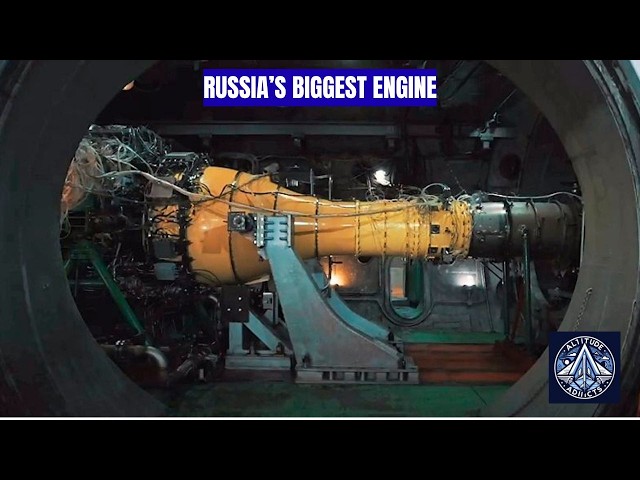
With the development of the PD-35, a
0:08
next-generation high-thrust turbofan
0:10
engine capable of producing
0:12
approximately 35 tons of thrust,
0:15
Russia's aviation industry has entered
0:17
one of its most ambitious technological
0:22
The United Engine Corporation has stated
0:24
that the development of at least 20
0:26
entirely new critical technologies,
0:29
many of which are not currently
0:31
available in the domestic industrial
0:33
base, is necessary for this engine.
0:36
This project is not just about building
0:38
a powerful engine. It represents a
0:40
complete transformation of Russia's
0:42
aviation engineering, material science,
0:45
and testing infrastructure.
0:48
And what makes this even more
0:49
fascinating is that one of the most
0:51
intriguing aspects of the PD-35 program
0:54
is that as of now, there is no finalized
0:57
aircraft specifically designed around
1:00
This places the engine in a unique
1:02
category as a strategic capability being
1:05
developed ahead of its main application.
1:08
Typically, engines are developed
1:10
alongside aircraft programs, but the
1:12
PD-35 breaks this tradition entirely.
1:16
It is being built as a technology
1:18
platform that could serve as the
1:20
foundation for multiple future
1:22
long-range and wide-body aircraft,
1:24
something even Altitude Addicts would
1:26
call a bold reversal of conventional
1:31
And when we move into where this engine
1:33
might actually be used, the most
1:35
discussed application is a potential
1:37
Russian long-haul wide-body airliner.
1:41
This idea is often linked to concepts
1:43
that could replace or complement older
1:48
The Ilyushin Il-96, Russia's current
1:51
wide-body aircraft, is frequently
1:53
mentioned as a possible candidate for
1:56
However, aviation observers at Altitude
1:59
Addicts point out that modifying the
2:01
Il-96 would likely require major
2:06
The cost and complexity of such
2:07
modifications could end up being
2:09
comparable to developing an entirely new
2:14
And this naturally brings us to the
2:16
biggest challenge behind the PD-35,
2:19
which is the unprecedented requirement
2:22
to develop 20 critical technologies.
2:25
According to official statements, the
2:27
engine program includes advanced
2:29
materials, new coatings, and entirely
2:31
new manufacturing techniques.
2:34
These are not incremental improvements,
2:36
but fundamental breakthroughs required
2:39
to achieve the efficiency, durability,
2:41
and performance expected from modern
2:43
high-bypass turbofan engines.
2:46
And within this challenge, material
2:49
science becomes one of the most
2:52
The high-pressure turbine must operate
2:55
under extreme thermal and mechanical
2:57
stress, requiring heat-resistant alloys
3:00
and ceramic matrix composites capable of
3:02
withstanding temperatures beyond current
3:06
Protective coatings must also be
3:08
developed to ensure long service life
3:10
under these extreme conditions.
3:13
And equally critical is the development
3:16
of new aerodynamic designs for
3:18
compressor and turbine stages.
3:21
These components must achieve higher
3:23
pressure ratios while maintaining
3:25
stability and efficiency.
3:28
Engineers are also introducing advanced
3:30
computational modeling and digital twin
3:32
technologies to simulate engine behavior
3:35
across a wide range of conditions before
3:38
physical prototypes are even built.
3:41
And as development progresses, a
3:43
significant portion of investment is
3:46
being directed toward testing
3:49
In March 2026, it was revealed that a
3:52
new test stand is being constructed in
3:55
Russia's Perm region with an estimated
3:57
investment of 3.7 billion rubles.
4:01
This facility is specifically designed
4:03
to test experimental PD-35 engines under
4:06
real-world operating conditions.
4:10
And what makes this development
4:11
particularly important is that these
4:13
test stands are described as unique with
4:16
no direct equivalents currently existing
4:21
They are expected to simulate full-scale
4:23
engine operation, including
4:24
high-altitude conditions, thermal loads,
4:27
and aerodynamic stresses.
4:29
This capability is essential for
4:31
validating new technologies and ensuring
4:34
that the engine meets both safety and
4:36
performance standards.
4:39
And despite all these challenges,
4:41
significant progress has already been
4:43
achieved in core engine components.
4:46
The PD-35 has undergone multiple phases
4:49
of testing, including validation under
4:51
full-scale and high-altitude conditions.
4:55
Engineers have successfully tested the
4:57
high-pressure turbine, one of the most
4:59
complex components of any aircraft
5:03
And alongside this, high-pressure
5:05
compressor blades have also been tested,
5:08
showing improvements in both efficiency
5:12
Another major milestone is the testing
5:14
of a low-emission combustion chamber.
5:17
This component is crucial for meeting
5:19
modern environmental standards by
5:22
reducing harmful emissions while
5:24
maintaining efficient fuel combustion.
5:27
And these milestones indicate that the
5:29
PD-35 program is steadily moving from
5:32
theoretical development toward
5:34
real-world implementation.
5:37
With each successful test, the engine
5:39
moves closer to certification and
5:41
operational deployment, a transition
5:44
that Altitude Addicts closely tracks as
5:46
one of the most important shifts in
5:48
modern aviation engineering.
5:51
And beyond performance, the PD-35
5:54
program is also driving innovation in
5:56
manufacturing and design processes.
5:59
Engineers are using advanced precision
6:02
machining and additive manufacturing to
6:04
create highly complex engine components.
6:08
These techniques allow for designs that
6:09
were previously impossible or too
6:12
expensive to produce.
6:14
And at the core of this transformation
6:16
is digital engineering.
6:18
Advanced simulation tools allow
6:20
designers to optimize airflow dynamics,
6:23
thermal management, and structural
6:26
This reduces reliance on costly physical
6:29
prototypes and significantly accelerates
6:31
development timelines.
6:34
And the integration of digital
6:36
technologies also enables predictive
6:38
maintenance capabilities.
6:40
Sensors embedded within the engine
6:42
monitor performance in real time,
6:44
allowing operators to detect potential
6:47
issues before they become failures.
6:50
This improves safety while also reducing
6:52
long-term maintenance costs.
6:55
And when viewed from a broader
6:57
perspective, the PD-35 is not just a
7:00
technical project, but a strategic
7:02
initiative for Russia's aviation
7:05
In recent years, access to Western
7:07
technologies has been limited due to
7:10
geopolitical factors.
7:12
As a result, there is a strong push
7:14
toward developing domestic alternatives.
7:18
And by creating a high-thrust engine
7:20
comparable to global competitors, Russia
7:23
aims to reduce dependence on foreign
7:25
suppliers and strengthen its position in
7:27
the global aviation market.
7:30
The PD-35 could become the foundation
7:32
for a new generation of aircraft,
7:35
enabling the country to re-establish
7:37
itself in long-haul aviation.
7:40
And looking at potential applications,
7:42
several possibilities are being explored
7:45
even though no specific aircraft has
7:49
One major possibility is a new wide-body
7:52
passenger aircraft designed to compete
7:54
with global models such as the Boeing
8:00
Engines in the 30-to-35-ton thrust class
8:03
would make the PD-35 an ideal fit for
8:08
And beyond passenger aircraft, the
8:10
engine could also be used in heavy
8:12
transport aircraft or specialized
8:16
Its high thrust and efficiency would
8:19
provide significant performance
8:20
advantages in these roles.
8:23
There have also been mentions of a
8:25
derivative known as PD-26,
8:28
although updates on this variant remain
8:32
And cargo aviation presents another
8:34
promising opportunity.
8:36
With global demand for air freight
8:38
continuing to rise, a new generation of
8:40
cargo aircraft powered by the PD-35
8:43
could deliver better efficiency and
8:45
lower operating costs.
8:47
And economically, the impact of the
8:49
PD-35 program is expected to be
8:54
The development of new technologies will
8:56
create opportunities across multiple
8:58
sectors, including metallurgy,
9:00
electronics, and software engineering.
9:03
This kind of cross-industry
9:05
collaboration could strengthen the
9:07
broader industrial base.
9:10
And regionally, the construction of
9:12
testing and production infrastructure is
9:14
already boosting economic activity.
9:17
The Perm region is emerging as a major
9:20
hub for engine development, attracting
9:22
both investment and technical expertise.
9:26
And beyond aviation, many of the
9:28
technologies developed for the PD-35
9:31
could have applications in other
9:34
Advances in material science, for
9:36
example, could benefit energy
9:38
production, automotive engineering, and
9:42
And despite all its promise, the PD-35
9:44
program still faces serious challenges
9:49
Developing 20 critical technologies
9:51
simultaneously is a complex and
9:53
resource-intensive task.
9:56
Any delays or technical setbacks could
9:58
impact the overall timeline.
10:01
And there is also uncertainty regarding
10:05
Without a confirmed aircraft platform,
10:07
the engine's commercial success depends
10:10
on future aircraft programs.
10:13
This makes the project unusually
10:14
uncertain for something of this scale.
10:18
And competition adds another layer of
10:22
Competing with established global
10:23
manufacturers will require not only
10:26
advanced engineering, but also
10:27
reliability, cost competitiveness, and
10:30
strong after-sales support.
10:33
And looking ahead, the PD-35 represents
10:36
a bold and defining step for Russia's
10:40
Continued investment in advanced
10:42
technologies and infrastructure is
10:44
laying the groundwork for long-term
10:48
While challenges remain, the program
10:50
appears to be progressing steadily.
10:54
And as development continues, focus will
10:56
likely shift toward integrating the
10:58
engine into a specific aircraft platform
11:01
and preparing for certification and
11:05
If successful, the PD-35 could become a
11:07
cornerstone of next-generation aviation.
11:11
And ultimately, the PD-35 is more than
11:16
It represents technological ambition,
11:18
industrial resilience, and a strategic
11:20
vision for the future of aviation.
11:23
Its success will depend not only on
11:25
engineering expertise, but also on
11:27
navigating the complex economic and
11:29
geopolitical landscape of modern
11:36
If you like the video, please subscribe,
11:40
Also, please take the membership of the
11:41
channel to encourage us.