0:06
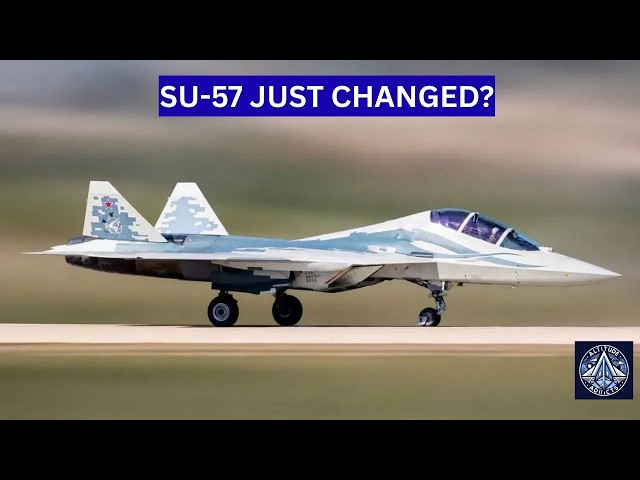
On May 17th, 2026, reports regarding the
0:10
potential introduction of a two seat
0:12
variant of the fifth generation Sue 57
0:15
fighter caused a stir across the Russian
0:18
aviation community. The information
0:20
first appeared through military blogs
0:22
and aviation focused telegram channels
0:25
which claimed that a new aircraft
0:27
modification had already begun. initial
0:30
taxing trials at a factory airfield.
0:33
The topic quickly attracted attention
0:35
both inside Russia and internationally,
0:38
even though the United Aircraft
0:40
Corporation, the Russian Ministry of
0:42
Defense, and Sukcoy have still not
0:44
officially confirmed the reports.
0:47
The reason for the sudden attention is
0:50
actually pretty simple.
0:52
Throughout the entire history of the PAC
0:54
FA and Sue57 program, the public had
0:57
only ever seen a single seat version of
1:01
For years, many aviation observers
1:03
believed that modern fifth generation
1:05
fighters no longer needed a second crew
1:08
member at all. Advanced automation,
1:11
artificial intelligence, integrated
1:13
sensors, and digital flight systems were
1:15
all designed to reduce pilot workload
1:20
But recent developments in drone warfare
1:22
and changing export requirements may
1:24
have altered that equation in a very big
1:27
way. And this is where the story starts
1:30
getting genuinely interesting. The SU57
1:34
is no longer an experimental aircraft
1:36
hidden behind closed hangar doors.
1:40
Serial production of the fighter has
1:41
been underway at the Yuri Gagarin
1:43
aircraft plant in Kamsolks on Amore
1:49
Russia's aerospace forces continue
1:51
receiving new aircraft, while the jet
1:53
itself has become increasingly visible
1:56
during public demonstrations and
1:58
operational deployments.
2:00
The aircraft was originally designed as
2:02
a multi-roll stealth fighter capable of
2:05
air superiority missions, precision
2:07
strikes against ground targets, and
2:10
network ccentric warfare within a fully
2:12
integrated battlefield environment.
2:15
Engineers placed enormous emphasis on
2:18
stealth characteristics, super
2:20
maneuverability, and high levels of
2:24
In theory, this should have eliminated
2:26
the need for a second crew member
2:30
But military aviation has a habit of
2:32
surprising people. In the days of the
2:35
Suee 27 and MIG 29, dual seat trainers
2:39
were considered absolutely essential for
2:41
pilot conversion and combat preparation.
2:45
Today, advanced jet trainers like the
2:47
Yak 130 can perform much of that
2:49
training role without requiring
2:51
dedicated combat trainer variants of
2:54
frontline fighters. Even so, Russian
2:57
aviation history shows that two seat
2:59
aircraft were never created purely for
3:01
instructional purposes.
3:04
Now, here comes the part that Altitude
3:06
Addicts viewers will probably recognize
3:10
at first glance. Having a second crew
3:12
member inside a modern stealth fighter
3:14
sounds outdated, maybe even unnecessary.
3:18
But operational reality tells a
3:20
completely different story. Even with
3:23
sophisticated automation, pilot workload
3:26
in modern air combat remains extremely
3:28
high. A modern fighter jet is no longer
3:31
just an aircraft. It is effectively a
3:34
flying command center packed with
3:36
radars, sensors, electronic warfare
3:39
systems, communication networks, and
3:41
precisiong guided weapons. Pilots are
3:44
expected to monitor airspace, track
3:46
threats, coordinate with allied forces,
3:48
and make split-second tactical decisions
3:51
almost simultaneously.
3:53
Honestly, that is a ridiculous amount of
3:56
information for one human being to
3:58
process at mock speeds.
4:00
This exact philosophy led to the
4:03
development of the sue30. The aircraft
4:06
divided responsibilities between the
4:08
pilot and the weapon systems officer.
4:11
One crew member focused on flying and
4:13
aerial combat while the second managed
4:16
radar operations, tactical coordination,
4:18
weapons deployment, and situational
4:21
awareness. The concept proved
4:23
extraordinarily successful.
4:26
The Sue30 eventually became one of
4:28
Russia's most successful fighter
4:31
India in particular embraced the SUe30
4:34
MKI as the backbone of its combat
4:36
aviation fleet. The Indian Air Force
4:39
considered the second crew member a
4:41
major operational advantage, especially
4:44
during long range and multi-roll
4:47
And then there is the MiG 31.
4:50
Despite the aircraft's age, every
4:52
version of the interceptor remains a
4:56
The second crew member plays a critical
4:58
role in target tracking, long range
5:00
patrol operations, and the deployment of
5:03
advanced weapons systems like the
5:05
hypersonic Kinsol missile. So, no, the
5:08
second seat never really disappeared
5:10
from Russian aviation thinking,
5:13
but drones may be the biggest reason
5:15
this entire conversation is returning.
5:18
Now pilot training is no longer the main
5:21
motivation behind a two seat SUe57.
5:25
The real driver is unmanned aviation and
5:27
the growing concept of manned unmanned
5:29
teaming often shortened to mum t. Russia
5:33
has invested heavily in the S70 Okatnik
5:37
heavy combat drone over the last several
5:39
years. From the beginning, the SUe57 was
5:43
expected to function as the command
5:45
platform coordinating these unmanned
5:49
The concept itself is fairly
5:51
straightforward, at least on paper. The
5:54
piloted fighter acts as the leader while
5:56
accompanying drones operate as
5:58
reconnaissance assets, strike platforms,
6:01
or even additional missile carriers. But
6:04
this dramatically increases the workload
6:06
on the pilot. The pilot must fly the
6:09
aircraft, engage threats, maintain
6:12
situational awareness, and coordinate
6:14
multiple drones all at the same time.
6:17
That is where the second crew member
6:19
suddenly becomes incredibly valuable.
6:22
A second operator could focus almost
6:24
entirely on drone control, sensor
6:27
management, battlefield coordination,
6:29
and tactical data processing while the
6:32
pilot concentrates on combat maneuvers
6:34
and flight operations.
6:36
According to multiple reports, Russia
6:38
may have already proposed exactly this
6:41
concept to India during renewed
6:43
discussions surrounding the 57 program.
6:47
And yes, India sits right at the center
6:49
of this story. The origins go back to
6:52
the FGFA program or fifth generation
6:55
fighter aircraft initiative launched
6:57
jointly by Moscow and New Delhi during
7:01
The project aimed to develop an Indian
7:04
version of the SUe57 tailored
7:06
specifically to Indian Air Force
7:10
India showed strong interest in a dual
7:12
seat fighter configuration almost from
7:15
the beginning. Much of that preference
7:18
came from the Indian Air Force's highly
7:20
positive experience operating the Sue30
7:23
MKI fleet. In many ways, Indian planners
7:27
viewed the second crew member as a
7:29
tactical force multiplier rather than a
7:33
The FGFA project was expected to include
7:36
more than 40 modifications compared to
7:39
the baseline Russian aircraft. These
7:42
included upgraded avionics, customized
7:44
communication systems, Indian weapons
7:46
integration, and potentially a dual seat
7:49
layout. But then things started becoming
7:53
Actually, complicated might be putting
7:57
India eventually raised concerns
7:59
regarding stealth performance, radar
8:02
capabilities, engines, and the overall
8:04
maturity of the program. In 2018, New
8:08
Delhi formally withdrew from the FGFA
8:10
project. However, conversations about
8:13
future cooperation never completely
8:17
By 2025 and 2026, discussions reportedly
8:22
began gaining momentum again. India
8:24
remains increasingly concerned about
8:27
China's expanding fleet of fifth
8:29
generation fighters, including the J20
8:31
and the emerging J35.
8:34
Meanwhile, India's own AMCA stealth
8:37
fighter program continues progressing
8:39
relatively slowly. According to reports
8:42
circulating in Russian media, Moscow has
8:45
now begun offering a much broader
8:47
partnership package. That package could
8:50
include local production, software
8:52
access, technology cooperation, and even
8:54
a dedicated two seat export variant,
8:57
sometimes referred to unofficially as
9:02
Whether those negotiations actually
9:04
succeed is another question entirely.
9:07
But here is where the story becomes even
9:09
bigger than India or exports.
9:12
Military planners around the world are
9:15
increasingly focused on sixth generation
9:19
These future systems are expected to
9:21
involve piloted aircraft controlling
9:23
entire swarms of drones across highly
9:28
The United States is already pursuing
9:30
these ideas through programs like ENGAD
9:33
and collaborative combat aircraft. China
9:36
is also conducting extensive research
9:39
into integrating drones directly into
9:41
future air combat ecosystems.
9:44
Russia clearly does not want to be left
9:49
In that context, a two seat SU57 starts
9:52
making a lot more sense. The aircraft
9:55
could serve as a transitional platform
9:57
between today's fifth generation
9:59
fighters and tomorrow's sixth generation
10:04
The second crew member would transform
10:06
the aircraft into something much closer
10:08
to an airborne command center.
10:11
That role would extend far beyond simple
10:14
drone control. The second operator could
10:17
manage reconnaissance missions,
10:18
electronic warfare operations, strike
10:21
coordination, and network ccentric
10:23
battlefield integration.
10:25
In other words, the fighter itself would
10:28
become a central node within a much
10:30
larger combat system.
10:32
And this is exactly the kind of shift
10:34
Altitude Addicts has been tracking for
10:37
years now. Future combat aviation
10:40
increasingly appears to be moving away
10:42
from isolated fighter aircraft and
10:44
toward interconnected combat ecosystems
10:47
where humans and drones fight together
10:49
as coordinated teams.
10:52
So the obvious question remains, is the
10:55
aircraft actually real?
10:57
Right now, nobody outside official
11:00
Russian defense circles can say for
11:02
certain. Rumors surrounding a two seat
11:05
SUe57 have existed for years. Russian
11:09
officials never completely ruled out the
11:13
but until May 2026, there had been no
11:16
publicly known photographs, no credible
11:18
test reports, and no evidence suggesting
11:21
that a prototype had actually reached
11:25
If the reports are eventually confirmed,
11:28
the implications could be enormous.
11:31
It would signal that Russia is not only
11:33
focused on domestic military
11:35
requirements, but is also aggressively
11:37
targeting export opportunities where two
11:40
seat heavy fighters remain highly
11:44
It would also confirm that collaboration
11:46
between piloted aircraft and unmanned
11:48
systems is becoming central to the
11:51
future of aerial warfare.
11:53
Right now, the story still lives mostly
11:55
in the world of rumors, leaks, and
11:58
aviation speculation.
12:00
But the sheer intensity of the
12:02
discussion suggests something important.
12:05
The era in which a single pilot was
12:07
expected to control every aspect of
12:09
modern air combat alone may finally be
12:12
approaching its limits.
12:14
And honestly, that possibility alone
12:16
makes the rumored two seat 257 one of
12:20
the most fascinating aviation stories of
12:27
If you like this video, please like,
12:29
share, and subscribe the channel. Please
12:32
also take the channel membership to
12:34
encourage us. Last but not least, please
12:37
hype this video if you're watching on a