Up next in 10

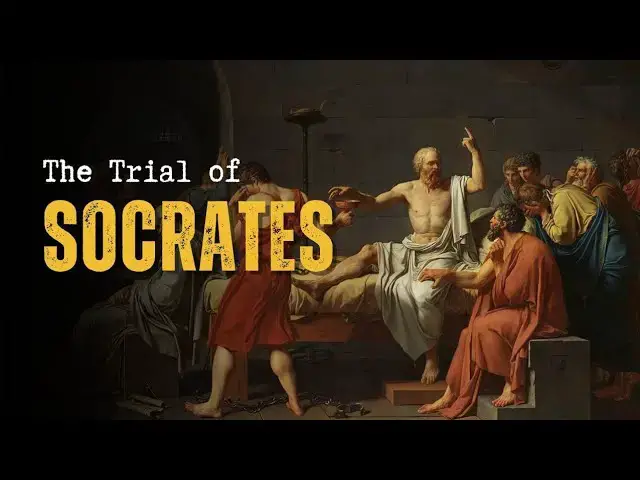
The Trial of Socrates: When the punishment of philosophy was death #law #philosophy #death #history
Dec 21, 2025

The Trial of Socrates remains popular because it's a timeless drama about truth vs. power, free speech vs. censorship, and the individual vs. the state, featuring a charismatic philosopher challenging Athenian democracy's foundations, all masterfully documented by Plato, making it a mirror for ongoing debates about justice, dissent, and intellectual freedom. It's a foundational story about a society killing its best mind for asking uncomfortable questions, embodying themes of martyrdom, corruption, and the tension between law and morality.
Socrates' relentless questioning of Athenian values and gods exposed the ignorance of the powerful, making him a threat to the democratic establishment that had just lost the Peloponnesian War.
The narrow jury vote (280-221) highlights how easily a small majority can condemn someone, making the story a powerful cautionary tale about mob mentality and the fragility of justice.
In frame: Vaibhav Agrawal, International Trade Lawyer
DISCLAIMER: THE INFORMATION PROVIDED IN THIS VIDEO IS FOR EDUCATIONAL AND INFORMATIONAL PURPOSES ONLY. ALL CONTENT HAS BEEN COMPILED FROM OPEN AND PUBLICLY AVAILABLE SOURCES., WHILE EVERY EFFORT HAS BEEN MADE TO ENSURE ACCURACY, JUST BE LAWGICAL, COMMERCYON, AND THE SPEAKER DOES NOT MAKE ANY WARRANTIES OR REPRESENTATIONS REGARDING THE COMPLETENESS, CORRECTNESS, OR RELIABILITY OF THE INFORMATION SHARED. THE CONTENT DOES NOT CONSTITUTE LEGAL ADVICE, AND VIEWERS ARE ADVISED TO CONSULT A QUALIFIED LEGAL PROFESSIONAL BEFORE TAKING ANY ACTION BASED ON THIS VIDEO. JUST BE LAWGICAL, COMMERCYON, AND THE SPEAKER SHALL NOT BE HELD RESPONSIBLE OR LIABLE FOR ANY LOSS, DAMAGE, OR CONSEQUENCES ARISING FROM RELIANCE ON THE INFORMATION PROVIDED HEREIN.
#law #legal #education #legaleducation #trending #socrates #news
Show More Show Less View Video Transcript
0:00
So greetings to one and all and welcome
0:02
to another episode of just be logical
0:06
history. So uh as per the request of
0:10
many of you law enthusiasts and students
0:13
across the nation uh today we are going
0:15
to discuss a very very very imperative
0:18
topic and personally if you are a legal
0:22
enthusiast or a law student
0:26
or subject the trial of so let's begin
0:33
and please subscribe to the channel, hit
0:37
the bell icon for more notifications and
0:45
so see when we are talking about this
0:47
trial of socrates there are many
0:50
pronunciations to it. Now some call it
0:52
so some call it uh sukrites but so is
0:56
what I would be pronouncing as uh see
0:59
this is very very important when it
1:01
comes to the legal history because you
1:05
know this comes from uh you know after
1:09
the defeat at the hands of Sparta and we
1:12
are talking somewhere in the 399 BCE so
1:15
this trial was a very very important
1:17
trial so let's understand what was it
1:19
exactly now what happens is after the
1:23
athens got defeated you know by Sparta
1:25
in the uh the peloponyian war that is
1:29
somewhere in 431 to 404 BC. See not only
1:33
the Spartans and athens uh you know the
1:36
Spartans and Athens were the military
1:38
rivals during you know these particular
1:40
years but they also had a radically very
1:43
different form of government. This is to
1:44
be understood. Now why is that so?
1:47
Because when we talk about athens, we
1:50
need to understand that it was a
1:51
democracy.
1:53
So all the male citizens who were
1:55
adults, see they were members of the
1:57
assembly and many of these offices of
2:00
the cities, you know, they were filled
2:02
by lot. All right? Because when it comes
2:06
to elections, they were regarded as
2:09
undemocratic.
2:10
And why so?
2:13
See because you know they were
2:14
pronounced by some citizens you know
2:17
better qualified than the others. All
2:19
right. So the citizens in the citizens
2:22
of uh you know this uh the citizens of
2:25
Athens as we speak you know they enjoyed
2:28
a very very exponential degree of
2:31
freedom to speak to live the way they
2:33
liked and you know all of that but
2:37
provided that they are obeying the laws
2:39
the rules the regulations and
2:43
they did absolutely nothing to undermine
2:45
the democracy and the public good. This
2:48
was about 8. But when we look at the
2:50
flip side, when we look at the other
2:52
side of the coin when you talk about
2:53
Sparta. All right? So Sparta was
2:57
absolutely a mixed regime. Why? Because
2:59
it was based on a very very complex
3:02
arrangement. Because why? There was a
3:05
see there was a power sharing between
3:06
whom? The ordinary citizens and you know
3:09
many of the elite groups which are a
3:11
part of it. and it exerted far more
3:15
control than what aans did over uh you
3:18
know the daily life or the education of
3:20
the citizens.
3:23
Now when we talk about athens
3:27
see particularly to be considered among
3:29
the well-born young you know a degree of
3:32
admiration for certain aspects of you
3:34
know Spartan life and government all all
3:36
wealthy you know so these young men and
3:41
they had spent most of their time you
3:43
know in these public gymnasia
3:46
and you know they had been prided
3:48
themselves on the you know their their
3:50
their toughness and all of that.
3:53
And obviously they practiced a certain
3:55
simplicity of style as well. Long hair,
4:00
you know, all in the imitation of
4:03
Spartan ways.
4:06
And from where does this come from? This
4:09
is coming from the Xenon and the Plato.
4:13
So no doubt the fact that Athens was an
4:18
empire building city and there were you
4:20
know vast resources and you know a huge
4:23
huge population and it could not defeat
4:26
you know smaller and I would say back
4:29
then a bit low on the economic side when
4:31
it come to when it came to Sparta and in
4:34
the end what happened is we all know
4:37
lost it lost its empire to the rival
4:39
regime and that added to the allure of
4:42
the Spartan politic ical system.
4:46
These ordinary, you know, Athenians, you
4:49
know, people had to work for a living
4:52
and did not really belong to any of the
4:55
aristocratic families. They were proud
4:56
of their democratic institutions. Damn
4:58
it.
5:00
Because and they were also enjoying a
5:02
lot of freedom as well.
5:04
So they were well aware that their form
5:07
of government had internal and external
5:10
critics as well as enemies. Furthermore,
5:13
see, let's be very pragmatic.
5:15
They never thought of civic and
5:18
religious matters as separate spheres.
5:20
Okay? Why? Because they were assuming
5:24
instead that the participation of a
5:27
spiritual religious life of the city is
5:31
as regulated by democratic institution
5:33
was one of the duties of all the
5:34
citizens.
5:36
Why
5:38
that great harm could come to the city
5:40
if the gods it recognized were offended.
5:43
So naturally
5:47
or even when you say when the customary
5:49
religious prohibitions were violated.
5:54
All right.
5:57
Now during or let me say soon after the
6:01
war with Sparta
6:03
there are several events which reveals
6:05
that how much damage could be done to
6:08
Athenian democracy by the individuals
6:11
who did not respect the religious
6:12
customs of the community and who had no
6:15
allegence to the you know the the the
6:18
so-called institutions of democracy or
6:21
even let's say those who were admiring
6:23
the adversary of the you know the city's
6:25
adversary
6:28
Now let me take you to 1415
6:32
one fine night
6:34
just very short before a you know major
6:38
naval expedition to uh you know Sicily
6:43
was to sit sail many statutes of the god
6:48
Hermas you know who protected the
6:50
travelers they were mutilated they were
6:54
mutilated
6:56
presumably by those who wish to prevent
6:58
you know the expedition from proceeding.
7:01
And while the matter was being
7:02
investigated you know there were many
7:04
many many mens including one of the
7:07
Socrates
7:08
greatest admirers
7:11
who had sponsored and helped to lead the
7:14
Sicilian expedition. They were accused
7:17
of mocking the religious ceremony and
7:19
also revealing the you know revealing to
7:23
the outsiders what the sacred secrets.
7:26
So some of them
7:29
they were tried and they were executed
7:31
also.
7:34
So this is where the entire thing comes
7:35
into picture.
7:38
So this Socrates, one of the greatest
7:41
admirers of Socrates,
7:44
what happened with this person? He had
7:47
been charged with the involvement in
7:49
other religious scandals before also.
7:53
He was called back from Sicily to face
7:55
the trial. The power of his enemies and
7:58
the suspicion of him was so great that
8:02
you know he decided to escape the escape
8:04
Sparta rather than return to Ethnes to
8:06
face the likelihood of death sentence.
8:09
That is the capital punishment.
8:11
And naturally an condemned
8:16
his associates to death in absentia
8:19
and he proceeded to offer council and
8:22
leadership to Sparta in in its fight
8:24
against Athens.
8:27
be simple.
8:29
In 407 what happened is he returned to
8:31
Aans and he was cleared of the charges
8:34
against him
8:36
and though he never fully you know
8:39
regained and the trust obviously
8:48
same
8:51
but he did not fully gain the trust
8:54
either of the opponents or of the
8:56
Democrats.
9:01
Now what happened is in 1411 a group of
9:04
these 400 opponents of Ethanian
9:06
democracy you know they stage a coup
9:09
they stage literally a coupe and they
9:10
tried to install a oligarchy
9:14
the oligarchy they they were trying to
9:16
install this but they were overthrown in
9:19
the same year and democracy was restored
9:21
simple as that some of them obviously
9:23
who were you know associates of this
9:25
gentleman Socrates they went into exile
9:27
and you know after their revolution had
9:29
absolutely failed and disastrously
9:31
failed.
9:33
So after the Athenians defeat now the
9:36
Sparta they had installed a group of
9:39
late around 30 men all right these were
9:43
the same people who were later somewhere
9:46
dubbed as the uh you know the 30 tyrants
9:49
okay in the Athens to establish a far
9:51
less democratic regime there.
9:55
Now the leader of the most extreme wing
9:57
of this group was Critius.
10:00
Now he was part of the Socratic circle
10:05
and along with him was Charmites. He was
10:08
another of the 30. So the democrats many
10:12
of whom who had left a 30 came to the
10:15
power they defeated them in battle and
10:17
democracy was restored in the form as
10:19
simple as this.
10:23
So this is basic of what had happened
10:27
then.
10:29
Now when we talk about the perceived
10:32
fragility of the Athenian democracy, you
10:34
see the year in which Socrates was
10:36
prosecuted that is 139 399 was one of
10:40
was one in which you know the several
10:42
other prominent figures were brought to
10:43
trial in a on the charge of impity.
10:47
that is unlikely to have been a
10:49
coincidence rather you know because see
10:52
it suggests that there was a sense of
10:55
anxiety about the dangers of the
10:58
religious unorthodoxy and about the
11:00
political consequences that the
11:02
religious deviation could bring and as
11:06
we see in history two attempts to put an
11:08
end to ethnanian democracy had occurred
11:10
already in the you know the recent days
11:11
and the religious scandals of 415 were
11:14
not so far in the past as they could
11:16
have you know been forgotten
11:20
because a general amnesty had been
11:22
negotiated
11:24
that no one except the 30 and a few
11:27
others could be tried for offenses
11:29
committed prior to 403. So when the 30
11:31
were defeated but this would have this
11:35
would have not have prevented an you
11:37
know accusation from being brought
11:39
against someone who committed a crime
11:41
after 403 or
11:48
after 403
11:51
engage in the same practices you know
11:54
that was so characteristic of him
11:58
throughout his adult life.
12:00
To be very honest enough, not even the
12:04
most ardent supporters of the amnesty
12:06
would have objected to bringing him to
12:08
trial.
12:11
Once a trial had begun, it was common
12:13
practice for prosecutors to mention
12:15
anything that might be just prejudicial
12:18
to the accused. This is a very important
12:20
point to note.
12:22
There was no legal custom or
12:24
courtappointed judge that you know would
12:26
have prevented that would have prevented
12:28
Socrates's accusers from referring to
12:30
those of his admirers.
12:42
hadn't been associated with religious
12:43
scandals.
12:45
So the law that socrates was alleged to
12:47
have violated was law against impity but
12:50
in support of that execute uh in support
12:52
of that uh you know accusation he also
12:54
was accused of having corrupted the
12:56
young. So his jury might have taken the
13:00
association with opponents of the
13:01
democracy or let's say with persons
13:04
convicted or suspected of religious
13:06
crimes obviously to be you know the the
13:09
the sure grounds for considering him as
13:11
a dangerous man. But here the important
13:14
point is the fact that one of those who
13:17
assisted in the prosecution of Socrates
13:21
spoke against him
13:24
and it is he was a bloody prominent
13:27
democratic leader makes it all the more
13:30
likely that worries about the future of
13:32
Ethanian democracy lay you know that lay
13:34
behind Socrates trial and even if let's
13:37
say neither nor the other prosecutors
13:41
they were you know like on There were
13:43
militus you know harbored such fears. It
13:46
is hard to believe that they were in
13:48
totality absent from the minds of those
13:50
who heard this case
13:54
because in any of the possibilities
13:56
because Socrates openly displayed his
13:59
anti-democratic ideas in his defense
14:01
speech. It would have been extremely
14:04
impossible for jurors to set aside his
14:07
association with the opponents of the
14:08
democracy.
14:12
Now it is not really known you know
14:15
there's no certainty that those who
14:17
prosecuted so mentioned Aliceates you
14:21
know and critias at his trial there is
14:24
no record of their speeches to be very
14:25
very honest or you know in the open
14:28
sources at least and it is difficult to
14:29
whether the interpretation also becomes
14:31
difficult that the evidence about what
14:34
they said but applying the common sense
14:37
is it is very likely
14:40
that specific names were certainly
14:42
mentioned and you can have the reference
14:45
of Plato's apology. Socrates notes that
14:48
his accusers alleged of certain
14:51
individuals that they that you know they
14:53
were his students. An accusation he
14:56
lamely denies on the ground that because
14:59
he has never undertaken to teach anyone
15:01
he cannot have students.
15:04
And Zenopon reports that according to
15:07
the accusers
15:09
you know the critias and the alibi they
15:12
were the followers of Socrates. The word
15:15
accuser
15:17
as considered by some of these scholars
15:19
to be a reference to one of the three
15:21
persons who spoke against Socrates
15:24
though others take you know xenophon to
15:26
be you know defending uh Socrates
15:30
against the charges made against him in
15:32
a pamphlet written several years later
15:34
by polycrates who was a teacher in
15:37
rhetoric.
15:39
in any event. See many years later in
15:41
the 4th century the orator one of the
15:44
orators in his speech you know he
15:46
asserted that and this was in public
15:49
that so was convicted because he was
15:52
shown to have been the teacher of critus
15:54
one of the 30 who had overthrown the
15:56
democracy
15:59
but even if we establish the association
16:01
with
16:04
Alibiads was an important factor leading
16:06
to his trial and conviction as well. All
16:09
right, these are the things because
16:13
Socrates was prosecuted because of his
16:15
religious ideals ideas and political
16:17
association
16:19
that indicates how easily an ideal uh
16:22
held dear by his fellow Athenians
16:25
Athenians the ideal of open and frank
16:28
speech among citizens could be set aside
16:31
when they felt insecure. So this ideal
16:33
and its importance in athens are well
16:36
illustrated by the remark of the orator
16:39
deosthenis
16:41
that in athens one is free to praise the
16:44
spartan constitution but in sparta it is
16:47
only the spartan constitution that one
16:50
is allowed to press.
16:53
Were the were there other instances
16:56
beside the trial of Socrates in which an
16:58
Athenian Athenian was prosecuted in
17:01
court because of dangerous ideas he was
17:03
alleged to have circulated?
17:05
Do you think so? centuries after so
17:08
there's several you know these these
17:10
authors the elies that you know many
17:11
other intellectual figures of this time
17:13
they were you know they had the the
17:16
protagoras the uh you know the demons
17:19
the aspas
17:22
so they were exiled or prosecuted simple
17:24
as that
17:27
now according to Plato's apology the
17:29
vote to convict Socrates was very close
17:32
had 30 of those who voted for conviction
17:34
cast their ballots differently he would
17:36
have been acquitted means freed. It is
17:41
reasonable to speculate that many of
17:42
those who opposed conviction did not
17:45
partly because however little they cared
17:48
for you know what Socrates thought and
17:51
how he lived. They cherished the freedom
17:53
of speech enjoyed by all ethnians and
17:56
attached more importance to the aspect
17:57
of the political system than to harm the
18:00
Socrates
18:02
than to harm Socrates may have done in
18:05
the past or might do in the future. So
18:08
the ethnanian love of free speech
18:10
allowed so to casual and criticize his
18:14
fellow citizens for the whole of his
18:16
long life but gave away when it was put
18:19
under great pressure.
18:23
very simple as that and it is not
18:25
surprising that there are significant
18:28
differences between Plato's and
18:29
Xenopon's accounts of what was said in
18:32
the trial but anyway it would be a
18:34
separate story altogether
18:36
and if we get into all of that then it's
18:38
going to be a huge huge huge huge debate
18:40
in a way
18:43
see any of the events the historical
18:46
accuracy of Plato's apology should not
18:48
be the only question on you know the the
18:51
listeners or the evaluator's mind. Of
18:54
equal importance is whether Plato's
18:57
socrates really is guilty of the charges
18:59
brought against him. Whether he is a
19:01
wholly just and admirable person
19:04
whether his manner of living is one of
19:06
that is most worthwhile and whether
19:08
there is any reason for a political
19:10
community to be concerned about the harm
19:14
such a person might do. Surely the last
19:16
thing Plato would have wanted his uh you
19:19
know dear readers to do with the apology
19:21
is to ignore its philosophical religious
19:23
or the political dimensions in order to
19:25
con you know concentrate solely on its
19:27
accuracy as a piece of historical
19:30
reputage
19:33
and we are well aware of the public's
19:35
hatred for so as well
19:41
but this can only be the beginning of so
19:44
explanation. And see for it leads to the
19:47
further questions why why should you
19:49
know the aristophans have written uh the
19:52
way they did for Socrates would not be
19:54
discussing this now
19:57
but the latter must have been a
19:59
well-known figure in 423 when clouds was
20:02
produced
20:04
these people typically wrote about and
20:06
mocked the figures who already were
20:08
familiar to his audience furthermore if
20:10
as if if as so claim many of his jurors
20:13
had heard him in discussion and could
20:16
therefore confirm for themselves that he
20:19
did not study or teach others about
20:20
clouds, air or other such matters and
20:23
did not take a fee as the sophists did
20:28
then why did they not vote to acquit him
20:31
of the charges which were over which
20:33
were you know by an overwhelming
20:34
majority. So, so provides answers to
20:36
these questions long before the
20:38
aristophans wrote about him.
20:41
He had acquired a reputation among his
20:43
fellow citizens because he spent his
20:45
days attempting to fulfill his divine
20:47
mission to cross-examine
20:50
these these ones cross-examining them
20:52
and to puncture their confidence belief
20:54
that they possess knowledge of the most
20:56
important matters. So, Socrates tells
20:58
the jurors that as a result of his
21:00
inquiries, he has learned a bitter
21:02
lesson about his fellow citizens. That
21:03
not only do they fail to possess the
21:06
knowledge they claim to have, but they
21:08
resent having his fact this fact pointed
21:11
out to them and they hate him for his
21:14
insistent
21:16
and for his insistence that his
21:18
reflective way of life and his disavo of
21:23
knowledge make him superior to them. The
21:25
only people who delight in this in his
21:28
in his conversation are the young and
21:30
wealthy
21:31
who have the leisure to spend their days
21:34
with him. These people imitate him by
21:38
carrying out their own cross-examination
21:39
of others.
21:43
This is very very important aspect of
21:46
this
21:47
particular system.
21:50
And so's analysis of hatred
21:54
he has incurred is you know that he has
21:57
incurred is one of one part of a larger
21:59
theme that he dwells you know on
22:02
throughout his speech. Athens is a
22:05
democracy
22:06
correct where you know many are dominant
22:10
power in you know politics and it can
22:12
therefore be expected to have all the
22:15
vices of the many because most people
22:18
hate to be tested in argument. They will
22:20
always take action of some sort against
22:24
those who provoke them with question.
22:26
But that is not the accusation Socrates
22:29
brings forward against his city and
22:30
politics.
22:33
He tells his democratic audience that he
22:36
was right to have withdrawn from
22:37
political life because a good person who
22:40
fights for justice in democracy will be
22:42
killed. Very important.
22:46
Many today relate to this.
22:50
In his cross-examination of militus as
22:53
we know he insists that only a few
22:55
people can acquire the knowledge
22:57
necessary for improving the young of any
22:59
species and that the many will
23:01
inevitably do a poor job. He criticized
23:04
the assembly for its legal actions and
23:07
the ethnians
23:09
the ethnians court for the ease with
23:12
which matters of justice are distorted
23:14
by emotional pleading.
23:17
to Socrates implies that the very nature
23:20
of democracy makes it corrupt political
23:23
system. Bitter experience has taught him
23:26
that people rest content with a
23:28
superficial understanding of what you
23:31
know of of the most urgent human
23:33
questions. When they are given greater
23:36
power, their shallowess inevitably leads
23:38
to injustice. As simple as this.
23:42
And there cannot be back then any any
23:45
you know arguments
23:49
back then and time as I speak. So these
23:53
subjects are of absolute importance to
23:57
be taken care of and to be read by you
23:59
know the legal enthusiasts.
24:02
See when we talk about the 19th century
24:03
Socrates was regarded as a similar
24:06
figure in the evolution of the European
24:08
thought or as a Christlike Herald of a
24:12
higher existence.
24:15
Scholars like GW of Hegel saw Socrates
24:21
you know as a decisive turn from the
24:23
pre-reflective moral habits to a
24:25
self-consciousness. Obviously that
24:27
tragic you know that tragically had not
24:29
yet learned how to reconcile itself to
24:31
universal civic standards.
24:35
There have been desertation examined
24:38
Socratic irony found in the Socrates a
24:41
pagant you know a pagan anticipation of
24:44
his belief that Christianity is a lived
24:46
doctrine of almost impossible demands
24:49
but he you know but these scholars also
24:52
regarded you know the socritic irony as
24:55
a deeply flawed indifference to
24:58
morality.
25:00
Frederick himself had struggled
25:02
throughout his writings against the
25:04
one-sided rationalism and the
25:06
destruction of cultural forms that he
25:09
found in Socrates. And hence this
25:11
becomes a very very important subject
25:13
and a very very important to be studied
25:15
my dear legal enthusiasts and law
25:16
students understanding so reading the
25:20
arguments the his trials is of utmost
25:23
importance for all of us. These
25:27
historic texts and trials give us a very
25:31
very in-depth understanding of how the
25:34
modern laws that today we have in hand
25:36
that today we possess came into being.
25:40
So I hope there would have been a lot of
25:42
takeaways from this particular topic of
25:45
so crates
25:47
and if you want to read more about so we
25:50
have an article given uh you know on our
25:53
website commercial you can check the
25:54
description for the link
25:57
and if you feel that we should be
25:59
covering some different topics as well
26:01
in future comment
26:04
share this video with all the legal
26:06
enthusiasts and the law students you
26:08
know who are history enthusiasts as
26:11
well. And if not, let's be trends
26:13
sitters. Let's do what is necessary and
26:16
let's be curious. Let's be logical.
26:20
Stay tuned for more videos, subscribe to
26:23
the channel. And if you want to check
26:24
out our courses and you know such
26:27
interesting tales, such interesting
26:30
blogs, check out the com website right
26:32
away. Have a good day. Take care.
26:34
Bye-bye.
#Human Rights & Liberties
#Public Policy
#Constitutional Law & Civil Rights