Up next in 10



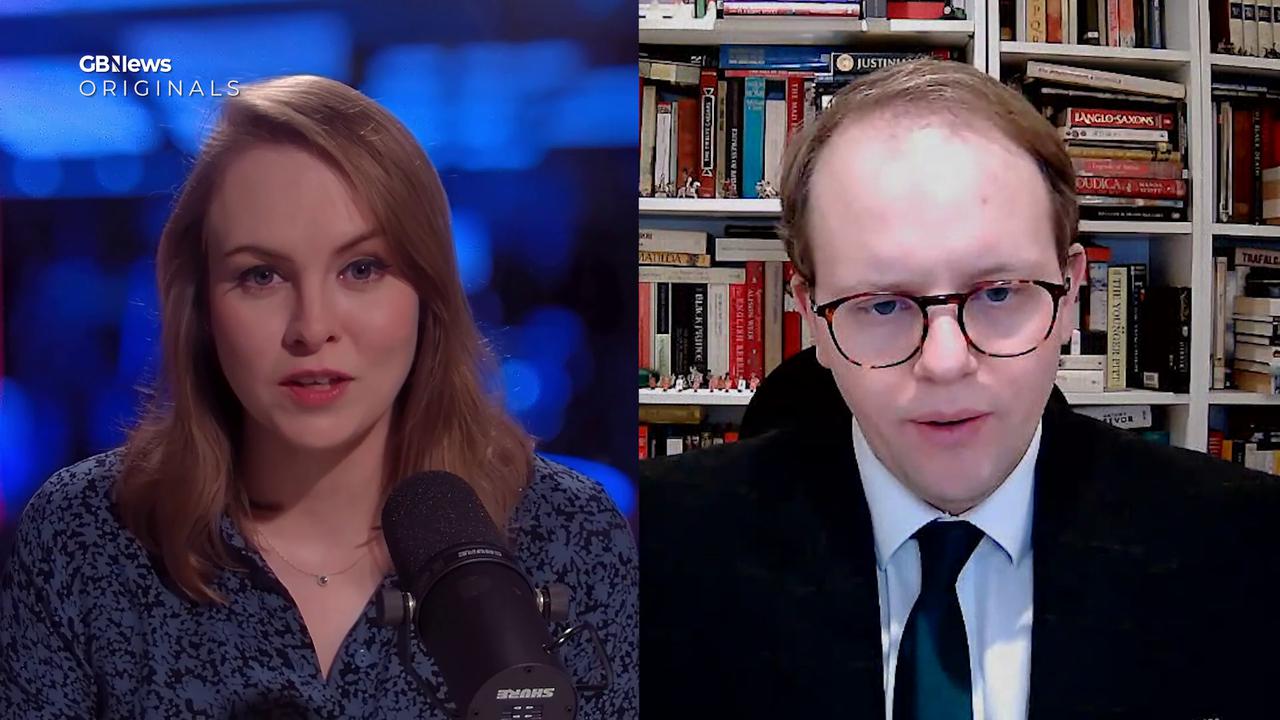
Ben Jones of the Free Speech Union joins GB News star Emma Trimble to discuss the growing controversy over recent arrests in Britain for burning the Koran. As police rely on public order legislation rather than explicit religious protections, they explore whether the law is being used to shield beliefs from offence rather than people from harm. The conversation raises serious questions about equal treatment under the law and the future of free expression in the UK.Watch the full interview above.
Show More Show Less View Video Transcript
0:00
Yet another person has been arrested for burning a Quran and it's really starting to look like British people are living under a de facto blasphemy law
0:11
I'm Emma Trimble and this is GB News Originals. And today I am joined by Ben Jones from the Free Speech Union who has been representing this gentleman who's recently been arrested for burning a Quran
0:24
So Ben, tell us a bit more about this case and exactly what happened
0:27
Well, this is one of three cases of Quran burning that has taken place in the last couple of years in Britain, which has resulted in police action of some kind or prosecution
0:40
Now, in this case, we're talking about a man called Deir. He was and is a refugee who came to Britain about three years ago
0:49
He is a former Muslim who converted to Christianity, and he's from Iraq
0:56
He came here and was settled in Bradford, and he decided as a religious and political protest to burn his own copy of the Quran
1:06
And he posted a video of this on social media. And as a result of this, the Bradford police force arrested him, told him he was going to be charged with a hate crime
1:17
and began the process of trying to have him prosecuted. And as in the other cases we've seen
1:24
tried various means by which to bring back to life and resurrect blasphemy laws
1:30
which, as you know, we don't have in Britain any longer. But we don't have them in law
1:37
but it is starting to look as if we have them in fact
1:41
I mean, this guy, as I understand, was he had pretty serious bail conditions put on him
1:47
stopping him from going on social media. I know in the interview that you did with him for the Free Speech Union
1:53
he said that he feels like he's still in Iraq. Surely he is well within his rights to be able to protest in this way
2:01
to burn a Quran that is his own possession. Is this just a case of the police actually effectively making up the law
2:09
They're enforcing a law that isn't actually on the books. Yes, that's exactly what's going on. And we're seeing this time and time again with the British state now attempting to construct some new blasphemy law without actually having to go through the trouble of introducing one in Parliament
2:28
And so we do have a situation where technically there is no law prohibiting blasphemy. In practice, as you say, the police are going to treat Koran burning incidents as though they are criminal matters
2:41
and in Deir's case, as you say, he was given these bail conditions
2:45
So we're talking, obviously, before any court has made any decision about what's going to happen to him
2:51
he was told that he could not post at all on social media
2:55
and this lasted for six months, that he could not make any religious posts
2:59
or make any religious comments on social media. So an outrageous infringement on his right to freedom of speech
3:07
and that's entirely just the police making that determination for themselves and the
3:11
free speech union did manage to get that lifted and in the end I mean Dea's story does have
3:16
something of a happy ending in that we did manage to get the entire process halted and so he was not
3:23
prosecuted but it took a long time to get to that point with Bradford police trying to find some way
3:29
to prosecute him for burning a book. But isn't the process the punishment because this is still
3:35
going to deter people from burning Qurans. And we have a government that is willing to use human
3:41
rights legislation to stop us from deporting foreign criminals who shouldn't be here. And yet
3:47
this man, even just in his bail conditions, by having restrictions put on his freedom to express
3:53
himself, especially to express himself religiously, surely this is a grievous trespassing on his human
4:03
rights on his right to freedom of expression, his right to freedom of religion in the UK
4:07
Why would you offer sanctuary to people here in the UK if when they come here, they're subject to
4:14
the same sorts of persecution and punishment that they would receive in another country
4:20
in a Muslim country, for criticising Islam or for protesting against Islam
4:25
Well, I'm afraid that's absolutely right. And in Deo's case, he said that it felt
4:30
as you said, that he was still in Iraq. With one of the other Quran burning cases that the
4:37
Free Speech Union has been defending, this is the case of Hamit Koskin, another refugee at this time
4:42
from Turkey. He wrote in The Spectator that if he had known that this would have happened, he would
4:48
have thought twice about coming. Perhaps we'll come on to his story. It's even more frightening
4:53
I think, the way in which he was prosecuted, that he would have thought twice about coming to Britain
4:58
And I think for these people particularly coming to Britain to escape religious persecution, and obviously there is a good deal of scepticism about people using conversions to Christianity as a pretext to gain entry or to get refugee status
5:17
In these cases, I think we can be absolutely certain that somebody like Deir is a genuine convert to Christianity and to do something as, well, as startling as burning a Koran
5:29
I mean, it doesn't really get more convincing than that, that you've left Islam behind
5:35
And instead of finding a country which protects their human rights, they find that they are being prosecuted and being held by the police for 12 hours in Deir's case
5:44
But they have these outrageous bail conditions placed on them. It seems completely topsy that you have this situation where those who are coming here who are genuinely being persecuted who would be genuine refugees who are the most likely to integrate into British society and to appreciate our liberties are the ones who would be dissuaded from coming here
6:04
And actually, those who might be more extreme in their religious and political opinions might see Britain as a safe harbour for them to come because Britain is more likely to protect them from having their religion offended against
6:18
So what do you think of the government's continuous recycling of the idea of defining Islamophobia, whether they call it an Islamophobia definition or whether they call it anti-Muslim hate
6:31
Do you see this as effectively turning the de facto blasphemy law into a du jour blasphemy law
6:39
I think it's going to be another crucial moment in the story that's been going on for longer than our lifetime since the satanic verses of Islam curtailing freedom of speech in Western countries in Britain
6:57
And I think the Islamophobia definition will be another critical moment in that story in which speech about Islam, speech that is critical of Islam, is made even more difficult and where people are even more likely to be punished or to undergo some immensely stressful process that is in itself the punishment for their views about Islam
7:24
we'll have to see what the definition says but in the view of the free speech union such a definition
7:32
is is clearly totally unnecessary and is only going to do harm to the speech rights and to
7:40
curtail the speech rights of people who do want to express what should be perfectly lawful criticisms
7:45
of islam and teachings what would you say to those critics who who might say
7:51
an anti-Muslim hate definition or an Islamophobia definition is just about protecting Muslims
7:59
It's not about silencing people's freedom of speech to criticise Islam. I think it's a terribly naive argument. I think it's a terribly naive argument
8:09
And I think if we're talking about crimes that are motivated by hostility or bigotry
8:19
or racism towards particular Muslim groups and communities. The law clearly already deals with those matters
8:29
and there's no benefit to protecting the victims of crimes of that sort
8:34
in having a sort of official but non-statutory definition of Islamophobia or anti-Muslim bigotry
8:45
On the other hand, it's going to do an immense amount of further harm to freedom of speech in this country
8:52
So we obviously don't currently have this definition. We don't currently have a blasphemy lot on the books, although I know Tahrir Ali, the MP, was explicitly calling for one two years ago, I think it was now
9:05
In the meantime, people are obviously being arrested for what is de facto regarded as blasphemy, for burning Korans, for saying things about Islam, perhaps that the state thinks that they shouldn't be
9:19
What are these people being charged with? Because if they are being convicted for crimes, they must be convicted for something that is actually on the books
9:29
So what law is it that they're actually falling foul of? And what is the problem with that law that is allowing it to be applied in this expansive way that is actually, you know, trespassing on people's right to freedom of expression
9:43
Well, it's a really interesting question. In Deo's case, I do stress he was not charged, but I think only because the FSC had a really brilliant solicitor helping him. The attempt hinged on the Public Order Act 1986 and the idea of behaviour likely to cause harassment, alarm or distress, and also the Crime and Disorder Act of 1998
10:11
um what's interesting about that if i could just take the public order act first 1986
10:17
as they were talking about um thatcher government um i i found a quote when doing some research uh
10:24
for book into this area uh from margaret thatcher who was talking about uh salmon rashti and satanic
10:31
verses um in which she says that they're uh that whether or not here it is whether or not we have
10:37
any sympathy with Rashid's views is not the point. We must react strongly to any state murder hunt
10:42
made against one of our citizens. And here we are, four decades or thereabouts later
10:51
in which a piece of legislation from that time is being applied explicitly to further the goals
10:58
of people who, via lawfare or state-sponsored assassination or intimidation, are trying to
11:05
stop people criticizing Islam. It opens up a whole other can of worms there, doesn't it? Because
11:12
he had these bail conditions set on him, despite the fact that he wasn't charged with anything. I
11:19
think most people would think that that itself was egregious. So going back to that Satcher quote
11:25
there, it's obviously being used for exactly the opposite for what it was intended
11:30
why are we doing this? Why is the British state why is law enforcement
11:36
why is the justice systems I know the CPS continued to to go after Koskyn even after he would have been successful in appealing his conviction Why is it that the institutions of British society are doing this
11:54
Well, what really is most startling, perhaps, about both Dayer's case and the case of Hannah Koskyn
12:00
is in both of those stories, these men have faced attempts to do them very serious harm
12:09
or in Deir's case, highly credible threats to do him harm. And the police and the authorities seem far more interested in suppressing the speech acts
12:22
or the demonstrations that these men have undertaken than they are in seriously punishing or investigating those who would do serious harm to blasphemers
12:36
And this dynamic is one clearly that we've seen time and time again
12:39
If you remember the incident in the high school in Wakefield a few years ago
12:46
where some schoolboys accidentally, lightly scuffed their own copy of the Quran
12:52
and at that time the police again were far more interested in those boys and what they had done
12:59
to their own property by accident than they were in people making what sounded at the time like
13:06
very serious threats against those boys and so there is this dynamic that is built into
13:12
the fabric of what this country is now becoming where if there are elements within your community
13:19
and let's be honest, we are talking overwhelmingly, I'm afraid, about Muslim communities
13:23
where there are elements within those communities that might credibly become violent in order to defend their sacred ideas
13:31
The state, in the interest of maintaining the peace, is going to come down very hard on people who are likely to provoke that unrest
13:41
And it's entirely unjust, and it has set our society on this trajectory
13:45
where speech is going to be sacrificed in order to maintain the peace
13:51
It seems as if they're doing the opposite, because in a sense, I think I'm right in saying that in one of these Quran burning incidents
13:59
the police actually effectively doxed the guy who had been arrested and put his personal information out on the internet
14:07
so people would know where to find him. It seems as if law enforcement, as if our legal and political institutions are in a sense aiding and abetting Islamists who might wish to do these people harm
14:23
The school teacher from Batley, as far as I know, is still in hiding
14:30
So what do you think should be done about this? Because it's obviously a recipe for serious trouble further down the line
14:41
Would you say that multiculturalism, as it has been as a state policy, which includes this kind of appeasement, is just simply not compatible with freedom of speech, is not compatible with British liberties as we understand them
14:57
And that maybe we need something like a First Amendment that covers acts of protest as well
15:02
I think the conflict between the type of multiculturalism that the UK now has, there is an intense and inherent conflict between that model and a tradition of liberty in which people are permitted or not prevented from making statements which are incendiary, which are likely, pun intended
15:29
which are likely to provoke condemnation and anger. And we are seeing and have seen over the last 40 years
15:40
that tension becoming inescapable and of political class, I think, that is still bearing its head in the sand
15:49
I mean, with the case of Hamit Koskyn, again, just to turn back to him
15:55
we have been trying at the Free Speech Union to rehouse him
15:59
to get him away from type of housing provided by the state, where frankly, he is very, very likely
16:07
or certainly at a significant risk of being targeted by Muslims who are very unhappy with what he has done
16:14
And you mentioned the case of a third Quran-burning case that the Free Speech Union has been involved in
16:19
where exactly, as you say, the police published his full name and the street on which he lived
16:27
and he was rendered homeless by this. And so why on earth would anybody feel able now
16:34
to speak robustly or to undertake a demonstration like this? I mean, you would have to do so knowing
16:42
that the state is going to be far more interested, essentially, in shutting you up
16:47
than it is in protecting your right to make such a demonstration
16:52
It seems like such an egregious violation of all of our rights, that the government would be able to, as I was saying, make this argument for
17:06
allowing people to come and seek refuge in the UK, making that about human rights
17:13
trying to justify Britain as the destination for those who are seeking asylum, while at the
17:19
same time effectively refusing to protect the rights of those who are here. It seems as if they
17:28
are setting us up for as David Betts has said the conditions that lead to civil war that lead to sectarian violence Well I think what seems to be happening is the desperate attempt to maintain the peace
17:44
primarily by suppressing various speech acts and various demonstrations which are likely to provoke anger
17:50
I mean, at best, that is kicking the can down the road and it is provoking a serious concern
17:57
You look at the polling, what people think of the course this country is on, how concerned people are about the way in which freedom of speech has been restricted in the last five to 10 years, say
18:10
And then I think you can see through how the state is handling these matters that it has internalized Islamic norms around blasphemy and the Koran
18:22
And if you look at what the Crown Prosecution Service said about Hamit Koskens, it's worth just sketching out quickly what happened
18:31
So he burnt a crime outside the Turkish consulate. He was attacked during the course of that demonstration
18:40
He was arrested. Criminal process began. He appealed and was successful. And now the CPS is appealing against his successful appeal
18:52
So it's an absolutely demented attempt to get Hamid and to show that you must not and may not burn a Quran in Britain
19:02
And the CPS said that it described his actions as an act of desecration
19:08
And that's been read like a like a press release from the Iranian Revolutionary Guard
19:12
And yet it's the is the Crown Prosecution Service in England, which is is using that kind of language and talking about the religious institution of Israel
19:21
Islam. There is no religious institution of Islam in England. Why are they doing that? Is that
19:28
someone within the Crown Prosecution Service or a group of people that are pushing for this
19:36
that are really trying to introduce a blasphemy law by the back door, even though it's not
19:41
something that's been legislated for? Why are the CPS continuing to hound him
19:46
well i i think that um for now it is seen and it must be seen that any attempt to actually
19:56
reintroduce a blasphemy law and to call it that would meet with the most vociferous opposition
20:02
and i think it would be um it would be a realization too far by the political class
20:09
of the conditions that this country is actually in and so they can't do that yet um but i think
20:15
they have decided, CPS have decided, the authorities have decided, the state and every level has
20:21
decided that these acts of blasphemy are so provocative to elements within, and I must be
20:28
candid, very substantial and significant elements within Muslim communities. I'm afraid we're not
20:33
just talking about a small handful of people. I'm talking about a substantial number of people
20:38
And you can go back to the polling after the Charlie Hebdo attack, for example, to see
20:42
how large these figures, I'm afraid, are. But the state has seen this and decided that actually
20:49
it's going to take the path of least resistance, that it is going to be accommodationist towards
20:55
Islamic demands that certain speech acts and demonstrations be suppressed. Now, I think that's
21:03
utterly unsustainable. The alternative is not a happy one either, which is that we must accept
21:11
that there is going to be quite considerable friction and conflict, which is required to defend a tradition of liberty
21:19
which I think the British people and people like Hamid and Dare
21:25
who've come here in the hope of finding human rights and a tradition of liberty and tolerance, are not willing to forsake
21:32
You're on the front line of this, the Free Speech Union. What is it that can be done to turn the tide of this
21:39
because I think I'm right in sensing a concern on your part that this could get worse
21:45
that it seems to be getting worse rather than better. So what can be done
21:51
I mean, I wouldn't assume that you would be particularly hopeful that this Labour government is going to improve things
21:59
But what is your hope in terms of maybe future legislation? Is there something that perhaps the Labour government could have its arm twisted on
22:07
to stand up for people's right to freedom of speech and freedom of religion
22:12
I think at the moment we're fighting this guerrilla defensive action with each of these cases and we're trying to hold this line
22:23
So the most tangible thing that people can do is from the 5th of February
22:27
there will be a crowdfunder on our website to help Hamit Koskinen with his upcoming court case, his third court case about this same issue
22:38
So if you are able to donate, I mean, even a small sum of money will go quite some way
22:43
And we are fortunate to be in a position where people are very generous and recognise that this is a line that must be held
22:50
So that's the most tangible thing that people can do. And I would say as well, though I'm not optimistic about where we are, we are winning a lot of these cases
23:01
I mean, we did manage to get Deir's case dropped completely. So it is possible to win quite significant victories
23:08
and it is possible, I think, to hold this line. But I also don't want to be naive about the level
23:14
and the scale of the challenge and threat that we face in doing that
23:18
Renderously worrying. Thank you so much, Ben Jones. Thank you for joining us. That was Ben Jones from the Free Speech Union
23:24
Don't forget to like and subscribe. Let us know what you think in the comments. I'll see you next time
news
Religion & Belief
Sensitive Subjects
Constitutional Law & Civil Rights