Up next in 10

Sanctions? Russia Says PD-8 Engine Has Passed All Certification Tests for SJ-100 Superjet
May 14, 2026

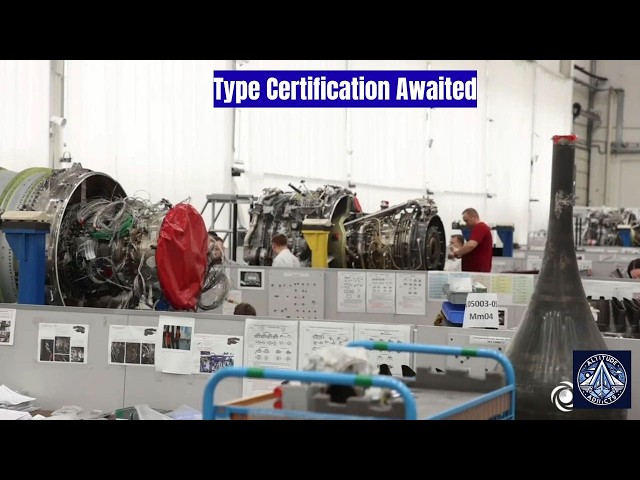
Russia’s aviation industry has reached a major milestone as the new PD-8 turbofan engine for the SJ-100 Superjet officially completed all certification trials. Developed by the United Engine Corporation under Rostec, the engine is central to Moscow’s effort to create a fully import-substituted regional passenger jet amid ongoing Western sanctions.
According to Russian officials, the PD-8 accumulated more than 6,500 hours of testing during the certification campaign, including nearly 1,500 hours aboard Superjet aircraft and the Il-76 flying laboratory. The engine was subjected to some of the harshest aviation tests imaginable, including icing conditions in the Arctic region, bird strikes, water ingestion, simulated fan blade failures, and even direct hailstorm impact simulations.
Russian engineers say the PD-8 incorporates 25 critical technologies, including 17 entirely new developments. Among its most advanced features are heat-resistant turbine materials, a next-generation high-pressure turbine stage, and ultra-precise turbine clearances designed to improve fuel efficiency and reliability.
The completion of the trials brings Russia closer to certification of the fully import-substituted SJ-100 aircraft, which replaces Western-made systems and the Franco-Russian SaM146 engine used on earlier Superjets. Moscow sees the aircraft as a key part of its strategy to maintain an independent civil aviation industry despite sanctions and restrictions on foreign aerospace technology.
In this video, we examine the technology behind the PD-8, the extreme testing campaign, the importance of the engine for Russia’s aviation sector, and what the certification milestone means for the future of the SJ-100 program.
#Russia #PD8 #Superjet #SJ100 #RussianAviation #Rostec #UEC #JetEngine #AviationNews #CivilAviation #AircraftEngine #RussiaNews #Aerospace #AviationIndustry #ImportSubstitution #RussianTechnology #Superjet100 #PD8Engine #Airliner #Aircraft
Be a Member for exclusive privileges - https://www.youtube.com/channel/UCviEFTf1xIPKsjmyF_zvFug/join
Twitter : https://x.com/AltitudeAddicts
Website: https://www.altitudeaddicts.com
Show More Show Less View Video Transcript
0:00
Another
0:07
major milestone has been reached by
0:09
Russia's aviation industry in its
0:12
mission toward building a completely
0:14
domestic civil aircraft ecosystem.
0:17
The United Engine Corporation or UEC, a
0:21
subsidiary of the Rosc State
0:22
Corporation, has officially concluded
0:24
the full certification testing campaign
0:26
for the new PD8 turboan engine developed
0:29
for the SJ100 Superjet regional
0:32
airliner. This development is being seen
0:35
as an important step in Russia's
0:37
postsctions aerospace strategy as the
0:39
country intensifies efforts to replace
0:42
aging foreign aviation technologies with
0:44
indigenous systems.
0:47
Rosstec and UEC officials confirmed that
0:50
the PD8 has effectively completed all
0:52
certification tests required to obtain a
0:55
type certificate from Russia's aviation
0:57
authorities. The engine completed more
1:00
than 6,500
1:02
hours of operational testing and
1:04
reportedly maintained stable performance
1:06
in some of the harshest conditions
1:09
simulated for a modern civil aviation
1:11
engine. That is not a small number,
1:14
honestly.
1:16
For comparison, many commercial aviation
1:18
programs spend years just validating
1:21
certain sections of an engine. The PD8
1:24
is expected to replace the FrancoRussian
1:27
SAM 146 engine that powered earlier
1:30
Superjet variants and become the main
1:32
power plant of the import substituted
1:34
SJ100 aircraft.
1:37
For Russia though, this program means
1:39
far more than simply introducing a new
1:41
engine. Officials and industry observers
1:44
say it represents proof that the country
1:46
can still develop advanced aerospace
1:49
technologies domestically despite
1:51
sanctions and industrial restrictions.
1:54
And yes, that message is clearly aimed
1:57
at both domestic and international
1:59
audiences.
2:01
Now, moving deeper into the story, the
2:03
PD8 program itself was really born out
2:05
of necessity.
2:07
The earlier versions of the superjet
2:09
depended heavily on western industrial
2:11
cooperation and imported systems.
2:15
Russia's NPO Saturn and Francis Saffran
2:18
jointly developed the SAM 146 engine
2:21
under the power jet partnership which at
2:23
the time was considered one of the most
2:25
important aerospace collaborations
2:27
between Russia and Europe.
2:30
But after sanctions intensified and
2:32
industrial cooperation with western
2:34
suppliers broke down, Russia began
2:36
facing increasing challenges maintaining
2:39
aircraft fleets dependent on imported
2:41
components.
2:43
Spare parts, technical support, and
2:45
manufacturing cooperation suddenly
2:47
became uncertain. Moscow responded by
2:50
launching an ambitious import
2:52
substitution campaign across the
2:54
aerospace sector and the SJ-100 program
2:58
quickly became one of the centerpieces
3:00
of that effort.
3:02
The aircraft itself is designed to
3:04
replace foreign-made avionics,
3:06
electronics, hydraulics, and propulsion
3:08
systems with Russian developed
3:10
alternatives.
3:12
At the center of this entire effort sits
3:14
the PD8 engine. Russian officials say
3:17
the engine was developed from the ground
3:19
up to satisfy modern certification
3:22
standards.
3:24
According to UEC Saturn general director
3:26
Ilia Kyukov, the PD8 is the most
3:30
advanced engine in its class presently
3:32
designed and ready for operational
3:34
introduction.
3:35
The engine is also described as an
3:37
allclimate power plant capable of
3:40
operating across a broad temperature
3:42
range. Russian engineers further noted
3:45
that the gas generator developed for the
3:47
PD8 may eventually find applications
3:50
beyond aviation, including ground energy
3:52
generation and the gas transportation
3:55
sector. That part often gets overlooked,
3:58
but aerospace engine technology
4:00
regularly spills over into other
4:02
industrial sectors.
4:04
As Altitude Addicts has noted before in
4:06
aviation coverage, one of the most
4:09
important indicators of any new engine
4:11
program is the scale of its testing
4:14
campaign. And in the case of the PD8,
4:17
the numbers are substantial.
4:20
According to UEC deputy sales director
4:22
Fiodor Moronov, the engine accumulated
4:25
6,590
4:26
operational hours during the overall
4:29
test program.
4:31
Of these 1,449
4:33
hours were flown aboard SJ100 aircraft
4:36
and the L76 LL flying laboratory. The
4:41
remaining hours came from extensive
4:42
groundbased bench testing. Certifying a
4:46
modern commercial turboan engine is
4:48
extraordinarily complex.
4:50
Regulators have to validate virtually
4:52
everything. Operating modes, thermal
4:55
cycles, emergency procedures,
4:57
environmental hazards, and long duration
4:59
endurance.
5:01
Russian officials say the PD8 confirmed
5:04
the accuracy of its engineering and
5:06
design solutions throughout the program,
5:09
helping pave the way for the expected
5:11
issuance of a type certificate in the
5:13
near future. That certification is
5:16
critical because without it, the engine
5:19
simply cannot enter regular airline
5:21
service.
5:23
Another major point attracting attention
5:25
is the amount of new technology built
5:27
into the engine. According to Rosstec,
5:30
engineers introduced 25 critical
5:33
technologies during development,
5:35
including 17 completely new innovations.
5:39
Many of these advances focus on the
5:41
engine's high temperature turbine
5:43
section, which remains one of the most
5:45
technically demanding parts of any
5:47
modern jet engine.
5:49
The high-pressure turbine blades and
5:52
nozzle guide veins were reportedly
5:54
manufactured using unique heatresistant
5:56
materials capable of operating under
5:59
extremely high temperatures.
6:01
Combined with advanced cooling systems,
6:04
these materials allow engine components
6:06
to function efficiently while enduring
6:08
intense thermal stress. Higher operating
6:12
temperatures generally improve
6:14
efficiency and reduce fuel consumption,
6:17
though only if the materials survive the
6:19
environment inside the turbine.
6:22
The PD8 also incorporates a supersonic
6:25
high-pressure turbine stage with a
6:27
pressure reduction ratio of four. In
6:30
simple terms, gas pressure decreases
6:32
four-fold as it travels through the
6:34
turbine compared with conditions at the
6:36
turbine inlet.
6:38
Russian engineers describe this as one
6:41
of the most technically advanced
6:43
components of the engine. It sounds very
6:46
technical because, well, it is very
6:48
technical.
6:50
Designers additionally minimized radial
6:53
clearances between rotating turbine
6:55
blades and stationary stator components.
6:58
These tiny gaps play a surprisingly
7:00
important role in reducing aerodynamic
7:03
losses and improving fuel efficiency.
7:06
Solutions like these are typically
7:08
associated with next generation gas
7:10
turbine engines and require extremely
7:12
high manufacturing precision.
7:15
Then came one of the harshest parts of
7:17
the certification campaign, icing
7:19
trials. Engineers subjected the PD8 to
7:23
icing simulations at the Central
7:25
Institute of Aviation Motors, known as
7:27
SIAM, Russia's leading engine testing
7:30
facility. The engine was exposed to
7:33
severe artificial icing conditions
7:35
designed to replicate dangerous
7:37
atmospheric environments encountered
7:39
during commercial flights.
7:42
The PD8 was also tested aboard the SJ
7:45
100 during flights in Russia's
7:47
Archangels region, known for severe
7:49
northern weather and icing risks. Icing
7:52
remains one of the most dangerous
7:54
environmental hazards facing aircraft
7:57
engines because ice accumulation can
7:59
disrupt air flow, damage compressor
8:01
blades, or even trigger engine shutdowns
8:04
if not properly controlled. Russian
8:07
officials reported that the PD8
8:09
maintained stable performance throughout
8:12
the icing evaluations.
8:14
Beyond icing tests, the certification
8:17
campaign also included 150hour endurance
8:20
trials designed to simulate long-term
8:22
operational use. During these tests, the
8:26
engine operated continuously under
8:28
varying power settings and thermal
8:29
conditions to evaluate thermal
8:31
stability, reliability, lubrication
8:34
systems, and wear resistance.
8:37
Modern turboan engines experience
8:39
enormous mechanical stress.
8:42
Turbine and compressor sections rotate
8:44
at extremely high speeds while enduring
8:47
major centrifugal forces and temperature
8:49
fluctuations.
8:51
That is why endurance testing matters so
8:53
much. You can design something brilliant
8:56
on paper, but the real question is
8:59
whether it survives repeated stress
9:01
cycles over time. According to Russian
9:05
officials, the PD8 maintained stable
9:07
performance characteristics throughout
9:10
the endurance campaign.
9:12
And then came the emergency condition
9:14
trials, which are honestly some of the
9:16
most dramatic tests any aviation engine
9:19
underos.
9:21
Among the most notable were bird
9:23
ingestion tests. During these
9:25
evaluations, birds are fired directly
9:28
into the engine intake at high speed to
9:30
verify that the power plant can absorb
9:32
impacts without catastrophic failure.
9:36
The engine also underwent water
9:38
ingestion tests designed to simulate
9:40
severe rainstorms and standing water
9:42
exposure.
9:44
Another crucial examination involved fan
9:46
blade failure simulations.
9:49
Engineers intentionally recreate the
9:51
sudden destruction or separation of a
9:54
fan blade while the engine is operating.
9:57
If containment systems fail during such
9:59
an event, the imbalance forces can
10:01
become violent enough to destroy the
10:03
engine itself.
10:05
Passing this test is therefore
10:07
considered one of the most critical
10:09
requirements in modern engine
10:11
certification.
10:13
According to Rosstec, the PD8 maintained
10:16
structural integrity and stable
10:18
operation throughout these assessments.
10:21
And just when it already sounded extreme
10:23
enough, the program moved into simulated
10:26
hailtorm testing.
10:28
The final certification tests took place
10:30
in April at UEC Saturn's openair testing
10:34
complex in Rabinsk.
10:36
Engineers simulated an aircraft flying
10:38
directly into a dense hail cloud by
10:40
firing specially manufactured ice
10:42
pellets into the engine at high speed.
10:46
The idea was to replicate severe
10:48
atmospheric conditions encountered
10:50
during major storms.
10:52
Despite the impacts, the PD8 reportedly
10:55
maintained operational stability and
10:58
continued functioning normally after the
11:00
test. Russian officials described the
11:03
results as confirmation that the engine
11:05
could withstand major environmental
11:07
influences while remaining operational
11:10
and safe.
11:12
That's the sort of test aviation
11:13
engineers probably lose sleep over
11:15
before it begins.
11:18
Another important but lesserk known
11:19
aspect of the certification process
11:22
involved repeated defect inspection
11:24
procedures.
11:26
Engineers completely disassembled the
11:28
engine down to its smallest components
11:30
for examination. After major testing
11:33
cycles,
11:34
specialists inspected turbine blades,
11:36
bearings, seals, combustion chambers,
11:39
compressor stages, and other elements
11:41
for microscopic fractures, overheating,
11:43
fatigue, or structural deformation.
11:47
According to reports, this process was
11:49
carried out more than 100 times during
11:52
the certification campaign.
11:55
These inspections are essential for
11:57
generating the documentation required
11:59
for type certification.
12:01
They also allow engineers to validate
12:03
material durability and verify that the
12:06
engine can survive thousands of
12:08
operational hours in airline service.
12:12
As Altitude Addicts continues following
12:14
the SJ100 program, one thing becoming
12:17
increasingly clear is that the PD8 is
12:20
not simply another propulsion system.
12:23
For Russia's aviation sector, it has
12:25
become a symbol of industrial resilience
12:28
and technological independence under
12:30
sanctions pressure.
12:32
The completion of the PD8 certification
12:34
campaign is directly tied to the future
12:37
of the import substituted SJ100
12:40
aircraft.
12:41
Russian airlines are expected to become
12:44
the first operators once certification
12:46
is finalized.
12:48
Rosstec officials have already stated
12:50
that domestic carriers are waiting for
12:53
the aircraft to enter service.
12:56
The program also supports a broad
12:58
industrial network across Russia
13:00
involving metallurgy companies, digital
13:02
simulation developers, research
13:04
institutes, and manufacturing
13:06
facilities.
13:07
In other words, this engine is connected
13:10
to far more than aviation alone.
13:13
The certification document package is
13:15
now reportedly being prepared for
13:17
submission to Rosaviatsia, Russia's
13:19
aviation regulator.
13:21
Officials expect the type certificate to
13:24
be issued in the near future, which
13:26
would move the imports substituted SJ
13:28
100 significantly closer to broader
13:31
operational certification.
13:34
The next challenge will involve scaling
13:36
serial production while maintaining
13:38
manufacturing quality and long-term
13:40
reliability.
13:42
Modern commercial engines demand not
13:44
only successful testing, but also
13:46
predictable airline economics,
13:48
operational efficiency, and maintenance
13:50
support over thousands of flight hours.
13:53
That part is usually much harder than
13:56
the headlines make it sound.
13:59
Still, the completion of the PD8
14:01
certification campaign represents a
14:03
major milestone for Russia's civil
14:05
aviation sector. After years of
14:08
sanctions pressure, technical obstacles,
14:10
and accelerated development schedules,
14:12
Russia now appears significantly closer
14:15
to deploying a fully domestic regional
14:17
jet powered by an indigenous next
14:19
generation turboan engine. And for
14:22
altitude addicts, this story is one of
14:25
the clearest examples yet of how
14:27
geopolitics and aerospace engineering
14:29
are becoming increasingly intertwined in
14:32
the modern aviation world.
14:36
Occasions to Saturn successfully
14:38
completed an extensive array of crucial
14:40
certification tests, including blade
14:42
break tests, bird impact simulations,
14:45
water and hail impact scenarios, ice
14:48
slab, and classic icing challenges. The
14:51
process culminated in rigorous trials
14:54
such as heavy hail and ice style throws.
14:57
However, engine defects have emerged in
14:59
the aftermath, bringing key insights
15:02
from these tests.
15:06
to the face focused on producing
15:08
in-depth and detailed certification
15:09
reports.
15:13
United Engine Corporation, State
15:15
Corporation, Rosc plans to receive a
15:17
type certificate for the PD8 engine in
15:20
the near future.
15:22
The P8 engine under development since
15:24
2019 showcases a fully indigenous design
15:26
incorporating state-of-the-art
15:27
technology solutions and cutting edge
15:29
materials emphasizing innovation and
15:31
self-reliance.
15:32
The engine has undergone extensive
15:34
testing since 2025, including trials
15:37
under extreme conditions in superjet
15:39
aircraft. Its comprehensive evaluations
15:41
encompass over 6,500 hours of operation
15:44
with approximately 1/400 of those hours
15:46
conducted via flying laboratory,
15:48
ensuring rigorous performance
15:50
validation.
15:51
Meanwhile, Superjet aircraft contributed
15:53
to the testing with the remaining
15:55
evaluations conducted on test benches.
15:57
Through these rigorous trials, the
15:59
engine demonstrated outstanding
16:00
reliability, safety, and adherence to
16:02
contemporary sanitary standards. The
16:05
volume of evidentiary documentation
16:07
formed during this work will soon be
16:08
transferred to the pave register of the
16:10
Russian Federation.
16:38
Heat.
16:41
Heat.
16:59
Heat.
17:11
Heat.
17:23
If you like this video, please like,
17:25
share, and subscribe the channel. Please
17:28
also take the channel membership to
17:30
encourage us. Last but not least, please
17:33
hype this video if you are watching on a
17:35
mobile device.
17:38
>> Generate by AI.
#Science