Up next in 10


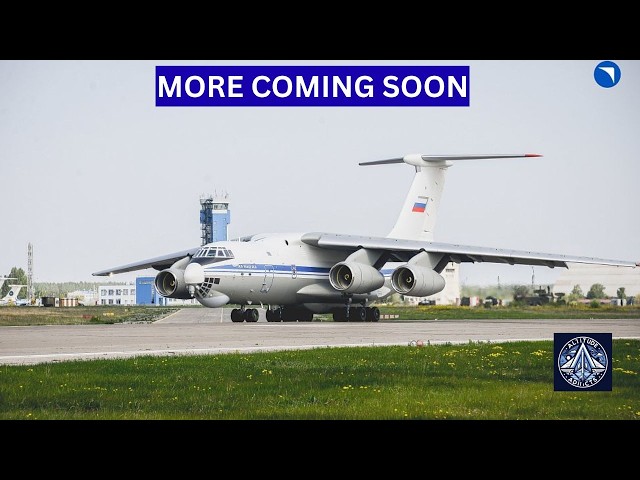
Russia's Military Transport Aviation has reached a major modernization milestone after fully re-equipping two operational airlift regiments with the new Il-76MD-90A heavy transport aircraft. The announcement highlights the most significant progress in Russia's strategic airlift modernization effort since the end of the Soviet Union.
For decades, the backbone of Russian military transport operations consisted of aging Il-76MD aircraft originally produced during the Soviet era. While many of those aircraft remain operational, increasing age and maintenance requirements have driven Moscow to pursue a long-term fleet renewal program centered around the Il-76MD-90A.
The new aircraft features more powerful and fuel-efficient PS-90A-76 engines, upgraded digital avionics, improved navigation systems, a strengthened wing structure, and increased payload capabilities. These enhancements allow the aircraft to transport up to 60 tons of cargo while improving operational efficiency and mission flexibility.
At the same time, Russia is not relying solely on new production. Existing Il-76MD aircraft are being modernized to the Il-76MD-M standard, extending service life and introducing many modern systems derived from the latest aircraft generation. This dual-track approach allows Russia to maintain fleet strength while gradually replacing older aircraft.
The development comes as Aviastar in Ulyanovsk records its highest post-Soviet production rates. The factory produced seven Il-76MD-90A aircraft in 2025 and plans to increase output to 12 aircraft annually by 2027 before eventually reaching 18 aircraft per year.
In this video, we examine what the replacement of two entire transport aviation regiments means for Russia's military capabilities, how many regiments still operate older aircraft, the role of the Il-76MD-M modernization program, and why increased production rates could reshape Russia's strategic airlift fleet throughout the remainder of the decade.
#Russia #RussianAirForce #Il76MD90A #Il76 #MilitaryAviation #MilitaryTransport #RussianMilitary #Airlift #TransportAircraft #AviationNews #DefenseNews #MilitaryNews #Aerospace #Aircraft #StrategicAirlift #RussiaDefense #AirForce #MilitaryTechnology #Aviastar #MilitaryAircraft
Be a Member for exclusive privileges - https://www.youtube.com/channel/UCviEFTf1xIPKsjmyF_zvFug/join
Twitter : https://x.com/AltitudeAddicts
Website: https://www.altitudeaddicts.com
Show More Show Less View Video Transcript
0:06
Russia's military transport aviation has
0:08
achieved a significant modernization
0:10
milestone by replacing all legacy
0:13
transport aircraft in two operational
0:16
regiments with the new Il-76MD-90A
0:19
heavy transport aircraft.
0:22
In this video, we are breaking down
0:24
every single detail of this massive
0:26
strategic shift from the specific
0:28
upgrade features of these heavy lifters
0:30
to the exact production numbers coming
0:32
out of the factories and even what is
0:34
happening to the older Soviet fleet.
0:37
So, make sure you watch till the end.
0:40
The announcement was made by Lieutenant
0:41
General Vladimir Benediktov, the
0:44
commander of the military transport
0:46
aviation.
0:48
He stated that the force is in the
0:49
process of modernizing older aircraft
0:52
that are already in service and that
0:54
deliveries under the 2025 state defense
0:57
order have been concluded in full.
1:01
The development is one of the most major
1:03
improvements in Russia's strategic
1:05
airlift capabilities since the Soviet
1:07
Union's collapse.
1:10
Il-76MD aircraft manufactured in
1:12
Tashkent served as the foundation of
1:14
Russian military transport aviation for
1:16
decades.
1:19
Although many planes are still
1:20
operational today, their age has caused
1:22
a growing demand for modernization and
1:25
replacement programs.
1:27
The Aviastar facility in Ulyanovsk has
1:30
finally achieved a production level that
1:31
is capable of making a major impact on
1:34
fleet renewal as evidenced by the
1:36
arrival of an adequate number of
1:38
Il-76MD-90A
1:40
aircraft to completely re-equip two
1:43
regiments.
1:44
Let's look at how this transition broke
1:47
down for those two specific regiments.
1:50
The Russian Aerospace Forces have
1:52
effectively completed the re-equipment
1:54
of two military transport aviation
1:56
regiments with the new Il-76MD-90A,
2:00
as stated by Lieutenant General
2:02
Benediktov.
2:03
This implies that the older aircraft
2:06
that were previously designated to those
2:08
units have been entirely replaced by
2:10
newly manufactured airlifters.
2:14
Now, let's take a quick breather from
2:16
the heavy technical stuff and just look
2:18
at the real-world reality of how these
2:20
units get handled.
2:23
It's honestly a giant logistical
2:25
headache to swap out a whole unit's
2:27
planes at once, which is why what the
2:29
Altitude Addicts emphasize is so
2:32
interesting. The announcement is
2:34
noteworthy because it is the first time
2:36
that entire transport aviation
2:38
formations have been converted to the
2:41
latest production standard, despite the
2:43
fact that the specific regiments
2:45
involved have not been identified by
2:47
Russian military authorities.
2:50
In the past, new aircraft were generally
2:52
distributed progressively across
2:54
multiple units, resulting in mixed
2:57
fleets of new and old aircraft.
3:00
The success is being celebrated in
3:02
Russia on Military Transport Aviation
3:05
Day, which commemorates the
3:06
establishment of the nation's first
3:08
experimental airborne detachment on June
3:11
1st, 1931.
3:14
In 95 years, Military Transport Aviation
3:17
has become a critical branch of the
3:18
Russian Aerospace Forces tasked with
3:21
transporting personnel, equipment,
3:23
weapons, and humanitarian assistance
3:25
over long distances.
3:28
Russia's Transport Aviation
3:29
modernization program has shifted from
3:32
isolated aircraft deliveries to fully
3:34
re-equipping operational formations with
3:36
new generation aircraft, exemplified by
3:39
two regiments' complete transition to
3:41
the Il-76MD-90A.
3:45
To understand the scale of this, we have
3:47
to look at exactly how many transport
3:49
regiments Russia operates.
3:52
The heavy airlift capability of Russia
3:54
is collectively operated by several main
3:57
transport aviation regiments that
3:59
comprise the military transport aviation
4:02
fleet.
4:03
According to open-source assessments,
4:05
Russia currently maintains approximately
4:08
five main heavy transport regiments.
4:11
Two of these regiments maintain mixed
4:13
fleets that comprise the larger remember
4:16
and 124 Ruslan strategic airlifters and
4:19
Il-76
4:21
transports, while three of them
4:22
primarily operate Il-76 aircraft.
4:26
These divisions collectively constitute
4:28
the foundation of Russia's strategic
4:30
mobility capability.
4:32
It is expected that the fleet will
4:33
consist of approximately 100 to 120
4:37
Il-76 family aircraft of varying
4:39
variants, including Soviet-built Il-76MD
4:42
transports and newly manufactured
4:45
Il-76MD-90A
4:47
aircraft.
4:49
Furthermore, a small fleet of
4:51
An-124 aircraft offers the ability to
4:53
transport massive military cargo at an
4:56
ultra-heavy rate.
4:58
If two regiments have already completed
5:00
their transition to Il-76MD-90A
5:03
aircraft, it indicates that a major
5:06
portion of Russia's front-line transport
5:08
force has already transitioned to a new
5:11
technological generation.
5:13
Nevertheless, multiple regiments
5:15
continue to depend heavily on Soviet-era
5:18
aircraft, which will eventually
5:20
necessitate either modernization or
5:22
replacement.
5:24
Let's pivot to the machine itself
5:26
because the Il-76MD-90A
5:29
represents a huge improvement to the
5:31
original design.
5:33
The Il-76MD-90A
5:35
maintains the classic Il-76's
5:38
recognizable appearance, but it
5:40
incorporates a plethora of enhancements
5:42
that substantially improve operational
5:44
efficacy and performance.
5:47
Time for a reality check here on what
5:49
actually makes a massive plane like this
5:52
get up into the air. Because if the
5:54
engines are junk, the whole thing is
5:56
just a multi-million dollar paperweight.
6:00
That brings us to what the Altitude
6:01
Addicts point out as the most critical
6:03
upgrade. The installation of four
6:05
PS-90A-76
6:07
turbofan
6:09
engines, which replace the antiquated
6:11
D-30KP2 engines used in previous
6:13
versions, is the most noticeable
6:15
modification.
6:17
These engines are much quieter, more
6:19
fuel efficient, and more efficient than
6:22
their predecessors.
6:24
The operational range and payload
6:25
capability are both enhanced by the
6:28
improved fuel consumption and additional
6:30
thrust.
6:32
The aircraft has the capacity to
6:34
transport heavy military equipment,
6:36
armored vehicles, troops, and
6:38
humanitarian supplies over great
6:40
distances with a maximum capacity of 60
6:43
tons.
6:44
Operational flexibility is also improved
6:47
by improved takeoff and landing
6:49
performance, particularly when operating
6:51
from rugged airfields.
6:53
The airframe has been fortified by the
6:56
implementation of a redesigned wing
6:58
structure.
6:59
New materials and manufacturing
7:01
techniques have improved durability and
7:04
are capable of supporting enhanced
7:05
performance levels.
7:08
In the cockpit, digital systems have
7:10
considerably replaced analog
7:12
instruments.
7:13
Modern avionics, sophisticated
7:15
navigation equipment, and upgraded
7:17
communication systems improve
7:19
situational awareness and decrease the
7:22
workload of the crew.
7:24
The navigator's workstation now features
7:26
multifunction displays that offer a
7:28
profoundly greater amount of information
7:31
than previous systems.
7:33
Additionally, Russian officials have
7:35
emphasized improvements in the quality
7:37
of communications, the precision of
7:40
airdrops, and the accuracy of
7:42
navigation.
7:43
These improvements are especially
7:45
critical for airborne operations, as the
7:48
success of a mission can be greatly
7:50
influenced by the precise delivery of
7:53
cargo and troops.
7:55
This naturally leads to the big question
7:57
of what happens to the older Il-76 MD
8:00
fleet.
8:02
The immediate retirement of older Il-76
8:05
transports is not a consequence of the
8:07
advent of new aircraft.
8:09
Rather, Russia is implementing a
8:11
parallel modernization strategy that is
8:13
intended to introduce new production
8:16
models progressively, while
8:17
simultaneously extending the operational
8:20
life of existing aircraft.
8:23
Lieutenant General Benediktov verified
8:25
that many existing aircraft are
8:27
currently undergoing modifications to
8:29
the Il-76 MDM standard.
8:33
According to observations by the
8:34
Altitude Addicts, several dozen aircraft
8:37
may be candidates for life extension and
8:40
systems upgrades over the coming decade.
8:43
The Il-76 MDM project is designed to
8:47
introduce a number of modern
8:48
technologies that are derived from the
8:50
Il-76 MD-90A program, while also
8:54
considerably extending the service life
8:56
of aircraft.
8:58
The upgrade is generally believed to
8:59
encompass structural refurbishment,
9:01
avionics replacement, navigation system
9:04
modernization, communication
9:06
enhancements, and improvements to
9:08
onboard mission systems, although
9:10
detailed specifications are still
9:12
limited.
9:14
This method enables Russia to maintain a
9:16
major portion of its transport fleet,
9:18
while avoiding the huge financial burden
9:21
of replacing each aircraft with newly
9:24
manufactured models.
9:26
Following the collapse of the Soviet
9:28
Union, most Il-76 aircraft that were
9:31
built in the Soviet Union accrued fewer
9:33
flight hours than had been initially
9:36
anticipated.
9:37
Consequently, many of them of airframes
9:40
still have a considerable structural
9:42
life that can be capitalized on through
9:45
modernization initiatives.
9:48
Let's step back from all the tiny
9:49
component details for a second and look
9:52
at the broader question of exactly how
9:55
many aircraft are being upgraded.
9:58
The exact amount of aircraft being
9:59
converted to the Il-76MDM
10:02
standard has not been publicly disclosed
10:05
by Russian authorities.
10:07
Nevertheless, the program's emphasis
10:09
appears to be on the most serviceable
10:11
aircraft in the current fleet, according
10:14
to the available information.
10:17
Given that Russia continues to operate
10:19
plenty of Il-76MD
10:21
aircraft that are older than the current
10:23
generation,
10:24
it is logical to anticipate that a
10:26
significant number of them may at some
10:29
point be subject to modernization.
10:32
Several dozen aircraft may be eligible
10:34
for life extension and system
10:36
enhancements in the next decade.
10:39
The modernization initiative is crucial
10:41
because new aircraft production rates,
10:44
while improving, are still inadequate to
10:46
replace all Soviet-era transports in
10:48
service.
10:50
Consequently, the integration of new
10:52
production and modernization is a
10:54
practical solution for ensuring the
10:56
readiness of the fleet as modernization
10:59
advances.
11:01
This brings us to how the Aviastar
11:03
factory is reaching record production
11:05
levels to make this all happen.
11:08
The transformation of Aviastar in
11:10
Ulyanovsk, Russia's sole producer of the
11:12
Il-76MD-90A,
11:15
is a critical factor in the recent
11:16
progress.
11:18
The impact of the modernization program
11:20
was restricted for years by low
11:22
production rates.
11:24
The complexity of restarting large-scale
11:26
aircraft production, workforce
11:28
shortages, supply chain challenges, and
11:31
manufacturing obstacles all contributed
11:34
to the slower than planned deliveries.
11:37
There has been consistent progress in
11:39
recent years.
11:41
The highest annual output in the
11:42
post-Soviet period was achieved by
11:44
Aviastar in 2025 when it produced seven
11:48
Il-76MD-90A
11:50
aircraft.
11:51
Although the production of seven
11:53
aircraft annually is still below the
11:55
levels of the Soviet era, it is a major
11:58
spike in comparison to previous years.
12:02
The facility has consistently increased
12:04
its production capacity by investing in
12:06
the modernization of manufacturing
12:08
facilities, workforce development, and
12:11
automation.
12:13
The recent increase in production has
12:15
finally enabled deliveries to reach a
12:17
level that enables entire operational
12:19
regiments to receive complete
12:21
inventories of new aircraft rather than
12:24
isolated examples.
12:26
This production surge lays the
12:28
groundwork for their ambitious plans for
12:31
further expansion.
12:33
The present production surge may be just
12:35
the beginning.
12:37
One thing is certain. Aviastar
12:39
management has established ambitious
12:41
objectives for the remainder of the
12:43
decade.
12:44
The company's objective is to increase
12:46
the annual production of the Il-76MD-90A
12:50
to 12 aircraft by 2027.
12:54
Additionally, officials have indicated
12:56
that the annual production rate could
12:58
eventually achieve 18 aircraft.
13:01
Russia would be able to greatly expedite
13:04
the replacement of older transport
13:06
aircraft if these objectives are met.
13:09
The tempo of fleet renewal could be
13:11
greatly accelerated compared to the past
13:13
decade as production rates approach 18
13:16
aircraft annually.
13:19
Additional variants of the aircraft
13:21
family, such as aerial refueling
13:23
transports and specialized mission
13:25
platforms based on the Il-76 airframe
13:29
would also be supported by the increased
13:31
production capacity.
13:33
Beyond this current fleet, Russia is
13:35
also laying out programs for future
13:37
transport aircraft.
13:39
Russia's transport aviation objectives
13:42
exceed the Il-76 family.
13:45
The aviation industry is also preparing
13:47
for the future serial production of
13:49
additional transport aircraft programs.
13:52
The Il-276 medium transport aircraft is
13:56
one of the most important as it is
13:58
designed to bridge the distance between
14:00
the heavy Il-76 fleet and the lighter
14:03
tactical transports.
14:05
The aircraft is anticipated to reduce
14:07
operating costs and offer increased
14:10
flexibility for regional transport
14:12
missions.
14:13
The introduction of specialized aircraft
14:16
and additional transport variants based
14:18
on existing platforms has also been
14:20
discussed by industry officials.
14:23
These programs are part of a more
14:24
comprehensive initiative to fortify
14:27
Russia's domestic aerospace industry and
14:30
decrease its reliance on foreign
14:31
technologies.
14:34
A significant expansion of the aerospace
14:36
workforce is necessary to support these
14:38
objectives.
14:40
Several important companies are
14:42
currently part of the Ulyanovsk aviation
14:44
cluster
14:45
and regional authorities anticipate that
14:48
the sector will employ approximately
14:50
20,000 personnel in the near future.
14:54
To satisfy the projected need for
14:55
engineers, technicians, and qualified
14:58
manufacturing personnel, universities
15:00
and technical institutes are expanding
15:03
their training programs.
15:05
Let's wrap this all up by looking at the
15:07
true strategic significance for Russian
15:10
military aviation.
15:12
In two transport aviation regiments, the
15:15
replacement of aging aircraft is not
15:18
just a straightforward fleet
15:19
modernization initiative.
15:22
Russia's capacity to swiftly deploy
15:24
forces across its extensive territory
15:26
and beyond is greatly affected by
15:28
military transport aviation.
15:31
Airborne operations, humanitarian
15:33
missions, disaster response, strategic
15:35
logistics, troop movements, and material
15:38
deployment are all supported by
15:39
transport aircraft.
15:41
They are among the most frequently
15:43
employed assets in the Russian Aerospace
15:46
Forces.
15:47
Russia is implementing a balanced
15:49
strategy that enhances capability while
15:51
safeguarding existing resources by
15:53
integrating newly built Il-76 MD-90A
15:57
aircraft with upgraded Il-76 MDM
16:00
transports.
16:02
The method enables the military to
16:04
sustain its current level of readiness
16:06
while gradually transitioning to a more
16:08
modern fleet.
16:10
Russia's military transport aviation is
16:13
poised for its most major change since
16:15
the original Seal 76 entered service
16:18
during the Soviet era as two regiments
16:21
have already been completely
16:22
re-equipped. Additional aircraft are
16:25
entering service annually and production
16:27
is anticipated to increase by 2027.
16:31
The most recent developments indicate
16:34
that the long-term renewal of Russia's
16:35
heavy airlift fleet is finally gaining
16:38
momentum, although the modernization
16:40
endeavor is still far from complete.
16:46
We thank the people who have subscribed
16:47
the channel, liked, and shared the
16:49
videos.
16:50
We also thank the channel members for
16:52
encouraging us.
16:54
Last but not least, we also thank the
16:56
viewers who have hyped our videos.
#Science