0:06
The aviation industry has been
0:08
captivated by an important announcement
0:11
made at the St. Petersburg International
0:16
Sergey Chemezov, the CEO of Rostec,
0:19
disclosed that the organization is
0:21
thinking about the creation of a new
0:23
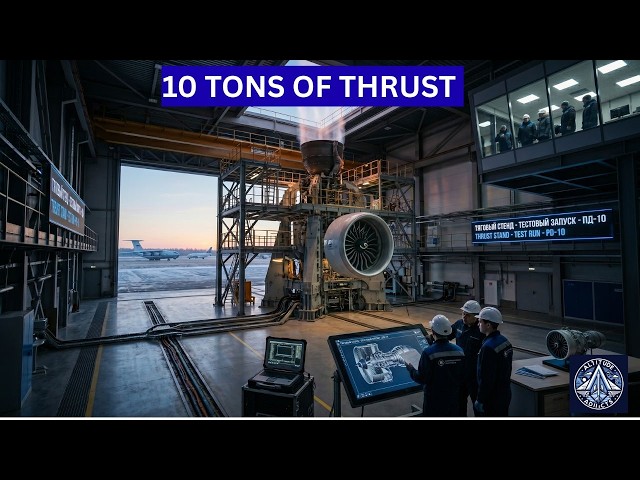
aircraft engine with a thrust of
0:24
approximately 10 tons, which is
0:27
initially intended for future business
0:31
The statement, despite its briefness and
0:34
absence of detailed technical
0:35
information, immediately sparked
0:37
discussions regarding the potential
0:39
applications of this power plant and the
0:42
future direction of Russia's civil
0:46
This video breaks down exactly what this
0:48
mystery engine means for the future of
0:50
flight, what it is hiding behind that
0:53
business jet label, and how it might
0:55
completely rewrite the rules for
0:57
regional air travel. So, watch till the
1:01
The announcement is made at a time when
1:04
Russia is actively expanding its
1:06
portfolio of domestically produced
1:08
aircraft and engines in response to the
1:10
need for technological independence.
1:13
Despite Rostec's official designation of
1:16
the project as a business aviation
1:18
engine, many experts believe that its
1:20
potential applications are far-reaching
1:23
and extend beyond that market segment.
1:27
This brings us directly to the reality
1:29
of how this development is filling a
1:31
critical gap in Russia's engine lineup.
1:34
The current civil aviation engine family
1:37
of Russia includes multiple critical
1:41
The PD-8 is designed for regional
1:43
aircraft such as the SJ-100, whereas the
1:46
PD-14 is used to propel the MC-21
1:49
narrow-body airliner.
1:51
The PD-35, on the other hand, is
1:54
currently under development for
1:55
prospective long-range transport
1:57
platforms and wide-body aircraft.
2:02
let's step away from the glossy
2:03
corporate brochures for a second and
2:06
just look at the math here.
2:08
There is a noticeable gap between the
2:10
PD-8 and PD-14 in terms of thrust.
2:14
This middle position would be occupied
2:16
by a new engine that produces
2:18
approximately 10 tons of thrust, thereby
2:21
establishing a more comprehensive engine
2:23
family that can accommodate a broader
2:25
range of aircraft types.
2:28
This engine has the potential to become
2:30
one of the most versatile products in
2:32
Russia's future aviation portfolio,
2:34
providing manufacturers with a
2:36
propulsion option for aircraft that are
2:38
too large for the PD-8, but do not
2:41
necessitate the capabilities of the
2:46
And honestly, wait, let's not sugarcoat
2:48
it. Why build a massive heavy engine
2:50
when a smaller 10-ton one does the job
2:54
This logic is exactly why people are
2:56
asking if this is more than just a
3:01
Although Rostec has marketed the project
3:03
as a power plant for future business
3:05
aircraft, the specified thrust level has
3:08
prompted many experts to question the
3:10
project's broader objectives.
3:13
Engines that generate approximately 10
3:15
tons of thrust are unnecessary for the
3:18
majority of small and medium-sized
3:22
Typically, power plants in this category
3:25
are found in larger aircraft, such as
3:27
ultra-long-range corporate jets,
3:29
regional airliners, and specialized
3:34
This has sparked speculation that the
3:35
project may have been referred to as a
3:38
business aviation engine purely because
3:41
it is one of its intended applications,
3:43
rather than its primary purpose.
3:46
The program is progressively being
3:48
perceived by industry observers as a
3:50
potential foundation for various future
3:53
aircraft developments.
3:56
Consequently, the revelation has piqued
3:58
the interest of both business aviation
4:00
specialists and those who are monitoring
4:03
Russia's broader civil aviation
4:04
modernization initiatives.
4:07
All of this speculation points toward a
4:09
very possible connection to the PD-10
4:14
One of the most intriguing features of
4:15
the announcement is its resemblance to
4:17
the PD-10 concept, which has been the
4:20
subject of much debate.
4:22
A new Russian engine in the 10-ton
4:24
thrust category has often been discussed
4:27
in aviation publications and industry
4:29
discussions over the past few years.
4:33
The engine, which has been known as the
4:34
PD-10 in certain reports, has been
4:37
associated with a variety of the future
4:39
aircraft projects, such as stretched
4:41
regional jets and export-oriented
4:46
Let's take a quick breather from all
4:48
these technical project codes and look
4:50
at the real-world geopolitics playing
4:55
Recent media reports suggest India and
4:57
Russia may collaborate on a new 10-ton
4:59
thrust engine, potentially suitable for
5:02
next-generation regional aircraft.
5:05
The overlap in thrust class and
5:07
potential applications between Rostec's
5:09
recently announced project and the
5:11
rumored PD-10 is difficult to disregard
5:14
despite the absence of an official
5:18
The most recent announcement may serve
5:20
as the first public indication that the
5:22
concept is approaching reality provided
5:25
that the endeavors are indeed
5:29
To get this concept off the ground,
5:31
engineers will rely heavily on
5:33
leveraging established technologies.
5:36
The extensive expertise acquired through
5:38
the development of the PD series family
5:41
is one of the advantages that Russian
5:43
engine designers have at their disposal.
5:47
The PD-8, PD-14, and PD-35 programs have
5:51
already established an extensive
5:53
technological foundation in areas such
5:55
as advanced aerodynamics,
5:57
high-temperature materials, digital
5:59
engine controls, and modern
6:00
manufacturing techniques.
6:03
Engineers could potentially adapt and
6:05
scale technologies that have already
6:07
been proven within the existing PD
6:09
family, rather than constructing an
6:12
entirely new architecture.
6:15
This methodology would mitigate
6:16
development risks, abbreviate testing
6:19
timelines, and decrease overall
6:22
Additionally, it would enable
6:24
manufacturers to capitalize on their
6:26
existing supply chains and production
6:31
The global aerospace industry has seen
6:33
an increase in the prevalence of this
6:34
approach as engine families frequently
6:37
share fundamental technologies across
6:39
multiple thrust classes.
6:42
This technological sharing opens up
6:44
massive potential applications beyond
6:49
The scope of aircraft that could benefit
6:51
from a 10-ton thrust engine is
6:55
A future Russian large-cabin business
6:57
jet that is capable of competing with
6:59
established international products is an
7:04
This type of aircraft could offer
7:06
domestic operators an alternative to
7:08
imported business aircraft, thereby
7:10
reducing their reliance on foreign
7:14
Okay, time for a quick reality check
7:16
because a 10-ton engine hanging off a
7:19
tiny private jet wing just looks kind of
7:22
ridiculous if you picture it.
7:24
Nevertheless, the power plant could also
7:27
have a substantial impact on commercial
7:31
The SSJ-100 regional aircraft is often
7:33
cited as a potential candidate for a
7:38
The importance of additional engine
7:39
thrust increases as aircraft expand in
7:42
size and payload capacity.
7:45
While enhancing operational flexibility,
7:47
a 10-ton class engine could deliver the
7:49
necessary performance for larger
7:54
An engine in this category could also be
7:56
advantageous for future regional
7:58
airliners, specialized transport
8:00
aircraft, government platforms, and
8:02
conceivably military derivatives.
8:05
The emergence of a new engine can have a
8:07
long-term impact on aircraft development
8:09
strategies, as propulsion systems often
8:12
dictate the capabilities of future
8:16
Even with those commercial uses, we
8:19
cannot overlook the massive opportunity
8:21
for business aviation itself.
8:24
The business aircraft market continues
8:26
to present a huge opportunity, despite
8:28
the fact that much attention has been
8:30
directed toward potential commercial
8:33
aviation applications.
8:35
For a long time, Russia has depended on
8:37
imported business aircraft for executive
8:42
A significant stride toward increased
8:44
self-sufficiency would be the
8:46
development of a business jet powered by
8:48
indigenous energy sources.
8:51
The market segment that a 10-ton thrust
8:54
engine is designed to target is likely
8:56
to consist of larger, longer range
8:58
aircraft that are capable of
9:00
transporting substantial passenger
9:02
cargos over intercontinental distances.
9:06
Producing a reliable powertrain would
9:08
not suffice to compete in this category.
9:11
Exceptional fuel efficiency, low
9:13
maintenance requirements, silent cabins,
9:16
and high dispatch reliability are all
9:18
expectations of operators.
9:21
It would be important for any future
9:23
Russian business jet to meet these
9:25
expectations in order to achieve success
9:28
on both a domestic and international
9:32
Standing in the way of that success are
9:34
several upcoming technical obstacles.
9:37
Today, the development of a modern
9:39
turbofan engine remains one of the most
9:41
intricate engineering challenges in the
9:46
While assuring compliance with the
9:48
increasingly stringent aviation
9:49
standards, engineers must balance the
9:53
performance, efficiency, durability,
9:56
weight, emissions, and maintenance
10:00
Let's cut through the engineering jargon
10:01
for a moment and focus on what actually
10:04
keeps these plane designers up at night.
10:08
Sophisticated digital control systems,
10:11
modern materials capable of withstanding
10:13
extreme operating temperatures,
10:15
advanced compressor designs, and highly
10:18
efficient turbine sections would be
10:20
necessary for a new 10-ton thrust
10:23
Fuel efficiency will be of paramount
10:27
Fuel consumption is a critical factor in
10:29
the competitiveness of aircraft as
10:31
airlines and business jet operators are
10:34
increasingly prioritizing operating
10:38
Additionally, there is an increasing
10:40
emphasis on the reduction of emissions
10:43
and pollution levels as environmental
10:45
considerations become more significant
10:50
The new engine's ability to contend
10:52
effectively in both domestic and
10:54
international markets
10:56
will be determined by its successful
10:58
fulfillment of these requirements.
11:01
Overcoming these hurdles makes this
11:03
project a highly strategic step for
11:05
Russia's aerospace industry.
11:08
In addition to its immediate technical
11:10
significance, the engine that has been
11:12
proposed is of greater strategic
11:16
Over the past decade, Russia has
11:18
dedicated a significant amount of time
11:20
to the restoration of its domestic
11:22
aerospace manufacturing capabilities and
11:25
the reduction of its dependence on
11:27
imported technologies.
11:30
A critical component of this endeavor is
11:32
the expansion of the nation's engine
11:36
A successful 10-ton thrust engine could
11:38
serve as the foundation for numerous
11:40
aircraft programs, thereby fortifying
11:43
Russia's position in the global
11:47
It would also serve as an illustration
11:50
of the country's ongoing development of
11:52
contemporary engine capabilities, which
11:55
would be further enhanced by the
11:56
knowledge acquired through prior PD
12:01
As we look ahead to what comes next,
12:03
many specifics are currently obscure.
12:06
There is no publicly available
12:08
information regarding production plans,
12:10
certification targets, or testing
12:13
timelines, and no development schedule
12:17
Nevertheless, the revelation is
12:19
significant because it indicates
12:21
Rostec's intention to branch out beyond
12:23
its current engine portfolio and enter a
12:26
strategically significant market
12:29
Whether the project ultimately
12:31
transforms into a dedicated business jet
12:34
engine, the long-rumored PD-10, or
12:37
functions as the foundation for numerous
12:39
future aircraft remains to be determined
12:41
by Altitude Addicts.
12:44
However, it is already evident that a
12:46
modern 10-ton thrust engine would
12:48
address a major absence in Russia's
12:51
civil aviation roadmap and could become
12:53
one of the most significant aerospace
12:55
programs of the upcoming decade.
13:00
We thank the people who have subscribed
13:02
to the channel, liked, and shared the
13:05
We also thank the channel members for
13:09
Last but not least, we also thank the
13:11
viewers who have hyped our videos.