0:04
Hey everyone. Welcome back to the
0:06
channel. Today, we are diving deep into
0:08
a massive shift in how technology is
0:11
secured from the ground up, specifically
0:13
focusing on a major breakthrough out of
0:16
Russia that completely changes the game
0:19
for hardware security.
0:21
Over the next few minutes, we will look
0:23
at how scientists have built a highly
0:25
specialized laser system designed to
0:28
intentionally break microchips in a lab
0:31
just to see where they are vulnerable.
0:34
We will explore how this tool breaks a
0:36
long-standing Western monopoly, how it
0:39
actually works on a microscopic level,
0:41
and why it is suddenly vital for
0:43
everything from the smartphone in your
0:45
pocket to satellites orbiting Earth.
0:49
This is a fascinating look into the
0:50
invisible hardware wars, so make sure to
0:53
watch till the end to see how it all
0:57
Russia has made a major stride toward
0:59
improving its technological sovereignty
1:01
in the fields of cybersecurity and
1:06
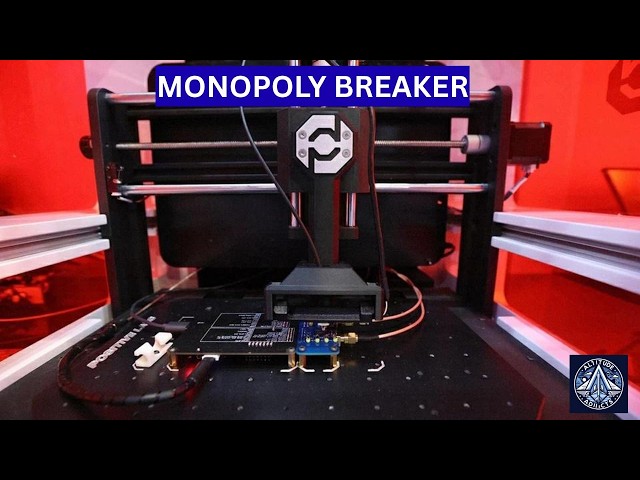
The first laser fault injection complex
1:08
to be domestically produced in the
1:09
country has been developed by
1:11
researchers at Positive Technologies,
1:13
the research division of Positive
1:17
This complex is intended to evaluate the
1:19
security of microchips and electronic
1:23
The new system, LFI 26, is an important
1:27
achievement for the hardware security
1:31
It offers capabilities that were
1:32
previously exclusively available from a
1:35
limited number of specialized foreign
1:39
The announcement of the system's
1:41
creation was made in early June 2026 and
1:45
promptly drew attention from the
1:46
cybersecurity and microelectronics
1:50
For many years, Russian organizations
1:53
that undertook advanced hardware
1:54
security research depended on imported
1:57
equipment from a small number of Western
2:01
Access to these specialized tools became
2:04
increasingly challenging as a result of
2:06
technological and geopolitical
2:08
constraints that were implemented after
2:13
This created a critical void in the
2:15
country's capacity to assess the
2:17
security of contemporary semiconductor
2:21
All right, let's step back for a second
2:23
and look at what is actually happening
2:27
This new system, the LFI 26, is
2:30
basically being built to patch up that
2:33
The whole point is to give Russian
2:35
researchers, chip makers, and cyber
2:37
specialists a local platform where they
2:40
can hunt down flaws in integrated
2:42
circuits before the bad guys do.
2:45
And honestly, wait, let's not sugarcoat
2:48
it. This matters because microchips are
2:50
pretty much running our entire lives
2:53
Every single day, billions of people are
2:56
tapping away on devices powered by
2:58
processors that are getting ridiculously
3:02
We're talking about your everyday
3:03
smartphones, laptops, payment cards,
3:06
banking terminals, crypto wallets, and
3:08
even cars, industrial systems, and
3:11
satellites spinning around the planet.
3:14
The value of the information processed
3:16
by these devices increases as
3:18
semiconductor technology becomes more
3:23
Financial transactions, cryptographic
3:25
keys, personal information, industrial
3:27
secrets, and national security data
3:30
frequently traverse integrated circuits
3:32
that must be protected from both
3:34
physical and software attacks.
3:37
While malware, hacking groups, and
3:39
network intrusions are often the subject
3:41
of cybersecurity discussions,
3:43
hardware-level assaults have become an
3:45
increasingly pressing concern.
3:48
The software protections that that built
3:50
on top of the chip may be circumvented
3:53
by attackers if they are able to
3:55
compromise the chip itself.
3:57
This is the point at which sophisticated
3:59
hardware security testing systems become
4:02
completely indispensable,
4:04
which brings us directly to
4:06
understanding how laser fault injection
4:11
Laser fault injection is the basic
4:13
method of this new system, and it is
4:15
widely recognized as one of the most
4:17
effective ways to test secure
4:21
The concept is unexpectedly simple.
4:24
Specific regions of a semiconductor
4:26
device are targeted by a laser beam that
4:28
is exceedingly focused.
4:31
Researchers can create temporary
4:33
malfunctions in the chip's operation by
4:35
meticulously modulating the laser
4:37
pulse's intensity, location, and timing.
4:41
So, what happens when you blast a chip
4:45
Well, these tiny defects can actually
4:46
make the device skip instructions, mess
4:49
up its math, spit out protected data, or
4:51
just act completely haywire.
4:54
Researchers then look at the damage to
4:56
figure out if a real-world hacker could
4:59
pull off the same trick.
5:01
Think of it like a controlled stress
5:03
test. Kind of like car manufacturers
5:05
crash testing vehicles, but for silicon.
5:09
Instead of just hoping for the best,
5:11
developers are intentionally trying to
5:13
break their own stuff in a lab before
5:18
International studies have already
5:20
proven that lasers can bypass security
5:22
checks and reveal hidden data, making
5:25
this level of precision absolutely
5:27
lethal in the right hands.
5:30
This precision is exactly why the system
5:32
is designed to meet a critical
5:34
technological deficit, especially since
5:36
Russia was previously unable to produce
5:39
such equipment domestically.
5:41
Organizations that needed advanced
5:43
laser-based testing tools typically had
5:46
to acquire solutions from foreign
5:47
suppliers, particularly French and Dutch
5:50
companies that specialized in
5:52
semiconductor security analysis.
5:55
Companies like Elfa Nov in France and
5:57
Riscure in the Netherlands were the
5:59
go-to names before 2022,
6:02
gaining international recognition for
6:05
supplying tools capable of undertaking
6:07
side channel security analysis and fault
6:12
Nevertheless, the access to these
6:14
platforms was uncertain due to changes
6:16
in international trade conditions and
6:18
technological restrictions.
6:21
This presented researchers with a
6:23
considerable limitation. How to continue
6:26
assessing the security of processors
6:28
that were created domestically or
6:30
imported without access to critical
6:32
testing infrastructure?
6:35
An answer to that challenge is
6:36
represented by the development of LFI
6:40
Positive Technologies stated that the
6:42
initiative started to maintain and
6:44
enhance domestic expertise in hardware
6:49
Representatives of the company
6:51
underscored that the absence of such
6:53
equipment renders it exceedingly
6:55
challenging to conduct thorough
6:57
evaluations of foreign semiconductor
6:59
products or to confirm the security
7:02
level of domestic microelectronics.
7:06
Now, if you are still with me and
7:08
finding this breakdown of hardware
7:10
warfare interesting, take a quick second
7:12
to hit that like button and subscribe to
7:16
It really helps get these deep dives out
7:20
Let's get right back into how this
7:21
machine actually operates.
7:24
While the full technical specs are still
7:26
pretty heavily guarded, the overall
7:28
operating principle aligns perfectly
7:30
with the world's most advanced laser
7:33
fault injection systems.
7:35
The system uses laser radiation that is
7:38
precisely focused to target microscopic
7:40
regions of a semiconductor die.
7:43
The laser incorporates controlled
7:45
disturbances into electronic circuits,
7:48
resulting in temporary changes in the
7:50
behavior of transistors and logic gates.
7:54
The chip's response to these
7:55
disturbances can be observed by
7:59
Developers acquire valuable insight into
8:01
potential vulnerabilities that require
8:04
resolution when security mechanisms
8:06
malfunction, encrypted data is
8:08
compromised, or authentication
8:10
procedures are circumvented.
8:13
Laser fault implantation stands out by
8:15
its exceptional precision.
8:18
Laser systems can target regions within
8:20
a chip that are very small, in contrast
8:23
to other forms of fault injection that
8:25
affect larger portions of a device.
8:28
As a result, researchers are able to
8:30
isolate and closely examine specific
8:35
The technology essentially allows
8:37
specialists to replicate the actions of
8:39
a highly sophisticated assailant in
8:42
controlled laboratory conditions.
8:45
Manufacturers can improve the overall
8:47
resilience of their products and
8:49
implement more robust protections by
8:51
comprehending the behavior of processors
8:54
during these simulated attacks.
8:57
Because of this flexibility, the system
8:59
opens up practical applications across a
9:02
massive variety of industries.
9:05
The scope of devices that can be
9:06
analyzed with LFI 26 is remarkably
9:11
Financial institutions can apply this
9:13
technology to assess the resilience of
9:16
automated teller machines, payment
9:18
terminals, and banking cards against
9:21
physical assaults that are intended to
9:23
steal sensitive information.
9:25
Manufacturers of cryptocurrency wallets
9:28
can evaluate the security of private
9:30
keys in the presence of sophisticated
9:35
The durability of secure areas and
9:37
trusted execution environments in the
9:39
face of fault injection attempts can be
9:41
examined by security researchers and
9:44
smartphone manufacturers.
9:46
Let's look at cars, for example, because
9:49
automotive organizations can use similar
9:51
setups to validate the safety of
9:53
electronic control units that handle
9:55
engine management, braking, and
9:58
self-driving features.
10:00
Factory managers and power plants can
10:02
use it to test the rugged programmable
10:04
controllers keeping our infrastructure
10:08
Even space tech gets a boost here
10:10
because satellites need to stay secure
10:12
for decades up in orbit without anyone
10:15
being able to physically go up and fix a
10:19
According to the first mention of our
10:21
industry experts, this single platform
10:23
can facilitate research across all of
10:26
these diverse devices simultaneously.
10:30
Beyond individual industries, this tool
10:32
is vital for building a complete
10:34
hardware security ecosystem.
10:37
Positive Technologies is currently
10:38
developing a more extensive suite of
10:41
testing equipment, which includes the
10:43
LFI 26, alongside systems for
10:46
electromagnetic side channel analysis
10:48
and electromagnetic fault injection.
10:51
These instruments collectively offer
10:53
researchers various methods for
10:55
assessing the security of electronic
10:59
Electromagnetic fault injection employs
11:01
precisely controlled pulses to induce
11:03
defects rather than lasers, while side
11:06
channel analysis evaluates indirect data
11:09
like power consumption to see if
11:11
sensitive info can be leaked.
11:14
Researchers can conduct exhaustive
11:16
evaluations that cover a diverse array
11:19
of attack scenarios by integrating these
11:23
The outcome is a more comprehensive
11:25
comprehension of the genuine security of
11:27
a microprocessor or embedded system.
11:30
Engineers are able to detect
11:32
vulnerabilities that may remain
11:34
undetectable if only a single analysis
11:36
method were employed
11:38
due to the existence of multiple
11:40
complementary testing platforms.
11:43
This integrated approach marks a
11:45
strategic step for Russia's
11:47
semiconductor industry as a whole.
11:50
The launch of LFI 26 arrives at a time
11:53
when many countries are seeking greater
11:55
control over critical technology
11:59
Semiconductors have evolved into a
12:01
strategic resource that has a
12:03
significant impact on national security,
12:06
technological independence, and economic
12:10
The development of a domestic laser
12:13
fault injection platform in Russia can
12:15
be interpreted as a component of a more
12:18
comprehensive initiative to improve the
12:20
capabilities of the semiconductor value
12:24
Technological independence encompasses
12:26
more than just the development and
12:28
production of processors. The capacity
12:31
to confirm their security through the
12:33
use of sophisticated testing equipment
12:35
is equally critical.
12:38
It becomes challenging to verify claims
12:40
regarding security and resistance to
12:42
sophisticated attacks in the absence of
12:47
Therefore, the introduction of LFI 26 is
12:51
not only a new research instrument, but
12:53
also a crucial element of the broader
12:55
microelectronics ecosystem in the
12:59
The system can be engaged to assess the
13:01
resilience of newly developed Russian
13:03
semiconductor products and to evaluate
13:06
foreign processors that have been
13:08
deployed in critical infrastructure.
13:11
In an environment where trust and
13:13
security have become central
13:15
considerations in technology procurement
13:17
and deployment, this dual role is
13:19
particularly valuable.
13:22
This dual role is also what is finally
13:24
putting an end to a foreign monopoly.
13:28
One of the most significant features of
13:29
the project is its ability to break the
13:32
long-standing reliance on a small number
13:34
of foreign suppliers who had previously
13:36
dominated this highly specialized niche.
13:40
For many years, organizations worldwide
13:43
depended on a limited number of
13:44
companies that were capable of producing
13:47
sophisticated laser defect injection
13:51
A domestic alternative has emerged,
13:53
which means that Russian researchers are
13:55
no longer wholly reliant on foreign
13:57
vendors for access to these
14:01
The development also illustrates the
14:03
increasing sophistication of local
14:06
hardware security knowledge.
14:08
You see, to build a machine like this,
14:10
you need a deep understanding of
14:11
semiconductor physics, optics, embedded
14:14
systems, cybersecurity, and precision
14:19
Smashing all of those wildly different
14:21
sciences together into a single working
14:23
machine is a massive technical
14:27
And as we look ahead to the future, the
14:29
unveiling of the LFI 26 stands out as a
14:32
defining milestone for both the
14:34
semiconductor and cybersecurity
14:38
Positive Technologies has entered a
14:40
highly specialized field that was
14:42
previously dominated by a tiny handful
14:45
of international vendors.
14:47
Tools that are capable of revealing
14:49
vulnerabilities before adversaries can
14:51
exploit them will be instrumental in
14:54
safeguarding digital infrastructure as
14:57
hardware security becomes an
14:58
increasingly critical concern on a
15:02
The new laser complex offers researchers
15:05
a potent tool for comprehending the
15:07
behavior of contemporary processors
15:09
under attack, regardless of whether it
15:12
is employed to test banking systems,
15:14
smartphones, industrial equipment,
15:16
automobiles, or satellites.
15:19
Furthermore, it provides the capacity to
15:21
fortify those systems prior to their
15:24
implementation in the actual world.
15:29
We thank the people who have subscribed
15:31
the channel, liked, and shared the
15:34
We also thank the channel members for
15:38
Last but not least, we also thank the
15:40
viewers who have hyped our videos.