Up next in 10


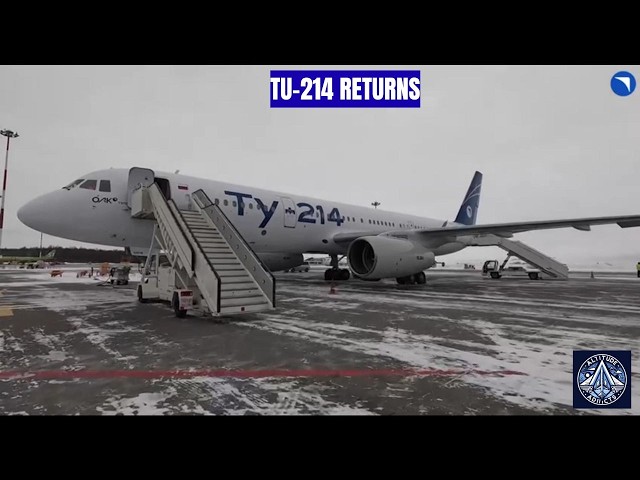
Russia is moving ahead with one of its most ambitious aviation revival projects in decades as the Tupolev Tu-214 prepares to return to commercial passenger service. In this video, we examine why Moscow is accelerating production of the Tu-214, how sanctions transformed the aircraft into a strategic national project, and why Red Wings has been selected as the launch commercial operator for the revived jet.
The Tu-214 was once seen as an aging Soviet-era airliner overshadowed by modern Boeing and Airbus aircraft. But following sweeping Western sanctions and growing pressure on Russia’s aviation sector, the aircraft has become central to the Kremlin’s plan for aviation self-reliance. The video explores how the Russian government, Rostec, and United Aircraft Corporation are attempting to scale up production despite major industrial and financial challenges.
We also examine why Aeroflot stepped away from the program, how Red Wings became the preferred operator, and what role state-backed financing is playing in keeping the project alive. From import substitution and supply chain localization to the future of the MC-21 and SJ-100 programs, the Tu-214 story reveals the broader struggle inside Russia’s aerospace industry.
Could the Tu-214 become Russia’s main medium-haul passenger aircraft for the next decade? Or is Moscow facing a much bigger challenge than simply restarting production lines? Watch the full report for a detailed look at one of the most important developments in Russia’s aviation sector.
#Russia #Tu214 #RussianAviation #RedWings #CivilAviation #AviationNews #RussianAircraft #Boeing #Airbus #MC21 #SJ100 #Rostec #UnitedAircraftCorporation #Geopolitics #AirlineIndustry #Aerospace #RussiaNews #AviationIndustry #CommercialAviation #AircraftProduction
Be a Member for exclusive privileges - https://www.youtube.com/channel/UCviEFTf1xIPKsjmyF_zvFug/join
Twitter : https://x.com/AltitudeAddicts
Website: https://www.altitudeaddicts.com
Show More Show Less View Video Transcript
0:05
The first commercially operated Tupolev
0:07
Tu-214
0:09
is expected to enter service with Red
0:11
Wings Airlines in 2027,
0:13
marking an important step in Russia's
0:15
long-delayed effort to revive
0:17
large-scale domestic civil aircraft
0:19
production.
0:21
The development is becoming a major part
0:23
of Moscow's post-sanctions aviation
0:25
strategy as the country tries to reduce
0:28
reliance on Western-built aircraft and
0:30
build a more self-sufficient aviation
0:32
ecosystem.
0:34
Russia's aviation industry is now
0:36
dealing with sanctions, supply chain
0:38
disruptions, certification problems, and
0:41
manufacturing bottlenecks, while also
0:43
trying to replace aging Boeing and
0:46
Airbus fleets.
0:48
United Aircraft Corporation has
0:49
confirmed that the first batch of 11
0:52
Tu-214 aircraft will be delivered
0:55
through a state-backed leasing mechanism
0:57
financed by Russia's National Welfare
0:59
Fund.
1:01
And honestly, this is no small
1:03
industrial task. Rebuilding aircraft
1:06
production capacity is not something
1:08
that happens overnight.
1:10
The Tu-214 program has gradually turned
1:13
into a visible symbol of Russia's
1:15
broader industrial sovereignty
1:17
ambitions.
1:18
While newer projects like the MC-21 and
1:22
SJ-100 continue to face delays connected
1:25
to engine localization and systems
1:27
replacement, the Tu-214
1:30
is increasingly being described by
1:32
Altitude Addicts and Russian aviation
1:34
observers as the only domestically
1:36
produced medium-haul aircraft that could
1:38
realistically enter larger-scale
1:40
production within the next several
1:42
years.
1:44
And that brings us to why the Tu-214
1:47
suddenly matters again in the present
1:49
day.
1:50
The aircraft itself is not new.
1:53
The Tu-214 first entered service decades
1:56
ago as a modernized derivative of the
1:58
Soviet-era Tu-214 family.
2:01
But geopolitics changed the equation
2:04
completely.
2:05
Before sanctions intensified, Russian
2:07
airlines preferred Western aircraft like
2:10
the Boeing 737
2:12
and Airbus A320 because of their fuel
2:15
efficiency, operational economics, and
2:17
extensive global support networks.
2:21
Then the sanctions environment changed
2:23
everything.
2:24
Western restrictions disrupted aircraft
2:26
deliveries, maintenance support, spare
2:29
parts access, and long-term fleet
2:31
planning for Russian airlines.
2:34
Moscow responded by accelerating import
2:36
substitution programs across the
2:39
aerospace sector.
2:41
In that environment, the Tu-214
2:43
transformed from what many considered an
2:45
aging legacy aircraft into a strategic
2:48
industrial asset.
2:50
Russian Prime Minister Mikhail Mishustin
2:52
previously announced that certification
2:55
work on the latest Tu-214 configuration
2:58
was completed in late 2025.
3:02
That certification allowed production
3:04
expansion plans to move forward.
3:07
The aircraft is now one of the few
3:09
Russian certified jetliners potentially
3:11
available for near-term deployment.
3:14
It sounds straightforward when said
3:16
quickly. It definitely is not
3:19
straightforward behind the scenes.
3:21
And this is where Red Wings enters the
3:23
story in a very important way.
3:26
The decision to hand the first
3:28
commercial Tu-214 aircraft to Red Wings
3:31
is seen inside Russia as both practical
3:34
and symbolic.
3:35
Unlike many carriers that fully
3:37
transitioned to Western fleets, Red
3:39
Wings historically operated
3:41
Russian-built aircraft and maintained
3:43
familiarity with the Tu-204 family.
3:47
The airline also already has limited
3:49
operational experience with the Tu-214
3:52
itself, including restored aircraft that
3:55
once belonged to the now-defunct
3:57
Transaero airline.
3:59
Crew training systems, operational
4:01
procedures, and maintenance familiarity
4:04
already exist inside the company.
4:07
That reduces some transition risks
4:09
compared to airlines operating only
4:11
Western-built aircraft.
4:13
Ownership structure matters, too.
4:16
Red Wings operates under Rostec, the
4:18
giant Russian state technology
4:20
conglomerate that also controls major
4:23
aerospace manufacturing assets.
4:25
That creates tighter coordination
4:27
between aircraft manufacturers, leasing
4:30
entities, and airline operators.
4:33
Basically, everyone is already inside
4:35
the same larger ecosystem.
4:38
Russian commentators have described Red
4:40
Wings as a potential demonstration
4:42
operator for modern Russian aircraft
4:44
programs.
4:46
The airline had also been expected to
4:48
become a flagship operator for the
4:50
SSJ100 program.
4:53
But continuing delays involving engines
4:55
and import-substituted systems
4:57
complicated those plans significantly.
5:01
Interestingly, the Tu-214 revival was
5:04
not originally supposed to revolve
5:06
around Red Wings at all.
5:08
Early plans centered around Aeroflot,
5:11
Russia's flagship airline.
5:13
Aeroflot was expected to become the
5:15
launch operator for several
5:17
next-generation domestic aircraft types.
5:20
But things did not go according to plan.
5:23
One of the biggest disagreements
5:25
reportedly involved cockpit crew
5:27
requirements.
5:29
Aeroflot wanted a two-person cockpit
5:31
arrangement similar to modern Western
5:33
airliners, while the Tu-214 retained a
5:36
three-person crew setup.
5:39
Combined with ongoing delivery delays,
5:41
Aeroflot's enthusiasm for the program
5:43
began to fade.
5:45
By the middle of 2024, Aeroflot
5:48
leadership openly indicated that the
5:50
airline would prioritize the MC-21
5:53
instead.
5:55
That forced Russian aviation authorities
5:57
and manufacturers to search for another
5:59
operator willing to support the Tu-214
6:03
rollout.
6:04
Red Wings eventually emerged as the most
6:06
politically and operationally practical
6:09
solution.
6:11
And then there is the manufacturing
6:12
challenge itself.
6:14
Despite growing optimism surrounding the
6:16
Tu-214, enormous production obstacles
6:19
remain.
6:21
The aircraft is built at the Kazan
6:23
Aviation Plant, part of the Tupolev
6:25
organization.
6:27
For years, the facility produced
6:29
aircraft at extremely low volumes and
6:31
often focused on specialized government
6:33
or military-related variants instead of
6:36
standardized commercial production.
6:39
Russian aviation veterans say the plant
6:41
operated more like a custom workshop
6:44
than a modern high-volume assembly line.
6:47
Over time, the factory produced numerous
6:50
specialized aircraft variants including
6:52
airborne command posts, surveillance
6:54
aircraft, communications platforms, and
6:57
government VIP transports.
7:00
That history created serious scaling
7:02
problems once the government suddenly
7:04
needed serial production.
7:07
Russia's earlier aviation development
7:09
plans envisioned a much faster increase
7:12
in Tu-214 production.
7:14
Government targets once anticipated
7:16
multiple deliveries per year beginning
7:19
several years ago.
7:21
But actual production progress moved far
7:23
more slowly than expected.
7:26
Sometimes industrial reality has a habit
7:28
of ignoring official schedules.
7:32
Russian sources indicate that only a
7:34
limited number of aircraft are currently
7:36
at advanced assembly stages.
7:39
That raises continuing doubts about
7:41
whether meaningful serial production can
7:43
truly begin by 2027.
7:47
Even so, Altitude Addicts notes that
7:49
Russian industry insiders continue to
7:51
insist the situation is gradually
7:54
improving through infrastructure
7:55
upgrades, workforce rebuilding, and
7:58
supply chain stabilization efforts.
8:01
Another major part of the Tu-214 revival
8:04
involves import substitution.
8:07
Russian officials repeatedly emphasize
8:09
that the upcoming commercial aircraft
8:11
will use domestically produced systems,
8:14
replacing foreign-origin components.
8:17
Since the sanctions waves of 2014, and
8:20
especially after 2022, Russia has
8:23
accelerated localization efforts
8:25
involving avionics, navigation systems,
8:28
inertial systems, and other critical
8:30
technologies.
8:32
Some Russian aviation specialists argue
8:34
that much of this replacement work was
8:36
already underway long before the latest
8:39
sanctions intensified.
8:41
Former civil aviation researchers cited
8:44
in Russian industry discussions claim
8:46
the number of foreign systems requiring
8:48
replacement may have been exaggerated
8:51
publicly.
8:52
According to those assessments, many
8:54
remaining foreign-origin components were
8:57
relatively minor and unlikely to
8:59
drastically alter aircraft performance
9:01
once replaced.
9:03
But import substitution is still
9:05
technically difficult.
9:07
Replacing a component is only one step
9:10
in the process.
9:11
Every new system integration requires
9:13
testing, certification, operational
9:16
validation, maintenance documentation,
9:18
and long-term supply assurance.
9:21
Those are exactly the kinds of areas
9:23
where aerospace projects become slow,
9:25
expensive, and sometimes painfully
9:28
complicated.
9:30
Financial support is also central to the
9:32
Tu-214 program.
9:35
Russian authorities are relying on
9:36
state-backed leasing mechanisms to make
9:39
the aircraft economically viable for
9:41
airlines.
9:43
Under the proposed structure, Russia's
9:45
Ministry of Finance would use National
9:47
Welfare Fund resources to finance
9:50
aircraft acquisitions through leasing
9:52
entities connected to Rostec.
9:55
That arrangement allows airlines to
9:57
access aircraft at heavily subsidized
10:00
lease rates far below normal commercial
10:02
financing conditions.
10:05
Russian reports suggest these leasing
10:07
structures were specifically designed to
10:09
compensate airlines for the operational
10:11
risks associated with introducing new
10:14
domestically produced aircraft into
10:16
service.
10:18
And really, this highlights a larger
10:20
reality about Russia's aviation sector
10:23
right now.
10:24
Domestic aircraft programs are no longer
10:27
driven purely by market economics.
10:30
They are increasingly tied to strategic
10:32
national priorities involving
10:34
transportation independence, industrial
10:36
sovereignty, and sanctions resilience.
10:40
The Tu-214 revival also highlights the
10:43
difficulties facing Russia's newer
10:45
aircraft programs.
10:47
The Irkut MC-21 remains Moscow's
10:50
flagship next-generation airliner
10:51
project, while the Sukhoi Superjet
10:54
replacement effort continues under the
10:56
SSJ100 designation.
10:59
Both programs, however, have experienced
11:01
major disruptions linked to sanctions,
11:03
especially involving engines, avionics,
11:06
and composite materials.
11:09
Production schedules for those aircraft
11:11
have repeatedly slipped.
11:13
As a result, some Russian aviation
11:15
observers now argue that the Tu-214 may
11:19
be the only practical domestically
11:21
produced medium-haul aircraft capable of
11:23
broader operational deployment within
11:26
the next 5 years.
11:28
That does not automatically mean the
11:30
aircraft is technologically superior.
11:33
Critics inside Russia continue to argue
11:36
that the Tu-214 remains less efficient
11:39
than modern Airbus and Boeing aircraft
11:41
in terms of operational economics and
11:43
fuel consumption.
11:45
Supporters respond by saying that
11:47
availability and independence now matter
11:50
more than achieving perfect
11:51
technological parity.
11:54
Russia is also exploring significantly
11:56
larger Tu-214 production ambitions
11:59
beyond Red Wings.
12:01
United Aircraft Corporation and leasing
12:03
partners have reportedly discussed a
12:05
potential agreement involving up to 100
12:08
Tu-214 aircraft for S7 Airlines.
12:13
Negotiations are reportedly in advanced
12:15
planning stages with deliveries
12:17
potentially beginning around 2029.
12:21
If that agreement moves forward, it
12:24
could become one of the largest
12:25
commitments ever made for the Tu-214
12:28
family and could reshape Russia's
12:31
commercial aviation manufacturing
12:33
sector.
12:34
But skepticism remains widespread.
12:37
Questions continue over whether the
12:39
industrial base can realistically
12:41
sustain production at those scales.
12:44
And yes, funding remains a huge issue,
12:46
too.
12:48
Russian officials estimate that broader
12:50
aviation development programs may
12:53
require trillions of rubles in
12:55
additional financing.
12:57
Altitude Addicts observes that the scale
12:59
of the challenge now now extends far
13:01
beyond simply assembling aircraft.
13:04
It involves rebuilding supply chains,
13:07
industrial capacity, workforce skills,
13:09
certification systems, and long-term
13:11
operational support structures almost
13:14
simultaneously.
13:16
Ultimately, the Tu-214 program has
13:19
evolved into something much larger than
13:21
a conventional commercial aviation
13:23
project.
13:24
It has become part of Russia's wider
13:26
effort to preserve an independent
13:28
aerospace sector under intense
13:31
geopolitical and economic pressure.
13:34
For Moscow, success would demonstrate
13:36
that Russia can rebuild domestic civil
13:39
aviation capabilities despite sanctions
13:41
and technological isolation.
13:44
Failure, meanwhile, would expose the
13:46
limitations of attempting rapid
13:48
industrial substitution in one of the
13:50
world's most technologically demanding
13:53
industries.
13:55
Whether the Tu-214 ultimately achieves
13:57
large-scale commercial success remains
14:00
uncertain.
14:01
But for now, the aircraft has become a
14:03
centerpiece of Russia's aviation
14:06
survival strategy.
14:08
It now stands as a bridge between Soviet
14:10
industrial heritage and a heavily
14:12
sanctioned future where domestic
14:14
production is no longer optional, but
14:17
essential.
14:21
If you like this video, please like,
14:22
share, and subscribe the channel.
14:25
Please also take the channel membership
14:27
to encourage us.
14:29
Last but not least, please hype this
14:31
video if you are watching on a mobile
14:33
device.
#Science