Up next in 10


What happens to a body if a helmet fails in vacuum, minute by minute, from the first second through recovery or not.
0:00 The First Second
1:15 Air Leaves First
2:40 What You Cannot Feel Yet
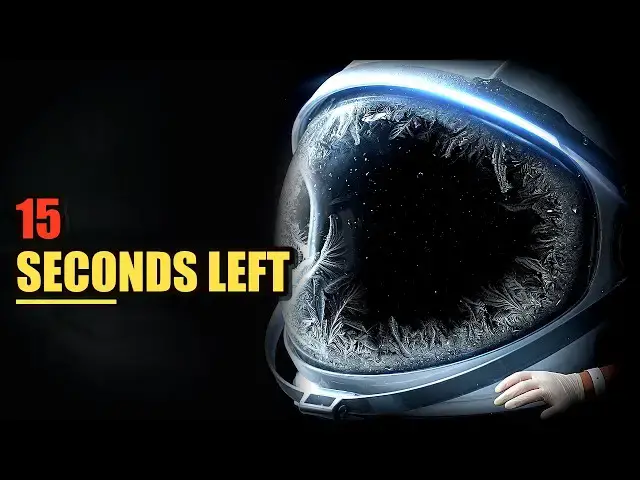
4:05 Fifteen Seconds
5:30 The Body Holds
7:00 And It Gets Worse
8:25 Jim LeBlanc, 1966
10:00 What Does Not Happen
11:20 After the Clock
This is a physiology walkthrough from public NASA records, vacuum-chamber tests, and the Soyuz 11 accident. It is not medical advice and not a movie recap.
#space #spacesuit #nasa #vacuum #spacescience #astronaut #spacesafety #humanbody
Visuals are original AI-generated stills. Narration is synthetic. Not medical, legal, or financial advice.
Show More Show Less View Video Transcript
0:00
On August 16th, 1966, a NASA technician
0:03
named Jim LeBlanc is standing in a
0:05
vacuum chamber in Houston when his suit
0:08
hose pops off and the pressure around
0:10
his body drops towards zero in a few
0:12
seconds.
0:13
He has about 15 seconds of useful
0:15
consciousness left. And the first thing
0:17
he notices is not pain. It is his spit
0:21
boiling on his tongue. A hospital clock
0:23
on a wall does not care about orbit. It
0:26
ticks the same second whether you are in
0:27
Houston or 300 km up. The body does not
0:31
get a warning light. The visor does not
0:34
fog with a last message. Air leaves,
0:36
pressure falls. The clock starts and you
0:39
cannot feel the part that will matter
0:41
later.
0:42
The first second.
0:44
The helmet is not a hat. It is a
0:46
pressure vessel around a wet, warm,
0:49
breathing animal. A working suit holds
0:52
about 4.3 lb per square inch of oxygen
0:56
in some American extravehicular designs
0:59
or a higher mixed gas pressure in
1:01
others.
1:02
Outside, in low Earth orbit, the
1:04
pressure is effectively zero. The seal
1:07
at the neck ring is the line between
1:09
those two numbers. When that line fails,
1:12
the gas in the helmet does not wait for
1:14
a decision. It dumps. In a hard vacuum,
1:17
a hole the size of a visor crack can
1:20
empty a helmet volume in well under a
1:22
second. Your ears pop. Your chest feels
1:25
a shove outward. The first lungful you
1:27
try to take has nothing in it that can
1:29
hold a shape. You do not hear a movie
1:32
hiss for long. There is almost no air
1:34
left to carry sound. You are still
1:36
standing or still clipped to a handrail.
1:39
The visor is still in front of your
1:41
face. The body has not voted yet. Blood
1:44
is still moving. The heart has not been
1:46
told. That first second is a plumbing
1:48
event, not a death scene. The gas left.
1:52
The wet surfaces have not caught up.
1:54
Air leaves first.
1:56
Oxygen in the blood is not a tank you
1:58
can see. It is a partial pressure. At
2:01
sea level, arterial blood carries oxygen
2:04
at about 100 mm of mercury. In vacuum,
2:07
the driving force that keeps oxygen in
2:09
the blood reverses. Gas leaves the
2:12
alveoli. Gas leaves the blood.
2:15
Within a few seconds, the brain is
2:17
already running on what it stored, not
2:19
what it is receiving. Useful
2:22
consciousness in a sudden vacuum is
2:24
commonly cited in the 10 to 15 second
2:27
range. That is not a personality trait.
2:30
That is how long the brain can spend the
2:32
oxygen already in the tissue. You may
2:34
try to hold your breath. Do not. The
2:37
lungs are bags of wet air at body
2:40
pressure. If the chest is closed against
2:42
a zero pressure helmet, the pressure
2:45
difference can tear tissue.
2:47
NASA training and vacuum chamber
2:49
practice say the opposite of the
2:51
instinct, exhale. Let the gas go.
2:54
Empty lungs in vacuum are ugly. Full
2:57
lungs fighting the vacuum are worse.
3:00
The mouth goes dry and loud at the same
3:02
time. Saliva boils. The water in the
3:05
tongue and the lining of the mouth
3:07
flashes to vapor because the boiling
3:09
point of water falls with pressure.
3:12
At the pressure of space, water boils at
3:15
body temperature. That is ebullism on
3:17
the exposed wet surfaces. It feels like
3:20
the tongue is fizzing. Jim LeBlanc later
3:23
described that fizz. He did not describe
3:26
a cinematic freeze. He described a boil.
3:30
What you cannot feel yet.
3:33
The skin does not explode. The body is
3:36
not a balloon with a weak seam. Skin and
3:38
connective tissue hold. Under a suit
3:40
that has lost helmet pressure, the rest
3:43
of the garment may still be doing work
3:44
or it may not.
3:46
If the whole volume is open to vacuum,
3:48
the body swells. Water in the tissues
3:50
turns toward vapor. The skin contains
3:53
it. You get puffy, tight, clumsy. Joints
3:57
fight you. The face behind the visor can
3:59
balloon enough that the eyelids are hard
4:01
to use.
4:03
You do not feel a freeze dry. Space is
4:05
cold in the sense that heat leaves by
4:07
radiation, not in the sense that you
4:10
flash freeze like a steak on a tray. In
4:13
the first minute, heat loss is not the
4:14
killer. Gas loss is. The hospital clock,
4:18
if you could see one, would show less
4:20
than a minute. The at the edge of the
4:22
frame would still look like hands. The
4:24
body is still a closed bag of salt water
4:26
with a pump. The pump is still beating.
4:28
What you cannot feel yet is the brain
4:31
going quiet.
4:32
Vision tunnels. Hearing goes strange.
4:35
Fine motor control in the fingers starts
4:38
to fail before you have a sentence left
4:40
to say on the radio. You may still think
4:43
you are working the problem. You are
4:45
already late.
4:47
15 seconds.
4:49
At about 10 to 15 seconds, useful
4:51
consciousness ends for most people in a
4:54
hard vacuum. That number comes from
4:56
aircraft altitude physiology and from
4:59
the vacuum chamber record, not from a
5:01
screenwriter.
5:02
The brain is a 3-lb organ that spends
5:05
oxygen like a furnace.
5:07
When arterial oxygen collapses, the
5:09
lights go out in a narrow window. You do
5:12
not get a debate. You get a fade. If
5:14
someone on the ground or a crewmate can
5:17
re-pressurize the volume in that window,
5:19
the story can still turn.
5:21
If they cannot, the clock keeps going
5:23
without you.
5:24
The heart may continue for a short time.
5:27
Breathing, if the chest is still moving,
5:29
is moving nothing useful. The visor may
5:31
show fog or ice from the moisture that
5:33
just boiled out of the mouth and nose.
5:36
That frost is not weather. It is your
5:38
water leaving. This is the turn most
5:41
people do not expect. The helmet failure
5:44
is not a slow leak you diagnose with a
5:46
checklist. In a true dump, the checklist
5:49
is already behind the event. The body is
5:51
on a 15-second fuse and the fuse started
5:54
when the seal opened, not when you
5:56
noticed. The body holds after
5:58
consciousness. The body is still a
6:00
physical object with rules. Blood does
6:03
not boil in the arteries the way a pot
6:05
boils on a stove.
6:07
The circulatory system is a pressurized
6:09
loop. Skin and vessel walls keep liquid
6:12
blood from flashing into a foam the way
6:14
spit does.
6:15
Animal tests and the human vacuum
6:17
chamber cases point the same way. The
6:20
organism swells, the wet surfaces boil,
6:22
the brain fails first, and the rest of
6:25
the meat is still there.
6:26
Nitrogen that was dissolved in tissues
6:28
can come out of solution. That is the
6:30
same family of problem as a diver's
6:32
bends. In a sudden vacuum, it is not the
6:35
main clock. The main clock is hypoxia.
6:38
The secondary clock is the damage that
6:40
starts when tissues have no oxygen and
6:42
when water vapor has been ripping
6:44
through the airways. NASA's public
6:47
recovery window is ugly and specific. If
6:49
pressure and oxygen return within about
6:51
90 seconds, survival with recovery has
6:54
been considered possible in the
6:56
literature around these accidents and
6:58
tests. Past that, the brain has been
7:00
without oxygen long enough that the
7:03
outcome shifts from blackout to injury
7:05
to death. That is not a guarantee of a
7:07
good day at 90 seconds. It is the outer
7:10
edge of the window people site when they
7:11
talk about vacuum exposure as
7:13
survivable. And it gets worse, and it
7:16
gets worse because the helmet is
7:18
attached to a person who still has a
7:20
job. If this is an EVA, you are on a
7:23
tether or a boom in sunlight or shadow
7:26
with a visor that may now be a sheet of
7:28
ice on the inside. The hands that were
7:31
working a bolt are now swollen inside
7:33
gloves. The radio may still be live, you
7:35
are not. A crewmate has to notice the
7:38
body go slack or a ground loop has to
7:40
see the suit data fall off a cliff. Suit
7:43
telemetry is a stack of numbers.
7:45
Pressure, oxygen flow, carbon dioxide,
7:48
heart rate. A helmet dump shows up as a
7:51
pressure trace that falls off the chart.
7:54
Heart rate may spike then wander. If the
7:56
rest of the suit is intact, some systems
7:59
keep pumping gas into a volume that no
8:01
longer exists. That is money and oxygen
8:04
thrown in a hole. If the failure is at
8:06
the neck ring or visor, the life support
8:08
backpack cannot outrun vacuum. Vacuum is
8:12
not a leak you can top off. It is an
8:14
infinite sink.
8:16
The part that actually matters is not
8:18
the visor cracking like glass in a film.
8:20
It is the time from seal failure to
8:22
repressurization. Everything else is
8:25
scenery. The body does not care if you
8:27
are over the Pacific or in a chamber in
8:29
Houston. The body cares about
8:32
millimeters of mercury and seconds. Jim
8:34
LeBlanc, 1966.
8:37
On August 16th, 1966, Jim LeBlanc is in
8:40
chamber B at Johnson Space Center
8:42
testing a suit. A hose detaches. The
8:45
pressure around him collapses. He feels
8:48
the saliva boil. He has time to say that
8:50
he cannot breathe and then he is gone
8:52
from the inside. The chamber team sees
8:54
it. They repressurize.
8:57
He is unconscious about 14 seconds after
8:59
the failure. By the accounts that have
9:01
been public for decades, he wakes. He
9:04
survives.
9:05
He reports the tongue. He does not
9:07
report exploding. He does not report
9:09
freezing solid. He reports a boil, a
9:11
blackout, and a return.
9:14
That is the named case the physiology
9:16
hangs on because it is a human in a real
9:18
vacuum with a clock and a recovery. The
9:21
darker named case is June 30th, 1971.
9:24
Soyuz 11. Georgy Dobrovolsky, Vladislav
9:28
Volkov, and Viktor Patsayev are in a
9:31
descent module when a pressure
9:33
equalization valve opens at about 168
9:36
km. They are not in pressure suits. The
9:39
cabin goes to vacuum. Recovery crews on
9:42
the ground open a hatch and find three
9:44
men who did not get a 15-second rescue.
9:47
The autopsy record, as later discussed
9:49
in public histories, points to asphyxia
9:52
and the effects of decompression.
9:54
That is the other end of the same clock,
9:56
same physics, no repressurization in
9:59
time.
10:01
What does not happen?
10:03
What does not happen tomorrow and what
10:05
does not happen in the first half minute
10:07
is the movie list. You do not flash
10:09
freeze into a statue. You do not burst
10:12
like a balloon. Your eyes do not pop out
10:14
of your head. Your blood does not boil
10:16
in your veins in a red fog. You do not
10:19
get a poetic last conversation. You do
10:22
not have minutes to write a note on the
10:23
visor.
10:24
The sun does not cook you in 10 seconds
10:26
and the shadow does not freeze you in 10
10:28
seconds. Thermal death is a longer
10:30
argument, measured in hours of radiation
10:33
imbalance, not in the helmet dump
10:35
window.
10:36
Your other organs do not all fail in the
10:38
first breath. The heart can keep a
10:40
rhythm after the brain has already
10:42
checked out. The skin holds, the
10:44
skeleton holds. The wet surfaces of the
10:47
mouth and lungs take the first physical
10:50
insult, the brain takes the first
10:52
functional insult. That order is the
10:54
whole mechanism. A cracked visor on a
10:57
well-designed suit is also not
10:59
automatically the story. Helmets are
11:01
tested, visors are layered, neck rings
11:04
have locks. The failure mode in training
11:07
films is rare because the hardware is
11:09
built against it. The body timeline only
11:12
starts if the pressure volume actually
11:14
opens. A fogged visor, a water leak, a
11:17
communications dropout, those are
11:19
different accidents.
11:21
Luca Parmitano's 2013 helmet water event
11:24
was a drowning risk in a pressurized
11:26
helmet, not a vacuum dump. Do not mash
11:29
those clocks together.
11:32
After the clock,
11:34
if the volume comes back in time, the
11:36
body has a second timeline.
11:38
Consciousness can return in seconds to
11:40
minutes after pressure and oxygen are
11:42
restored if the blackout was short. The
11:45
tongue stops boiling because boiling
11:47
needs low pressure. Swelling eases as
11:49
gas goes back into solution and as vapor
11:52
collapses. There can be lung injury from
11:54
the pressure swing. There can be ear and
11:57
sinus damage. There can be the bends.
11:59
There can be a hospital clock in a real
12:01
hospital. Monitors at a distance. An
12:04
empty visor on a bench. Hands at the
12:06
edge of a bedrail.
12:08
The person may remember the fizz and
12:10
then nothing. The person may remember
12:11
nothing at all. If the volume does not
12:14
come back, the brain's clock runs out.
12:16
In the range, people quote around a
12:18
minute and a half. After that, this is
12:20
no longer a helmet problem. It is an
12:22
oxygen problem that has already been
12:24
decided. The body can still be
12:26
retrieved. Retrieval is not the same as
12:28
a person coming back. The visor at the
12:30
end is just plastic and seals. The suit
12:33
is fabric and bearings and a
#News