Up next in 10

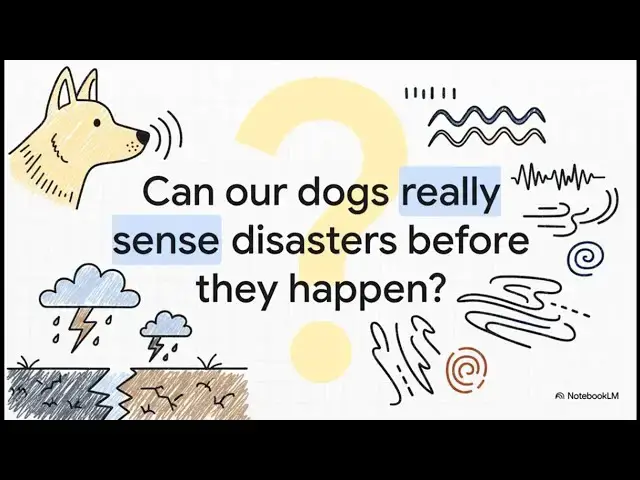
Can Dogs Sense Natural Disasters?
Nov 27, 2025
For centuries, tales have persisted of animals behaving strangely before a catastrophic event.
From dogs refusing to go outside before an earthquake to pets acting anxious hours before a storm hits, these anecdotes are compelling. But is there any truth to them?
As dog owners, we’ve all witnessed our pets do things that seem inexplicable, leaving us to wonder about the hidden depths of their perception.
This article dives into the fascinating question: can dogs sense natural disasters?
We’ll explore the cutting-edge science, the historical accounts, and the biological superpowers that might just make your furry friend a four-legged early warning system.
🔎 Read the full article at Doggozila Magazine on the link below: 👇🔗 👀
🔗 https://doggozila.com/can-dogs-sense-natural-disasters/
👆 📺 👀
#rescuedogs #dogssensedisasters #herodogs #heroicdogs #doggielife #pets #petlove #doglove #dogbehavior #dogowner
Show More Show Less View Video Transcript
0:00
You've probably heard the stories,
0:01
right? Tales of animals acting strange
0:03
just moments before disaster hits. Dogs
0:06
barking like crazy, hiding, refusing to
0:08
go outside. It makes you wonder what's
0:10
really going on in their heads. Is it
0:12
just folklore or are they actually
0:13
sensing something that we can't? Well,
0:15
let's dive in and find out. I mean, it's
0:18
a huge question and it almost feels like
0:19
something out of a movie, doesn't it?
0:21
But it's a question that so many dog
0:22
owners have seriously asked themselves.
0:24
So, are we just talking about a bunch of
0:26
compelling stories, or is there a real
0:28
measurable ability at play here? And
0:30
then you hear a story like this and wow,
0:32
it's just impossible to ignore. See,
0:34
this isn't just about a dog being a
0:36
little nervous. We're talking about
0:37
specific, urgent behavior that literally
0:39
saved a family. It's an absolutely
0:41
chilling, powerful account. And it's not
0:44
a one-off thing. Here's another one. A
0:46
dog just refusing to go for her morning
0:49
walk. Just a simple, stubborn act that
0:51
seemed so out of character. But that one
0:53
decision kept her owner out of the path
0:55
of one of the deadliest tsunamis in
0:57
history. It's the sheer number of these
0:59
stories that pushes this whole question
1:01
out of the realm of myth and into
1:03
something we have to take seriously. So
1:06
where does this all come from? Well,
1:07
these kinds of powerful stories, they're
1:09
not new at all. In fact, this idea has
1:12
been a part of human history for,
1:14
believe it or not, thousands of years.
1:17
So, the big question is, are these just
1:19
legends we keep telling ourselves, or is
1:21
there a real pattern here stretching all
1:23
the way back through time? No,
1:25
seriously, this idea is ancient. We're
1:27
talking as far back as 373 BC when
1:30
historians actually wrote about animals
1:32
just up and fleeing a city right before
1:34
it was completely wiped out by an
1:35
earthquake. And as you can see, the
1:37
pattern just keeps going. The most
1:39
famous modern case, though, has to be
1:40
Haichi, China, in 1975. The animal
1:43
behavior was so widespread and so
1:45
bizarre that officials took it
1:46
seriously, they actually issued an
1:47
evacuation order that saved thousands of
1:49
lives from a monster quake. Okay, so
1:52
this brings us to the central problem
1:53
that science is trying to figure out. On
1:56
one side, you've got the idea of a
1:57
genuine ability, a premonition. But on
2:00
the other side, you have something
2:01
called confirmation bias. And we all do
2:04
this, right? It's where we remember that
2:06
one time our dog freaked out right
2:07
before a thunderstorm, but we totally
2:09
forget the 10 other times he freaked out
2:11
and absolutely nothing happened. We're
2:14
just connecting the dots after the
2:16
event. So, how do we get past this
2:18
debate? How do we separate fact from
2:20
coincidence? Well, you turn to science.
2:22
Researchers are now taking these
2:24
centuries of stories and trying to find
2:25
hard, measurable data to finally figure
2:28
out if this K9 sense is real. And the
2:31
way scientists have approached this has
2:32
really evolved. You know, it started
2:34
pretty simply, just collecting and
2:36
cataloging all these stories. From
2:37
there, it moved to more organized
2:39
surveys with pet owners. But now, now
2:42
we're in a whole new ball game, using
2:44
modern tech like activity monitors on
2:46
dog collars to see if there's a real
2:48
quantifiable link between their behavior
2:50
and say an earthquake. And this research
2:53
is getting really serious. One huge
2:56
study looked at 160 earthquakes and
2:58
found some pretty strong evidence that
3:00
animals were in fact detecting something
3:03
beforehand. And now we have these cool
3:05
new projects that are crowdsourcing data
3:07
from thousands of pet owners using
3:09
technology to search for big statistical
3:11
patterns that one person could never
3:13
ever spot on their own. Okay, so if the
3:16
data is starting to suggest that dogs
3:18
can sense these things, the next
3:20
question is how? How are they doing it?
3:23
Well, the answer isn't magic or anything
3:25
mystical. It's biology. And honestly,
3:27
it's way cooler than magic. They have
3:29
biological sensors that are so much more
3:31
powerful than ours, it's kind of hard to
3:33
even wrap your head around it. Just
3:35
think about this number for a second.
3:37
300 million. That's how many scent
3:39
receptors a dog can have. We've got a
3:42
measly 6 million. This incredible sense
3:44
of smell is a top theory for how they do
3:46
it. See, right before an earthquake, the
3:49
immense pressure on rocks can release
3:50
gases from the ground. We'd never
3:52
notice, but for a dog's nose, it could
3:54
be like a blaring alarm siren going off,
3:56
telling them something is very wrong.
3:59
And it's not just their nose, not by
4:01
long shot. Check out their hearing
4:03
range, but what's maybe even more
4:05
important is what they can hear on the
4:06
other end of the spectrum. That super
4:08
low frequency sound we call infrasound.
4:11
These are the deep, deep rumbles from
4:13
shifting tectonic plates or faraway
4:15
tornadoes. Sounds that travel from miles
4:17
completely unheard by us. And then
4:20
you've got the final piece of the
4:22
puzzle, touch. When an earthquake
4:25
happens, the very first waves to arrive
4:27
are called Pwaves. They're super fast,
4:29
but they're also really weak. Most of
4:32
the time, we humans don't feel them at
4:33
all. But a dog with all four paws on the
4:36
ground, they might feel those tiny
4:38
little tremors seconds before the big
4:40
destructive waves hit. That's a few
4:42
precious moments of a head start.
4:45
So, when you put it all together, this
4:47
is the main takeaway. It's not some kind
4:49
of supernatural sixth sense. It's a
4:52
finely tuned biological toolkit. Their
4:55
sense of smell, their hearing, their
4:56
sense of touch, they're all so sharp
4:58
that they can pick up on faint clues
5:00
from the environment that are completely
5:02
invisible to us. All right, so this is
5:05
all pretty fascinating, but what does it
5:07
actually mean for you as a dog owner?
5:09
How can you learn to read these
5:11
potential signals from your dog without,
5:13
you know, getting paranoid every time
5:14
they whine? The owners who are convinced
5:17
their dogs warn them, they report these
5:19
kinds of behaviors over and over again.
5:21
It's not just a single bark. It's the
5:24
intensity, the fact that it doesn't
5:25
stop, and just how out of character it
5:27
is. I mean, a dog that suddenly starts
5:29
trying to hide in the bathtub on a
5:31
perfectly calm, sunny day. That's a very
5:34
different signal than a dog hiding
5:35
during a thunderstorm you can already
5:37
hear. So, here's a good way to break it
5:39
down. To tell the difference, it really
5:41
just comes down to trigger and context.
5:44
Is there an obvious reason for your dog
5:45
to be anxious or is it happening out of
5:47
the blue? Is this a typical level of
5:50
anxiety for your dog, or is it something
5:51
you've never seen before? Knowing the
5:53
difference is everything. And honestly,
5:56
that leads us to the single most
5:58
practical and important thing you could
5:59
take away from all of this. Before you
6:01
can ever hope to spot what's abnormal,
6:03
you have to become an absolute expert on
6:05
your dog's normal. What's their
6:07
baseline? How do they act on just a
6:09
regular old Tuesday? Knowing that,
6:10
that's the key to everything. All right,
6:13
so we've looked at the stories, we've
6:14
gone through the history, and we've
6:16
unpacked the science. Let's bring it all
6:18
together and land this plane. Can they
6:20
or can't they? The final verdict seems
6:23
to be a cautious yes. The evidence is
6:27
pretty strong that dogs can detect the
6:29
subtle changes that happen before some
6:31
disasters. But, and this is a really big
6:33
butt, they are not infallible. They're
6:36
not perfect crystal balls. Not every dog
6:38
is going to react and not every disaster
6:41
gives off clear signals for them to pick
6:42
up on. And this is just so important to
6:45
remember. We have to respect that our
6:47
dogs are our companions first. They are
6:49
family. Their job isn't to be our
6:51
personal little alarm system. It's one
6:53
thing to celebrate their amazing
6:55
abilities, but it's another thing
6:56
entirely to put the burden of our safety
6:58
on their shoulders. But this whole thing
7:00
leaves us with a really fascinating
7:02
thought for the future. What if we
7:03
didn't have to rely on just one dog's
7:05
weird behavior? Just imagine a system
7:08
that could gather the data from the
7:09
activity monitors of thousands and
7:11
thousands of pets in a region. A sudden
7:13
massive spike in anxious behavior all at
7:15
once. That could be a powerful new kind
7:17
of early warning. Maybe buying all of us
7:20
just a few more precious seconds to get
7:21
ready. Now that that's an interesting
7:24
idea.
#Dogs
#Dogs
#Earth Sciences