Up next in 10

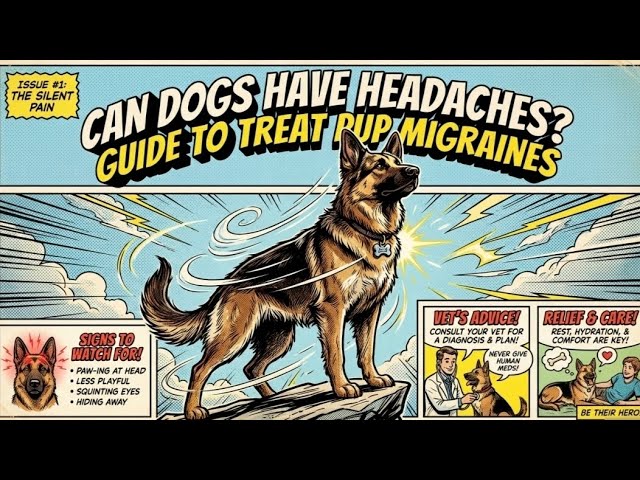
Watch the video guide about dog migraines and can dogs have headaches in the first place!
If interested in learning more visit the source article by Doggozila Magazine on the link below: 👇
🔗 https://doggozila.com/can-dogs-have-headaches/
👆
#dogheadache #dogmigrains #doghealth #dogcare #doglife #doglove #petlove #dogbehavior #pets
Show More Show Less View Video Transcript
0:00
Have you ever just looked at your dog
0:01
and wondered what is really going on
0:03
inside that furry head of theirs? It's
0:05
one of the biggest mysteries for any pet
0:07
owner. And today, we're going to try to
0:09
crack the case. Our investigation starts
0:11
right now. So, picture this. Your dog,
0:15
who's usually all about playing, is
0:17
suddenly hiding away in a closet.
0:19
They're squinting in the sunlight. Maybe
0:21
they even flinch when you try to pet
0:22
their head. They can't just tell you
0:24
what's wrong, but you've got that gut
0:26
feeling. Something is just off. Could it
0:30
actually be a headache? Well, in this
0:32
explainer, we're putting on our
0:34
detective hats to learn the silent
0:35
language of our dogs and find some
0:37
answers. All right, so our first line of
0:40
inquiry is pretty simple. Is this even a
0:42
real thing? I mean, can dogs actually
0:44
get headaches in the first place? This
0:46
is the core question we need to solve.
0:48
And you know, it's a lot trickier than
0:50
you'd think. Mainly because our key
0:52
witnesses can't talk. And the answer is
0:55
a huge resounding yes. vets, experts,
0:58
you name it. They all agree that dogs
1:01
can and definitely do get headaches. So,
1:04
the case isn't really about if it
1:05
happens, but how on earth we can know
1:08
when it's happening. The real mystery
1:10
here is learning to crack the code of
1:12
their silent signals. Now, something
1:14
you've got to know is that not all
1:16
headaches are created equal. Just like
1:18
in a good detective story, we have to
1:20
figure out if the headache is the main
1:22
problem, what experts call a primary
1:24
headache, think of it like a migraine,
1:26
or if it's just a clue pointing to
1:28
something else entirely. You know, a
1:30
secondary headache, maybe caused by a
1:32
bad tooth or a hidden ear infection. So,
1:35
now that we know what we're looking for,
1:36
we can move to the next phase of our
1:38
investigation, decoding the clues. Your
1:41
dog is trying to tell you what's up, and
1:43
it's our job as their best friend to
1:45
learn how to listen with our eyes. First
1:47
up, let's talk about the physical clues.
1:50
These are the most direct pieces of
1:51
evidence you're going to find. Does your
1:53
dog suddenly shy away when you go to pet
1:55
their head? Are they holding their head
1:57
kind of low? Now, a really serious sign
2:00
is something called head pressing, where
2:02
they literally push their head against a
2:04
wall or furniture and shivering when
2:07
it's not even cold. That can also be a
2:09
big signal that they're in pain. Next,
2:12
you want to look for changes in their
2:13
personality. You know your dog best. A
2:16
super happy pup might become really
2:18
quiet or seem kind of sad. They might
2:20
start hiding in dark rooms, seem
2:23
anxious, and just can't get comfortable,
2:25
or maybe they suddenly refuse to eat
2:27
their crunchy food because chewing just
2:29
hurts too much. A big shift in their
2:31
behavior is always a huge clue. And
2:34
here's one of the biggest giveaways, a
2:37
total sensitivity overload. Just like a
2:39
person dealing with a terrible migraine,
2:42
a dog with head pain can find normal
2:43
lights and sounds completely unbearable.
2:46
This is exactly why they go looking for
2:48
those dark, quiet places to hide. And
2:50
what's really key here is realizing just
2:52
how similar their experience might be to
2:54
our own. Okay, so you've gathered your
2:57
evidence, you've been watching closely,
2:59
and you've noticed the clues. Now what?
3:02
Well, it's time to take your case file
3:04
to headquarters. your veterinarian.
3:06
They're the lead investigator who can
3:08
really put all these pieces together.
3:10
You know, a vets's process is really
3:12
methodical. It always starts with your
3:14
story. Everything you've observed is so
3:16
important. Then comes a really thorough
3:18
physical exam. From there, they'll
3:20
probably run some tests like blood work
3:21
to rule out other suspects like an
3:23
infection. If things are still unclear,
3:25
they might use advanced scans like an
3:26
MRI. And sometimes the final clue is
3:29
just seeing how your dog responds to a
3:30
specific pain treatment. It's all a
3:32
process of elimination to get to the
3:33
truth. And now we're at the resolution
3:36
of our case. Once we have a likely
3:38
suspect, a headache, what's our action
3:40
plan? This is the part where you get to
3:42
be your dog's hero by providing safe and
3:44
effective relief. Okay, listen up
3:46
because this is without a doubt the
3:49
single most important thing in this
3:50
entire explainer. I really cannot stress
3:53
this enough. Never ever give your dog
3:55
human pain medicine. Things like
3:57
ibuprofen or Tylenol are actually
3:59
poisonous to them and can literally be
4:01
fatal. Safe pain relief has to come from
4:04
your vet who can give you medications
4:05
made specifically for dogs. Please just
4:08
never ever make that mistake. While your
4:10
dog is feeling under the weather, you
4:12
can be an amazing nurse for them at
4:14
home. Go ahead and provide that quiet,
4:16
dark den they're looking for. Make sure
4:18
fresh water is always nearby since being
4:20
dehydrated can make everything worse.
4:22
And if they don't want to eat, try
4:24
offering some soft food that's easy to
4:25
chew. These little acts of comfort, they
4:28
make a world of difference. So, now that
4:31
we have a plan for our own dogs, let's
4:33
just zoom out for a second. This whole
4:35
investigation into canine pain is
4:37
actually part of a much much bigger
4:38
story. The evolving science of pain
4:40
research for all of us. And this is
4:43
super relevant right now. A major US
4:46
health agency is actually shifting its
4:47
policy to fund fewer animal studies.
4:50
Historically, believe it or not, a lot
4:51
of what we know about migraines came
4:53
from this kind of research. So, some
4:54
scientists are a little worried this
4:56
shift could slow down the discovery of
4:57
new pain treatments for both people and
4:59
our pets, which just shows you how
5:01
connected all of our medical futures
5:02
really are. And all of this information,
5:04
from spotting the clues to understanding
5:06
the science, it all brings us to this
5:08
one really powerful truth. Just by
5:11
learning this stuff, by learning to
5:13
decode your dog's silent language, you
5:15
have officially become their single most
5:17
important health advocate. You are their
5:20
voice. All the clues and insights from
5:23
our little investigation today come from
5:26
the fantastic folks over at Doggozilla
5:29
magazine. So, we'll end with this
5:31
thought. The case might be closed for
5:33
this explainer, but your job as your
5:35
dog's detective, well, that's just
5:37
getting started. So, pay attention,
5:39
listen with your eyes, and ask yourself,
5:41
what silent stories is your dog trying
5:43
to tell you?
Pets & Animals
Dogs