live_tv
Livestream Starting Soon
00
Hours
:
00
Minutes
:
00
Seconds
Up next in 10

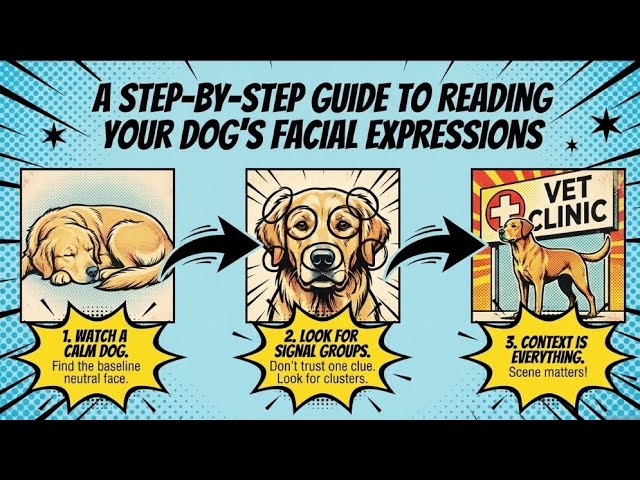
Watch the guide on the dog's facial expressions and how to learn to read them!
For more in-depth information visit the source material by Doggozila Magazine on the link below: 👇
🔗 https://doggozila.com/dogs-facial-expressions/
👆
#funnydogface #dogface #dogfacialexpression #dogexpressions #dogexpression #fundogfaces #doglove #petlife #puppylove
Show More Show Less View Video Transcript
0:00
Welcome. In this explainer, we're going
0:02
to crack the code to unlock the secret
0:04
language written all over your dog's
0:06
face. You know, from a tiny ear twitch
0:08
to a soft blink, every single movement
0:11
tells a story. And you, you're about to
0:13
become a master interpreter. Okay, so
0:16
let's just dive right in. Your dog talks
0:19
to you every single day, not with words,
0:22
of course, but with this incredibly
0:24
complex and fascinating language of
0:26
facial expressions. And honestly,
0:29
understanding this language is the
0:30
absolute key to a deeper bond. So,
0:33
what's our game plan? Well, first we'll
0:35
get into the surprising science behind
0:37
it all. Then, we'll build your personal
0:39
toolkit so you know exactly what to look
0:41
for. After that, I'm going to give you a
0:43
super simple three-step guide to decode
0:45
any look. And then, we'll translate some
0:47
common messages. And finally, make sure
0:49
you avoid some classic rookie mistakes.
0:51
Let's do this. All right, first things
0:54
first. We have to start with the science
0:56
because it turns out that expressive
0:57
face your dog has, it's no accident.
1:00
Nope, it's a masterpiece that's been
1:02
sculpted over thousands of years of
1:04
partnership with us. And the biology
1:06
behind it is, well, it's just
1:08
incredible. Think about this for a
1:10
second. The journey from wolf to dog
1:12
wasn't just about becoming tamer. It
1:14
physically changed their faces. A wolf's
1:17
face is pretty stiff, but a dog's face
1:20
is super mobile. They actually developed
1:22
new muscles, including one very special
1:25
one right above the eye. And its only
1:27
purpose to make that irresistible puppy
1:30
dog eye look that we humans just can't
1:32
handle. And you know, this didn't happen
1:34
overnight. We're talking about a
1:36
30,000year collaboration. For millennia,
1:39
the dogs that were better at
1:40
communicating with us, the ones that
1:42
could give us that look, were the ones
1:43
who did the best. It's this beautiful
1:45
story of co-evolution.
1:47
And this all comes together perfectly in
1:49
what's called the fox experiment. It's
1:52
fascinating. Scientists took wild foxes
1:54
and only bred the ones that were
1:56
friendliest to humans. And the results
1:58
were just astounding. Over generations,
2:01
not only did their personalities change,
2:03
but their actual faces change to become
2:05
more expressive, more doglike. It proved
2:08
it. A communicative face is biologically
2:10
linked to a friendly personality. Okay,
2:13
so now that we know why their faces are
2:15
so expressive, let's get into the what.
2:18
What are they actually doing? To crack
2:20
the code, you need a detective's
2:22
toolkit. So, let's break down the face
2:24
into the most important message carrying
2:26
parts. And here's the secret. Don't try
2:30
to read the whole face at once. Instead,
2:32
we're going to break it down into three
2:34
critical zones because the real magic
2:37
happens when you see how the signals
2:38
from the eyes, the ears, and the mouth
2:41
all work together to tell one story.
2:44
Zone one, the eyes. They really are the
2:47
most direct window. Soft, relaxed eyes,
2:50
that's a great sign. A hard stare,
2:53
totally different meaning. And you have
2:54
to know this one. If you see the whites
2:56
of their eyes in a little crescent
2:58
shape, that's called whale eye. It's a
3:00
classic clear as day sign that they are
3:02
feeling stressed out. Next up, zone two,
3:06
the ears. Just think of them as mood
3:09
antennas. You know, when they're
3:11
pricricked forward, your dog is laser
3:13
focused. When they're relaxed and kind
3:14
of off to the side, they're calm. But
3:17
when those ears are pulled back flat
3:18
against their head, that is a huge
3:20
signal of fear or submission. And
3:23
finally, zone three, the mouth, which
3:25
completes the picture. A relaxed
3:27
openmouth pant is usually a sign of a
3:29
happy, content dog. But a tightly
3:32
clamped shed mouth can mean stress. And
3:34
that really tricky one, the smile that
3:36
shows a lot of teeth. Well, if it's
3:38
paired with a wiggly, loose body, it's
3:40
often a submissive grin, which is just
3:42
their way of saying, "Hey, I'm friendly.
3:44
I'm no threat." Okay, you've got the
3:46
clues. The eyes, the ears, the mouth.
3:49
But how do you actually put them all
3:51
together to solve the mystery? Well,
3:53
it's time for the method. Here is a
3:56
simple three-step guide that will have
3:58
you reading your dog's face like an
3:59
absolute pro. Seriously, this process is
4:02
your secret weapon. First, step one, you
4:05
have to know your dog's baseline. What
4:07
do they look like when they're totally
4:08
relaxed, just hanging out? That's their
4:10
neutral face. Step two, look for
4:12
patterns. Don't just see one thing. Scan
4:14
all three zones. Are the eyes, ears, and
4:16
mouth all telling the same story? And
4:18
finally, step three, and this one is so
4:20
important. Context is everything. A big
4:23
yawn after a nap probably just means
4:25
they're tired. But that same exact yawn
4:26
at the vets's office, you can bet that's
4:28
a sign of stress. All right, now that
4:30
the code is cracked, let's translate
4:32
some of the most common messages your
4:34
dog is sending you every single day.
4:36
Time to put your new skills into action.
4:39
First up, the one we all love to see,
4:41
right? The happy face. A truly happy
4:44
dog's face is just loose and soft.
4:47
There's no tension anywhere. The eyes
4:49
are soft, the ears are in their normal
4:51
neutral position, and the mouth is
4:52
usually gently open. This is the look
4:55
that says, "I'm good. I feel safe and I
4:57
trust you." Now, stress signals are so
5:00
important to catch because they often
5:02
start as subtle whispers. So, look for
5:04
the little things. The repeated yawning
5:06
when they're definitely not tired, the
5:07
constant lip licking or looking away
5:09
from you. These are all signs your dog
5:11
is trying to say, "Hey, I'm really not
5:13
comfortable with this situation."
5:15
And then there's the face of pure focus.
5:19
I like to call it the squirrel face. You
5:21
know the one. The eyes are wide and
5:23
locked on target. The ears are swiveled
5:25
all the way forward and the mouth is
5:27
shut. Now, this expression is neutral,
5:30
but it means all of your dog's attention
5:32
is on one thing, and whatever happens
5:34
next is key. Now, if you want to become
5:37
a true expert, you've got to learn how
5:39
to avoid the common misinterpretations
5:41
because getting these wrong can really
5:43
confuse your dog. And in some cases, it
5:45
can actually be dangerous. The single
5:48
most common and yeah, potentially the
5:50
most dangerous mistake is confusing a
5:53
warning sign for a happy one. Just
5:55
because a dog is showing its teeth does
5:57
not mean it's smiling. And the key to
6:00
telling them apart, it's not in the
6:02
teeth, it's in the rest of the body. A
6:04
submissive grin is a peace offering, and
6:06
it comes with a soft, wiggly, almost
6:09
liquidy body. A true snarl, on the other
6:11
hand, is a warning, and it comes with a
6:13
body that has gone stiff, rigid, frozen,
6:16
often with those hard, staring eyes. The
6:19
difference is critical. You can't
6:21
confuse the two. And remember, don't
6:23
miss those early whispers of stress we
6:25
talked about. And please don't fall into
6:28
the trap of only watching the tail. A
6:30
wagging tail on a tense, stiff dog is
6:32
not a friendly sign. You have to read
6:34
the whole dog from the tip of their nose
6:36
to the tip of their tail. Oh, and get
6:39
this. It is absolutely a two-way street.
6:42
Incredible research shows that when dogs
6:44
look at us, they have a left gaze bias.
6:47
That means they look at the right side
6:49
of our faces first, which is where we
6:51
humans show our emotions most intensely.
6:53
Their brains are literally wired to read
6:55
our faces, too. Isn't that amazing? And
6:58
the future of this shared language is
7:00
just so exciting. I mean, scientists are
7:03
developing AI that can analyze a dog's
7:06
face to tell a vet if they're in pain.
7:08
There's systems like dog facts creating
7:10
a universal dictionary of dog faces.
7:13
This tech is giving dogs a clearer voice
7:15
than ever before. And it's going to
7:17
revolutionize how we care for them. So
7:20
the next time you look at your dog, just
7:22
remember every flicker of their eyes,
7:24
every twitch of their ears, it's a word
7:26
in a conversation. And by learning your
7:29
language, you're not just preventing
7:30
problems. You are building a deeper,
7:33
more trusting, incredible bond with your
7:35
best friend. Your dog is talking now.
7:39
You know how to listen.
#Pets & Animals
#Pets & Animals
#Pets
#Dogs