Up next in 10


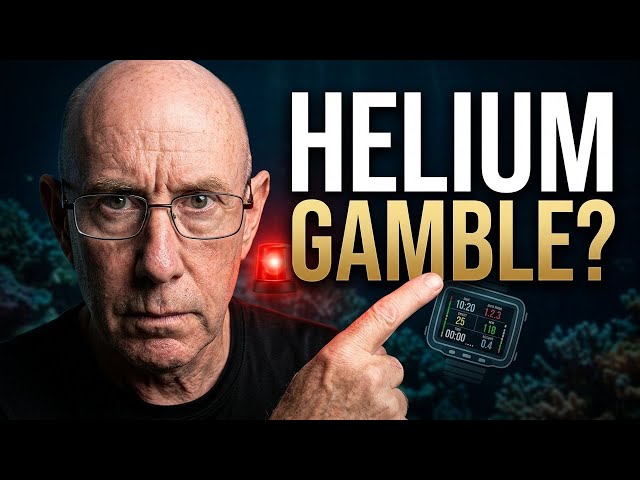
A recent video showing divers conducting very deep dives with no helium programmed into their dive computer has sparked a lot of discussion across my social media channels.
So what does the science actually say? In this interview I speak with Professor Simon Mitchell, one of the world’s leading authorities in decompression physiology and diving medicine.
Simon is a Professor of Anaesthesiology at the University of Auckland, editor of Diving and Hyperbaric Medicine, and an experienced technical diver.
In this conversation we discuss:
• Where the helium penalty originally came from
• The Bühlmann assumption about helium vs nitrogen kinetics
• What modern research suggests about helium in relevant tissues
• Why shorter decompression always means increased risk
• Why doing the same dive twice can produce very different bubble results
• The dangers of assuming that “getting away with it once” proves anything
If you are a technical diver using helium, planning deeper dives, or following the current online debate, this conversation provides important context from one of the most respected voices in diving medicine.
━━━━━━━━━━━━━━━━━━━━━━
*Thanks*
A huge thanks to Prof Simon Mitchell for taking the time to discuss this important topic with me.
━━━━━━━━━━━━━━━━━━━━━━
*Chapters*
00:00 The Helium Penalty Controversy
00:20 Divers Doing Deep Dives With No Helium Set
00:41 Why This Debate Has Exploded Online
01:03 Introducing Professor Simon Mitchell
01:36 The Interview Begins
02:06 Why We Need to Understand the Origin
02:26 Where the Helium Penalty Actually Came From
04:46 Bühlmann’s Key Assumption About Helium
08:18 What Later Research Discovered
12:09 The Problem With the Evidence
16:31 How Decompression Models Really Work
20:11 What This Means For Real Divers
24:08 What Happens If You Remove The Helium Penalty
27:39 Risk, Conservatism and Personal Choice
30:21 The Big Takeaway
━━━━━━━━━━━━━━━━━━━━━━
*ABOUT THIS CHANNEL*
Deep Wreck Diver explores shipwrecks, submarines, and sunken aircraft from around the world - combining technical diving with detailed wreck identification and historical storytelling. Every dive uncovers a piece of history lost to the depths.
━━━━━━━━━━━━━━━━━━━━━━
*Kit I Use*
Note, some of these are affiliate links so help support making my videos:
- Gloves are Ansell Alphatec 87-063 - https://amzn.to/4jDHhX4
- Main torch is an Orcatorch D630 - https://amzn.to/4jlT4tA
- Backup torch is an Orcatorch D710 - https://amzn.to/4jhddRk
- Drysuit is an O-Three Ri200 - https://www.othree.co.uk/drysuit-range/ri-2-100-drysuit/
- CCR is an AP Diving Inspiration (XPD) - https://www.apdiving.com/
- Backup computer is a Shearwater Perdix v2 - https://amzn.to/42FXZOW
- Reels are by Kent Tooling - https://www.divingproducts.co.uk/
- Cameras are Paralenz Vaquita
- Video light is NiteScuba NSV60 - NiteScuba NSV60 - https://s.click.aliexpress.com/e/_onHEKQZ
- Phone housing is Divevolk Seatouch 4 Max - https://s.click.aliexpress.com/e/_omJlNKL
- Stickers for gear by Dive Signs - https://www.divesigns.com/
━━━━━━━━━━━━━━━━━━━━━━
*Strobes*
I use two different strobes (also affiliate links)
-- Prozhaozhu 3000 Lumen Diving Strobe - https://s.click.aliexpress.com/e/_c3Qb99tF
-- Prozhaozhu 4000 Lumen Diving Strobe - https://s.click.aliexpress.com/e/_c3KmWqCN
- Jon clip - https://s.click.aliexpress.com/e/_oDqq0RW
━━━━━━━━━━━━━━━━━━━━━━
📱Follow My Socials!
Instagram 👉 https://www.instagram.com/deepwreckdiver/
Facebook 👉 https://www.fb.com/DeepWreckDiver
Buy Me A Coffee 👉 https://buymeacoffee.com/d33puk
Email 👉 [email protected]
Show More Show Less View Video Transcript
0:00
On this helium purity question, when you
0:02
boil it all down,
0:04
it's simple. If you do less
0:06
decompression,
0:08
there's more risk.
0:09
You may have seen the recent video
0:11
circulating online that had some divers
0:14
doing some very deep dives with no
0:17
helium programmed into the computer.
0:19
I talked about it on my social media
0:22
channels and it got a whole load of
0:24
comments and that kind of led into a
0:26
discussion about the helium penalty. So,
0:29
I thought that I would go straight to
0:31
one of the world experts in
0:33
decompression physiology and medicine.
0:36
And I just come back to the fundamental
0:37
message, which is
0:39
if you do less decompression, it's more
0:41
risk.
0:42
I'm sure most people will know Professor
0:44
Simon Mitchell. He's a diving physician.
0:47
He's a professor at the University of
0:50
Auckland. He's editor of the Diving and
0:53
Hyperbaric Medicine Journal.
0:56
Perhaps most importantly, he's also a
0:59
technical diver. I'm very invested in
1:02
getting the right answers for us. So,
1:05
actually has a whole load of skin in
1:07
this game himself. So, in the
1:09
conversation you're about to see, he
1:11
explains what the helium penalty is,
1:14
where it comes from, and then talks
1:16
about some of the more recent research
1:19
that is in place and provides some real
1:22
practical advice on what that means to
1:25
to us and him as a diver. It's an
1:28
absolutely fascinating interview. I
1:31
think it will be really useful. I hope
1:34
you enjoy it.
1:35
Hello, Simon. Thank you very much for
1:37
coming on to the Deep Wreck Diver
1:39
channel. Yeah, no, Dom, thanks for
1:41
asking me, you know, to talk about this.
1:43
It's obviously a
1:45
topic of some, you know, considerable
1:47
relevance to, you know, all of our
1:50
technical diving colleagues. So, yeah,
1:52
no, happy to answer questions. Yeah.
1:54
There has been some research done on
1:56
this. We've we've seen that the paper
1:58
that's on the the Shearwater website is
2:00
frequently referred to. I think it'd be
2:02
useful to get your kind of summary of
2:04
that.
2:05
Yeah, uh look, I I wonder actually
2:08
though whether it's worth
2:10
just stepping back a little bit and
2:12
looking at the origins of the helium
2:15
penalty because
2:17
if you don't understand that, then it's
2:19
pretty hard to have the debate about
2:22
what the more recent research shows. Uh
2:25
and I can summarize that very quickly if
2:27
that's acceptable to you. Of course.
2:30
Yeah, well, uh
2:32
the helium penalty is something that
2:35
arose out of uh some I think uh
2:38
assumptions that were made by Buhlmann
2:41
back when he was doing his original
2:43
research and design of his algorithm uh
2:46
based essentially on
2:49
the
2:50
the the physical properties of the
2:52
various gases that he was considering.
2:54
Uh I think a fair summary of it is to
2:56
say that
2:57
Buhlmann assumed that
3:00
helium uh would be a faster exchanging
3:03
gas than nitrogen and it's probably best
3:06
just to keep it as simple as that. Based
3:08
largely on the fact that it's a smaller,
3:10
more diffusible molecule and therefore
3:13
you would take up and actually eliminate
3:16
helium
3:18
more quickly than nitrogen.
3:20
But what that meant was on a dive where
3:23
you were breathing
3:25
a substantial amount of helium, you
3:27
would [clears throat]
3:28
build it up in your fast tissues more
3:30
quickly. That would mean that during an
3:34
ascent at the end of your dive,
3:38
the fast tissues would start to reach
3:40
their Buhlmann supersaturation limits
3:42
with helium uh earlier than they would
3:45
have if
3:46
you were breathing nitrogen because
3:48
you've absorbed that helium really
3:50
quickly. So this more rapidly absorbed
3:53
gas would be the limiting gas as you
3:55
started to ascend.
3:57
And that would mean
3:59
that you would require deeper stops
4:02
because those tissues that had
4:04
accumulated a lot of helium would be
4:06
reaching their super saturation limits
4:07
more quickly.
4:09
And of course, during those deeper
4:10
stops, you would be absorbing more gas
4:13
in the slower tissues, and that would
4:15
mean
4:16
that at the other end of your
4:18
decompression, the sort of the shallower
4:20
end, you would have to spend longer to
4:22
unload those slower tissues that
4:25
have accumulated more gas during the
4:27
deeper stops. And so,
4:29
that's where the helium penalty came
4:31
from. Because you had to stop earlier in
4:33
the ascent because you've absorbed a
4:35
larger quantity of inert gas being
4:37
helium, you had to spend more time at
4:40
the other end unloading those slow
4:42
tissues. And that that was the origin of
4:44
the helium penalty.
4:47
Now, fast forward to
4:49
the work that he that David Doolette did
4:52
in Adelaide some years ago actually. He
4:55
looked at helium versus nitrogen
4:58
kinetics in
5:00
a couple of tissues that were of
5:03
relevance to the kind of
5:05
diving that we do in terms of their you
5:07
know, their on-gassing and off-gassing
5:09
kinetics.
5:10
And I if I recall correctly, those two
5:12
tissues were skeletal muscle and brain.
5:15
You know, in a very well conducted,
5:18
carefully calibrated experiment, he
5:20
showed that in fact, helium and nitrogen
5:23
kinetics were quite similar in those
5:25
tissues. It's important to understand
5:27
that David wasn't saying there isn't a
5:29
difference between helium and nitrogen.
5:31
There actually is. If you actually
5:34
compare
5:35
total body out-gassing from saturation
5:38
on helium or nitrogen, helium is
5:41
quicker.
5:42
Uh but that's whole body saturation.
5:44
It's It's the same as the kind of dives
5:47
that we do where you don't get whole
5:49
body saturation.
5:51
So there is a difference in helium and
5:53
nitrogen kinetics, but what David was
5:55
saying is that in the tissues that are
5:57
substantially relevant to what we do,
5:59
the kind of dives, depths, and durations
6:01
that we do as tech divers,
6:03
there's probably not as much difference
6:05
as Buhlmann assumed there was.
6:08
So
6:09
that's the origin of the helium penalty.
6:11
That is the current evidence about
6:14
helium versus nitrogen kinetics in
6:16
relevant tissues that David
6:19
has
6:20
published.
6:22
I guess now the question is, well, how
6:24
do we
6:25
rationalize those two things? How do we
6:28
interpret David's findings in relation
6:31
to the Buhlmann prescriptions that were
6:34
based on this assumption that helium was
6:36
very different?
6:37
So So shall I go on and talk about that?
6:40
>> Absolutely, because there is a lot of
6:42
people out there, I'm sure you know this
6:43
already, who are simply not programming
6:46
helium into their dive computers. I know
6:48
some, I'm sure you do as well. And by
6:51
and large, those people seem to be
6:53
getting away with it or it seems to be
6:55
working for them. I guess it'd just be
6:57
useful We would all like a bit of
6:58
clarity or an understanding of which way
7:00
the risks go. Yeah, well, there's only
7:02
one way the risks go.
7:04
I
7:04
>> [clears throat]
7:04
>> put this one like this.
7:07
If before any of this discussion
7:09
emerged, right?
7:11
Like and before any debate about the
7:13
helium penalty emerged,
7:15
I I let's just say I'd gone online and
7:18
said, "Hey guys,
7:20
let's just
7:21
cut the amount of decompression that we
7:23
do by 30% or 20% or something like
7:27
that."
7:28
Everyone would have looked at me and
7:29
gone, "You're bonkers. Why would we do
7:31
that?" Like
7:33
people get bent doing what we do. This
7:34
is when we were doing decompressions
7:37
with the helium penalty in place. If I'd
7:39
said, "Hey, let's just cut our
7:40
decompressions." Lots of people would
7:42
go, "Yeah, are you bonkers? You're mad."
7:45
But now, what's happening is people are
7:47
doing exactly that based on this idea
7:50
that
7:51
we don't have to account for the helium
7:53
penalty. You're right, some people are
7:55
getting away with it and some people
7:58
probably aren't. What it really comes
8:00
down to is
8:03
the fact that yes, over the years we've
8:06
been doing this these decompressions
8:09
that have assumed that the helium
8:12
penalty is real, the difference in
8:14
helium and nitrogen kinetics is real.
8:17
We've adhered to the algorithms that
8:21
have assumed that and we've been doing
8:23
these longer decompressions as a result.
8:27
David's point, and I think it's very
8:29
important and it's kind of the view I
8:31
subscribe to, is that
8:34
yeah, Buhlmann might have had it wrong
8:37
in terms of some of the important
8:39
tissues that are relevant to the kind of
8:41
diving we do, but he may have been
8:44
prescribing the amount the right amount
8:46
of decompression, but for the wrong
8:48
reason. In other words,
8:50
we were doing the kind of decompressions
8:52
that you need for deep diving,
8:55
uh
8:56
but
8:57
based on a flawed assumption.
9:01
But what that means is if you then take
9:03
that assumption away and do shorter
9:05
decompressions as a result, your risk is
9:06
going to be higher and there's no doubt
9:08
about that. I mean, it's simple. If you
9:11
do less decompression, your risk is
9:12
higher.
9:13
So, if you're going to be all clever and
9:16
say, "Okay, well, we'll we'll
9:19
we'll ditch the helium penalty. We'll
9:20
tell our computers we're just diving on
9:22
nitrogen
9:24
and we'll have shorter decompressions as
9:25
a result." There's no magic that you've
9:27
just suddenly invoked that reduces your
9:30
risk or makes it the same as the risk
9:32
you had before. You are assuming higher
9:35
risk. There is absolutely no doubt about
9:37
that. There's There's just simple
9:39
physics, right? You spend longer
9:40
decompressing, you'll have less risk.
9:44
So, if you're going to ignore the helium
9:46
penalty, you're increasing your risk.
9:48
How much by? I can't tell you that.
9:50
Nobody knows, but it's definitely
9:52
increased risk.
9:54
That That's the defining thing. And one
9:55
of the things I think it is important to
9:57
point out about the kind of diving we do
9:59
is that if you accept a particular
10:02
algorithm,
10:04
then you have to understand that the
10:06
decompressions that it prescribes across
10:10
the depth range are not iso risk. There
10:13
are one or two iso risk algorithms that
10:15
David has developed for the US Navy, but
10:17
none of the ones we use as tech divers
10:19
are like that. And And what I mean by
10:21
this is that as you go deeper, even when
10:23
you're using the same algorithm,
10:26
the risk gets greater
10:28
even though you're using the same
10:30
algorithm, like Bühlmann gradient
10:32
factors 50/70.
10:34
A 50-m dive is less risk than a 100-m
10:38
dive is less risk than a 150-m dive. The
10:40
risk gets greater the deeper you go. One
10:42
of the things about the helium penalty
10:44
is that because you tend to use more
10:47
helium at those deeper depths, it's
10:49
tended to prescribe increasingly
10:51
conservative
10:53
uh well, it's imposed more helium
10:55
penalty decompression time on these
10:57
deeper dives. So, I guess what I'm
11:00
saying is
11:01
the deeper you go and ignore the helium
11:04
penalty, the more risk you're assuming.
11:07
So, ignoring the helium penalty at a
11:09
fifth on a 50-m dive
11:11
may not be as bad as ignoring it on a
11:14
100-m dive or of even worse, a 150-m
11:17
dive. This is not based on any real
11:20
data, really, except to say that we know
11:23
that
11:24
you know, the helium penalty probably
11:26
becomes more important as you go deeper
11:28
cuz you're breathing more helium, and
11:30
therefore ignoring it as you go deeper
11:32
will impart more risk on the diving you
11:36
do.
11:37
So, there's nothing magical about
11:39
ignoring the helium penalty and it
11:42
doesn't say it magically adjust your
11:44
risk so that it's the same as if you
11:47
didn't ignore it. If you do less
11:49
decompression, you're going to assume
11:50
more risk.
11:51
And actually, that conversation we've
11:53
just had kind of summarizes the whole
11:55
thing. If I mean, if you want to know
11:57
what I recommend, I don't I don't ignore
11:59
the helium penalty. I
12:02
you know, I've been diving
12:04
kind of with it in place for, you know,
12:06
the last 26 years since I started diving
12:09
rebreathers, going pretty deep.
12:12
Uh it's served me well. I've actually
12:15
had musculoskeletal decompression
12:17
sickness several times during that
12:19
period. And so why why would I
12:22
volunteer, you know, I've I've it So,
12:24
what that tells me is I'm getting close
12:26
to the edge of my envelope of risk and
12:29
I don't I I don't want to make it any
12:32
more risky
12:33
by, you know, arbitrarily ignoring what
12:37
Bühlmann had in place when he designed
12:39
his algorithm. If if I do less
12:41
decompression, I'm going to have more
12:43
risk. So, I don't do it.
12:45
Uh yes, people are doing it and getting
12:48
away with it.
12:49
Uh what that means is
12:52
that, you know, they on that particular
12:54
day, on that particular dive, it was
12:57
okay. Uh they can't say that that means
13:00
it will be okay every time. Definitely
13:02
not. One of the things uh that has
13:04
emerged in recent times, also David
13:06
Doolette's work, is that
13:09
uh the same diver doing the same dive,
13:12
alt you know, like absolutely the same
13:15
dive, depth, time, decompression,
13:18
temperature, workload. This is data from
13:21
his experimental dives in the US Navy.
13:23
So, everything very carefully be
13:26
Same diver doing identical dives
13:29
can produce markedly different bubble
13:31
grades. Markedly different. It's like
13:33
landmark study, really interesting.
13:36
Freely available online by the way, if
13:37
you
13:38
PubMed search do that DJ, you can find
13:41
it.
13:43
Uh published in DHM 2024.
13:46
Anyway,
13:47
what that tells us is that yeah, you can
13:50
do a dive
13:51
uh one day that you you know you produce
13:53
no bubbles and you can do exactly the
13:55
same dive a week later and produce grade
13:57
four bubbles. Well, that's he clearly
13:59
showed that.
14:00
So, these people that say, "Well, okay,
14:02
I've dived the helium I've dived without
14:04
the helium penalty,
14:05
uh just ignored it and told my computer
14:08
I was diving nitrox and it was fine. So,
14:10
therefore I'm fine." Doesn't necessarily
14:12
hold because
14:14
that intra-individual variability that
14:17
David's demonstrated could come bite you
14:18
on the ass,
14:19
you know, on another dive a week or two
14:21
weeks or whatever later.
14:23
So, you just need to be very careful
14:25
about this. And I just come back to the
14:26
fundamental message which is
14:28
if you do less decompression, it's more
14:30
risk. So,
14:33
I hope that's kind of answered your
14:34
questions, Dom. I But I'm I'm happy to
14:37
go into it further if you want. No, I
14:40
mean that's that's absolutely
14:41
fascinating. I think getting that kind
14:42
of the linkage that you've drawn there.
14:44
So,
14:46
doing less decompression equals more
14:47
risk and going deeper, breathing more
14:51
helium equals more risk. So, effectively
14:53
you if you you know, the point you've
14:55
just made there, you're putting risk on
14:57
top of risk. Although, you know, I think
14:59
your point is also that it's not
15:01
possible really to to necessarily
15:03
quantify that and it will be different
15:05
for the same individual on different
15:06
days anyway.
15:08
Several people have told me, you know,
15:10
in online comments, so obviously take
15:12
that with a pinch of salt, that they or
15:15
groups they're associated with are doing
15:16
active research into this area. And and
15:19
and trying to study it. Now, you've
15:20
obviously mentioned the stuff that goes
15:22
on, you know, with the US Navy that is
15:26
I guess the gold standard research. Are
15:29
you aware of or are you involved in any
15:31
other groups that are doing stuff in
15:34
this area? Short answer, no. Probably
15:36
no. I'm editor of Diving and Hyperbaric
15:38
Medicine Journal and
15:41
pretty well linked up with most of the
15:43
serious researchers around the world and
15:48
I'm not aware of anyone who is actively
15:52
looking at this. That's not saying no
15:54
one is. You just have to be careful
15:57
you know, people talk about research
16:00
amongst technical diving groups, but
16:01
it's often
16:03
essentially uncontrolled or
16:05
non-standardized anecdote and
16:07
uh
16:08
So, I No, look, I don't know of any any
16:11
research that's going on specifically to
16:13
address this issue of the helium
16:15
penalty, but I look
16:17
I can virtually guarantee you that
16:19
answer. I mean
16:20
if if you do less risk than we all used
16:23
to do when we assumed that Buhlmann had
16:26
it right, if you do less risk than
16:29
sorry, less decompression than he
16:30
prescribed, you are assuming more risk.
16:33
You You don't need research to determine
16:36
that. I mean, there's decades of
16:38
research in the US Navy
16:40
where they're trying to minimize the
16:43
amount of decompression that their
16:45
military operators have to do because,
16:47
you know, decompression is time and time
16:49
is risk in a military environment.
16:52
You know, they're trying to minimize
16:53
that. So, they're butting up against
16:55
risk of decompression sickness. This is
16:57
what their research is all about is
16:59
trying to to minimize the amount of
17:01
decompression they do. And, you know,
17:03
there's decades of data that show that
17:05
the more decompression you do, the less
17:07
the risk and the less decompression you
17:09
do, the more the risk. And
17:11
so, there's
17:12
you know [laughter]
17:13
you don't really need research to tell
17:15
you that if you ignore the helium
17:17
penalty, risk is going to be higher. The
17:19
only question is is how high and are you
17:22
prepared to accept it?
17:24
Uh and you know, if if people are
17:26
advocating
17:28
for ignoring the helium penalty, then
17:30
they kind of have to answer those
17:32
questions as well. Okay, you're going to
17:33
have higher risk. You can't really
17:36
quantify that change. I mean, that would
17:38
be an interesting thing perhaps to do in
17:41
a research project, but it'd be very
17:43
hard and you need big data for it
17:45
because like I say, all this individual
17:48
variability makes studying this kind of
17:50
thing very difficult, but you know, are
17:52
you are you aware that there's an
17:54
increased risk and are you prepared to
17:56
accept it?
17:57
And and I think that is a a perspective
18:01
that sometimes missing from these online
18:03
discussions that occur. That you do get
18:06
the sense that there are some people who
18:08
think
18:09
that they can ignore the helium penalty
18:12
and their risk isn't changed. Well,
18:13
that's nonsense. It's just nonsense. If
18:16
you do less risk, there's more Sorry,
18:18
less decompression, there's more risk.
18:20
No question. Don't know if you thought I
18:22
was, but I'm not advocating getting rid
18:25
of the helium penalty. I've just been
18:26
involved in these discussions and there
18:28
are people who are absolutely out there
18:31
who are saying the helium penalty
18:33
doesn't exist, there is no risk, or the
18:35
risk is very marginal. That's why one of
18:37
the reasons I thought I would reach out
18:38
because you are really well trusted,
18:41
you're really well known, and I think
18:43
it's kind of useful to get it direct
18:45
from you in the way that you have just
18:47
done and made it really clear. You know,
18:49
two things, go deeper, you increase the
18:50
risk.
18:52
Don't do as much deco, you increase the
18:54
risk. Now, those those things shouldn't
18:56
be rocket science, but I you know, I I I
18:58
think going deeper has been normalized.
19:00
I don't know, 20 years ago, 100 m was
19:03
was incredible, wasn't it? But there are
19:05
lots and lots of people doing dives to
19:07
those depths and well beyond.
19:09
Yeah, look, I mean, we're kind of
19:11
getting slightly from the helium
19:13
penalty, but it is worth pointing out
19:15
that
19:16
uh
19:16
your your point is exactly right. Uh the
19:20
way technical diving has evolved is, you
19:23
know, towards deeper dives.
19:25
Uh
19:26
it's also involves in certain locations
19:28
it involves repetitive technical diving.
19:31
So, you know, places like Truk Lagoon
19:32
where people might be doing two dives a
19:34
day, that kind of stuff. A lot of it is
19:36
outside the envelope of what Buhlmann
19:38
actually tested when he developed this
19:40
algorithm.
19:41
And
19:43
uh you know, we need to understand that.
19:44
We're we're extrapolating
19:47
you know, his testing program into
19:49
contexts where it was never tested or
19:53
intended for. So,
19:55
we are we're breaking new ground and uh
19:58
you know, there's risk associated with
19:59
that.
20:00
But yeah, it is important people
20:02
understand there's nothing magical about
20:04
ignoring the helium penalty
20:07
in some that it in some you know, like
20:08
okay, well, the the helium penalty may
20:11
not exist in the kind of diving we do.
20:14
It may be true.
20:15
But if you're going to do less
20:17
decompression than you used to do, then
20:19
you're going to have more risk. It's
20:22
it's very simple. And and the other
20:24
thing I'd quite like to say, Dom, uh
20:27
you know,
20:28
I think it's important to get out there
20:29
from from me. Like I'm a very impartial
20:32
observer in this space. I'm I'm a
20:34
scientist and a diving physician, and I
20:38
I follow the science, right? So, you
20:41
know, you look you look for evidence. I
20:43
don't I don't want to be
20:45
uh seen as
20:47
um
20:49
politically aligned with any particular
20:51
group that's doing one thing or the
20:53
other. I I All I'm interested in is
20:55
safety for me and my colleagues, that's
20:57
you and your audience. I That's my
21:00
primary motivation. It's not This isn't
21:02
a political discussion. Unfortunately,
21:04
these these things sometimes get
21:06
politicized, you know, like for example,
21:08
if a particular group says, "Okay, the
21:10
helium penalty is rubbish." And then
21:12
another group says it isn't. Then you've
21:14
got a political
21:15
kind of conflict. And I don't want any
21:18
part of that.
21:20
I just want to provide objective
21:23
commentary, narrative, evidence where
21:25
it's available to my technical diving
21:28
colleagues. And that's what I'm trying
21:29
to do here. That's understood and and
21:31
really appreciated. I mean, I don't
21:33
think there's any organization that's
21:35
advocating getting rid of the helium
21:36
penalty. I'm certainly not aware of
21:38
them, and I'm not speaking or
21:40
representing any particular organization
21:42
other than I do a lot of diving myself.
21:44
I had four really good mates of mine
21:46
bent last year. One of them is never
21:47
going to dive again.
21:49
And and a few others have been really
21:50
restricted. So, you know, I guess I
21:53
don't want that to happen to me in the
21:55
nicest possible sense. And nobody loves
21:58
deco, do you? You know, no nobody wants
22:00
to do more deco than we than we have to.
22:02
So, I guess there's a bit of
22:03
self-interest there, but also you know,
22:05
it is I think useful for people to get
22:06
the thoughts of someone like yourself.
22:09
Yeah, I look at it at all times. I think
22:11
divers in our cohort, our technical
22:13
diving colleagues, should have
22:15
in mind what David showed in that recent
22:18
study, that 2024 study. So,
22:21
same diver, identical dives multiple
22:24
times, and markedly different bubbling.
22:28
And what that tells you is that you
22:30
can't just say, "I ignored the helium
22:33
penalty once and I was fine. Therefore,
22:35
that's a legitimate strategy."
22:37
Because the next time or the next time
22:39
or the next time you could run into
22:41
problems. It is one of the difficulties
22:44
of
22:45
uh
22:46
the whole area of deep decompression.
22:48
You know, that it would seem
22:51
that the profile, so the time, the
22:53
depth, the decompression stops, how you
22:55
distribute them, what you're doing
22:58
during them, and the temperature of the
22:59
water, which we know has an influence,
23:01
it would seem that that is far from
23:04
the only influence on how much you
23:06
bubble on any one day. And it kind of
23:08
puts into perspective all this debate
23:10
about helium penalties or not, you know,
23:12
because
23:13
that
23:15
you know, you will increase risk by
23:17
ignoring the helium penalty, but that
23:19
might shift the
23:21
the risk needle by a small amount. Uh
23:24
Other things would appear that we don't
23:26
yet understand can shift it by a large
23:28
amount. Anyway, the point is
23:31
uh
23:32
I come back right back to my initial
23:34
point, which was
23:36
if you do less decompression, you've got
23:38
you've got more risk.
23:39
And that and that risk can vary quite a
23:41
lot. So,
23:43
getting away with it once doesn't
23:45
necessarily mean much. Uh you just need
23:48
to not over interpret that.
23:51
Okay. That's That's absolutely fantastic
23:53
and would be a nice way to finish, apart
23:56
from I've just got I just want to pick
23:58
up on one of those points that you just
23:59
made, which is about unknown risk
24:01
factors. Are there any thoughts about
24:03
the sorts of things that may change you
24:05
from a you know, a low-grade bubble to a
24:07
level four bubble? Yeah, it's
24:09
fascinating. It really is fascinating.
24:12
Uh
24:13
there are some thoughts. Uh in fact, uh
24:17
at my own group have just
24:21
received some funding from various
24:23
organizations,
24:25
uh
24:26
including DAN
24:28
uh and the US Navy, to look at some of
24:31
these things.
24:32
Um
24:33
And I might add, uh in our world
24:37
funding for research is extraordinarily
24:39
difficult to come by, and we're very
24:40
grateful to those organizations,
24:43
uh
24:44
groups like DAN, the US Navy,
24:45
Shearwater,
24:47
uh
24:48
very various groups, but those in
24:50
particular um
24:52
have just been amazing with funding.
24:53
Anyway, we uh we are exploring a few
24:56
things, so
24:57
it's possible that what you do
25:01
in the say the 24-hour period leading up
25:03
to a dive might be influential. So,
25:05
things like
25:07
diet, exercise, sleep, various
25:10
parameters that might change your body's
25:13
inflammatory state. They're all
25:16
possibilities and
25:18
and of course
25:20
you know, isolating each one of them and
25:22
individually testing each one of them is
25:24
really challenging because you know, you
25:26
need big numbers and
25:29
you know, and subjects who are engaged
25:31
in the in the process to
25:34
you know, standardize what they do in
25:36
the day leading up to an experimental
25:37
dive. It really is quite a challenge to
25:40
study this kind of thing. But, work is
25:42
underway and our group is working on
25:44
that. We're about to start a
25:47
program for one of our PhD students
25:49
who'll be looking very carefully at at
25:51
one aspect of that. So, largely focused
25:54
on exercise
25:56
day prior to a dive.
25:58
Exercise patterns, what you do in your
26:00
day,
26:01
and how that might influence bubbling.
26:04
So, that's about to start here in
26:06
Auckland. And there are probably other
26:08
things happening around the world as
26:09
well.
26:11
It's not my work, so I won't talk about
26:13
it. But, yeah, I mean, we're working on
26:14
it. But, right now, we don't have the
26:17
answers. I mean, I guess there's a whole
26:19
lot of stuff we know you shouldn't go
26:20
and you know, dive with a hangover or
26:23
body needs to be in the best possible
26:24
state, I guess. But, other than that,
26:25
you can't you can't really offer any
26:27
more thoughts. No, no, I don't think we
26:30
can right now.
26:32
I mean, there are some things that just
26:34
make sense, right? And people talk a lot
26:35
about hydration. Uh
26:38
Actually, you know, hydration as an
26:39
influence on bubbling has been looked at
26:41
a little bit.
26:42
And the evidence isn't particularly
26:45
strong on that. But, but equally, I'm
26:47
not saying you know, so people don't
26:49
over interpret it. I think being well
26:51
hydrated based on first principles alone
26:55
makes sense prior to a big technical
26:57
dive.
26:59
Getting dehydrated during the dive, you
27:01
know, a 4 or 5 hour dive, you can pee a
27:04
lot out and you can become dehydrated
27:07
and that will reduce tissue perfusion
27:09
and then reduce inert gas washout. So,
27:12
being well-hydrated, not over-hydrated,
27:14
but well-hydrated is probably probably
27:16
makes sense. Yeah, all all the things
27:19
that we do tend to focus on say that are
27:22
appropriate or are right, you know,
27:24
well-rested, not hungover, hydrated,
27:26
those kind of things.
27:28
But, objective answers like
27:31
evidence solid evidence-based answers
27:33
are far and few between.
27:35
It is actually all at once frustrating,
27:37
but one of the exciting things about our
27:39
field is that there are still these
27:41
low-hanging fruit questions that are of
27:44
high practical relevance to the
27:45
community. It's exactly the sort of
27:47
thing we love studying because it is of
27:49
such high rate practical relevance. And
27:51
of course, I'm an end-user myself, so
27:54
>> [laughter]
27:54
>> you know, I'm quite I'm I'm very
27:57
invested in getting the right answers
27:59
for us.
28:00
You know, because I'm one of you, right?
28:02
So, and so are the people that work with
28:04
me.
28:05
I kind of view it as really fascinating
28:07
that we've been doing this kind of
28:09
diving for a very long period of time or
28:11
you know, so it seems and yet you know,
28:14
these kind of questions still don't have
28:16
really clear answers.
28:18
Yeah. Well, you know, you're exactly
28:20
right. And and look, part of the reason
28:22
for that is that
28:24
it's
28:25
not child cancer, you know, it's not
28:28
and and so research funding from the
28:31
traditional research funders like the
28:34
big organizations that fund research in
28:35
any country. You go to them asking for
28:38
money to study
28:40
you know, the adverse consequences of a
28:42
discretionary recreational activity
28:45
that's engaged in mainly by what middle
28:47
class males.
28:49
Uh
28:49
They'll just laugh at you. And I guess
28:51
rightly so. I mean, you know, there are
28:53
higher priorities for research out there
28:55
for medical research.
28:57
We're just lucky and I come back to it,
28:59
you know, my gratitude to the various
29:01
organizations that do fund this kind of
29:03
research. We're just lucky there are
29:05
some.
29:06
Uh
29:07
you know, these organizations, various
29:08
philanthropists, um you know, our free
29:11
diving study in Dominica was
29:13
funded by an American philanthropist who
29:16
we're very grateful to. Um all of this
29:19
is is terrific, but it's it's hard to
29:22
get money to study. And that's why these
29:24
questions still exist. Your your point,
29:26
you know, that
29:27
>> Yeah.
29:27
Um research in this area is difficult to
29:30
do and it's difficult to get funding
29:32
for.
29:33
I I guess we should just be grateful
29:35
that the military still have an interest
29:36
in sending uh sending people down
29:38
relatively deep and they haven't got
29:40
round to the idea that it all needs to
29:41
be done by ROVs yet.
29:44
No, well, no. I mean, a lot of what they
29:46
want to do can't be done by ROVs and uh
29:50
yep, they they're still on board, very
29:52
much so. Uh brilliant. Okay, well, thank
29:56
you very much, Simon. That was I really
29:58
appreciate you spending your time to
30:00
kind of go through these questions and
30:02
you know
30:03
you know, be so honest, I guess, and you
30:05
know, straightforward as well, which is
30:07
which is really appreciated. Just to
30:09
kind of conclude, is there any final
30:10
message you want to you want to give
30:11
across? Honestly, Dom, you get me
30:14
talking on a podcast about diving
30:16
physiology and medicine and we could
30:18
talk we could talk all day. I mean, I've
30:21
there are so many things I'm passionate
30:22
about, right? But um no, I'd just say
30:25
that
30:26
uh on this helium penalty question
30:29
when you boil it all down
30:31
it's simple. If you do less
30:33
decompression
30:35
there's more risk.
30:36
And and you have to decide
30:39
given that you can't really quantify
30:41
that change in risk, whether you're
30:42
prepared to accept that. And if you are,
30:45
fine, you know? But,
30:47
if you're not, I'd just do what I do,
30:49
which is stay with the old algorithm and
30:52
be honest with my computer.
30:55
Thank you very much, Simon, for those
30:57
incredible thoughts, for spending so
30:58
much time going through that with us.
31:02
For everyone watching this, I hope
31:03
you've enjoyed it. I hope you've learned
31:05
as much as I have. Of course, if you
31:08
want to leave some comments, uh if you
31:10
want to ask some questions, I will see
31:12
if I can uh get Simon to answer them.
31:16
Otherwise, if you could do all the usual
31:17
stuff, leave us a like, subscribe,
31:21
share it with your friends, all those
31:23
kind of things, it would be brilliant.
31:25
I'm Dom Robinson, deep wreck diver. I
31:28
hope you've enjoyed this, and I shall
31:30
look forward to seeing you on the next
31:31
one.
Sports