Up next in 10


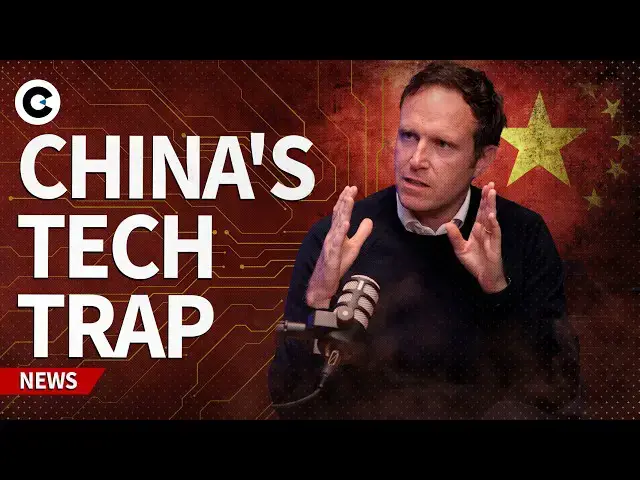
Sky News Economics Editor Ed Conway joins us in the studio to expose the fragile, invisible underpinnings of the modern global economy. From the radioactive reality of China’s stranglehold on rare earth metals to why Western politicians are completely blind to supply chain risks, Ed explains the terrifying compromises keeping our everyday tech alive.
We also dive into the future of traditional terrestrial TV, why audiences are rejecting 15-second soundbites for deep-dive economics, and the Victorian "paradox" that explains why tech advances never actually lower your workload.
Check out Ed's new Sky News documentary podcast, 'Stuff Matters', on all major platforms.
#SupplyChain #TradeWar #Economics #EdConway #UKPolitics #TechNews
Get more of City AM 👇
🌐 http://www.cityam.com
X(formerly Twitter): http://twitter.com/CityAM
Facebook: http://www.facebook.com/cityam
Instagram: http://www.instagram.com/city_am
LinkedIn: http://www.linkedin.com/company/cityam
Show More Show Less View Video Transcript
0:00
People talk these days about rare earths, mostly without entirely understanding what they are
0:04
dare I say, including some people at the top of the White House. But these things are really important
0:11
Do you know about the Jevons Paradox? I didn't. I skipped that chapter in GCSEs, but yeah
0:18
No, I didn't know about the Jevons Paradox until I read about the Jevons Paradox. If certain FT reports are true, I think Ofcom might think about shutting off terrestrial and digital TV in the 2030s
0:27
but we'll see how life changes then. I'm joined today by Sky News' economics editor, Ed Conway
0:35
who's about to launch a brand new podcast called Stuff Matters. I'm very lucky to be joined by Ed in the studio
0:42
Ed, thank you very much for coming into the city. Thank you for having me in your glorious new studio
0:48
Well, I'm glad the management at Isleworth let you come all the way out here. Special exception for you
0:54
So, Stuff Matters. It's about where the kind of stuff in your life comes from
1:00
how it's assembled and all the different bits and pieces in the history of that sort of technology
1:05
Yeah. You've built a bit of a really positive name out of writing books about how stuff works
1:12
and where stuff comes from. What first lit that fire in your belly
1:17
about how supply chains work and where stuff comes from? Gosh, well, I think we all have..
1:26
this latent curiosity. I think that's kind of an inherent human facet
1:32
is having this curiosity about how is it that the world works? What is the backstory of the things around us
1:37
But not many people look at a podcast microphone and think, oh, I wonder where all the bits in that come from
1:42
Not yet. Not yet. But, you know, that may well be something we cover
1:47
No, I mean, like, I actually think we have lost a bit of..
1:51
And this was something I kind of talked a bit about when I was writing my last book, Material World
1:56
I think we've lost a little bit of our kind of physical contact with how we make stuff and how the extraordinary stories behind everyday objects
2:06
It might be kind of microphones, it might be lithium-ion batteries, it might be something as seemingly boring as cement
2:12
But beneath all of these things, there are these stories. Sometimes it's about the amazing kind of scientific processes that are happening that you're not really aware of
2:21
like cement concrete it's famously boring but actually scientists still have yet to comprehend
2:28
what is actually happening in concrete when it's setting it is literally this this this long-standing
2:33
uh scientific kind of void of understanding that we still haven't worked out you know we
2:38
concrete i don't make this whole thing about concrete but we could uh concrete you know was
2:44
was being deployed and laid and set by the romans you know 2 000 years ago then we lost the recipe
2:51
and then we rediscovered it. And all of which is to say, there's amazing history, there's amazing backstories behind everyday objects
2:57
But these days, you know, we have shipped off so much of our production of these things overseas
3:01
And as a result, I don't think we have that kind of intimacy. I was going to ask, is that a byproduct of globalization
3:06
Yeah, I think it is to an extent. I think it's, you know, we have become
3:10
in the course of the last kind of 20, 30 years, more of a consumer of stuff and a buyer of stuff
3:15
And you order it from wherever it might be and it turns up the next day
3:19
And you don't have to think that much about kind of where it comes from, about the journey it's been on and about what it's made of
3:24
And that's kind of the point of Stuff Matters is to say, OK, let's take any kind of everyday object
3:29
Let's take an LED. Let's take a pair of AirPods like earbuds
3:33
Beneath each of those things, you've got this backstory. And sometimes it's this amazing backstory of how this thing was made
3:39
You know, what was the science behind it? But sometimes also it leads you on to these other kind of takeaways that teach you profound lessons about the world
3:47
So like, you know, LEDs, which is our first episode, which is just out
3:52
Part of that story is not just about the amazingness of the technology that allows you to make an LED, which, by the way, is amazing
3:58
You know, again, this longstanding decades and decades of work went into trying to invent a blue LED, which was the final bit of the spectrum they needed to work out
4:07
They got red. They've got green. They didn't have blue. And if you have blue, then all of a sudden you're able to have LEDs creating kind of any color in the world
4:14
and LEDs are so much more energy efficient than everything else, which completely changes the game for everything
4:21
for the cost of light, for the fact that we have these wonderful lights in the studio
4:25
that are not baking us too much, at least today. And also..
4:29
You should have been in here before they put the air con. I was sweaty
4:33
Air con is another one. But human endeavor has allowed us to create amazing things
4:40
And I think sometimes if we take a step back and appreciate what those things are
4:43
and appreciate the journey they've been on and also appreciate the kind of compromises along the way
4:48
So with LEDs, you've got the amazingness of the product, but you've also got this question mark about whether
4:53
because they're so cheap these days, are we just bathing the world in light
4:57
in a way that we never have done before? And for centuries and centuries of human existence
5:03
one of the perennial things we had to deal with is that the world was just dark, and we struggled to deal with that
5:08
Only kind of like 150 years ago, the amount of light that people had in their world
5:12
was about equivalent, just in terms of lumens of light, the amount of light that they had in their world
5:17
was equivalent to the light that you get by opening a fridge and you have one bulb, like old fridges
5:22
with like one bulb in the back. That was your entire light in your house. Not the new ones, which is like opening up a sunbed
5:27
Not the new ones, no. The new ones are much better. Again, because of LEDs. So I just kind of happen to believe
5:34
that all of these everyday objects provide this lens into the world
5:38
that will create marvel, but will also allow you to understand some of the compromises
5:44
that we're making more. And again, so with LEDs, theoretically our episode is about LEDs
5:50
but actually if you listen to it you'll find this is also about the notion of the Jevons Paradox
5:54
You know about the Jevons Paradox? I didn't. I skipped that chapter at GCSEs
6:01
No, I didn't know about the Jevons Paradox until I read about the Jevons Paradox. But basically it's the idea
6:06
it was this guy, William Stanley Jevons, in the Victorian period, noticed that all of the steam engines
6:11
were getting more and more efficient. And as they were, theoretically, the amount of coal that we were consuming
6:16
to generate all that kind of movement and all of the engines theoretically we should have actually been consuming less and less coal But in reality we consume more and more
6:28
And why is that? It's because there is this insatiable human demand to do more things
6:33
Because we can. Because we can. Yeah. And because we want to do more stuff. And most of that doing stuff, in the case of kind of coal, in the case of engines, a lot of that..
6:41
Arguably in the case of AI. And as that will just grow and grow and grow. AI, okay, I don't want to get away
6:47
But there's, so we have, so we've got our main episode and then we've got these bonus episodes
6:52
which you can get if you become a subscriber, which is the other thing
6:56
Premium content. Subscribe. Sky 2030 strategy. That's part of the strategy. We can talk about that as well
7:01
But part of that, we've done extra bonus episodes and one of those is about things like AI
7:07
And actually, Dario from Anthropic is talking about the Jevons Paradox has been a really good example of actually one of the bonuses of AI
7:18
because the more of this stuff we have, the more uses we'll come up with. It's like when they invented the Internet and they were like
7:23
oh, this is going to mean everyone does a three-day week and it's all good, but actually the workload on white-collar workers has just exploded
7:30
since the invention of the Internet. It's a similar kind of trend
7:35
Yeah, I mean, I'm slightly more techno-optimist about this stuff and I kind of happen to believe that we generate these tools
7:44
and like what is it about humans like what is it defines us as humans it is that we take stuff out
7:50
of the ground and we turn it into tools that improve our standard of living and back in the
7:54
day you know back kind of you know in our earliest days in the neanderthal period or in the kind of
7:59
um uh the stone age we would get stones out of the ground and turn them into axes these days we
8:04
take stones out of the ground and we turn them into silicon chips and there's a far more complex
8:08
process but the silicon chip still begins as literally as a rock coming out of the ground
8:13
But for more on that, you can obviously read my last book. But the point is, what is it that defines us as humans
8:19
It is that we take stuff out of the ground and we turn it into tools
8:22
and use those tools to improve our standard of living. And I just happen to think that AI is another one of those tools
8:28
It's going to be bumpy, but it was bumpy with the railroads. It was bumpy with the telegraphs
8:31
It was bumpy with the internet, with all of these industries as they came along
8:35
And we need to work out what those bumps are. But, yeah, inherently, I'm quite positive about that
8:42
Yeah. No, I totally agree. I think there will always be a reason for more work
8:47
Do you then think that there is a bit of a knowledge gap in the general public about this sort of thing
8:52
I mean, Nick Ferrari likes the phrase Mrs Jones in Clapham. Do you think Mrs Jones in Clapham doesn't quite get
8:59
how all this stuff is interlinked and how she kind of actually is part of that journey
9:04
of where stuff comes from and where it eventually goes? I think if Mrs Jones in Clapham doesn't understand that
9:11
I think it's because we haven't been doing a good enough job of talking about this stuff for years and years
9:16
Because, like I say, I think that we have been encouraged as consumers
9:21
And to some extent, you know, us journalists have been a part of this. Politicians have been a part of this
9:26
Encouraged not to think about the journey that things have been on, about what it took to get them there
9:31
And part of the point of this podcast is to start, I mean, scratching the surface
9:36
and part to some extent what i've been doing you know in previous books is to start to just say
9:41
this may look simple this may look humdrum but if you just unpeel the surface of it one of our
9:47
episodes is bananas so that's that's a little another plug am i doing enough plugs yeah you do
9:51
you do but if you unpeel the surface if i unpeel the surface um what what else do you learn yeah
9:57
what do you learn about globalization what do you learn about the world around you and And it has profound political consequences as well
10:06
And do you think there is a knowledge gap with policymakers on this stuff? Massive
10:11
And so if you tariff, I don't know, copper or something like that
10:15
or tariff bananas, you tariff this or that, maybe it's not something you think, oh, is it really that important
10:20
But actually it has profound consequences later on down the supply chain
10:24
and throughout manufacturing. Yeah, I mean, a good example is rare earth metals
10:28
And, you know, people talk these days about rare earths, mostly without entirely understanding what they are, dare I say, including some people at the top of the White House
10:36
But these things are really important, a set of 17 elements really important, without which you can't make the motors in many of the most advanced electric cars
10:47
You can't make wind turbines work. You can't make the advanced alloys you need that go into turbines
10:51
You can't make, you know, the steel and the various other components you need just to make the world work
10:57
and you can't make airpods and so you know in one of our episodes we look at airpods and we ask that
11:05
question you know this how did rare earths become such a big deal how did they become ubiquitous
11:10
without us even knowing i think to the point where they've become so important that spacex looks to
11:16
ipo for one of the biggest ipos of all time because they need to reach the moon and mars
11:20
because it's full of rare earth metals yeah although i'm a bit i'm a little skeptical about
11:25
the notion of kind of minerals and how much you can, you know, the space mineral, mineralology
11:31
geology kind of story, but just because I kind of think there's a lot of this stuff still on Earth
11:37
The main thing stopping us from getting rare earths in like, you know, in the United States
11:41
or in Europe, isn't that there's a lack of rare earths in the ground. You dig up, you know, grab
11:46
a chunk of earth out of the ground in your garden or in the park nearby you, there will be some rare
11:51
Earth's in there. Maybe not many, but the challenge is not the availability of this stuff. The
11:56
challenge is our willingness to do the refining, to take those ores and turn them into actual
12:01
metals that we can use. And what does that come back to? Well, it comes back to the backstory of
12:06
Rare Earth's. And the backstory of Rare Earth's is that these things, in order to actually refine
12:11
them... So this goes back to the Manhattan Project, where the atomic bomb was basically invented
12:17
When they were doing that, they were trying to get the uranium at the same time. They were trying to separate the uranium from all these rare earths
12:23
And that is where they worked out how to refine rare earths. That's the backstory
12:27
But the flip side of that is if you're making rare earths, it involves the production of quite a lot of radioactive waste
12:33
and also quite a lot of it's just dirty in other respects as well. And we just decided over time that we would much rather not have this radioactive waste in our backyard and we very happy for the Chinese to have it in their backyard instead So these are kind of policy decisions that have happened over time
12:49
the result of which, you know, fast forward to where we are now
12:53
and rare earths are at the absolute heart of the trade war between America and China
12:57
and it was part of the explanation for why the US basically stepped back from those highest tariffs on China last year
13:03
And the problem is that by, you know, kind of absorbing yourself of thinking about this
13:08
stuff that might be fine for a while and it might mean you can get cheaper items for some time and
13:13
then all of a sudden roll on a few years and you're dependent for 90 of these things on a single
13:19
country which is where we are right now with rare earths not to mention other you know things as well
13:23
it does seem to kind of roll into a bunch a bunch of other sort of policy areas that have been you
13:29
know head in the sand territory on on all sorts of different policy areas um you are doing a little
13:38
bit less TV stuff and more doing a lot more digital stuff like podcasts and YouTube and stuff like
13:44
that. First of all, do you miss, will you miss the thrill of live TV if it ever goes away or if you
13:51
decide to step back from it further? Because as someone who used to produce a bit of TV
13:56
I do quite miss that thrill, that adrenaline of maybe it goes wrong, maybe the guest doesn't show
14:02
up, maybe, you know, maybe we go off, you never know. So is there, as we, as journalism and media
14:08
expands more into digital, are we at risk of perhaps losing that romance of live
14:14
I mean, maybe. There is nothing like... As I know, having kind of gone through that gauntlet
14:20
that's where I learnt how to do TV. And I learnt that sometimes you make mistakes
14:27
And happily, some of this stuff is ephemeral. Some of it's not. There is this extraordinary kind of cauldron
14:36
of being there in a studio when you're live and when you're broadcasting around the world
14:43
The ultimate of those moments is election nights for us in TV news
14:48
And that's still an enormous part of what we do. But by the same token, you can't ignore the fact
14:54
that people's consumption habits are changing an enormous amount. And a large amount of where we are being watched these days is online
15:01
But, you know, like you, I quite... I like the thrill of doing live TV
15:07
And I think it gets people on edge and it gets them often at their best
15:11
It is scary. It heightens everything, you know. It does, it absolutely..
15:16
As you know, from when we worked together, it absolutely puts people in a spot
15:22
where they have to either perform or, you know, it's going to be tough. I enjoy that
15:26
And so, you know, when I do that, I kind of really enjoy it. I've done less of it recently
15:31
because I've been making kind of films and putting together podcasts and other things like that
15:34
But yeah, when I get back into the studio and I'm kind of live on it, there's also, it's just, it's the moment
15:40
It's being in the moment. And when things are happening. But as I say, you know, people's consumption habits are changing
15:45
and we have to recognise that and we have to try and, you know
15:50
cater for that and ensure that we're doing our job, which is providing as much news and as much ysis
15:56
and as much insight as we can to as many people as possible. And if certain FT reports are true, I think Ofcom might think about shutting off terrestrial and digital TV in the 2030s
16:07
But we'll see how life changes then. What is the secret to making business news go viral
16:16
Why are you asking me this? That's what you're focused on, isn't it
16:22
Your numbers do very, very well. But predominantly, these new audiences, they're not as in touch with business and economics as, say, a Bloomberg viewer who is probably a bit more excited by things like bond yields and stuff like that
16:36
And I think it's to be a bit sort of inside baseball for a second
16:41
I do wonder how you engage new audiences online to pay attention to where stuff in their AirPods comes from
16:49
Yeah, I think because there is a wellspring of curiosity for this kind of stuff
16:56
I think people are tired of being patronised. I think people are tired of being kind of talked down to
17:02
And, you know, I think a lot of the history of a lot of broadcasting
17:08
has been to try to fit as much information into as short a space as possible
17:16
and also to trim away some of the bits. The context. The context and some of the stuff that isn't seen as core
17:23
And I can understand why that has been historically the way because you want to try and fit as much news as you can
17:27
into, say, half an hour. But the amazing thing that on-demand online video has shown us
17:36
is that maybe it's not all people, but a lot of people do want more context
17:40
and they want to look more deeply at the world around us
17:45
And it might be, you know, it might be some of the stuff that we're doing on economics. It might be some of the stuff that we're doing, you know, on on ysis of what's happening kind of militarily
17:54
But it is striking to me historically. And if I if I try to make the case to my bosses, you know, kind of 10 years ago
18:03
Right. What we really need, Martin, is we need a 10 minute explainer on quantitative tightening
18:10
And I want to put like a lot of charts in there. there's no way I would have been able to get that on TV
18:16
and yet here we are and a lot of that stuff now
18:19
on the Sky News YouTube site is by far and away our best performing stuff
18:23
and it's not because of any great insight that I can bring to it
18:27
it's more because people I think are ready to listen in more depth to things
18:34
and there is a place, they will find time to listen if they know they're going to
18:37
learn something and the rest I think to some extent takes care of itself
18:42
And that's one of the reasons I guess I'm kind of grateful to be at Sky News is that we have tried that stuff out
18:48
and we do give a platform to it. And not many other broadcasters kind of give a platform to me
18:52
banging on for 10 minutes about quantitative tightening. And they will roll with it
18:57
And I think that's kind of a credit to them, because not every organization would be confident enough to do that But I do notice you know that other broadcasters are are now doing kind of longer explainers and and so on so it good that that is is finding more kind of it was
19:12
one of my biggest frustrations producing tv when they were like 15 second nib yeah that's all you
19:17
get 15 seconds you want to write 15 seconds like well can you fit into 15 seconds for goodness sake
19:21
it's a different form of communication i think it's fair enough you know you've got you've got kind of live tv shows you've got it's really tight and fair enough people are going to be tuning in
19:29
And maybe this is what they want. They want the news in 15 minutes, or maybe they want it in a tighter period
19:33
But there are other people who have different demands. And I suppose what we're trying to do is to cater to both of those at the same time, which is tricky
19:40
So some of the stuff I do is tight and short, and some of the stuff I do is kind of longer form
19:45
But I'm relieved that that longer form stuff, there is demand for it
19:51
Because what does that tell you? It tells you people care. They want to hear more
19:55
They want to hear more about the world. They want to hear more about the backstories. And so, you know, it's Stuff Matters
19:59
we're not making them tight. We're making these quite long episodes and hopefully people will enjoy that
20:05
This leads me to my penultimate question. Why did you choose to go with podcasts as a medium
20:09
to tell these specific stories? I mean, I've listened to a bit of it
20:14
It's got a lot of sound design. This is a high quality production
20:18
It's a bit different. You've got really good guests. I mean, it almost sounds like an audio book
20:23
I know you've got some paid stuff, but it's a free audio book, basically
20:27
So why choose to go down this route and why not make another YouTube documentary
20:31
and then rip the audio from that and make that a podcast? Or, like, why did you kind of decide to go, like, audio first
20:37
Well, I think it's not either or. I think, you know, we're still... We still are doing lots of YouTube stuff
20:41
I'm still making films. I'm going to do kind of some explainer screens
20:45
that will dovetail with these episodes as well. So it's a bit of everything. I think we just wanted to make a podcast that felt a bit different
20:51
There are thousands, and, you know, we've got nothing against them, thousands of podcasts of two people talking to each other in a room
20:58
and often that is very compelling but we just thought, well, let's try and do something a bit different
21:04
let's have an experiment and try and make something that tries to tell a story
21:07
and that hopefully people will want to keep coming back to and for the time being, we've got this kind of run of six episodes
21:14
there's lots of kind of bonus add-on stuff as well and we'll try and do some more in the future
21:18
it's harder to make what we're doing because we're making kind of documentary-esque podcasts
21:24
How long does it take to script an episode? It's a long process, it's a long process
21:27
And I was kind of thinking to myself, God, I wish I was just, you know, some of the time, I wish we'd just done the kind of two people chatting to each other
21:34
But, you know, telling a story is and allowing people into a world like that
21:39
Not everyone is doing that. And I thought we'd just try and be ambitious and do something a little bit different
21:43
And I hope people enjoy it. And I hope also, you know, you've got to give us suggestions about what you think are the next objects we should look at
21:50
And the point is, we're not just looking at them in a shallow way. We're trying to look at everyday things and tell the wider story about humanity
22:00
if that doesn't sound a bit too pompous and big. Not sore. Final question, and this is quite vague
22:06
How has the news media changed since you started your career in journalism
22:10
Yes, I'm a veteran. I'm a veteran. Well, I didn't want to use that word. Some people really don't like that word
22:15
No, I was talking to someone the other day. We were at some lunch and she's kind of similar kind of era to me
22:21
and I was saying, are we veterans? And she said, I think we are, Ed
22:26
I think we are. Because, yeah, it's a moment of realisation. Gosh, well, it's..
22:31
Don't worry, Paul Kelso is too. Yeah. I don't want to go into the numbers, but we're all veterans
22:37
Not you, Martin, yet. But, I mean, I did start when the internet
22:44
was really only just becoming a thing. I did my first work experience at the Telegraph
22:49
at the age of 16, I think. and there was a single computer for the internet in the whole office
22:55
And we were running on something called ATEX, which was an old system which was kind of black and white
22:59
I think it was kind of green LED monitors, CRTs. And since then, kind of everything has changed
23:06
The nature of the way that we consume our news has changed enormously
23:11
I do think it's got better. And it's back to that point about why are there hundreds of thousands of people
23:17
who routinely watch quite long, intense explainers about something that might seem quite anodyne
23:22
It's because people are curious about the world. I think what they now have before them
23:27
is this enormous panoply of different places where you can get that kind of news and ysis
23:31
Before, it was TV. It was maybe some magazine you subscribed to
23:36
It was maybe the newspapers as well. Now, you can kind of go to all sorts of different places
23:40
You can have the substat from someone who, you know, is the expert in whatever it might be
23:44
You can have City AM and its kind of ysis on, you know, the business of sport
23:49
something we were talking about earlier. Or you can, you know, you can watch kind of very long explainers about construction projects if you like tunneling and the way that tunnel boring machines work
23:59
I think that's kind of amazing. I think that's wonderful. And so I've gone through, like every journalist, I've gone through periods of thinking, God, it's all coming to an end
24:08
And like journalism is over. I've had a few of those moments in my career
24:12
But actually now I'm kind of, hopefully it's not just a temporary thing
24:16
Now I think actually this is kind of a golden age. Yes, there's all sorts of issues with journalism and with institutions
24:24
but there's a lot of good stuff out there and a lot of people want to consume it
24:28
Yeah, actually, and I think news organisations are now realising how people want their news packaged, which for a long time I think they ignored
24:35
I was always kind of curious and to some extent frustrated, particularly kind of in newspapers where we would have these conversations
24:41
about who is your reader? Who is your reader? and I remember someone at the Telegraph back in the day
24:47
saying it's the retired vicar in the countryside. And we think, okay, well, so that's who I'm writing for, is it
24:54
But the reality is obviously you're writing for this whole different spectrum of people
24:58
and I think the great thing about the internet is now if you want to focus on a particular audience, you can
25:04
and if you want to focus on a wider audience, you can and I think that's great
25:08
Ed Colmite, thank you very much for joining me. Stuff Matters launches ASAP on all your podcast feeds
25:13
It's from Sky News and is well worth a listen. I've had a listen to it
25:18
Thank you so much for coming in. Thank you
News