Up next in 10


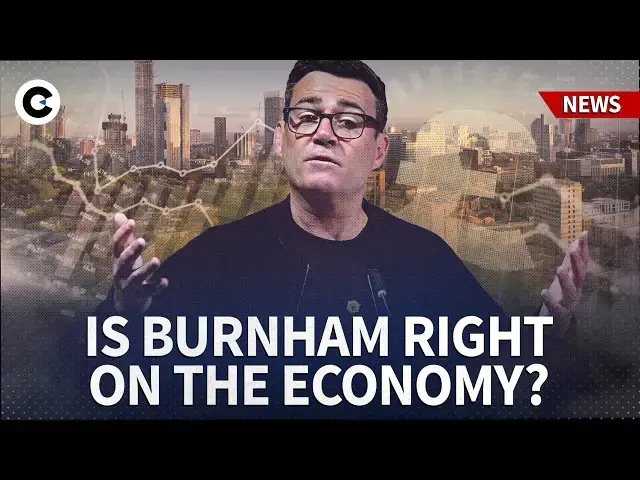
New polling suggests that in all leadership scenarios, Andy Burnham trounces his Labour rivals.
So, what kind of PM would Burnham be? The Andy Burnham economic worldview is of more devolution and "business friendly socialism".
He’s said that he wants to roll back what he describes as “40 years of neoliberalism”, but what does this mean?
Opinion Editor Alys Denby has strong views…
Get more of City AM 👇
🌐 http://www.cityam.com
X(formerly Twitter): http://twitter.com/CityAM
Facebook: http://www.facebook.com/cityam
Instagram: http://www.instagram.com/city_am
LinkedIn: http://www.linkedin.com/company/cityam
Show More Show Less View Video Transcript
0:00
Welcome back to business as usual. Now,
0:02
new polling suggests that in all
0:04
leadership scenarios, Andy Burnham would
0:06
trounce his Labour rivals. But, what
0:09
kind of Prime Minister would Burnham be?
0:12
>> [snorts]
0:12
>> Well, the word that is doing the rounds
0:14
at the moment is Manchesterism. That's
0:16
his mantra. Essentially, the Andy
0:18
Burnham economic worldview is a more
0:21
devolved, {quote} {unquote},
0:22
business-friendly socialism. He has said
0:25
this week that he wants to roll back
0:27
what he describes as 40 years of
0:30
neoliberalism.
0:31
But, what does this mean? Well, luckily,
0:34
our Westminster watching opinion editor,
0:36
Alice Denby, has some quite strong
0:38
views. Welcome back to the podcast,
0:40
Alice.
0:41
What do you make of What do you make of
0:43
Andy Burnham's interventions? Cuz he
0:44
really does look set to be the next
0:46
Prime Minister.
0:46
>> Look, the first thing I would say is
0:47
that business-friendly socialism is
0:49
quite obviously a contradiction in
0:50
terms. There is no such thing. Any every
0:52
socialist country has impoverished its
0:54
people. Um but like it is worth
0:58
analyzing Andy Burnham's record because
1:00
Manchester is growing at double the rate
1:02
of anywhere else. Um and leadership is
1:05
definitely one aspect of that. I think
1:07
it would be really churlish to say that
1:08
he hasn't been a very successful mayor
1:10
of Manchester, kind of embodying the
1:11
spirit of that city. Um and especially I
1:14
was impressed how he stood up for
1:16
Manchester during COVID when uh
1:18
you know, Westminster was trying to uh
1:20
lock it down, impoverish it even more,
1:23
and he was like, "Look, if you're going
1:24
to do this, I need more money from
1:25
central government." So, I thought that
1:26
was impressive.
1:27
But, if you kind of dig into it, I mean,
1:29
no one would say that Manchester's
1:31
success is nothing at all to do with
1:33
Andy Burnham. But, also nobody would say
1:36
it is all down to him. What really
1:38
happens uh
1:39
as in any successful city is what is
1:41
called agglomeration effects. This is
1:43
human capital, capital capital, and
1:46
intangible assets all coming together to
1:48
make this city grow. Um so, Manchester
1:51
has uh in terms of human capital has a
1:53
huge graduate population. I think it's
1:55
uh the largest campus in the UK.
1:57
>> I think that sounds right. Yeah.
1:58
>> Um and a lot of graduates go and study
2:00
there and they stay and they build
2:01
businesses there and contribute in that
2:03
way. It's also obviously got amazing
2:06
heritage. It was uh uh the cradle of the
2:08
Industrial Revolution. More recently,
2:11
incredible musical heritage with Oasis
2:13
and The Stone Roses.
2:14
>> is what I think is quite interesting
2:15
about the way that Andy Burnham is
2:17
styling Manchesterism because I think
2:18
he's he's got There's a cultural layer
2:21
on top of a pretty modern quite
2:24
Qatar-adjacent
2:26
economic layer. So, like on on the top
2:27
cultural layer, it's like, yeah, there's
2:28
the industrial history. We can look at
2:30
You can look at that. You can look at
2:32
the cultural history. And then that is
2:33
the kind of outward-facing marketing of
2:35
Burnhamism, of Manchesterism. But
2:37
actually, it's What it is is really a
2:38
huge amounts of international
2:40
investment, which has been very
2:41
successfully secured. But I don't think
2:43
that's going to be necessarily part of
2:44
his leadership pitch. That I don't think
2:46
that's the comms that
2:47
>> Look.
2:48
>> it's going to be
2:48
Labour-membership-facing.
2:49
>> The massive elephant in the room here,
2:51
the massive investment that Manchester
2:52
has recently benefited from is, of
2:54
course, uh a huge amounts of money
2:56
piling into football. As you say, a lot
2:58
of that's Qatari money. Uh Jim Ratcliffe
3:00
is going to spend a huge amount of money
3:02
regenerating Old Trafford. This is a man
3:03
who said that Britain is otherwise
3:05
uninvestable, but football, a unique uh
3:08
a unique asset. And then we've also had
3:09
taxpayer money going into MediaCity in
3:11
Salford. So,
3:12
I wouldn't say, therefore, that a
3:14
combination of foreign investment and
3:15
taxpayer investment is necessarily the
3:18
answer for the entire country. Those
3:20
things are obviously very desirable, but
3:22
what you really want is domestic
3:23
companies to start, scale, and grow here
3:26
in Britain. And that is not really
3:27
what's happened in Manchester. Um
3:31
So, look, that's what I make of
3:33
Manchesterism. As for his criticism of
3:35
neoliberalism, I don't really know I've
3:37
never really understood what that means.
3:39
It's a sort of criticism that gets
3:40
hurled at people like me who uh support
3:42
sort of lower tax and and uh more free
3:45
markets and I suppose more international
3:47
trade. But that is certainly not the
3:49
current economy we have when we have the
3:51
highest tax burden
3:53
um when we were withdrawn from a huge
3:56
trading partnership. I don't know what
3:57
he means by neoliberalism. As for
3:59
trickle down, what what you need is
4:01
growth. That is not the same as trickle
4:04
down. That is growing the economy for
4:05
everybody, making everybody richer, not
4:08
just the rich. It's not a It's not an
4:10
economic concept that any economist
4:12
subscribes to. It's a kind of
4:14
um
4:15
a perversion of of the idea. But But I
4:18
mean, at the end of the day, trickle
4:19
down economics is sort of, you know, if
4:22
the fat cats get fatter, some of that
4:24
trickles down. If I form a very
4:26
successful business No, that's not it,
4:28
Martin. It's if the fat cats get fatter,
4:30
they employ more people, they enrich
4:31
those people, they create more jobs,
4:33
they grow the economy, and they raise
4:35
everybody up. It's not a question of
4:37
just No, like nobody No economist says
4:39
all you need to do is focus on enriching
4:40
the wealthiest, and that somehow
4:42
benefits everybody. What you talk about
4:43
is growth, and I don't think that Andy
4:45
Burnham understands that concept. I
4:47
think he understands getting investment
4:49
into your city,
4:51
but I don't think that's as a model that
4:53
works necessarily for deprived seaside
4:55
towns or for
4:56
>> The key is I think that this is this is
4:57
more cultural than it is economic, this
4:59
pitch. I think I mean the best I mean
5:01
the the best writing about Andy Burnham
5:02
was in Tom McTague's New Statesman
5:05
profile about him from about 6 months
5:06
ago, which I know he's brought up since
5:08
and and spoken about this idea that the
5:11
Andy Burnham view of the world and of
5:13
Britain is of this place where people
5:16
feel totally disconnected from their
5:18
communities. So, that you have people
5:20
who feel like they can't access the kind
5:22
of public services, the kind of
5:24
community services that maybe Andy
5:25
Burnham would remember when he was a
5:26
kid.
5:27
But that
5:29
doesn't really
5:31
actually hold any more water than just
5:33
being a bit of a cultural memory. But I
5:35
don't I don't I don't I don't I don't I
5:36
don't really see how that connects to
5:37
any policy platform he can give. I
5:38
understand what he's getting at, but I
5:40
don't really see what his positive
5:42
vision is for implementing that. Well,
5:43
and I also think that it's quite
5:45
specific to his own
5:48
cultural inheritance and to Manchester
5:50
as well. I mean, what he talks about is
5:52
place before party, right? But what does
5:54
he have to say as someone who leans very
5:56
heavily on his kind of northern slight
6:00
sort of grievance narrative, what does
6:02
he have to say to people like me and
6:04
other Londoners and other Citizen
6:06
readers in the Southeast who don't share
6:07
that cultural background at all? Is he
6:09
speaking for our place? I don't think
6:12
so. I didn't think it was odd that he
6:13
mentioned Margaret Thatcher in his in
6:15
his election video. I was like, "Blimey,
6:16
that was a long time ago."
6:18
Yeah. But again
6:19
>> [laughter]
6:19
>> Yeah, that's 35 years back. That's a
6:21
very specific narrative to those kind of
6:24
industrial heartlands that that believe
6:26
that they were decimated by Thatcherism.
6:29
That is not a narrative that speaks to
6:30
the whole country. That's certainly not
6:31
a narrative that speaks to a lot of
6:32
conservatives, for example, and I think
6:34
a lot of Reform voters who still respect
6:35
Margaret Thatcher. Just very, very
6:37
briefly, finally, why has the kind of
6:40
low-tax, small-state, free-market wing
6:43
of British politics
6:45
comprehensively failed to make a
6:47
compelling argument to the people as to
6:50
why this is a recipe for growth? Look, I
6:52
don't want to sound like a a sort of
6:53
socialist, but true neoliberalism has
6:56
never been tried.
6:57
>> [laughter]
6:58
>> Yes, but I mean, the Conservatives were
6:59
in government for 14 years and they
7:01
failed to make the argument.
7:03
>> Yeah, look. To the point where the the
7:04
the like Kemi Badenoch says, you know,
7:06
the the the rider is now heavier than
7:08
the horse. We're spending more than we
7:10
make We're spending more than we make in
7:11
income tax. You know, like you said, we
7:13
are not a free-market like ultra
7:16
right-wing Singapore on Thames as the
7:18
Brexiteers wanted us to be. So, how have
7:21
they so fundamentally failed to make
7:23
this argument?
7:24
>> I think the problem was, and this is
7:26
Kemi Badenoch's analysis at least, that
7:27
uh the Conservatives talked right but
7:29
governed left. And that the state, I
7:32
think Look, you can trace it back to
7:34
sort of
7:35
Blair The state The regulatory state
7:37
massively expanded. The number of
7:38
quangos, the kind of levers of
7:40
government got increasingly pulled away
7:42
from ministers
7:44
um
7:45
and and I think that's made it very
7:47
difficult to claw back. I mean, even
7:48
when we had, you know, so-called
7:50
austerity,
7:52
the amount that the state was rolled
7:53
back was was tiny compared to, you know,
7:56
the size that it was before Tony Blair.
7:58
And I So,
8:01
um
8:01
I think that the argument has failed to
8:04
be made because the policies weren't
8:06
properly enacted.
8:08
Well, I fear that unless
8:11
unless the Conservative Party managed to
8:13
make that that case fairly soon, there
8:15
might be even more splits on the
8:18
extremes of the left and the right.
8:19
Thank you very much, Alice Denby, for
8:20
coming in.
8:21
>> Always pleasure.
News