Up next in 10


The world’s energy watchdog has urged people to work from home to mitigate soaring oil prices and supply constraints caused by the intensifying Iran conflict.
The International Energy Agency said people should limit commuting where possible as the impact on markets and national economies becomes “more and more severe”.
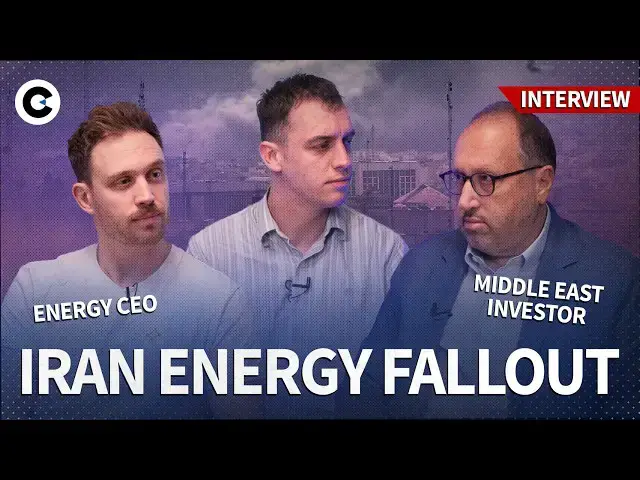
City AM's Matt Kenyon spoke to the Chief Executive of tem energy, Joe McDonald and Dubai-based investor and author of Next: Leading through the new realities, Alain Bejjani.
Get more of City AM 👇
🌐 http://www.cityam.com
X(formerly Twitter): http://twitter.com/CityAM
Facebook: http://www.facebook.com/cityam
Instagram: http://www.instagram.com/city_am
LinkedIn: http://www.linkedin.com/company/cityam
Show More Show Less View Video Transcript
0:00
Work from home and don't commute. That's
0:02
the warning from the International
0:03
Energy Agency as the war in and around
0:05
Iran intensifies further. And that's not
0:08
just for if you're in the Middle East,
0:09
it's a warning to everyone in the world.
0:11
The group says that shocks to the global
0:13
energy industry are going to get more
0:15
and more severe. And the group has
0:17
released a 10-point action plan to
0:19
manage the energy crisis. On the list is
0:22
a recommendation to tighten speed limits
0:24
to cut fuel use. So, I'm joined by the
0:27
Dubai-based investor and author Alam
0:29
Pajani whose
0:31
next leading through the new realities
0:33
is coming out very soon, I think, the
0:35
next few weeks. Yeah. And I'm also
0:37
joined by the chief executive of Tam
0:39
Energy, Joe McDonald. I'll come to you
0:42
first, Alam, cuz you're living in Dubai.
0:43
What have you made so far of the crisis?
0:46
Do you think there's been pretty
0:47
significant disruption to people's
0:48
working lives so far? Honestly,
0:51
it's very surprising. I mean, this war
0:53
is very surprising. I mean, I've I just
0:55
came back from Dubai. I was I landed
0:57
last night. I mean, the situation is, I
0:58
would say, as close as it can be to kind
1:01
of business as usual.
1:02
And this is something that's surprising.
1:04
I mean, people It's not possible. True,
1:07
but I think what Dubai has shown us this
1:10
time, something that's I think no one
1:12
thought possible, is the ability to kind
1:14
of shield itself from what's happening.
1:16
Of course, there are some disruptions
1:17
there. You could transport was
1:19
disrupted. I mean, air traffic and then
1:21
it came back very fast. I think three
1:23
three days into the I was here in
1:25
London, actually, when it started. Three
1:27
days later, I flew back I flew back to
1:29
Dubai. Very very small. Uh business is
1:32
as usual. There are some sectors that
1:34
are impacted, like tourism, severely
1:35
impacted, for sure. Real estate is on
1:37
hold, I think. How it's going to unfold,
1:40
we'll see how long it takes, but the
1:42
reality is, I would say, 80 to 90% of
1:45
actually live is really basically
1:47
business as usual. Very unusual for the
1:49
situation. I think we're going to learn
1:50
a lot out of this war. I mean, you said
1:53
at the beginning the war around I mean,
1:55
the war around Iran. Uh
1:58
Dubai has kind of a a very strong shield
2:00
on top of it, and it's actually pushing
2:03
through as much as possible. Uh is it
2:05
going to be untouched? Of course not,
2:08
but it's more about what do you do with
2:10
with basically what life throws at you.
2:12
I think this is where we really are. A
2:13
lot of resilience,
2:15
a lot of capabilities and planning for
2:17
the day after that actually is very top
2:19
of mind for everyone there.
2:21
And Joe, what do you make of these IEA
2:23
warnings from this morning? It feels
2:25
like pretty dramatic compromise is being
2:27
expected. Do you Do you believe that?
2:29
Yeah, I mean, I think the obvious point
2:31
is that it's becoming clear that sort of
2:34
energy constraints is now economic
2:36
constraints. Now, whether that's simply
2:38
some of the businesses here in the UK
2:40
waking up and seeing their energy prices
2:42
are now 20% higher all the way now
2:44
through to being told, um you know, work
2:46
from home, don't travel. A lot of
2:49
businesses, I think, are already really
2:50
struggling to compete um from a UK
2:53
position on a global scale. And to be
2:56
brought in under these extra constraints
2:57
for something they really don't
2:59
understand, and they're not quite sure
3:00
why an event on the other side of the
3:01
world should be affecting them. I think
3:04
there's a lot of frustration from the
3:05
customers we've been speaking to.
3:06
Ultimately, the advice is very practical
3:09
um and pragmatic. I think there's a lot
3:11
more nuance that needs to be understood
3:13
uh for every business that's operating
3:14
here in the UK today. Because it's a
3:16
pretty alarming warning, I suppose, when
3:18
applied to the UK because this is
3:20
broadly a service economy. Like, if we
3:22
if everyone just worked from home, huge
3:24
swaths of our business environment
3:25
becomes really tricky.
3:27
Do you Do you think that we're going to
3:29
see
3:30
long-term reductions in energy use? Do
3:33
you think we're going to have to apply
3:34
this at some point to our our long-term
3:36
view of the world? Yeah, so look, um
3:39
there is a such thing that's kind of
3:41
been bandied around as energy
3:42
sovereignty. And what does this actually
3:44
mean? It would mean if in an event like
3:48
we have in Iran today, we have a
3:49
constraint on supply of energy, oil and
3:51
gas, if the UK had energy sovereignty,
3:53
we shouldn't really see much of an
3:55
impact on our businesses on on our
3:57
households. Um we don't have that today,
3:59
right? So, the cost of the electron is
4:01
still being set by gas and gas is still
4:04
heavily relied on um and therefore we're
4:06
seeing energy prices increase that are
4:08
outside of our control. Um
4:10
I think at a a business level, the risk
4:13
we see, and I mentioned this, very real
4:15
reality is in the next 10 years, you
4:17
might end up with a tourist state here
4:18
in the UK. Businesses now have to
4:20
compete on a global scale. And if the
4:22
electron is one of their number one
4:23
inputs to how competitive they can be in
4:26
creating products, and we're paying 30,
4:28
40, 50% higher than most other
4:30
countries,
4:31
they simply won't be able to win. That's
4:33
what's quite scary is when you look at
4:34
actually the updated demand forecast for
4:36
electricity, they're dropping.
4:38
And yet we're building all of this
4:40
generation on the hope that, you know,
4:41
we can support the kind of revolution
4:43
that we'll see in compute uh and
4:45
industry. But what if that industry
4:47
industry has already disappeared because
4:48
electricity prices were too high to stay
4:50
competitive? And that's the real
4:51
friction we have right now, short-term,
4:52
long-term in terms of the outlook for
4:54
the energy market here in the UK.
4:56
And Alam, if we were to apply this to
4:57
Dubai, this is a a region that has had
5:02
extremely extremely fast growth over the
5:04
last 25, 30 years. It in thanks in part
5:07
to very cheap energy. If we're now
5:09
looking at, I suppose, rolling energy
5:12
industry shocks, rolling volatility,
5:14
what does the outlook for Dubai and the
5:18
broader UAE look like?
5:19
>> I mean, look, I think what what what was
5:21
just mentioned is very interesting. I
5:22
mean, these are shocks uh that were not
5:26
unpredictable. These were shocks that
5:28
were actually predictable in any
5:29
scenario. And I think the energy
5:31
sovereignty concept is a very
5:33
interesting one. Why? Because you
5:34
actually build resilience during good
5:35
times.
5:36
We've seen it post-COVID. We've seen it
5:38
with with the Ukraine crisis. The reason
5:41
why, I mean, Europe primarily was so
5:43
impacted by what happened was because it
5:45
did not build resilience during good
5:47
times. It's actually it actually relayed
5:50
on the most efficient then the cheapest
5:53
possible access to energy without
5:55
building an integrated energy
5:57
infrastructure, without building proper,
5:59
I would say, uh energy policy that
6:01
actually could prevent or basically
6:04
reduce shocks. Now, what we are seeing
6:06
is a dissimilar situation whereby, I
6:09
mean, everyone knew that Iran is a
6:10
global threat.
6:12
No one wanted to deal with the global
6:13
threat that Iran represented. People
6:15
thought that actually it's possible to
6:16
basically walk your walk your way
6:18
through it one way or the other. And
6:20
today actually reality bites. So, this
6:23
is not unreal. This is not impossible.
6:26
But what we already have, we have two
6:28
very important pipelines in the
6:31
in the peninsula. One that goes from one
6:33
side of Saudi Arabia to the other one
6:35
which is to the end of port. And there's
6:36
another one that comes from one end of
6:39
the of the UE to the other, which is
6:41
Fujairah, that bypass Hormuz Strait.
6:43
These are capable of getting about 5.5
6:45
to 6 million uh
6:47
barrels per day, which is important.
6:50
It's a substantial part of the 20 to 22
6:52
million that usually go through the
6:54
Hormuz Strait. It doesn't solve the
6:56
problem, but this is building for
6:57
resilience. And I want to build on that
6:59
to tell you Dubai has been building for
7:01
today. In good times, Dubai has invested
7:04
for it to be able to be resilient and
7:06
for it it to be able to come back
7:07
afterwards. We're seeing it today in the
7:09
brunt of it with its ability to
7:11
basically just shield itself as as much
7:13
as humanly possible from basically
7:16
incoming, I would say, uh
7:19
projectiles that are now in the about
7:21
3,000 or I'm sorry, 2,000 plus that came
7:24
already, ballistic missiles, cruise
7:25
missiles, drones, and so on.
7:27
And there is so much built in the
7:29
infrastructure that people, I would say,
7:30
do not see as much or where people were
7:33
more taken about the kind of what you
7:35
see on the surface, which is kind of the
7:36
successful entrepreneurial city that
7:40
actually a lot of people envy. I have
7:42
I'm personally very much comfortable to
7:44
say that Dubai is going to come back and
7:46
it's going to come back very strong. I
7:48
think if you go to Dubai, talk to to
7:50
people that are there, resident that are
7:51
there, people feel safe and people feel
7:54
that actually it's going to come back. I
7:55
think there's also a lot that is built
7:57
on how Dubai is dealing with the current
8:00
situation. So, whe- whether you have the
8:03
the government, whether you have
8:04
basically the policies that are in place
8:06
that are all business-friendly,
8:07
people-friendly, as much as as possible,
8:09
which was the case during COVID, really.
8:11
And I think one of the big surprise out
8:12
of COVID was Dubai's ability to benefit
8:15
from it, and it was kind of a
8:16
springboard for it.
8:18
So, I suppose the picture you're
8:19
painting there is very much
8:20
infrastructure which has been
8:21
future-proofed to the point where these
8:23
sort of shocks can be dealt with. Just
8:25
picking up on the point you made earlier
8:26
about tourism, though,
8:27
I suppose maybe the risk becomes more of
8:29
a reputational risk based around
8:32
people's, I suppose, fear of volatility
8:34
in the region. Do you think that after
8:35
something like this where there are
8:37
projectiles being fired directly into
8:38
Dubai, that tourism can really bounce
8:40
back to the place it was before? I would
8:42
say yes because you we can't talk just
8:44
about the projectiles
8:46
without talking about how the the war is
8:48
going to end. Because in reality, what
8:51
what we're currently having is we're
8:52
finally dealing with a real threat that
8:54
was there.
8:56
The risk was there before.
8:58
Okay? People did not want to think that
9:00
this risk will ever materialize.
9:01
Now, Iran decided to actually prove to
9:04
the world that Iran is a global threat.
9:06
And Iran is willing to basically destroy
9:08
everything just for it to kind of for
9:10
its regime to survive. It's being dealt
9:12
with.
9:13
So, the world after this war is not
9:15
going to be the way the world the world
9:17
was on February 28th. It's going to be a
9:19
different world where that threat is
9:21
going to be dealt with. Whether there is
9:22
a regime change in Iran or not, I think
9:23
this is a secondary issue. The real
9:25
issue is make sure that Iran doesn't
9:27
cannot anymore represent a threat to its
9:30
environment and to the global economy. I
9:32
think everyone is reeling under this
9:34
reality.
9:35
And everyone now is aware that this is
9:37
not something that the world can allow
9:40
to basically continue because if that
9:42
was the case, this is not going to be
9:43
Dubai, it's going to be a global issue.
9:45
And I I mean, I was really struck just
9:46
by that description of um Dubai's backup
9:49
um sources of energy for when you do
9:51
have a situation like we're seeing in
9:53
the Strait of Hormuz. And I suppose that
9:54
is something that in the UK, the answer
9:56
is very often just to import at that
9:58
stage. Are you optimistic that there can
10:02
be enough at some point long-term
10:03
thinking in the government's energy
10:05
policy that we can have energy
10:07
sovereignty, or do you think we're still
10:08
a way off
10:09
that sort of plan working? Yeah, so I
10:12
actually think the long-term vision set
10:13
out by the current government is pretty
10:16
much what's needed, right? It's about
10:18
creating some form of nationalized
10:20
energy company, uh deploying far more uh
10:24
sovereign energy generation sites,
10:26
whether that's, you know, um wind or
10:28
solar or uh you know, even more gas. It
10:31
doesn't really matter so long as we can
10:32
control the production locally. I think
10:34
the risk is just the time frame and the
10:36
speed of execution. And actually our
10:38
cost of building infrastructure is what
10:40
worries me, right? So, if we are trying
10:42
to build more nuclear power stations,
10:44
but China can build them 10 times
10:45
cheaper, China's now input costs are 10
10:48
times less, which means China's
10:49
businesses are 10 times more
10:50
competitive.
10:51
Whether that comes into the compute or
10:53
the manufacturing processes or even
10:55
filters down to living standards. So, my
10:57
concern is actually
10:58
we need short-term and mid-term measures
11:01
to really protect and ensure that
11:03
businesses can compete from the UK and
11:05
just survive to make it to that future.
11:08
Um
11:08
and I think obviously that comes down to
11:10
implementation, thinking about stopping
11:12
just kind of moving pieces around the
11:13
same broken board, and really deep
11:15
innovation into why we're using
11:17
wholesale electricity markets the way we
11:19
are.
11:20
Why is our price for electricity set by
11:22
the most expensive uh price for gas? How
11:25
is taxation a solution here versus
11:28
subsidizing all these costs onto
11:29
businesses and homes? I think there's a
11:31
lot in the short-term that we can do to
11:33
make sure we get to that long-term
11:35
vision. Um at the moment, I don't think
11:37
we're making necessarily the right
11:38
moves. Um and that's pain That's painful
11:40
for businesses. I suppose I'm always
11:41
struck by that um there was that famous
11:44
Nick Clegg quote from I suppose 2011 or
11:46
2012 where he said um that the Lib Dems,
11:50
who were then in coalition, sort of
11:51
proudly voted against uh expansion of
11:53
nuclear power cuz it wouldn't be online
11:55
until 2022 or 2023, which obviously like
11:57
if we had had that, that would have
11:58
lined up directly with the um the
12:01
invasion of Ukraine. Do you do you I
12:03
Do you really trust though that any of
12:05
this will get implemented?
12:07
Well, I come from a space of kind of
12:10
technical innovators, right? So, I see a
12:12
huge amount of entrepreneurs now turning
12:14
their focus to energy. And actually the
12:16
UK has one of the Yeah, we can complain
12:19
about it, but one of the most
12:20
progressive energy markets, the most
12:21
competitive. And so, I see a lot of hope
12:25
in the people that are building battery
12:26
power plants, the people that are
12:27
building new generation technology, many
12:29
founders who are trying to tackle the
12:30
energy crisis alongside them rebuilding
12:32
the entire transaction infrastructure
12:34
for electricity, things that weren't
12:36
possible even 4 or 5 years ago. So, I
12:37
think so long as we give access to data,
12:40
we bring in competition, we don't
12:42
over-regulate, try and pick too many
12:44
winners, I actually do see a really
12:46
positive outlook for our ability to
12:48
execute. I think, as I said, it's just
12:51
about creating that alignment between
12:53
what are the short-to-mid-term stopgaps
12:54
to protect uh businesses as they kind of
12:58
go through this transition and just
12:59
don't burden them with all the costs. Um
13:01
and then are we genuinely picking the
13:03
long-term unfair advantage the UK could
13:06
have? It's probably not going to be a
13:07
nuclear. Um so, we need to think that
13:09
through, but we do have amazing tides,
13:12
we have amazing wind, we have some
13:14
solar.
13:15
Not the best this year so far. Uh maybe
13:17
this week. Um and we have great
13:19
innovation coming in at home level as
13:21
well um with, you know, heat pumps and
13:24
and off-grid opportunities. So, I think
13:25
the mix is there, um but it is going to
13:28
be about the the short-term execution.
13:30
And unfortunately, we still face today
13:32
an issue where an event on the other
13:34
side of the world has meant many of our
13:35
businesses woke up and their energy
13:37
prices are 20 25% more expensive than
13:40
they were budgeting for. I think the
13:42
only interesting thing is why is it not
13:43
300% like we saw in 2022? And there is a
13:46
difference between oil being trapped in,
13:49
you know, the the the Gulf versus, you
13:52
know, gas not being pumped through the
13:53
pipelines into the UK. Uh not to say it
13:56
won't necessarily escalate further, but
13:58
at least there has been some shielding
14:00
from the potential impact on energy
14:02
costs.
14:03
And just in terms of I suppose looking
14:05
forward to um
14:06
policy measures that can be put in
14:07
place, what would you like to see I
14:09
mean, you've you've painted I think
14:10
quite a positive picture of Dubai's
14:13
resilience and the broader UAE
14:14
resilience. What would you like to see
14:17
done to I suppose better protect from
14:20
future shocks because when this this war
14:22
presumably at some point will
14:24
de-escalate, but it does seem like we
14:26
are entering a period
14:27
almost constant volatility now.
14:30
I mean, look, we live in a world that is
14:31
so integrated that it's very difficult
14:33
to basically kind of wrap your head
14:35
around the concept of sovereignty being
14:37
about isolation and being having the
14:39
ability to just basically take care of
14:41
yourself on your own. The world is so
14:43
integrated. I think a the great example
14:45
is how business in the UK are waking up
14:47
to a problem that actually happened at
14:48
the other end of the world. Is this
14:50
going to end? No, it's not going to end.
14:52
This is going to be there. I think
14:55
the answer to that is what I call
14:56
responsible and responsive leadership.
14:58
We cannot just kick the can. Things have
15:00
to be dealt with. What we are living
15:03
through today is what I call kind of uh
15:06
a
15:07
it was kind of a a threat to the system,
15:09
to the whole system that was there.
15:11
Okay? Uh
15:12
and this this threat actually kind of
15:15
manifested itself in the in this crisis.
15:18
And
15:19
so, it's not a surprise. Okay? I think I
15:22
would love for the world to basically
15:24
take on more of the lessons out of this
15:26
conflict by saying in good times you
15:28
have to build for bad times. Resilience
15:30
is built when things work.
15:32
I think if you look at the on the on the
15:34
energy side, for example,
15:35
a big issue is how do you deal with the
15:37
Strait of Hormuz going forward? I mean,
15:39
20% of the oil go there. Now, we know
15:41
that Qatar is going to be down for at
15:43
least 3 to 5 years with about 70% of its
15:46
capacity of of uh gas production or
15:49
export uh by the time they they they fix
15:51
it. This is about, again,
15:54
uh 3 3.4 to 3.5% of the global gas
15:57
supply that's going to go globally. This
15:59
will have an impact. So, actually the
16:01
whole world is paying for it. I think
16:02
what we need to do is to make sure that
16:04
that part of the world is one has even
16:05
further resilience in order to find a
16:08
solution to bypass the Strait of Hormuz
16:10
because today it could be Iran, tomorrow
16:12
it could be something else. You you
16:13
don't really know what you're doing, but
16:15
you have to have redundancies. And
16:16
redundancies cost money. So, I think
16:18
that that's that's very important. Two,
16:20
I think which is also extremely
16:22
important, is to make sure that
16:25
we actually
16:27
understand that leaders have to work
16:28
together rather than if it's basically
16:31
not impacting me, not my issue. I think
16:34
you had this great example about the Lib
16:36
Dems in 2011 2012 saying, "You know
16:39
what? This will see the day in 2022, so
16:41
I don't really care about it and I'm
16:42
against it." I think
16:44
the definition of leadership I've read
16:46
is uh that I really like is about
16:48
accepting that your fruits basically uh
16:52
I mean, other trees will bear your
16:54
fruits.
16:55
This is this is what leadership is
16:56
about. I think the world needs more of
16:57
that.
16:58
And Joe, just before we wrap up, do you
17:00
have any advice for business owners who
17:02
might be worried about the situation
17:04
with the energy markets? Yeah, so we've
17:06
talked a lot about leadership. Um I
17:08
think we've been on the phone to
17:09
business customers over the last week or
17:11
two talking them through the potential
17:13
crisis. The kind of core advice we have
17:16
is now is the time to be engaged as a
17:18
leader in your organization uh with the
17:20
energy markets as much as they might not
17:22
like to. Now is the time to speak with
17:23
your energy broker, your utility, and
17:26
ensure you understand what the impact of
17:28
the cost of your electricity could be
17:30
for your next electricity contract. Um
17:33
it's about making sure you get
17:34
transparent and fair pricing and that
17:36
you're decisive and you understand what
17:38
you can and can't afford. I'll give you
17:41
a very uh specific example. A business
17:44
we've been speaking to for the last 2
17:45
weeks took about 10 days to sign off on
17:48
their electricity contract. In that
17:49
10-day period, their electricity
17:51
contract has gone from about 800,000 a
17:53
year to 1.1 million a year. So, this is
17:55
the kind of decision uh and
17:57
proactiveness that needs to be shown
17:59
during a time of crisis. You just can't
18:00
ignore it, unfortunately.
18:02
That's about all we have time for, but
18:03
thank you so much for joining me. We're
18:05
going to be covering this situation as
18:07
it continues to unfold. And for
18:09
everything you need to know about the
18:11
energy market and the conflict in the
18:13
Middle East, head to cityam.com.
#News